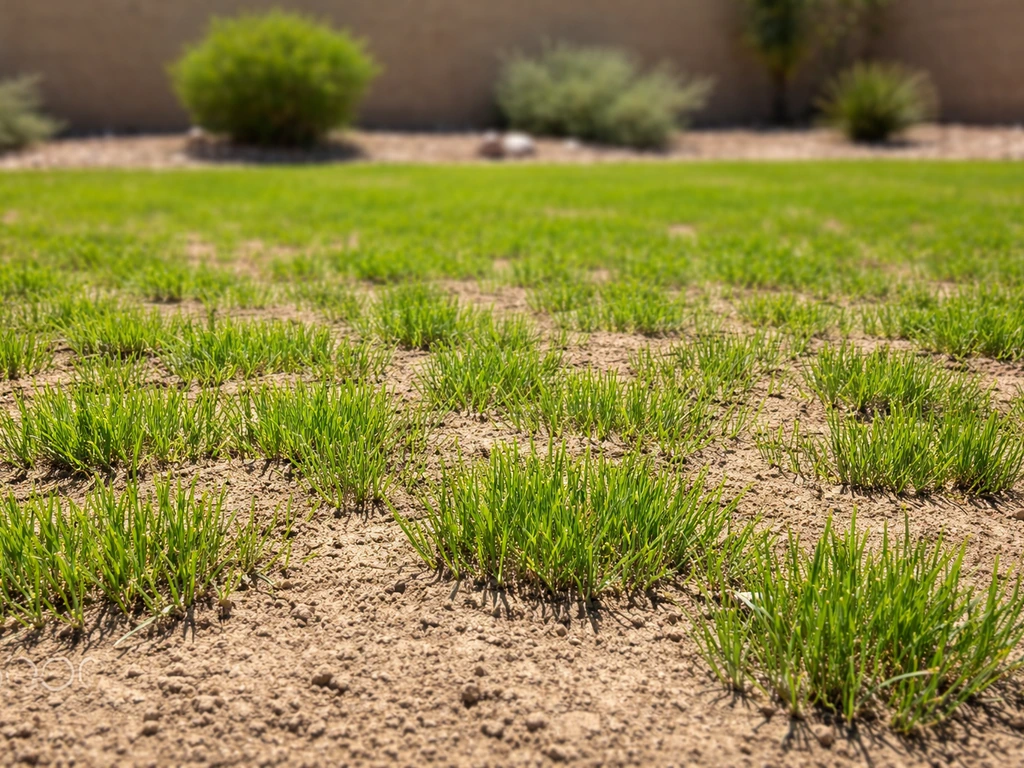
You can grow a real putting green in your backyard from seed, but it takes the right grass for your climate, solid soil prep, and a watering routine you stick to for at least the first month. If you want a simpler, step-by-step version of this overall process, you can also follow the guidance in how to grow grass at home for seeding and early care. Choosing the right type of fairway grass for your climate is key to getting a dense, durable stand. Plan for a 6-to-12-week runway before the surface is genuinely playable, and expect to mow frequently once the grass is up. Do this right and you'll have a smooth, dense, rollable surface by the end of your first season.
How to Grow a Putting Green Step by Step at Home
Marcus Tillwell
17 May 2026
Pick the right spot and figure out your size
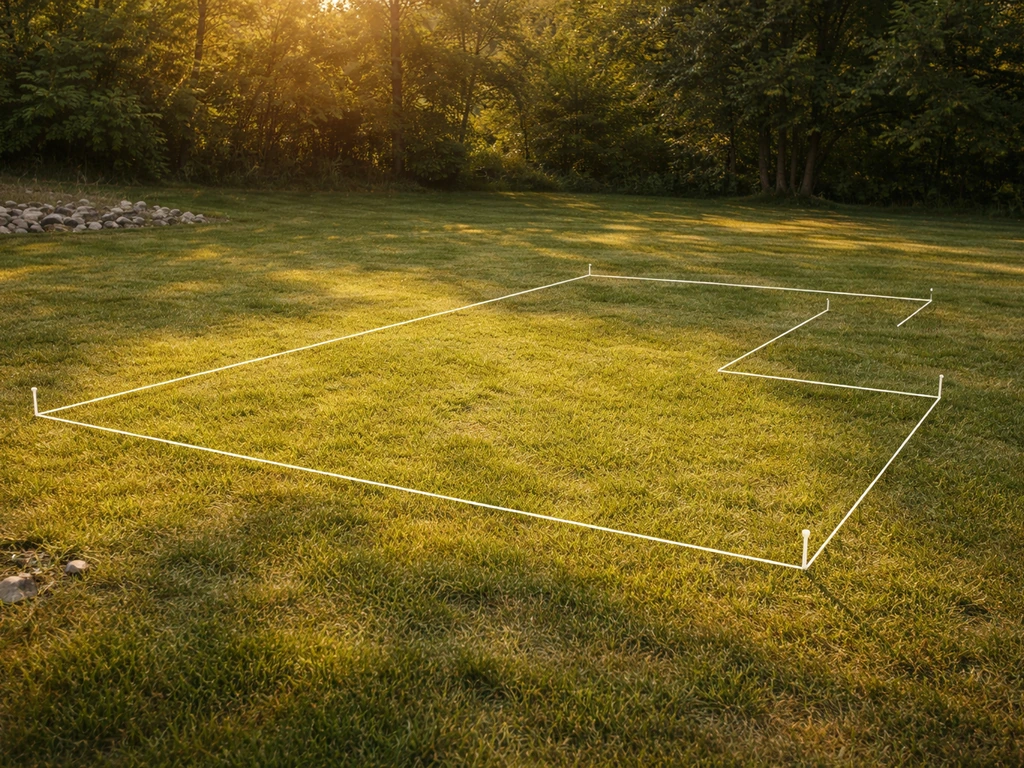
Start by walking your backyard and looking for a naturally flat or gently sloping area that gets at least 6 hours of direct sun per day. Putting greens are high-maintenance turf, and warm-season grasses like bermuda and zoysia won't perform well in shade at all. Even cool-season options like tall fescue thin out fast in dense shade. If your yard is mostly shaded, you'll need to be realistic: a partially shaded corner might work for a fescue-based putting surface, but don't expect golf-course quality.
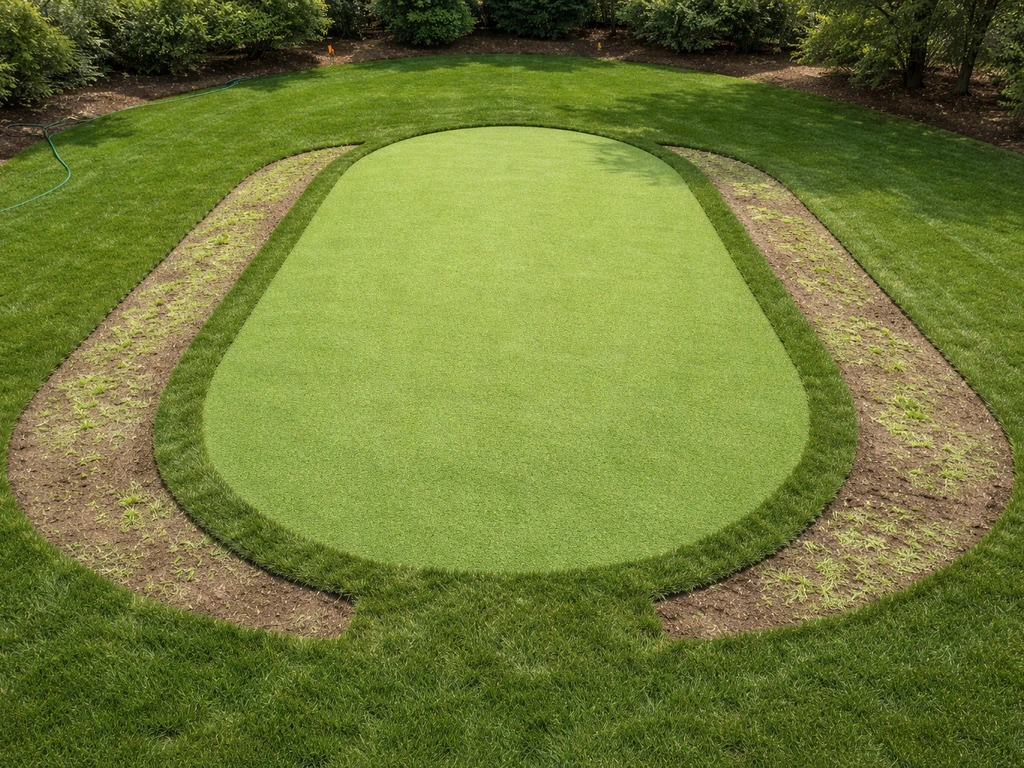
For size, most backyard putting greens run between 100 and 500 square feet. Smaller greens (around 100 to 200 sq ft) are easier to manage from a seeding, watering, and mowing standpoint, which matters a lot in the first season. Measure the area, sketch the shape (kidney, oval, and free-form shapes all work), and mark it out with spray paint or stakes before you do anything else. This boundary becomes your entire project footprint.
One thing worth noting early: the contour of the green affects drainage and ball roll. A slight slope of 1 to 2 percent away from any structures drains surface water without creating a hill you're constantly putting uphill on. Purdue Extension is clear that the green's contours must facilitate rapid surface drainage, and USGA guidance hammers home that no water-holding depressions can exist anywhere in the footprint. Low spots where water pools will cause algae, moss, and uneven turf before you even finish establishment.
Choose the best grass for your climate
This is the most important decision you'll make. The wrong grass for your region either won't establish well or will look great for a season and then die. Here's the honest breakdown of what works where. Here’s the honest breakdown of what works where how to grow football field grass.
| Grass Type | Best Climate | Germination Time | Mowing Height for Putting | Putting Surface Quality |
|---|---|---|---|---|
| Bermudagrass | Warm-season (Southeast, Southwest, transition zone) | 7–10 days (warm soil) | 0.5–1.5 inches | Excellent – the top choice for putting greens |
| Zoysiagrass | Warm-season to transition zone | 14–21 days | 0.5–1.5 inches | Very good – dense and wear-tolerant |
| Tall Fescue | Cool-season (Mid-Atlantic, Pacific NW, transition zone) | 10–21 days | 2.5–3.5 inches (min practical) | Fair – passable surface but not ideal |
| Perennial Ryegrass | Cool-season (North, coastal West) | 5–10 days | 1.5–2.5 inches | Good – fast establishment, fine texture |
Bermudagrass: the gold standard for warm climates
If you're in the Southeast, Gulf Coast, Southwest, or anywhere with hot summers, bermudagrass is your best bet. It's what actual golf course putting greens are built on in those regions, it can be mowed as low as half an inch, and it recovers fast from wear. Seeded bermuda germinates in about 7 to 10 days when soil temperature is warm (above 65°F) and moisture is consistent. It establishes quickly in summer heat and gets dense fast if you mow frequently. Seeding rates run around 1 lb per 1,000 sq ft of hulled seed. Going higher doesn't significantly improve establishment.
Zoysiagrass: dense and tough, but slower
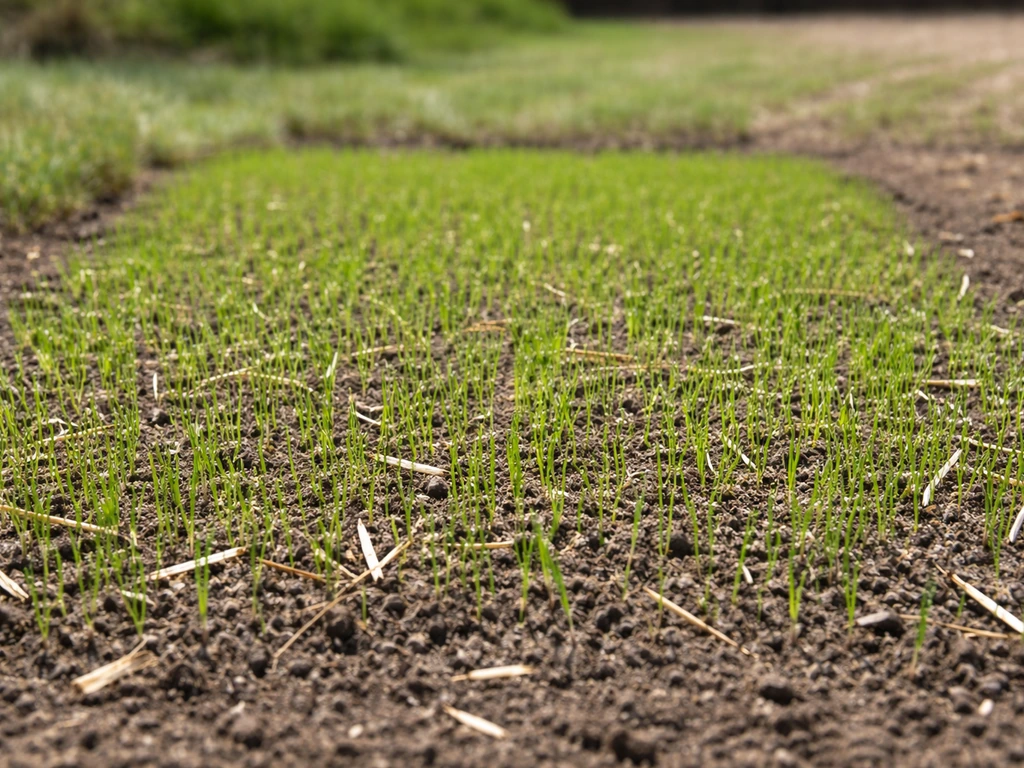
Zoysia is a great putting-green grass in transition-zone and warm-season climates. It's dense, wear-resistant, and handles moderate traffic well once established. The catch is time: zoysia germinates in 14 to 21 days and is a slow establisher overall. Expect your surface to take longer to reach a playable state than bermuda. Soil temperature should be around 65°F or higher for reliable germination. If you're in the upper transition zone and want a warm-season option, zoysia is worth the wait.
Perennial ryegrass: the fastest cool-season option
If you're in the northern half of the country or the Pacific Northwest, perennial ryegrass is your best seeded option for a putting surface. It germinates fast (often 5 to 10 days under good conditions), establishes quickly, and can be mowed fairly low compared to tall fescue. Penn State recommends 4 to 5 lb per 1,000 sq ft for lawn establishment, but for a dense putting surface, push toward the higher end of that range. Optimal soil temperature for germination runs 68 to 86°F, so seed in late summer or early fall when soil is warm but air temps are cooling.
Tall fescue: workable but with limitations
Tall fescue is the most shade-tolerant option on this list and handles clay soil and drought reasonably well. It germinates in 10 to 21 days at soil temperatures between 50 and 70°F. The honest limitation for putting greens: tall fescue has a coarser leaf texture and can't be mowed nearly as low as bermuda or zoysia without serious damage. You'll get a surface you can putt on, but ball roll won't match what you'd get with a fine-textured warm-season grass. If shade is forcing your hand, use a high-quality turf-type tall fescue variety at 6 to 8 lb per 1,000 sq ft and keep expectations realistic. DLF/Pickseed turf-type tall fescue technical sheets list seeding rates of 6, 10 lb per 1000 sq ft for these turf-type tall fescue products blank" rel="noopener noreferrer">6 to 8 lb per 1,000 sq ft. This is also the same approach used in related lawn-growing contexts like growing turf grass in challenging conditions.
Soil prep: the step most people skip and regret
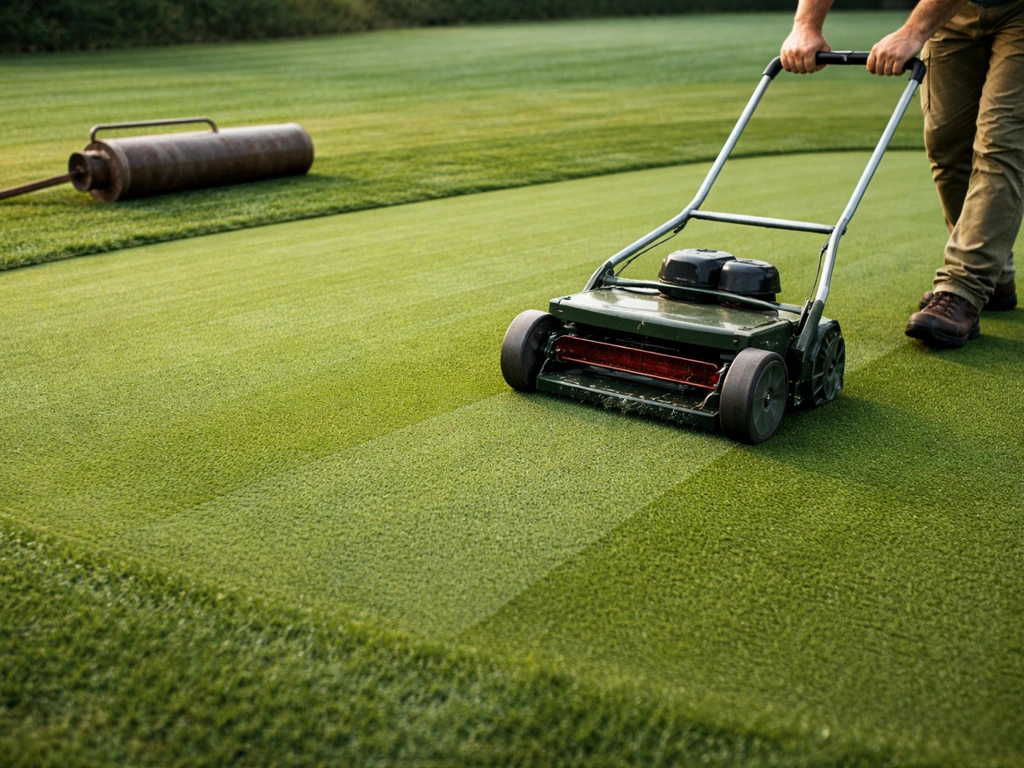
A putting surface lives and dies by its soil structure. You need good drainage, a firm but not concrete-hard rootzone, and the right pH. Skip this step and you'll end up with a patchy lawn, not a putting green.
Get a soil test first
Before you do anything to the soil, pull a sample and send it to your local extension service or a private lab. It costs around $15 to $25 and tells you exactly what pH adjustments and nutrients you need. Bermudagrass grows best at pH 5.5 to 6.5. Zoysia and bermuda can tolerate up to about pH 7.7 on the high end. Tall fescue is flexible between 5.5 and 7.5. Perennial ryegrass does well between 6.0 and 7.0. If your pH is off, lime or sulfur takes months to move the needle, so do this early. Missouri Extension specifically recommends getting your soil test and applying lime 6 to 12 months before planting bermudagrass.
Deal with clay, sand, or poor soil
Clay soil is dense, drains slowly, and compacts under foot traffic. For a putting green on clay, you need to break it up and amend it. Till 6 to 8 inches deep, then incorporate coarse sand and compost to improve drainage and aeration. Don't till when the soil is wet or you'll make it worse. Sandy soil drains too fast and holds few nutrients. Amend it with compost to improve water retention and add organic matter. If your existing soil is just bad overall, the most durable approach is the USGA-style method: excavate 16 inches, lay drainage pipe, add a 4-inch gravel layer, and fill the top 12 inches with a sand and organic matter rootzone mix. That's a significant project, but it's what separates a putting green that lasts from one that gets patchy after the first season.
Grade and compact the subgrade
Once your soil is amended, grade the area to your planned slope (1 to 2 percent), then firm the subgrade. USGA guidance is direct: the subgrade must be smooth, firmly compacted, and have no water-holding depressions. Any low spot you leave now becomes a soggy, weedy problem area later. Use a lawn roller or hand tamper, check with a level, and fill any low spots before moving on. This is tedious work, but it's what your ball roll depends on.
Seeding: timing, method, and rates
When to seed by region
Timing is tied to soil temperature, not calendar date. Bermudagrass and zoysia need soil temps above 65°F, which means late spring to early summer in most warm-season regions (late April through June in much of the South). Cool-season grasses like perennial ryegrass and tall fescue germinate best when soil is 50 to 70°F, which typically means late August through mid-October in northern and transition-zone states. Seeding in the spring is possible for cool-season grasses but means competing with summer heat and weeds during establishment. Fall seeding is almost always better for cool-season species.
Prepare the seedbed
Rake the surface to a fine, crumbly texture. You want no clods larger than a marble. Good seed-to-soil contact is everything at this stage: seed sitting on top of loose debris or clumps won't germinate reliably. Lightly roll the area before seeding if the surface feels fluffy. After seeding, lightly rake again to get seed covered to about 1/4 inch deep. University of Maryland Extension is clear that grass seed needs light to germinate and should not be covered with more than about 1/2 inch of soil. Don't bury it.
Seeding rates and method
Use a broadcast spreader or hand spreader and make two passes at right angles to each other for even coverage. Here are the rates to target for a dense putting surface:
- Bermudagrass (hulled seed): 1 lb per 1,000 sq ft
- Zoysiagrass: 1 to 2 lb per 1,000 sq ft
- Perennial ryegrass: 4 to 5 lb per 1,000 sq ft (push toward 5 for a putting surface)
- Tall fescue (turf-type): 6 to 8 lb per 1,000 sq ft
After spreading, lightly roll again with an empty lawn roller to press seed into contact with the soil. Skip this step and you'll get patchy germination. Cover the area with a thin layer of straw (you should still be able to see some ground through it) or use a starter fertilizer with slow-release nitrogen to support early root development without burning seedlings.
Watering schedule and what to expect during germination
The first two weeks after seeding, your only job is keeping the seedbed consistently moist. After you choose the right grass and get the soil and seeding right, the next step is following a tight watering routine so your golf course grass establishes solidly how to grow golf course grass. Not soaking wet, but never dry. University of Maryland Extension is blunt about this: once germination begins, you cannot let the seed dry out. That means watering two to three times per day in dry or hot conditions, even if it's just a light misting. Letting the top inch of soil dry out mid-germination kills the seedlings before they can root.
Once your grass reaches 1 to 2 inches tall, you can start pulling back watering frequency. Iowa State Extension recommends shifting to less frequent but deeper watering at that stage, encouraging roots to chase water downward. By weeks 3 to 4, you should be watering once per day or every other day, running the water long enough to wet 4 to 6 inches of soil. After the first mowing, reduce to every two or three days and continue that pattern through the rest of establishment.
| Stage | Watering Frequency | Goal |
|---|---|---|
| Days 1–14 (pre-germination) | 2–3 times per day | Keep top 1 inch consistently moist |
| Days 14–28 (early seedlings) | Once per day | Begin deepening root zone, 2–4 inch depth |
| Weeks 4–8 (active growth) | Every 1–2 days | Water to 4–6 inch depth |
| After first mowing | Every 2–3 days | Transition to normal lawn watering schedule |
Germination timelines vary by species and conditions. Bermuda is usually the fastest at 7 to 10 days in warm soil. Ryegrass follows at 5 to 10 days. Fescue takes 10 to 21 days. Zoysia is the slowest at 14 to 21 days, sometimes longer. If you're at day 21 and still seeing bare patches, don't panic yet. Check that soil moisture has been consistent and that soil temp hasn't dropped below the germination threshold. Slow germination is almost always a moisture or temperature issue.
Early maintenance: mowing, rolling, and weed control
First mowing timing and height
Mow for the first time when the grass reaches about 1.5 to 2 times your target mowing height. For bermuda or zoysia going in as a putting surface, that means mowing once the grass hits about 1 to 1.5 inches. For ryegrass or fescue, mow around 3 to 4 inches. Iowa State Extension recommends mowing promptly once grass reaches that height rather than letting it grow too tall before cutting. Set your mower at the highest setting first and gradually lower the height over multiple mowings. Dropping from 3 inches to 0.5 inches in one pass will scalp and stress the seedlings badly.
Rolling for firmness and smoothness
Rolling is what separates a lawn from a putting surface. After the grass is established enough to handle light foot traffic (usually 4 to 6 weeks after germination), start rolling the surface with a light lawn roller once every week or two. This firms the rootzone, smooths out small surface irregularities, and improves ball roll. Topdressing, which is applying a very thin layer of sand to the surface, helps fill micro-depressions and further levels the green. Do it lightly: no more than 1/4 inch at a time, worked into the canopy with a drag mat or stiff broom.
Keeping weeds out without killing your seedlings
Pre-emergent herbicides will kill your grass seed. Do not apply them before or during establishment. Post-emergent broadleaf herbicides should not go down until your new lawn has been mowed at least three to four times, according to University of Maryland Extension. For the first 4 to 6 weeks, pull weeds by hand or spot-treat very carefully. Restrict foot traffic on the new green for at least a month after germination. This is hard if you're excited to putt on it, but traffic before the roots are established compresses seedlings and creates the thin, worn patches that take weeks to recover.
Troubleshooting: what to do when things go wrong
Bare spots and patchy germination
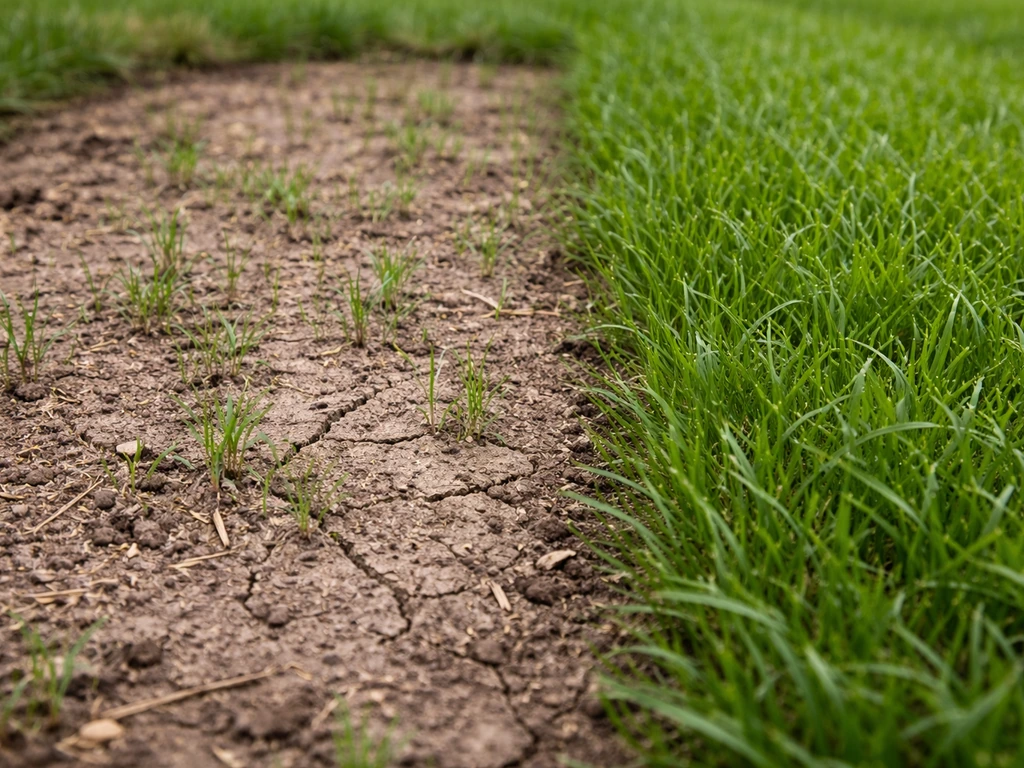
Bare spots after week 3 almost always mean one of three things: the soil dried out during germination, the seed didn't make good contact with the soil, or the area got foot traffic too early. Overseed the bare patches at the same seeding rate you used originally, rake them lightly, and re-establish your twice-daily watering routine for those areas. If bare spots keep appearing in the same location, check for drainage issues. A low spot that stays wet or a high spot that dries out faster than the rest of the green will cause recurring bare patches.
Slow germination
If you're past the expected germination window and very little is coming up, check soil temperature with a cheap probe thermometer. For bermuda and zoysia, if soil is below 65°F, germination will stall. For fescue and ryegrass, below 50°F will slow or stop germination. In either case, you may need to wait for soil temps to come up before you see results. Don't reseed in a panic: the original seed is often still viable and will germinate once conditions improve.
Thin, weak coverage
Thin coverage across the whole green (not just patches) usually points to under-seeding, poor seedbed prep, or too-deep seed burial. If you suspect burial, scratch the surface in a bare area and look for seed sitting more than 1/2 inch down. For a putting green specifically, thin coverage is a compounding problem because you're mowing low, which stresses sparse turf harder. If your coverage is under 70 percent by week 8, overseed the entire green at half the original rate, resume full watering, and hold off on rolling and aggressive mowing until density improves.
Drainage problems showing up after establishment
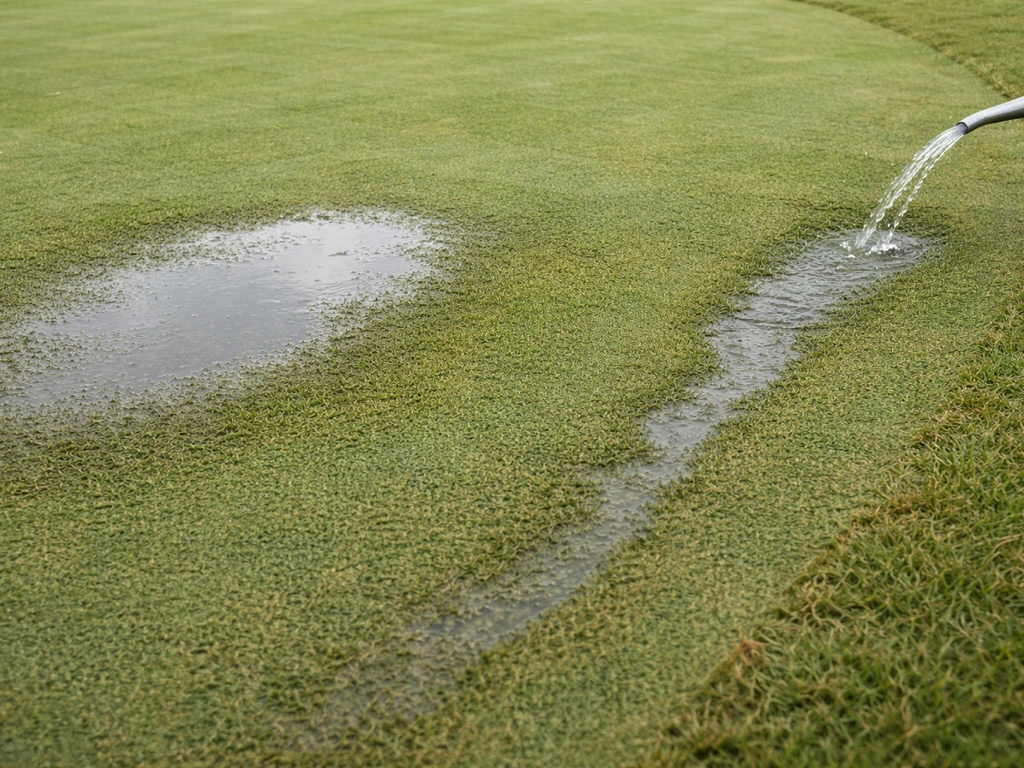
If you see puddles, soggy zones, or algae forming after the green is established, you have a drainage problem that needs to be addressed structurally. Topdressing with sand can help mild cases over time. For persistent standing water, you may need to install a French drain at the perimeter or core aerate the worst spots and backfill with coarse sand to improve infiltration. Ignoring standing water on a putting green leads to disease, moss, and surface softness that ruins ball roll.
Your week-by-week roadmap
- Weeks before seeding: Get a soil test, adjust pH if needed, plan your layout and drainage slope.
- 1 to 2 weeks before seeding: Till and amend soil, grade the subgrade, firm with a roller, eliminate any low spots.
- Seeding day: Apply seed at the correct rate with two perpendicular passes, lightly rake in, roll, and water immediately.
- Days 1 to 14: Water 2 to 3 times daily. No foot traffic. Watch for germination beginning.
- Weeks 2 to 4: Shift to once-daily deeper watering. Do first mowing at correct height. Still no herbicides.
- Weeks 4 to 8: Reduce watering frequency, begin light rolling, hand-pull weeds, gradually lower mowing height toward target.
- Week 8 and beyond: Topdress lightly with sand, apply herbicide if weed pressure is high, assess coverage and overseed any remaining thin areas.
- End of first season: Surface should be dense, firm, and rollable. Maintain low mowing frequency, roll regularly, and fertilize based on your soil test results.
FAQ
What’s the biggest mistake people make when planning how to grow a putting green at home?
Most failures trace to contour and drainage. Even if the grass type is perfect, a low spot that holds water for more than a day or two will create algae and thin turf, so level and slope the footprint before seeding, then recheck with a level after you firm the subgrade.
How do I know my putting green is flat enough for ball roll?
Use a long straightedge or a 6 to 10 foot level bar and check for bumps and dips across multiple directions, not just at the edges. Small windrows from grading can ruin roll, and they show up after the first mowing cycle when you start cutting low.
Should I build a putting green from scratch like the USGA method, or can I amend what I already have?
If your soil is compacted clay or it stays wet, USGA-style excavation with a defined rootzone and drainage is usually the long-term fix. If your yard drains well and just needs texture improvement, simpler till-and-amend methods can work, but you must still prevent standing water anywhere in the footprint.
What’s the right way to test soil pH and nutrients before I plant?
Collect samples after the season’s last mowing, from several spots at consistent depth, then mix into one composite for testing. Follow the lab’s timing advice, because lime and sulfur adjustments usually need months, and applying right before seeding can leave you with an unstable nutrient plan.
Can I seed a putting green in spring instead of fall?
For cool-season grasses (ryegrass, tall fescue), fall seeding typically avoids summer heat and weeds. If you must seed in spring, plan for extra weed control and tighter watering during hot spells, and accept that establishment may be slower due to temperature swings.
How often should I water during germination without drowning the seed?
Keep the top layer consistently moist, not soaked. A practical check is to press a small plug of soil from the edge of the green after watering, if it feels wet and forms a loose ball, you are likely okay, if it feels powder-dry you are behind. If it stays muddy, reduce frequency and increase duration only after the seed has germinated.
What should I do if my seedbed crusts over after watering?
Crusting usually prevents seedlings from emerging. Lightly loosen the surface with a rake tine or small hand cultivator in bare areas only, then re-roll lightly to restore seed-to-soil contact. Avoid deep disturbance, because you can bury remaining seed too far.
How low should I mow during the establishment phase?
Do not jump straight to putting-green height. Start at a higher setting when the grass reaches the 1.5 to 2 times target height, then lower in stages over several mowings, because scalping seedlings leads to thin turf that later takes longer to recover than you expect.
When is it safe to roll the green?
Wait until the turf can handle light foot traffic, usually several weeks after germination, then roll lightly. Roll should smooth surface irregularities, not compact wet soil, so avoid rolling right after heavy watering or rain.
Do I need to topdress right away?
Topdress once the turf has a stable canopy and can tolerate light abrasion. Applying sand too early can bury young seedlings or create uneven sand ridges, so start with thin applications and confirm the green still drains and stays even after mowing.
When can I apply herbicides or fertilizer for weed control?
Pre-emergent herbicides should be excluded during establishment because they interfere with germination. For post-emergent broadleaf products, wait until the turf has been mowed multiple times, and for the first weeks focus on hand removal or careful spot treatment to avoid damaging new grass.
My putting green has bare patches after three weeks, what’s the fastest diagnosis?
Check moisture consistency first by digging a small test hole in a bare patch and a nearby healthy area, then compare soil depth and seed contact. Next check for foot traffic, if the same area gets stepped on, overseed and change your access plan, such as temporary boards or designated walk paths.
If germination stalls, should I reseed immediately?
Not automatically. Use a soil temperature probe to confirm conditions, because ryegrass and fescue slow below roughly the 50°F range, while bermuda and zoysia stall below about 65°F. If temperatures still do not support germination, wait and avoid burying additional seed too deep.
What’s the difference between patchy thin turf and thin coverage across the whole green?
Patchy thinning often points to watering gaps, poor seed-to-soil contact, or localized traffic. Thin coverage everywhere usually indicates under-seeding, seed buried too deeply, or inadequate seedbed preparation, and it often requires a coordinated overseed plan rather than spot fixes.
If water ponds after the green is established, can I fix it with sand alone?
Sand topdressing can help mild micro-low areas, but persistent puddles usually mean an underlying drainage and infiltration problem. If water stands, plan a structural fix such as perimeter drainage, core aeration with coarse sand in the worst zones, and addressing any compaction layers.
Next Article
How to Grow Grass in El Paso TX: Seed, Plant, and Care
Step-by-step guide to grow grass in El Paso: pick Bermuda, Zoysia or fescue, prepare soil, seed timing, watering, fixes.