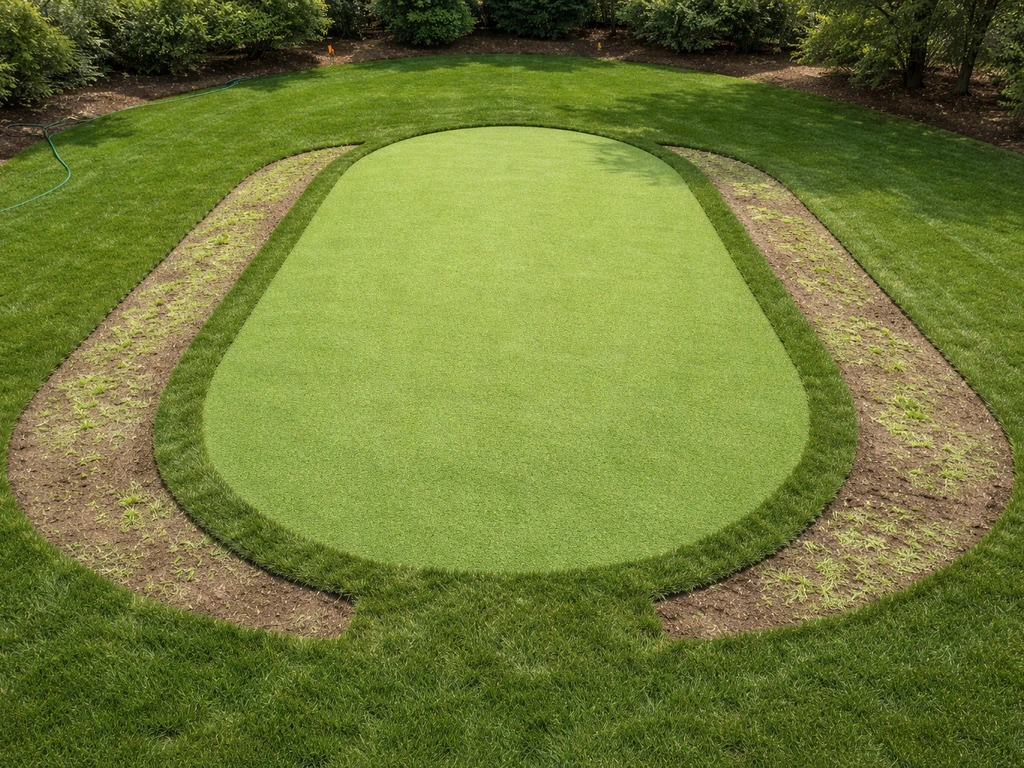
Growing turf grass comes down to four things done in the right order: pick the right grass for your climate, prep the soil before you do anything else, seed or install at the correct time of year, and water consistently during germination. Get those four right and most lawns establish reliably. Skip one and you end up with patchy results, bare spots, and a lot of wasted seed. This guide walks you through every step, including what to do when things go wrong.
How to Grow Turf Grass: Step by Step Guide for Success
Marcus Tillwell
2 Jun 2026
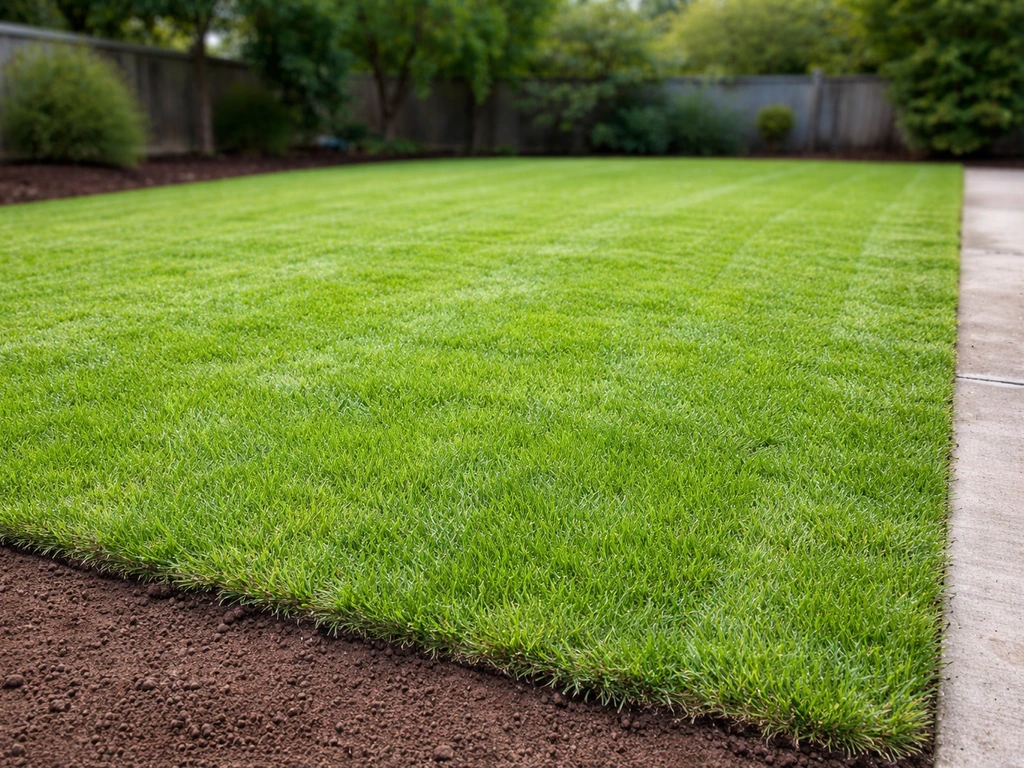
Choose the right turf grass for your climate and conditions
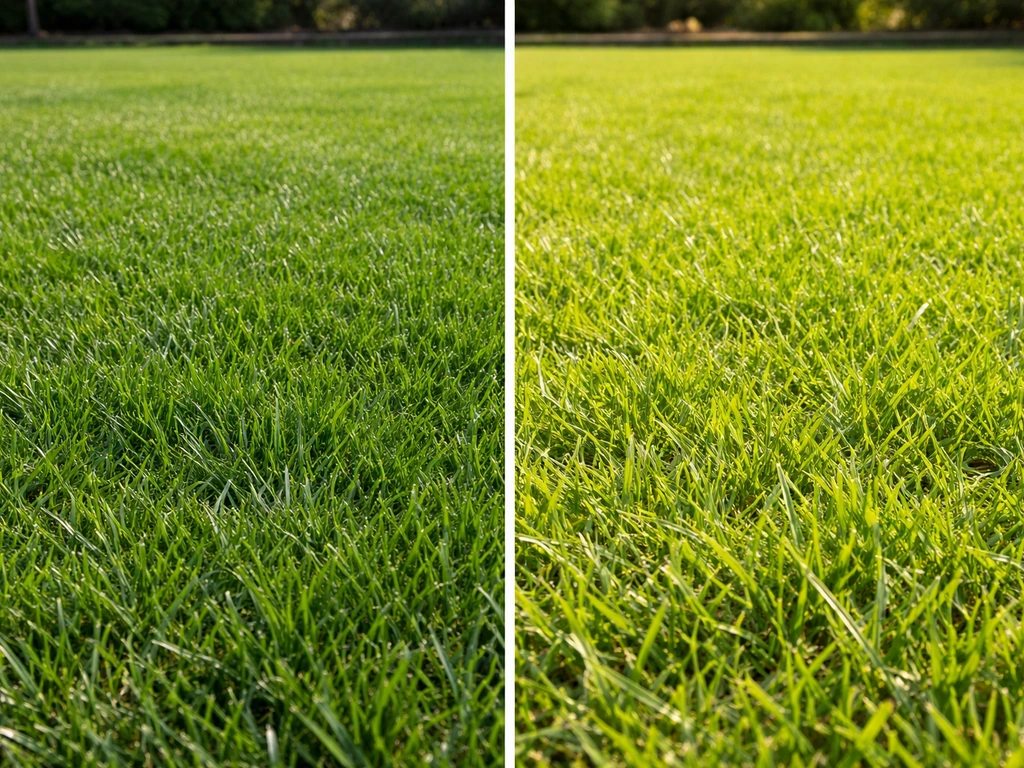
The single biggest mistake homeowners make is buying whatever seed is on sale without checking whether it actually suits their climate. Turf grasses split into two groups: cool-season and warm-season. Cool-season grasses (Kentucky bluegrass, tall fescue, perennial ryegrass, fine fescues) thrive in the northern half of the country and perform best when temperatures are between 60 and 75 degrees. Warm-season grasses (bermudagrass, zoysiagrass, buffalograss) are built for the South and transition zone, growing aggressively in heat and going dormant in winter.
Here is a quick breakdown of the most common varieties and where they actually work:
| Grass Type | Climate Fit | Best Use | Shade Tolerance | Germination Speed |
|---|---|---|---|---|
| Kentucky Bluegrass | Cool-season, Northern US | Dense, high-traffic lawns | Low | 14–30 days |
| Tall Fescue | Cool-season, transition zones | All-purpose, tough lawns | Moderate | 7–12 days |
| Perennial Ryegrass | Cool-season, mild climates | Quick cover, overseeding | Low-moderate | 5–10 days |
| Fine Fescue | Cool-season, Northern US | Shade areas, low maintenance | High | 7–14 days |
| Bermudagrass | Warm-season, Southern US | High-traffic, sun-heavy lawns | Very low | 7–30 days |
| Zoysiagrass | Warm-season, transition zones | Dense, wear-tolerant lawns | Moderate | 10–14 days |
If you have heavy shade, fine fescues are your best bet among the cool-season options. Zoysiagrass handles more shade than bermuda if you are in the South. Pets are hard on grass regardless of variety, but tall fescue and bermuda bounce back faster from wear than bluegrass or fine fescue. For specific high-performance applications like putting greens, fairways, or athletic fields, the grass selection process gets more specialized and the establishment standards are much tighter than a typical home lawn.
For golf fairways specifically, aim for a consistent cool-season or warm-season grass choice matched to your local sunlight and mowing height. Putting greens are a more specialized type of turf project, so you will need stricter establishment and care standards than a typical lawn.
Soil testing and site prep for faster establishment
Do not skip the soil test. It is the cheapest thing you can do to improve your results, and most university extension offices offer testing for $15 to $25. The test tells you your pH and nutrient levels so you are not guessing at lime or fertilizer rates. Tall fescue wants a pH of 5.5 to 6.5. Kentucky bluegrass prefers 6.5 to 7.2. Fine fescues, perennial ryegrass, and turf-type tall fescues tolerate slightly more acidic conditions around 6.0 to 6.5. If your pH is off, your grass will struggle even if you do everything else right. Test annually when you are trying to correct a deficiency or shift pH, since it takes time for amendments to work through the soil.
Fixing clay soil
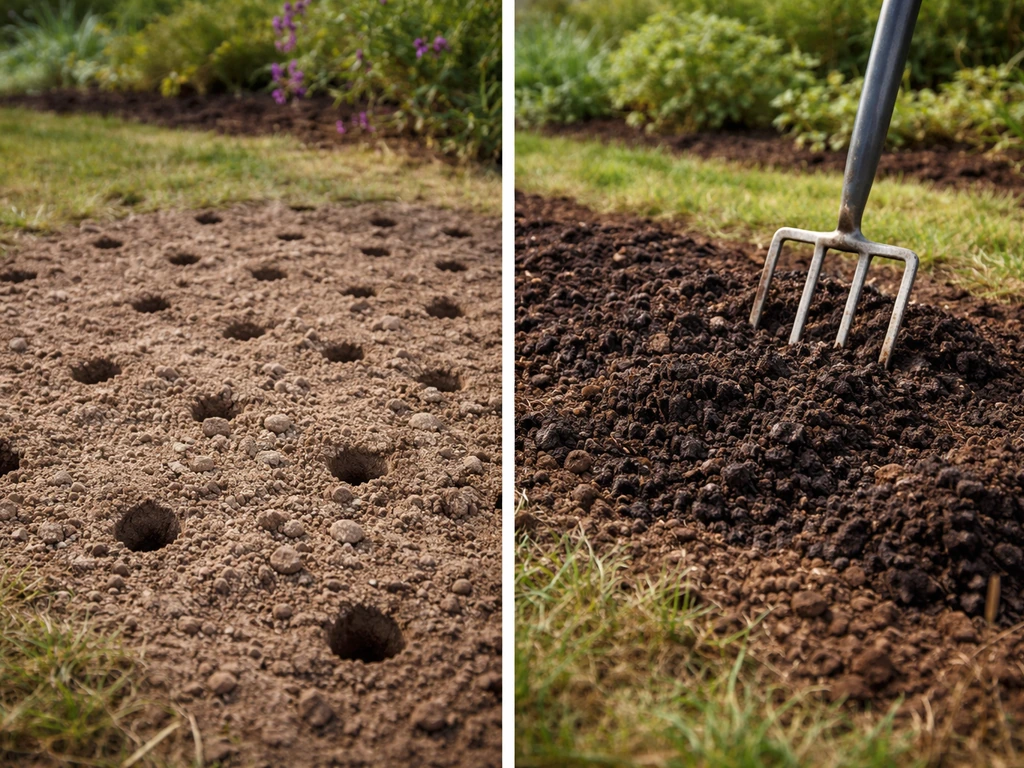
Clay soil compacts easily and drains poorly, which suffocates new roots and washes seed into low spots. Before seeding, till or core-aerate the area and work in compost. Research out of Rutgers found that tillage combined with compost amendments measurably improved bulk density, water content, and turf cover on compacted sandy loam. The same principle applies to clay: break it up, get organic matter in, and you give roots somewhere to go. Aim for 2 to 4 inches of compost worked 4 to 6 inches deep if you are starting from scratch.
Fixing sandy soil
Sandy soil does the opposite: it drains too fast, and both water and nutrients flush through before roots can absorb them. Penn State's establishment guidance specifically recommends adding organic matter to sandy soils to improve water and nutrient retention, which also reduces how often you need to irrigate and fertilize. Compost, decomposed leaves, and well-rotted sawdust all work. Add 3 to 4 inches and till it in before you seed.
Basic site prep steps
- Test your soil pH and nutrients at least 4 to 6 weeks before seeding so you have time to amend
- Kill or remove existing weeds and dead grass. Rake away matted or dead blades so seed makes direct contact with soil
- Grade the area to eliminate low spots where water will pool
- Till or loosen the top 4 to 6 inches, especially on compacted sites
- Work in compost or organic matter based on your soil type
- Apply lime or sulfur if pH needs adjusting, following your soil test recommendation
- Firm the soil surface lightly with a roller or by foot before seeding
Best timing and seeding or installation methods
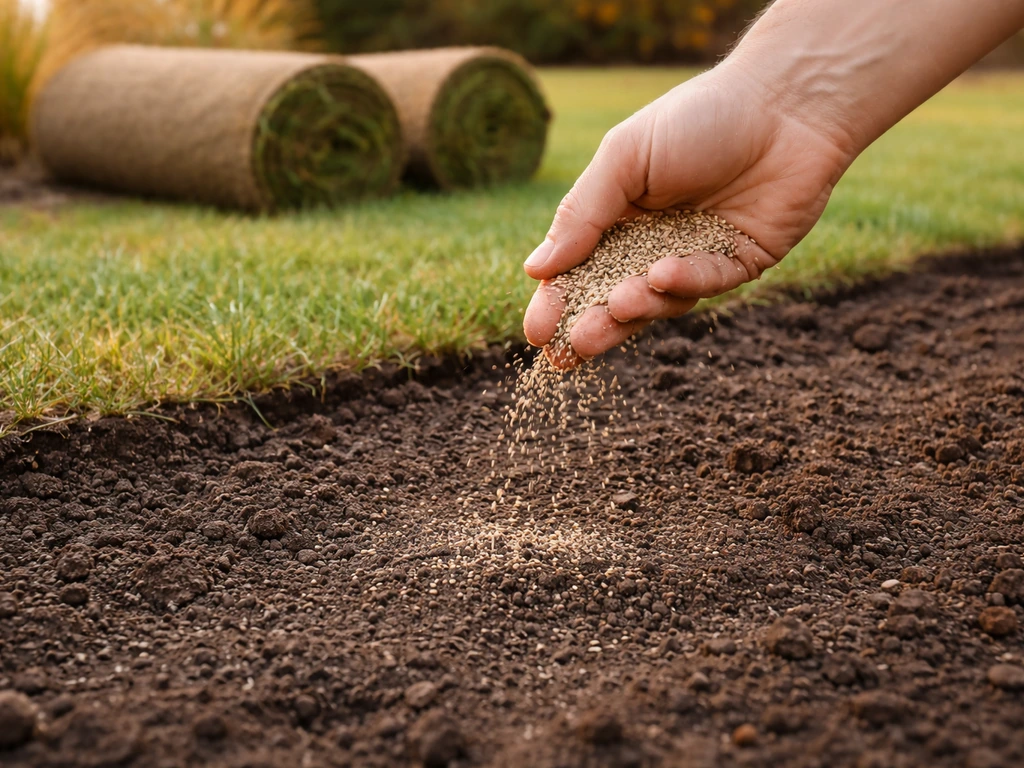
Timing is everything with turf grass. Seed at the wrong time and germination is slow, erratic, or fails entirely because soil temperature does not match what the grass needs.
For cool-season grasses, late summer to early fall is the sweet spot. University of Maryland Extension puts the window at mid-August to mid-October. Soil is still warm from summer, there is less weed competition, and seedlings have months to establish before winter. Spring seeding works but competes with weed germination.
For warm-season grasses, you seed or install during active growing season. These same timing rules also apply when you are learning how to grow field grass, just with more attention to uniform coverage and establishment speed warm-season grasses. MSU Extension places bermudagrass seeding in Mississippi at February to March, when soil temperatures are climbing. Always check local conditions since these windows shift by a few weeks depending on your region.
Seeding methods
Drill seeding (using a slit-seeder) gives you better seed-to-soil contact and lower seed rates. If you are broadcasting by hand or spreader, WSU recommends using about 150 percent of the recommended drill seeding rate to compensate for less consistent placement. Either way, seed depth matters: target 1/4 to 1/2 inch deep. Too shallow and the seed dries out before germination. Too deep and seedlings exhaust themselves pushing through soil before they reach light.
Sodding
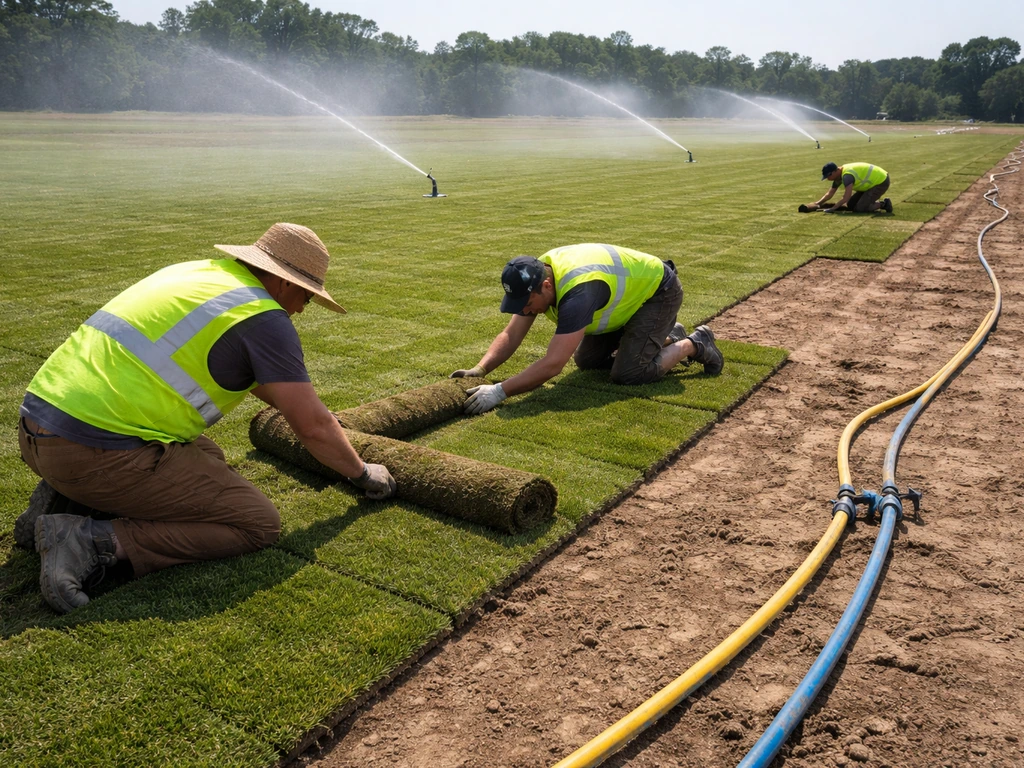
Sodding skips the germination phase entirely and gives you near-instant coverage. It costs more but it is the standard method for warm-season grasses like bermuda and zoysia, which are slow from seed. When laying sod, stagger the seams like brickwork, press each piece firmly against the next, and fill any small gaps between strips with soil. Rolling the sod after installation improves soil contact, which directly affects how quickly roots knit into the ground.
Hydroseeding
Hydroseeding mixes seed, fiber mulch, fertilizer, and a tackifier in a water tank and sprays it as a slurry. It is faster than hand broadcasting over large areas, keeps seed in place on slopes, and the mulch component helps retain moisture. OSU describes it as a practical option for lawn establishment and renovation. It is mostly used by contractors, but rental hydroseeding units exist if you want to DIY a large area.
Watering, fertilizing, and sunlight management
New turf needs water more often than established grass, but that does not mean drowning it. The goal is to keep the seed zone consistently moist without creating standing water or washing seed away.
Watering schedule from day one
Before you seed, water the prepared soil to a depth of 4 to 6 inches to give seeds a moist base to germinate into. Once seed is down, switch to light and frequent irrigation, up to 3 or 4 times per day in hot or windy conditions, keeping just the top inch moist. Once seeds are germinating and producing leaves, reduce frequency and water more deeply to push roots downward.
OSU's establishment research is clear: after germination starts, reducing frequency and increasing depth promotes deeper root development. One important biology note from OSU: once a seed absorbs water and starts germinating, that process is irreversible. If it dries out at that stage, the seedling dies. Do not let the surface crust between waterings during the first two weeks.
Fertilizing at establishment
Use a starter fertilizer at seeding or sod installation. Penn State recommends 0.5 to 1 pound of nitrogen per 1,000 square feet for new turf establishment. Starter fertilizers are higher in phosphorus to support root development. Do not apply a full general-purpose nitrogen fertilizer at seeding because it pushes top growth at the expense of roots and can burn seedlings. Wait until the turf has been mowed two or three times before applying a regular maintenance fertilizer schedule.
Sunlight requirements
Most turf grasses need a minimum of 4 to 6 hours of direct sunlight to establish and fill in. If you are under heavy tree cover or on a north-facing slope, your options narrow significantly. Fine fescues are the most shade-tolerant cool-season option. Zoysiagrass handles partial shade better than bermuda in warm climates. In deep shade (fewer than 3 to 4 hours of direct sun), even tolerant varieties will thin out over time. Trimming low branches to let in more light, or accepting a shade-tolerant ground cover instead, may be the more honest solution.
What to expect during germination and how to not ruin it
Germination timelines vary quite a bit by species. Perennial ryegrass is the fastest at 5 to 10 days. Tall fescue is close behind at 7 to 12 days. Bermudagrass takes 7 to 30 days under ideal conditions, and zoysia takes 10 to 14 days to germinate but 10 to 14 weeks to reach full establishment. Kentucky bluegrass is notoriously slow and can take 14 to 30 days to show up. Do not panic if you do not see anything in the first two weeks with bluegrass.
Do's during germination
- Keep the seed zone consistently moist, especially during the first 10 to 14 days
- Use a light straw mulch or seed-cover product to reduce surface crusting, hold moisture, and protect seed from birds
- Check daily for signs of germination and adjust watering frequency as seedlings appear
- Stay off the area entirely until the new grass reaches mowing height (about 3 to 4 inches)
Don'ts during germination
- Do not let the surface dry out and crust over, even once
- Do not apply pre-emergent herbicide. It will prevent germination
- Do not mow until the grass is tall enough to leave at least 2/3 of the blade after cutting
- Do not apply post-emergent weed killers until the turf has been established for at least 4 to 6 weeks and has been mowed several times
- Do not ignore foot traffic. Rope off the area or post signs if needed
Troubleshooting bare spots, thin turf, clay and sand problems, and shade
If your turf is patchy or not filling in, something specific caused it. Guessing at random fixes wastes time and money. Here is how to diagnose the most common problems.
Persistent bare spots
Bare spots after seeding usually point to one of four causes: poor seed-to-soil contact, drying out during germination, soil compaction blocking root penetration, or buried debris under the surface. University of Maryland Extension recommends raking away any matted or dead blades so new seed contacts bare soil directly. Before reseeding, probe the bare spots with a screwdriver. If it is hard to push in, compaction is the problem. Loosen the area first, then reseed. If the spot keeps dying off after germination, check for subsurface issues like gravel fill, construction debris, or a drainage problem.
Thin turf in heavy-traffic areas
High-traffic zones need a grass that can take it and a regular overseeding program. Bermudagrass and tall fescue recover faster from wear than bluegrass. If you have dogs, the urine burn spots need to be flushed with water immediately after they occur and reseeded regularly. There is no grass variety that is truly immune to repeated concentrated pet traffic, but tall fescue holds up better than most.
Clay soil problems
If you already have established turf on clay and it is thinning out, core aeration is your best tool. Aerate in the fall for cool-season grasses or in late spring for warm-season grasses, then topdress with compost and overseed immediately after. Do this annually for 2 to 3 years and the soil structure will gradually improve.
Sandy soil problems
On sandy sites, the turf dries out faster than it looks. If you are watering but turf is still thin and yellowing, increase your irrigation run time and topdress with compost annually to build organic matter over time. You may need to water more frequently than neighboring lawns on heavier soil until organic matter builds up.
Shade problems
Shade turf fails gradually. First it thins, then bare spots appear, then weeds move in. If fine fescue or zoysia is already thinning under trees, raise your mowing height. Taller grass blades capture more of the limited light. Also reduce nitrogen in heavily shaded areas since soft, fast-growing tissue is more disease-prone with low light. If a full canopy is blocking most light, no grass will win long-term. Ground cover, mulch, or hardscaping may be a better long-term answer for those spots.
Scaling up: growing turf commercially
Commercial turf production and large-scale establishment follow the same biological principles but with tighter standards and higher stakes. Whether you are establishing an athletic field, a commercial property, or growing sod for sale, the core differences come down to precision, equipment, and timing at scale. The same approach is what you use when you’re learning how to grow football field grass.
Soil testing is non-negotiable at scale. On large sites, take multiple soil cores across the field since soil variability across an acre can be significant. Correct pH and nutrient levels uniformly before planting. For seeded bermudagrass at commercial scale, MSU Extension cites seeding rates around 5 to 10 pounds per acre for improved cultivars. Broadcast seeding at commercial scale requires roughly twice that rate to compensate for uneven distribution.
Irrigation management at scale requires a properly designed system. The principle is the same as a home lawn: deep initial watering before seeding, frequent light irrigation during germination, then transitioning to deeper, less frequent cycles as roots establish. University of Tennessee's turfgrass irrigation guidance emphasizes not watering below the root zone, which wastes water and leaches nutrients on commercial sites where inputs are a real cost.
For sprig or plug planting of warm-season grasses like bermuda or zoysia at commercial scale, soil firming is important for establishment. Cultipacking after planting, or using a heavy roller, presses plant material against soil and dramatically improves contact and survival rate. For sod-farm operators or those establishing large sod fields, weed control during establishment is a bigger challenge than for home lawns because scale makes hand-removal impractical. Pre-plant herbicide programs and certified weed-free seed sources are standard practice.
If you are growing turf for specialty applications like golf fairways, putting surfaces, or athletic fields, the establishment process shares a lot with standard turf grass establishment but with much tighter tolerances for uniformity and surface quality. If you are aiming for golf fairways, keep uniform seeding rates, precise watering, and tight maintenance schedules to support consistent density.
Your starting checklist for today
If you want to start moving today, here is the order of operations regardless of your situation:
- Identify your climate zone and pick a grass variety that actually matches it. Cool-season or warm-season is the first decision
- Order or pick up a soil test kit and get a sample in. You need pH and nutrient data before you spend anything on amendments or seed
- Plan your seeding or installation window. Cool-season grasses: mid-August to mid-October. Warm-season grasses: late spring through midsummer when soil is warm
- Prep the site: kill weeds, rake away dead material, grade, till, and amend for your soil type
- Buy seed at the correct rate, add 50 percent to the recommended drill rate if you are broadcasting
- Seed at 1/4 to 1/2 inch depth and firm the surface for good seed-to-soil contact
- Apply starter fertilizer at 0.5 to 1 pound of nitrogen per 1,000 square feet
- Mulch lightly to hold moisture and prevent surface crusting
- Water to 4 to 6 inches depth before seeding, then switch to light and frequent irrigation (up to 3 to 4 times daily) until germination
- Reduce irrigation frequency as seedlings emerge and roots develop deeper into the soil
- Stay off the lawn completely until first mowing, and mow high the first time
Most turf establishment problems trace back to one skipped step or the wrong timing. If your lawn is already in and struggling, go back to the troubleshooting section above and match your symptoms to a cause. Adjust one variable at a time so you know what actually fixed the problem. Turf grass is resilient when it gets what it needs at the right moment.
FAQ
Can I seed or lay sod immediately after adding lime or fertilizer?
Yes, but only after your soil is amended and your irrigation plan can keep the seed zone evenly moist. Lime and fertilizer need time to dissolve and move, so if you spread seed immediately after adjusting pH or adding nutrients, you risk uneven results and wasted inputs. A practical approach is to complete soil test corrections first, lightly rework the surface, then seed within a short window once the soil is settled enough for good seed-to-soil contact.
How do I know if my watering schedule is actually enough?
The “right” amount depends on whether your goal is germination versus root growth. During germination, water to keep the top inch moist but avoid puddles or runoff, then later water deeper with less frequent cycles to drive roots down. A simple check is to probe the soil 2 to 4 hours after watering, if it stays wet at that depth you are using enough water, if it is dry the next morning you need longer run time, not more frequent short cycles.
What signs mean I am overwatering during turf establishment?
It can be, especially in wet climates or on heavy clay. If you see algae, persistent puddling, sour odors, or seedlings that rot before sprouting, reduce frequency and improve drainage or aeration. Standing water also increases disease risk. The key is consistent moisture at the seed zone, not a constantly saturated surface.
Should I roll or cover after seeding, and how does seed depth affect success?
For many lawns, the best target is to lightly water first to settle the surface, then seed, then cover with the recommended depth (1/4 to 1/2 inch) and keep that zone moist. If you bury seed too deep you slow or stop emergence, if you leave it too shallow it dries out. Also avoid rolling immediately after seeding unless you are sure your seed depth and soil contact are correct, because pressing too hard on loose soil can bury seed deeper than planned.
When can I mow new turf, and how does mowing affect fertilizer timing?
Mowing timing is about establishment, not the calendar. Wait until seedlings have rooted and the grass blades can be cut without tearing or pulling up the plant, then mow high enough to avoid scalping (especially on cool-season lawns). The article mentions waiting before switching to a maintenance fertilizer plan, as a practical rule, plan your first mow before any later fertilizer applications and only after the turf looks stable.
Is it okay to seed outside the recommended window if I can water a lot?
Yes, but it must be planned around temperature and your grass type. Cool-season lawns generally do better in late summer through fall, warm-season lawns in active growth periods. If you try to seed outside the window, you may get weak or patchy stands even with perfect soil prep and watering, because soil temperature slows germination or causes seedlings to fail before they establish roots.
What should I do about pet damage so it does not keep creating bare spots?
Pet urine burn is not just a cosmetic issue, it creates concentrated nitrogen salts that kill tissue. Flush the area with plenty of water right after incidents to dilute the salts, then plan for regular overseeding in high-traffic zones. Over time, tall fescue and bermuda tend to recover faster than bluegrass, but no grass is immune to repeated concentrated traffic.
My lawn has bare spots after seeding, how can I tell if it is compaction versus moisture or debris?
If bare spots are hard to fix with reseeding, the next step is to diagnose soil and subgrade problems. Probe with a screwdriver to check compaction, and look for buried debris or drainage problems if areas keep dying off after sprouting. If the soil is hard, core aerate or loosen first, then reseed, because seed over compacted ground often germinates but cannot develop roots.
How much shade can turf actually handle before it is a losing battle?
Use sunlight hours as a decision tool, not just a guess. If the site gets fewer than about 3 to 4 hours of direct sun, even shade-tolerant grasses will thin over time. Before you spend on repeated overseeding, consider raising the mowing height, reducing nitrogen in deep shade, and accepting that ground cover or mulch may be a better long-term solution for the darkest areas.
Why does my turf look under-watered even when I run the sprinkler, especially on sandy soil?
For sandy soils, you can often fix “watering but still thin” by changing the organic matter strategy, not just turning the sprinklers on longer. Topdress with compost annually to build water-holding capacity, then adjust irrigation run time and frequency to match how fast the seed zone dries. Expect you may need more frequent watering at first, but the goal is to gradually reduce how often you irrigate as the soil improves.
What is the best way to deal with weeds while my new turf is establishing?
If weeds are popping up during establishment, the fix depends on the cause. If germination and watering were inconsistent, weeds can capitalize on open bare soil, and topping up with seed and maintaining correct moisture can crowd them out. For difficult weed pressure, especially at commercial scale, pre-plant herbicide programs and certified weed-free seed sources are standard, but for home lawns you typically focus first on timing, seed-to-soil contact, and consistent early care.
What changes when you try to establish turf at a commercial or large property scale?
At scale, you can lose uniformity even if the biology is correct. You need multiple soil samples across the site, ensure consistent pH and nutrient corrections, and manage irrigation so water reaches only the root zone. Also plan for equipment-driven placement, drill seeding versus broadcasting rate differences, and weed control strategies that are feasible for large areas.
Next Article
How to Grow a Putting Green Step by Step at Home
Step-by-step guide to grow a backyard putting green, choose grass, prep soil, seed, water, and fix common bare or thin s