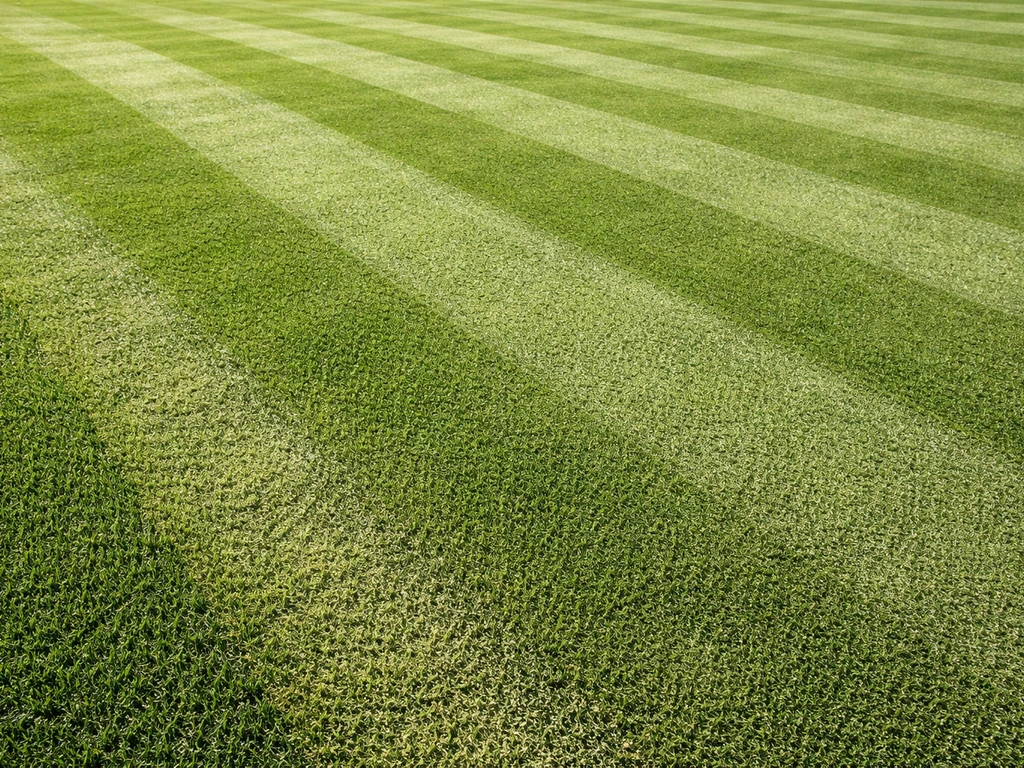
Growing natural grass means building healthy soil first, picking the right seed for your climate, and feeding the lawn with organic matter instead of synthetic chemicals. Do those three things well and you'll get thick, green coverage without a bag of granular fertilizer or a bottle of herbicide in sight. It takes a little more patience than the conventional approach, but the results last longer and the lawn actually improves year over year.
How to Grow Natural Grass: Step-by-Step Organic Lawn Guide
Marcus Tillwell
16 Jun 2026
What "growing grass naturally" actually means
People use the phrase "natural grass" to mean a few different things. Sometimes it just means real turf instead of artificial. Other times it means growing grass without synthetic fertilizers, pesticides, or herbicides. This guide is about the second definition: a genuinely organic approach where you rely on soil biology, compost, and cultural practices to grow a thick, real lawn.
The organic approach, as defined by NC State Extension, uses biological, cultural, manual, and mechanical options but leaves out synthetic chemical controls. That means no glyphosate, no synthetic preemergent herbicides, and no quick-release nitrogen spikes. What it does mean is feeding the soil with compost, managing weeds by hand or with properly timed organic products, and choosing grass varieties that are genuinely suited to your conditions. The University of New Hampshire Extension also points out something worth knowing: if a soil test shows you don't have a nutrient deficiency, you may not need to fertilize at all, even organically. The goal is to work with what's already there rather than adding more.
One more thing: "natural" doesn't mean "low effort at the start." The prep work is actually more important with this approach because you can't compensate for poor soil with a chemical fix later. Get the foundation right and the lawn largely takes care of itself.
Prep your site properly before a single seed goes in
Site preparation is where most people fail. They scatter seed on compacted, pH-wrong, weed-infested ground and wonder why nothing grows. Here's how to do it right, naturally. If you want the clearest roadmap, follow the steps in this guide on timing, seeding rates, and post-seeding care.
Get a soil test first
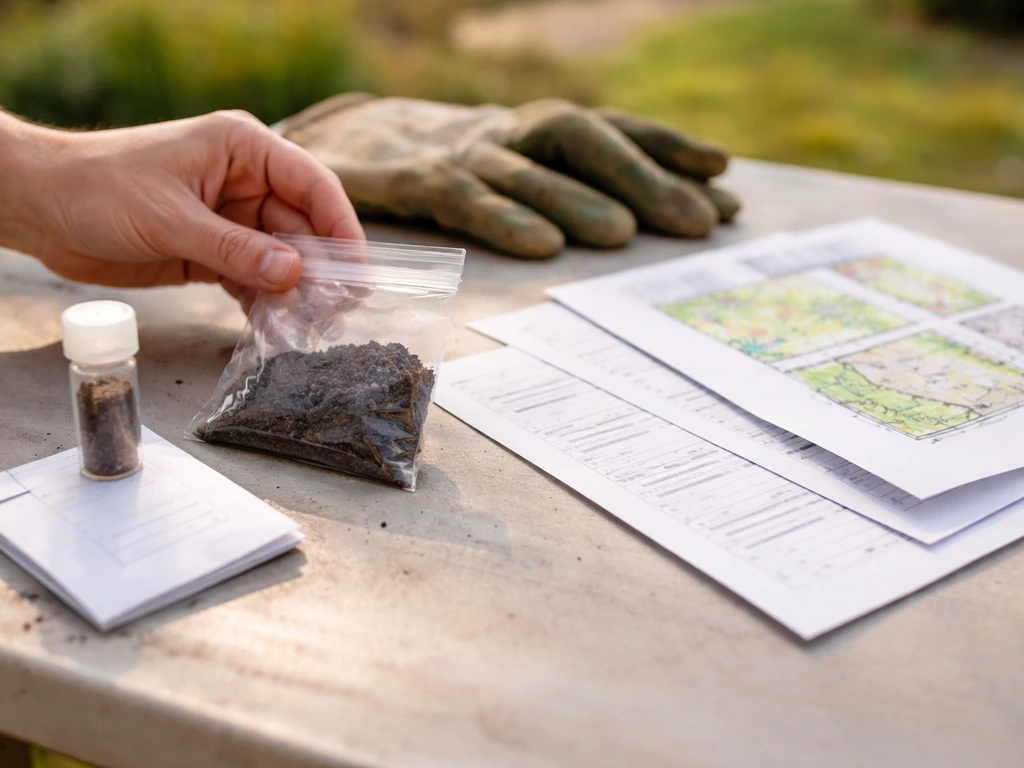
A soil test is the single most useful thing you can do before spending money on seed or amendments. It tells you your pH, phosphorus, potassium, and organic matter levels. Most university extension labs charge $15 to $25 and give you specific amendment recommendations. The ideal pH for turfgrasses is 6.
0 to 7. 0, with Kentucky bluegrass preferring the slightly higher end, around 6. 5 to 7. 2.
If your pH is off, nutrients lock up in the soil and grass struggles even when everything else is right. To raise a low pH naturally, add pelletized lime. The University of Missouri Extension recommends tilling lime into the soil at establishment rather than applying it on top, because it moves very slowly through the soil profile.
Aerate and loosen the soil
If the ground is compacted, seed won't make good contact and roots won't develop. Rent a core aerator for large areas or use a hand aerator for smaller patches. For a new lawn, go over the area six to eight times in different directions if you can. If you're just overseeding thin turf, two or three passes is usually enough. Utah State Extension notes that aerification is most effective during active growth periods, so aim for early fall for cool-season grasses or late spring for warm-season types.
Control weeds without chemicals
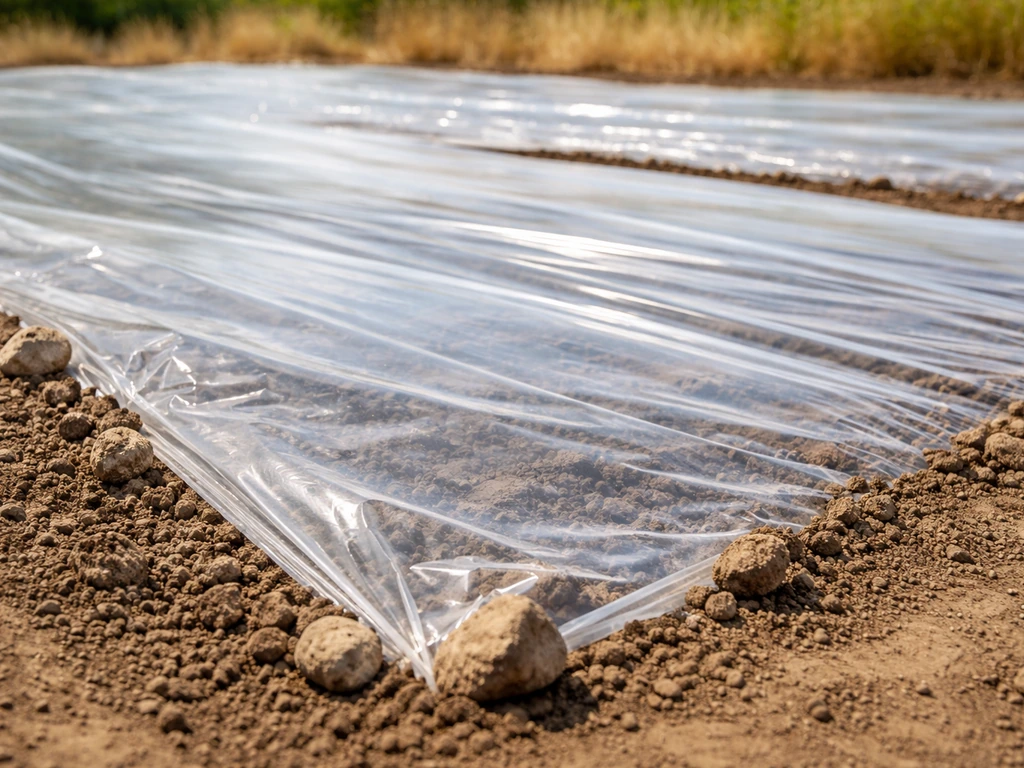
For a new area, solarization is a genuinely effective non-chemical option. Lay clear plastic sheeting over the prepared soil for four to six weeks in summer heat. The trapped heat kills weed seeds and soil pathogens near the surface. UMN Extension backs this up as a legitimate non-chemical prep method.
One catch: you need to avoid disturbing the soil much after solarization, since buried weed seeds will come back to the surface. For existing thin lawns, hand-pulling weeds before overseeding is the most reliable approach. Corn gluten meal is often marketed as an organic preemergent, but be realistic: University of Nebraska Extension notes it may take multiple years of consistent applications to get weed suppression comparable to synthetic products, and UMD Extension doesn't recommend it for lawn use at all.
Your best long-term weed defense is actually dense, healthy grass.
Picking the right grass seed for your conditions
Choosing the wrong grass is one of the most common reasons natural lawns fail. No amount of organic care fixes a grass that doesn't belong in your climate or soil type. Here's a practical breakdown of the most common options.
| Grass Type | Climate | Sun/Shade | Soil Tolerance | Best For |
|---|---|---|---|---|
| Tall Fescue | Cool-season (transition zones included) | Full sun to moderate shade | Clay and drought | Most homeowners in the mid-Atlantic, South, and Midwest |
| Kentucky Bluegrass | Cool-season (northern US) | Full sun | Well-draining loam | Lush, dense lawns in cooler climates |
| Perennial Ryegrass | Cool-season, fast establishment | Full sun to light shade | Most soil types | Overseeding, quick cover, high-traffic areas |
| Bermudagrass | Warm-season (South, Southwest) | Full sun | Sand and clay | Hot climates, wear-tolerant lawns |
| Zoysiagrass | Warm-season (South to transition zone) | Full sun to light shade | Wide range | Low-maintenance warm-season lawns |
| Fine Fescue | Cool-season | Shade to full sun | Sandy, low-fertility | Shaded areas, low-input natural lawns |
Tall fescue is probably the most forgiving choice for homeowners in the transition zone and much of the South. It handles clay, tolerates some shade, and germinates reliably. Perennial ryegrass germinates faster than almost anything else, which makes it great for filling bare spots quickly. For pure warm-season climates, bermudagrass is tough and dense but needs full sun to thrive. Zoysiagrass takes longer to establish but is remarkably low-maintenance once it's in. Fine fescue is your best bet for shaded areas or low-fertility sandy soils where other grasses thin out.
One important note: buy high-quality seed. Penn State Extension is direct about this: low-purity seed with high weed seed content leads to thin, weedy lawns that are harder to manage without chemicals. Look for seed with germination rates above 85% and weed seed content below 0.5% on the label. Cheap seed is genuinely more expensive in the long run.
When and how to plant: timing, seeding rates, and getting seed into the ground
Timing your planting
Timing is probably the single biggest factor in whether your seed establishes or fails. For cool-season grasses like fescue, bluegrass, and ryegrass, late summer to early fall is the best window. If you want to know how to grow fairway grass specifically, the timing and soil prep principles are similar, but the grass choice and mowing height matter most Late summer to early fall.
Virginia Cooperative Extension puts the optimal range at September through mid-October for most of the mid-Atlantic and similar climates. The soil is still warm enough to drive germination, but air temperatures are cooling down so the seedlings don't stress in heat. Spring planting (April to May) can work but you're racing against summer heat and weed competition. Nebraska Extension recommends August 15 to September 15 for overseeding cool-season lawns in the Midwest.
For warm-season grasses like bermuda and zoysia, you're planting in late spring to early summer when soil temps hit 65°F or above. That typically means May through June depending on your location. Bermudagrass seed germinates in 7 to 21 days with adequate moisture, according to NC State Extension, which is on the slower end, so plan accordingly.
Seeding rates and how to apply seed
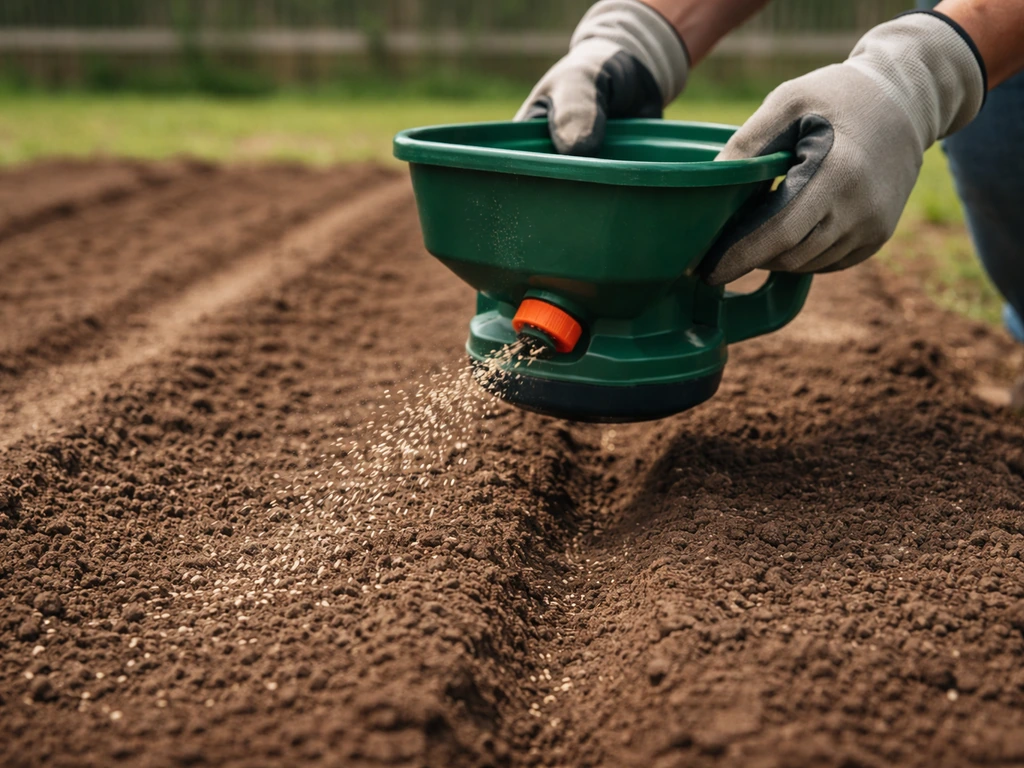
Use the right amount of seed. Too little and you get thin coverage. Too much and seedlings compete with each other. For tall fescue, Virginia Cooperative Extension recommends around 6 to 8 lbs per 1,000 sq ft for new establishment.
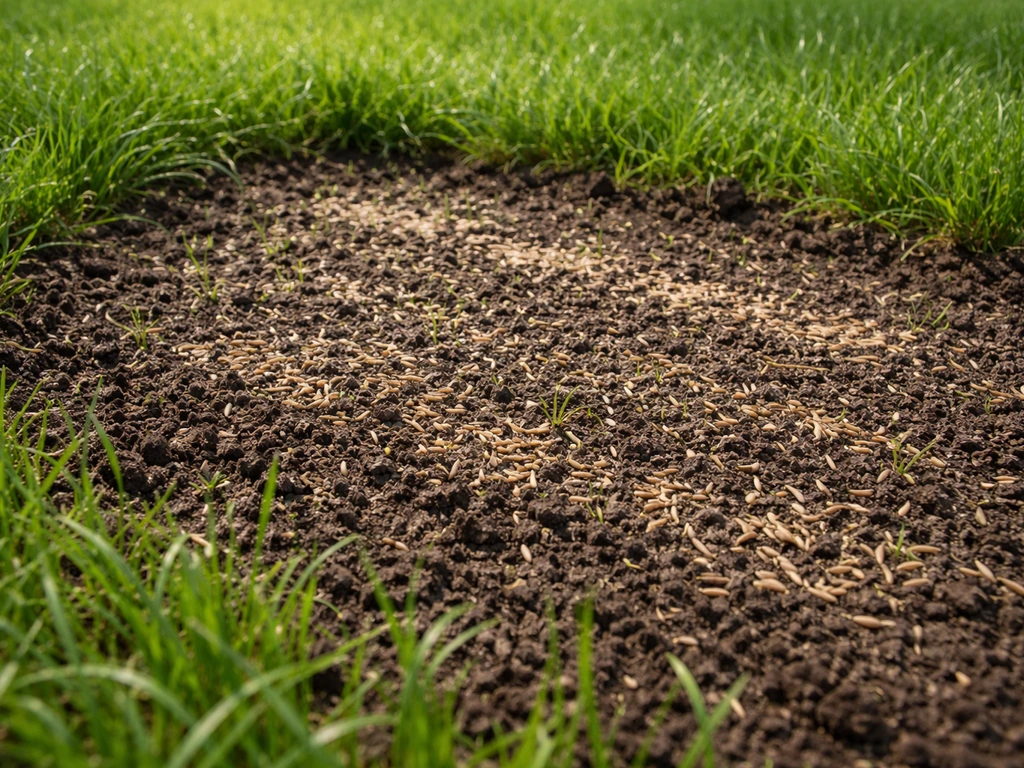
Perennial ryegrass for overseeding runs 8 to 12 lbs per 1,000 sq ft. The goal, per Penn State Extension, is roughly 1,000 to 2,000 seedlings per square foot of lawn. Spread seed with a broadcast spreader for large areas or by hand for small patches. After spreading, rake lightly to press seed into the soil surface without burying it.
UMD Extension is clear on this: many grasses need light to germinate, so don't bury the seed, just get it in contact with soil.
Topdress with compost after seeding
Topdressing is one of the best natural things you can do at seeding time. Apply a thin layer of compost (about a quarter-inch) over the seeded area. It improves soil-to-seed contact, retains moisture, and feeds the emerging seedlings with slow-release organic nutrients. UNH Extension notes that topdressing increases organic matter and stimulates microbial activity, but cautions to use compost from a reliable source to avoid introducing weed seeds. Finished compost from a municipal facility or a well-made backyard pile works well. Avoid raw manure at seeding time.
Watering schedule after seeding
The number one reason seeds fail is drying out before germination finishes. OSU Extension advises soaking the seeded area immediately after planting, then watering at least once daily for the first two weeks. The goal is to keep the seed consistently moist, not waterlogged. In hot or windy weather, that might mean two short waterings per day.
Once you see consistent germination and seedlings are about an inch tall, back off to deeper, less frequent watering to encourage roots to grow down. Virginia Cooperative Extension makes a useful point: if you can't commit to daily watering once germination starts, it may be better to wait for a time when you can, because letting newly germinated seedlings dry out kills them quickly.
Natural ways to build thick, green grass growth
Feed with compost and organic fertilizers
Once the lawn is established, organic fertilizers are your main nutrient source. UC ANR describes natural organic fertilizers as products derived from plant or animal materials that contain meaningful levels of nitrogen, phosphorus, and potassium. The key difference from synthetic fertilizers is release speed. Organic nitrogen mineralizes slowly through soil microbial activity, meaning it's gentler on seedlings, builds soil biology over time, and is much less likely to burn.
Cornell University notes that nitrogen sources differ in how they affect burn potential, including that organic nitrogen typically releases more slowly than synthetic nitrogen and carries different risk profiles Organic nitrogen mineralizes slowly through soil microbial activity.
The tradeoff is that results aren't as immediate. UW-Extension backs this up: organic fertilizers add organic carbon and improve soil structure long term, but you need to be consistent and patient.
Good organic fertilizer options include feather meal, blood meal (higher nitrogen), bone meal (phosphorus), kelp meal, and composted poultry manure. Apply based on your soil test results, not on a generic schedule. And don't overapply: UNH Extension notes that state lawn fertilizer laws can limit nitrogen and phosphorus applications regardless of whether the source is organic or synthetic.
Leave your clippings on the lawn
Grasscycling, meaning leaving clippings on the lawn after mowing, is one of the easiest free things you can do. UF/IFAS reports that returning clippings to the lawn can supply nitrogen equivalent to roughly one to two fertilizer applications per year. UConn Extension adds that it can supply about a third of the lawn's total nitrogen need over time. The clippings break down quickly when you mow regularly and don't let the grass get too long before cutting.
Mow correctly and consistently
Mow at the right height for your grass type and never remove more than one-third of the blade at once. Tall fescue and most cool-season grasses do best kept at 3 to 4 inches. Bermudagrass can be cut shorter, around 1 to 2 inches. Mowing too short stresses the grass, thins it out, and opens the door for weeds. A sharp mower blade makes a real difference too: ragged cuts leave grass vulnerable to disease.
Annual compost topdressing
Once a year in fall (for cool-season grasses) or spring (for warm-season grasses), topdress the lawn with a thin layer of screened compost, about a quarter-inch. This is a long-game strategy. It slowly raises organic matter levels, improves water retention in sandy soils, improves drainage in clay soils, and feeds the microbial life that makes nutrients available to grass roots. It's not a dramatic overnight fix, but over three to five years the difference in soil quality is significant.
Growing natural grass in specific conditions
Clay soil
Clay holds nutrients well but compacts easily and drains poorly. If your soil is clay, core aeration every fall is essential. Work compost into the holes left by the aerator rather than just spreading on top. Over several seasons this genuinely changes the soil structure. Tall fescue is a strong choice for clay because it tolerates compaction better than most grasses. Avoid overwatering clay soils: they stay wet longer and root rot is a real risk.
Sandy soil
Sandy soil drains fast, which means it dries out between waterings and doesn't hold nutrients well. Organic matter additions are critical here: compost topdressing every year builds the water and nutrient-holding capacity over time. Fine fescue performs particularly well in sandy, low-fertility conditions. Bermudagrass also handles sandy soil naturally. You'll need to water more frequently at establishment in sandy soil, and organic fertilizer applications may need to be split into more frequent, smaller doses since nutrients leach through faster.
Shaded areas
Shade is one of the hardest problems in lawn care. Most grasses need at least four to six hours of direct sun. In partial shade, fine fescue blends are your best natural option: they tolerate low light better than any other common turfgrass. Tall fescue handles moderate shade reasonably well. Bermudagrass and zoysia really struggle in shade and will thin out no matter what you do. In deep shade under trees, consider whether ground cover plants might be a better long-term choice than grass. If you do try to grow grass in shade, raise your mowing height by at least half an inch compared to sunny areas, and reduce foot traffic since shaded grass recovers more slowly.
Bare spots and garden bed edges
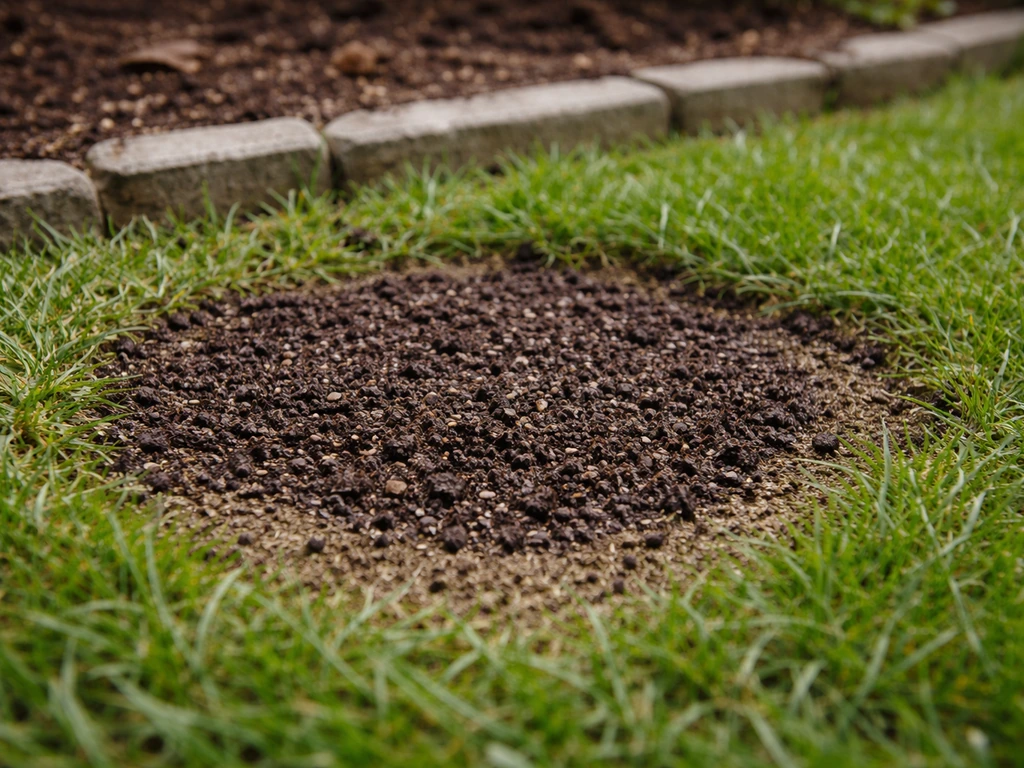
Bare spots in an established lawn usually have an underlying cause: compaction, buried debris, shade, disease, or pet damage. Fix the cause before reseeding or the spot will come back bare. For small bare spots, scratch the surface with a hand rake, apply a thin layer of compost, scatter seed at roughly double the normal rate, and keep it consistently moist. For grass in or around garden beds, use a clear physical edge (steel or plastic edging) to prevent grass from creeping into the beds while also stopping mulch from smothering the grass edge.
Growing natural grass as part of a garden
If you want grass in a garden setting rather than a traditional full lawn, the same principles apply but scale down nicely. Small grass areas between garden beds can be seeded and managed the same way: good soil prep, right variety for the light conditions, compost topdressing, and consistent moisture at establishment. Fine fescue or perennial ryegrass works well for smaller ornamental grass areas because they stay relatively compact and look tidy without aggressive spreading. The organic approach is especially well-suited here since you want to avoid chemical runoff near food plants or ornamentals.
Germination timelines and what to expect
Knowing what's normal saves a lot of anxiety. Here's a realistic timeline for what to expect after seeding.
| Grass Type | Germination Timeline | Usable Coverage |
|---|---|---|
| Perennial Ryegrass | 5 to 10 days | 3 to 4 weeks |
| Tall Fescue | 7 to 14 days | 4 to 6 weeks |
| Kentucky Bluegrass | 14 to 21 days | 6 to 8 weeks |
| Bermudagrass | 7 to 21 days | 4 to 8 weeks |
| Zoysiagrass | 14 to 21 days | 6 to 12 weeks |
| Fine Fescue | 7 to 14 days | 4 to 6 weeks |
UMD Extension puts general lawn seed germination at about two weeks, which lines up with the middle of these ranges. UMD Extension also notes that killing frosts can occur in November and may harm young seedlings UMD Extension puts general lawn seed germination at about two weeks. Kentucky bluegrass is slow, which surprises a lot of people who see nothing for three weeks and assume the seed failed. Warm-season grasses like bermuda and zoysia slow down significantly if soil temperatures drop. If you seed in the right window and keep the seed moist, germination will happen. If you stop watering for even two or three days before germination is complete, you can lose the whole planting.
Troubleshooting: why grass won't grow or stays thin
If your grass isn't establishing, one of these is almost certainly the reason. Penn State Extension and WSU Extension both identify the most common seeding failures:
- Seed dried out before or during germination: the most common cause. You need consistent moisture for the full germination period, not just the first day or two.
- Seed buried too deep: many grass seeds need light to germinate. Raking seed in lightly is fine; covering it with more than a quarter-inch of soil is not.
- Wrong timing: seeding cool-season grass in midsummer or warm-season grass in fall leads to failure almost every time.
- pH is off: even good seed in well-prepared soil won't thrive if pH is below 5.5 or above 7.5. This requires a soil test to diagnose.
- Heavy shade: if the area gets less than four hours of sun and you've planted a sun-loving variety, the grass will always be thin.
- Poor-quality seed: low germination rates and weed seed contamination mean you're setting yourself up for a thin, weedy result before you even start.
- Thatch buildup: in existing lawns, a thick thatch layer prevents seed from reaching soil. Dethatch before overseeding.
- Drought or heat stress after germination: seedlings that just emerged are vulnerable. Losing irrigation consistency after they sprout but before they're established kills them fast.
Patching, overseeding, and keeping it going long term
A natural lawn improves year over year if you treat it as a long-term project rather than a one-time fix. Annual overseeding is one of the most effective tools for thickening coverage without chemicals. Penn State Extension describes overseeding after aeration as a standard practice that can be done in late winter, spring, or early fall. For most homeowners with cool-season grass, fall overseeding after aerating is the highest-value annual task you can do.
One thing to skip: Iowa State Extension makes it clear that trying to thicken your lawn by letting grass go to seed naturally doesn't work reliably. The resulting seed often has poor germination, and thin turf in the meantime invites weed invasion. Deliberate overseeding with quality seed is the effective version of this idea.
For long-term maintenance without chemicals, the routine looks like this: soil test every two to three years and amend based on results, topdress with compost annually, overseed thin areas every fall, leave clippings on the lawn, mow at the right height, and water deeply but infrequently once the lawn is established. It sounds like a lot written out but most of it is low-effort once the initial establishment work is done. The payoff is a lawn that gets progressively healthier, more weed-resistant, and lower-maintenance every season.
If you're interested in taking the natural grass approach into more specialized territory, many of the same principles apply whether you're growing turf grass for a sports field, a home putting green, or a fairway-style lawn. The core of it is always the same: right variety, healthy soil, and patient, consistent care.
FAQ
Can I get a truly chemical-free lawn, including no herbicides?
Yes, but you need to stay realistic about weed control. “Organic” lawns still use non-synthetic tools, like hand weeding, mowing, properly timed overseeding, and (in some cases) targeted organic herbicide products where allowed. If you rely on organic inputs only and do nothing about weeds during the seedling window, weeds can outcompete young grass even if your compost and fertilizing are perfect.
What should I do if my soil test shows no nutrient deficiency?
Not usually. If your soil test shows pH and nutrient levels are already in range, extra organic fertilizer can still cause problems, especially phosphorus in areas with lawn fertilizer limits. Instead, focus on compost topdressing, correcting pH (if needed), and improving mowing and watering, since those steps drive growth even when nutrients are adequate.
When should I reseed a patch versus renovate the whole lawn?
If the lawn is failing because of poor seedbed conditions, resodding or reseeding won’t fix it. The decision rule is simple: if you have compacted soil or persistent weed pressure, aerate, topdress, and seed again, rather than just adding more seed. If you have bare areas caused by shade or drainage problems, you may be better off adjusting grass type or improving drainage before you spend on seed.
Can I topdress with any compost when seeding?
Check the label before “going organic” because some products are not suitable for lawn seeding periods. For example, compost from an unreliable source can introduce weed seeds, and raw manure is risky around germinating grass. Use screened, finished compost and follow application rates, especially if you are spreading it right after seeding.
How do I change watering after my seed starts to sprout?
Follow up watering based on germination progress, not the calendar. Once you see steady germination and the seedlings are about an inch tall, switch from frequent “keep it moist” watering to deeper watering less often, otherwise seedlings can remain shallow and more prone to drying and disease.
Is corn gluten meal a reliable organic preemergent for lawns?
Be careful with “organic” weed preventers. Corn gluten meal may require repeated applications over multiple years to see meaningful suppression, and some extension guidance discourages lawn use. If you need predictable results this season, prioritize dense turf (seed at correct rate), fall overseeding, proper mowing height, and targeted hand control.
What’s the best time to seed if I missed the ideal window?
It depends on the grass type and your climate. For cool-season lawns, fall overseeding after aeration is often the highest value. For warm-season lawns, seeding too early usually leads to weak establishment, especially if soil temperatures are still below the level for germination. If your schedule forces a borderline planting date, choose the grass variety that matches your warm or cool-season window and adjust expectations.
Do I need to remove weeds before overseeding organically?
You can’t usually “seed onto weeds” and expect success. Many weeds have persistent seed banks or fast growth, so remove what you can before seeding (hand pulling for small areas, solarization for some prep). Then seed into a clean, firm seedbed, and keep seedlings evenly moist long enough for germination to finish.
How can I make sure I’m using the right amount of seed?
Measure it. Many homeowners overestimate how much seed they have spread, especially on irregular areas. Use the recommended pounds per 1,000 square feet for your grass and overseeding goal, then calibrate a broadcast spreader (or measure by hand with a simple area breakdown) to avoid thin coverage or excessive seeding that creates competition.
What mowing mistakes most often sabotage natural grass lawns?
Sharp mower blades help prevent disease and uneven cuts, but mowing height matters more. Never scalp, and avoid removing more than one-third of the blade in a single mowing. After establishment, consistent mowing at the correct height promotes density, which is one of your best weed barriers.
Will increasing mowing height alone fix a shady lawn?
Raised mowing height in shade is a good start, but you may still need to rethink the grass choice. Fine fescue blends can hold up better in low light, tall fescue tolerates moderate shade, and bermudagrass or zoysiagrass typically thin in shade over time. Also reduce foot traffic, since recovery is slower when light is limited.
How do I identify the real reason for bare spots before reseeding?
Start with the cause. If the soil is compacted, fix it with aeration, then topdress into the holes. If drainage is poor, address soil structure and water timing. If bare spots are pet related, treat the underlying issue (for example, adjust traffic routes and avoid repeated wet urine spots), then re-seed only after conditions improve.
Why is my warm-season seed germinating slowly or patchy?
If warm-season grasses are failing due to low soil temperature, you may see slow or uneven germination regardless of fertilizer. For bermuda and zoysia, aim for planting when soil temperatures are high enough, keep moisture consistent during the germination window, and expect that establishment can take longer than cool-season grasses.
Do I need to overseed every year even if my lawn looks full?
Annual overseeding is most helpful when you have an actively thinning lawn, not when the turf is already dense. If you’re thick and healthy, prioritize soil tests, compost topdressing, and spot renovation. Overseeding is best targeted to aerated, thin areas so you’re not wasting seed on areas that already have adequate coverage.
Next Article
How to Grow Golf Course Grass: Step by Step Guide
Step-by-step plan to grow dense golf-course grass, from soil prep and grass choice to seed, watering, mowing, and mainte