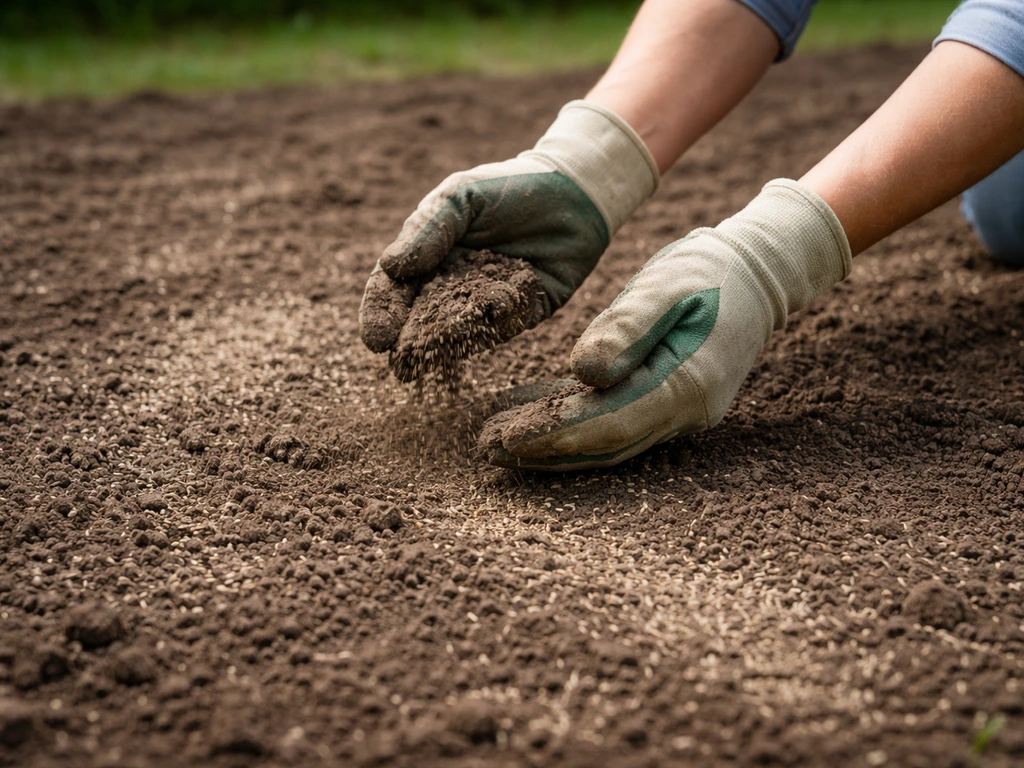
Golf course turf gets its dense, even, almost carpet-like look from three things working together: the right grass variety for the climate, obsessive soil prep before anything is planted, and a tight maintenance routine after. You can absolutely replicate that at home without a grounds crew or a six-figure budget, but you do need to follow the same basic logic the pros use. To learn the full process step by step, including choosing the right grass variety, preparing the soil, and setting a maintenance routine, see our guide on how to grow field grass. Pick the wrong grass for your region and no amount of mowing will save it.
How to Grow Golf Course Grass: Step by Step Guide
Marcus Tillwell
12 Jun 2026
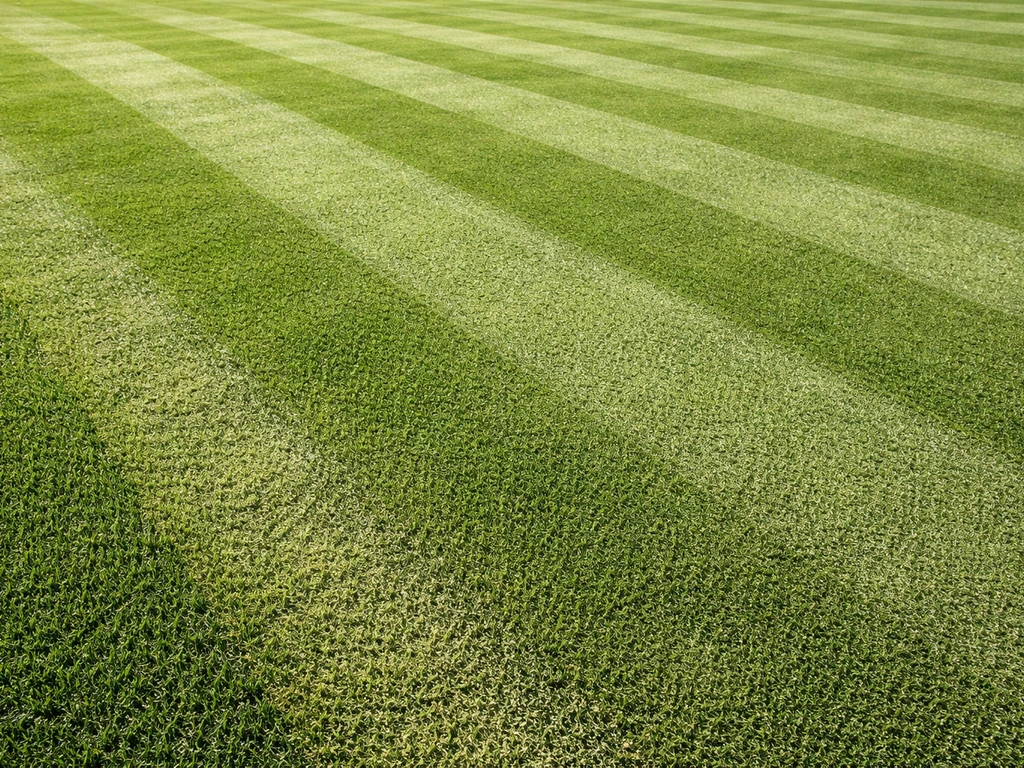
Skip the soil prep and you'll be fighting bare spots and weeds forever. Nail both of those, then stay consistent with water and fertility, and you'll have the kind of lawn people slow down to look at. If you want step-by-step guidance on how to grow natural grass, focus on choosing the right grass for your region and then building consistent care habits around watering, soil, and mowing.
How golf courses build green, dense turf
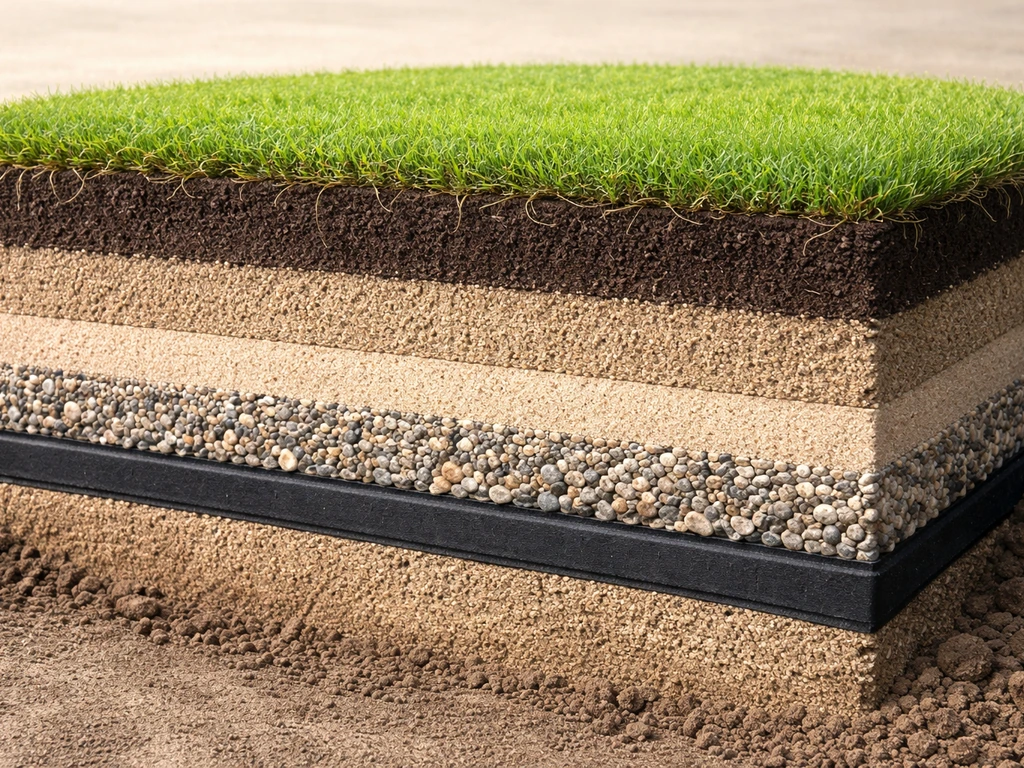
The secret to what golf courses do isn't magic seed. It's the combination of a purpose-built root environment, the right grass variety, and maintenance that never really stops. Most homeowners try to skip straight to step three and wonder why the results are mediocre.
At the highest level, a USGA-spec putting green is built on a 12-inch (plus or minus one inch) sand-based rootzone mix sitting on top of a minimum 4-inch gravel drainage layer with drain pipes underneath. That structure keeps roots healthy, prevents compaction, and drains water fast enough to avoid disease. You're not going to build that in your backyard for a standard lawn, but the principle matters: grass that looks like a golf course needs a root zone that drains well, stays loose, and lets grass roots go deep.
On top of that foundation, courses use grass varieties selected specifically for dense, low growth. They mow frequently and at very low heights. They fertilize on a precise schedule. They topdress with sand regularly to keep the surface firm and smooth. They aerate when soil compaction builds up. Everything that makes course turf look the way it does is just those basics done consistently and done well.
Choosing the right grass variety for your climate and goals
This is the single most important decision you'll make. Plant a warm-season grass in Minnesota or a cool-season grass in Phoenix and you'll lose it. Here's how the main golf-course varieties break down by region and use case.
Cool-season options (northern U.S., Pacific Northwest, transition zone)
Creeping bentgrass is the classic putting green grass for cool climates. It forms an incredibly dense, fine-bladed mat and can be mowed down to 0.125 to 0.5 inches, which is why greens look the way they do. The tradeoff is that it's high maintenance and needs significant sunlight. USGA research points to a minimum daily light integral (DLI) of 30 to keep bentgrass in acceptable condition, which basically means it struggles in shaded yards. If your target area gets fewer than 6 hours of direct sun, bentgrass is going to frustrate you.
Poa annua (annual bluegrass) shows up naturally on many courses alongside bentgrass, and it actually tolerates lower light and heavier traffic reasonably well. The downside is it doesn't handle heat and drought stress, so it's a poor choice for anything south of the transition zone and it can thin out badly in summer. For a home lawn, Poa annua isn't something you'd intentionally plant, but knowing it exists helps you understand what you're seeing on older northern lawns.
Tall fescue and fine fescue are more practical choices for most northern homeowners chasing a golf-course look without the extreme maintenance demands of bentgrass. Turf-type tall fescue varieties are tough, handle clay soils better than most, and stay green from fall through spring. Fine fescues (creeping red, chewings, hard fescue) are your best bet for shaded areas or low-input situations. Neither will mow as low as bentgrass, but at 2 to 2.5 inches they can look extremely clean and dense.
Perennial ryegrass is often mixed into overseeding programs and is used on fairways and tee boxes at many courses. It germinates fast (5 to 7 days), establishes quickly, and gives you that bright green color and fine texture. It doesn't handle extreme cold or extended drought well, but as part of a blend it's a solid performer.
Warm-season options (southern U.S., Gulf Coast, Southwest)
Bermudagrass is the dominant choice for warm-climate golf courses and for good reason. It's dense, it spreads aggressively via stolons and rhizomes, it handles heat and drought extremely well, and it can be mowed very low. Hybrid bermuda varieties like Tifway 419 or TifTuf are what you'll find on southern fairways and tee boxes. For a home lawn, these aren't available as seed (they're installed as sod or sprigs), but common bermuda seed works well and still gives you that fine-textured, tight-growing turf.
Zoysia is the slower-growing, more refined alternative to bermuda. It's softer underfoot, handles shade slightly better than bermuda, and has a beautiful fine texture when it fills in. The catch is patience: zoysia takes longer to establish than bermuda, sometimes a full season or more to fully cover from seed. But once it's in, it's dense, it chokes out weeds naturally, and it holds its color well.
| Grass Type | Best Climate | Mowing Height | Sun Needs | Establishment Method | Maintenance Level |
|---|---|---|---|---|---|
| Creeping Bentgrass | Cool/northern | 0.125–0.5 inches | Full sun (6+ hrs) | Seed | Very high |
| Tall Fescue | Cool/transition | 2–3 inches | Full sun to partial shade | Seed | Moderate |
| Fine Fescue | Cool/northern | 2–3 inches | Shade tolerant | Seed | Low–moderate |
| Perennial Ryegrass | Cool/transition | 2–2.5 inches | Full sun to partial shade | Seed | Moderate |
| Bermudagrass | Warm/southern | 0.5–1.5 inches | Full sun required | Seed, sod, or sprigs | High |
| Zoysiagrass | Warm/transition | 1–2 inches | Full sun to light shade | Sod or seed (slow) | Moderate |
Site prep: soil testing, pH, drainage, and leveling like a course
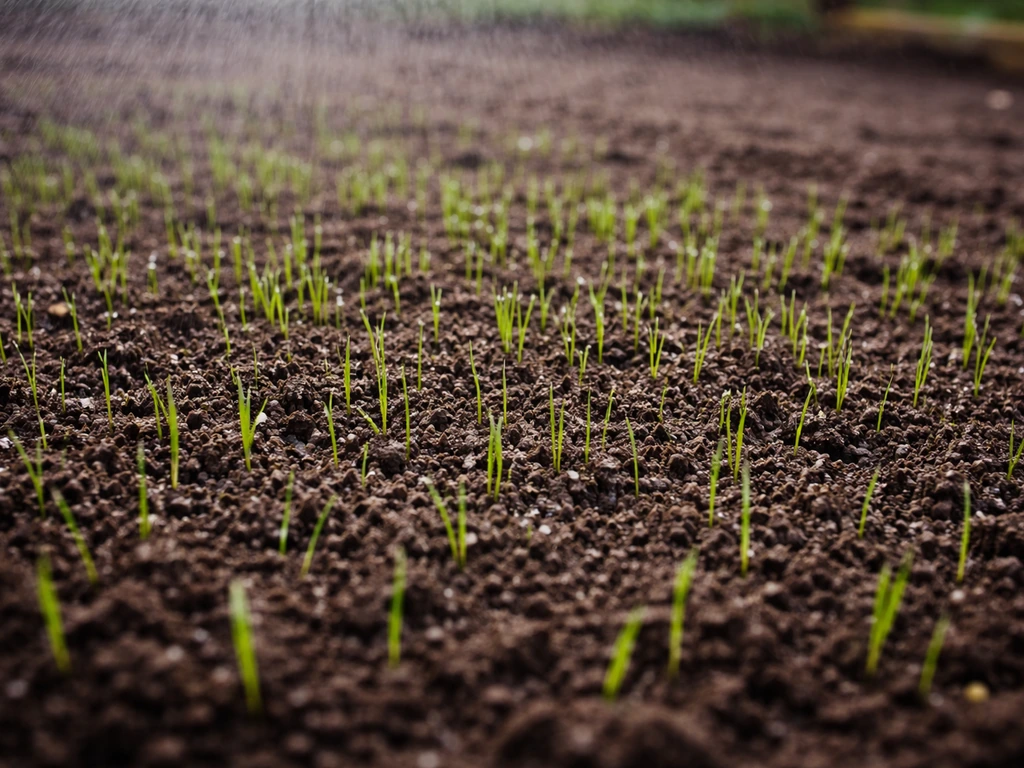
Skipping site prep is the number one reason home lawns never reach their potential. You can plant the best seed money can buy, but if the soil is compacted, has the wrong pH, or drains poorly, you're fighting uphill from day one.
Soil testing first, always
Get a basic soil test before you do anything else. Your local cooperative extension office usually offers tests for $15 to $20, and it tells you your current pH, phosphorus, potassium, and organic matter levels. Most turfgrasses want a pH between 6.0 and 6.5. Bentgrass is comfortable from about 5.5 to 6.5. If you're in clay-heavy areas with a pH above 7.5, you'll need to work sulfur in. If you're below 5.5, you need lime. Applying fertilizer to out-of-range pH soil is largely a waste of money because the grass can't absorb nutrients efficiently.
Clay soil vs. sandy soil adjustments
If your soil is clay, your biggest enemies are compaction and poor drainage. Before seeding, till to at least 4 to 6 inches, work in 2 to 3 inches of coarse sand and an inch of compost, and grade the area so water moves away from structures. Do not add small amounts of sand to clay without adequate volume and tilling, because thin layers of sand in clay actually make drainage worse, not better. Sandy soil has the opposite problem: it drains too fast and doesn't hold nutrients. Add 2 to 3 inches of compost and till it in to increase water retention and give grass roots something to hold onto.
Grading and leveling
Golf courses are meticulous about surface uniformity. For a home lawn, you don't need perfect but you do need to eliminate major low spots where water pools, high spots that scalp when mowed, and any slope that drains toward your foundation. Use a landscape rake to grade the area after tilling, pulling soil toward low spots and smoothing high areas. Lightly roll the prepared seedbed to identify where it settles, then rake again to level. Aim for a 1 to 2 percent slope away from the house. Even a simple 2x4 dragged across the surface can show you where the bumps are.
Seeding vs. sodding vs. sprigging: what to use and how to apply it
Your establishment method depends on your grass type, your budget, and how quickly you need results. Each approach has real trade-offs.
Seeding
Seeding is the most affordable option and works for most cool-season grasses and common bermuda. For something like a putting green area using creeping bentgrass, Purdue University's turfgrass research puts the seeding rate at 0. 5 lb of seed per 1,000 sq. ft.
For a fairway-style lawn using fescue or ryegrass, typical rates run 5 to 9 lbs per 1,000 sq. If you want the same look on a home fairway-style strip, use the same approach but tailor mowing height, seeding rate, and watering to your grass variety and climate how to grow fairway grass. ft. depending on variety.
Apply seed with a broadcast or drop spreader, rake it very lightly into the top 1/8 inch of soil (don't bury it deeper), then roll lightly to ensure good seed-to-soil contact. Straw or erosion control matting over the seeded area holds moisture and protects against birds and washout.
Sodding
Sod gives you an instant lawn and is the right call when you need results fast, when erosion is a concern on slopes, or when you're planting bermuda or zoysia hybrids that aren't available as seed. It's 3 to 5 times more expensive than seeding per square foot, but it also dramatically shortens the timeline to a usable surface. Lay sod on moist, prepped soil in a brick-laying pattern with tight seams. Roll it after installation to push out air pockets. Water immediately and keep it consistently moist for the first 2 to 3 weeks while roots establish.
Sprigging
Sprigging is mostly used for warm-season grasses, especially hybrid bermuda and zoysia varieties that don't produce viable seed. Sprigs are small pieces of stem and root (stolons or rhizomes) broadcast across prepared soil and pressed in. It's cheaper than sod but slower to fill in, typically taking a full growing season. Rates run about 3 to 10 bushels per 1,000 sq. ft. depending on how fast you want coverage. Keep sprigged areas consistently moist until spread and establishment are complete.
Timing and germination: when to plant and how to manage early growth
Planting at the wrong time of year is one of the most common and most avoidable mistakes. Each grass type has a preferred planting window tied to soil temperature and seasonal growth patterns.
Cool-season grasses (fescue, ryegrass, bentgrass)
Plant in late summer to early fall (late August through October in most of the northern U.S.) when soil temperatures are between 50 and 65 degrees Fahrenheit. This is the single best window for cool-season grass establishment. The soil is warm enough for germination but cooling air temperatures reduce heat stress and weed competition. Spring planting (April to May) works as a second option but puts young grass under summer heat stress just as it's trying to establish. Expect perennial ryegrass to germinate in 5 to 7 days, tall fescue in 7 to 14 days, and creeping bentgrass in 10 to 14 days under good conditions.
Warm-season grasses (bermuda, zoysia)
Plant warm-season grasses in late spring to early summer when soil temperatures are consistently above 65 degrees, ideally 70 to 80 degrees. In the Deep South that might be April or May. In the transition zone, late May to June is safer. Bermuda seed typically germinates in 7 to 14 days. Zoysia from seed is much slower, often 14 to 21 days, and will take longer to establish a full cover.
Managing the first 6 weeks
Keep the seedbed consistently moist from day one, which usually means light watering 2 to 3 times per day for short durations until germination is complete. Once seedlings are visible, back off to once daily deeper watering to encourage roots to go down. The most common early failure is letting the seedbed dry out for even a day or two in the first two weeks. Set a reminder. The second most common failure is mowing too early or too low. Wait until new grass is at least one-third taller than your target mowing height before the first cut, and use sharp blades so you're cutting, not tearing.
Mowing and fertility: building the 'golf green' look with consistent maintenance
This is where the golf course look actually comes from. Dense, even, lush turf is the product of mowing at the right height consistently and feeding the grass on a schedule that matches its growth rate.
Mowing height and frequency
Golf course putting greens run creeping bentgrass at mowing heights between 0. 125 and about 0. 5 inches, with Penn State Extension noting acceptable green speeds at roughly 5/32 to 3/16 of an inch. That's not practical for a standard home lawn mower, but the principle of mowing low and often absolutely translates.
For bermuda home lawns targeting that tight, dense look, mow at 0. 5 to 1. 5 inches with a reel mower if possible, and mow every 4 to 5 days during peak growth. For tall fescue or ryegrass, stay between 2 and 2.
5 inches and mow before the grass gets more than one-third taller than your target height. Scalping (mowing too low all at once) weakens the grass and invites weeds. Mowing frequently keeps the leaf blade short and encourages lateral density.
Sand topdressing at home
Topdressing with fine sand is one of the practices that gives golf greens their firm, smooth surface, and you can do a simplified version at home. USGA research shows that light, frequent topdressing programs are more effective than heavy infrequent applications, with example rates around 1.
USGA explains that sand topdressing works best when applied lightly and frequently, and that the appropriate application rate and interval depend on turf growth and the overall green management program light, frequent topdressing programs are more effective than heavy infrequent applications.
23 cubic feet per 1,000 sq. ft. on a 14-day schedule. At home, a thin layer of dry, fine sand (about 1/8 inch) dragged in with a lawn brush or the back of a rake two to four times per growing season fills in minor surface irregularities and encourages denser turf.
The key rule from USGA guidance: don't topdress and then immediately mow. Let the grass grow up through the sand layer first.
Fertilization basics
Cool-season grasses are fed primarily in fall (September and October) and secondarily in early spring. Avoid heavy nitrogen applications in summer when cool-season grasses are stressed. A slow-release nitrogen fertilizer at 0.5 to 1 lb of actual nitrogen per 1,000 sq. ft. per application is a solid starting point. Warm-season grasses get fed in spring through summer (May through August) as they're actively growing, then fertilization stops 6 to 8 weeks before the first expected frost. Always follow your soil test results rather than guessing, especially for phosphorus and potassium. Over-fertilizing produces lush but weak top growth that's more disease-prone and requires more mowing.
Aeration: the maintenance step most homeowners skip
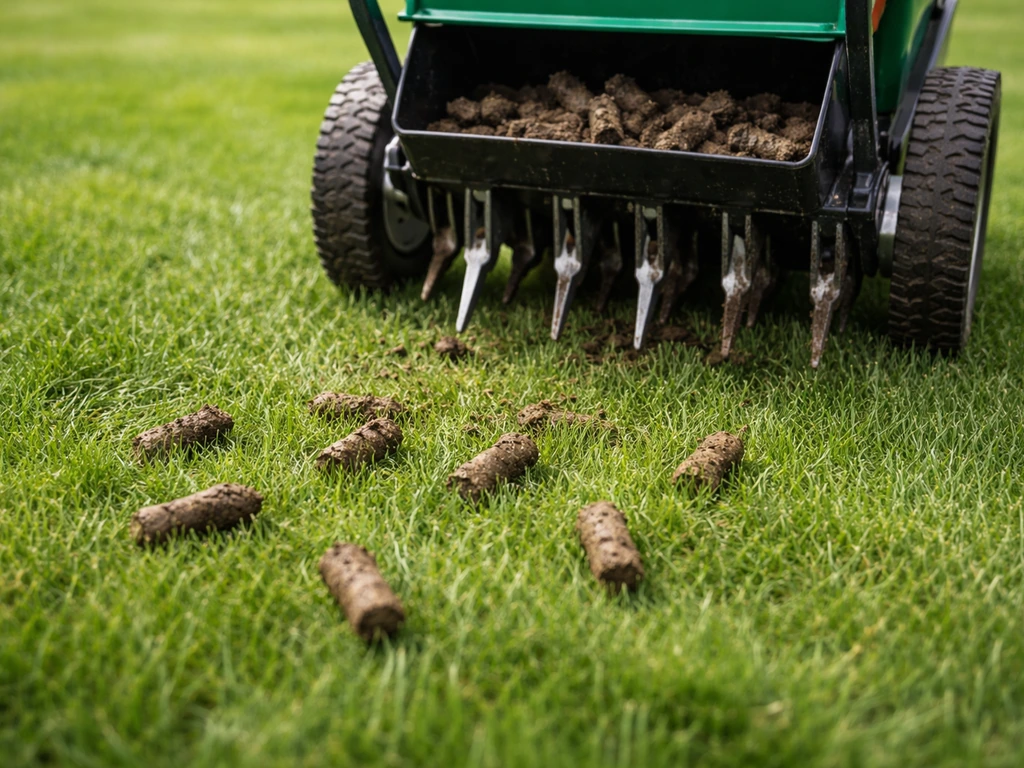
Core aeration is critical for any lawn aiming for the golf course standard. Pulling cores breaks up compaction, improves air and water movement into the root zone, and gives sand topdressing somewhere to go. USGA guidance ties aeration timing to soil temperature, scheduling it when turf has the best recovery conditions. For cool-season grass, aerate in early fall. For warm-season grass, late spring through summer. Rent a core aerator from any equipment rental shop for $50 to $80 for a half-day, aerate in two perpendicular passes, then topdress with sand and drag it into the holes. Do this once or twice a year minimum.
Watering, weed control, and turf protection (pets, pests, and common problems)
Watering: less often, more deeply
Established turf needs about 1 to 1.5 inches of water per week total, including rainfall. The mistake most homeowners make is watering lightly every day, which keeps roots shallow and makes the lawn more drought-sensitive over time. Once your lawn is established (not during germination), water deeply two to three times per week and let the top inch of soil dry out between sessions. Early morning watering is best. Watering at night keeps the canopy wet for hours and encourages fungal disease, which is a real problem with dense turf.
Weed control
Dense, healthy turf is your best weed control. Thin, patchy grass is an open invitation. For new seedings, avoid pre-emergent herbicides for the first season because most of them prevent grass seed germination right alongside weed seed germination. Once your lawn is established (typically after the second mowing), you can apply a pre-emergent in early spring to block crabgrass and other summer annuals. Post-emergent selective herbicides handle broadleaf weeds like dandelion and clover without harming most grasses. Always read labels carefully, especially for bentgrass and zoysia, which can be sensitive to certain herbicide chemistries. If you're in a situation with persistent bare spots, the fix is almost always improved establishment, not more herbicide.
Shade challenges
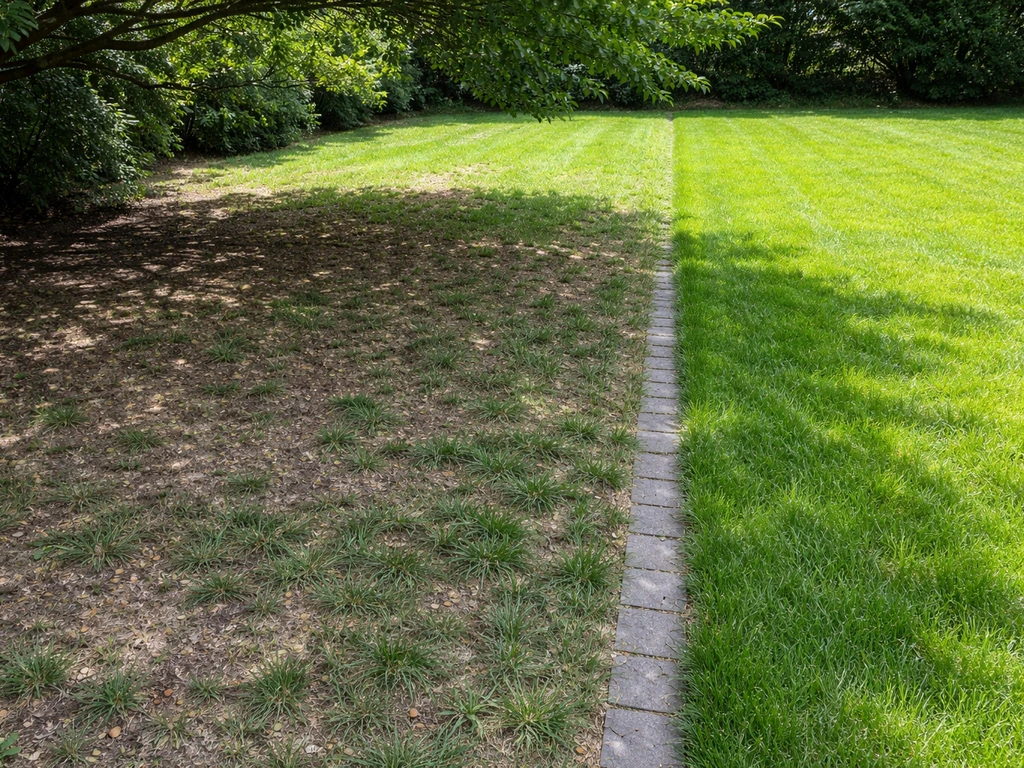
If your target area gets less than 4 to 5 hours of direct sun, reconsider your grass choice before anything else. Bermuda is essentially a non-starter in shade. Bentgrass research shows it needs a minimum daily light integral of 30, which heavy shade makes very difficult. Fine fescue blends (especially creeping red fescue) are your best option in shaded northern zones. In the South, St. Augustinegrass or certain zoysia varieties handle moderate shade better than bermuda. No grass variety truly thrives in deep shade, and trying to force a sun-loving variety into a shaded spot is a losing battle.
Pet damage
Dog urine burns are nitrogen overload spots, and physical traffic wear from dogs running the same paths repeatedly causes compaction and bare areas. For urine spots, the fix is dilution: water the area immediately and heavily when it happens. You can overseed burned spots in fall (cool season) or late spring (warm season) after loosening the soil with a hand rake. For compaction from pet paths, you're essentially dealing with the same issue as high-traffic areas: aerate, topdress, and overseed. Turf-type tall fescue holds up to traffic better than most cool-season grasses, and bermuda recovers from wear better than anything in warm climates.
Common problems and quick fixes
- Seed not germinating after 3 weeks: Check soil temperature (too cold or too hot), check moisture (seedbed drying out), and verify seed wasn't buried too deep. Most seeding failures are moisture or temperature issues.
- Bare spots persisting after overseeding: Usually a compaction, drainage, or shade issue. Loosen the soil with a hand rake before overseeding. Don't just throw seed on top of hard ground.
- Yellowing turf: Check pH first. Yellow grass on an otherwise moist and fertilized lawn almost always points to pH out of range blocking nutrient uptake. A soil test will confirm.
- Fungal patches or brown rings: Back off nighttime watering, reduce nitrogen input, and improve air circulation. A contact fungicide (chlorothalonil) can knock back active disease but fixing watering habits is the permanent solution.
- Slow fill-in on warm-season grass: Bermuda and zoysia fill from stolons and rhizomes, so they need warmth and consistent moisture to spread. Patience plus summer fertilization is the answer. Don't overseed with a cool-season grass if you want the warm-season variety to dominate long term.
Your starting plan from here
If you're starting from bare ground today, here's the order of operations: get a soil test, prep and grade the soil, plant the right grass variety for your climate at the right time of year, keep the seedbed moist through germination, then build a mowing and fertility routine that you actually stick to. The difference between a mediocre lawn and one that looks like a fairway is almost never the seed.
It's the prep, the timing, and the consistency afterward. If your goal is specifically a putting green surface, the same fundamentals apply at a more precise scale, and the same approach that goes into building a home putting surface is a useful reference point. For anyone who wants to go deeper on overall lawn establishment from seed, the broader process of growing turf from the ground up covers a lot of the same territory.
For a step-by-step approach, follow this guide on how to grow turf grass from start to finish growing turf from the ground up. The golf course look is achievable at home. It just takes the right grass in the right soil at the right time, followed by maintenance you don't skip.
If you’re starting from scratch with football field grass, the same golf-green principles apply: choose the right turf for your climate, prep the soil, and keep mowing and watering consistent right grass in the right soil at the right time. For a durable, game-day surface, focus on selecting the right turf for your climate and keeping up with consistent mowing, watering, and soil prep football field grass.
FAQ
How do I know if my yard has enough sun for a golf-course type lawn?
Before buying seed, measure actual direct sun at turf height, not just overall “brightness.” If you cannot consistently get at least 4 to 6 hours of direct sun, avoid bentgrass and bermuda and plan on fine fescue blends instead, or accept that density will be limited in shade even with perfect mowing.
Should I dethatch or remove old turf before seeding for a golf-course look?
If you are seeding into existing turf and thatch is more than about 1/2 inch, plan to loosen it first (dethatch or verticut) so seed can reach the top 1/8 inch of soil. If you seed over thick, spongy thatch, you often get patchy germination and shallow rooting, which later forces heavier fertilizer and more mowing.
What’s the right way to seed “into” the soil without burying it?
Use a light rake to incorporate seed into the top 1/8 inch, then roll. Avoid deeper coverage because many cool-season seeds lose vigor when buried too far. If you see birds pulling seed up within the first few days, increase light coverage and use straw or erosion matting rather than adding extra depth.
How often should I water after germination, and how do I prevent shallow roots?
Once seedlings are visible, water less frequently but more deeply, aiming for moisture down into the top few inches. A practical check is to push a screwdriver into the soil after watering, if it slides in easily you are watering enough, if it barely penetrates you are not. Consistent shallow daily watering is the fastest path to drought-sensitive turf.
Can I mow at the target height immediately to speed up the golf-course look?
No. Wait until the grass is at least one-third taller than your intended mowing height before the first cut. Cutting too early or too low weakens plants and creates open space, which then invites weeds and slows your path to the dense, even look.
What should I do if my lawn keeps thinning in summer?
Heat and drought thinning usually points to mismatch between grass type and climate, or watering habits that keep roots shallow. For cool-season lawns, reduce summer nitrogen (don’t “force green”) and prioritize deeper watering schedules during the hottest weeks. If thinning is severe and persistent, consider overseeding in fall rather than repeated summer reseeding.
Do I need to topdress every time I want the surface to look smoother?
More topdressing is not always better. Golf-green style results come from light, frequent applications, but only when the turf is healthy and actively growing. Don’t topdress right before mowing, let turf grow through the sand layer first to avoid smothering and to prevent scalping when you cut through the added texture.
How do I choose between aeration and just adding more sand?
If the real problem is compaction, sand alone will not fix it, it just fills surface voids. Core aeration breaks up compaction and creates space for sand to work down into the root zone. After aeration, topdress and drag sand into holes, otherwise you often end up with a sandy crust that makes mowing uneven.
When is the best time to use pre-emergent weed control without harming my grass seed?
Time pre-emergent use to after your establishment period. If you have seeded recently, skip pre-emergent for that season because it can suppress grass germination alongside weed seed. For established turf, apply in early spring before crabgrass germinates, using label directions and local timing, since a calendar date alone is less reliable.
What’s the quickest way to repair dog urine burn and traffic bare spots?
For urine burns, flush and dilute immediately, then overspeed the recovery in the correct season (fall for cool-season, late spring for warm-season) after lightly loosening soil. For traffic paths, treat it as compaction, aerate, topdress, and overseed. If you just fertilize, the bare spot usually widens because the root environment is still stressed.
Is a fertilizer schedule more important than grass variety for getting the golf-course look?
Variety and soil conditions come first, but fertilizer becomes the steering wheel once turf is established. Use your soil test to target nitrogen timing and avoid heavy phosphorus and potassium guesses. Overdoing nitrogen can create fast growth that looks good briefly but increases mowing frequency and disease risk in dense turf.
Can I achieve a putting-green style look with a normal lawn mower?
You can get a closer “tight, clean” look, but not the same height precision as a dedicated green mower. If you want the most realistic results, plan for a reel mower (especially for bermuda targets) and keep mowing frequently during peak growth while staying within the grass’s workable height range.
Next Article
How to Grow Grass at Home From Seed Step by Step
Step-by-step seeding guide to grow green lawn grass fast, with variety picks, soil prep, timing, and early care.