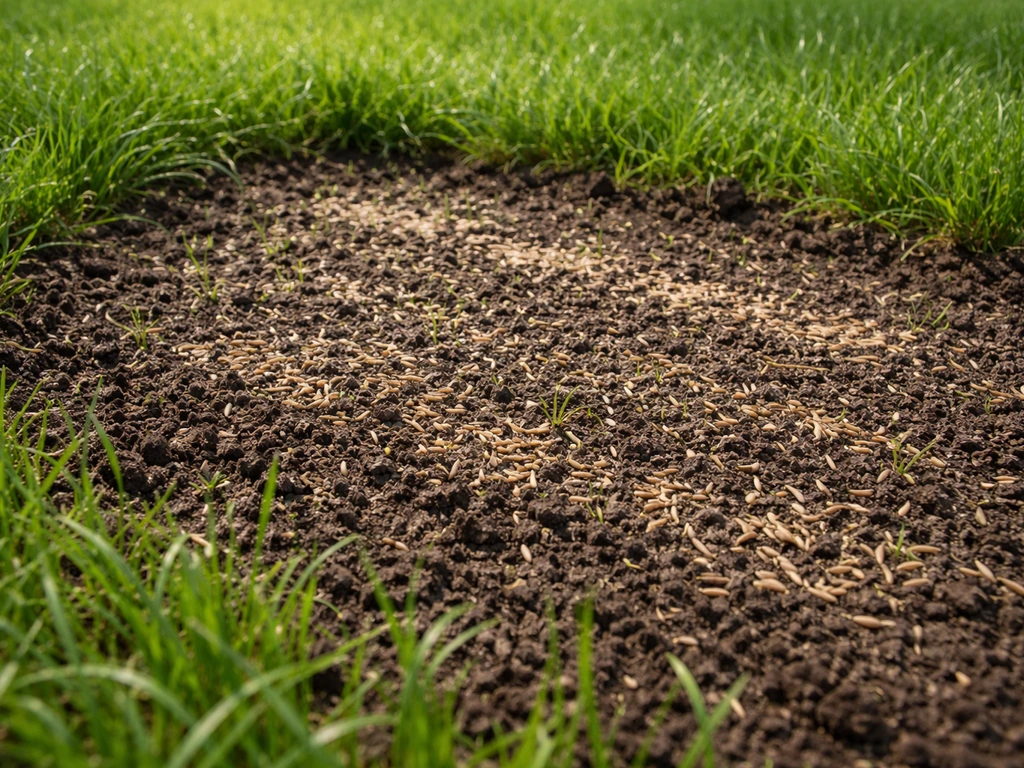
Growing fairway-style grass at home comes down to four things done right: picking the correct grass species for your region, prepping the soil properly before you ever open a seed bag, nailing the planting window, and protecting the seedlings through those first fragile weeks. Do all four and you end up with a dense, tight, low-cut lawn that looks like it belongs on a golf course. Skip any one of them and you get patchy, weedy, uneven turf that frustrates you for years.
How to Grow Fairway Grass: Step-by-Step Backyard Guide
Marcus Tillwell
6 Jul 2026
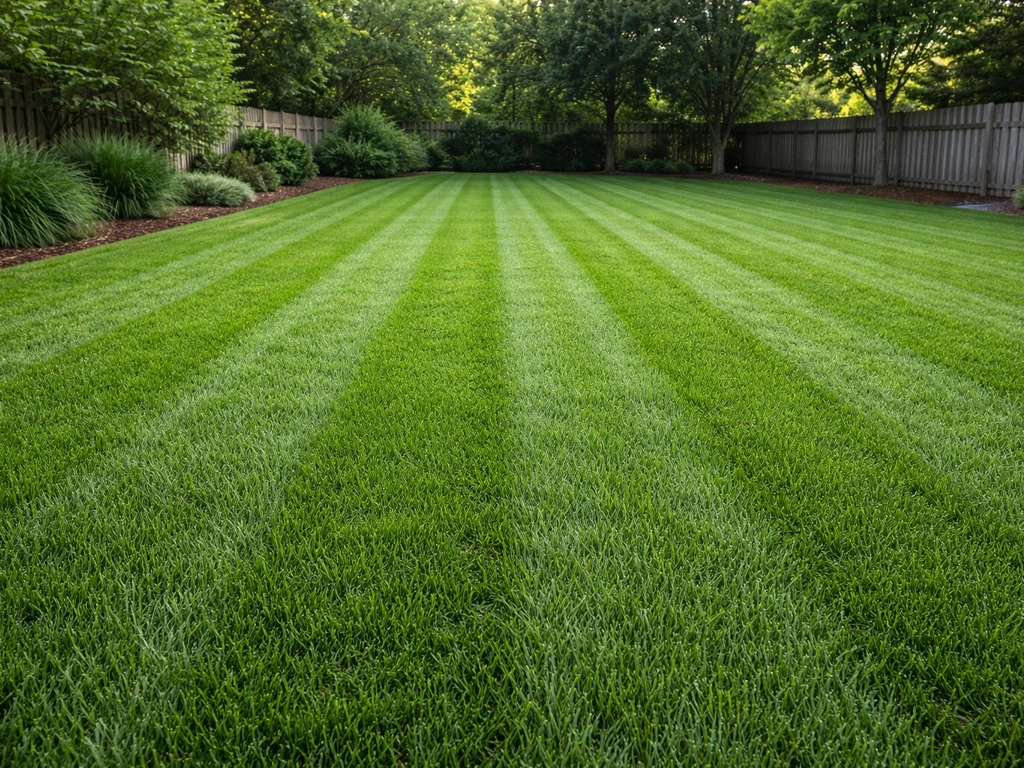
Choose the right fairway grass type for your region
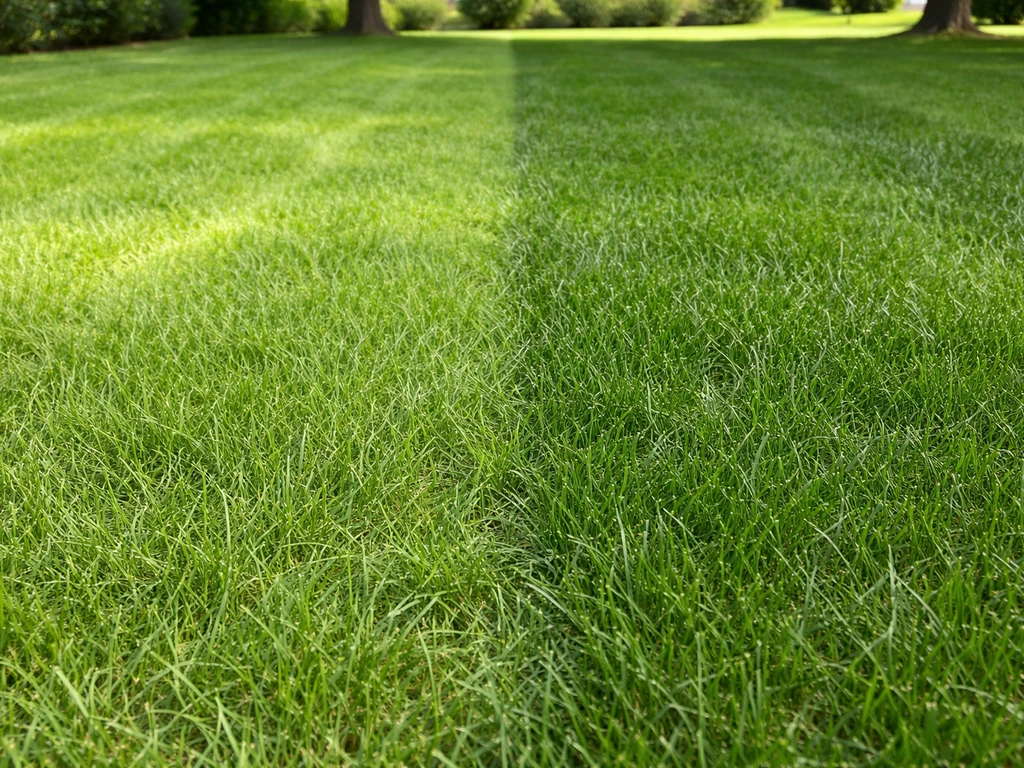
The single biggest mistake homeowners make is buying the wrong grass. A fairway look is achievable with several species, but each one has a climate range it actually thrives in. To get started, follow a clear how to grow field grass plan that matches your local climate and soil conditions. Plant outside that range and you are fighting the grass every season.
| Grass Type | Best Region | Sun Requirement | Traffic Tolerance | Shade Tolerance | Fairway Mow Height |
|---|---|---|---|---|---|
| Bermudagrass | Southeast, Southwest, transition zone | Full sun | Excellent | Poor | 0.5–1.5 inches |
| Zoysiagrass | Southeast, transition zone, mid-Atlantic | Full sun to light shade | Excellent | Poor to fair | 1–2 inches |
| Tall Fescue | Transition zone, Pacific Northwest, upper South | Full sun to partial shade | Good | Moderate | 2.5–3.5 inches |
| Fine Fescue (creeping red/chewings) | Northern US, shaded cool climates | Partial to full shade | Moderate | Good to excellent | 2–3 inches |
| Perennial Ryegrass | Northern US, Pacific Coast, overseeding | Full sun to light shade | Good | Fair | 1.5–2.5 inches |
| Kentucky Bluegrass | Northern US, mountain West | Full sun | Good | Poor | 2–3 inches |
For a true tight-cut fairway look, bermudagrass and zoysiagrass are the top picks in warm climates. Bermuda is the most common fairway grass on southern and western golf courses for a reason: it tolerates extremely low mowing, recovers fast from traffic, and stays dense in full sun. The downside is it has poor shade tolerance and unpredictable cold hardiness north of the transition zone. Zoysiagrass is slightly more shade-tolerant (though still primarily a sun grass), handles heat and drought well, and requires less frequent mowing than bermuda. In cooler climates, tall fescue gets you the closest to a fairway look without going warm-season, and fine fescue blends are your best option under trees or in the shade areas many backyards have.
If your backyard is mostly shade, be realistic: no grass achieves a true tight fairway look in deep shade. Fine fescue mixes will give you the best density, but mow them higher (roughly 1 inch higher than the open-sun recommended height for the species) and accept that traffic wear will be more noticeable than in a sunny spot.
Backyard site prep before you plant anything
Fairway turf is unforgiving of poor soil prep. If you are wondering how to grow turf grass successfully, start by matching the grass to your climate and doing solid site prep before you plant. You cannot seed over bad ground and expect professional results. Give this step as much time as you give the seeding itself.
Start with a soil test
Order a soil test from your local extension service or a reputable lab before you do anything else. It costs around $15 to $25 and tells you your pH, phosphorus, potassium, and organic matter levels. Most fairway grasses want a soil pH between 6.0 and 7.0. Tall fescue does well around 6. For example, University of Delaware Cooperative Extension target pH guidance by turf type lists a target pH of 6.5 for tall fescue. 5. If your pH is at or below 5.5, you are looking at nutrient deficiencies even with heavy fertilization, because the soil chemistry locks out nutrients at low pH. Add lime based on the test recommendation, not a guess. The test also drives your phosphorus and potassium inputs before seeding, which is the one time you can work these nutrients into the root zone rather than applying them on the surface.
Deal with thatch before it becomes a barrier
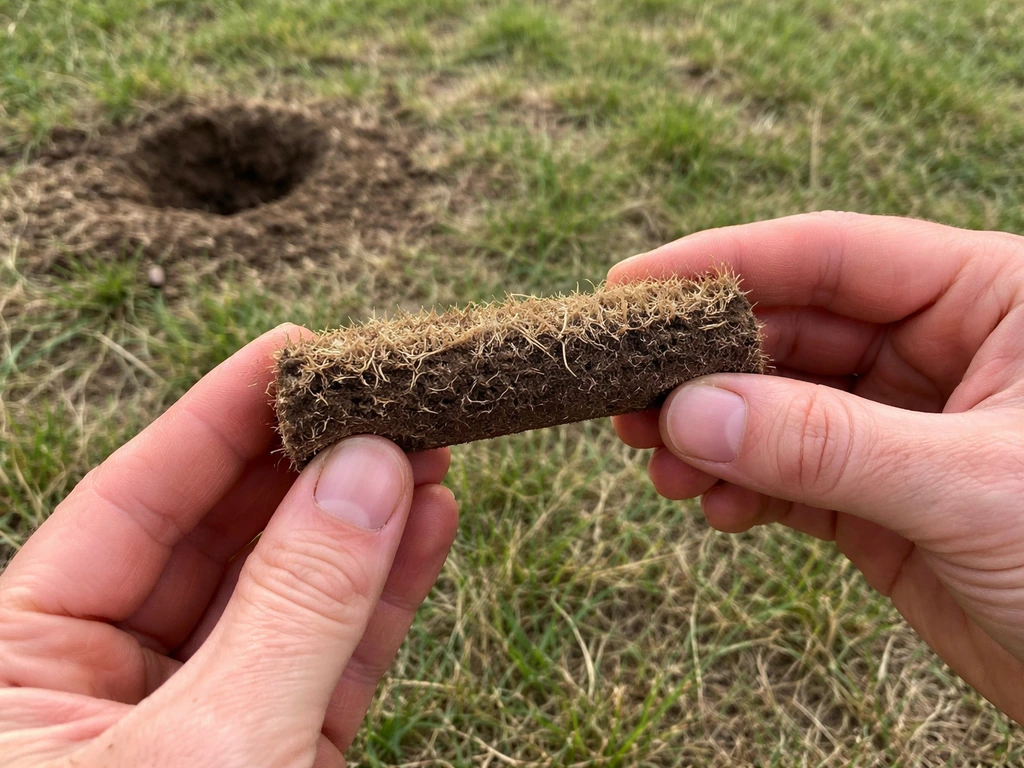
If you are overseeding an existing lawn or converting an old bermuda or zoysia lawn, check the thatch layer first. Dig out a small plug and measure. If thatch exceeds half an inch, it will block water, air, and nutrients from reaching the soil and create a spongy seedbed where seed germinates but roots never reach mineral soil. For warm-season lawns, a vertical mower (power rake) or dethatching attachment handles this. Do it before aeration, not after.
Aerate compacted soil
Core aeration before seeding is one of the highest-return steps you can take, especially in backyards with compacted soil from foot traffic, pets, or construction. Pull 2-to-3-inch cores at 3-inch spacing if possible. Leave the cores on the surface to break down, or break them up and drag them back in. Aeration improves seed-to-soil contact for overseeding and helps roots establish faster in a new planting.
Set your mowing height expectation early
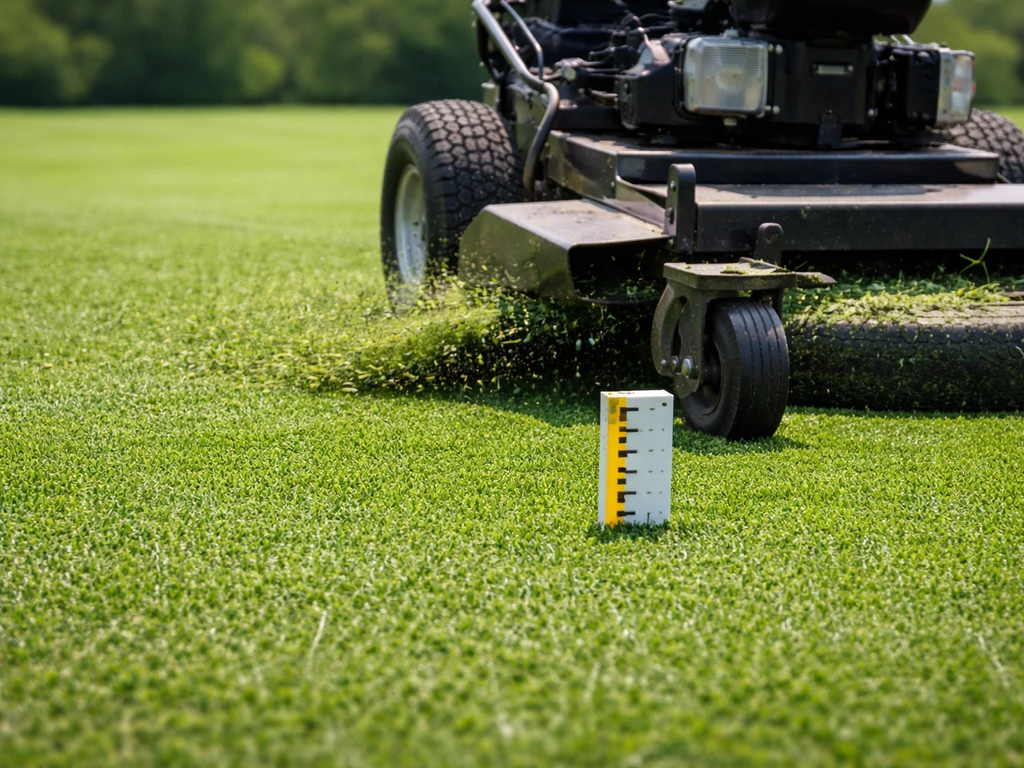
A fairway look requires regular, low mowing. Bermudagrass fairways are typically cut at 0.5 to 1.5 inches. Home equipment (most rotary mowers) struggles below 1.5 inches cleanly, so if you want to cut below that consistently, consider a reel mower. Set your target mowing height before you plant so you are not scalping mature turf later trying to get down to the height you actually want.
Seeding vs sodding vs sprigging: which one makes sense for you
Each method has a real use case depending on your grass type, budget, and timeline.
Seeding
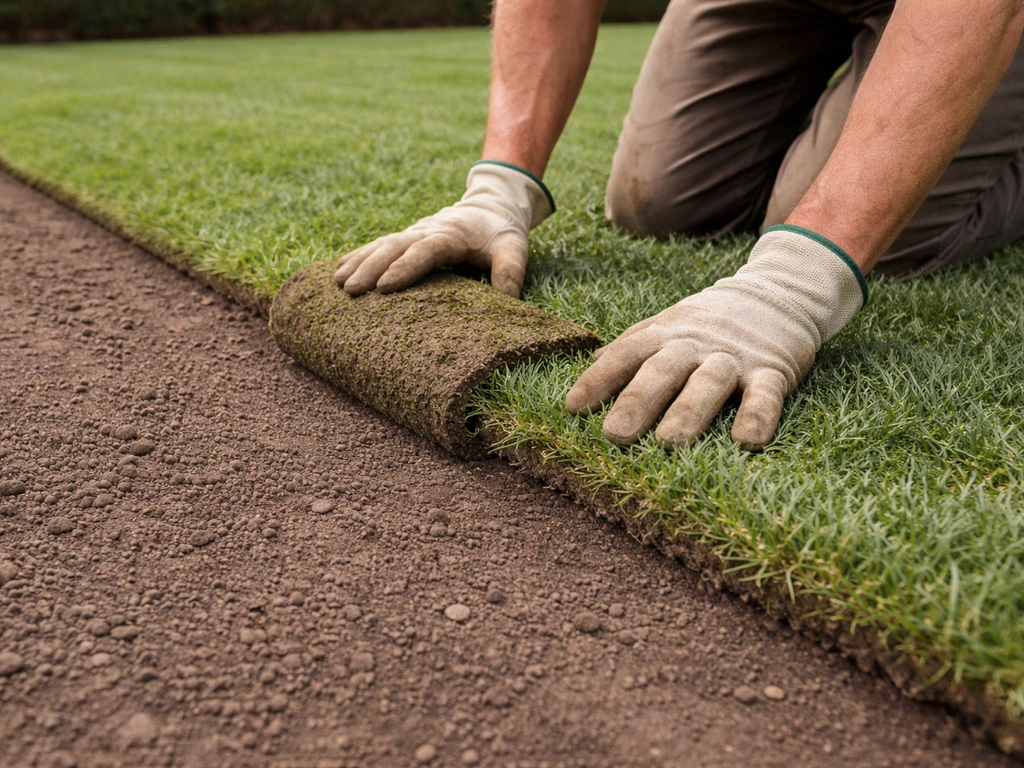
Seeding is the most affordable option and works well for cool-season grasses (fescues, ryegrass, bluegrass) and some bermudagrass varieties. To get the best results, follow these same seeding and early-care steps to support healthy growth for a golf-course-style lawn. You get the widest variety selection and it is the most practical DIY approach for large areas. The tradeoff is time: germination takes 7 to 21 days depending on species and conditions, and you will not have a usable lawn for 6 to 10 weeks. Bermudagrass seed is widely available and germinates well when soil temperatures are consistently warm. Zoysiagrass can be seeded but germination is very slow and patchy, which is why most people use plugs or sod for zoysia.
Sodding
Sod gives you nearly instant results and is the right call when you need erosion control on a slope, want to avoid a long weed competition window, or are on a tight timeline. It costs 3 to 5 times more than seed per square foot, but you get a usable lawn in 2 to 3 weeks rather than 2 to 3 months. Sod works for bermuda, zoysia, tall fescue, and bluegrass. You still need the same soil prep as seeding: test, amend, grade, and aerate first. Laying sod on unprepared ground is a waste of money.
Sprigging
Sprigging is primarily used for bermudagrass in the South. Sprigs are live stem sections broadcast or pressed into prepared soil. LSU AgCenter identifies bermudagrass as the warm-season turf species most commonly established by sprigging for home lawns. Zoysia is also sometimes sprigged or plugged. Sprigging is cheaper than sod but slower to fill in. The key is immediate irrigation right after planting to keep the sprigs and soil moist, and then consistent watering through the establishment period. Expect full coverage in one growing season with aggressive watering and fertilization.
| Method | Cost | Speed to Usable Lawn | Best For | Main Risk |
|---|---|---|---|---|
| Seeding | Low | 6–10 weeks | Cool-season grasses, bermuda, large areas | Weed competition, slow germination |
| Sodding | High | 2–3 weeks | Any species, slopes, tight timelines | Cost, poor rooting if soil prep skipped |
| Sprigging | Medium | 1 full growing season | Bermudagrass, zoysiagrass in warm climates | Slow fill-in, high water demand at planting |
When to plant: timing and soil temperature
Timing is not optional. Planting at the wrong time wastes seed, money, and months of your life watching a lawn fail.
For cool-season grasses (fescue, ryegrass, bluegrass), the target window is late summer to early fall (late August through mid-October in most of the country). Soil temperatures at 1-inch depth should be in the 50 to 70°F range, which is the optimal germination zone. Fall planting lets seedlings establish before winter without the heat and weed pressure of summer. Spring is a secondary option but comes with more competition from annual weeds and summer heat stress right after germination.
For warm-season grasses (bermuda, zoysia), plant in late spring through early summer when soil temperatures are consistently above 65°F, ideally 70 to 80°F. In most of the Southeast and Southwest, that window is May through July. Do not plant warm-season grass in fall: seedlings will not establish before dormancy and you will lose most of what you planted.
Growing degree days (GDD) give you a more precise read than calendar date. Soil thermometers cost under $15 and take the guesswork out. Take readings early morning at 1-inch depth for 3 to 5 consecutive days. If you are averaging in the target range, you are in the window. A cold snap in the week before your planned planting date is a better reason to wait than a specific calendar date.
Soil amendments for clay, sandy, and shaded conditions
Clay soil
Clay holds nutrients well but drains poorly and compacts fast, which suffocates roots. Before seeding, incorporate 2 to 3 inches of compost tilled into the top 4 to 6 inches. This improves drainage and aeration without destroying the clay's nutrient-holding capacity. Core aeration every year after establishment keeps clay from re-compacting under traffic. If you have standing water after rain for more than 24 hours, you may need a French drain before you seed, because no amount of amendment corrects a drainage gradient problem.
Sandy soil
Sandy soil drains fast (sometimes too fast) and holds very little water or nutrients, which means seedlings dry out quickly and fertilizer flushes through before roots can use it. Work 2 to 3 inches of compost into sandy soil to increase water-holding capacity. Topdress with a thin layer of compost after seeding to retain surface moisture. With sandy soil, plan on watering more frequently during establishment and fertilizing in smaller, more frequent doses so nutrients stay available rather than leaching below the root zone.
Shaded areas
Shade reduces turf density and makes it much more susceptible to disease, especially fungal issues. To learn the full process for your climate and soil, see our guide on how to grow natural grass. On top of choosing the right grass (fine fescue for deep shade, tall fescue for moderate shade), you need to mow higher in shaded spots, roughly 1 inch above your normal open-sun target height. Higher cut means more leaf area capturing limited light. Avoid heavy fertilization in shade: lush, soft growth under low light is extremely disease-prone. Thin out tree canopies if possible to get even a few more hours of direct sun.
Watering, germination timelines, and early establishment care
The goal during germination is simple: keep the seedling root zone moist at all times without saturating it. The tricky part is that newly seeded soil dries out fast, especially on warm days, so you often need to water more than once a day.
For the first 2 to 3 weeks after seeding, water lightly and frequently. The top 1 to 2 inches of soil should stay consistently moist but never soggy. On hot or windy days, this can mean 3 to 4 short waterings per day of about 5 to 10 minutes each. Over-watering is just as damaging as under-watering: saturated soil kills developing roots and can erode ungerminated seed, leaving bare patches. Once germination is visible (green fuzz across most of the area), you can start transitioning to deeper, less frequent watering, targeting moisture in the top 4 to 6 inches. To get the best results, follow a complete football field grass plan that matches your climate, soil, and watering routine saturated soil kills developing roots.
Germination timelines by grass type
- Perennial ryegrass: 5 to 10 days
- Tall fescue: 7 to 14 days
- Fine fescue: 7 to 14 days
- Kentucky bluegrass: 14 to 30 days
- Bermudagrass (hulled seed): 10 to 14 days at proper soil temperature
- Zoysiagrass (seed): 14 to 21 days, often longer and uneven
If you see nothing after 3 weeks and conditions looked right, dig a few seeds at random spots. If they are soft, rotted, or gone, the seed either washed away, dried out, or rotted in saturated soil. Patch those areas and restart. If seeds look intact but have not germinated, give them another week, especially with bluegrass or zoysia, which are notoriously slow. For sprigged material, water daily for at least the first 2 weeks and check for rooting by gently tugging a sprig: resistance means roots are forming.
Fertilization, mowing, and weed control during establishment
Fertilization timing
Do not fertilize too early. For newly planted turf, wait at least 30 to 60 days after planting before applying any fertilizer. Young roots cannot process a nitrogen hit and you risk burning seedlings or promoting lush top growth with no root depth. The exception is the pre-plant fertilizer based on your soil test: phosphorus and potassium worked into the soil before planting are fine and useful. Once grass is established and actively growing, start with a moderate nitrogen application (around 0.5 to 1 lb nitrogen per 1,000 sq ft) and follow a schedule tied to your grass type's active growth window.
First mowing
Mow new turf when it reaches about one-third taller than your target mowing height. For example, if you are targeting a 2-inch fairway height on a fescue lawn, mow when it reaches about 3 inches. For bermuda, if your target is 1 inch, mow when it hits 1.5 inches. Never remove more than one-third of the blade at a single mowing: cutting too aggressively on young turf stresses roots that are not yet deep. After the first three to four mowings, you can start stepping down toward your permanent fairway height in small increments. Make sure mower blades are sharp before that first cut: dull blades tear young seedlings rather than cutting them cleanly.
Weed control without killing your seedlings
Weed control during establishment requires timing discipline. Most preemergence herbicides will kill germinating grass seed along with weed seeds, so do not apply them before or during seeding. For fall-seeded cool-season lawns, skip preemergence entirely in fall and apply it the following spring when crabgrass pressure resumes. For warm-season lawns being established in summer, preemergence (like prodiamine or dithiopyr) applied before soil temperatures hit 55°F in spring can reduce your weed burden, but check the label carefully for species safety, since some actives injure specific turfgrasses. Post-emergent broadleaf herbicides are generally safer to use about 4 to 6 weeks after germination once grass has two to three mowings under it. For weed control before that point, hand-pulling is your best tool.
Keeping that fairway look after establishment
Managing traffic and pets
A fairway look requires consistent, dense turf, and that density breaks down fast under unmanaged traffic. Keep foot traffic off new seedings for at least 4 to 6 weeks after germination. If you have dogs, fence them off from the new seeding area until the grass has been mowed at least 3 times. After establishment, traffic patterns matter: rotate where people walk, redirect dog paths if possible, and aerate high-traffic zones annually. Warm-season grasses like bermuda and zoysia recover from traffic damage much faster during their active growing season than cool-season grasses do in summer heat.
Disease basics to watch for
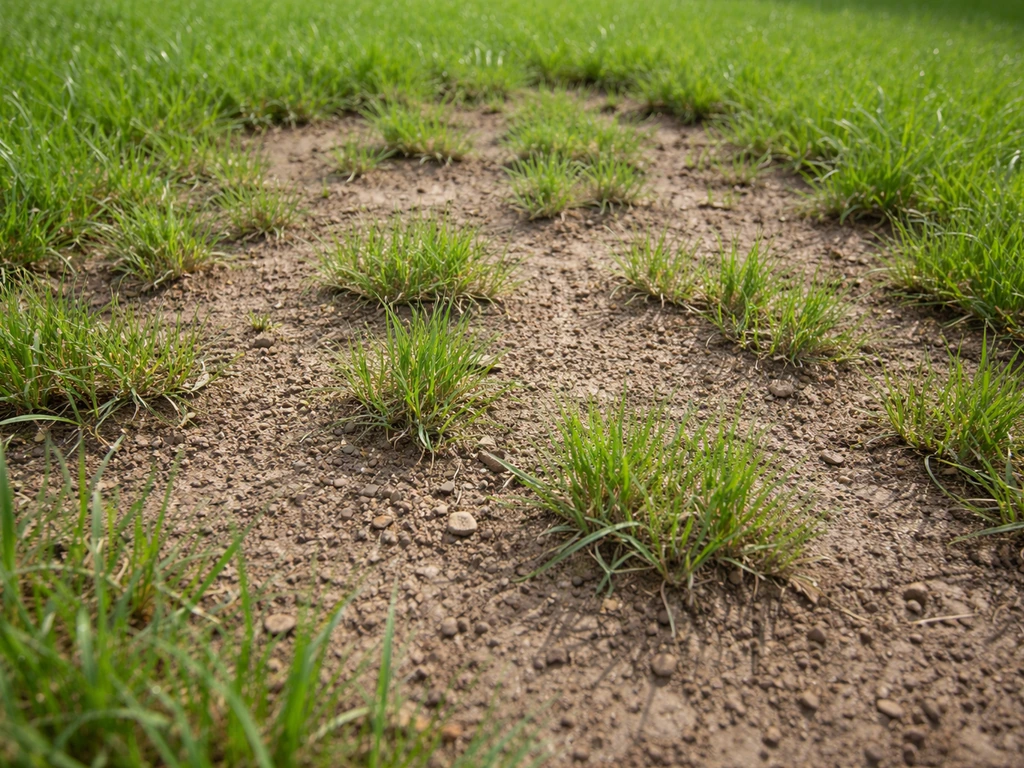
Brown patch is the most common disease problem on tall fescue lawns, showing up as circular patches or rings, sometimes with a smoke-ring border. It thrives in hot, humid conditions with nighttime temperatures above 70°F. Avoid evening watering (water in early morning), do not over-fertilize with nitrogen in summer, and mow consistently to reduce humidity inside the canopy. On zoysiagrass, large patch is the primary disease concern, especially in wet years or low-lying poorly drained spots. Keep thatch under half an inch, improve drainage where possible, and avoid overwatering in late fall and early spring when large patch is most active. Dollar spot appears as small, silver-dollar-sized dead spots across multiple grass types and usually signals low nitrogen or drought stress, so check your watering and fertilization schedule before reaching for a fungicide.
Troubleshooting thin spots and patchiness
Thin spots after a new seeding almost always trace back to one of three causes: inconsistent moisture during germination (surface dried out), seed washed or blown away in rain or wind, or shade and poor soil in specific spots. For patchy areas, overseed in the correct seasonal window for your grass type and keep those spots consistently moist. If the same spots fail repeatedly, do a small soil test in that exact area: localized soil issues (pH spike near a concrete edge, compaction under a buried root) often explain stubborn bare patches. Bermuda and zoysia established from sprigs or plugs will have obvious thin areas in the first season; this is normal and fills in with mowing, fertilizing, and watering through the growing season.
Long-term fairway maintenance rhythm
Once established, a fairway-style lawn is not low-maintenance, but it is manageable with a consistent routine. Mow frequently enough that you never remove more than one-third of the blade at once, which often means mowing every 4 to 7 days during peak growing season. Fertilize on a schedule tied to active growth, not the calendar. Aerate once a year, or twice a year for high-traffic areas. Check thatch annually and dethatch whenever it exceeds half an inch. Water deeply and infrequently once established (aiming for roughly 1 inch per week including rain) rather than the frequent shallow watering used during germination. This deeper watering pattern trains roots downward, building the drought tolerance that makes fairway turf resilient.
If you have already been through the basics of growing grass at home and want to take it further, the fairway approach is really just a tighter version of those same fundamentals applied with more precision on species selection, mowing height, and traffic management. The difference between a decent backyard lawn and one that genuinely looks like a fairway is mostly discipline in those three areas, applied consistently season after season.
FAQ
How can I tell if I should seed now, not just based on the month?
Use the calendar window as a starting point, then confirm with soil temperature at 1-inch depth. If you seed cool-season grass when soils are already running warm or you seed warm-season grass before soils stabilize above 65°F, germination becomes uneven and you end up with thin stripes that are hard to fix later.
Can I just spread seed on top of the existing lawn to get a fairway look?
Yes, but “seed-to-soil contact” is the key. After broadcasting, lightly roll the area and drag over it so seed sits in firm contact with the topsoil. If you leave seed floating on loose soil, it can germinate unevenly and wash away during the first rain.
What should I do if overseeding keeps failing in the same spots?
For cool-season grasses, avoid overseeding in thick shade where air circulation is poor and mowing will be higher than open-sun. If thin areas persist after several seasons, treat it as a spot soil or drainage problem, not a seed problem, and do a small-area soil test or core removal in those exact spots.
Is it safe to use preemergence weed killer right after seeding?
Don’t. Preemergence herbicides usually prevent grass seed from emerging, even if weeds would normally be controlled. Plan weed control around establishment, and rely on hand weeding until the lawn has put on multiple mowings.
How do I know whether my drainage problem needs a drain, not compost?
If the area stays wet more than 24 hours after rain, amendment alone often cannot solve it. In that situation you may need a drainage fix first (for example, a French drain or regrading), otherwise roots sit in low-oxygen soil and you will see persistent patchiness or disease.
Does aeration after seeding improve results?
Not always. If you aerate and seed, you still need moisture discipline during germination, because aeration creates channels that can dry out faster than the surrounding ground. Use more frequent, lighter watering immediately after seeding, then shift to deeper watering only after you see widespread germination.
How can I avoid watering too much during germination?
Overwatering is common and can look similar to under-watering at first. If seed beds are staying constantly soggy, you can lose germination and wash seed away. The “right” level is consistent moisture in the top 1 to 2 inches, not saturated soil, and you should stop increasing run time if water is pooling.
When is sprigging a bad choice compared with sod or seed?
For warm-season grasses, full success depends on aggressive early irrigation for sprigs. If you can’t irrigate consistently right after planting, sprigging is a higher-risk choice than sod or seed varieties that germinate quickly in your climate.
What’s the best way to manage dog or foot traffic on new turf?
If your dog traffic is causing damage, fencing is the fastest fix during establishment, but you also need to prevent rutting and compaction. Once the grass is established, rotate paths and re-evaluate high-traffic zones each season, because repeated compaction leads to thatch buildup and thinning.
How do I choose the right first mowing height for fairway-style turf?
Plan mowing height for the species and your shade level, then set your mower accordingly from day one. If you cut too low early, you remove leaf area before roots are deep enough, and you can’t “grow it back” into a fairway look.
Can I fertilize immediately after seeding to speed things up?
Fertilize after the establishment window, typically 30 to 60 days after planting, and only do pre-plant inputs based on your soil test (especially phosphorus and potassium). If you push nitrogen early, seedlings can burn or grow lush top growth without building root strength.
If I see no germination after a few weeks, what should I check first?
For most homeowners, the easiest diagnostic is to confirm whether the seed is intact and whether the soil is staying moist enough. If germination does not start after about three weeks and you find rotted or missing seed, the issue is usually watering extremes or washout, then you should patch and restart rather than keep waiting.
If my soil test is very acidic, can fertilizer alone solve it?
Yes, but you need the correct pH target for the grass and your local conditions. If soil is below about 5.5, nutrients can become unavailable even with fertilizer, so applying lime based on a soil test is what unlocks growth.
Why does my new lawn look ragged after the first few mowings?
For fairway aesthetics, sharp mowing blades are non-negotiable, but the bigger mistake is cutting too aggressively on young turf. Make small height adjustments after establishment, and only remove up to one-third of the blade per mowing to avoid stressing roots.
What can I realistically expect in deep shade for a fairway look?
If shade is reducing density, the “fix” is mostly sunlight management and mowing height, not heavier fertilizing. In deep shade, accept a rougher texture and reduce stress by mowing higher, avoiding heavy nitrogen, and thinning tree canopy where possible.
Next Article
How to Grow Natural Grass: Step-by-Step Organic Lawn Guide
Step-by-step organic guide to grow natural grass: pick varieties, prepare soil, seed, water, and fix thin or bare spots.