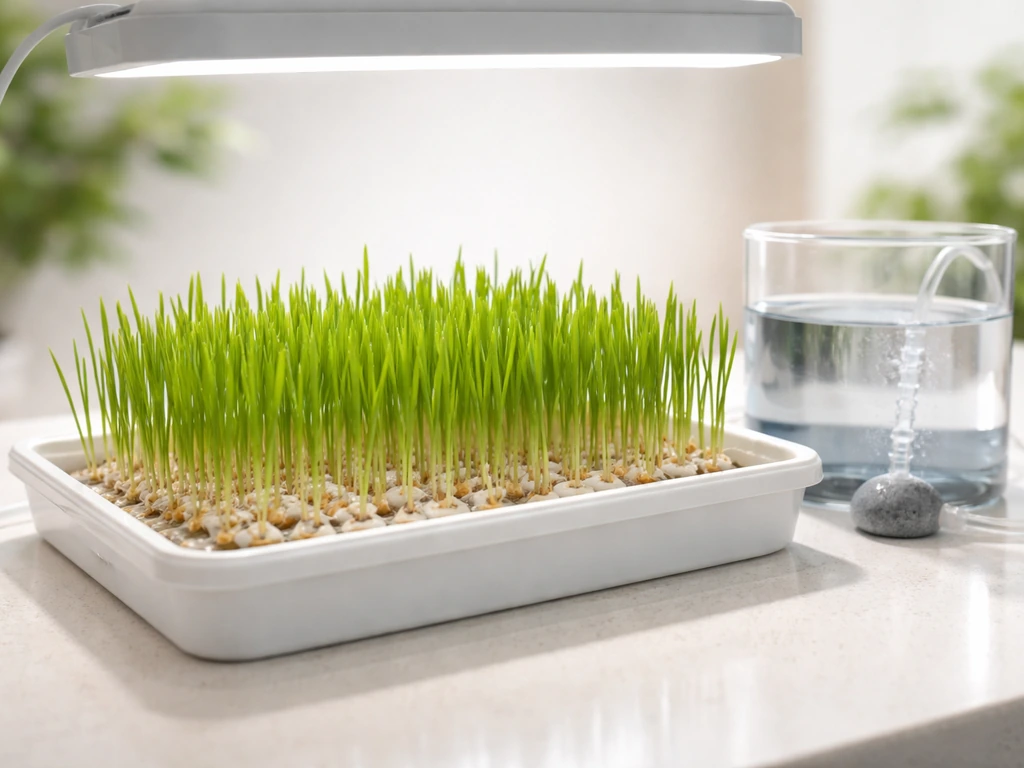
The best thing to grow cat grass in is a shallow tray or pot filled with plain, additive-free potting mix, placed inside a second tray for bottom watering. That combo gives you fast, even germination, easy moisture control, and the drainage you need to stop mold before it starts. Use wheat, oat, or barley seeds (or a mix of all three), keep the soil evenly moist but never waterlogged, and you'll have chewable grass in about 5 to 7 days.
What to Grow Cat Grass In: Best Planter Setup
Marcus Tillwell
30 Jun 2026
What cat grass actually is (and why the setup matters)
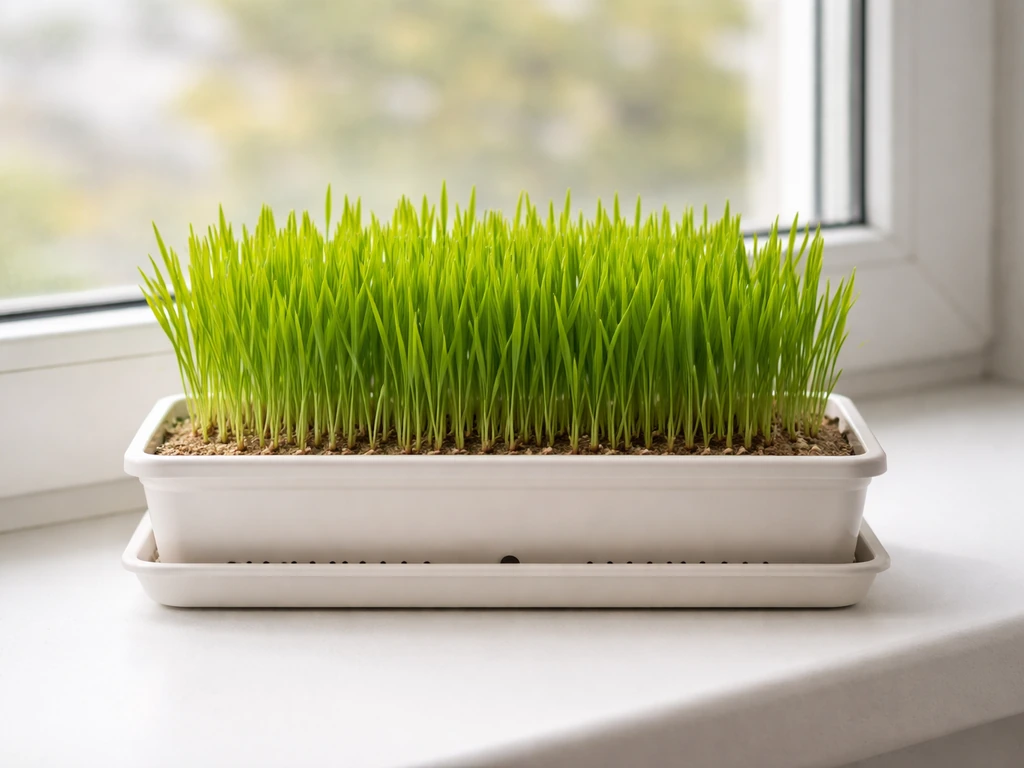
Cat grass is not a single plant species. It's a casual name for young cereal grasses, most commonly wheat (Triticum aestivum), oat (Avena sativa), barley (Hordeum vulgare), and sometimes rye (Secale cereale), grown in small containers for cats to chew on indoors. It's also not the same thing as catnip, which is a completely different plant that affects cats neurologically. Cat grass is purely a chewable green that most cats are drawn to naturally.
The reason the growing setup matters so much with cat grass is that you're growing dense, fast-sprouting seed indoors in a small, enclosed container. To grow cat grass hydroponically, you still need dense, fast germinating seeds and consistent moisture control, just without soil. That's a very different environment from a lawn or garden bed where air moves freely, roots spread wide, and rain comes and goes.
Indoors, poor drainage and too much moisture trapped in a small pot create the perfect conditions for mold, which is both a health risk for your cat and the number one reason cat grass fails. Getting the container, the growing medium, and the watering method right from the start solves most problems before they happen.
Which seeds to choose
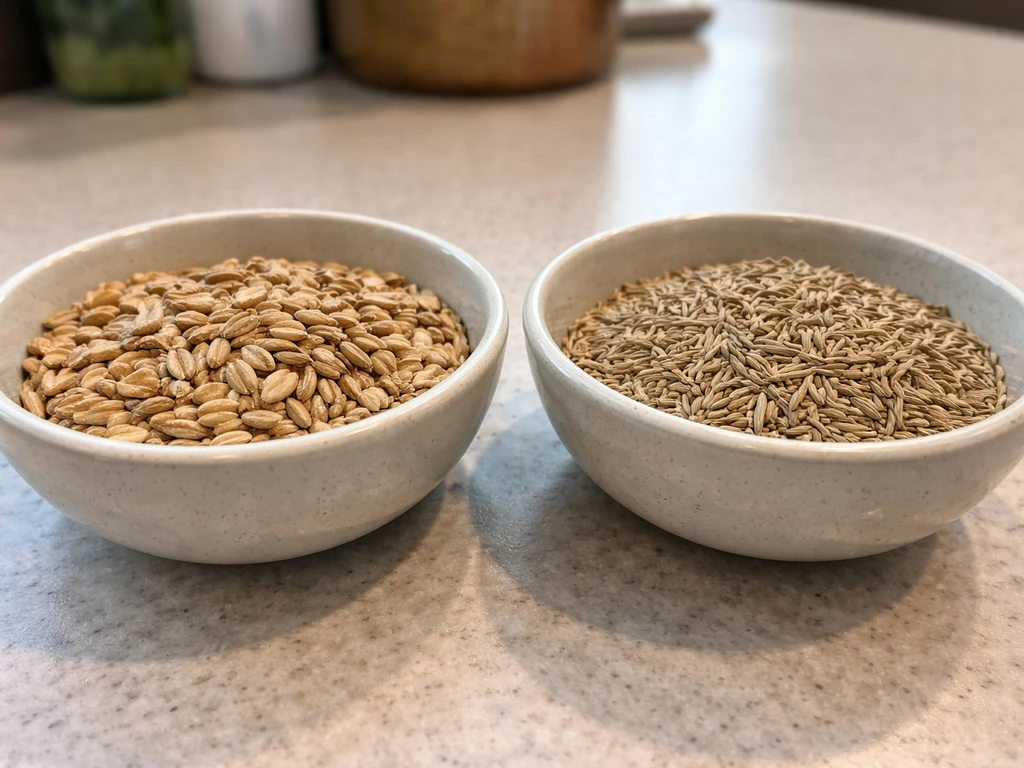
Stick to seeds sold specifically as cat grass or as individual cereal grains: wheat, oat, barley, or rye. A premixed bag labeled 'cat grass seed' usually contains a combination of two or three of these, which is fine. Wheat and oat are the most forgiving for beginners. They germinate quickly, grow evenly, and cats tend to accept them well. Barley adds a slightly different texture cats enjoy. Rye is fast but can get coarse and wiry if you let it grow too long.
One thing to be firm about: do not use standard lawn grass seed. Lawn seed mixes contain fescue, bluegrass, ryegrass, bermuda, or zoysia, and while some of those grasses are not inherently toxic, lawn seed is often treated with fungicides, coatings, or fertilizer additives that are not safe for cats to chew. There's also a practical problem: grass hulls from some lawn seeds can get lodged in a cat's mouth or throat. Cereal grain seeds sold for sprouting or for cats are clean, untreated, and sized correctly. If you want to go organic, look for seeds labeled certified organic, which ensures no chemical treatments.
The best containers and trays for growing cat grass
You have a few good options depending on how much space you have and how often you want to re-sow. The most practical setup for most people is a shallow plastic or ceramic tray or pot with drainage holes, placed inside a second solid tray that catches runoff. The inner pot is where the grass grows. The outer tray is your watering vessel. This two-tray method is the standard approach recommended by most cat grass kits, and it works well because it lets you water from the bottom without splashing or overwatering the top of the soil.
For the growing container itself, you don't need anything fancy. A 4-inch to 6-inch pot works for a single cat. A wider, shallower tray (roughly 6x9 inches or similar) gives you more surface area and lets you grow a denser patch that lasts longer. Shallow is actually better than deep here. Cat grass has short roots and doesn't need more than 2 to 3 inches of growing medium. A deep pot just holds excess moisture with no benefit.
| Container Type | Best For | Drainage | Notes |
|---|---|---|---|
| Shallow plastic tray with holes | Most beginners, re-sowing frequently | Good with outer catch tray | Cheap, easy to clean, widely available |
| Terra cotta pot | Single-cat households, windowsill growing | Excellent (porous walls wick moisture) | Naturally reduces overwatering risk |
| Ceramic pot with drainage hole | Longer-term use, aesthetics | Good | Heavier, holds moisture slightly longer than terra cotta |
| Biodegradable peat or coir pot | One-time grows, minimal cleanup | Decent | Dispose of whole pot after grass is spent |
| Catit or purpose-built cat planter | Cats who knock pots over | Varies by model | Wider base reduces tipping; check for drainage holes |
What growing medium to use (and what to skip)
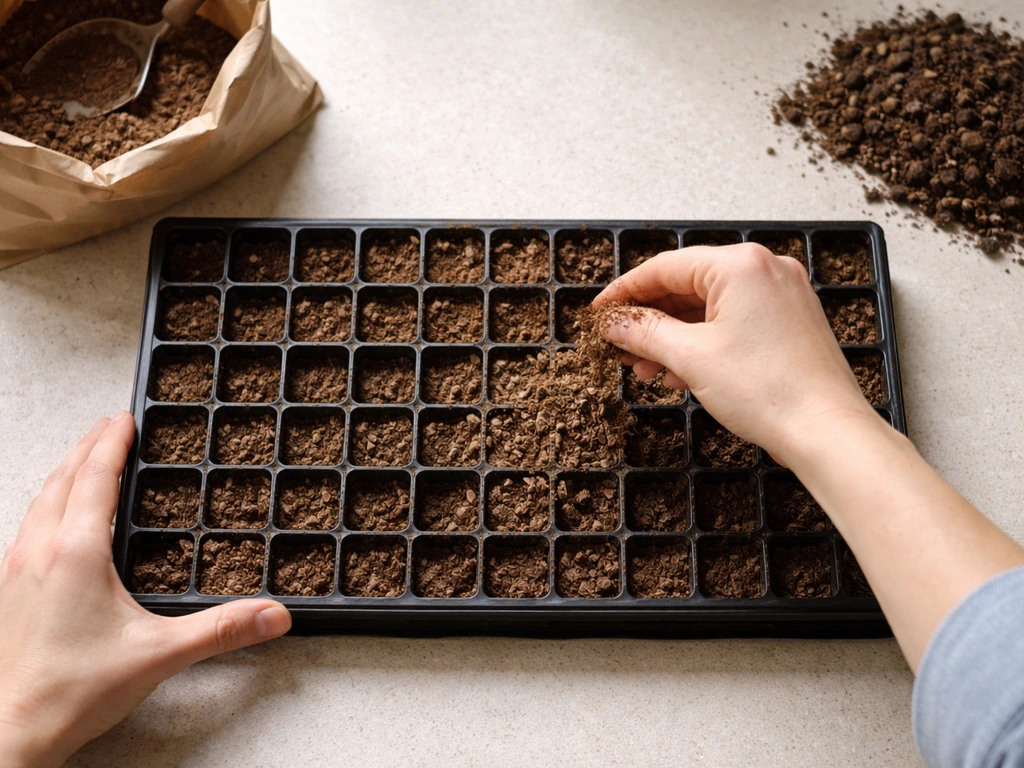
Plain, peat-based or coir-based potting mix is your best all-around choice. It's light, holds enough moisture for germination, and drains well when you're not overwatering. Fill your container to about 1 inch deep. That's genuinely all you need for cereal grass roots. Don't use garden soil from your yard. Outdoor soil compacts in small containers, drains poorly, and brings in insects and fungal spores that cause mold indoors much faster.
If you've had repeated mold problems with standard potting mix, try a blend of coco coir with a generous addition of perlite or vermiculite (roughly a 70/30 or 60/40 mix). Coir holds moisture well but drains faster than peat, and perlite or vermiculite keeps the mix from compacting and improves airflow around the roots.
Greenhouse Grower notes that growing media composition, including sand and perlite, affects moisture handling and can influence crop-media performance as moisture content rises to around 50, 60% by weight [perlite or vermiculite keeps the mix from compacting and improves airflow around the roots. ](https://www. pthorticulture. com/sites/ptgcpro/files/2024-05/greenhouse-grower-how-growing-media-handling-impacts-crop-performance_march-2020.
pdf). Reddit growers who made this switch report significantly less mold than with straight potting mix. The downside is you'll need to water slightly more often since the mix dries out a bit faster.
Whatever medium you use, make sure it has no added fertilizers, no slow-release pellets, and no wetting agents. Plain is always safer. Cat grass grows fast enough on its own that it doesn't need fertilizer, and those additives are not tested for cat ingestion. If you're curious about growing cat grass without any soil at all, that's a different approach (hydroponics or water-based sprouting) covered in other related guides. If you want to grow cat grass in water instead of soil, use a hydroponic or water-based sprouting method to keep the roots from sitting in stale, dirty liquid.
How to plant cat grass: step by step
- Soak your seeds in clean water for 6 to 8 hours before planting. This softens the seed coat and speeds up germination by a day or two. Drain completely before planting.
- Fill your container with potting mix to about 1 inch deep. Pre-moisten the mix so it feels damp like a wrung-out sponge, not wet and heavy.
- Scatter seeds densely across the surface. Cat grass is grown thick, not spaced apart. Aim for near-full seed coverage of the soil surface.
- Press the seeds gently into the top of the soil so they make good contact. You don't need to bury them deeply. A light press is enough.
- Cover the container loosely with a piece of plastic wrap or a dome lid for the first 2 to 3 days to hold in moisture and warmth while seeds germinate. Leave a small gap for airflow.
- Place the container in a warm spot (65 to 75°F is ideal). You don't need direct light yet. A kitchen counter or shelf works fine at this stage.
- Check moisture daily. If the surface looks dry, mist lightly with a spray bottle. You should not need to water heavily during this covered phase.
- Remove the cover once you see sprouts, usually around day 2 to 4. Move the container to a spot with indirect natural light.
- Switch to tray watering: pour about 1 inch of water into the outer catch tray and let the inner pot absorb from the bottom. After about an hour, drain any remaining water from the tray. Do not let the pot sit in water longer than that.
- Grass will be ready for your cat at around 4 to 6 inches tall, typically day 5 to 7 under good conditions. In ideal warmth, it can grow close to 1 inch per day once it gets going.
Light, watering, and keeping mold out
Light
Cat grass doesn't need intense direct sunlight. A bright windowsill with indirect light is ideal. A south or east-facing window works well. Too much harsh afternoon sun can dry the soil out unevenly and stress the grass. Too little light and the grass will be pale and weak. If you have no good natural light, a basic grow light or even a strong desk lamp a few inches above the tray will do the job.
Watering
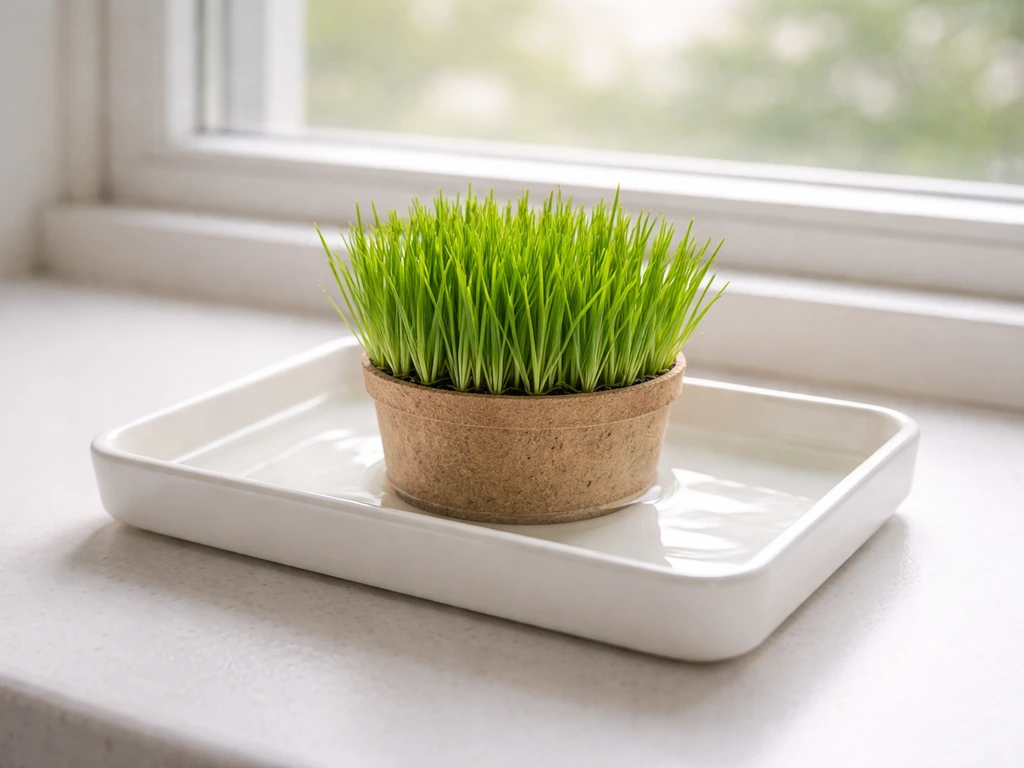
Once sprouted, water your cat grass about twice a week using the tray method described above. If you want step-by-step guidance, this is where to focus on how to grow grass indoors for cats successfully water your cat grass about twice a week. Pour water into the outer tray, let the pot absorb for an hour, then drain. You can also use a spray bottle for a light top-mist between waterings if the surface is drying out. The goal is evenly moist soil, not wet soil. If you press a finger about half an inch into the mix and it feels damp, it doesn't need water yet.
Mold prevention
Mold is the most common problem with indoor cat grass, and it almost always comes from one of three things: overwatering, poor drainage, or no airflow. If you see white fuzzy mold at the base of the stems or on the soil surface, drain the tray immediately and move the pot somewhere with better air circulation. Don't mist the base of the grass, only the soil surface if needed. A small fan nearby on low setting can make a real difference. If mold keeps recurring, switch to the coir-plus-perlite mix, which drains faster and stays less hospitable to mold than dense potting mix.
Troubleshooting slow or patchy growth
- Seeds not sprouting by day 4: the soil is probably too dry or too cold. Check that you're keeping it above 65°F and the soil surface isn't drying out between checks.
- Patchy growth with bare spots: uneven seed contact with soil is usually the cause. Press seeds more firmly next time, and make sure your potting mix is pre-moistened before seeding.
- Yellowing or drooping grass after a few days: this is almost always overwatering. Drain the outer tray, hold off watering for a day, and let the mix dry out slightly.
- Grass growing leggy and pale: not enough light. Move it to a brighter window or add a light source.
- Seeds growing mold before sprouting: too much moisture under the cover. Lift the cover for 10 to 15 minutes each day to allow air exchange during germination.
Serving it to your cat, re-sowing, and what to avoid
When and how to serve it
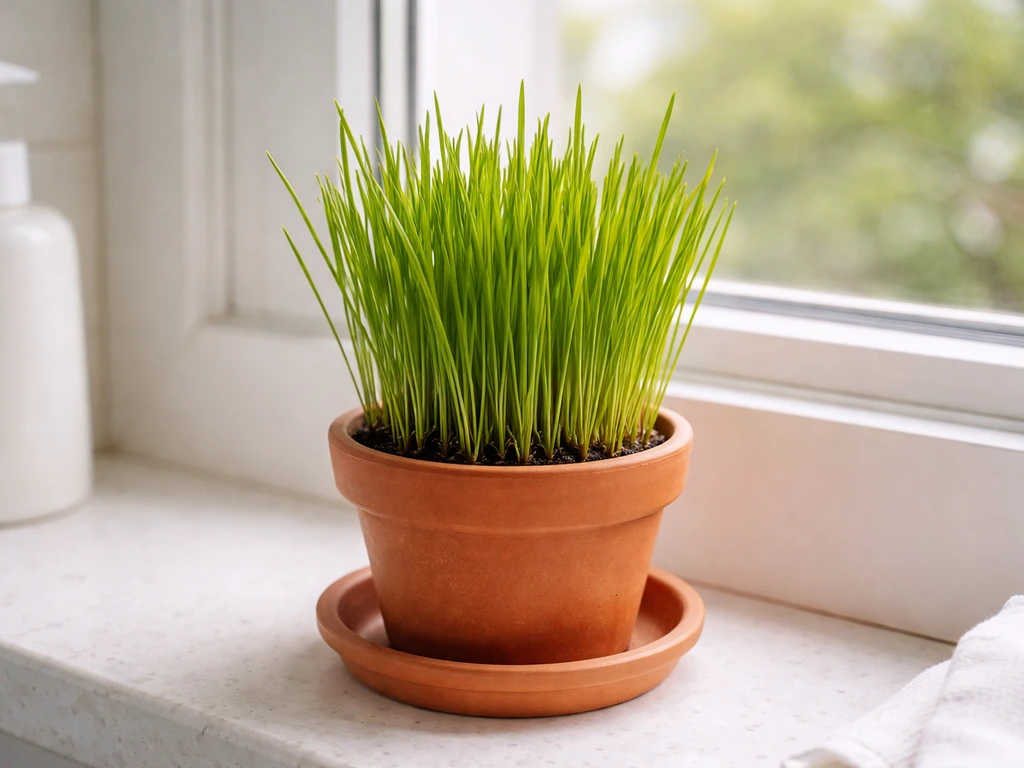
Let the grass reach at least 4 inches before giving your cat access. This gives the roots time to anchor properly so the whole pot doesn't get yanked out of the soil on the first chew session. You can place the whole tray on the floor or a low surface and just let your cat at it. Most cats figure it out quickly. Some are immediately interested; others take a day or two to warm up to it.
Re-sowing schedule
A single pot of cat grass typically lasts 1 to 3 weeks before it gets chewed down, turns yellow, or starts going to seed. The most practical approach is to start a new pot every 1 to 2 weeks so you always have a fresh batch ready when the current one is spent. If you want the full step-by-step, follow this guide on how to grow trixie cat grass from seed to harvest start a new pot.
This rotating schedule is simple once you get the rhythm: start a new pot, hand it off when it hits 4 to 6 inches, and compost the old one. You don't need to try to revive an old pot. Cat grass is cheap and fast enough that starting fresh is always better than nursing a declining batch.
What to keep away from your cat grass setup
- No fertilizers of any kind, including liquid fertilizers, slow-release pellets, or compost teas. Cat grass does not need them and your cat will chew this directly.
- No pesticides or insecticidal soaps, even ones labeled 'organic' or 'pet safe.' If you get fungus gnats (small flies near the soil), the fix is drying out the soil better between waterings, not spraying anything.
- No potting mixes with added moisture crystals, wetting agents, or synthetic fertilizer beads. These are common in branded potting soils and are not appropriate for a plant your cat eats.
- No lawn grass seed. Treated seeds and the wrong grass types can cause problems ranging from minor digestive irritation to physical hazards from seed hulls.
- Do not confuse cat grass with toxic plants. Cat grass (cereal grasses) is safe. But plants like lilies, pothos, and many common houseplants are toxic to cats. Keep cat grass clearly separated and labeled if you grow other plants nearby.
If you want to go deeper on specific growing methods, like growing cat grass in water alone, trying a hydroponic setup, or avoiding soil entirely to cut down on mess and mold, those are all valid paths worth exploring once you have the basics down. The core principles stay the same: clean seeds, good drainage, controlled moisture, and no chemical additives anywhere near what your cat is going to chew.
FAQ
Can I grow cat grass in a pot with no drainage holes?
Use a shallow growing container with drainage holes, and keep it inside a second tray for bottom watering. If your pot or tray does not drain, the mix stays wet and mold usually starts at the stem base, even if you water less often.
Is it safe to use regular grass seed if I do not fertilize it?
Avoid any labeled “lawn fertilizer,” “weed and feed,” or seed-coating products. Even if a grass is not inherently toxic, coatings and additives can be unsafe because your cat chews the blades close to the seed and soil surface.
What if my only option is sprouting seeds instead of “cat grass” labeled seed?
Yes, but only if it is truly an additive-free sprouting seed. Check the package for “no treatment” or “untreated for sprouting,” and skip seed mixes that contain “starter,” “enhancer,” or pelleted components.
Should I try to revive a moldy or yellowing cat grass pot?
Don’t. Start fresh every time, because declining batches become harder to keep evenly moist, and they are more likely to go moldy. Rotating in new pots every 1 to 2 weeks gives you consistent chew quality without trying to recover a failing tray.
How deep should the growing mix be for what to grow cat grass in?
For cat grass, depth is mainly about preventing excess wetness. Keep the growing medium around 1 to 2 inches deep and focus on bottom watering and good airflow, rather than adding more soil to make it last longer.
How do I know when to water between the usual 2 times per week?
Check dryness by feel, not by schedule. If the mix is still damp about half an inch down, hold off watering, even if it is not time for your usual routine.
Can I mist the grass to keep it from drying out?
Yes, but keep it light and brief. A quick surface mist is okay only to fix a drying top, but do not repeatedly mist the base of the stems, since that creates moist pockets right where mold starts.
What should I do if mold appears, should I just scrape it off?
When you need to remove mold, immediately drain the outer tray and discard any heavily affected growing mix. Wipe the outer tray with mild soap and water, let it dry fully, then start a new pot rather than reusing the same soil.
How long do I need to wait before my cat can chew it?
Once it reaches about 4 inches, you can offer it right away. If you notice your cat yanking the whole tray before the roots anchor, wait longer (up to around 5 to 6 inches) or switch to a wider, sturdier tray.
How long does one pot of cat grass last in your planter setup?
Typically, 1 cat grass pot lasts 1 to 3 weeks, but it varies with light, watering consistency, and how quickly your cat chews. Using a rotation schedule (starting new pots every 1 to 2 weeks) prevents a gap when one batch ends.
Can I use garden soil for cat grass?
Use only clean, additive-free potting mix, never outdoor soil. Outdoor soil compacts and brings in insects and fungal spores, which increases the chance of mold and gnats indoors.
My cat grass looks thin and pale, what should I adjust first?
If the blades are pale, weak, or bending, it is usually not enough light or inconsistent moisture. Move to a brighter spot with indirect sun, and avoid drying out unevenly with harsh direct afternoon light.
Next Article
How to Grow Cat Grass Hydroponically Step by Step
Step-by-step guide to grow cat grass hydroponically with seeds, water, pH, light, airflow, harvesting cycles, and troubl