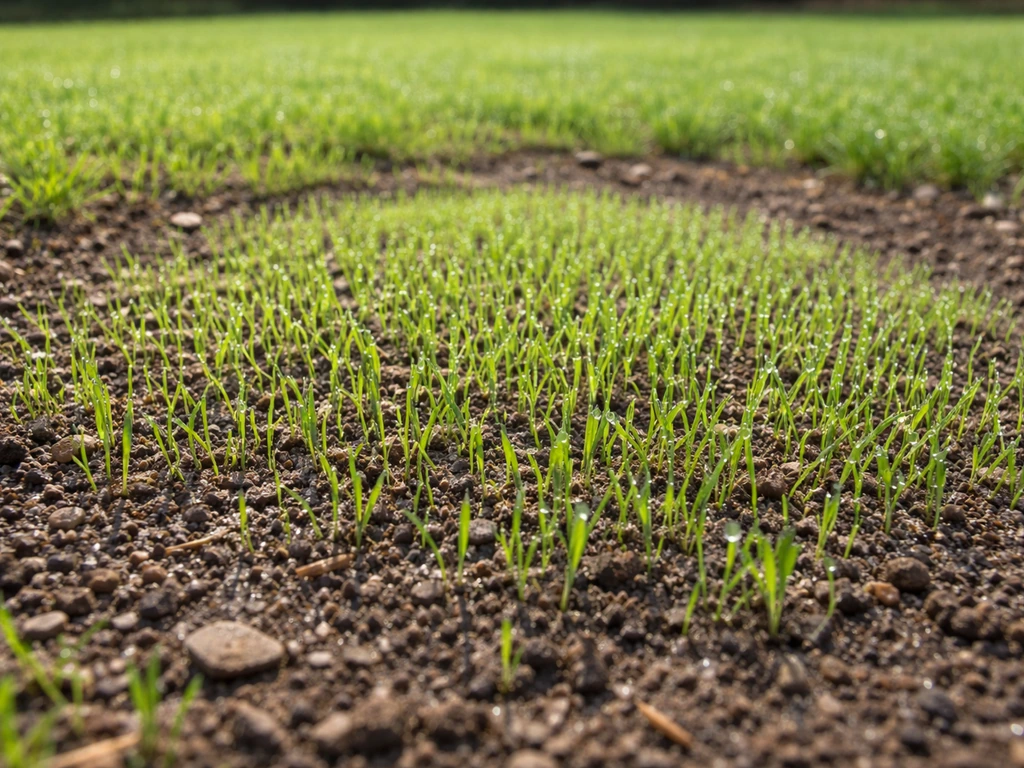
To grow vetiver grass at home, skip the seeds and start with slips (small root divisions), plant them in spring once soil temperatures hit around 80°F, space them 4 to 6 inches apart in a shallow furrow, water daily for the first two weeks, and keep weeds cleared until the clumps fill in. The same warm-season care principles can also help you figure out how to grow durva grass successfully. That's the core of it. Everything else is just managing the details for your specific soil, climate, and site.
How to Grow Vetiver Grass at Home: Step by Step Guide
Marcus Tillwell
17 Jun 2026
What vetiver actually is and what to plant

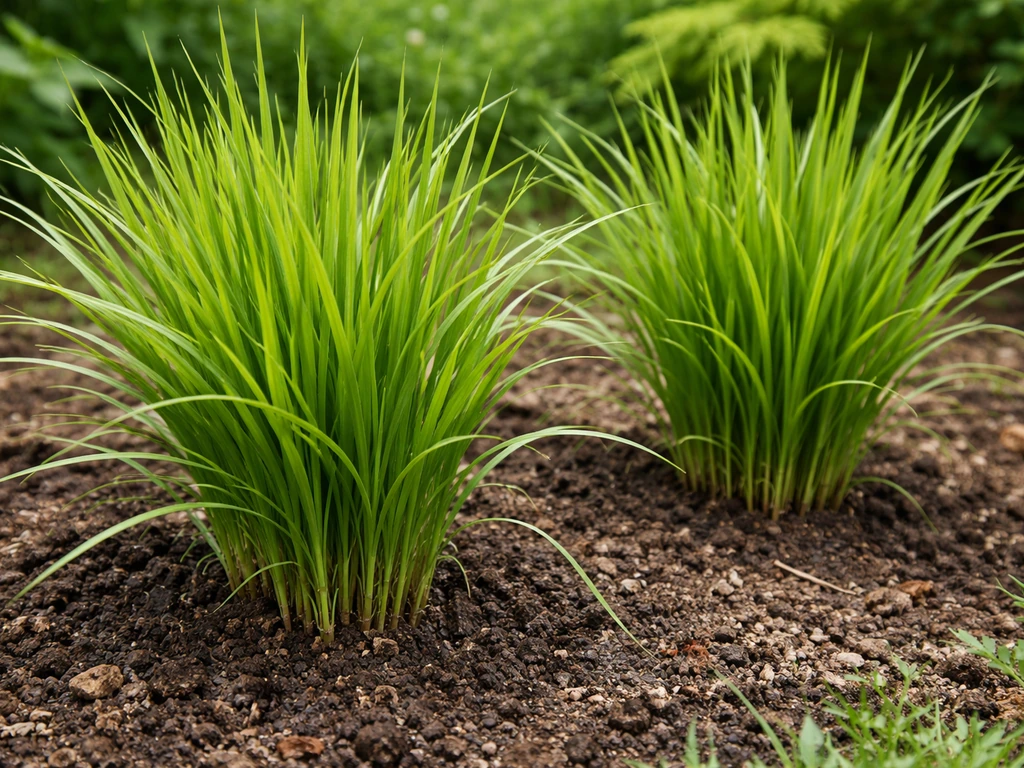
Vetiver (Chrysopogon zizanioides) is a clumping tropical grass native to the Indian subcontinent, and it behaves very differently from the turf grasses most homeowners are used to. It grows in dense upright clumps, not a spreading mat like bermuda or zoysia. Its most remarkable feature is underground: given the right conditions, its roots can go 3 meters deep, which is what makes it so effective at holding slopes, controlling erosion, and anchoring soil along drainage channels.
When it comes to what to plant, vetiver almost never produces viable seed. It rarely sets seed at all, and where it does, germination rates are poor and temperature-dependent. For home use, forget seeds entirely. You want slips, which are small divisions of root clumps with a few tillers attached. These are the standard planting unit used worldwide, and they're what give you a reliable, predictable result. If you can source well-rooted slips with multiple tillers already formed, your survival rate will be noticeably better than planting bare, single-stem divisions.
One important note: for hedgerow and erosion-control use, vetiver organizations specifically recommend sterile or seedless cultivars (like 'Sunshine' in the US). These won't spread aggressively, which matters if you're in a warmer climate where invasive spread is a concern. Check with your local extension service or a vetiver supplier to confirm you're getting a recommended cultivar before you buy.
Best time to plant and where to put it
Vetiver is a warm-season tropical grass that needs heat to get moving. Soil temperature is your main planting trigger, not the calendar date. You want soil temps consistently at or above 65°F at planting depth, with 80 to 85°F being ideal for fastest establishment. Slips root up much quicker at those warmer temperatures, so planting too early in cool soil is one of the most common reasons for slow establishment.
In practical terms, that means: if you're in the southern US (zones 8 and warmer), aim for March 15 through May 15. If you're further north or in a cooler climate, push that to May 1 through June 15. The goal is to plant just before a period of reliable rainfall so the slips get watered in naturally. Planting in midsummer heat is possible but will demand more irrigation effort from you during establishment.
For location, vetiver wants full sun. It's a tropical grass that thrives in heat and direct light, and it will struggle in shaded spots. That's a real difference from something like mondo grass or monkey grass, which tolerate shade well. If you want mondo grass too, the exact planting and care steps are a bit different from vetiver, so it helps to follow mondo-specific guidance.
Pick your sunniest areas, especially south-facing slopes or spots that get baked in summer. Vetiver can handle waterlogged spots, poorly drained areas, and even slopes that get occasional flooding. It's remarkably tough once established, surviving submergence in water for up to five months, and tolerating temperatures as extreme as 55°C. For most homeowners, that resilience is a feature, not a concern.
Getting the soil ready
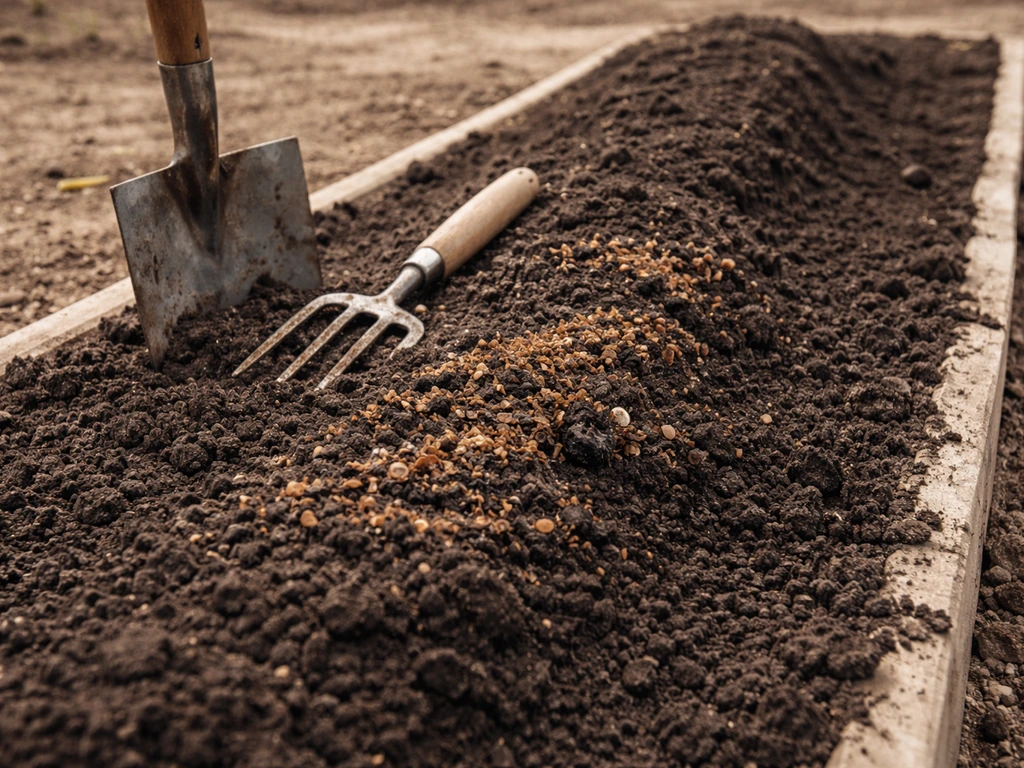
Here's the good news: vetiver is genuinely unfussy about soil. It grows in clay, sand, low-fertility soils, and everything in between. But that doesn't mean soil prep is irrelevant. The first months after planting are when vetiver is most vulnerable, and giving the roots a good start makes a meaningful difference in how quickly the stand fills in.
Clay soil
If you're working with heavy clay, your main enemy is compaction and poor drainage in the top few inches where the slip roots first need to establish. You don't need to overhaul the whole bed. Loosen the planting row to about 6 to 8 inches deep with a fork or narrow spade. If your clay is extremely dense, mixing in a little compost or aged organic matter in the immediate planting zone helps. Vetiver's roots will eventually push through clay on their own, but giving the young slip a softer start reduces establishment failures.
Sandy soil
Sandy soil drains fast, which means your main challenge is keeping moisture at the slip crown during the critical first few weeks. Organic matter mixed into the planting row helps retain water. Farm yard manure (FYM) or well-composted material works well here. Vetiver Network International recommends roughly 100 kg of FYM per 100 running meters of hedgerow at planting, which gives you a sense of scale. For a backyard row of 10 to 20 feet, a few shovelfuls of compost worked into the planting trench is a reasonable equivalent.
General drainage and amendments
Vetiver doesn't need fertile soil to survive long-term, but a small boost at planting helps it establish faster. If you're on genuinely infertile soil, a basic balanced fertilizer (NPK) worked into the trench is useful. On average suburban soil, you likely don't need anything beyond compost. The most important amendment for every soil type is organic matter at the planting zone. It improves moisture retention in sand, softens clay, and feeds the microbial environment around the new root zone.
How to plant vetiver slips
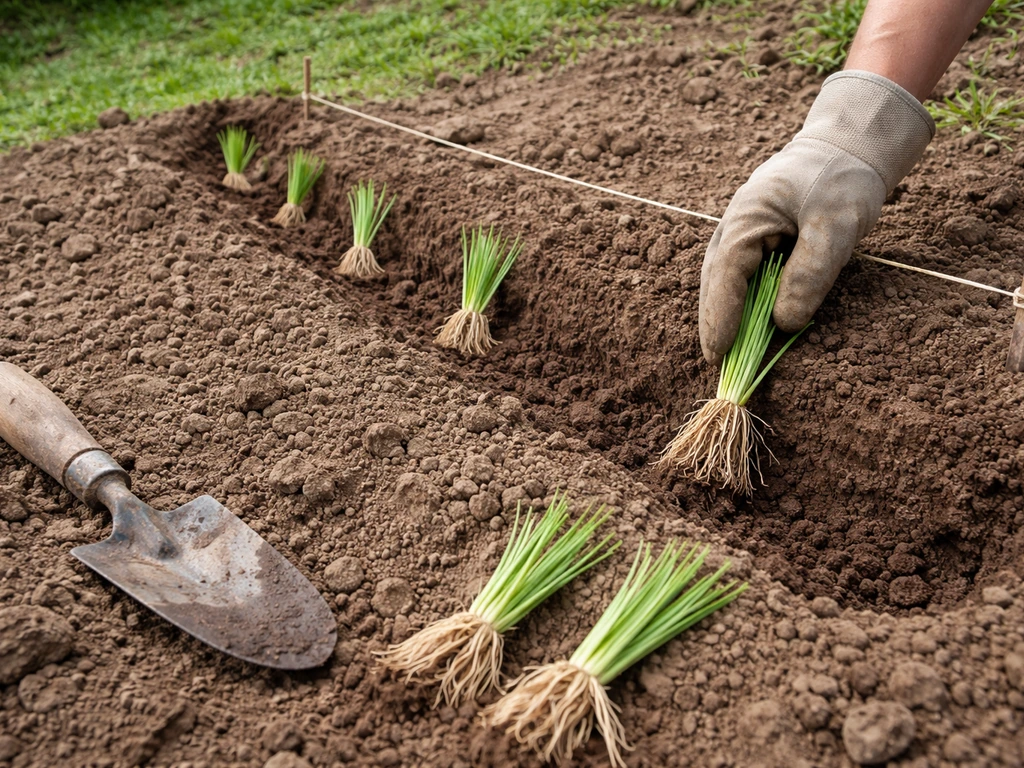
The actual planting process is straightforward, but the details of spacing, depth, and setup matter more than people expect. Getting these right is the difference between a stand that fills in confidently over one season and one that ends up patchy and full of gaps.
- Mark out your planting line. For erosion control or a hedge, this usually follows a contour or slope edge. For a garden bed border, it's simpler: just lay out a straight or curved line where you want the hedge.
- Dig a shallow furrow or V-shaped trench about 4 to 6 inches deep along your planting line. In dry conditions, dig a slightly deeper V-ditch to concentrate any available moisture around the crown.
- Prepare your slips. If the roots are very long, trim them back to about 4 inches. Trim the top growth to 6 to 8 inches as well. This reduces moisture stress on the plant while it roots in.
- Plant 2 to 3 slips per planting station, with stations spaced 4 to 6 inches apart along the row (roughly 100 to 120 mm, or about 4 to 5 inches, between individual plants). Tighter spacing means faster hedge formation.
- Set each slip so the crown (the junction between roots and stems) sits just below the soil surface, about an inch deep. Don't bury the whole stem, just anchor the roots in the soil.
- Firm the soil around the crown with your hands or foot to eliminate air pockets. Good soil contact at the crown is critical for the slip to root.
- Water the entire row immediately after planting, even if rain is expected. This settles the soil around the crown and kick-starts root contact with the soil.
If you're planting in containers, use a deep pot (at least 12 inches, ideally deeper) since vetiver roots aggressively downward. One or two slips per large container works well. Use a well-draining potting mix with some compost, and water in the same way as in-ground plants.
Watering and early care during establishment
The first two weeks after planting are the most critical. The slip has no established root system yet, and it's completely dependent on the moisture you provide. In dry weather, water every day for the first two weeks. The blank" rel="noopener noreferrer">Vetiver System guidance also says that in dry weather you should water daily for the first two weeks after planting, then shift to watering every second day. After that, you can drop to every second day, or two to three times per week if you're in a climate with some natural rainfall. Keep the soil consistently moist at the crown level but not waterlogged.
As the slips begin to show new growth (usually within 3 to 6 weeks if soil temperatures are warm enough), that's your signal that roots are establishing. You can gradually back off watering frequency at this point. By the end of the first full growing season, established vetiver clumps are remarkably drought-tolerant and won't need regular irrigation.
Weeding is the other major task during establishment. Vetiver is not competitive against weeds when it's young. Hand-pull or lightly hoe any weeds growing directly in the planting row, especially for the first 6 to 8 weeks. Once the clumps thicken up and start to push together, vetiver can handle weeds between hedgerow gaps without any significant impact on its growth. But those early weeks matter: weeds competing for water and light at the crown can slow or stall establishment noticeably.
Ongoing maintenance once vetiver is established
Feeding
Vetiver is a low-maintenance plant once it's past the establishment phase. On fertile or average garden soil, you likely don't need to fertilize at all after the first season. On poor or sandy soil, a light application of balanced NPK fertilizer at the start of the second growing season (spring) can boost density and vigor. This is the same principle that works for other warm-season grasses: a spring feed when soil temps warm up encourages fresh growth and tillering.
Pruning and cutting back
Vetiver will grow quite tall if left uncut, reaching 5 to 6 feet in a good growing season. Most homeowners prune it at least twice a year to keep it tidy and encourage dense, upright regrowth from the base. The first cut is typically in late spring or early summer, and the second in late summer or early fall. After the initial pruning establishes your rhythm, you can trim monthly if you want a more manicured look. Cut back to about 12 to 18 inches above the ground. Don't scalp it to the crown.
If you're growing vetiver for the roots (vetiver root oil is a real product, used in perfumery), harvest roots after 12 to 18 months when the clump is well established. Dig the clump, wash the roots, and replant divisions to maintain your stand.
Winter and cold weather
In zones 8 and warmer, vetiver usually survives winter with the top growth dying back and re-sprouting in spring. In cooler climates, a late frost can kill the top growth entirely, and the plant may not recover until mid-May. If you're in a marginal zone, protect the crown with a layer of mulch over winter and don't be alarmed if it looks completely dead in early spring. Give it time before writing it off.
Troubleshooting when things don't go as expected
| Problem | Likely Cause | What to Do |
|---|---|---|
| Slips aren't showing new growth after 4 weeks | Soil too cold, or poor root contact at crown | Check soil temperature; if below 65°F, wait. Firm soil around crown and water thoroughly. |
| Slips wilting or dying shortly after planting | Insufficient watering or heat stress before roots establish | Water daily without fail for at least 2 weeks. Trim top growth shorter to reduce moisture demand. |
| Patchy stand with gaps in the row | Slips failed to root; possibly planted too shallow or too dry | Replant gaps with fresh slips immediately. Use V-ditch method in dry conditions to concentrate moisture. |
| Very slow growth, pale or yellowish plants | Nutrient-poor soil or waterlogged roots in the early phase | Apply light NPK or compost top-dress. Check drainage; vetiver handles flooding long-term but not stagnant, anaerobic root rot during establishment. |
| Weeds overwhelming young plants | Weed competition during establishment window | Hand-weed the planting row immediately. Mulch lightly between plants to suppress weeds without smothering crowns. |
| Top growth killed by frost | Frost event in late winter or early spring | Mulch crown, wait until mid-May. Vetiver roots often survive even when top growth is fully killed. |
| Disease or fungal spots appearing | Plants under stress, especially on shallow soil with drought | Improve soil moisture consistency. Stressed vetiver on shallow soils is most susceptible to disease. |
The most common fix across almost all of these problems is the same: replace failed slips quickly and water more consistently in the first two weeks. Most vetiver establishment failures come down to dry crowns in the first fortnight after planting. Once you get past that window with consistent moisture, vetiver is one of the toughest plants you'll grow.
Realistic timeline for what to expect
Here's an honest look at what a typical vetiver establishment timeline looks like when conditions are right:
- Weeks 1 to 2: Slips look dormant. No visible top growth. Roots are starting to anchor. Keep watering daily.
- Weeks 3 to 6: New green shoots appear from the crown. This is the signal that roots have taken. Weeding matters most during this window.
- Months 2 to 4: Clumps start to size up visibly. You'll see multiple tillers forming at the base. Watering frequency can decrease.
- Months 6 to 12: A well-established hedgerow or stand starts to look full and dense. First pruning can happen during this period.
- Year 2 and beyond: Vetiver is fully established, deeply rooted, and largely self-sufficient. Maintenance is minimal: annual or biannual cutting, occasional feeding on poor soils.
If you're comparing vetiver to other ornamental or utility grasses, it's in a different category from spreading grasses like carpet grass or carabao grass, which colonize bare areas horizontally. Vetiver stays in clumps and forms its stand by the individual plants densifying, so the initial planting density you set is what you work with. Tight spacing from the start means a faster, more complete hedge.
If you go into the project with good slips, plant at the right soil temperature, water consistently for that first two weeks, and clear weeds during the establishment phase, vetiver will reward you with one of the most durable, low-maintenance grass stands you'll ever put in the ground. If you're specifically looking for how to grow carpet grass, the best approach is different, so use a guide tailored to its light, mowing, and watering needs.
FAQ
Can I plant vetiver anytime if I keep watering? (My soil is a bit cool)
Yes, but use the right timing and prep. Even if the “slips are available,” don’t plant when soil is still cool, since slow rooting is the main reason slips fail. Before planting, re-check soil temperature at planting depth (not just air temp), then loosen the planting row and water in deeply enough that the crown does not dry out during the first 14 days.
How do I know whether my vetiver slips are good quality?
Choose slips that already have multiple tillers and visible root mass, and avoid single bare stems if possible. If your slips arrive with little root structure or are dried out, soak the clump base briefly in clean water and plant immediately, then treat the first two weeks as critical with daily watering to recover.
What spacing should I use if I’m planting vetiver as a hedge versus for looks? (Can I space them farther apart?)
For erosion control and hedgerows, typical spacing is 4 to 6 inches in a continuous row, tighter than you would use for many ornamental grasses. If you are planting a small home garden accent, you can use wider spacing, but expect slower clump fill-in. The tradeoff is simple: tighter initial density usually means fewer gaps.
Should I fertilize at planting, or only later?
Fertilizer is not usually needed beyond the planting zone because vetiver can establish on low fertility. If your soil is extremely poor, apply balanced NPK only in the trench or around the slip area at the start of the second growing season, not immediately at planting. Over-fertilizing early can encourage weak, lush growth and make watering issues harder to manage.
How low can I cut vetiver without damaging it?
Cutting too low (scalping to the crown) can reduce regrowth because the plant relies on protected basal growth points. A safer rule is to trim to about 12 to 18 inches above the ground, usually late spring or early summer, then again late summer or early fall.
Why doesn’t my vetiver seed germinate reliably? Can I still grow it from seed at home?
A big misconception is that vetiver can be grown from seed at home. Since seed set is rare and germination can be inconsistent, buying or collecting seed is usually not a reliable path. Stick with slips for predictable establishment, especially if you need a uniform row.
Can I mulch vetiver after planting, and should I mulch it in winter?
Mulch can help during winter or to moderate moisture, but keep it away from directly covering the crown right after planting in warm months. In cool climates, apply mulch over winter after growth slows, and monitor so the crown doesn’t stay cold and wet for long stretches during establishment.
What changes if I’m growing vetiver in containers instead of in-ground?
Container-grown vetiver needs deeper pots and more careful moisture control, because roots dry faster in confined soil. Use a pot at least 12 inches deep, 1 to 2 slips per large pot, keep the mix well-draining, and water to maintain crown moisture without pooling.
Will vetiver survive heavy rain or standing water? What about right after planting?
Yes, vetiver can tolerate flooded conditions once established, but young slips need crown-level moisture control, not prolonged soaking. If your site is frequently waterlogged, loosen the planting row and ensure the crown does not sit in standing water during the first two weeks, since that window drives early failure.
My vetiver looks dead in early spring. How long should I wait before replanting?
Early “dead-looking” growth is common in marginal zones. If the crown is alive, it should resprout after the last hard frosts, sometimes not until mid-May in cooler areas. Give it time, avoid aggressive cutting until you see new shoots, and protect the crown with mulch going into winter.
What should I do if my vetiver isn’t growing after a month?
If establishment stalls, focus on the crown moisture window first. The most effective next step is to replace failed slips promptly and then tighten your watering routine for the first 14 days, aiming for consistently moist crown conditions (not waterlogged). After new growth appears (often 3 to 6 weeks in warm soil), reduce watering gradually.
Next Article
How to Grow Carpet Grass From Seed for Faster Results
Step-by-step how to grow carpet grass from seed faster: choose type, prep soil, seed rates, watering, and fixes for patc