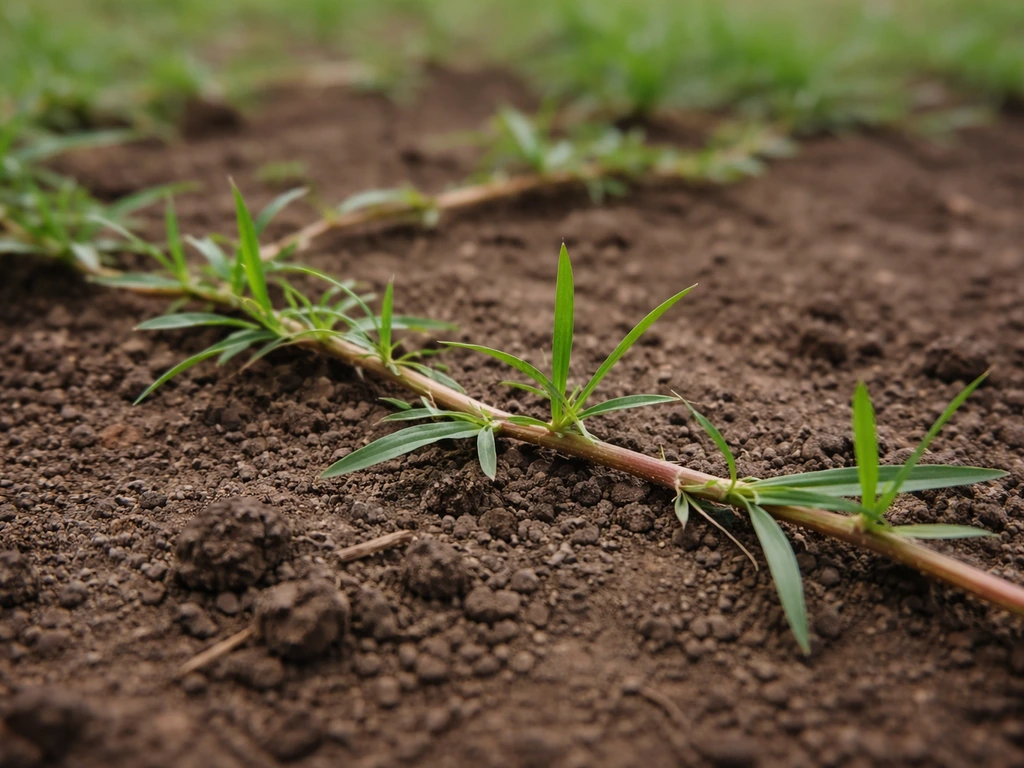
Carabao grass (Axonopus compressus, also called broadleaf carpetgrass) establishes fastest when soil temperatures are consistently above 70°F and you plant between late spring and midsummer. Clemson University’s Home & Garden Information Center describes carpetgrass as a creeping warm-season grass native to the West Indies. If you hit that window, use plugs or sod for the quickest cover, prep your soil to a slightly acidic pH of 5.0 to 6.0, water lightly and frequently until roots take hold, then back off to deep-and-infrequent irrigation. Done right, you can have a solid stand filling in within 6 to 10 weeks.
How to Grow Carabao Grass Fast: Step-by-Step Guide
Marcus Tillwell
31 May 2026
What Carabao grass actually needs to thrive
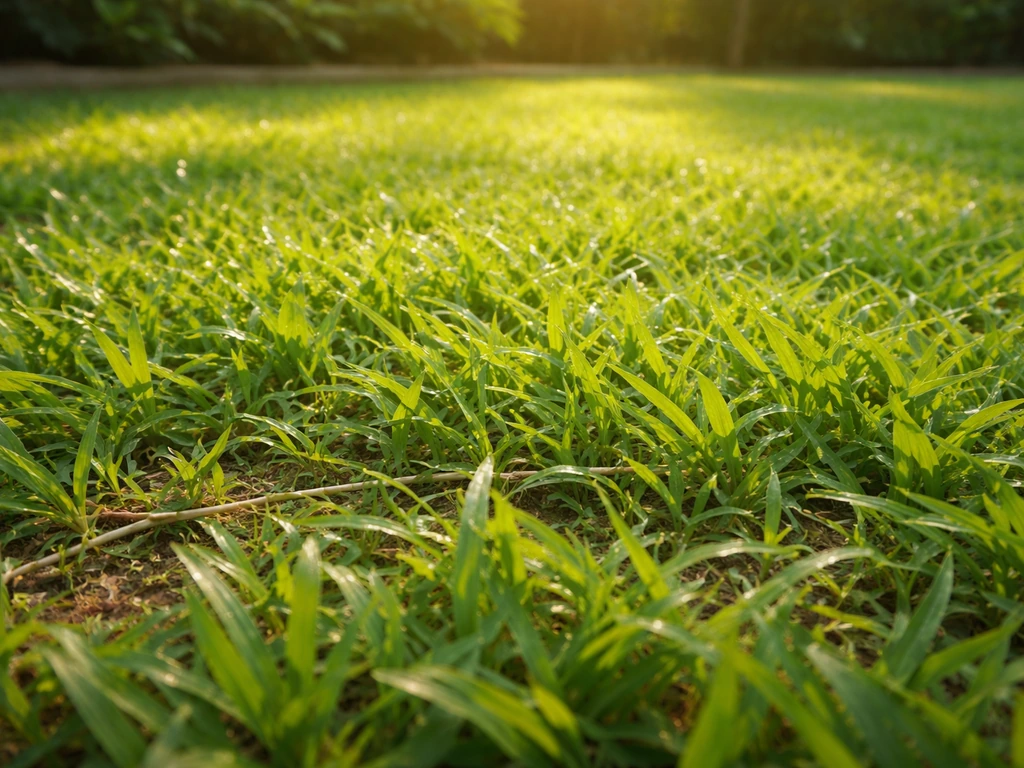
Carabao grass is a warm-season creeping grass with a strong preference for heat and humidity. It spreads via stolons (above-ground runners) and handles foot traffic reasonably well once established, but it has a few non-negotiable requirements you need to respect from the start.
- Full sun to partial shade: Carabao grass tolerates more shade than bermuda but still needs at least 4 to 6 hours of direct sun daily. Deep shade will thin it out fast.
- Heat: It is truly tropical and subtropical in character. Growth slows below 60°F and nearly stops below 50°F. Expect the best establishment results when daytime highs are consistently in the 80s or 90s°F.
- Acidic soil: This grass strongly prefers a pH of 5.0 to 6.0. Above pH 7.0, you risk iron chlorosis (yellowing) and poor nutrient uptake. If your soil runs alkaline, you need to correct it before planting.
- Moisture without waterlogging: Carabao grass handles wet, low-lying areas better than most warm-season grasses, but it still needs decent drainage. Constantly saturated soil will rot stolons and invite disease.
- Low-to-medium fertility: This grass actually performs fine in low-fertility soils. Pushing too much nitrogen makes it rank and weedy-looking, so resist the urge to over-fertilize.
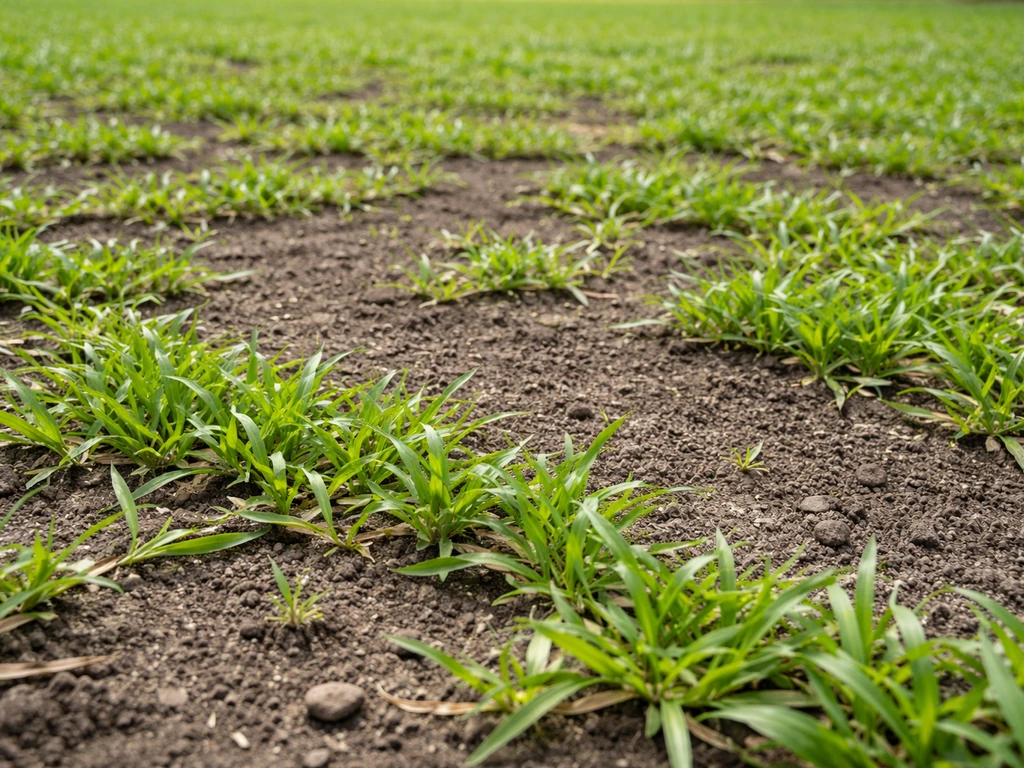
One honest caveat worth knowing upfront: Carabao grass has a coarser leaf texture than centipedegrass or zoysia, and it can look a little weedy during the fill-in phase. That's normal. Don't panic and assume something is wrong just because it doesn't look like a golf course in week three. Give it time and consistent care.
When to plant for the fastest establishment
Timing is probably the single biggest factor controlling how fast Carabao grass establishes. Plant too early in cool soil and you'll wait forever for germination or rooting. Plant too late and you lose the long warm growing season the grass needs to knit together before temperatures drop.
The sweet spot is late spring through early summer, once soil temperatures at the 2-inch depth are reliably at or above 70°F. For most warm-season regions (the Gulf Coast, Florida, Southeast Asia, and similar climates), that means planting between mid-April and July. If you're using seed, research shows the optimum germination temperature for carpetgrass is around 86°F (30°C), so waiting until your soil is genuinely warm pays off in much faster sprouting. Plugs and sod are a bit more forgiving of slightly cooler soil, but they still root and spread fastest in the heat of early summer.
If you miss the early summer window, you can still plant in late summer, but give yourself at least 8 weeks before the first cool nights arrive. Planting in fall or winter in a warm-season climate is a recipe for a patchy, struggling lawn that won't fill in until next spring.
| Planting Window | Soil Temp Target | Expected Result |
|---|---|---|
| Mid-April to June (ideal) | 70°F or above | Fast germination and rooting, strong fill-in by mid-summer |
| July to mid-August | 75–90°F | Good establishment if watered consistently; less buffer before cool weather |
| Late August to September | 65–70°F falling | Slow establishment; risky in cooler regions |
| Fall/Winter | Below 60°F | Not recommended; dormancy or failure likely |
Seed vs. plugs vs. sod: which method gets you there faster
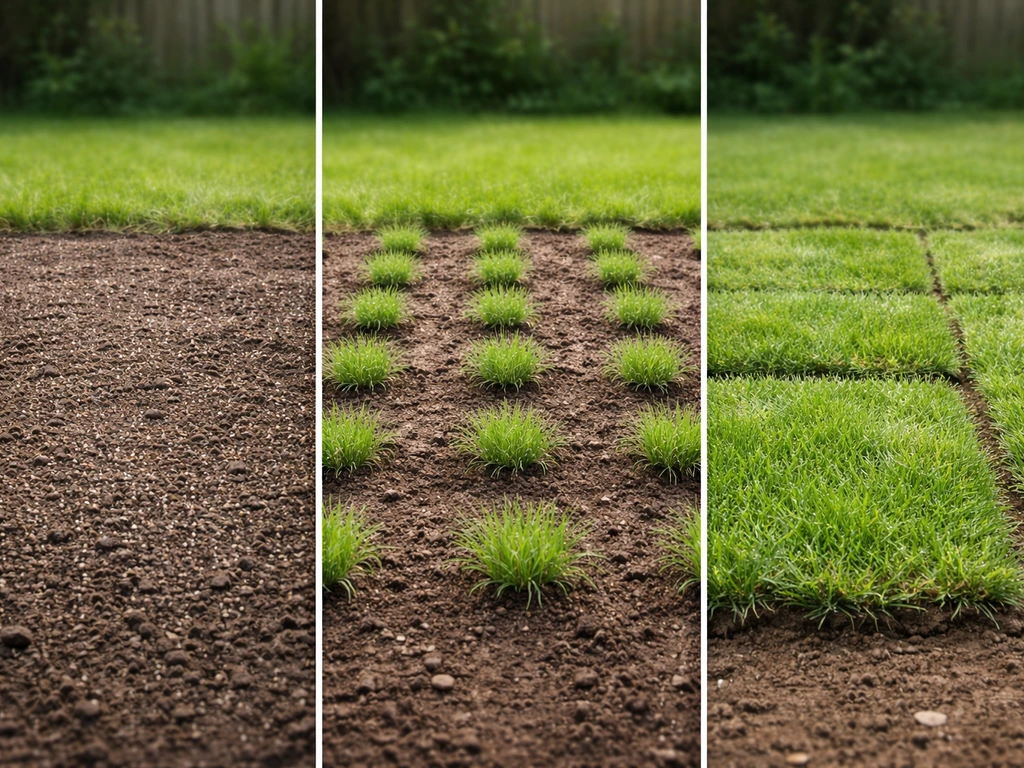
Carabao grass can be grown from seed, plugs, or sod (and sometimes sprigs). Each method has a real speed difference, so choose based on your budget, how fast you need coverage, and what's available in your area.
Seed: slowest but cheapest
Seed is the most affordable option, but it's also the most variable. Germination at ideal soil temperatures takes roughly 14 to 21 days, and you won't have a solid-looking stand for 6 to 10 weeks after that. One practical challenge: quality carabao grass seed can be hard to source in some markets, and germination rates on commercial seed are often modest. If you go the seed route, plan on a slightly higher seeding rate to compensate.
- Mow and scalp the existing area down as short as possible, then rake off all debris.
- Till the top 4 to 6 inches of soil, breaking up any hard crust.
- Amend and grade (covered in the soil prep section below), then rake smooth.
- Broadcast seed evenly at the rate recommended on the package (typically 1 to 2 lbs per 1,000 sq ft for carpetgrass types). Go over the area twice in perpendicular directions for even coverage.
- Rake lightly to make contact between seed and soil. You're aiming for seed sitting about 1/8 to 1/4 inch deep, not buried.
- Roll lightly with a lawn roller if you have one to improve seed-to-soil contact.
- Water gently immediately after seeding and keep the seedbed consistently moist until germination (see the watering section).
Plugs: the practical middle ground
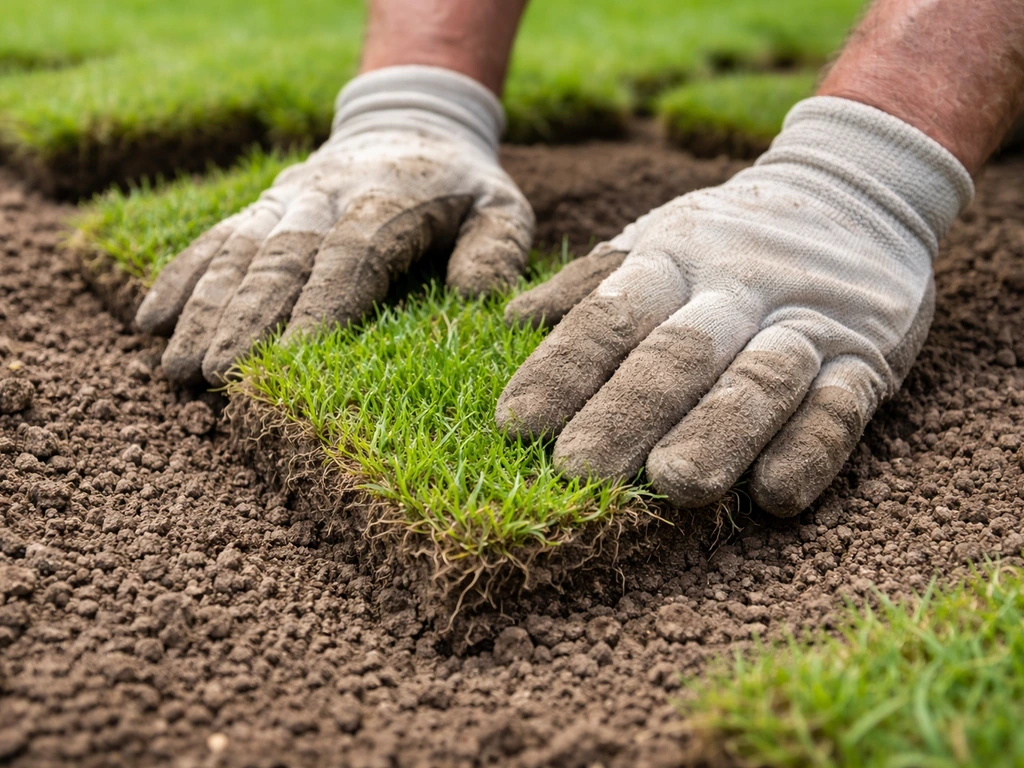
Plugs are small sections of sod, typically 2 to 4 inches square or round. They root faster than seed and fill in more predictably, usually giving you solid coverage in 4 to 8 weeks under good conditions. Plant them in a grid pattern with 6- to 12-inch spacing for faster coverage (closer spacing means faster fill-in, but more material cost). Dig or punch holes slightly deeper than each plug, press the plug in so it's level with the surrounding soil, and firm the soil around it. Water immediately and keep consistently moist for the first 2 weeks.
Sod: fastest coverage but highest cost
Sod gives you near-instant coverage and dramatically cuts the establishment period since the grass is already mature. Roots knit into the soil within 2 to 3 weeks under warm conditions. The tradeoff is cost, and carabao grass sod can be harder to source than bermuda or zoysia sod depending on your region. If you can find it and budget allows, sod is the best choice for bare or high-visibility areas. Lay pieces tightly, stagger the joints like brick work, roll after laying, and water heavily for the first week.
| Method | Time to Coverage | Cost | Difficulty | Best For |
|---|---|---|---|---|
| Seed | 6–12 weeks | Low | Moderate (irrigation-intensive early on) | Large areas, tight budgets |
| Plugs | 4–8 weeks | Medium | Low to moderate | Most homeowners, partial repairs |
| Sod | 2–4 weeks | High | Low (physical labor, not technique) | High-visibility areas, fast results |
Soil prep: the step most people skip (don't)
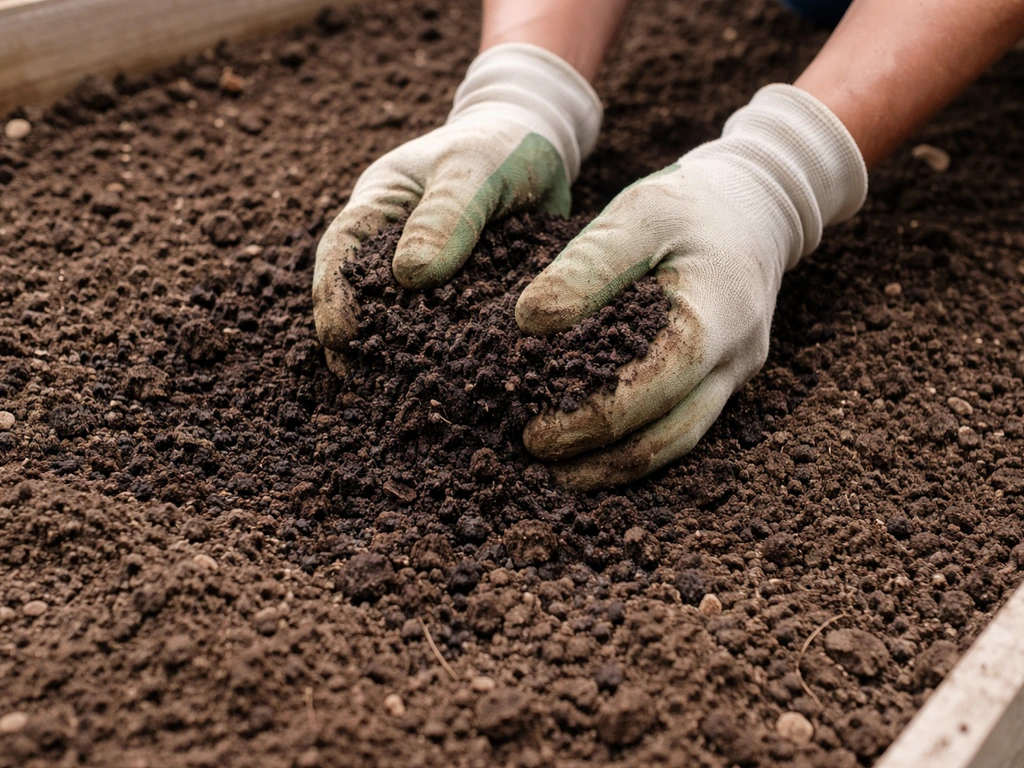
Skipping soil prep is the number one reason Carabao grass fails to establish quickly. The grass needs loose, slightly acidic soil with good contact between the roots (or seed) and the soil surface. Spend time here and everything else gets easier.
Get a soil test first
Before you buy a single bag of amendment, do a simple soil test. Your local cooperative extension office usually offers them for $15 to $20, or you can use a basic mail-in kit. You need to know your pH above all else. If your pH is above 6.0, you'll need to bring it down with elemental sulfur. If it's already in the 5.0 to 6.0 range, you're in good shape. If it's extremely low (below 5.0), a small amount of lime can raise it slightly.
If your soil is clay
Clay soil compacts and drains slowly, which creates two problems for Carabao grass: poor root penetration and potential for waterlogging. Till the top 4 to 6 inches and incorporate 2 to 3 inches of coarse compost or aged organic matter. This loosens the structure and improves drainage without massive earthmoving. For severely compacted clay, rent a core aerator before tilling. Avoid working clay soil when it's wet or you'll make the compaction worse.
If your soil is sandy
Sandy soil drains so fast that moisture and nutrients run straight through before new roots can access them. The fix is the same: 2 to 3 inches of compost worked into the top 4 to 6 inches. Compost improves sandy soil's water and nutrient retention significantly. You may also need to water more frequently during early establishment since sandy soil dries out faster than clay.
If you have drainage problems or low spots
Carabao grass tolerates wet areas better than many warm-season grasses, which is one of its genuine advantages over bermuda or zoysia in persistently moist spots. That said, standing water for days at a time will still hurt it. If you have a chronically wet low spot, either grade the area to redirect surface water before planting, or install a simple French drain. A 2 to 4 inch layer of sand mixed into the top 6 inches can also improve drainage in persistently soggy spots.
Final prep before planting
- Kill or remove all existing grass and weeds (solarize with clear plastic for 4 to 6 weeks in summer, or use a non-selective herbicide and wait the label-required period before seeding).
- Till the area 4 to 6 inches deep.
- Work in compost and any pH-adjusting amendments based on your soil test results.
- Grade the area so water drains away from structures and low spots are filled.
- Rake the surface smooth and firm. You want a level, slightly compacted seedbed with no large clods.
Watering schedule: the key to fast germination and rooting
Water management during establishment is where most people either give up (let it dry out) or overdo it (waterlog the seedbed). The goal is to keep the top inch of soil consistently moist, not wet, until seeds germinate or plugs/sod roots take hold. Then you shift to encouraging deeper rooting.
For seeded areas
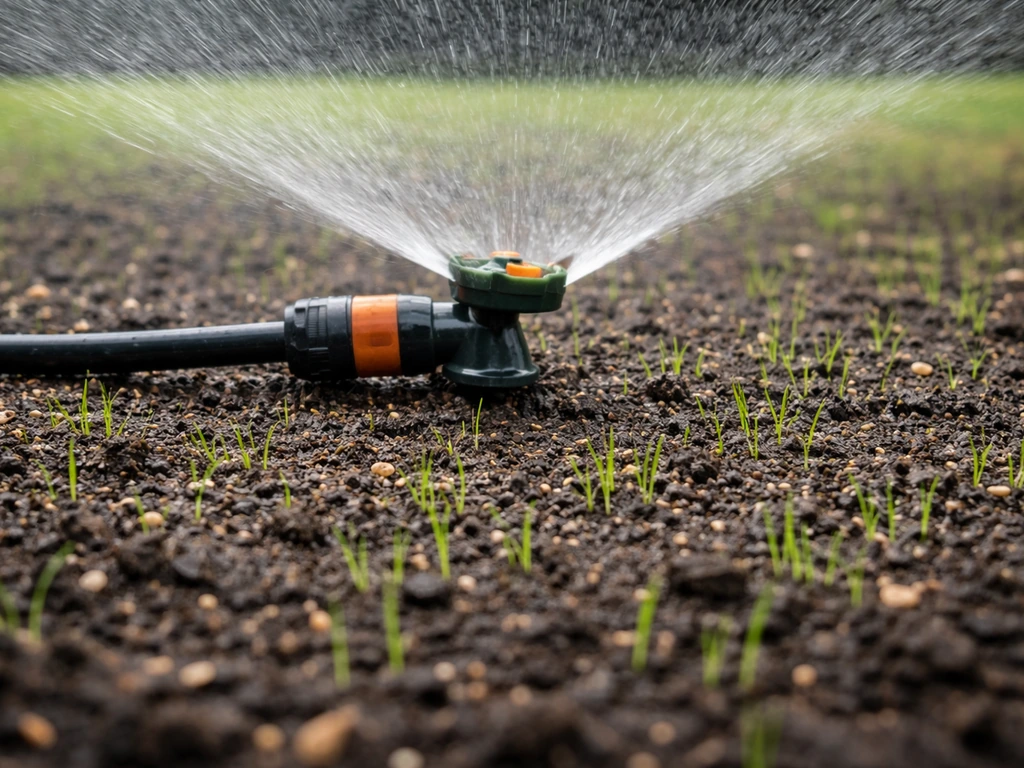
Water lightly two to three times per day in the first 1 to 2 weeks, applying just enough to keep the surface moist without puddling or washing seed away. Think short, gentle cycles, not a full irrigation run. Once you see germination (tiny green threads appearing), back off to once or twice daily and start watering slightly deeper. After seedlings reach 1 to 1.5 inches tall, shift to once daily, watering to about an inch of depth. By the time seedlings hit 2 inches, start transitioning toward the mature watering schedule: deep and infrequent (roughly 1 inch of water once or twice per week, depending on heat and soil type).
For plugs and sod
Water heavily immediately after installation, wetting the soil 4 to 6 inches deep to saturate the root zone. For the first week, water once daily (morning is best to reduce disease risk). In week two, back off to every other day. By weeks three and four, shift to the deep-and-infrequent schedule as the roots establish. A quick pull test: grab a corner of sod and tug gently. When it resists pulling up, the roots have taken hold and you can reduce irrigation frequency.
One important note: daily watering is the exception during establishment, not a long-term habit. Once your Carabao grass is established, frequent shallow watering encourages shallow roots and weed pressure. The goal of the establishment phase is to transition as quickly as possible to deep watering that trains roots downward.
Fertilizing for faster establishment without burning your lawn
Carabao grass doesn't need heavy feeding to establish, and over-fertilizing early on can burn tender seedlings or flush out the soil before roots can absorb nutrients. Keep it measured.
At planting
Work a starter fertilizer (one higher in phosphorus to support root development) into the top 2 to 4 inches of soil before seeding or laying sod. At planting, limit nitrogen in the root zone to no more than 1 lb per 1,000 sq ft. This gives new roots something to work with without burning them. A standard lawn starter fertilizer at label rates will generally hit this target.
First post-germination feeding
Once seedlings reach 1.5 to 2 inches tall (or sod has been down for 3 to 4 weeks and is rooting well), apply a light nitrogen application to accelerate growth. For Carabao grass, keep nitrogen at or below half a pound of actual nitrogen per 1,000 sq ft per application. This is a firm limit, not a suggestion. At higher rates, you risk burning the young grass or pushing it into rank, weedy-looking growth that's harder to manage. A simple 16-4-8 or similar balanced fertilizer, applied at conservative rates, is all you need.
Ongoing fertility during establishment
Repeat light nitrogen applications every 6 to 8 weeks through the warm season, staying at or below 0.5 lb N per 1,000 sq ft each time. Stop fertilizing at least 6 to 8 weeks before your region's first cool weather to avoid pushing soft new growth that won't harden before temperatures drop. Always water after fertilizing to move nutrients into the soil and off leaf surfaces.
Weed control, mowing, and keeping your lawn on track
The establishment phase is when weeds cause the most damage because they compete directly with young grass for light, water, and nutrients. A few careful choices now save a lot of fighting later.
Weed control timing: be careful with herbicides early on
If you applied a preemergence herbicide before planting, you must wait at least 9 weeks before seeding into that area. Plan your timing accordingly. For established weeds that come up during establishment, avoid postemergence herbicides as long as possible, especially in the first 4 to 6 weeks. Young Carabao grass seedlings are more sensitive to herbicide injury than mature turf, and most herbicide labels restrict use on new lawns for good reason. Some products require waiting until after the second mowing before application. Purdue turfgrass guidance on herbicide-delay timing (gleaned from labels) notes an example for prodiamine where you should wait 60 days after seeding or until after the second mowing, whichever is longer Some products require waiting until after the second mowing before application.. Read the label every time.
The practical weed strategy during early establishment: hand-pull large weeds that emerge, mow consistently to keep weeds from going to seed, and let the grass fill in and outcompete weeds naturally as density increases. Thick, healthy Carabao grass is its own best weed suppressor once established.
When and how to mow
For seeded lawns, wait until seedlings reach about 3 inches before the first mow. Set your mower to cut at 1.5 to 2 inches (Carabao grass is typically maintained at 1 to 2 inches). Never remove more than one-third of the blade height in a single mow. That one-third rule matters a lot during establishment: scalping young grass stresses it and sets back coverage. For plugs and sod, you can mow once the grass is actively growing and has reached 3 inches, typically 2 to 4 weeks after installation.
Foot traffic limits
Stay off seeded areas completely until the grass has been mowed at least twice. For sod and plugs, limit foot traffic for the first 3 to 4 weeks while roots are anchoring. This is especially important if you have kids or pets. Even young sod that feels firm on top can be displaced or damaged by heavy use before root knitting is complete.
Troubleshooting slow or patchy growth
If your Carabao grass isn't filling in as expected, work through this checklist before assuming the grass is a lost cause.
- Soil temperature too low: Check the actual soil temp at 2 inches with an inexpensive soil thermometer. If it's below 68°F, germination and rooting will be sluggish regardless of what you do above ground. Wait for warmer conditions.
- pH is off: If you didn't soil test before planting and growth is uneven or yellowing, do a test now. A pH above 6.5 is a common culprit for poor Carabao grass performance.
- Seed-to-soil contact problem: For seeded areas, poor contact between seed and soil is the most common germination failure. The seed needs to be in direct contact with moist soil, not sitting on top of thatch or dry mulch.
- Inconsistent moisture: Missing even one or two watering cycles in the first two weeks of seed germination can kill off emerging seedlings. Be consistent.
- Bare spots in sod or plugs: If specific plugs or sod sections aren't knitting in, check for standing water, soil compaction under those spots, or physical damage. Fill bare spots with additional plugs pressed firmly into moistened soil.
- Grass looks weedy or thin: Remember that Carabao grass has a coarser texture than some alternatives and can appear weedy during establishment. As long as it's actively spreading via stolons, you're on track. Give it another 2 to 4 weeks before making changes.
- Shade too heavy: If areas under trees aren't establishing well, Carabao grass may not be the right fit for deep shade. Consider supplementing with a shade-tolerant alternative in those spots, similar to how mondo grass or monkey grass are used in shady border areas.
Your quick-start action plan
Here's how to pull everything together into a practical sequence you can start on today if you're in the right season. If you are interested in a different grass for landscaping and erosion control, here is a step-by-step guide on how to grow vetiver grass. If you need a step-by-step guide, see our full walkthrough on how to grow monkey grass how to pull everything together into a practical sequence. If you want a step-by-step breakdown, see our guide on how to grow durva grass for timelines and care tips.
- Check soil temperature: get a $10 soil thermometer and confirm you're at 70°F or above at 2-inch depth before spending money on seed, plugs, or sod.
- Do a soil test: spend $15 to $20 and confirm your pH is in the 5.0 to 6.0 range. Adjust with sulfur (to lower pH) or lime (to raise pH) as needed, following the test recommendations.
- Kill existing weeds and vegetation, till the area 4 to 6 inches deep, and work in 2 to 3 inches of compost plus your pH amendments.
- Choose your planting method based on budget and timeline: plugs at 6- to 12-inch spacing for the best balance of cost and speed, sod for maximum speed, seed for large areas on a tight budget.
- Incorporate starter fertilizer at label rates (no more than 1 lb N per 1,000 sq ft in the root zone at planting).
- Plant, water immediately, and begin your establishment irrigation schedule: frequent and light until germination or rooting, then progressively deeper and less frequent.
- Apply your first post-establishment nitrogen feeding at 0.5 lb N per 1,000 sq ft once seedlings reach 1.5 to 2 inches or sod has rooted (around 3 to 4 weeks after sod installation).
- Mow for the first time when the grass hits 3 inches, cutting to 1.5 to 2 inches. Never cut more than one-third of the blade at once.
- Hold off on postemergence herbicides for at least 4 to 6 weeks (and follow product labels), and hand-pull large weeds in the meantime.
- Repeat light nitrogen applications every 6 to 8 weeks through the growing season, stop 6 to 8 weeks before cool weather arrives.
Carabao grass rewards patience and consistent care in those first 6 to 10 weeks more than almost anything else. Get the soil right, hit the right planting window, and keep the moisture consistent during germination and rooting, and you'll have a dense, heat-tough lawn that handles the conditions most other grass types struggle with. If you need step-by-step guidance on timing and growing mondo grass, follow the planting and care tips in this guide: how to grow mondo grass hit the right planting window.
FAQ
How can I tell whether Carabao grass is still establishing or actually failing?
During establishment, it is normal to look uneven or a bit weedy. The tell is progress in both coverage and anchoring, if plugs or sod start resisting a gentle tug and seeded areas show steady new threads moving outward, it is on track. If coverage stops expanding for more than 2 to 3 weeks and the area stays patchy despite correct watering, check soil pH and drainage, then re-evaluate planting timing and seeding rates.
Can I grow Carabao grass from seed in the shade?
Carabao grass can tolerate some light shade, but it will fill in slower and may thin out compared with full sun. If the area gets less than about 4 to 6 hours of direct sun, expect slower germination and plan for tighter spacing with plugs or sod, or increase the seeding rate. Also keep weeds controlled, shade makes early competition more likely.
What seeding rate should I use if I’m planting from seed?
Because germination rates can be modest and seed availability varies, many people under-seed and then blame the grass. Use a higher-than-budgeted seeding density to compensate for expected germination losses, and if your goal is faster cover, consider switching part of the area to plugs or sod for a “starter” density. A practical approach is to seed, then top-dress lightly with compost to improve soil contact.
Should I top-dress or cover Carabao grass seed after planting?
Yes, but lightly. The key is good seed-to-soil contact without burying seed too deep. After spreading, lightly cover with a thin layer of fine compost, then keep the surface consistently moist using gentle watering so you do not wash seed away.
What’s the best way to water so I don’t wash out seed or waterlog the bed?
Use short, gentle cycles aimed at keeping the top inch moist, not puddled. In windy areas or on slopes, use a lighter output nozzle and water in smaller rounds closer together. If you see runoff or crusting, reduce cycle duration and increase frequency, then improve soil structure with compost so water holds evenly.
How do I handle Carabao grass on slopes or areas where water flows?
On slopes, erosion is often the real reason seedlings fail, not temperature. Use temporary erosion control like light mulch that does not smother seed, and water with smaller frequent applications. If the slope is severe or frequent runoff is unavoidable, plugs or sod usually outperform seed because they establish immediately and resist displacement.
Can I install Carabao grass over existing turf or weeds?
You can, but you must reduce competition and create soil contact. Remove the existing turf as completely as possible, or at least scalp and loosen the top layer so roots can knit into soil rather than sitting on old thatch. For heavy weed pressure, wait for clearance before seeding and follow any preemergence herbicide waiting periods because early establishment is sensitive.
Do I need to aerate after Carabao grass establishes?
Routine aeration helps, especially in compacted clay, but do it after the lawn is fully established and actively growing. Avoid heavy disturbance in the first 6 to 10 weeks because it can disrupt rooting and create new weed opportunities. If you core aerate later, plan to top-dress with compost to improve the soil structure.
How soon can I fertilize, and what if my lawn looks yellow anyway?
Apply starter fertilizer at planting, then wait until seedlings are about 1.5 to 2 inches tall before a light nitrogen push, staying within conservative nitrogen limits. If the lawn is yellow early, it can be nutrient-related or pH-related, but over-fertilizing often makes burn worse. Re-check pH, then correct watering and weed competition before adding more nitrogen.
Is it safe to use herbicides during establishment?
Many herbicide labels restrict use on new lawns, and young Carabao grass seedlings are more sensitive than mature turf. If you used a preemergence herbicide before planting, the waiting interval matters. For established weeds, avoid postemergence herbicides as long as possible, and rely on hand-pulling and mowing until the turf is past the most sensitive growth stages.
When can I put mulch, sand, or soil on top of emerging Carabao grass?
Use a thin top-dressing only during seed establishment for contact, and avoid thick layers that block light and keep the surface too cool or wet. For sod and plugs, heavy top-dressing can bury crowns before roots have anchored. If you need to correct soil grade, do it before planting whenever possible, or use minimal, controlled amounts during establishment.
How long should I wait before heavy foot traffic, pets, or mowing frequency changes?
For seeded areas, avoid stepping until the grass has been mowed at least twice. For sod and plugs, limit traffic for the first 3 to 4 weeks while roots knit. Once it is actively growing and you can mow safely, keep the one-third rule, and do not increase mowing frequency too quickly because repeated stress can slow fill-in.
Next Article
How to Grow Durva Grass at Home From Seed or Clumps
Step-by-step guide to grow durva grass from seed or clumps, with soil prep, sowing rates, watering, and fixes.