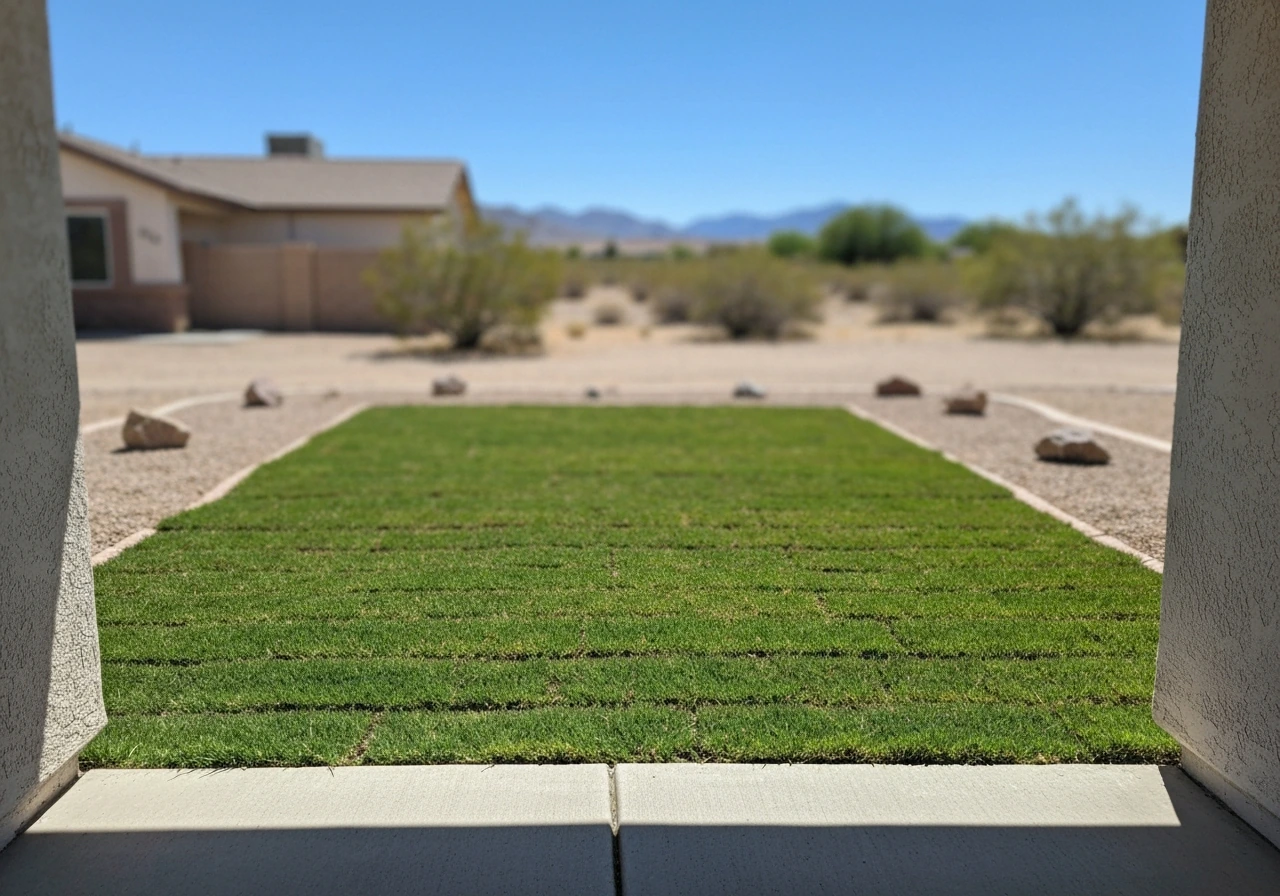
Growing grass in Tucson is absolutely doable, but you have to stop thinking like a lawn-care person from Ohio. The heat, the alkaline desert soil, the caliche lurking a foot underground, and the monsoon seasons completely change the playbook. The short version: plant warm-season grasses like bermudagrass or zoysia between late May and August when the soil is hot enough to drive germination, prep your soil before you plant a single seed, and water daily until establishment. If you want winter color, overseed with perennial ryegrass in late September to mid-October. Get those fundamentals right and you can have a healthy lawn in Tucson.
How to Grow Grass in Tucson: Complete Seed & Sod Guide for Desert Climates
Marcus Tillwell
5 Aug 2026
Who this guide is for
This guide is written for Tucson homeowners starting a lawn from scratch, filling in dead or bare patches, or just tired of watching neighbor lawns stay green while theirs burns out by June. It also applies closely to anyone in similar desert climates across southern Arizona, southern Nevada, and the warmer valleys of New Mexico. If you're in Las Vegas or Albuquerque, a lot of this applies to you too, with some timing adjustments I'll flag along the way. For city-specific timing and water rules, see our guide on how to grow grass in Las Vegas. The advice here is tuned to low-elevation Sonoran Desert conditions: intense summer heat, low annual rainfall (roughly 12 inches in Tucson, most of it arriving as monsoon rain in July and August), alkaline soils, and occasional hard caliche layers that can wreck your drainage and your roots if you ignore them.
Quick start: seed vs. sod and your decision checklist
Before you buy anything, answer these five questions. Your answers will determine whether seed or sod makes more sense, which grass type fits your yard, and what soil work you need to do first.
- Budget: Seed costs $0.10–$0.30 per square foot for bermudagrass; sod runs $0.50–$1.50 per square foot installed. For large areas, seed is usually the better value if you can manage daily watering for 3–4 weeks.
- Sun exposure: How many hours of direct sun does your lawn area get? Full sun (6+ hours) opens up all options. Partial shade (3–5 hours) narrows you to tall fescue or shade-tolerant zoysia. Deep shade (under 3 hours) means no grass will thrive — consider ground covers instead.
- Water limits: Check whether you're under Tucson Water restrictions. New installations typically get a grace period for daily watering, but confirm before you start.
- Timeline: Need a usable lawn in 2 weeks? Sod is your answer. Willing to wait 4–8 weeks for seed to fill in? Seed is fine.
- Soil condition: Do you have hard, compacted caliche within the top 12 inches? Sandy soil that drains in seconds? This matters enormously — see the soil sections below before you spend money on seed.
For most Tucson homeowners with average-sized yards (under 2,000 sq ft), seeded hybrid or common bermudagrass in May or June is the most practical and affordable approach. Sod makes sense if you need immediate ground cover, have erosion issues on slopes, or want the fastest possible results for bermudagrass installation.
Which grasses actually work in Tucson
The University of Arizona Cooperative Extension is pretty direct on this: warm-season bermudagrass is the best-adapted turf for low-elevation desert cities like Tucson, Phoenix, and Yuma. But bermuda isn't the only option, and each grass type has real tradeoffs worth understanding.
Bermudagrass
Bermudagrass thrives in Tucson's summer heat and tolerates drought better than any other common lawn grass. It goes dormant and turns brown in winter (roughly November through February), which is either a dealbreaker or a non-issue depending on your priorities. Common bermudagrass can be seeded; improved hybrid cultivars like Tifway 419, TifTuf, and Celebration are available as sod only but offer finer texture, better drought tolerance, and lower water needs. UA research recommends seeding common bermudagrass at 1.0–1.5 lb per 1,000 sq ft between May 25 and August 1 in Tucson. Germination takes 10–30 days. Seeded bermuda establishes in roughly one month with consistent daily irrigation during the hot summer period.
Zoysiagrass
Zoysia is a slower-establishing warm-season grass that handles heat and moderate drought well. It also tolerates partial shade better than bermudagrass, making it a solid choice if your yard gets 4–5 hours of sun rather than full exposure. The catch is establishment time: zoysia from seed takes the entire summer to fill in, and it's slow to spread. UA guidance recommends seeding at 2.0–3.0 lb per 1,000 sq ft between June 1 and July 1 in Tucson. If you need faster results, zoysia plugs or sod are worth the extra cost.
Tall fescue
Tall fescue is a cool-season grass that stays green through Tucson's mild winters and springs but struggles badly in peak summer heat. It's not the primary recommendation for Tucson's low elevation, but it works reasonably well in shaded microclimates, in yards that get significant relief from afternoon sun, or at slightly higher elevations (above 3,000 feet) where summer highs are more moderate. Tall fescue germinates in 7–12 days and should be seeded in early to mid-September in Tucson at 6–8 lb per 1,000 sq ft. Expect it to thin out or go off-color during the hottest weeks of summer unless you're irrigating heavily and providing some shade.
Annual and perennial ryegrass
Ryegrass is almost always used for overseeding dormant bermudagrass in winter, not for permanent lawns. Perennial ryegrass is the standard choice: it germinates in 5–10 days, establishes quickly, and provides green color from roughly October through April. Annual ryegrass germinates just as fast and costs less, but it's coarser in texture and doesn't hold up as well under foot traffic. The UA recommends overseeding into dormant bermudagrass in Tucson between approximately September 25 and October 15, at 12–20 lb per 1,000 sq ft.
Grass variety comparison for Tucson
| Grass Type | Heat Tolerance | Water Needs | Shade Tolerance | Maintenance Level | Best Use in Tucson |
|---|---|---|---|---|---|
| Common Bermudagrass (seed) | Excellent | Low–Medium | Poor | Low–Medium | Primary lawn, full sun, budget-friendly |
| Hybrid Bermudagrass (sod) | Excellent | Low | Poor | Medium | Best overall lawn quality, full sun |
| Zoysiagrass | Very Good | Low–Medium | Moderate | Low | Partial shade, slower establishment |
| Tall Fescue | Fair | Medium–High | Good | Medium | Shade or higher elevation microclimates |
| Perennial Ryegrass | Poor | Medium | Fair | Medium | Winter overseed over dormant bermuda only |
| Annual Ryegrass | Poor | Medium | Fair | Low | Budget winter overseed, temporary cover |
Seed or sod: how to choose for Tucson and nearby desert climates
The seed-versus-sod decision comes down to budget, timeline, and which grass you want. For bermudagrass in Tucson, seeding works very well if planted in the right window (late May through July) because soil temperatures are already 75–90°F, which is exactly what bermuda needs to germinate. You seed, you water daily, and in about four weeks you have coverage. The labor is yours; the material cost is low. Sod, on the other hand, gives you instant turf and a real advantage if you're fighting erosion, have an impatient client or household, or want a hybrid cultivar like TifTuf that simply isn't available as seed. With sod, a healthy bermuda lawn is ready for light use in about a week, as long as irrigation is consistent.
If you're considering this question in Las Vegas, the calculus is similar but the water picture is more complicated. The Southern Nevada Water Authority enforces mandatory watering restrictions with summer blackout hours, and the Las Vegas Valley Water District only allows daily watering for newly installed or reseeded landscapes for up to 14 days once per calendar year (you need to call before you plant to note it on your account). Southern Nevada Water Authority (SNWA) maintains year‑round mandatory seasonal watering restrictions for the Las Vegas Valley (including summertime watering blackout hours and assigned watering days) and offers rebates and programs such as turf‑replacement incentives; their guidance and the Las Vegas Valley Water District schedule define permitted irrigation timing and establishment exceptions in southern Nevada blank" rel="noopener noreferrer">Southern Nevada Water Authority (SNWA) — conservation & watering rules. That narrow window makes sod the more reliable choice in Las Vegas because it establishes faster and you don't have to sustain the intensive daily watering cycle as long. In New Mexico, elevation matters more than the city you're in: warmer valleys near Las Cruces are close to Tucson conditions and bermuda is appropriate, while higher, cooler locations in central or northern New Mexico may warrant tall fescue or even cool-season grass mixes instead. For more on elevation-specific grass choices and timing, see our guide on how to grow grass in New Mexico.
Microclimates and elevation: when to switch your grass strategy
Tucson sits at roughly 2,400 feet elevation, which is actually a bit cooler than Phoenix (1,100 feet) or Las Vegas (2,000 feet) in terms of summer nighttime lows and winter freezes. This matters for grass selection in two ways. First, bermudagrass in Tucson goes dormant earlier in fall and greens up slightly later in spring than it would in Phoenix. It will generally survive winters fine without winter-kill, but you can expect brown turf from November through February unless you overseed with ryegrass. Second, if you're in a north-facing yard with deep shade from walls or mature trees, your microclimate could be cool enough in summer to support tall fescue reasonably well, especially if you're at 3,000 feet or higher.
For readers in higher-elevation parts of New Mexico (Santa Fe sits at 7,000 feet; even Albuquerque is at 5,300 feet), the entire warm-season grass strategy changes. Bermudagrass is marginal to unreliable at those elevations because summer nights stay too cool for vigorous growth and winter cold is severe enough to kill it outright. Tall fescue, Kentucky bluegrass, and cool-season blends become the better long-term choice in those areas. This is one of the key differences between growing grass in the low Sonoran Desert versus the higher Colorado Plateau and Rio Grande corridor.
Soil testing: how to do it and what the results mean
I'll be honest: most Tucson homeowners skip soil testing and it shows. Desert soils are almost always alkaline (pH 7.5–8.5 is typical), often deficient in nitrogen and organic matter, and frequently have physical barriers like caliche that no amount of fertilizer can compensate for. A basic soil test before you plant costs $15–$30 from a university extension lab or mail-in service and tells you pH, major nutrient levels (N, P, K), and sometimes organic matter content. That information directly determines what amendments you need to buy.
To test your soil, take a clean trowel and collect small samples from 6–8 spots around your lawn area, each about 4–6 inches deep. Mix them together in a clean bucket, scoop out about a cup of the blended sample, let it air dry, and mail it to your preferred lab with a note that you're establishing turf in an arid desert climate. When results come back, here's how to read the key numbers for Tucson conditions.
- pH 6.5–7.0: Ideal for most turf. Uncommon in Tucson but no adjustment needed if you're here.
- pH 7.1–8.0: Acceptable for bermudagrass. Add sulfur to gently lower pH over time, at roughly 1–2 lb elemental sulfur per 100 sq ft per application, and repeat annually.
- pH above 8.0: Common near caliche horizons. Bermuda still survives but nutrient uptake suffers. Sulfur applications help, but physical caliche removal is more important than chemistry here.
- Organic matter below 1%: Very common in Tucson. Add 3–4 inches of compost and till it in before seeding.
- Low phosphorus: Important for root establishment. Use a starter fertilizer with higher middle number (like 10-20-10) at planting.
- Compacted or hardpan results: Mechanical aeration and organic matter addition are the fix, not fertilizer.
The USDA NRCS Web Soil Survey is also worth checking before you dig. You can look up the specific soil map unit for your property address in Pima County and get detailed information on texture, drainage class, and depth to any restrictive layers like caliche (officially called petrocalcic horizons in soil science). Finding out you have dense caliche at 10 inches before you install irrigation heads saves a lot of pain.
Amending desert soils: what to do before you plant anything
This is the part most people rush through, and it's the biggest reason Tucson lawns fail. You can buy the best bermudagrass seed money can buy, but if you're planting into compacted alkaline hardpan with a caliche layer at 12 inches, you'll have a thin, struggling lawn within two summers. Spend as much time on soil prep as you do on everything else combined.
If your soil is sandy
Sandy soils are common in parts of Tucson, particularly in newer developments where topsoil was scraped during construction. Sandy soil drains so fast that water and nutrients move through the root zone before grass can use them. The fix is organic matter, and lots of it. Spread 3–4 inches of compost across the entire area and till it in to a depth of 6–8 inches. This improves water retention, adds microbial life, and gives roots something to hold on to. You'll still need to water more frequently than you would in loam, but the difference after adding compost is significant. A light application of a sandy-soil conditioner (look for products based on leonardite or humate) can also help with water retention if you're dealing with very coarse sand.
If your soil is clay or has caliche
Heavy clay soils in Tucson have poor drainage and get rock-hard when dry. Water puddles on the surface, roots can't penetrate deeply, and grass suffocates. The standard amendment is gypsum (calcium sulfate), applied at 40 lb per 1,000 sq ft, which helps break up clay structure and improve drainage without significantly affecting pH. Add 3–4 inches of compost on top of the gypsum application and till both in together. If you hit dense caliche within the top 12 inches, you have two realistic options: break through it mechanically with a pick, a rented jackhammer, or a caliche breaker bar and remove it from the planting area, or raise the grade by adding 6–8 inches of quality topsoil above the caliche layer. Caliche that stays intact will collect water above it like a bathtub and eventually drown your grass roots or prevent deep rooting entirely.
Fixing compaction and grading before seeding
Compaction is almost universal in Tucson yards, especially near driveways, pathways, or any area that had construction traffic. Rent a core aerator, run it over the area twice in perpendicular directions, and leave the plugs on the surface to break down. If the soil is very hard, water it 24 hours before aerating to soften it slightly. After aerating, apply your compost and amendments, till everything together if you're doing new installation, then grade the area so water flows away from your house foundation at a minimum 1% slope (about 1 inch of drop per 8 feet). Low spots collect water and create moss, disease, and bare patches. Grade them out now or you'll be chasing problems forever.
Planting step by step: seeding bermudagrass in Tucson
Once your soil is prepped, seeding bermudagrass in Tucson is straightforward. For broader, statewide tips and timing adjustments, see our guide on how to grow grass in AZ. Here's the process that works.
- Confirm the window: Plant between May 25 and August 1. Soil temperatures should be at or above 65°F for germination, and Tucson's surface soil hits that by mid-May. Late May through June is the sweet spot — you get the full summer for establishment before fall dormancy.
- Choose your seed: Common bermudagrass hulled seed gives the fastest germination. Look for seed labeled as 98% purity / 85% germination or better. Unhulled seed can be used but takes longer.
- Apply seed: Use a drop spreader or broadcast spreader set for 1.0–1.5 lb of seed per 1,000 sq ft. Go over the area twice in perpendicular directions to get even coverage.
- Rake lightly: You want seed in contact with soil, not sitting on top of it. A light raking or a pass with a lawn roller pressed lightly into the surface improves contact without burying the seed too deep. Target 1/8 to 1/4 inch depth.
- Water immediately: Run your sprinklers or hose for 5–10 minutes after seeding to settle the seed and wet the top inch of soil. Do not wash seed into piles.
- Keep the surface moist: Water 2–3 times daily (early morning, midday, late afternoon) just enough to keep the top 1/2 inch of soil consistently moist. You are not trying to soak deep — you're maintaining surface moisture for germination. This is the daily commitment for the next 10–30 days.
- Watch for germination: Expect the first shoots in 10–14 days under warm summer conditions. Full germination and visible coverage takes 3–4 weeks. Once you have solid coverage, transition to deeper, less frequent watering.
- First mow: Mow for the first time when grass reaches 2–2.5 inches, cutting back to 1.5 inches. Use a sharp mower blade — a dull blade will pull seedlings out of the ground before roots anchor fully.
Irrigation: watering schedules tuned to Tucson's heat
Water is the most expensive and most critical input for a Tucson lawn. The University of Arizona AZMET station publishes reference evapotranspiration (ETo) data for the Tucson area, which is the foundation for how much water your turf actually needs. In June and July, Tucson's ETo runs roughly 0.25–0.35 inches per day. A well-established bermudagrass lawn uses about 60–80% of that figure (the crop coefficient for bermuda is roughly 0.6–0.8 depending on conditions), so you're targeting around 0.15–0.25 inches per day of irrigation during peak summer, minus whatever rain you receive from monsoons.
In practical terms for a typical home sprinkler system, that works out to roughly 15–20 minutes per zone per day in June and July, tapering down to 10–12 minutes in September as temperatures drop and ETo falls. Run sprinklers early in the morning (before 8 a.m.) to reduce evaporative loss and comply with most local watering guidance. Tucson Water recommends against daytime irrigation for exactly this reason. Once bermudagrass is established, water deeply and infrequently: 3–4 times per week in summer rather than daily, to encourage deep rooting. Deep roots survive heat and drought far better than shallow ones.
During the germination period (first 3–4 weeks after seeding), you must water lightly and frequently, multiple short cycles per day, to keep the seed surface moist. This is the exception to the deep-and-infrequent rule and it only lasts until germination is complete and seedlings are 1 inch tall.
Fertilizing your Tucson lawn
Bermudagrass in Tucson needs nitrogen during its active growing season, which runs from April through September. At planting, apply a starter fertilizer with higher phosphorus (like 16-20-0 or similar) to support root development. After the lawn is established, switch to a balanced or nitrogen-forward fertilizer. A simple schedule that works well for Tucson bermudagrass: apply a slow-release nitrogen fertilizer (like 32-0-8 or similar) in late April as the grass greens up, again in late June at peak growth, and a final application in late August. Do not fertilize after September, late nitrogen pushes new growth that can be damaged by early winter cold and delays dormancy. For tall fescue or overseeded ryegrass, apply a light nitrogen application in October after overseeding and again in late January or February to keep winter turf green.
Overseeding with winter ryegrass
If you want a green lawn all year in Tucson, overseeding dormant bermudagrass with perennial ryegrass is the standard approach used by both homeowners and commercial landscapers throughout the low desert. The timing is precise: overseed between approximately September 25 and October 15 in Tucson. Too early and temperatures are still too hot for ryegrass to establish well; too late and soil temperatures drop below optimal germination range.
Before overseeding, mow your bermudagrass as short as your mower allows (scalp it to 1/2 inch or less) to reduce competition and let seed reach the soil surface. Dethatch if you have more than 1/2 inch of thatch buildup. Spread perennial ryegrass seed at 12–20 lb per 1,000 sq ft, rake lightly to improve soil contact, and water twice daily for the first 7–10 days until germination is complete. Ryegrass germinates in 5–10 days and fills in quickly. In spring, as temperatures rise above 85°F consistently (typically late April to May in Tucson), the ryegrass will naturally die out and your bermudagrass will re-emerge from dormancy underneath.
Dealing with common problems
Seed isn't germinating
If you're past 14 days with no visible germination, check these things first: Is the soil surface staying moist between waterings, or drying out completely? Even a few hours of dry surface in Tucson's summer heat can kill germinating seedlings. Second, did you plant outside the optimal window? Bermudagrass planted before soil temperatures hit 65°F (before mid-May) will sit dormant. Third, is your seed buried too deep? Bermuda needs light to germinate and should be no deeper than 1/4 inch. Rake the surface lightly and re-water.
Persistent bare spots
Bare spots that refuse to fill in usually have a physical cause: compaction, standing water, caliche close to the surface, or too much shade. Probe the bare spot with a screwdriver or metal rod, if it hits resistance at 6–10 inches, you have caliche. If water pools there after irrigation, you have a drainage or grade problem. Fix the physical issue before reseeding. Simply throwing more seed at a bare spot without fixing the underlying problem is a cycle you'll repeat every season.
Pets and high-traffic areas
Dog urine creates nitrogen burns, circular dead spots with a darker green ring around them. The best practical defense is to keep urine diluted by watering the spot immediately after your dog uses it. High-traffic paths between the back door and the fence will always thin out. Bermudagrass recovers relatively quickly from traffic damage once you reduce the stress, so the realistic approach is to accept some thinning in high-traffic corridors and reseed or sod those spots each spring. Zoysia handles moderate traffic slightly better than bermuda in terms of recovery time, but it's slower to fill in after damage.
Growing grass in shade
Bermudagrass in deep shade will thin and eventually die. If you have areas under mature mesquite, palo verde, or large shade trees, tall fescue at 6–8 lb per 1,000 sq ft seeded in early September is your best option. It's not perfect in a desert summer, but in dense shade where temperatures are 10–15°F lower than the open yard, it survives far better than any warm-season grass. Accept that shaded areas will need more frequent overseeding or reseeding than your sunny bermuda sections.
Pests and disease basics for Tucson turf
Tucson lawns are generally less disease-prone than humid-climate lawns because low humidity limits fungal activity. The exceptions are during the monsoon season (July–August) when humidity spikes and temperatures stay high overnight. Dollar spot and brown patch can appear on bermudagrass during warm, humid nights. Both show as irregular tan or brown patches. Improve air circulation, reduce nighttime irrigation frequency, and apply a contact fungicide if the disease is spreading rapidly. Keeping thatch below 1/2 inch by dethatching in spring reduces disease pressure significantly. Common pests include bermudagrass mites (which cause a witch's broom tuft appearance), white grubs in sandy soil, and occasionally chinch bugs. Inspect before treating: dig a small section and look for grubs, or do a soap flush (2 tablespoons dish soap in a gallon of water poured over a square foot) to surface any insects.
Seasonal lawn care calendar for Tucson
| Month | Bermudagrass Tasks | Overseeded Ryegrass Tasks |
|---|---|---|
| January–February | Dormant — no mowing, reduce watering to once every 2–3 weeks | Water 2–3x/week, fertilize lightly in late February |
| March | Watch for green-up, hold fertilizer until actively growing | Continue regular watering, mow at 1.5–2 inches |
| April | Apply first fertilizer as growth begins, increase watering | Ryegrass begins dying back as temps rise; reduce water |
| May | Increase watering; begin seeding new bermuda late May | Ryegrass transition out; bermuda re-emerges |
| June–July | Peak growth; fertilize mid-June; water daily for new seed | N/A — warm-season period |
| August | Final summer fertilizer application; overseed prep begins | N/A |
| September | Scalp and prepare for overseed; seed tall fescue in shade areas | Overseed ryegrass late September – mid-October |
| October | Bermuda enters dormancy; reduce fertilizer | Germination complete; fertilize lightly; mow at 2 inches |
| November–December | Dormant; minimal water; no fertilizer | Water 2–3x/week; mow regularly |
Realistic expectations: what a Tucson lawn actually looks like
A healthy bermudagrass lawn in Tucson will be a dense, medium-green carpet from May through October. It will go tan and dormant from November through February unless you overseed. It will require about 30–40% more water than native desert landscaping, which is a real cost and a real environmental consideration worth thinking through. It will thin in deep shade, struggle near large tree roots, and need reseeding or resodding in pet-heavy traffic areas every few years. None of that is failure, it's just what warm-season desert turf looks like in the real world. If you go in with accurate expectations, prep your soil properly, and nail your planting timing, you can have a lawn that looks genuinely good and holds up well for years in Tucson's climate. For broader strategies that apply across arid regions, see our guide on how to grow grass in the desert.
FAQ
What grass types work best for growing a lawn in Tucson and similar desert climates?
Warm‑season grasses are usually best for low‑elevation Tucson: Bermudagrass (common and improved/hybrid cultivars), Zoysiagrass, and (in limited spots) buffalograss; cool‑season options for shaded or higher‑elevation microclimates include tall fescue and, for winter color only, perennial ryegrass overseed. Choose bermuda or zoysia for full sun, tall fescue for shaded/cooler areas, and perennial ryegrass only as a temporary winter overseed.
When is the best time to seed or sod in Tucson?
Warm‑season seeding/sodding window: late spring through summer (roughly May–Aug) — this is best for bermuda and zoysia establishment. Tall fescue seeding: early to mid‑September in cooler microclimates. Overseeding bermuda with perennial ryegrass: late September–mid October (typical Tucson window). Sod can be installed a bit earlier or later than seed but still during active growth months to speed rooting.
How do I pick the right seed or sod variety and what are typical seed rates?
Select varieties adapted to heat, drought, and local soils (ask suppliers for region‑adapted cultivars: e.g., TifTuf/Tifway type bermudas; zoysias from reputable turf lines). Typical seed/sod rates: seeded bermudagrass 1.0–1.5 lb/1000 ft²; zoysia 2–3 lb/1000 ft²; tall fescue 6–8 lb/1000 ft²; perennial ryegrass overseed 12–20 lb/1000 ft². For sod, order enough to cover the area plus 5–10% waste. Ask supplier for cultivar water/salt tolerance if you have poor water quality.
What step-by-step soil and site preparation should I follow before seeding or sodding?
1) Test soil (pH, salts, texture, organic matter). 2) Remove debris, weeds, and old turf. 3) Grade for proper drainage and slope away from structures. 4) Break compaction mechanically (rototiller, vertical tiller, or excavation) to 4–6 in. depth; for deeper caliche/petrocalcic layers consult contractors. 5) Amend: incorporate 2–4 in. compost into clay or sandy soils where practical to improve structure and water-holding. 6) Lightly firm surface (no heavy compaction) and rake smooth. 7) Apply starter fertilizer per soil test recommendations (low phosphorus if already high). 8) Mark irrigation heads and run a system check before planting.
How do I manage caliche, clay, or very sandy soils in Tucson?
Caliche: identify depth via a soil probe; thin layers can be mechanically fractured and mixed with amended soil or removed; deep hardpan may require excavation or engineered solutions. Clay: add coarse sand plus 2–4 in. compost and avoid adding only fine silt; improve drainage and encourage aerobic structure. Very sandy soils: add organic matter (compost) to increase water and nutrient retention and reduce leaching; use more frequent, shorter irrigation cycles. Always base heavy amendment decisions on a soil test and local contractor advice.
What are practical, step-by-step watering schedules for seed germination and early establishment in Tucson's hot, arid climate?
Seed germination phase (first 2–3 weeks): keep top 0.25–0.5 in. of soil constantly moist — use light misting 3–6 times daily (short cycles totaling 10–30 minutes/day depending on system). After germination (weeks 3–6): reduce frequency and increase depth; water 1–2 times daily to reach 0.5–1.0 in. per watering so roots reach 1–2 in. deep. Establishment to rooting (weeks 6–8+): transition to 2–3 deeper irrigations per week delivering 0.75–1.0 in. each (adjust by soil type and ETo). Sod: water heavily first 7–10 days to keep sod/soil moist (multiple daily cycles), then shift to deeper less frequent watering. Check by probing soil moisture and watching turf response. Follow local watering rules — you may need temporary establishment exemptions.
Next Article
How to Grow Grass in Las Vegas: Best Types and Steps
Learn how to grow grass in Las Vegas: pick Bermuda, Zoysia, Fescue or Ryegrass, prep soil, seed, and water.