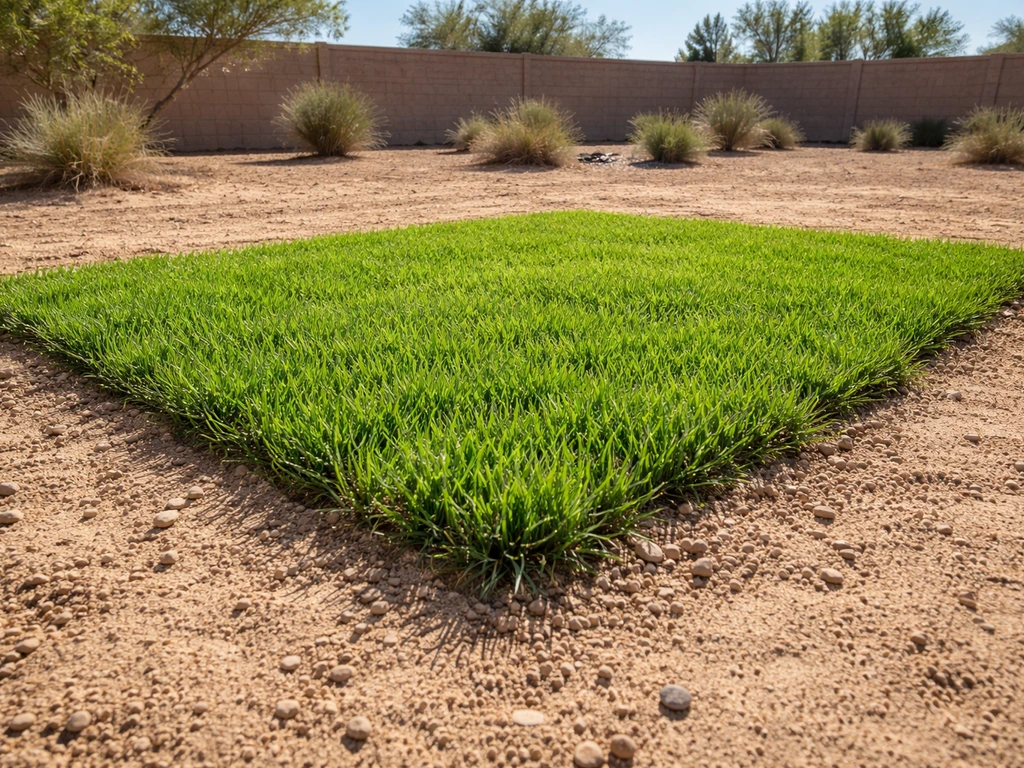
You can grow grass in the desert, but you have to work with the environment instead of fighting it. That means picking a grass variety built for heat and drought, fixing your sandy soil before you seed a single blade, timing your planting around your region's temperature windows, and committing to a watering schedule that keeps the seedbed moist without washing your seed away. Skip any one of those steps and you'll end up with patchy, dying seedlings or nothing at all. Do all four right, and you can have a real lawn in desert conditions.
How to Grow Grass in the Desert: Step-by-Step Guide
Marcus Tillwell
24 May 2026
Desert vs. High-Desert: Why Grass Is So Hard to Establish Here
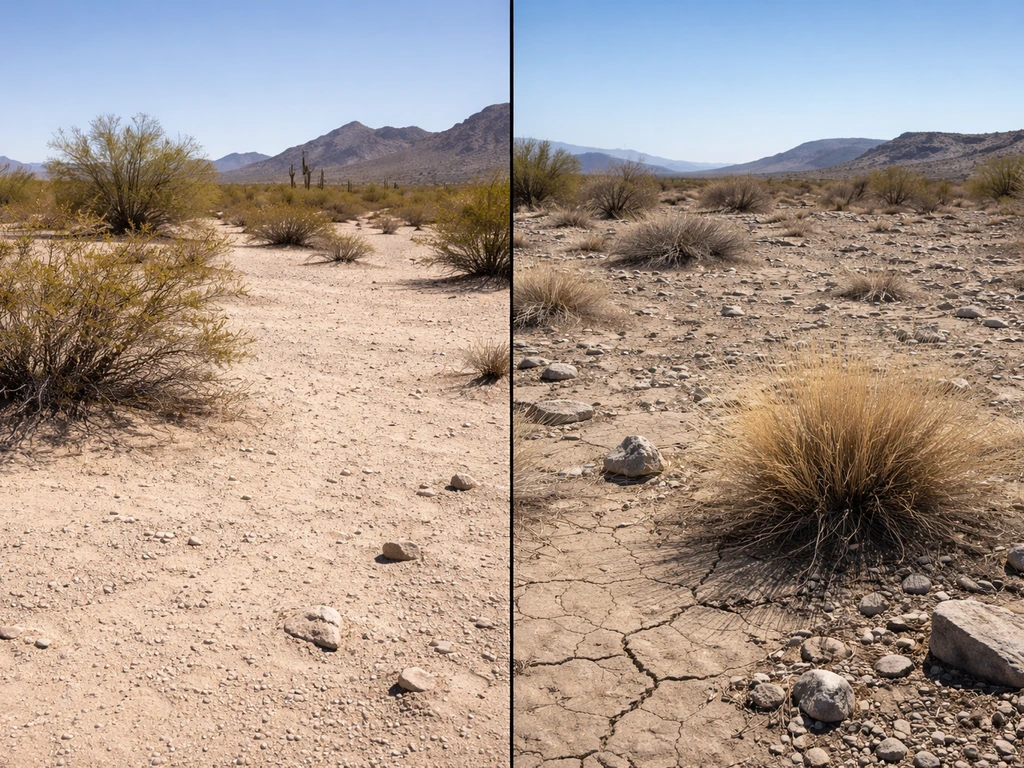
Not all desert climates are the same, and that matters a lot when you're seeding grass. Low-elevation deserts like the Sonoran (Phoenix, Tucson) or the Mojave (Las Vegas) hit brutal summer highs of 110°F or more, have almost no humidity, and get maybe 3 to 8 inches of rain per year. High-desert climates like Albuquerque, Santa Fe, or Flagstaff are hot in summer but drop hard below freezing in winter, sometimes seeing 12 to 15 inches of rain and snow annually. The challenges are different but overlapping.
In both cases, the main enemies of grass seed are desiccation (seeds and seedlings drying out before roots establish), soil structure (desert sand drains so fast that water disappears before roots can absorb it), wind (which dries the surface and can physically displace lightweight seed), and heat stress at the soil surface (bare desert sand can reach 150°F on a summer day, which will cook seedlings). High-desert areas add a frost risk that can kill warm-season grasses before they go dormant properly.
There's also the salinity issue. Desert soils often accumulate salts from evaporation and irrigation water, which can inhibit germination. If you've tried to seed before and gotten almost nothing, a soil test will tell you whether salt buildup or pH is the real problem.
Fix Your Desert Soil Before You Seed Anything
Desert sand is basically the worst possible seedbed. It holds almost no moisture, has very little organic matter to feed seedlings, and has poor structure for root development. You can't just rake and seed over native desert sand and expect results. You need to amend it first.
Start with a Soil Test
Before you spend money on amendments, get a basic soil test through your county extension office or a mail-in kit. You're checking for pH (desert soils are often alkaline, ideally you want 6.0 to 7.0 for most grasses), salinity (electrical conductivity), and nutrient levels. A high-pH, salty soil will cause germination failure no matter how perfect everything else is. If your pH is above 8.0 or EC is high, you'll need sulfur or gypsum and possibly a good flushing-leach with irrigation before seeding.
Amend for Water Retention
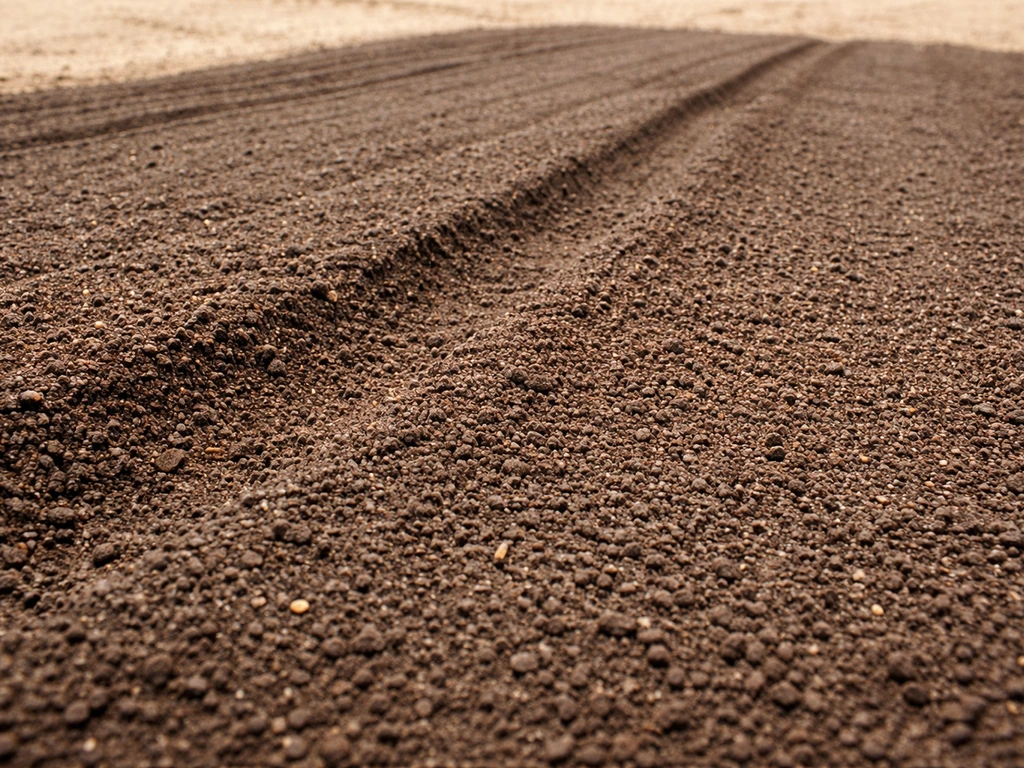
For most desert seeding projects, plan to work 3 to 4 inches of compost into the top 6 inches of soil. This is the single most important amendment you can make. Organic compost improves water retention dramatically in sandy soil, adds microbial life, and lowers pH slightly. Use a rototiller or garden fork to mix it thoroughly. Don't just spread it on top and seed over it. If your area has native caliche (that white, rock-hard calcium carbonate layer under many desert soils), break through it or install drainage holes before planting, because caliche acts like a bathtub and creates waterlogging even in dry climates.
After amending, grade and level the area so water flows gently toward a drain or away from structures. Desert soil that pools water will cause seedling damping-off, a fungal collapse where seedlings turn black and shriveled at the stem base. It's as deadly as drought in the other direction.
Choosing the Right Grass for Your Desert Climate
This is where a lot of people go wrong. They buy a pretty seed mix at the hardware store without checking whether it's suited for their specific desert situation. Here's how to think about it.
| Grass Type | Best Desert Region | Heat Tolerance | Cold Tolerance | Drought Tolerance | Shade Tolerance |
|---|---|---|---|---|---|
| Bermudagrass | Low desert (AZ, NV, CA) | Excellent (survives 110°F+) | Poor (dies below 10°F) | Excellent | Poor |
| Zoysiagrass | Low to mid desert | Very good | Moderate (to -10°F some varieties) | Very good | Moderate |
| Tall Fescue | High desert (NM, CO, UT) | Moderate (struggles above 95°F) | Excellent | Moderate | Good |
| Perennial Ryegrass | Overseeding only / high desert | Poor (heat kills it) | Good | Low | Moderate |
Low-Desert Pick: Bermudagrass
If you're in Phoenix, Las Vegas, Tucson, or the California desert, bermudagrass is the right answer for a permanent lawn. If you're specifically wondering how to grow grass in Las Vegas, start by matching the grass type to low-desert heat and then follow a strict watering and timing plan. It handles extreme heat, goes dormant in winter without dying, and spreads aggressively once established. Common bermuda is the most affordable seeded variety. Improved varieties like Blackjack or Princess 77 establish faster and look better but cost more. Bermuda will not tolerate shade at all, so if you have large trees, plan accordingly.
Low to Mid-Desert Alternative: Zoysiagrass
Zoysia is a great choice if you want a denser, softer lawn that uses less water than bermuda once it's established. It's slower to establish from seed than bermuda, and germination can take 14 to 21 days even under ideal conditions. It has better shade tolerance and handles more foot traffic. In the mid-elevation desert Southwest, zoysia can be a better long-term investment if you're patient through establishment.
High-Desert Pick: Tall Fescue
In high-desert climates like Albuquerque or Santa Fe that get genuine cold winters and summer highs that usually stay below 100°F, tall fescue is often the best permanent option. If you're specifically wondering how to grow grass in New Mexico, focus on high-desert timing, cold-season risk, and selecting varieties like tall fescue for survival through winter and summer swings Albuquerque or Santa Fe. It's a bunch-type grass that handles cold well, has decent drought tolerance, and germinates reliably in cool-to-warm soil. It doesn't spread aggressively like bermuda, so bare spots need to be reseeded. Look for drought-tolerant turf-type tall fescue varieties specifically bred for the Southwest.
Overseeding with Perennial Ryegrass
Perennial ryegrass isn't a permanent desert lawn solution, but it's widely used in low-desert climates to keep a lawn green through winter when bermuda goes dormant. If you already have a bermuda lawn and want winter color, overseed with perennial rye in late October when soil temps drop below 75°F. This is a seasonal strategy, not a way to establish a permanent lawn.
When to Seed in the Desert (Timing Is Everything)
Getting timing right in the desert is more critical than almost anywhere else because you have narrow windows where conditions actually support germination.
Warm-Season Seeding Window
For bermuda and zoysia in low-desert areas, seed when soil temperatures are consistently at or above 65°F, ideally 70 to 85°F. In Phoenix or Las Vegas, that window typically runs from late April through early June. Seeding in July or August in the low desert is technically possible but brutal: you'll fight 115°F soil surface temps and rapid moisture loss. If you miss the spring window, wait until late summer (mid-August) when the worst heat breaks slightly. In Arizona specifically, monsoon season can actually help establishment if you time it right.
Cool-Season and High-Desert Timing
For tall fescue in high-desert climates, aim for fall seeding in late August through mid-October. Soil temperatures in the 50 to 65°F range are ideal for fescue germination. Spring seeding in March to April works too, but fall is better because seedlings establish through cool months before summer heat arrives. In places like Albuquerque or Flagstaff, a fall-seeded fescue lawn has a much higher survival rate heading into its first summer than a spring-seeded one.
Overseeding Timing
If you're overseeding a dormant bermuda lawn with perennial ryegrass, target late October in low-desert cities. Soil temps need to be below 75°F for rye germination to succeed. Overseed too early and the rye won't germinate well. Too late and it won't establish before hard cold arrives.
How to Seed Desert Soil Step by Step
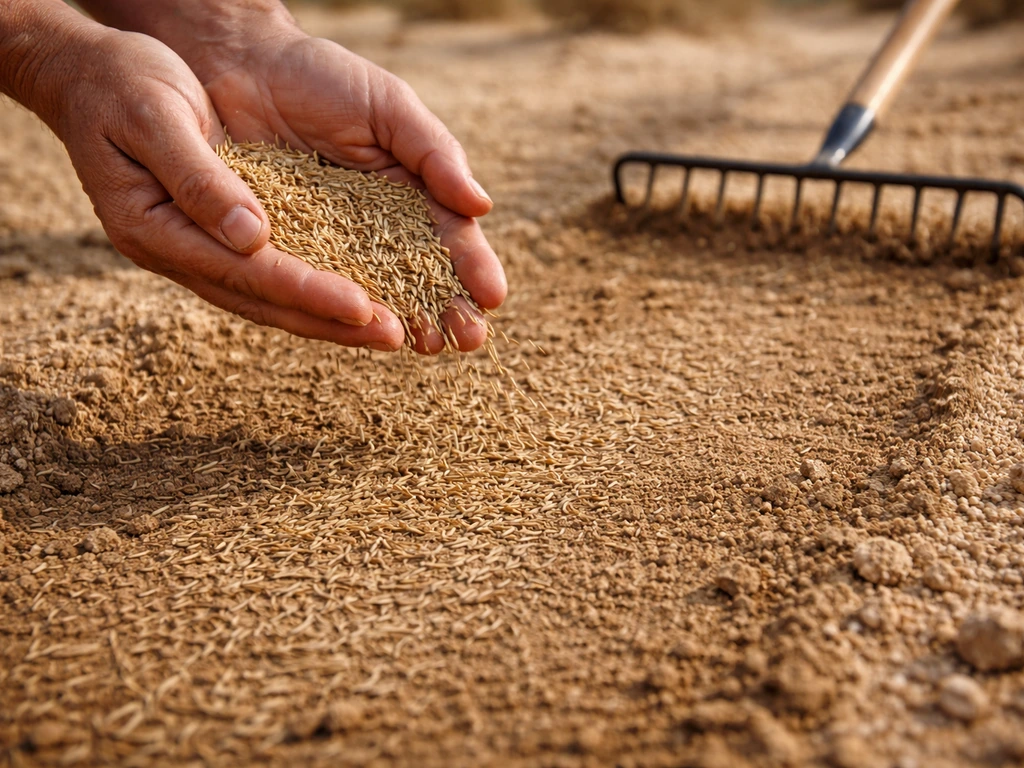
Once your soil is prepped and you've chosen the right grass for your climate and timing window, here's how to actually get seed into the ground and give it the best shot at germinating.
- Lightly rake and level your amended seedbed. You want a smooth, slightly firm surface with no clumps larger than your thumbnail. A lawn roller with about one-third fill is useful here if you have one.
- Spread seed at the right rate. For common bermudagrass, use 1 to 2 pounds of hulled seed per 1,000 square feet. For tall fescue, use 6 to 8 pounds per 1,000 square feet. For zoysia, use 1 to 2 pounds per 1,000 square feet. Use a broadcast spreader for large areas, not hand-throwing, which creates uneven coverage.
- Get seed-to-soil contact. In desert conditions this is non-negotiable. After spreading, drag a light rake across the surface to work seed shallowly into the top 1/8 to 1/4 inch of soil. Then roll with a lawn roller or walk over the area with flat-soled shoes to press seed against the soil. Seed sitting on the surface in desert wind will dry out and blow away.
- Apply a thin layer of mulch. In hot, windy desert conditions, a light topdressing of weed-free straw (enough to see through, about 50 to 75 percent ground coverage) or a diluted wood fiber mulch helps retain soil moisture and protect seed from wind and surface heat. Don't bury the seed under thick mulch.
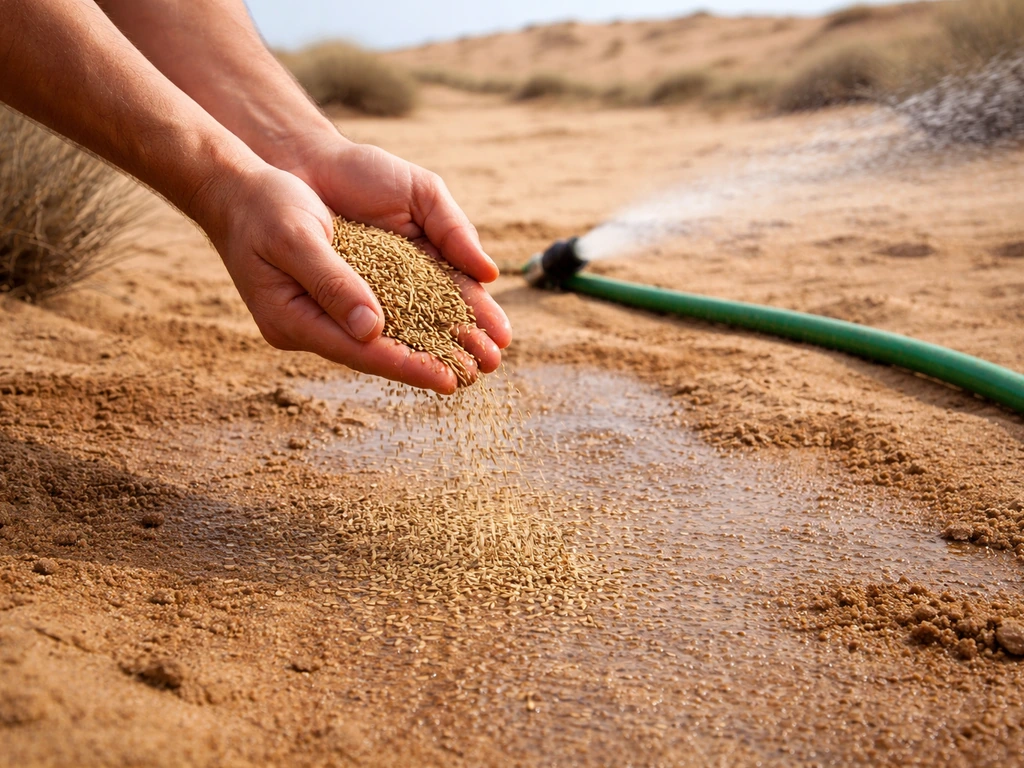
- Water immediately and gently. Start your first watering within an hour of seeding. Use a fine mist setting, not a stream, to avoid displacing seed. Soak the top 2 to 3 inches of soil, then follow your germination watering schedule (see the next section).
Expect germination timelines to vary by grass type. Bermudagrass typically germinates in 7 to 14 days under ideal soil temps. Tall fescue comes up in 5 to 10 days. Zoysia is the slowest at 14 to 21 days. In desert heat, even the faster varieties can stall if soil moisture drops at the wrong moment, so don't lose faith before the 3-week mark.
Watering: The Make-or-Break Factor in Desert Seeding
Desert seeding fails more often because of watering mistakes than anything else, and those mistakes go both directions: too little and seeds dry out; too much and you get runoff, seed washout, or damping-off disease. In sandy or arid settings, keep newly seeded areas moist during germination and seedling establishment, and use watering plans that avoid runoff and puddling while matching the soil’s water-holding capacity and drainage. Getting this right is the core challenge.
Germination Phase (Days 1 to 21)
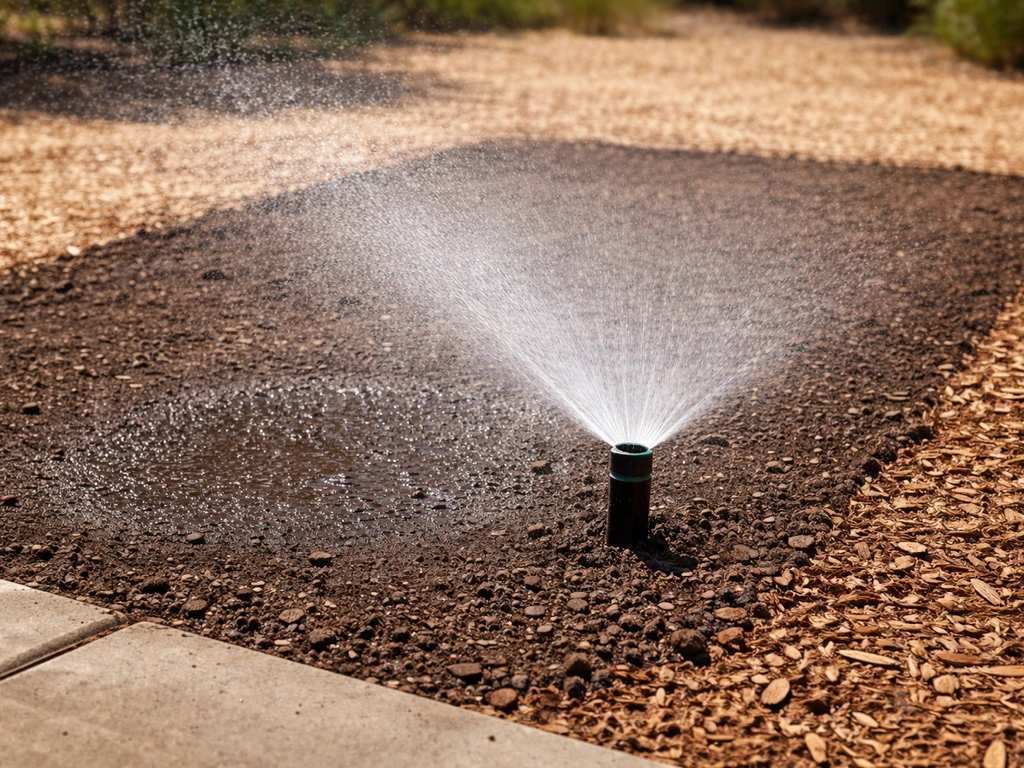
During germination, your goal is to keep the top inch of soil consistently moist, never soggy, never dry. In summer desert heat, that usually means watering 3 to 4 times per day in short cycles, typically 5 to 8 minutes per zone. The key is light and frequent, not one long soak. If you water too heavily at once, desert sand will wick moisture down and away from the seedbed faster than roots can form, or you'll create surface runoff that carries seed off your lawn. A drip or micro-spray system works better in desert conditions than large rotor heads for this phase. If you're hand-watering, use a fine-mist nozzle and check the soil with your finger every few hours in the afternoon heat.
University of Nevada research on Mojave Desert lawn establishment points to a well-designed irrigation system as one of the most critical factors in success, not just the water itself. If your irrigation isn't delivering even coverage, you'll have dry dead spots no matter how much you water on a timer.
Transitioning to Deep Watering After Germination
Once you see consistent germination across the lawn (typically at 2 to 3 weeks), start transitioning to less frequent but deeper watering. The goal is to train roots to go deep in search of water. Begin reducing watering frequency from 3 to 4 times per day down to twice daily, then once daily, and eventually every 2 to 3 days once the grass is 2 inches tall. Each deep watering should wet the soil to 4 to 6 inches. This is when sandy desert soil's fast drainage actually helps: it dries out relatively quickly, which encourages root depth.
Watch for runoff every time you water. If water is sheeting off the surface or pooling, your soil may be crusting or your rate is too fast. Cycle and soak: run the zone for 5 minutes, let it absorb for 30 minutes, then run it again. This is especially important on slopes.
After Germination: Keeping New Grass Alive and Growing
Getting seeds to sprout in the desert is an accomplishment, but new seedlings are incredibly fragile. Here's how to take them through the early growth phase without losing them.
First Mowing
Wait until your grass reaches about 3 to 4 inches tall before the first mow, then cut it to 2 to 2.5 inches. For bermuda, you can mow shorter once it's established, but new seedlings need leaf area to drive photosynthesis and root development. Always use a sharp blade: a dull mower tears seedlings out by the roots in sandy, loosely structured desert soil. After mowing, water lightly to help recover from the stress.
Fertilizing New Desert Seedlings
Don't fertilize immediately after seeding. Wait until the grass has been mowed at least once and is actively growing, usually 4 to 6 weeks after germination. Then apply a starter fertilizer with a moderate nitrogen and higher phosphorus ratio (something like 12-24-12) to support root development. Desert soils are typically low in organic nitrogen, so you'll need to fertilize regularly once the lawn is established, but more is not better during establishment. Over-fertilizing new seedlings in heat causes burn.
Weed Control Without Killing New Grass
Pre-emergent herbicides are off the table until the grass is fully established, usually after 3 to 4 months of active growth. Before that, pull weeds by hand. Desert environments often have a seed bank of annual grassy weeds (like spurge and goathead) that will sprout right alongside your lawn seed. Be patient and pull consistently. Post-emergent broadleaf herbicides can generally be used once your lawn grass has been mowed at least 2 to 3 times, but check the label for your specific grass type. Some warm-season grasses are sensitive to certain herbicides at young ages.
Troubleshooting Common Desert Seeding Failures
- Patchy germination: Usually uneven seed-to-soil contact or inconsistent irrigation coverage. Hand-reseed bare areas and check that your sprinkler heads are overlapping correctly.
- Seeds disappearing: Wind or birds. Use straw mulch to anchor seed and consider temporary bird netting on small areas.
- Seedlings dying suddenly: Check for damping-off, a fungal disease that collapses seedlings at the soil line. Caused by overwatering combined with poor drainage. Reduce irrigation frequency and improve drainage if possible.
- Crust forming on the surface: Desert soil can form a hard crust that blocks emergence. Break it up very gently with a light rake if you see seedlings pushing against a sealed surface, then mulch to prevent recurrence.
- Grass coming up but dying in patches during heat: Likely heat stress at the soil surface. Apply a very thin layer of topdressing compost over established seedlings to moderate surface temp, and make sure your midday watering is keeping the surface from baking.
- Pet damage: Keep pets off newly seeded areas for at least 4 to 6 weeks. Even light foot traffic on loose, sandy desert soil disrupts seedling roots.
Your Desert Lawn Action Plan: Start Here Today
Here's a practical checklist you can start working through right now, regardless of where you are in the desert Southwest. Some steps you can do today, some will take a week or two, and that's fine.
- Identify your desert type: Are you in a low-elevation desert (Phoenix, Las Vegas, Tucson) or a high-desert climate (Albuquerque, Flagstaff, Santa Fe)? Your grass choice and timing depend on this answer. If you're in Arizona or New Mexico specifically, those climates have their own nuances worth exploring.
- Get a soil test this week. Order a mail-in kit or contact your county extension office. You need to know your pH and whether you have a salinity problem before spending money on seed and amendments.
- Decide on warm-season vs. cool-season based on your climate: Low desert, go bermuda or zoysia. High desert, go tall fescue. If you're overseeding an existing dormant bermuda lawn, go perennial ryegrass in fall.
- Check today's soil temperature. You can buy an inexpensive soil thermometer for about $10. For bermuda or zoysia, you need 65°F or above consistently. For fescue, 50 to 65°F is ideal. If you're out of window, use this time for soil prep and get ready for the next one.
- Plan your soil prep: Order or pick up compost (at least 3 cubic yards per 1,000 square feet), rent a rototiller if needed, and plan to amend before seeding. If you suspect caliche, probe 12 to 18 inches down with a rod to check.
- Design or audit your irrigation before you seed. Uneven coverage is the number-one reason desert lawns fail. Walk your yard with your sprinklers running and look for dry spots.
- Buy the right seed for your grass type and use correct seeding rates. Don't over-seed thinking more seed means more grass. It causes competition and poor establishment.
- Set a week-by-week calendar from your seed date: Week 1 to 2, germination phase, water 3 to 4 times daily lightly. Week 3 to 4, transition watering, begin deep soak cycles. Week 4 to 6, first mow and starter fertilizer. Weeks 6 to 12, establish regular mowing and deep watering routine.
Growing grass in the desert is genuinely achievable, but it rewards preparation more than anything else. If you need location-specific guidance, look up how to grow grass in AZ for the best grass types and timing Growing grass in the desert is genuinely achievable. The homeowners who fail usually skipped the soil work, seeded at the wrong time, or had irrigation gaps they didn't know about. Get those three things right and you'll be surprised how fast a quality stand of grass can come in, even in desert sand.
FAQ
Can I use desert water (or treated water with dissolved salts) to grow grass from seed?
Yes, but only if the irrigation and soil mix can handle the salt. If your soil test shows high EC, avoid seeding until you do a pre-leach (run enough clean water to move salts below the seed zone), then confirm pH and salinity again. Also, use compost that is low-salt, and keep germination watering frequent but light to reduce upward salt movement at the surface.
What should I do if my grass seeds germinated but then died?
If seedlings stop at “sprout but then melt,” the usual causes are seedbed drying between short cycles, watering so heavy that runoff forms, or damping-off from consistently soggy conditions. For triage, check the top inch moisture twice daily (morning and late afternoon), and verify you are not washing seed away by running water too fast on sandy slopes.
How do I prevent grass seed from blowing away or drying out on day one?
Wind seed loss is common in desert sites, especially right after seeding. A practical fix is to use a light seed-and-soil contact method (topdress with a thin, compost-based layer, then roll gently) and seed during lower-wind hours. If you see seed “piling” in ridges, adjust the spreader settings and slow down walking speed.
How often should I soil-test in a desert lawn project, and when should I retest?
A soil test is worth it, but timing matters. If you recently applied fertilizer, gypsum/sulfur, or leach irrigation, wait long enough for results to stabilize before retesting (often a couple of weeks). If you are seeing repeated germination failure, retest pH and EC after amendments rather than changing grass type immediately.
My soil pools water after irrigation, but it’s a “dry” desert site. Could caliche be the cause, and what’s the workaround?
Caliche affects more than drainage. If water won’t soak in within a reasonable time, roots will struggle even if you irrigate often. In that case, you may need mechanical breaking of caliche in strips, localized aeration, or installing drainage where ponding occurs, then regrade to avoid low pockets.
Is it possible to seed in late summer anyway if I missed spring, and how should I change my approach?
For bermuda and zoysia in low-desert areas, avoid seeding when soil temps are above your target window, because surface heat quickly desiccates the seedbed even if you water. If you must seed late, reduce stress by switching to a micro-spray or drip setup, shading the seed zone for the first 2 to 3 weeks, and expecting slower, patchier establishment.
What’s the best way to protect seedlings from unexpected cold snaps in the high desert?
Frost can wipe out warm-season seedlings if they are still tender. In high desert, use a “protect the seedlings” plan: seed during the correct fall window for the warm season you chose, and be ready with row covers or portable frost protection when nights are forecast to drop hard.
Should I use mulch after seeding in the desert?
Don’t count on mulch alone as a substitute for compost incorporation. A better approach is to mix compost into the top 6 inches as your base and, if needed, use a very light top layer (fine mulch or a thin compost topdress) to reduce evaporation. Too much mulch can reduce seed-to-soil contact and delay germination.
Can I use weed killer right before or right after seeding grass in the desert?
Glyphosate, selective herbicides, and broad-spectrum “weed killers” can damage grass seedling establishment if they move with irrigation or are applied too close to seeding. If you are clearing weeds right before planting, prefer non-chemical removal (hand pull or solarization) or spot treatments with a long waiting period, then verify compatibility with your exact grass type.
If I want winter color, what’s the most common mistake when overseeding bermuda with perennial ryegrass?
Yes, but do it with an eye for grass-specific timing and soil moisture. If you overseed bermuda with rye for winter color, you still need to keep the top inch moist until the rye establishes, and you should be careful not to overwater into damping-off conditions. Also, mowing height matters, keep it higher on new rye and transition down only after a few mowings.
Next Article
How to Grow Grass in AZ: Step-by-Step for Phoenix Dirt
Step-by-step how to grow grass in Phoenix AZ: pick the right type, prep clay or sand, seed, water, and prevent failures.