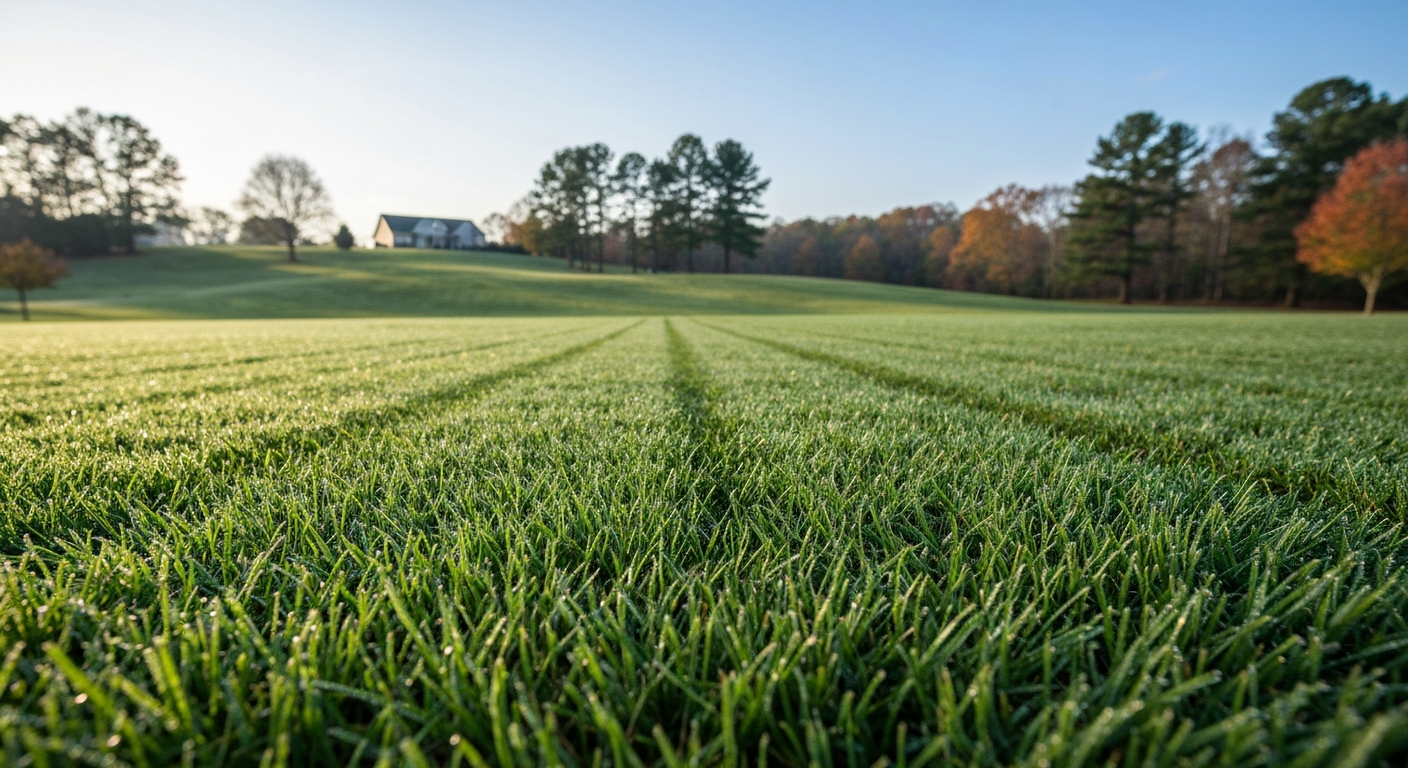
Kentucky 31 tall fescue is a tough, adaptable cool-season grass that you establish from seed at 6 to 9 pounds per 1,000 square feet for a new lawn, or 3 to 4 pounds per 1,000 square feet when overseeding a thin stand. Plant it in late summer or early fall, when soil temperatures are still above 60°F but cooling air slows weed competition. Keep the seedbed continuously moist until seedlings hit about 2 inches tall, apply a phosphorus-heavy starter fertilizer at seeding, and you can expect germination to begin in as few as 7 days under good conditions. That is the short version. Everything below explains exactly how to make it work on your specific site. For a step-by-step guide on how to grow Kentucky 31 tall fescue, see our detailed how-to guide.
How to Grow Kentucky 31 Grass: Complete Seeding & Care Guide
What Kentucky 31 Actually Is (and Who This Guide Is For)
Kentucky 31, often written as K-31, is a variety of tall fescue (Festuca arundinacea) that was collected from a farm in Menifee County, Kentucky, in the 1930s and released by the University of Kentucky in 1943. It is one of the oldest named grass varieties still in widespread commercial use. For decades it was grown almost entirely as a pasture and hay grass, but homeowners in the transition zone and upper South eventually adopted it for lawns because it handles heat, drought, and hard use better than most other cool-season grasses. If you are reading this because you have a large, sunny yard in the mid-Atlantic, the Carolinas, Kentucky, Tennessee, Missouri, or anywhere in USDA zones 4 through 7, and you want a grass that survives summer without constant irrigation, K-31 is worth understanding. If you are a small-plot lawn purist who wants a golf-course texture, keep reading because you need to know what you are getting into before you buy a bag.
This guide is written for homeowners doing the work themselves, people who have rented a spreader, bought a bag of seed, and are trying to avoid the frustration of a patchy, failed lawn. It covers every step from soil testing through first mow, with specific numbers at each stage rather than vague advice.
Kentucky 31 vs. Similar Grasses: Know What You Are Choosing
K-31 is regularly confused with several other grasses, and buying the wrong seed is one of the most common and expensive mistakes a homeowner can make. Here is how it stacks up against the grasses you are most likely to encounter or consider.
| Grass | Type | Texture | Heat Tolerance | Shade Tolerance | Drought Tolerance | Best Use |
|---|---|---|---|---|---|---|
| Kentucky 31 tall fescue | Cool-season, bunch | Coarse | Good (transition zone) | Moderate | Good (goes semi-dormant) | Large lawns, slopes, utility turf |
| Turf-type tall fescue (modern) | Cool-season, bunch | Medium-fine | Good | Moderate | Good | Lawns wanting better texture than K-31 |
| Kentucky bluegrass | Cool-season, spreading | Fine | Moderate | Low | Moderate | Northern lawns, cooler climates |
| Blue fescue (Festuca glauca) | Cool-season, ornamental | Very fine/blue | Low | High | High | Ornamental borders, not lawns |
| Tall fescue blends/mixes | Cool-season, bunch | Medium | Good | Moderate | Good | Transition zone lawns |
| Perennial ryegrass | Cool-season, bunch | Fine-medium | Moderate | Low-moderate | Moderate | Overseeding, quick cover, mixes |
| Bermuda | Warm-season, spreading | Fine-medium | Excellent | Poor | Excellent | South/Southwest, high-traffic lawns |
| Zoysia | Warm-season, spreading | Fine | Excellent | Moderate | Good | South, transition zone, low mow |
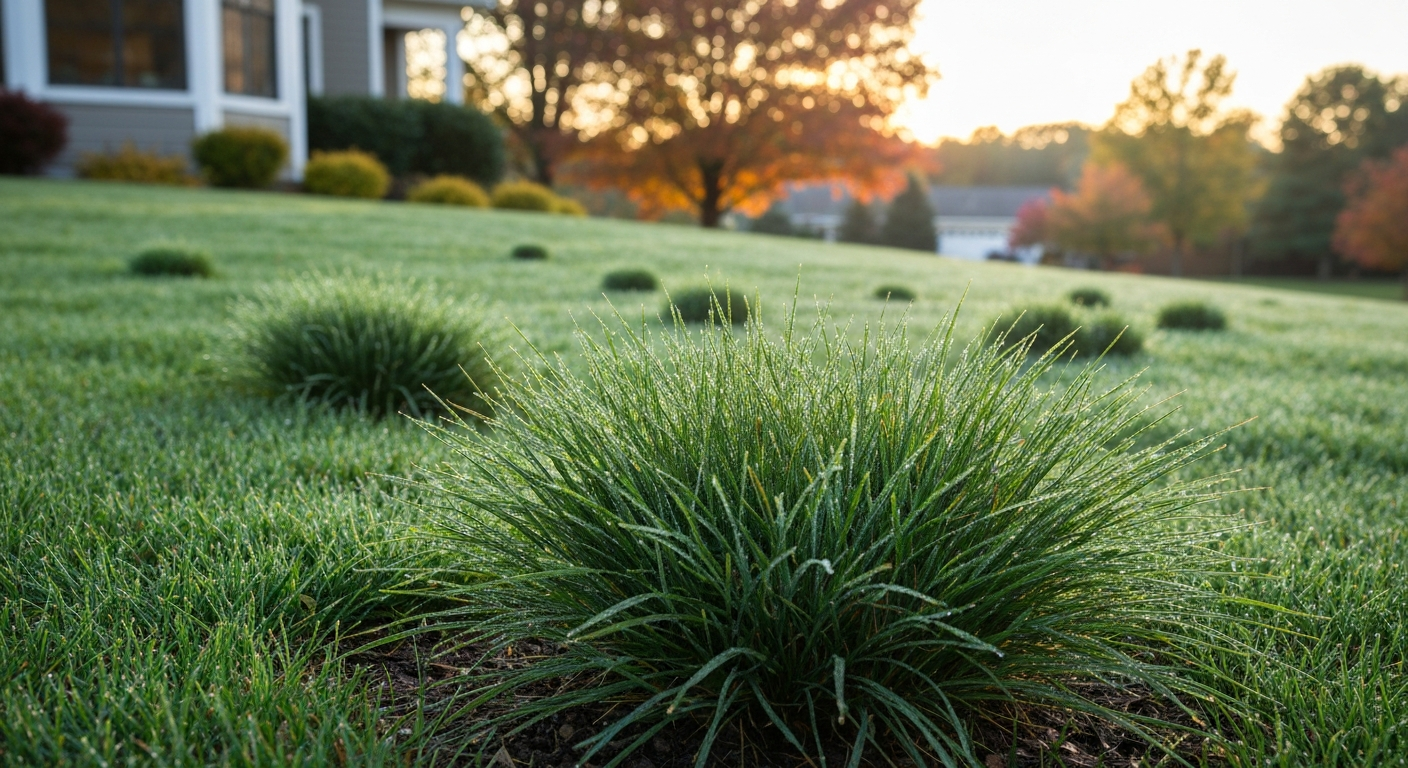
The confusion between K-31 and Kentucky bluegrass is very common. If you want guidance on cultivating Kentucky bluegrass instead, see how to grow blue grass for planting times, seeding rates, and care tailored to bluegrass. Despite the shared state name, they are completely different grasses. Kentucky bluegrass is a fine-textured, spreading grass that forms a thick sod and does best in zones 3 through 6, while K-31 is a coarse, clump-forming grass that handles the hotter summers of zones 5 through 7 much better. If you are in the Midwest or upper South and your goal is durability without heavy irrigation, K-31 is the stronger choice. If you are in the cooler northern plains or New England, bluegrass is probably a better fit. Blue fescue is something else entirely: it is a low-growing ornamental grass grown for its blue-gray color in garden beds, not a lawn grass at all, so do not confuse the two even though both carry the word fescue. If you want instructions for the ornamental blue-gray clumping grass, see our guide on how to grow blue fescue from seed.
Compared to bermuda and zoysia, K-31 is on the opposite side of the warm/cool-season divide. Bermuda and zoysia go dormant and brown in cold winters, while K-31 stays green longer into fall and greens up earlier in spring. In the deep South below zone 7, warm-season grasses will outperform K-31 in summer. In the transition zone (roughly zones 6 to 7), K-31 is a legitimate competitor to both if you manage it correctly.
Honest Pros and Cons of Kentucky 31
K-31 has real strengths, but it also has documented weaknesses that some homeowners discover the hard way after planting. Here is a frank accounting.
Where K-31 Genuinely Excels
- Drought survival: K-31 goes semi-dormant rather than dying outright during summer drought, then recovers when moisture returns. It does not need the irrigation that bermuda or Kentucky bluegrass require in hot, dry summers.
- Wear and traffic tolerance: The deep root system (roots can reach 2 to 3 feet under good conditions) supports decent recovery from foot traffic and play.
- Shade tolerance: It handles moderate shade better than bermuda or bluegrass, making it workable under open tree canopies where roughly 4 to 6 hours of sun still reach the ground.
- Cost: K-31 seed is among the cheapest turfgrass seed available, typically a fraction of the price of named turf-type tall fescue blends.
- Winter color in the transition zone: Unlike bermuda and zoysia, it stays green well into November and often through mild winters, which many homeowners strongly prefer.
- Low-input maintenance: It does not require the fertilizer, overseeding, or dethatching regimen that high-end turf types demand.
Real Weaknesses You Should Know About
- Coarse texture: K-31 is noticeably wider-bladed than modern turf-type tall fescues, bluegrass, or zoysia. Up close, many homeowners find it unattractive compared to a premium blend.
- Clumping growth habit: Unlike bluegrass or bermuda, K-31 does not spread laterally via rhizomes or stolons. Bare spots must be reseeded manually; they will not fill in on their own.
- Thatch buildup: Under high fertilization or irrigation, K-31 can build moderate thatch layers that reduce water infiltration over time.
- Lower turf quality scores: Multiple National Turfgrass Evaluation Program (NTEP) trials show K-31 scores lower for turf quality than most modern named tall fescue cultivars. If appearance matters a lot to you, a turf-type blend will look better.
- Endophyte concerns if you have livestock: Standard K-31 almost universally contains the toxic endophyte strain that produces ergot alkaloids causing fescue toxicosis in cattle and horses. If any livestock will graze near your lawn or you plan to use clippings as feed, choose a novel-endophyte variety instead.
- Mediocre performance in deep shade: Below about 30 to 40 percent full sun, even K-31 struggles and thins out significantly.
Is Kentucky 31 Right for Your Site and Climate?
K-31 is purpose-built for the transition zone, the band of the country where summers are too hot for most cool-season grasses to stay pristine and winters are too cold for warm-season grasses to stay green year-round. This zone runs roughly through Virginia, North Carolina, Kentucky, Tennessee, Missouri, Kansas, and similar mid-elevation areas. If you are in USDA zones 5 through 7, K-31 is a legitimate primary turf choice.
North Carolina is a particularly good example of K-31 country. For detailed, region-specific steps including timing, seeding rates, and soil amendments, see our guide on how to grow fescue grass in North Carolina. The Piedmont and western mountain regions sit squarely in the transition zone, with hot, humid summers and moderate winters. NC State Extension recommends tall fescue as the primary cool-season lawn grass for these regions, and K-31 is the most widely planted variety in the state's older residential lawns. The coastal plain is a different story: summers are long, hot, and humid enough that warm-season grasses like bermuda and zoysia usually outperform tall fescue there, and K-31 can struggle to survive without supplemental irrigation.
Common Site Scenarios and Whether K-31 Fits
| Site Scenario | K-31 a Good Fit? | Notes |
|---|---|---|
| Full sun, transition zone (zones 5-7) | Yes | Ideal use case. Plant fall, manage irrigation in year one. |
| Partial shade, 4-6 hours direct sun | Yes, with management | K-31 tolerates moderate shade but thins in deep shade. |
| Deep shade (under dense canopy) | No | Consider shade-tolerant fine fescue blends instead. |
| Clay soil | Yes, amend first | K-31 tolerates clay but establishes far better with organic matter and core aeration. |
| Sandy soil | Yes, amend first | Add organic matter to improve water retention; K-31 dries out fast in pure sand. |
| Slopes and erosion areas | Yes | Deep roots make K-31 a solid erosion-control choice once established. |
| High-traffic play areas | Yes | Handles wear reasonably well; reseed bare spots each fall. |
| Homes with cattle or horses | Use NE variety | Standard K-31 endophyte is toxic to livestock. Choose novel-endophyte tall fescue. |
| Coastal plain South (zone 8+) | No | Warm-season grasses outperform K-31 in long, hot coastal summers. |
| Northern zones 3-4 | Marginal | K-31 can survive but Kentucky bluegrass is better adapted to severe cold. |
If you have pets, K-31 is about average in urine tolerance. Dog urine burn spots will still appear, especially from female dogs who urinate in concentrated patches. The good news is that overseeding those spots each fall is easy and inexpensive with K-31 seed. The grass does not spread to fill spots on its own, but it also does not require expensive renovation products to fix them.
Choosing Seed and Blends: What to Look for on the Bag
Not all K-31 seed bags are equal, and this is one place where homeowners spend money on inferior product without knowing it. Here is what to check before you buy.
Reading the Seed Label
Every bag of commercially sold seed in the United States must carry a label showing purity percentage, germination percentage, inert matter, crop seed, weed seed, and test date. These figures follow Association of Official Seed Analysts (AOSA) standards, which are the national benchmark used by state seed labs and commercial testing labs. The number that actually matters for your wallet is Pure Live Seed (PLS). If a bag of K-31 shows 90 percent purity and 85 percent germination, only about 76 percent of the seed in that bag (0.90 x 0.85 = 0.765) is actually going to grow. This means you need slightly more seed than the base rate to hit your target coverage. Look for bags with at least 85 percent germination and purity above 90 percent. Check the test date: germination rates decline over time, so avoid seed tested more than 9 to 12 months ago.
Standard K-31 vs. Novel-Endophyte Varieties
The endophyte issue is important and frequently misunderstood by homeowners. The fungal endophyte (Neotyphodium coenophialum) living inside nearly all standard K-31 plants produces alkaloids that make the grass resistant to surface-feeding insects and tolerant of drought and heat stress. That sounds great, and it is, for the lawn. The problem is that those same alkaloids cause fescue toxicosis in horses, cattle, and other livestock when they graze the grass. If your yard is strictly for family and pets and no livestock ever comes near it, standard K-31 is fine. If you have horses or cattle, or your lawn clippings might ever be fed to animals, choose a novel-endophyte (NE) variety such as Jesup MaxQ or MaxQ II. These cultivars use specially selected endophyte strains (AR542, AR584, and similar) that retain the plant stress and insect tolerance benefits while eliminating or greatly reducing the harmful alkaloids. NE seed costs more than commodity K-31, but it is a genuine safety upgrade in livestock situations.
Pure K-31 vs. Blends: Which to Use
Pure K-31 seed is the cheapest option and entirely legitimate for utility lawns, large properties, slopes, or anywhere looks are secondary to performance and budget. For a front-yard lawn where appearance matters more, consider a blend of turf-type tall fescues that may include a small percentage of K-31 or simply replace K-31 entirely with a named blend. Blends of multiple tall fescue cultivars improve disease resistance and texture compared to a monoculture. Some blends include 5 to 15 percent Kentucky bluegrass to improve lateral spread and help fill bare spots over time, which is useful given tall fescue's non-spreading habit. Adding perennial ryegrass (10 to 20 percent) speeds germination and gives quicker initial cover, but ryegrass does not perform as well in summer heat as tall fescue. If you are strictly comparing K-31 to these premium options, K-31 wins on cost and drought durability; the blends win on texture and turf quality scores.
When to Plant: Regional Windows and Timing Details
Getting the planting window right is probably the single biggest factor in establishment success. K-31 is a cool-season grass, meaning it germinates and roots best when soil temperatures are between roughly 59 and 86°F (15 to 30°C), with the sweet spot around 77°F (25°C). The goal is to plant when soil is still warm enough to trigger fast germination but air temperatures are cooling so that weed competition and heat stress are reduced. That window is late summer into early fall in almost every region where K-31 is appropriate.
| Region / USDA Zone | Primary Fall Window | Secondary Spring Window | Notes |
|---|---|---|---|
| Zone 4 (upper Midwest, northern plains) | Aug 1 – Sept 1 | April 1 – May 1 | Earlier fall start needed due to short warm season |
| Zone 5 (Indiana, Ohio, mid-Missouri) | Aug 15 – Sept 15 | April 1 – May 15 | Purdue recommends Aug 15–Sept 15 for northern Indiana |
| Zone 6 (VA, KY, TN, southern MO) | Sept 1 – Oct 1 | March 15 – May 1 | Purdue: Sept 1–30 for southern zones; aim for 6 weeks before first frost |
| Zone 7 / NC Piedmont and Mountains | Sept 1 – Oct 15 | March 1 – April 15 | NC State recommends late August/September for optimal fall establishment |
| Zone 7 / NC Coastal Plain | Sept 15 – Oct 15 | Not recommended | Summer heat is too intense; warm-season grass is usually better here |
| Zone 8 (deep South) | Not recommended | Not recommended | K-31 struggles in sustained summer heat; use warm-season grass |
Fall planting consistently outperforms spring planting for K-31. In fall, weed pressure drops sharply, soil stays warm from summer heat stored in the ground, and the grass has the entire cool season to establish roots before it faces summer stress. Spring planting works but gives the grass only a few weeks to root before summer heat arrives, which means more irrigation and higher first-year losses. If you miss the fall window, plant as early as possible in spring rather than waiting until the next fall.
In North Carolina specifically, late August through mid-September is the target window for the Piedmont. Mountains can push slightly earlier (late August) to stay ahead of early cold snaps. If you are in the NC Piedmont and you miss October without planting, your best bet is to wait for the following fall rather than risk a spring planting that runs straight into a hot, dry June.
Soil Testing and Amendment: Do This Before Anything Else
Skipping soil testing is the most common mistake I see homeowners make. You can have perfect timing and top-quality seed and still get patchy, yellow establishment if your soil pH is off or your phosphorus is depleted. A basic soil test costs $10 to $20 through your state's cooperative extension service, and it tells you exactly what you need to add instead of guessing with a generic fertilizer.
Target pH and Nutrient Levels
Tall fescue performs best at a soil pH of 5.5 to 6.5. Below 5.5, aluminum and manganese can reach toxic levels and phosphorus becomes less available. Above 6.5, micronutrient availability drops. Most mid-Atlantic and southeastern soils lean acidic and need lime to raise pH. Your soil test report will recommend a specific lime rate. As a general rule, do not apply more than about 50 to 70 pounds of ground limestone per 1,000 square feet in a single application to avoid overshooting. If the recommendation is higher than that, split the applications across two seasons. Apply lime at least 2 to 3 months before seeding if possible, since it reacts slowly with soil. Pelletized lime works faster than ground limestone for quick adjustments.
Fixing Clay Soil
Clay soil is extremely common in the transition zone. K-31 tolerates clay reasonably well once established, but it germinates poorly in hard, compacted clay because seeds cannot make firm contact with mineral soil and the surface crusts over and dries between rain events. Before seeding a clay lawn, core aerate aggressively (aim for 3-inch depth, 4-inch spacing) and work in 2 to 3 inches of compost or aged organic matter across the surface. Till it 4 to 6 inches deep if you are starting a new lawn. This improves drainage, reduces compaction, and dramatically speeds germination by giving seeds a softer, moisture-retaining seedbed to sit in. Do not add sand alone to clay without large quantities of organic matter: small amounts of sand mixed into clay can actually worsen drainage by creating a concrete-like structure.
Fixing Sandy Soil
Sandy soil presents the opposite problem: it dries out so fast that seeds desiccate between waterings. Adding 3 to 4 inches of compost worked in 6 inches deep improves water and nutrient retention significantly. In sandy soils you will also need to water more frequently during establishment than on heavier soils, and your fertilizer will leach faster. Split your nitrogen applications into smaller, more frequent doses rather than one large hit.
Building Organic Matter
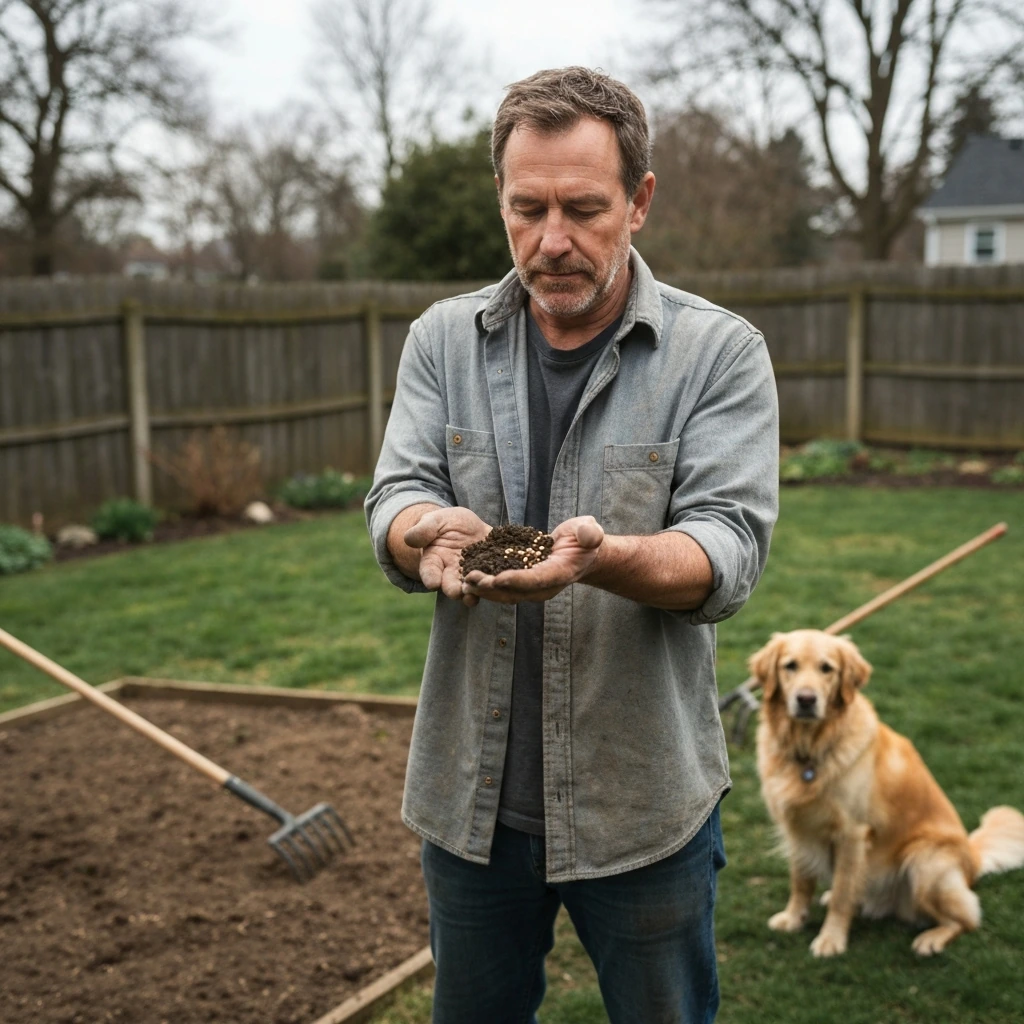
For new lawns, incorporate 2 to 4 inches of compost into the top 6 inches of soil before seeding. This single step improves germination, water retention, and long-term turf health more than almost any other amendment. For existing lawns being renovated, top-dress with 0.25 to 0.5 inches of compost after core aeration each fall. Over several seasons this measurably improves soil structure even without deep tilling.
Seedbed Preparation: Step by Step
How you prepare the ground determines whether seed sits in good contact with mineral soil or just rolls around on the surface. Most establishment failures trace back to poor seedbed prep, not bad seed or bad timing.
Preparing a New Lawn from Scratch
- Kill or remove existing vegetation. Use a non-selective herbicide (glyphosate) 2 to 3 weeks before seeding to kill weeds and old grass, then wait at least 7 to 14 days per the label before working soil. Alternatively, sod-cut and remove the top 2 inches of old turf with a sod cutter rented from a equipment rental store.
- Rough-grade the area. Use a garden rake or a box blade on a small tractor to establish a slope of about 1 to 2 percent away from the house. This prevents low spots where water pools and drowns seedlings.
- Till 4 to 6 inches deep. A rear-tine tiller is the right tool here. A front-tine tiller is fine for small areas. This depth breaks up compaction, buries old thatch and debris, and loosens the zone where roots will establish.
- Add amendments. Spread your compost, lime, and any other soil test recommendations on top of the tilled area, then till again lightly (2 to 3 inches) to incorporate.
- Firm the seedbed. Use a lawn roller filled one-third with water to firm the surface. You want the soil to feel slightly firm underfoot, not fluffy. Seeds germinate far better in firm soil than in loose, airy soil because firm contact prevents drying out.
- Rake the surface smooth. A landscape rake creates a level, fine-textured surface free of large clods. Remove any rocks larger than about an inch.
Renovating an Existing Thin or Patchy Lawn
- Mow the existing grass as short as possible (1 to 1.5 inches) and bag the clippings to reduce thatch competition.
- Core aerate the entire area. Use a core aerator that pulls plugs 3 inches deep, at maximum coverage. Two passes at 90 degrees to each other is better than one pass. Leave the plugs on the surface; they break down and add organic matter.
- Dethatch if thatch layer exceeds 0.5 inches. A power rake or vertical mower set to 0.25-inch depth cuts through thatch and improves seed-to-soil contact dramatically.
- Apply soil amendments based on your soil test. Top-dress with 0.25 to 0.5 inches of compost and work it lightly into the aeration holes.
- Slit-seed or overseed into the prepared surface. Slit seeding (using a slit seeder that cuts furrows and drops seed into them) gives the best seed-to-soil contact for overseeding. Broadcasting seed over an aerated surface is a legitimate lower-cost alternative.
- Roll lightly or drag a piece of chain-link fence across the seeded area to press seed into the soil surface.
Seeding Methods and Exact Rates
For a new lawn seeded to pure K-31, use 6 to 9 pounds of seed per 1,000 square feet. For a step-by-step guide on how to grow fescue grass from seed, see how to grow fescue grass from seed. That converts to roughly 261 to 348 pounds per acre for larger properties. The lower end of that range (6 lb/1,000 ft²) is appropriate for ideal seedbed conditions with excellent seed-to-soil contact. If your seedbed is imperfect, lean toward 8 to 9 pounds. For overseeding a thin existing lawn, use 3 to 4 pounds per 1,000 square feet. Do not over-seed hoping more seed means better coverage: excessive seed density leads to competition between seedlings, weaker root development, and higher disease risk.
Calculate your actual need using the Pure Live Seed adjustment. If your bag shows 88 percent purity and 82 percent germination, your PLS factor is 0.88 x 0.82 = 0.72. To get an effective rate of 7 lb/1,000 ft², you actually need to spread 7 / 0.72 = about 9.7 lb/1,000 ft² of that particular seed lot.
Choosing a Seeding Method
| Method | Best For | Seed-to-Soil Contact | Cost/Equipment | Notes |
|---|---|---|---|---|
| Broadcast spreader | New lawns, large flat areas | Moderate (needs rolling after) | Low (rotary spreader) | Follow seeding with light raking or rolling to press seed in |
| Slit seeder / slice seeder | Overseeding, renovation | Excellent | Medium (rent ~$60-100/day) | Best method for renovating existing turf; cuts furrows and drops seed simultaneously |
| Drill seeder | Large properties, bare ground | Excellent | High (hire or rent) | Most efficient for acreage; best germination rates |
| Hydroseeding | Slopes, erosion areas, large bare sites | Good with proper mulch | High (hire a contractor) | Slurry of seed, mulch, and fertilizer; great for hard-to-reach slopes |
| Hand broadcast | Bare spots, small areas under 500 sq ft | Low (must rake in) | Minimal | Rake seed lightly into top 1/4 inch after broadcasting |
Seeding depth for tall fescue is 1/4 to 1/2 inch (about 6 to 12 mm). Deeper than that and seeds cannot push through to the surface. Shallower than that and seeds dry out rapidly between watering. After broadcasting, a light raking or a gentle pass with a roller is usually enough to achieve the correct depth on a prepared seedbed.
Watering Schedule: From Seeding to Establishment
Consistent moisture is what turns a bag of seed into a lawn. Letting the seedbed dry out for even a day during the germination window can kill seeds that have already begun to sprout. This is not optional or forgiving, especially in the first two weeks.
Phase 1: Germination (Seeding Through Day 14-21)
Water 2 to 4 times daily to keep the top 0.5 to 1.0 inch of soil continuously moist. Early morning and late afternoon are the best times; avoid watering late in the evening to reduce disease risk. Each watering event does not need to be long: 5 to 10 minutes with a sprinkler is usually enough to re-wet a surface that has only been drying for a few hours. The goal is a consistently dark, damp surface, not standing water. In warm, windy weather you may need more frequent light irrigation. In cool, overcast weather you may get away with less.
Phase 2: Seedling Growth (When Grass Reaches 2 Inches Tall)
Once most of the seedlings are about 2 inches tall, scale back irrigation frequency. Water once or twice daily with slightly longer run times to wet the soil 2 to 3 inches deep. This encourages roots to chase moisture downward rather than staying shallow. Shallow roots are weak roots.
Phase 3: After Three Mowings
After you have mowed the lawn three times, transition to deep, infrequent irrigation: water to a depth of several inches (typically 45 to 60 minutes with a standard lawn sprinkler on most soils) once or twice a week depending on rainfall. This is the watering pattern you should maintain long-term.
Germination Timeline: What to Expect and When
At optimal soil temperatures around 77°F (25°C), tall fescue seeds begin germinating in 3 to 7 days. At the cooler end of the acceptable range, around 60°F (15.5°C), expect germination to start within 7 to 14 days and full coverage to take 3 to 4 weeks. If soil temperatures drop below about 50°F (10°C), germination slows dramatically and can stretch to several weeks. This is why late fall seeding (after mid-October in most of the transition zone) is risky: you are racing against soil that is cooling rapidly.
Do not panic at 10 days if you only see thin green fuzz rather than a full stand. K-31 germinates somewhat unevenly, with faster-germinating seeds appearing in good spots while slower seeds catch up over the following week. Full coverage on a properly seeded and irrigated lawn should be visible by 3 to 4 weeks after planting. If you see significant bare spots at 4 weeks, that is a flag to investigate seed-to-soil contact issues, dry spots, or bird damage.
Fertilization: Starter Application and First-Season Schedule
At seeding, apply a starter fertilizer high in phosphorus at a rate equivalent to about 1.5 pounds of P2O5 per 1,000 square feet. Phosphorus drives root development in young seedlings and is the nutrient most critical at this stage. Do not substitute a standard lawn fertilizer for a starter formulation: standard lawn fertilizers are nitrogen-heavy, which pushes top growth at the expense of roots in new seedlings. Starter fertilizers are labeled as such and typically show a middle number (phosphorus) much higher than standard maintenance fertilizers.
After germination, apply 0.75 to 1.0 pound of nitrogen per 1,000 square feet at 4 to 6 weeks after germination, then again at 8 to 10 weeks after germination during the first season. If you seeded in fall, this puts your second nitrogen application in mid-to-late fall, which is actually ideal for K-31: fall nitrogen applications boost root growth and carbohydrate storage before winter. Do not apply nitrogen during mid-summer heat stress in year one; it pushes top growth the plant cannot support.
First Mow and Mowing Heights
Mow K-31 for the first time when it reaches 3.5 to 4 inches tall. Set your mower to a height of 2.5 to 3 inches and never remove more than one-third of the blade height in a single mowing. Removing too much at once shocks young seedlings and can set back establishment by weeks. Make sure your mower blade is sharp: a dull blade tears grass rather than cutting it cleanly, which opens the seedlings to disease and desiccation.
For long-term maintenance, keep K-31 at 2.5 to 4 inches. This height is higher than most homeowners expect, but taller grass shades the soil (which reduces weed germination and water loss), protects growing points from heat, and supports deeper root development. Cutting shorter than 2 inches stresses K-31 significantly, especially in summer.
Weed Control During Establishment
This is where many homeowners make a costly mistake. Most common pre-emergent herbicides used to prevent crabgrass, including prodiamine, dithiopyr, and pendimethalin, will prevent desirable grass seed from germinating just as effectively as they prevent weed seeds. Do not apply any of these products at the time of seeding or for several months before seeding. Always check the specific product label for the recommended reseed interval, which varies by product and rate.
Siduron (Tupersan) is an exception: it is labeled for use at the time of cool-season grass seeding and suppresses crabgrass without harming the new turf. It is more expensive and harder to find than standard pre-emergents, but it is the right tool if crabgrass pressure is severe and you cannot delay seeding.
For post-emergent weed control, wait until after the third mowing before applying any broadleaf herbicide. New seedlings are more sensitive to herbicide damage than established grass. Most broadleaf weeds that appear in a new K-31 lawn are annuals that will not survive the winter anyway; you can often leave them alone and let the established grass crowd them out the following spring.
Overseeding and Repairing Bare Spots
Because K-31 does not spread laterally, bare spots will not fill in on their own. Every fall, plan on overseeding any thin areas at 3 to 4 pounds per 1,000 square feet. For small bare spots from dog urine, compaction, or foot traffic, scratch the soil surface with a hand rake, apply seed at the same rate, cover lightly with a thin layer of straw or compost, and water daily until germination. Timing still matters: try to do spot repairs in late summer or early fall rather than mid-spring or mid-summer.
For large bare areas (more than a few hundred square feet), the full renovation process (core aeration, dethatching, overseeding) gives you much better results than just throwing seed on hard ground.
Shade Strategies and Pet Considerations
In areas where K-31 is thinning under tree canopies, a few adjustments help. Raise mowing height to 4 inches in shaded areas to maximize leaf area for photosynthesis. Reduce nitrogen fertilization slightly in heavy shade (excess nitrogen in low light promotes lush, disease-prone growth). If shade is so deep that K-31 still fails after two seasons of effort, consider transitioning those spots to a fine fescue blend, which handles deep shade better than tall fescue.
For pet owners dealing with urine spots: the fastest fix is to flush affected areas with water immediately after your dog urinates to dilute the nitrogen concentration. For existing burn spots, scratch the soil, reseed each fall, and water the repair area daily. Some homeowners add a small amount of gypsum to burned areas, though evidence for this is mixed. The most reliable solution is consistent fall overseeding of damaged patches.
Common Pests, Diseases, and Simple Fixes
K-31 with the standard endophyte has built-in resistance to many surface-feeding insects, including billbugs, sod webworms, and aphids, which is one legitimate advantage over endophyte-free grasses. The primary disease concerns in K-31 lawns are brown patch (Rhizoctonia solani) in hot, humid weather and Pythium blight during warm, waterlogged conditions in summer. Both are promoted by excessive nitrogen in summer, overwatering, and poor air circulation.
- Brown patch: Irregular tan or brown circular patches, 6 inches to several feet across, appearing in July and August during hot, humid nights. Avoid evening watering, reduce nitrogen in summer, and improve air circulation by trimming overhanging shrubs. Fungicide (propiconazole or azoxystrobin) is effective if applied early but usually not needed in home lawns unless disease is severe.
- Pythium blight: Greasy-looking patches that collapse quickly after heavy rain or overwatering. Rare in home lawns but possible. Improve drainage, reduce irrigation frequency, and avoid waterlogged conditions.
- Fusarium crown rot and dollar spot: Less common in tall fescue than in other turf types but can appear in stressed lawns. Maintain proper fertility and avoid scalping.
- Bird damage: Birds, especially starlings, eat freshly seeded grass seed before it germinates. Cover seeded areas with straw mulch or erosion-control netting immediately after seeding in areas with high bird pressure. This alone can be the difference between a full stand and a patchy one.
Troubleshooting Establishment Failures
If your K-31 stand looks sparse, patchy, or completely absent four weeks after seeding, work through this checklist before reseeding. Renovating an Established Lawn, NC State Extension (Organic Lawn Care guide) documents common establishment failures, poor seed‑to‑soil contact, surface crusting/drying, herbicide carryover, bird predation, and surface compaction, and recommends remedies such as firming the seedbed, light rolling or slice seeding to ensure 1/8–1/4 inch contact, keeping the topsoil continuously moist, protecting seed from birds, and addressing herbicide residuals per product label or state lab guidance Renovating an Established Lawn — NC State Extension (Organic Lawn Care guide).
| Symptom | Most Likely Cause | Fix |
|---|---|---|
| No germination after 3 weeks | Soil too cold, seed too deep, or seedbed too dry | Check soil temp; water more frequently; reseed at 1/4 inch depth |
| Patchy germination with random bare spots | Poor seed-to-soil contact or bird damage | Roll or press seeded areas; use straw mulch to deter birds |
| Good germination, then seedlings die | Surface drying out between waterings, or damping off disease | Increase watering frequency; improve air circulation; check for fungal symptoms |
| Thin stand despite good germination | Seeding rate too low, or seed quality poor | Check PLS on bag; reseed at correct adjusted rate |
| Germination in some areas only | Uneven spreading or drainage/shade variation | Reseed thin areas; address drainage or shade causes |
| No germination, herbicide carryover suspected | Pre-emergent herbicide applied too recently | Check product label for reseed interval; wait the required period and reseed |
| Yellowing seedlings shortly after germination | Nutrient deficiency or pH problem | Test soil; apply starter fertilizer if not already done |
Week-by-Week Establishment Checklist
| Week | Task |
|---|---|
| 6-8 weeks before seeding | Take soil sample and send to extension lab; apply lime if needed |
| 3-4 weeks before seeding | Kill existing vegetation with herbicide; wait per label |
| 1-2 weeks before seeding | Till 4-6 inches, incorporate compost and amendments, rough grade |
| Day of seeding | Final raking, apply starter fertilizer, seed at correct rate, roll or drag to press seed in, water immediately |
| Days 1-14 | Water 2-4 times daily to keep top inch moist; watch for crusting |
| Days 7-21 | Watch for germination; do not mow or walk on new seedlings |
| Weeks 3-4 | Thin cover should be visible; maintain frequent watering |
| When grass reaches 3.5-4 inches | First mow at 2.5-3 inches; bag clippings to reduce stress on seedlings |
| 4-6 weeks after germination | Apply 0.75-1.0 lb N/1,000 ft²; reduce watering to once or twice daily |
| After third mowing | Switch to deep infrequent irrigation; apply post-emergent if broadleaf weeds are severe |
| 8-10 weeks after germination | Apply second 0.75-1.0 lb N/1,000 ft²; assess stand for thin spots |
| Each subsequent fall | Overseed thin areas at 3-4 lb/1,000 ft²; core aerate and top-dress with compost |
Quick-Reference Numbers for Kentucky 31
| Parameter | Value |
|---|---|
| New lawn seeding rate | 6-9 lb per 1,000 ft² (261-348 lb/acre) |
| Overseeding rate | 3-4 lb per 1,000 ft² |
| Seeding depth | 1/4 to 1/2 inch (6-12 mm) |
| Optimal soil temperature for germination | 59-86°F (15-30°C); best at ~77°F (25°C) |
| Expected germination time (optimal conditions) | 3-10 days |
| Expected germination time (cool soil, ~60°F) | 7-21 days |
| Target soil pH | 5.5 to 6.5 |
| Starter fertilizer P2O5 rate at seeding | ~1.5 lb P2O5 per 1,000 ft² |
| First nitrogen after germination (4-6 weeks) | 0.75-1.0 lb N per 1,000 ft² |
| Second nitrogen application (8-10 weeks) | 0.75-1.0 lb N per 1,000 ft² |
| Mowing height (maintenance) | 2.5 to 4 inches |
| First mow height | 2.5 to 3 inches (when grass reaches 3.5-4 inches) |
| Max lime per single application (established turf) | 50-70 lb per 1,000 ft² |
| Irrigation frequency at germination | 2-4 times daily, keeping top 0.5-1.0 inch moist |
Final Thoughts: Is K-31 Worth It?
Kentucky 31 is not the most glamorous grass you can plant, and it will not win any comparison to premium turf-type blends on texture or appearance score. What it will do is survive. It handles heat, drought, wear, and neglect better than most cool-season alternatives, and it does so at a seed price that leaves budget for amendments, equipment rental, and the inevitable overseeding every fall. For homeowners in the transition zone who want a functional, durable, affordable lawn from seed, K-31 remains a sensible choice. If you are in the Piedmont of North Carolina, central Virginia, Kentucky, or similar zones, it is one of the most field-proven options available. Follow the timing, prep the soil properly, keep the seedbed moist, and you will have grass in the ground in under three weeks.
FAQ
What is Kentucky 31 (KY‑31) and how does it differ from other grasses homeowners confuse it with?
Kentucky 31 is a pasture‑type tall fescue (Festuca arundinacea/Festuca arundinacea syn.) historically selected for forage durability, not fine turf quality. Compared with Kentucky bluegrass it: has coarser leaf texture, deeper roots, and better heat/drought tolerance in cool‑season lawns; it does not spread by rhizomes like bluegrass. Compared with turf‑type tall fescues, KY‑31 is generally coarser, lower turf quality, and more clump‑forming. Don’t confuse KY‑31 with blue fescue (Festuca glauca) — a fine ornamental — or with warm‑season grasses (bermuda/zoysia) which have different climates and establishment windows. Note: KY‑31 commonly contains the common (toxic) fungal endophyte that produces ergot alkaloids (important for forage/livestock use) while many modern turf cultivars use novel endophytes to retain insect/heat tolerance with lower livestock/toxicity risk.
How should I choose seed (variety, PLS, and endophyte) for a homeowner Kentucky 31 lawn?
Decide whether you truly want pasture‑type KY‑31 or a turf‑type tall fescue. For publication‑ready guidance: 1) Buy certified seed with a bag tag listing variety, purity, germination, and inert matter; convert to Pure Live Seed (PLS) = (%purity × %germination)/100 to calculate accurate seeding rate. 2) Consider turf‑type cultivars or novel endophyte (NE) tall fescues (e.g., MaxQ/AR542/AR584 lines) for better turf quality and lower livestock risk. 3) For homeowners, prefer named turf cultivars from NTEP trials for your region rather than generic 'KY‑31' if appearance is a priority. 4) Avoid seed mixes that mask KY‑31 unless you want mixed performance; list seed lot PLS and cultivar names in the article.
What are the exact seeding rates and seeding depth for new installations and overseeding?
Use weight per 1,000 ft² and convert with PLS: 1) New lawn (100% tall fescue): 6.0–9.0 lb per 1,000 ft² (≈261–391 lb/acre) — Purdue guidance; aim higher (8–9 lb/1,000 ft²) for poor seedbed or heavy bird pressure. 2) Overseeding a thin stand: 3–4 lb per 1,000 ft². 3) Correct for PLS: required bulk seed = (recommended lb/1,000 ft²) ÷ (PLS as decimal). 4) Seeding depth: 1/4–1/2 inch (6–12 mm) — surface‑drill, slit, or lightly rake seed into firm mineral soil; avoid >1/2" which reduces emergence.
When is the best time to seed Kentucky 31 in different regions (transition zone, North Carolina, northern states)?
Cool‑season tall fescue establishes best in late summer to early fall when soil temperatures are warm but air temperatures cool. General regional windows: - Northern/upper Midwest: late August–early September (adjust by local frost dates). - Transition zone (including much of North Carolina): late August through mid‑October; target a 6–8 week window before average first hard frost for best root development. - Southern edge of transition zone: early fall (September) is usually best; spring seeding is possible but riskier due to summer heat and summer annual weeds. Use county extension planting dates where available and ensure soil temperatures are consistently above ~60°F (≈15.5°C) for active germination.
What soil tests and soil amendments are required before seeding (pH, lime, organic matter, correcting clay/sand)?
Order a professional soil test at least 4–6 weeks before seeding. Targets and actions: - pH: 5.5–6.5 ideal for tall fescue. Apply lime per soil test recommendations; for established turf avoid >50–70 lb/1,000 ft² in one application—split large corrections. - Phosphorus/Potassium: apply starter fertilizer per soil test; if P is low apply starter at seeding (see fertilizer FAQ). - Organic matter: incorporate 1–2 in of screened compost into top 3–4 in of topsoil on poor soils to improve structure and water retention. - Clay compaction: deep‑tine aerate, add organic matter, and if necessary, strip and replace compacted topsoil. - Sandy soils: add organic matter and consider higher irrigation frequency early. Include recommendations and timing for lime application (apply and allow a few weeks if possible before seeding).
What is the starter fertilizer and fertilization schedule for establishment (exact rates and timing)?
Starter and early season N schedule: - At seeding: apply a starter fertilizer with phosphorus (label‑equivalent to ~1.5 lb P2O5 per 1,000 ft²) — follow product label and soil test; if soil test shows adequate P, reduce or omit. - 4–6 weeks after germination: apply 0.75–1.0 lb N per 1,000 ft². - 8–10 weeks after germination: apply another 0.75–1.0 lb N per 1,000 ft². - First dormant season: follow normal cool‑season maintenance rates but avoid heavy late‑spring N pre‑summer stress. Always follow label rates and local regulations; split applications reduce nutrient loss and protect seedlings.
how to grow fescue grass in north carolina: complete guide
How to grow fescue grass in North Carolina: step-by-step seeding, timelines, rates, soil pH & care for NC lawns