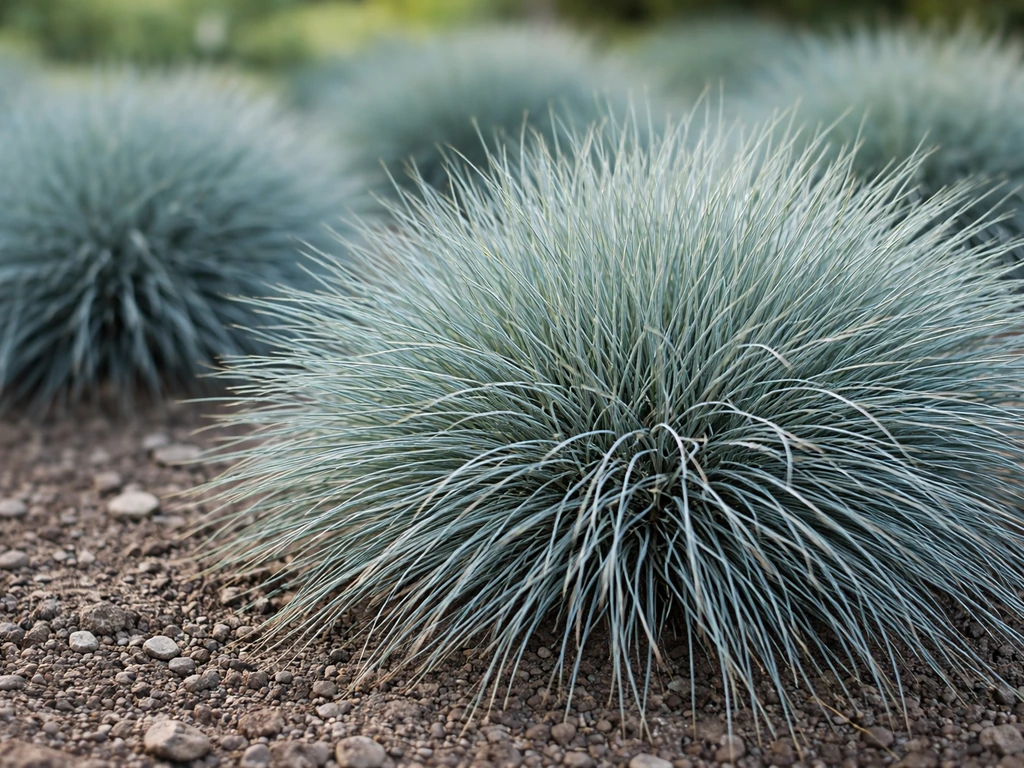
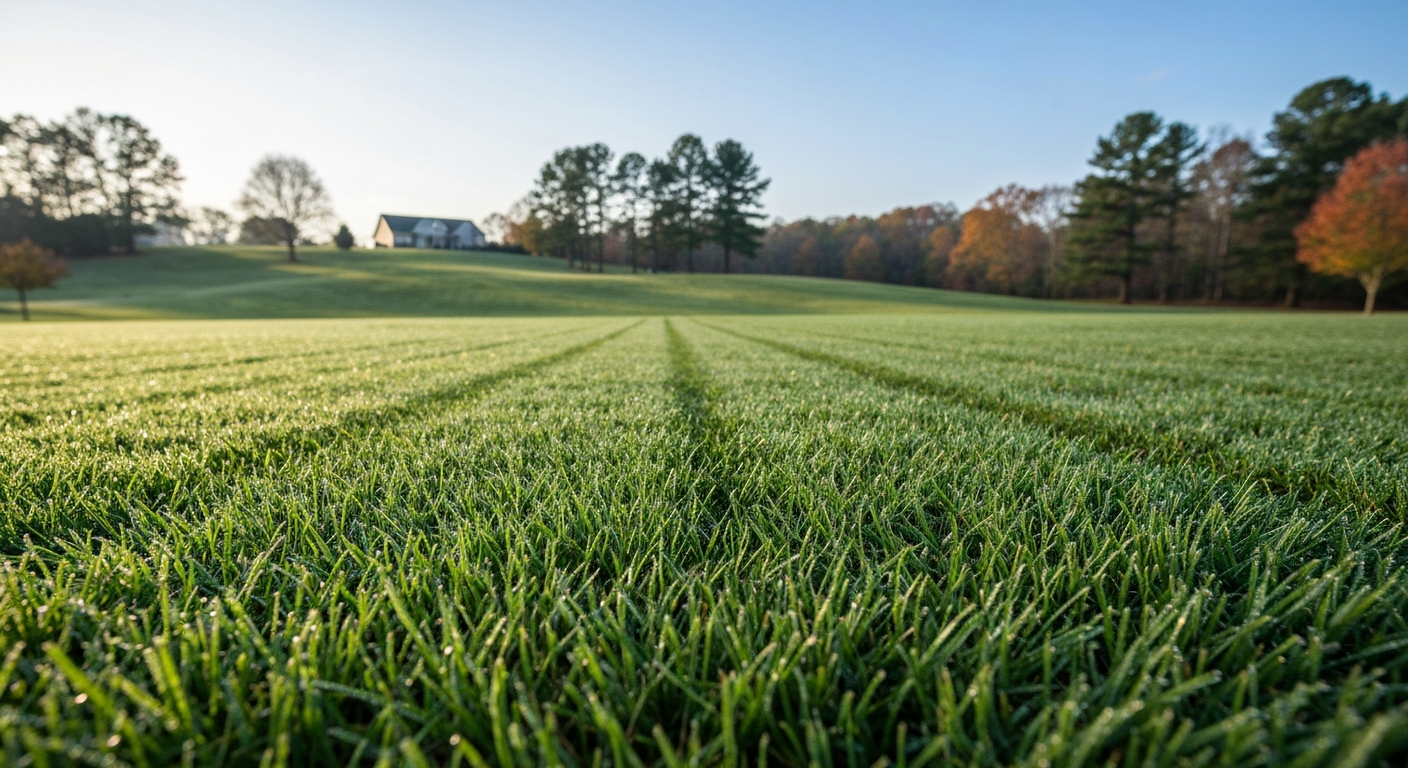
Fescue grass grows well in North Carolina, but only if you plant it at the right time and prepare your soil properly. Tall fescue, specifically the newer turf-type cultivars, is the go-to cool-season grass for NC homeowners from the mountains through the Piedmont. It tolerates summer heat better than most cool-season grasses, stays green through winter, and handles shade reasonably well. The non-negotiable rule: seed in fall, not spring. In the Piedmont, that means September 1 through September 15. Miss that window and you're fighting summer heat with a seedling that has no root system to survive it.
how to grow fescue grass in north carolina: complete guide
Marcus Tillwell
20 Jul 2026
Is fescue actually the right grass for your NC lawn?
North Carolina sits squarely in the transition zone, the climatic middle ground where neither warm-season nor cool-season grasses are fully comfortable year-round. Bermudagrass and zoysiagrass love NC summers but go dormant and brown in winter. Kentucky bluegrass struggles with summer heat and disease pressure. For tips on how to grow blue grass in similar conditions, see our guide on how to grow blue grass. For tips on cultivating Kentucky bluegrass despite those challenges, see our guide on how to grow Kentucky bluegrass. Tall fescue splits the difference: it stays green when bermuda goes dormant, tolerates temperatures that would fry a bluegrass lawn, and roots deep enough to survive a dry August if you've built the soil right.
That said, fescue is not a set-it-and-forget-it grass. It does not spread by stolons or rhizomes the way bermuda or zoysia does, so bare spots don't fill in on their own. You'll overseed every fall to maintain density. If you want a lawn that repairs itself with minimal annual effort, a warm-season grass may serve you better. But if you want green turf through winter, the ability to grow in partial shade, and a lawn that doesn't go dormant and brown in November, fescue is the right call for most NC homeowners.
Fescue types that grow in North Carolina
Not all fescues perform the same in North Carolina's climate, and the type you plant makes a real difference in how your lawn looks and how much work it requires. Here's an honest rundown of what's available and where each one fits.
Turf-type tall fescue
This is the best option for most NC home lawns. Modern turf-type tall fescue cultivars have been specifically bred for finer leaf texture, better heat and drought tolerance, improved disease resistance, and denser growth compared to older varieties. NC State publishes annual trial results ranking the top-performing cultivars for North Carolina specifically, and using that list to pick your seed is far better than grabbing whatever's on sale at the hardware store. Look for blends labeled 'turf-type tall fescue' rather than single-variety bags, since blends spread disease risk across multiple genetics.
Kentucky 31 tall fescue
Kentucky 31 is the old-school tall fescue, and it still shows up everywhere in NC, especially on roadsides, pastures, and in cheap seed bags at big-box stores. It's tough and cheap, but it's coarser, more upright, and consistently rates lower for turf quality in NC State trial data compared to modern turf-type varieties. If your budget is tight or you're seeding a large area where appearance is secondary, KY-31 will give you a functional stand. For a quality home lawn, though, spend a few extra dollars per bag and get a turf-type blend instead. Growing Kentucky 31 tall fescue follows the same timing and soil prep steps as any tall fescue, so the process is identical, just the end result looks different.
Fine fescues
Fine fescues (creeping red, chewings, hard fescue, sheep fescue) are thinner-bladed, shade-tolerant, and low-maintenance. They're not a great standalone lawn grass in NC because they struggle in heat and don't hold up to heavy foot traffic. Where they shine is in shaded, low-traffic areas, or mixed into tall fescue blends to boost shade performance. When you see a seed bag labeled 'shade blend,' it usually contains a combination of fine fescue and turf-type tall fescue. NC State recommends seeding fine fescue at about 1.5 lb per 1,000 sq ft when included in a blend, lower than tall fescue rates because they establish more slowly.
Blue fescue (ornamental)
Blue fescue (Festuca glauca) is a different animal entirely. It's an ornamental grass grown for its blue-gray color and clumping form, not for lawn coverage. You plant it in garden beds, borders, or as a ground cover accent, not as turf. It's not mowed as a lawn, and it does not fill in bare patches. If you're interested in growing blue fescue from seed as a landscape plant, that's a separate project from establishing a lawn.
| Fescue Type | Best Use in NC | Turf Quality | Shade Tolerance | Traffic Tolerance | Cost |
|---|---|---|---|---|---|
| Turf-type tall fescue | Home lawns, full sun to partial shade | High | Moderate | Good | Moderate |
| Kentucky 31 tall fescue | Large areas, pastures, low-maintenance turf | Low-moderate | Moderate | Good | Low |
| Fine fescue | Shade areas, blends, low-traffic zones | Moderate | High | Poor | Moderate |
| Blue fescue | Ornamental beds and borders | N/A (not lawn) | Moderate | Very poor | Moderate-high |
Choosing the right variety for your specific situation
Before you buy seed, think about what your lawn actually deals with every day. Picking the right type up front saves you from reseeding the same area twice.
- Full sun, regular traffic: A straight turf-type tall fescue blend from NC State's top-performing cultivar list is your best bet. Varieties like 'Rebel Supreme,' 'Falcon IV,' and blends marketed specifically for NC transition-zone performance are worth the extra cost per bag.
- Partial to heavy shade: Mix turf-type tall fescue with fine fescue (creeping red or chewings) in a ratio of roughly 70/30. Pre-blended shade mixes are widely available and save the math. Don't expect any fescue to thrive in dense, full-day shade under a canopy of mature trees.
- Pets and heavy play: Tall fescue handles moderate pet and foot traffic reasonably well. It won't match bermuda for recovery, but a dense stand of turf-type tall fescue with consistent overseeding each fall will maintain coverage. Avoid fine fescue blends in high-traffic areas.
- Sandy coastal soils: Tall fescue struggles more on the coastal plain due to summer heat and fast-draining sandy soils. If you're in the coastal plain, pay extra attention to soil organic matter and irrigation, or consider whether a warm-season grass like bermuda or zoysia might better suit your conditions.
- Clay Piedmont soils: Tall fescue actually does relatively well in clay if you fix compaction and drainage. Core aerate before seeding and add compost to improve structure. Clay holds moisture, which can work in fescue's favor during dry spells, but compacted clay suffocates roots.
When to plant fescue in North Carolina
Timing is the single most important variable in whether your fescue seed succeeds or fails. Tall fescue germinates best when soil temperatures are between 60 and 75°F (15-24°C). In NC, those temperatures align with fall, not spring. Planting in spring means your seedlings hit summer heat with less than two months of root development, and most of them die. Fall planting gives the grass an entire winter and spring to root deeply before the first hot summer.
| NC Region | Primary Seeding Window | Notes |
|---|---|---|
| Mountains (Asheville, Boone, Brevard) | August 15 to September 1 | Earliest window due to cooler temps and earlier first frost; don't push past Sept 1 |
| Piedmont (Charlotte, Raleigh, Greensboro) | September 1 to September 15 | Sweet spot for most NC homeowners; soil temps ideal, warm air aids germination |
| Coastal Plain (Wilmington, Greenville, Fayetteville) | September 15 to October 15 | Later window due to warmer summer temps persisting; still achieves fall root development |
Spring seeding is generally not recommended in NC, with a narrow exception in the mountains where the growing season is short enough that spring temperatures stay cool longer. Even then, fall is preferred. If you miss the fall window entirely, it's better to wait until the following September than to gamble on a spring seeding that will likely fail by July.
A soil thermometer is a cheap and useful tool. You want confirmed soil temperatures above 60°F (15°C) at a 2-inch depth before you seed. NC Extension recommends monitoring soil temperatures and generally timing fall tall fescue seeding for September–October when soil temperatures exceed 60°F; see Time for Fall Seeding of Tall Fescue (Jackson County, NC State Extension). If you're in the Piedmont and it's September 8 but a cold front has pushed soil temps to 58°F, wait a few days. Conversely, if soil temps are still 78°F in early September, hold off another week. The dates above are guidelines based on average conditions, not guarantees.
Pre-seeding checklist: soil testing, pH, and amendments
Skipping a soil test before seeding is one of the most common mistakes I see. You can do everything else right and still get a weak stand if your pH is off, because fescue roots can't absorb nutrients efficiently in acidic soil. NC State and the NC Department of Agriculture (NCDA&CS) Agronomic Services lab offer soil testing for homeowners, and the results include specific lime and fertilizer recommendations in pounds per 1,000 sq ft. Send a sample four to six weeks before your seeding date so you have time to act on the results.
Target pH
Fescue and most cool-season grasses perform best at a soil pH between 6.0 and 6.5. Most NC soils naturally trend acidic, often in the 5.0 to 5.5 range, especially in the Piedmont and mountains. If your test comes back at pH 5.5, you need lime before you seed. At pH 5.5 or below, nutrient availability drops sharply and your fertilizer dollars are largely wasted.
Lime application
Dolomitic lime is the standard amendment to raise pH in NC. Follow your soil test recommendation exactly. As a rough frame of reference, raising pH by about one unit in the top 6 inches of a typical NC clay-loam soil requires approximately 50 to 100 lb of ground limestone per 1,000 sq ft. NCDA has an important safety guideline: do not surface-apply more than 50 lb of lime per 1,000 sq ft in a single application on established plantings, even if your test recommends more. If a larger correction is needed before a new seeding where you're tilling, you can incorporate the full recommended rate before grading. If you're overseeding an existing lawn, split the application across two seasons.
Organic matter and compost
If you have clay soil (common in the NC Piedmont) or sandy soil (common in the coastal plain), adding organic matter is the most effective thing you can do to improve soil structure and moisture management. NC State is clear on this: adding sand to clay does not fix clay, it can actually create a concrete-like mix. Compost is the answer. Work 2 to 3 inches of finished compost into the top 4 to 6 inches of soil before seeding a new lawn. For overseeding an established lawn, apply a thin layer (about 1/4 inch) of fine-screened compost after aeration as a topdress.
Pre-seeding checklist summary
- Submit soil test 4 to 6 weeks before your target seeding date (NCDA&CS Agronomic Services or local extension office)
- Confirm target pH is 6.0 to 6.5; apply lime per test recommendation (no more than 50 lb per 1,000 sq ft surface-applied on existing lawns)
- Identify soil texture (clay, loam, or sandy) and plan organic matter additions accordingly
- Incorporate 2 to 3 inches of compost on new lawn areas; topdress existing lawns after aeration
- Confirm starter fertilizer needs from soil test results (look for phosphorus recommendation, critical for seedling root development)
- Mark irrigation zones or plan a watering strategy before seed goes down
Step-by-step site preparation
Good site prep is where most DIY lawn projects succeed or fail. Rushing through this phase and then blaming the seed is a mistake I've made myself. Here's the sequence that works.
- Clear the area: Remove rocks, sticks, construction debris, and any dead vegetation. If you have weeds, apply a non-selective herbicide (glyphosate) two to three weeks before your seeding date and let it fully kill the existing growth. Do not seed into living weeds.
- Grade for drainage: The ground should slope gently away from your foundation, with no low spots that pool water. Even minor depressions create standing water and fungal problems. Rake or move soil to establish a 1 to 2 percent slope away from structures. Fill low areas before final grading.
- Dethatch if overseeding: If you're overseeding an existing lawn with more than a half-inch of thatch, dethatch first. A dethatching rake works for small areas; rent a power dethatcher for larger ones. Thatch blocks seed-to-soil contact, which is the most common reason overseeding fails.
- Core aerate: This is non-negotiable for clay soils and strongly recommended everywhere else. Core aeration pulls 2 to 3 inch plugs from the soil, reducing compaction, improving water infiltration, and creating micro-environments where seed can make direct soil contact. Rent a walk-behind core aerator for about $80 to $100 per day. Aerate when the soil is slightly moist, not dry and hard. Leave the cores on the surface, they'll break down in a week or two.
- Apply amendments: Spread lime and compost per your soil test recommendations after aeration so nutrients work down into the aeration holes.
- Build the seedbed: Rake the surface to break up large clumps, level high spots, and create a firm but not compacted seedbed. Your goal is a relatively smooth surface where seed will have consistent contact with soil. A light roller (half-filled with water) after raking helps firm the surface on loose or sandy soils.
How much seed you actually need
Seeding rate depends on whether you're starting from bare dirt, renovating a thin lawn, or patching isolated spots. For forage/cover‑crop tall fescue (not lawn turf types), NC guides recommend broadcast 15–20 lb/acre or 10–15 lb/acre drilled with about 1/4‑inch planting depth; see the Planting Guide for Forage Crops in North Carolina (NC State Extension). Using too little seed gives weeds room to establish. Using too much wastes money and can lead to overcrowded, stressed seedlings.
| Scenario | Turf-Type Tall Fescue | Kentucky 31 Tall Fescue | Fine Fescue (in blend) | Notes |
|---|---|---|---|---|
| New lawn (bare ground) | 5 to 6 lb per 1,000 sq ft | 5 to 6 lb per 1,000 sq ft | 1.5 lb per 1,000 sq ft (blend component) | Full seed-to-soil contact; firm seedbed required |
| Full renovation / thin stand | 6 to 8 lb per 1,000 sq ft | 6 to 8 lb per 1,000 sq ft | 1.5 lb per 1,000 sq ft (blend component) | Dethatch and aerate first; heavier rate compensates for competition |
| Annual overseeding (maintenance) | 3 to 4 lb per 1,000 sq ft | 3 to 4 lb per 1,000 sq ft | 1 to 1.5 lb per 1,000 sq ft (blend component) | To maintain density; existing turf competes with seed |
| Patch repair (bare spots) | 5 to 6 lb per 1,000 sq ft | 5 to 6 lb per 1,000 sq ft | Use blend matched to existing lawn | Scratch soil surface before applying; keep moist |
When buying seed, look for certified seed with a germination rate of at least 85 percent and weed seed content below 0.5 percent. Cheap uncertified seed may be poorly labeled, contain off-type cultivars, or carry weed seed that will haunt your lawn for years. Certified seed programs through AOSCA and state certification agencies guarantee varietal purity and testing standards, so the label on a certified bag is actually meaningful.
Seeding methods: how to actually put the seed down
There are four practical seeding methods for NC homeowners, each suited to a different situation. The method matters less than achieving good seed-to-soil contact, which is the goal regardless of which approach you use. For a step-by-step guide on how to grow fescue grass from seed, see our detailed planting and care instructions.
Broadcast seeding (new lawns and large areas)
Use a rotary spreader for areas larger than about 500 sq ft. Divide your total seed into two equal batches. Apply the first pass in one direction, then apply the second pass perpendicular to the first. This crosshatch pattern catches any gaps from the spreader pattern and gives you more even coverage. After spreading, lightly rake the seed into the top quarter-inch of soil. Do not bury it deeper than that. Then roll with a light water-filled roller to press seed into firm contact with the soil. Apply a thin layer of wheat straw (not hay, which contains weed seeds) at about one bale per 1,000 sq ft to hold moisture and protect from erosion.
Slit-seeding and drill seeding (best germination rates)
A slit-seeder (also called a seeder-slicer or overseeder) cuts shallow grooves into the soil and drops seed directly into them. It gives you far better seed-to-soil contact than broadcast seeding, which translates to higher germination rates and a denser stand. This is the method I'd recommend for full renovations. You can rent a slit-seeder for $60 to $100 per day at most equipment rental centers. Run passes in two perpendicular directions, same as broadcast. Set the seeding rate on the machine to half your total rate per pass so you don't over-apply in one direction. Straw mulch after seeding.
Overseeding an existing lawn
This is the annual maintenance task that keeps a fescue lawn dense, because fescue doesn't self-repair. Mow the existing lawn short (about 1.5 to 2 inches) before overseeding so seed can reach the soil. Core aerate the entire area first. Spread seed at 3 to 4 lb per 1,000 sq ft using a rotary spreader, then lightly drag a rake over the surface or make a follow-up pass with a slit-seeder at a light setting. Water the same day seed goes down.
Patch repair (bare spots)
For isolated bare spots, scratch the soil surface with a hand rake, removing any dead material down to bare dirt. Spread seed at the new-lawn rate (5 to 6 lb per 1,000 sq ft equivalent for that small area). Tamp it down with the back of the rake or your foot. Cover with a thin layer of peat moss or fine compost, just enough to barely see the seed underneath. Keep the patch consistently moist until germination. Small patches dry out faster than large seeded areas, so check moisture twice daily if temperatures are above 75°F.
Tools you'll need
- Rotary broadcast spreader (own or borrow)
- Walk-behind core aerator (rent)
- Slit-seeder/overseeder (rent for renovations)
- Soil thermometer ($10 to $20, worth every penny)
- Straw mulch (one bale per 1,000 sq ft)
- Garden rake and hand rake
- Light lawn roller (rent or half-fill a rented drum roller)
- Hose with adjustable nozzle or sprinkler system for watering
Seed vs. sod in North Carolina: which one makes sense for you
Fescue sod does exist, but it's less widely available than bermuda or zoysia sod in NC, and it costs significantly more than seeding. Here's an honest comparison to help you decide.
| Factor | Seed | Sod |
|---|---|---|
| Upfront cost | $0.05 to $0.15 per sq ft for seed only | $0.50 to $0.80 per sq ft for sod (plus installation labor if hired) |
| Labor | Moderate DIY effort; 1 to 2 days for a typical yard | Heavy labor for DIY; 1 to 2 days minimum plus sod cutting/laying skill needed |
| Time to usable lawn | 8 to 12 weeks to light traffic; full establishment by spring following fall seeding | 2 to 4 weeks to light traffic; 6 to 8 weeks to full use |
| Establishment risk | Higher: germination can fail if timing, moisture, or soil prep is off | Lower: sod is already established, failure usually means poor watering or contact |
| Availability in NC | Wide: turf-type tall fescue seed available at most garden centers and online | Limited: fescue sod is less common than warm-season sod in NC; may require special order |
| Best for | New lawns, annual overseeding, large areas, budget-conscious homeowners | High-visibility areas needing immediate coverage, erosion control on slopes, time-sensitive projects |
For most NC homeowners, seeding is the right call. It's dramatically cheaper, gives you access to the best modern cultivars, and works well when timed correctly in fall. Sod makes sense if you have a high-visibility area (a front yard before a home sale, for example), a slope where seed erosion is a real problem, or you simply don't want to manage a fall seeding project and can afford the premium.
Watering after seeding: the schedule that actually works
The most common reason fescue seed fails in NC isn't bad timing or poor soil, it's inconsistent moisture after seeding. Fescue seed needs the top quarter-inch of soil to stay consistently moist, not flooded, but never dried out, until germination is complete. This means watering two to three times per day in short cycles (5 to 10 minutes per zone) during the first two weeks. After germination, shift to longer, less frequent watering to encourage deep root growth. By week four, water once every two to three days with a 20 to 30 minute cycle. By week eight, weekly deep watering (about 1 inch total) is sufficient, supplemented by rainfall.
If you don't have an irrigation system, this is manageable with sprinklers on a timer. The key is not to let the seeded area dry out completely during the first two weeks. If you see the surface crust dry and pale, you've let it go too long. That said, don't overwater to the point of runoff, which washes seed and loosens the seedbed. Light and frequent is the rule early on.
Germination timeline and what to expect
At optimal soil temperatures (60 to 75°F), turf-type tall fescue typically germinates in 7 to 14 days. You'll see thin green shoots pushing through within 10 days if conditions are right. KY-31 germinates in a similar timeframe. If soil temperatures are on the cooler end (below 60°F), expect 14 to 21 days. If you're not seeing any green after three weeks with consistent moisture, something went wrong: check if the seed was buried too deep, the soil surface crusted over, or temperatures dropped too far.
The lawn will look thin and patchy for the first four to six weeks. That's normal. Don't panic and don't overseed again immediately. Give it time. By week eight to ten after a properly-timed fall seeding, a dense stand should be visible. The real density comes after winter and into spring, when the root system develops fully.
First mowing, fertilizing, and establishment care
First mowing
Don't mow until seedlings reach 3 to 3.5 inches. That's usually four to five weeks after germination. Set your mower at the highest setting (3 to 4 inches) for the first cut. Mowing too short on young fescue removes the leaf area the plant needs to drive root development. Keep fescue at 3 to 4 inches throughout fall and winter. Never remove more than one-third of the blade height in a single mowing.
Fertilizer timeline
- At seeding: apply starter fertilizer (high phosphorus, such as 18-24-12 or similar) per soil test recommendation; phosphorus is critical for seedling root development
- 6 to 8 weeks after germination (late October or November in the Piedmont): apply a fall nitrogen application at about 1 lb of actual nitrogen per 1,000 sq ft to support root development heading into winter
- Late winter (February to March): a light fertilizer application (0.5 to 1 lb nitrogen per 1,000 sq ft) as the lawn greens up
- Avoid heavy nitrogen fertilization in spring, which pushes excessive top growth and increases disease risk heading into summer
- Do not fertilize after May in NC; summer fertilization on fescue invites disease and stresses the lawn
Common problems and how to fix them
Brown patch disease
Brown patch (Rhizoctonia solani) is the most damaging disease on fescue in NC, and it hits hard in summer when temperatures climb above 85°F with high humidity. You'll see circular brown patches, often with a dark water-soaked ring at the margins. There's no way to reverse active brown patch mid-summer, so prevention is the strategy: avoid excess nitrogen fertilization in spring, don't water in the evening, and mow at the proper height. Modern turf-type tall fescue cultivars have better brown patch resistance than KY-31, which is another reason to upgrade your seed.
Seed isn't germinating
If you're past three weeks with no germination, work through this checklist: Was the soil temperature above 60°F when you seeded? Did the surface dry out at any point in the first two weeks? Is the seed buried deeper than a quarter-inch? Did you apply a pre-emergent herbicide recently (most pre-emergents prevent grass seed germination, not just weeds)? Solving the actual cause matters more than just throwing more seed at the problem.
Bare spots that keep returning
Persistent bare spots usually have an underlying cause that seed can't fix on its own. Common culprits in NC: compacted clay with poor drainage, tree root competition (which also causes drought stress), dog urine (which kills fescue from nitrogen burn and pH change), deep shade under tree canopies, or an unresolved grading issue that causes standing water. Identify the cause first. If it's dog traffic, either fence the dogs out of that area or accept that you'll reseed it every fall. If it's heavy shade, switch to a fine fescue shade blend or consider a mulched bed instead of turf.
Fescue going dormant or thin in summer
Some summer thinning is normal for fescue in NC, especially in the coastal plain. This is why fall overseeding is a standard annual practice, not a sign of failure. If your lawn is significantly thinning every summer, assess whether your watering is adequate during June through August (fescue needs about 1 to 1.25 inches of water per week in summer), and whether you're mowing high enough (at least 3.5 to 4 inches in summer). Scalping fescue in summer is a fast way to kill it.
When fescue isn't the only answer: mixing grasses and knowing when to switch
NC's transition zone means you sometimes have to make pragmatic choices. If you have a shaded front yard but a sunny, hot backyard that gets heavy summer use, a mixed approach may work better than forcing fescue everywhere. Tall fescue handles the front yard beautifully. Bermudagrass or zoysiagrass in the backyard handles heat, drought, and pet traffic with far more resilience. Some NC homeowners overseed bermuda lawns with annual ryegrass for winter color, though ryegrass is temporary and dies out when summer heat arrives.
If you're consistently losing fescue in the same sunny, hot spots year after year despite doing everything right, the honest answer might be that those areas are better suited for a warm-season grass. Fighting a plant's natural limitations is expensive and frustrating. Matching the right grass to each microclimate on your property is the approach that actually produces a low-maintenance lawn over time.
FAQ
Which fescue types and specific cultivars should I consider for a North Carolina lawn?
Prioritize modern turf‑type tall fescues for home lawns in NC (better density, finer texture, improved disease tolerance) rather than older KY‑31. Include fine fescues only in shaded blends (use at low percentages). Use NC State 'Top Performing' cultivar lists / TurfFiles to pick region‑adapted varieties. For example: select named turf‑type tall fescues from the NC State top‑performer lists; if shade is a major issue, choose blends containing 1–1.5 lb fine fescue per 1,000 sq ft. Avoid relying on KY‑31 unless you need a coarse, drought‑tolerant, low‑maintenance pasture‑type turf.
When is the best time to seed fescue in North Carolina?
Fall is the primary window. Recommended regional windows for homeowners: Mountains — Aug 15 to Sep 1; Piedmont — Sep 1 to Sep 15; Coastal Plain — Sep 15 to Oct 15. These dates reflect typical soil and air temperatures favorable for germination. Spring seeding is generally only recommended in mountain/high elevation areas; spring seeding elsewhere risks summer heat stress on new seedlings.
What soil temperatures and conditions are ideal for tall fescue germination?
Aim for soil temperatures consistently above about 50–60°F; optimum germination and rapid emergence occurs around 60–75°F. Monitor soil temps at a 1–2 inch depth before seeding. Ensure a firm, fine seedbed with good seed‑to‑soil contact and avoid seeding into standing water or overly dry, crusted soil.
What site preparation steps and soil targets should I follow in NC?
1) Get a soil test from NCDA&CS or NC State — follow lime and fertilizer recommendations in lb/1,000 sq ft. 2) Target pH ≈6.0 (acceptable range ~5.7–6.5). If lime is needed, follow report rates and do not surface‑apply more than 50 lb lime/1,000 sq ft at once on established areas. 3) Correct grade and drainage; use NRCS Web Soil Survey to understand local soil series. 4) Incorporate 1–3 inches of compost or organic matter into the top 4–6 inches for either heavy clay or sandy soils (avoid simply adding sand to clay). 5) Remove trash, large stones, weeds; firm and rake to a smooth, slightly compacted seedbed for good seed‑to‑soil contact.
What seeding rates and seeding depths should I use for new lawns and overseeding in NC?
New turf establishment with turf‑type tall fescue: 5–6 lb per 1,000 sq ft (≈220–260 lb/acre). Full renovation or heavy overseeding: 6–8 lb/1,000 sq ft (some extension guides recommend up to 8 lb for renovation). Light overseeding: 3–5 lb/1,000 sq ft depending on goals. Fine fescue in blends: ~1.5 lb/1,000 sq ft portion of the mix. Plant seed very shallowly — broadcast then lightly rake or use a slit seeder; final coverage should be at or just below the soil surface (≈1/8–1/4 inch).
Which seeding methods are appropriate and when should I use seed vs. sod?
Methods: broadcast with drop or rotary spreader (follow calibrated rates) then roll/lightly drag for contact; slit seeder for compacted or existing turf renovations (improves seed placement); overseed existing lawns in early fall using lighter rates; use patch repair (hand seed small areas) with higher local rates and mulch/cover. Seed vs sod: seed is cost‑effective and gives wider cultivar choices but needs 2–8 weeks to establish and more watering; sod provides instant cover, erosion control, and is best for steep slopes, erosion‑prone sites, or when immediate use is needed. Choose cultivar‑matched sod where available and ensure good soil contact and immediate irrigation after laying.
Next Article
How to Grow Blue Fescue From Seed Step by Step
Step-by-step guide to grow ornamental blue fescue from seed: timing, site prep, sowing, watering, and fixes for patchy r