
Growing fescue from seed is one of the more forgiving lawn projects a homeowner can take on, but only if you get the timing and soil prep right. Plant at the wrong time of year and even the best seed will rot or stall. Get those two things right, and fescue establishes faster than most people expect. Here is everything you need to know, in the order you need to know it.
How to Grow Fescue Grass From Seed Step by Step

Marcus Tillwell
21 Apr 2026
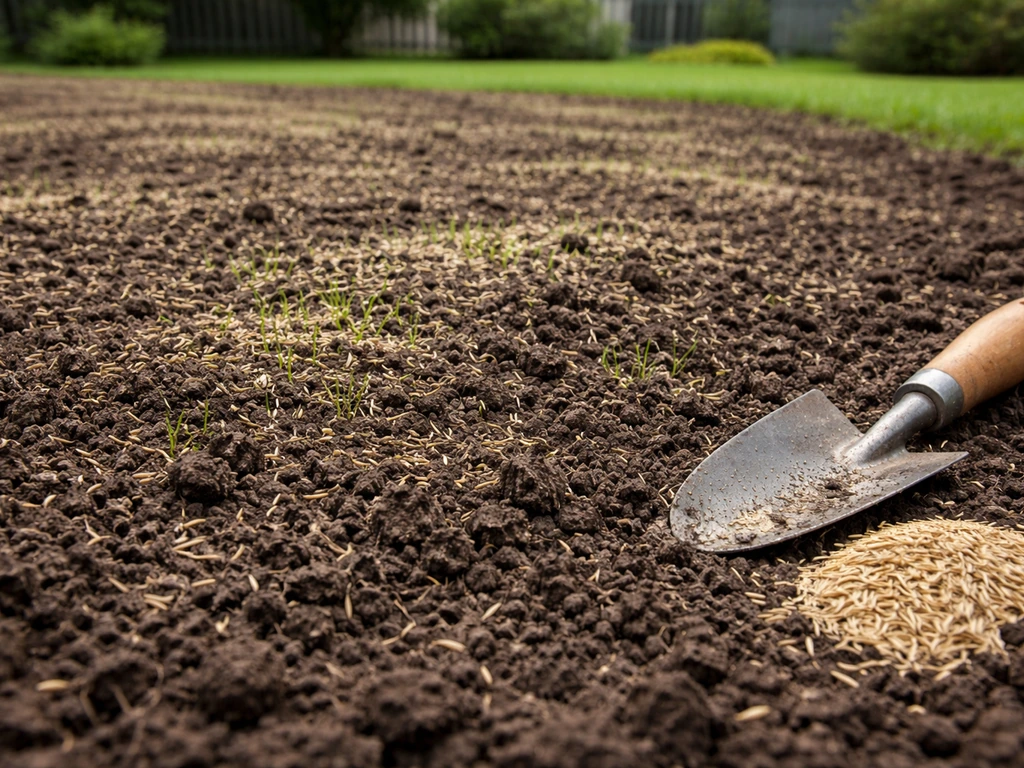
Picking the right fescue type and seed
Fescue is not one grass. It is a family of cool-season grasses, and the differences between types matter a lot for how you plant and where they perform.
Tall fescue: the go-to for most lawns
Tall fescue is what most homeowners are thinking about when they search for fescue seed. Modern turf-type tall fescue cultivars are deep-rooted, heat-tolerant for a cool-season grass, and durable enough to handle foot traffic. They are the right choice for full-sun to lightly shaded lawns in the transition zone and cooler regions. When you buy seed, look specifically for 'turf-type tall fescue' rather than forage-type tall fescue like Kentucky 31.
For Kentucky 31 specifically, use the same cool-season seeding timing, but aim for overseeding and care practices that support a thicker, more durable stand over time how to grow kentucky 31 grass. If you are set on Kentucky 31 instead of turf-type tall fescue, follow the same seeding timing and use the full steps in how to grow kentucky 31 grass for the best results.
Forage types are bred for hay production and animal feed, not for a tight, attractive lawn. The blades are coarser, the texture is rougher, and the overall appearance is noticeably different from what you probably picture. If you want a lawn that looks like a lawn, stick to turf-type cultivars.
Buying a blend of two or three turf-type tall fescue cultivars in one bag also gives you some insurance: if one variety struggles with your soil or a disease pressure, the others fill in.
Fine fescue: best for shade and low-maintenance spots
Fine fescue (including creeping red fescue, chewings fescue, and hard fescue) is a different animal. It is famously shade-tolerant, probably the most shade-tolerant cool-season turfgrass you can plant, and it also handles drought stress and low-fertility soils well. If you have a deeply shaded area under trees where nothing else grows, fine fescue is worth a serious look. It does not hold up to heavy traffic nearly as well as tall fescue, so it is better suited to low-use areas, slopes, or naturalized spaces. Some homeowners mix fine fescue into shaded zones while using tall fescue in sunnier areas.
| Type | Best use | Shade tolerance | Traffic tolerance | Typical seeding rate |
|---|---|---|---|---|
| Turf-type tall fescue | General lawns, sun to light shade | Moderate | High | 6–8 lb per 1,000 sq ft |
| Forage tall fescue (e.g., KY 31) | Pasture, erosion control | Moderate | Moderate | Not recommended for turf |
| Fine fescue | Deep shade, low-use areas | Very high | Low | 4–6 lb per 1,000 sq ft |
For the rest of this guide, the focus is on turf-type tall fescue since that is what most homeowners are trying to establish. If you are considering Kentucky bluegrass for a similar cool-season lawn, that is a different process with different timing needs, and it is worth looking into separately. If you are specifically trying to grow blue grass, you will need to use a Kentucky bluegrass-focused seeding plan and care schedule how to grow blue grass. If you want to learn how to grow Kentucky bluegrass instead, you will need to adjust the seeding approach and timing to match its requirements.
When to plant fescue seed
Timing is the single biggest factor in whether tall fescue germinates and establishes well. Plant it at the wrong time and you will spend money on seed and get almost nothing back.
Tall fescue is a cool-season grass, which means it germinates best when soil temperatures are in the range of 68 to 86 degrees Fahrenheit. Air temperatures track close to surface soil temperatures, so a daytime high of around 70 to 80 degrees with cooler nights is your sweet spot. That window falls in early-to-mid fall in most of the country, roughly late August through October depending on your region. Spring seeding is possible, but you are racing against summer heat. Seed planted in spring has a much shorter window to establish before the heat of summer arrives, and thin or stressed new grass often browns out before it has developed a real root system.
The general recommendation for most of the transition zone and upper South is to plant tall fescue between mid-August and mid-October. Penn State Extension gives a late-summer seeding cutoff example for northern Pennsylvania and southern Pennsylvania, advising seedings be made before August 15 in northern Pennsylvania and September 1 in southern Pennsylvania late summer seedings should be made before August 15 in northern Pennsylvania and September 1 in southern Pennsylvania.
Earlier in that window is better than later. Seed planted in September has more weeks of good growing weather to develop roots before winter than seed planted in November. Research from university extension programs consistently shows that September and October plantings produce thicker, higher-quality stands than November plantings, even when the later plantings technically germinate.
Getting the site and soil ready
UGA Extension sums up the keys to tall fescue establishment simply: thorough soil preparation, good seed-to-soil contact, and proper irrigation. Skipping any one of those three is the most common reason a seeding fails. Here is how to handle each.
Start with a soil test
Before you do anything else, run a soil test. Tall fescue grows best in a soil pH of 5.5 to 6.5, with the ideal range sitting around 6.0 to 6.5. Outside that range, nutrients become unavailable to the grass even if they are physically present in the soil. Your county extension office can send you a test kit for a few dollars. The results will tell you exactly how much lime (to raise pH) or sulfur (to lower it) you need to add, along with starter fertilizer recommendations. Skip the guesswork and just test. It takes a couple of weeks to get results, so do this first, before you plan your seeding date.
Handling clay soil and compaction
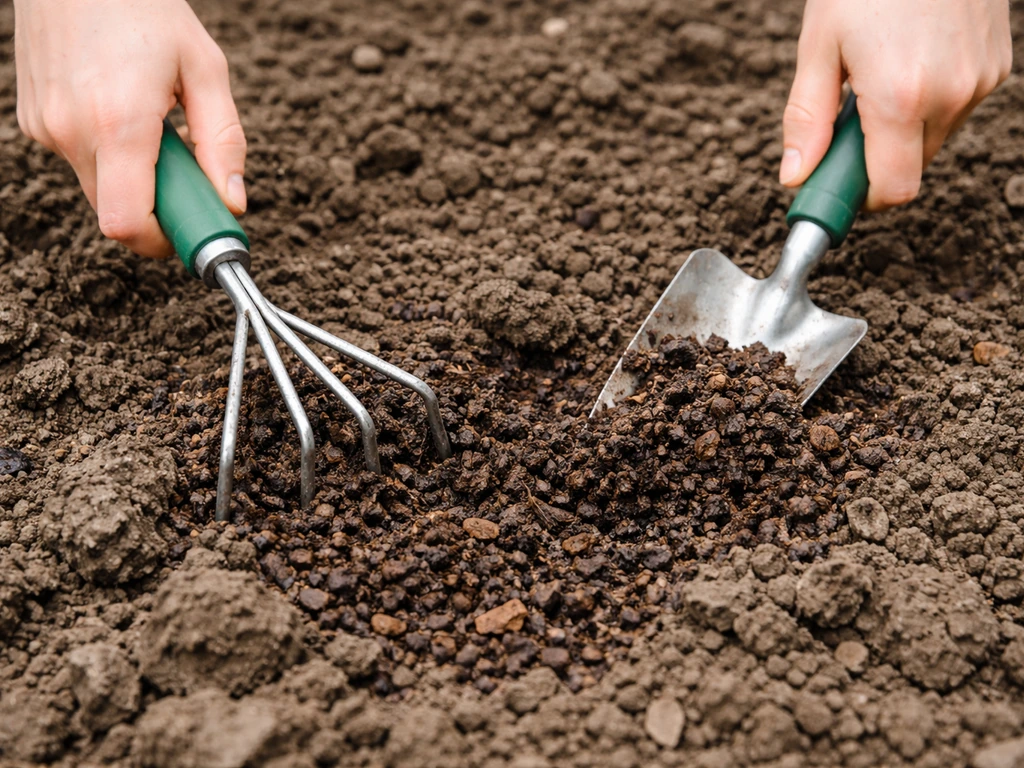
If your soil is heavy clay, compaction is probably working against you. Compacted clay drains poorly, which leads to standing water that can rot seed, and it is physically hard for new roots to penetrate. The most effective fix before seeding is core aeration. Rent an aerator, run it over the area two or three times in different directions, and leave the plugs on the surface to break down.
You do not need to remove them. If the clay is extreme, topdressing with a thin layer (about a quarter inch) of quality compost and working it into the aeration holes will improve drainage and organic matter at the same time. On sandy soil, the challenge is the opposite: water drains too fast and the seed dries out. Adding compost here also helps by improving moisture retention.
Final seedbed prep
For a new lawn or a bare area, loosen the top 2 to 4 inches of soil with a tiller or a hard rake. To get the best results, follow a similar start-to-finish process for blue fescue, including choosing the right timing, preparing the seedbed, and keeping the soil consistently moist until it germinates. Remove rocks, old thatch, and debris. Rake the surface smooth and firm it lightly so it is not loose and fluffy. A firm seedbed gives the seed somewhere to nestle against the soil rather than floating on top of loose material. Apply any lime or starter fertilizer your soil test recommended at this stage, before you seed.
How to plant tall fescue seed
How much seed to use
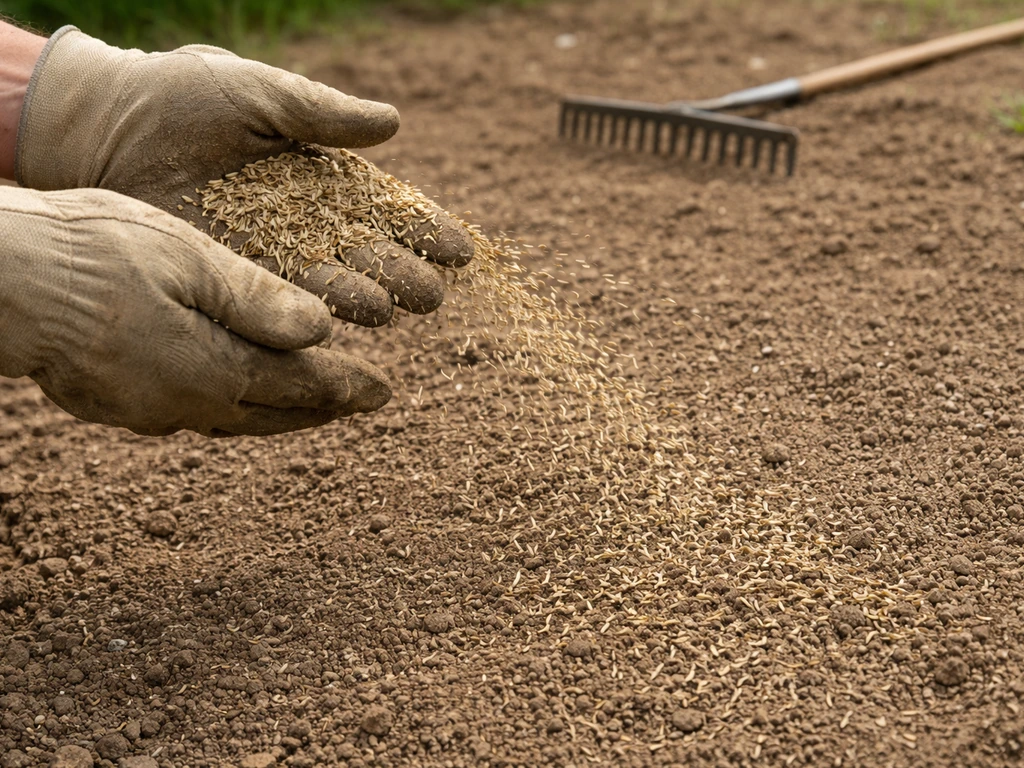
For a new lawn or heavily bare area, use 6 to 8 pounds of turf-type tall fescue seed per 1,000 square feet. For overseeding thin or patchy spots in an existing lawn, you can drop to around 5 to 6 pounds per 1,000 square feet since the existing turf fills in some of the gaps. These rates are calibrated to give you roughly 1,000 to 2,000 seedlings per 1,000 square feet, which is enough for a thick stand without wasting seed. Do not think more seed automatically means a better lawn. Overcrowding creates competition among seedlings and can actually weaken establishment.
Seeding depth and method
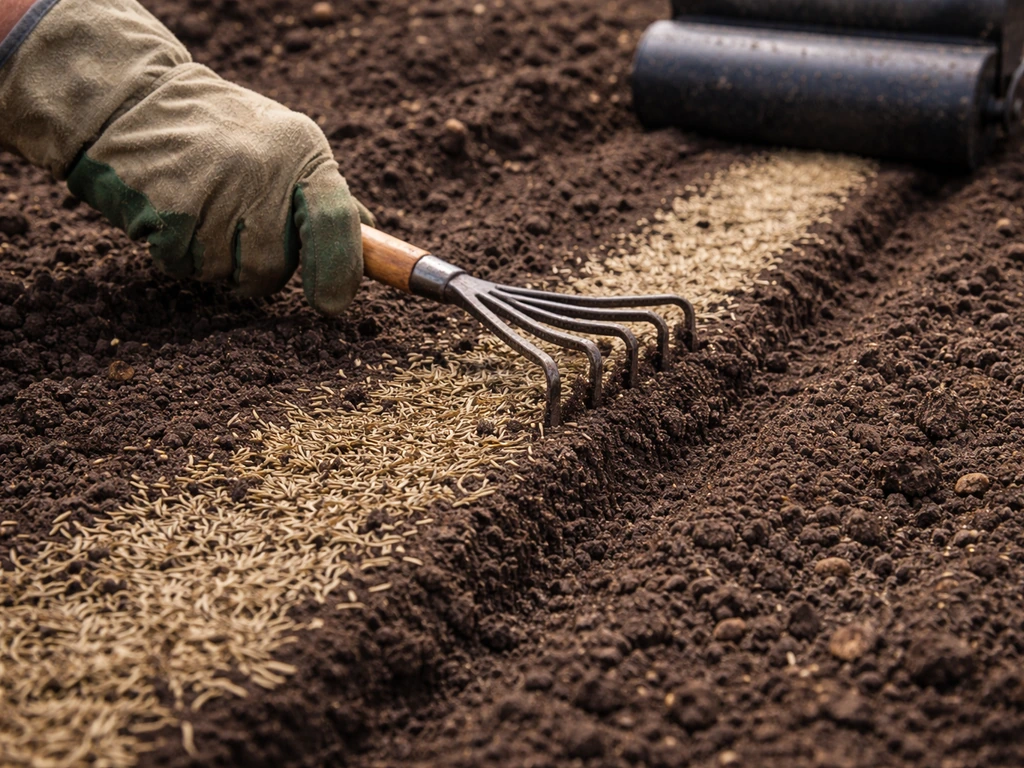
Tall fescue seed needs to be in contact with soil at a depth of about a quarter inch. It does not need to be buried deep.
The most reliable way to do this without any fancy equipment is to spread the seed with a broadcast spreader (split the seed into two halves and walk in perpendicular directions for even coverage), then lightly rake the surface or roll it with a lawn roller to blank" rel="noopener noreferrer">press the seed into the top quarter inch of soil. Raking too aggressively buries the seed too deep.
Rolling without raking first is fine if your seedbed is already smooth and firm. Either method works as long as the seed ends up touching bare soil, not sitting on top of mulch or thatch.
Watering right after seeding
Water immediately after seeding and keep the top 1 to 2 inches of soil consistently moist for the first three weeks. That does not mean soggy. Saturated soil drives out oxygen and can cause seed rot. The goal is consistently damp, like a wrung-out sponge. In practice, that usually means watering lightly once or twice a day, applying up to about a quarter inch of water each time. A light spray setting is better than a heavy stream that displaces seed or creates puddles. If the surface dries out and forms a crust before germination, the seed can fail even if it sprouted. Keeping that top layer moist is your most important job for the first three weeks.
What to expect during germination
Under good conditions (soil temps in the 68 to 86 degree range and consistent moisture), tall fescue typically germinates in 5 to 21 days. UGA Extension puts the window at about 5 to 10 days under ideal Georgia fall conditions. NC State Extension puts the broader range at 10 to 21 days depending on soil temperature and moisture. If you planted at the right time and kept the soil moist, you should see green fuzz emerging within two weeks.
Once you see germination, do not stop watering. The seedlings have tiny root systems and dry out fast. Continue the light, frequent watering schedule until the grass is about 2 inches tall, then gradually transition to deeper, less frequent watering to encourage deeper root growth. Most lawns are ready for the first mowing about three weeks after seeding, when the grass reaches 3 to 4 inches. Mow at a height of around 3 to 3.5 inches and never remove more than a third of the blade at one time. The first mow feels scary on a new lawn, but it actually encourages the grass to tiller and fill in more thickly.
Fixing bare spots and troubleshooting thin stands
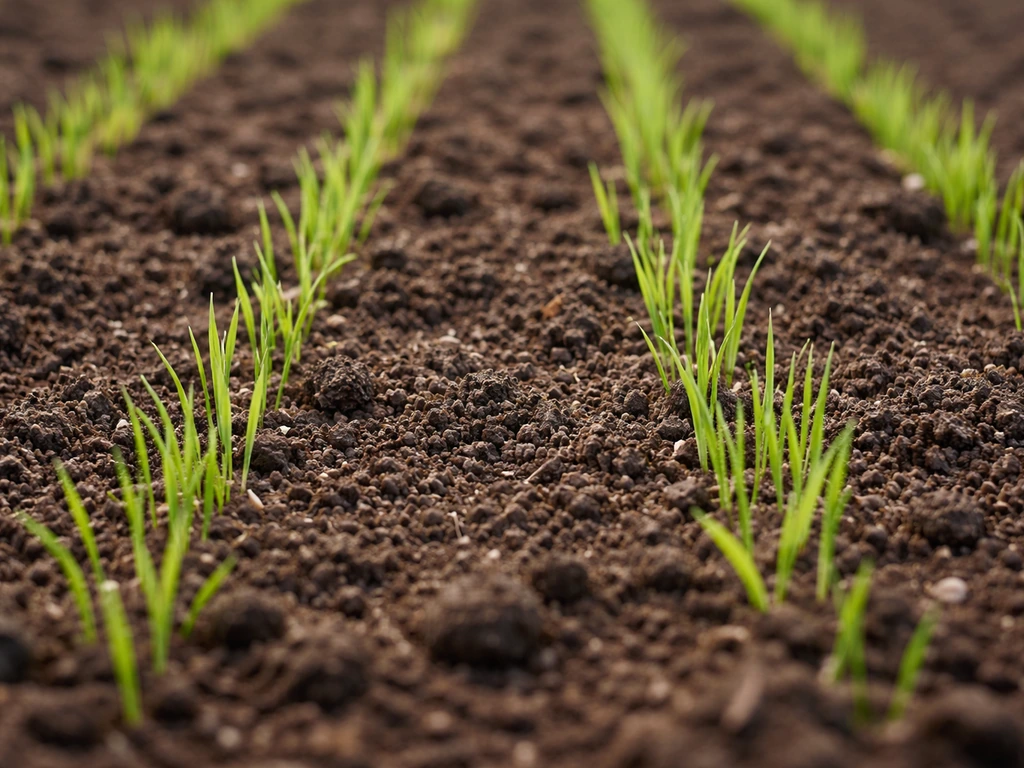
Even a well-planted lawn sometimes comes in uneven. Here is how to read what went wrong and fix it.
- Bare patches after 3 weeks: The seed in those areas likely dried out during germination, got buried too deep, or had poor soil contact. Scratch the surface lightly with a rake, reseed at the same rate, and water daily. Do not wait too long to fix bare spots or weeds will fill them first.
- Thin coverage overall: This usually points to a seeding rate that was too low, uneven spread, or soil that was too compacted to allow roots to establish. Overseed the whole area at half the new-lawn rate (3 to 4 lb per 1,000 sq ft) and core aerate first if compaction is an issue.
- Seed germinated but seedlings died: This is almost always a watering problem. Either the soil dried out between waterings or the area got waterlogged. Check your drainage and adjust your watering frequency.
- Yellow or pale seedlings: Often a sign of low nitrogen. A light application of starter fertilizer (or a balanced slow-release fertilizer) at the recommended rate can correct this quickly.
- Weeds taking over: Avoid pre-emergent herbicides for at least 8 to 12 weeks after seeding because they will prevent germination. Hand-pull weeds in new seedling areas or use a post-emergent labeled safe for newly seeded fescue once the grass has been mowed two or three times.
For ongoing bare spots that keep failing no matter what you do, dig deeper into the cause. Sometimes there is a compaction problem directly under the surface, a drainage issue, or too much shade for tall fescue to thrive. In heavy shade situations, switching to a fine fescue blend in that specific zone might be the real fix rather than continuing to reseed with tall fescue.
Long-term establishment care
Once the lawn is established (typically 6 to 8 weeks after seeding), shift from baby-mode to normal maintenance. Water deeply and infrequently, about 1 inch per week including rainfall, to encourage roots to grow down rather than staying near the surface. Tall fescue has a naturally deep root system when it is trained correctly, which is one of its best features for surviving summer stress.
Fertilize in the fall (your main growing season for fescue), not in spring. A late-fall nitrogen application after the first frost helps roots harden and store energy for spring green-up. Avoid heavy fertilization in late spring or summer, which pushes soft top growth during the hottest part of the year and stresses the grass. Mow at 3.5 to 4 inches during summer to reduce heat stress and keep the root zone shaded. Plan to overseed any thin areas each September to keep the stand thick year over year.
Growing fescue in Georgia: what's different
Georgia sits in the transition zone, which means your summers are hotter and longer than the rest of fescue country. Tall fescue is the only cool-season grass that really works here, and it still struggles during Georgia summers compared to warm-season grasses like bermuda or zoysia. That means timing your seeding correctly is even more critical in Georgia than it is further north.
Georgia planting window
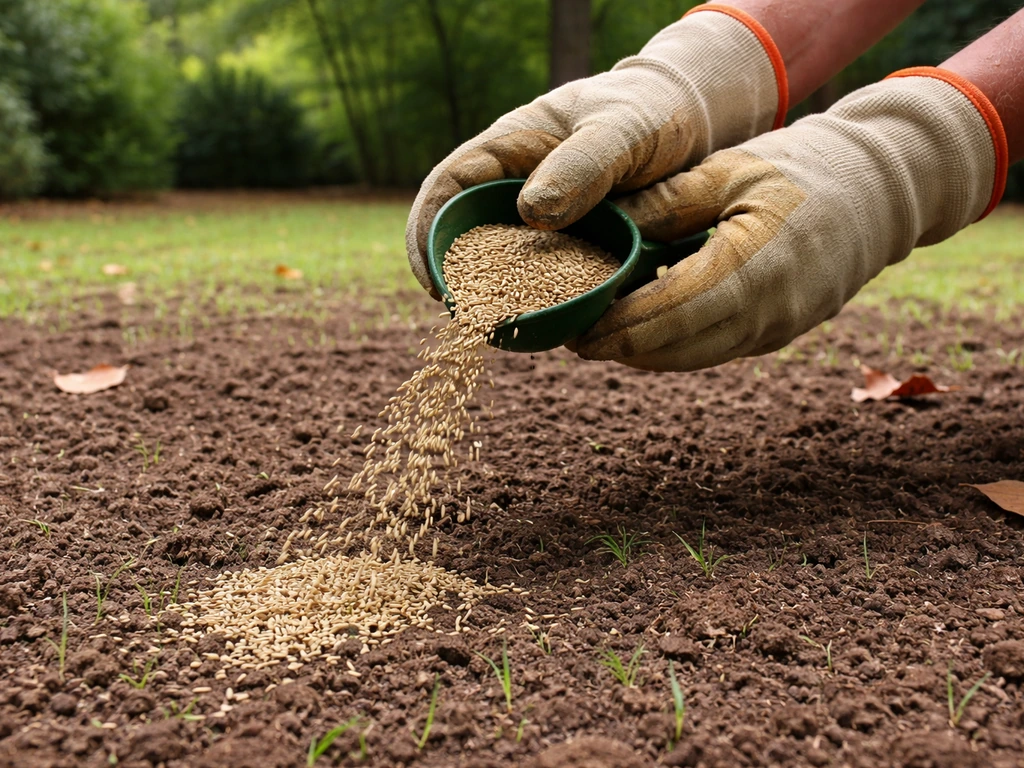
Plant tall fescue in Georgia between September 1 and October 31, with early-to-mid September being the strongest window. University of Georgia Extension specifically recommends September through October as the seeding window, and their field research shows that September and October plantings consistently produce better-quality, denser stands than November plantings. Georgia Gardener Walter Reeves puts September as the prime month. If you seed in November, you risk germination going into cold soil that slows growth, and the young stand will be thin and more vulnerable heading into spring weed pressure. Do not plant in spring in Georgia. The summer heat arrives fast and can kill a fescue seedling before it has enough root depth to survive.
Georgia-specific seeding and soil tips
For Georgia lawns, use 5 to 6 pounds of turf-type tall fescue seed per 1,000 square feet for establishment. Georgia soils (especially in the Piedmont region) tend toward clay and acidic pH, so a soil test before you plant is particularly important. Amend pH to the 5. 5 to 6.
5 target range before seeding. Core aerate compacted clay areas before you spread seed. After seeding, rake or roll lightly to press seed into the top quarter inch of soil, then water daily with up to a quarter inch per session for the first three weeks. Georgia falls can be warm into October, which actually helps germination speed, but it also means you need to stay diligent about watering since the soil dries out faster in warm weather.
Managing Georgia summers
Once established, Georgia fescue lawns need active management in summer. Mow high (3.5 to 4 inches), water deeply once or twice a week if rainfall is insufficient, and avoid any fertilization from May through August. Expect some summer dormancy or thinning in the hottest zones of Georgia. This is normal. Plan to overseed thin areas every fall, targeting that September window, to keep the lawn filling back in. Some Georgia homeowners in hotter parts of the state (south Georgia especially) find that fescue is simply too heat-stressed to maintain long-term and consider warm-season grasses instead. But in the northern two-thirds of the state, turf-type tall fescue is a reliable choice with the right seasonal management.
If you are comparing fescue options for a specific region, North Carolina has a nearly identical climate profile to northern Georgia and follows the same September-to-October planting window. The guidance translates closely across that region. If you want to grow fescue in North Carolina, focus on the right tall or fine fescue type, plant in the early fall window, and follow a steady watering and soil-prep plan. For any homeowner in Georgia working with a challenging site (heavy shade, clay soil, or steep slope), fine fescue varieties are worth exploring as a complement or alternative in those specific problem areas, though tall fescue remains the backbone of most Georgia cool-season lawns.
FAQ
What’s the latest I can seed tall fescue and still expect it to fill in before winter?
Use the first week or two of your target fall window as your planning baseline. Even though germination can happen later, late seedings often enter winter with too little root mass, leading to thinner stands and more weed pressure. If you miss the window, focus on spot patching or postpone the main seeding to the next early-fall period rather than broadcasting late in the season.
Should I cover fescue seed with soil, straw, or mulch after spreading?
Don’t bury it deeper than about a quarter inch. Avoid straw or thick mulch layers, they can keep the seed too dry on top or prevent good seed-to-soil contact. Light raking or rolling is the safer approach, because it presses seed into bare soil without trapping it under an insulating blanket.
How do I prevent seed from washing away or forming puddles during the first watering?
Use a fine mist or light sprinkler setting, water in short cycles, and confirm you are not creating runoff. If you see pooling, reduce each watering session and increase the number of cycles to keep the top 1 to 2 inches consistently damp, not saturated.
Do I need to soak the area or just keep the top layer moist?
Keep the top 1 to 2 inches damp during the germination phase, not the entire depth of soil. If the soil feels wet below the top layer while the surface is drying out, you likely have uneven distribution or poor infiltration, so adjust sprinkler placement and repeat lighter waterings until moisture is consistent.
What if my soil test suggests a pH outside the ideal range, can I add lime or sulfur after seeding?
It’s best to correct pH before you seed because nutrient availability and early root development depend on it. Lime generally takes longer to work, sulfur can act faster but still needs time to be effective. If you must seed before amendments fully take effect, expect slower early growth and consider focusing on proper watering and seed placement while you follow the soil-test amendment schedule.
How can I tell if I seeded too much or too little?
Too much seed can lead to crowded seedlings that compete, increasing the chance of weak stands and uneven thinning later. Too little seed shows up as persistent gaps that keep reopening after germination. A practical check is to compare coverage to the target seeding rates for your situation (new lawn versus overseeding), then correct patchy areas by overseeding in the next September window rather than repeatedly reapplying heavy rates all at once.
Is core aeration always necessary before seeding fescue?
It’s not mandatory for every site, but it’s one of the most effective steps for compacted clay or areas that stay wet. If your ground is firm and drains well, you may only need a light seedbed roughening and careful firming. The best decision aid is to inspect for crusting, standing water, or hard areas, then aerate if those issues are present.
Can I seed over existing grass without removing it?
You can overseed, but success depends on seed-to-soil contact. If the existing turf mat is thick, it can block contact and trap seed on top. For best results, mow short, remove debris/thatch as needed, and rake lightly or aerate so seed can reach the top quarter inch of soil.
Why are my fescue seedlings sprouting but then dying off?
Common causes are surface drying after germination, crusting that prevents continued root growth, or saturated soil causing rot from overwatering or puddling. Check moisture daily by feel, look for water pooling, and adjust watering frequency before roots expand beyond the top layer. Also avoid stopping watering right after you see green.
When should I fertilize after seeding, and what kind of fertilizer should I use?
The article emphasizes soil-test starter recommendations, but for many homeowners the key timing is to rely on the starter product at seeding and then wait. Avoid heavy nitrogen in the first growth window. If you want a simple rule, use starter per the soil test at seeding, then follow a fall schedule for main fertilization once the lawn is established and actively growing.
How high should I mow new fescue, and how often should I mow in the first month?
Mow when the grass is about 3 to 4 inches tall, with a height around 3 to 3.5 inches, and remove no more than one third of the blade each pass. For new seedings, mow frequency is driven by growth, so plan to mow sooner if it grows quickly rather than waiting and letting it get too tall and stressed.
Do I need to overseed again the same fall after an uneven first seeding?
If germination is patchy but seedlings are healthy, you can sometimes improve density with late-summer or fall overseeding in the following season rather than repeating the same-year broadcast. If failure is localized and due to a specific site issue (poor drainage, heavy shade, severe compaction), fix the cause first, then overseed in the next appropriate early-fall window.
What’s the best way to handle weeds right after seeding?
Avoid assuming you can use weed control immediately. Newly seeded fescue seedlings are sensitive, and some herbicides can harm young grass depending on timing and product labels. A safer approach in the first weeks is physical control (spot removal) and preventing competition by keeping the lawn dense through correct watering and mowing height.
Should I seed in spring if I missed the fall window?
Spring seeding is possible, but it’s a higher-risk approach because summer heat arrives before roots are deep enough. If you decide to seed in spring, plan for extra monitoring of moisture and expect thinner establishment. If you want the most reliable outcome, wait for the fall window rather than forcing a spring seeding.
Next Article
How to Grow Grass in San Antonio Texas: Step-by-Step Guide
How to grow grass in San Antonio: best turf choices, planting windows, soil prep, watering schedules and troubleshooting