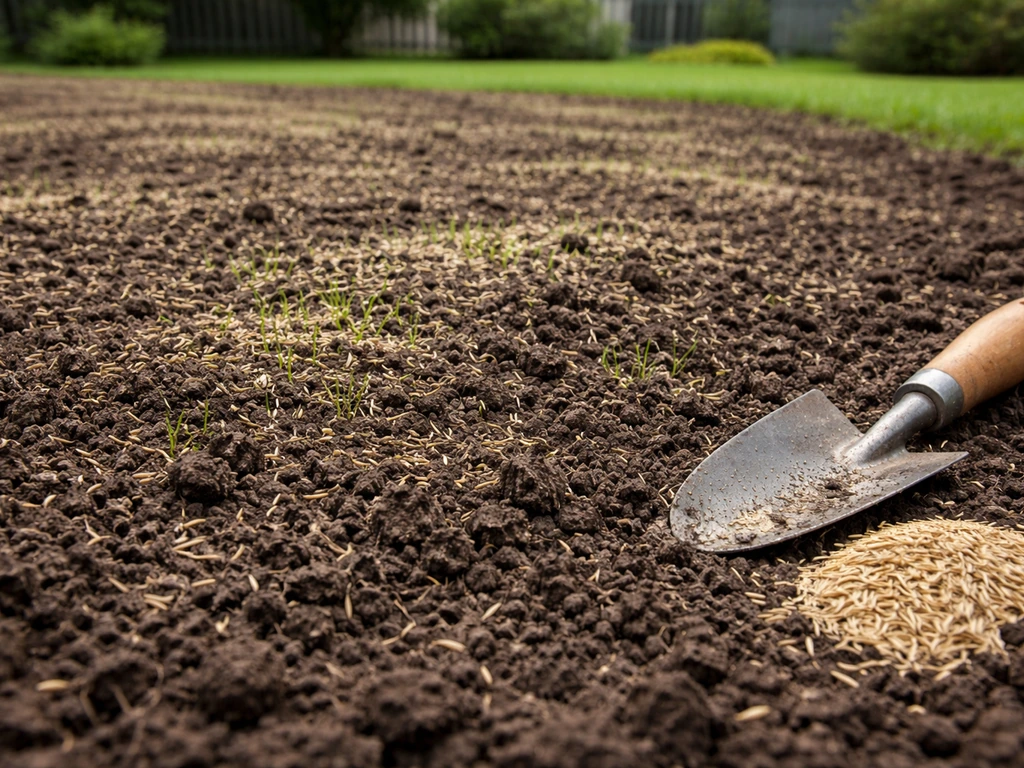
Growing Kentucky bluegrass from seed takes patience, but the process itself is straightforward: prep your soil in late summer, sow at 2–3 lbs per 1,000 sq ft, keep the seedbed consistently moist for 3–4 weeks, and you'll have a dense, dark-green lawn that fills in beautifully by fall. For a deeper guide on timing, seeding, and aftercare, see our full article on how to grow blue grass Kentucky bluegrass. The catch is that Kentucky bluegrass is slow to germinate (14–30 days is normal) and very particular about timing and conditions. Get those two things right and almost everything else falls into place.
How to Grow Kentucky Bluegrass From Seed: Step-by-Step
Marcus Tillwell
26 Apr 2026

When Kentucky bluegrass actually thrives
Before you buy a single bag of seed, make sure your yard is a good match for this grass. Kentucky bluegrass (Poa pratensis) is a cool-season grass, which means it does its best growing in the cool, moist conditions of spring and fall and goes semi-dormant under summer heat. It performs beautifully across the northern tier of the U.S.: the Midwest, the Northeast, the mid-Atlantic, and into the Pacific Northwest. If you're in the transition zone (think Virginia, Kansas, or Oregon's Willamette Valley), it can work but may struggle through hot summers without irrigation.
Sun is non-negotiable. Kentucky bluegrass wants full sun, ideally 6 or more hours of direct sunlight per day. It has very poor shade tolerance compared to tall fescue or fine fescue. If you're dealing with heavy tree coverage, you'll likely fight a losing battle trying to establish Kentucky bluegrass alone. In that case, a bluegrass-fescue mix is a smarter starting point. For context, if you're also considering tall fescue options, the approach for growing fescue grass from seed shares some timing overlap but fescue handles shade and drought noticeably better. Tall fescue also has its own best practices for timing, seeding rate, and early watering, so review the specific steps for how to grow fescue grass from seed. In North Carolina, the biggest success factors for fescue are choosing the right fescue type for your shade and heat exposure and following a solid seeding and watering schedule fescue grass.
- Best regions: USDA zones 3–7 (northern U.S., upper Midwest, Mid-Atlantic, Pacific Northwest)
- Sun requirement: 6+ hours of direct sun daily; not suitable for heavy shade
- Soil drainage: prefers well-drained loam; struggles in waterlogged or compacted clay
- Traffic tolerance: moderate; rhizome growth helps it self-repair but it needs time to establish before heavy use
- Drought behavior: goes dormant in heat and drought, recovers when moisture and cooler temps return
Soil prep: the step most people skip
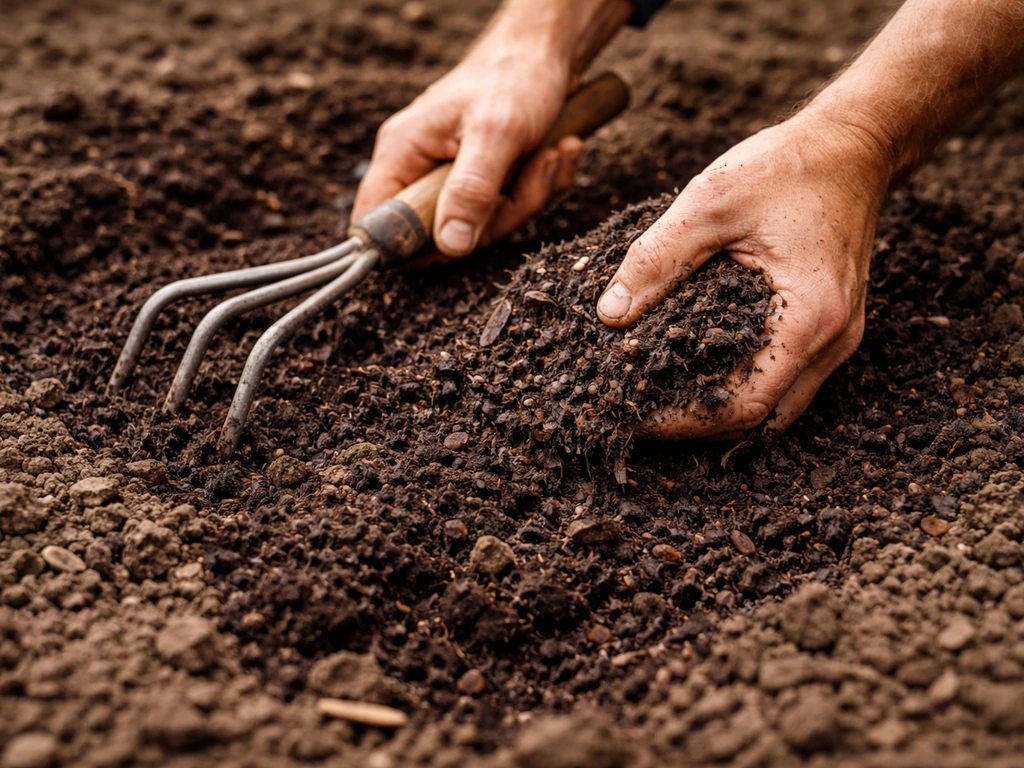
Soil prep is where Kentucky bluegrass seeding is won or lost. The grass has relatively shallow roots and rhizomes, which means it depends heavily on the top 4–6 inches of soil being loose, fertile, and properly pH-balanced. Skimping here is the number one reason people end up with patchy, thin stands.
Test your soil first
A soil test isn't optional if you want predictable results. You can grab a mail-in kit or drop a sample at your local cooperative extension office. Most results come back within a week or two and will tell you your pH, phosphorus, potassium, and organic matter levels. For Kentucky bluegrass, you're aiming for a soil pH of 6. Penn State Extension notes that Kentucky bluegrass grows best when the soil pH is between 6.5 and 7.2 soil pH of 6.. 0–7.0. The grass can tolerate a wider range (some sources cite 5.5 to 8.5), but you'll get the best nutrient availability and growth in that 6.0–7.0 sweet spot.
If your pH is below 6.0, add ground limestone to raise it. If it's above 7.5, sulfur can help bring it down. Your soil test results will tell you exactly how much to apply based on your current reading and soil type, which takes the guesswork out of it completely.
Fix texture problems before you seed
If your soil is heavy clay, it compacts easily and drains poorly, which is rough on bluegrass seedlings. Work in 2–3 inches of compost and till it into the top 4–6 inches. This isn't a one-time cure for clay, but it meaningfully improves drainage and root penetration. For sandy soil on the other end, organic matter is still the answer: compost improves water and nutrient retention so seedlings don't dry out between waterings. A general rule is that if your soil is clumping into hard chunks or running through your fingers like beach sand, it needs compost before seed.
Compaction is another common issue, especially on lawns that've been mowed and walked on for years. Rent a core aerator and run it over the area before seeding. It pulls small plugs from the soil, relieving compaction and creating natural pockets where seed can settle. Leave the plugs on the surface; they break down on their own and return organic matter to the soil.
Final seedbed prep
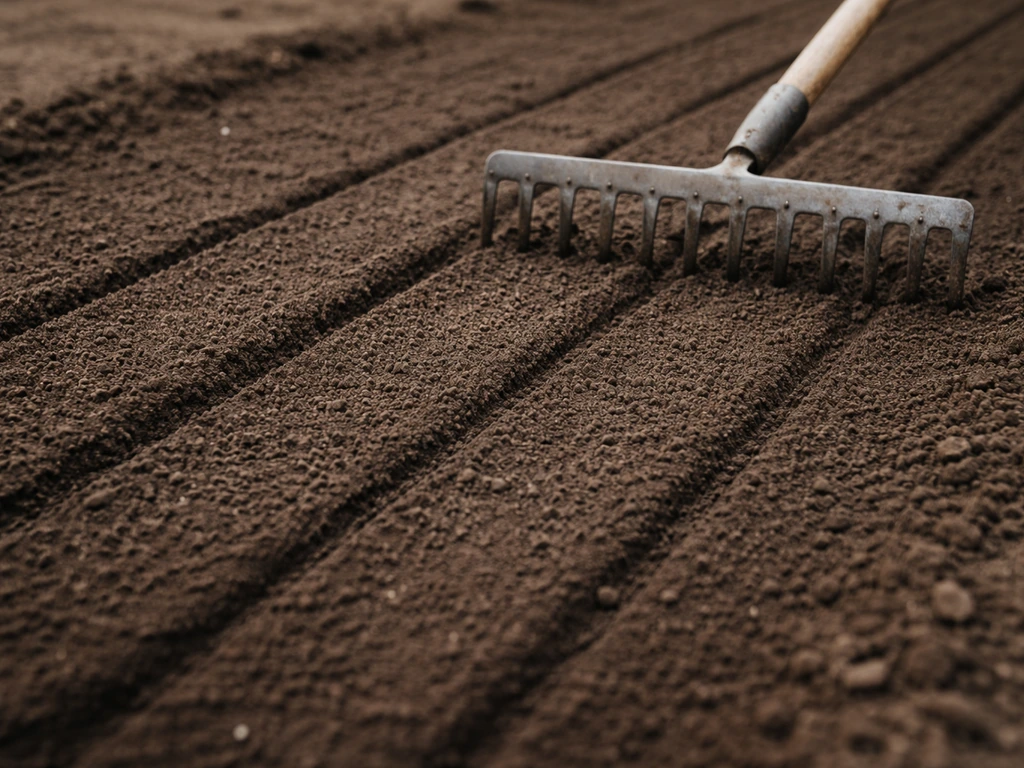
Rake the area smooth after any tilling or aeration. You want a firm, even surface with no big clumps or depressions. Loose, rough soil leads to poor seed-to-soil contact and uneven germination. Lightly firm the seedbed with a lawn roller (most rental places have them) if you've done a lot of tilling. The goal is firm but not compacted, like a well-prepared garden bed.
Seeding Kentucky bluegrass the right way
Timing is everything
Late summer to early fall is the best time to seed Kentucky bluegrass in almost every cool-season region. Specifically, late August through mid-September hits the sweet spot: soil temperatures are still warm enough to trigger germination (you want air temperatures in the 59–86°F range), but the approaching cooler weather keeps seedlings from baking, and there's typically more consistent rainfall. Penn State Extension is clear on this: late summer seeding is the optimum window for cool-season grasses across most of the Northeast and Midwest.
Spring seeding is a fallback option, but it comes with real risks. You're racing against summer heat. If germination is slow or conditions aren't ideal, you can end up with barely-established seedlings heading into 90°F weather before they've had time to build a root system. If you do seed in spring, go as early as the ground can be worked, usually late March to mid-April depending on your zone.
One thing to take seriously: seeding too late in fall can mean your seed sits dormant all winter and germinates the following spring. That's not a disaster, but the seedbed is exposed to erosion and weed competition all winter long. If you miss the September window, you're better off waiting for a proper spring seeding than rushing into October.
Choosing the right seed
Look for improved Kentucky bluegrass varieties rather than generic or bargain-bin seed. Improved varieties have been bred for better disease resistance, density, and heat tolerance. Check the seed tag for germination rate (aim for 85% or higher) and purity. Avoid 'inert matter' percentages above 2–3%, and steer clear of bags listing 'annual ryegrass' as a filler unless you want a mix. Some homeowners intentionally mix Kentucky bluegrass with perennial ryegrass for faster germination cover while the bluegrass establishes, which is a reasonable approach.
Seeding rate and seed-to-soil contact
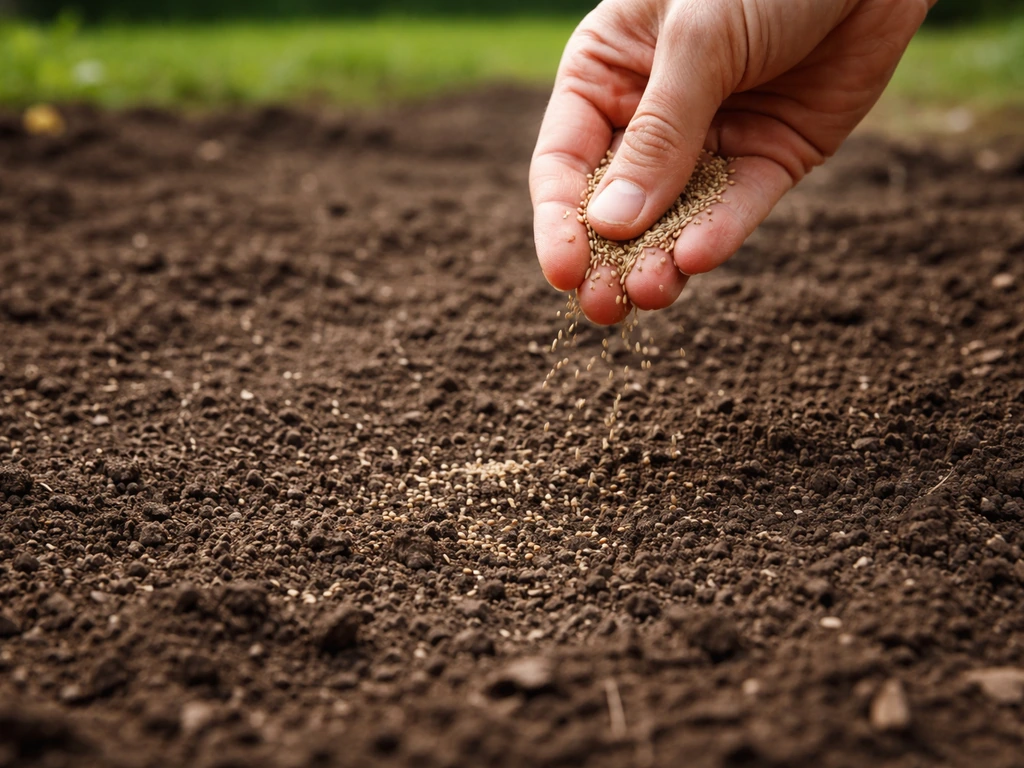
For a new lawn or full overseeding, use 2–3 lbs of Kentucky bluegrass seed per 1,000 sq ft. This is the recommended rate from Penn State Extension and hits the right balance between coverage and avoiding overcrowded seedlings competing for resources. For overseeding into an existing thin lawn, you can go toward the lower end of that range.
Seed-to-soil contact is critical. Bluegrass seed is tiny and light. Simply broadcasting it on the surface and hoping for the best leads to poor germination because seed that sits on top of dry soil or thatch never activates. The best method is slit seeding: a slit seeder (also called a slice seeder, available at most rental centers) cuts shallow grooves in the soil and drops seed directly into them. This dramatically improves germination rates compared to broadcast seeding alone. If you're doing a smaller area or don't want to rent equipment, broadcasting seed and then raking it lightly into the top 1/8 to 1/4 inch of soil is a reasonable DIY alternative.
Use a drop spreader or rotary spreader set to the appropriate rate. Split your seed in half and make two passes in perpendicular directions for more even coverage. This simple trick eliminates the streaks and thin spots you get from a single-pass seeding.
Germination and early care
What to expect and when
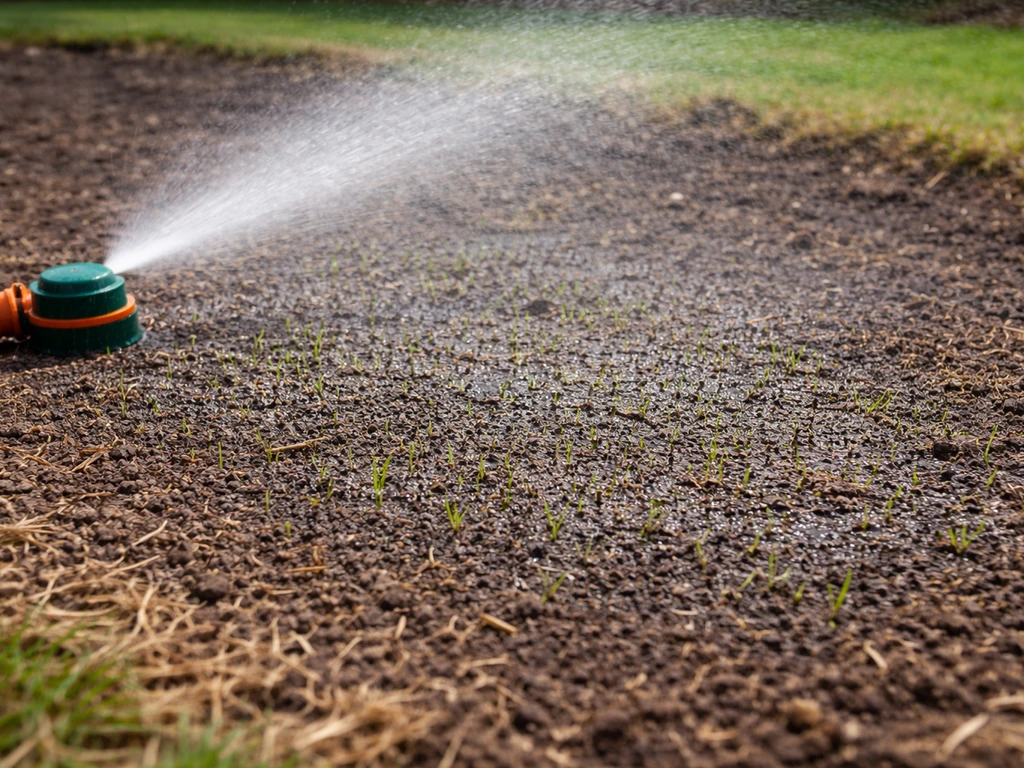
Kentucky bluegrass is one of the slower-germinating cool-season grasses. Under ideal conditions (consistent moisture, air temps in the 60–75°F range), expect to see the first sprouts in 14–21 days. In cooler conditions or if temperatures fluctuate, it can take 28–30 days. Don't panic if nothing is visible at 10 days. The seed is working underground. What kills establishment at this stage is letting the seedbed dry out, not slow germination.
Watering schedule after seeding
The watering goal for the first 3–4 weeks is simple: keep the top inch of soil consistently moist without saturating it. That usually means light, frequent watering, sometimes twice a day during warm, dry, or windy weather. You're not trying to soak the soil deeply; you're just preventing the seed from drying out. A light mist or gentle spray is better than a full soaking at this stage.
- Days 1–14 (pre-germination): Water lightly 2 times daily, morning and late afternoon, just enough to keep the top 1 inch moist. Avoid puddling or runoff.
- Days 14–28 (germination and early sprouts): Continue twice-daily light watering. As seedlings emerge, you can shift to once-daily deeper watering if temperatures are mild.
- Weeks 4–8 (establishment): Gradually transition to deeper, less frequent watering, aiming for about 1 inch of water per week total. This encourages roots to grow deeper.
- After 8 weeks: Water deeply once or twice per week depending on rainfall and heat. Kentucky bluegrass has decent drought dormancy but needs consistent moisture to stay green.
If you get a heavy rainstorm early on, back off supplemental watering and check soil moisture before running the sprinklers again. Overwatering is just as harmful as underwatering at the seedling stage because waterlogged soil starves roots of oxygen.
Protecting the seedbed
On sloped areas or bare spots prone to erosion, apply a thin layer of straw mulch after seeding. About one bale per 1,000 sq ft is the right amount: light enough that sunlight still reaches the soil, thick enough to hold moisture and prevent seed from washing away. Use straw, not hay. Hay contains weed seeds that will compete with your bluegrass. The straw breaks down naturally and doesn't need to be removed.
First mowing
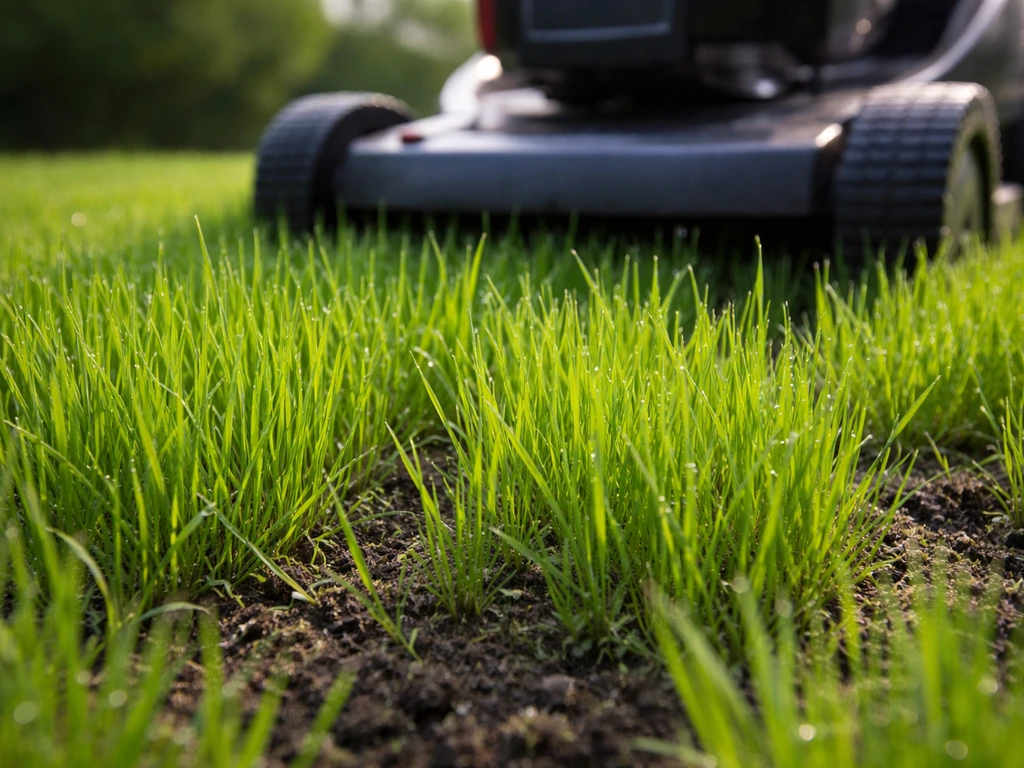
Wait until seedlings are at least 3–3.5 inches tall before the first mow, and mow to about 2.5 inches. This usually happens 5–7 weeks after seeding for fall-sown bluegrass. Make sure your mower blade is sharp so you're cutting cleanly rather than pulling seedlings out by the root. University of Minnesota Extension also emphasizes using a sharp mower blade at the proper height when mowing Kentucky bluegrass as part of cool-season lawn care guidance Make sure your mower blade is sharp so you're cutting cleanly rather than pulling seedlings out by the root. Keep off the new lawn as much as possible until after that first mow; the root system is still fragile and foot traffic can uproot young plants.
Ongoing maintenance through the first season
Fertilizing a new Kentucky bluegrass lawn
At seeding, you can apply a starter fertilizer with higher phosphorus (the middle number on the fertilizer bag) to support root development. This is especially useful if your soil test showed low phosphorus levels. Once seedlings have germinated and you've mowed once or twice, you can begin a regular nitrogen program. University of Kentucky's extension guidelines (AGR-1) recommend per-application nitrogen limits for Kentucky bluegrass systems, and the general approach is to apply moderate amounts (around 0.5–1 lb of nitrogen per 1,000 sq ft per application) rather than heavy single doses. For a new seeding, a light fall fertilization 6–8 weeks after germination helps seedlings build carbohydrate reserves before winter without pushing excessive tender growth.
Avoid high-nitrogen fertilizers immediately after seeding. You want roots first, top growth second. Too much nitrogen early encourages leafy growth before the root system can support it, which actually weakens the plant.
Weed control without killing your seedlings
This is a real tension point. Pre-emergent herbicides, which are the most effective way to prevent crabgrass and other annual weeds, will also prevent Kentucky bluegrass seed from germinating. You cannot use a pre-emergent in the same area you're seeding. Full stop. Plan your weed control timing around your seeding schedule: apply pre-emergent in spring before crabgrass germinates, then seed in late summer after the pre-emergent barrier has broken down (typically 8–16 weeks depending on the product).
For post-emergent broadleaf weed control (dandelions, clover, etc.) after your new lawn is established, wait until the grass has been mowed at least 3–4 times before applying any selective herbicide. Many broadleaf herbicides list this same minimum on their label. Spot-treating weeds by hand during the first season is slower but safer than a blanket spray application.
Thatch management
Kentucky bluegrass produces thatch more readily than most cool-season grasses because of its aggressive rhizome growth. In the first year, thatch won't be an issue, but by year two or three, it's worth checking. A thatch layer under 0.5 inches is fine; it helps retain moisture and insulate roots. Above 0.5 inches, it starts blocking water and fertilizer from reaching the soil. If that happens, spring dethatching or core aeration will clear it out without damaging the established stand.
Troubleshooting the most common Kentucky bluegrass problems
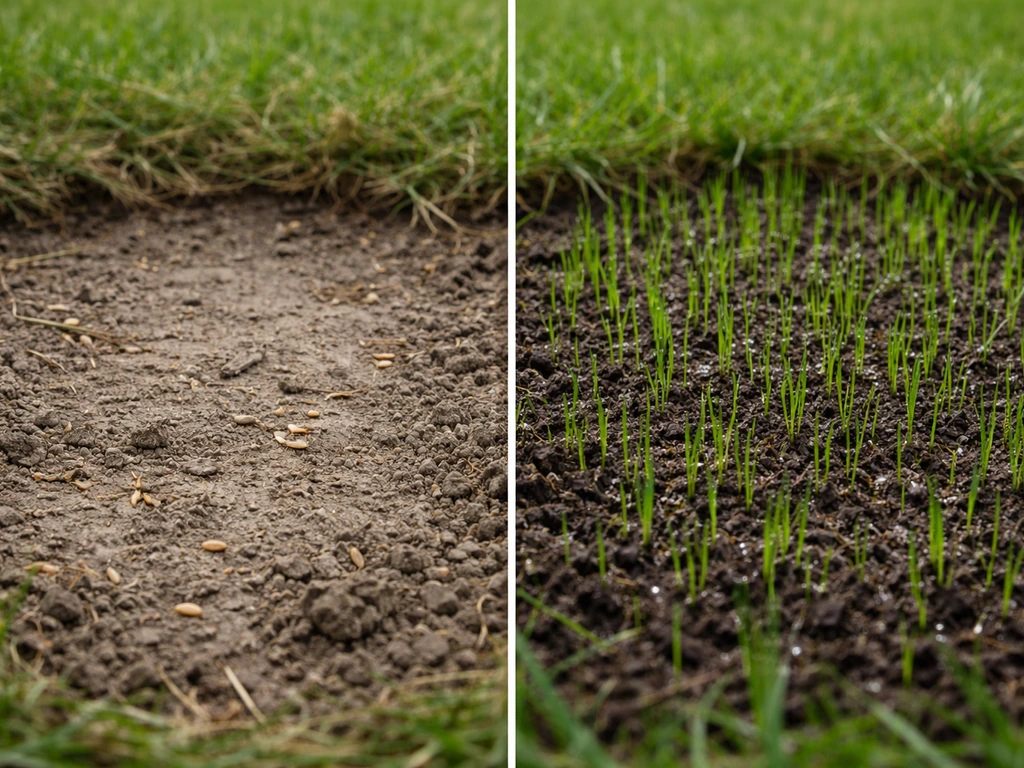
| Problem | Likely cause | What to do |
|---|---|---|
| No germination after 30 days | Soil dried out, seeded too late, or poor seed-to-soil contact | Check soil moisture at 1-inch depth; re-seed bare areas with slit seeder; confirm air temps are in 59–86°F range |
| Bare spots after germination | Foot traffic, birds, washout, or dry pockets | Re-seed bare areas; protect with straw; limit foot traffic for 8 weeks |
| Soil crusting on surface | Heavy rain or overhead watering on bare clay or silt soil | Gently break crust with a light rake; top-dress with a thin layer of fine compost; switch to lighter, more frequent watering |
| Erosion and washouts on slopes | Heavy rain moving seed and soil before germination | Apply straw mulch immediately after seeding; use erosion control netting on steep slopes; re-seed washed areas |
| Thin, patchy growth | Uneven seed distribution, low seed rate, or shade | Overseed thin areas at 1–2 lb per 1,000 sq ft; check if shade is the issue and consider fescue blend |
| Yellowing seedlings | Nitrogen deficiency or waterlogged soil | If soil is soggy, reduce watering; if drainage is fine, apply light starter fertilizer; check for fungal damping-off |
Bare spots are the most common complaint after a new seeding. Before re-seeding them, take a minute to diagnose why they're bare. If it's erosion, fix the water flow first. If it's shade, that area may need a different grass type. If it's just uneven seed coverage, a simple re-seed with good moisture management will take care of it. Kentucky bluegrass fills laterally via rhizomes once established, so even a thin stand will thicken up over one or two growing seasons if you give it consistent water and fertilizer.
Your action checklist for seeding this season
- Pull a soil test now and order amendments (lime, sulfur, compost) so they're on hand before your seeding window
- Mark your seeding date: late August to mid-September for most northern and mid-Atlantic zones
- Rent a core aerator and run it over the area 2–3 weeks before seeding if compaction is an issue
- Till in 2–3 inches of compost if soil is clay-heavy or sandy; rake smooth and lightly firm the seedbed
- Buy improved Kentucky bluegrass seed with 85%+ germination rate; calculate 2–3 lbs per 1,000 sq ft
- Use a slit seeder for best results, or broadcast seed in two perpendicular passes and rake lightly
- Apply straw mulch on slopes or bare areas prone to erosion
- Start a twice-daily light watering schedule and keep it up until seedlings are 1–2 inches tall
- Make your first mow at 3–3.5 inches of growth; mow to 2.5 inches with a sharp blade
- Apply light nitrogen fertilizer 6–8 weeks after germination; hold off on any herbicide applications until after 3–4 mowings
Kentucky bluegrass rewards patience more than almost any other cool-season grass. The first few weeks feel slow, but once it establishes and starts spreading via rhizomes, you'll end up with one of the most beautiful and resilient lawns possible in a northern climate. If you're weighing it against other cool-season options, it's worth knowing that tall fescue varieties like Kentucky 31 establish faster and handle drought and shade better, while Kentucky bluegrass wins on density, color, and self-repairing ability once it's fully established. Tall fescue, including Kentucky 31, is a great alternative when you need better drought and shade performance. Choose based on your site conditions and you'll be set up for success.
FAQ
How can I tell if my Kentucky bluegrass seed is actually germinating if I see nothing at 10 days?
That timing can be normal since sprouts often appear between 14 and 30 days. If you want to check without digging up everything, probe the soil in a few spots, the seed should be swollen and the top inch should show slight darkening or tiny root tips. The bigger problem to avoid is letting the top inch dry out, which stops germination even if the calendar timing is right.
Should I water daily after seeding, or only when the soil starts to dry?
For the first 3 to 4 weeks, the goal is consistent moisture, so err toward light, frequent watering rather than waiting for visible dryness. If you are watering twice a day, reduce frequency after germination and focus on deeper but less frequent moisture so roots grow downward. Always re-check soil moisture after heavy rain, since skipping supplemental watering is better than continuing the same schedule.
Is it okay to use hay instead of straw mulch after I seed?
Avoid hay. Hay can contain weed seeds that compete with the bluegrass while it is establishing. Straw mulch is the safer choice because it holds moisture and protects the seed, then breaks down without introducing many new weed problems.
What seed rate should I use for overseeding an existing lawn versus starting from bare soil?
For a new lawn or full overseeding, 2 to 3 lb per 1,000 sq ft is the typical target. For overseeding into a thin but living lawn, go toward the lower end because you do not want to over-thicken seedlings and increase competition. If your lawn is very sparse, you can raise the rate within that range, but still avoid going far above it without a renovation plan.
Can I seed Kentucky bluegrass in October or early November if the weather is mild?
Late summer through mid-September is the safer window because seedlings need time to establish before winter. If you seed too late, the seed may sit dormant and germinate the following spring, leaving the surface exposed to erosion and winter weeds. If you missed the fall window, spring seeding early in the season is usually a better bet than rushing into late fall.
What’s the best approach if my lawn has trees and lots of shade?
Kentucky bluegrass has poor shade tolerance, so you may not get a dense result on its own. A bluegrass-fescue mix is a practical starting point, or you may need to select a more shade-tolerant grass for the darkest areas. If you do seed bluegrass in partial shade, plan on extra irrigation and be realistic about slower, thinner fill-in compared to full sun sites.
Do I need to fertilize right away after seeding, or can I skip it?
You can use a starter fertilizer at seeding to support root development, especially if your soil test shows low phosphorus. After germination and at least one mow, transition into a regular nitrogen program. Also avoid high-nitrogen fertilizer immediately after seeding, because it can push leafy growth before roots are strong enough to support it.
When can I apply weed control if I have crabgrass or broadleaf weeds?
You cannot use a pre-emergent herbicide in the same area you are seeding, since it blocks bluegrass germination too. For spring, apply pre-emergent before crabgrass germinates, then seed in late summer once that barrier has broken down. For post-emergent broadleaf control after establishment, wait until you have mowed at least 3 to 4 times before applying selective herbicides.
How do I prevent thin patches from coming back after I re-seed?
First diagnose the cause before adding more seed. If the bare spots are due to erosion, change the water direction and consider a light straw mulch layer on slopes. If it is a drainage or compaction issue, aerate and improve the top 4 to 6 inches with compost. If it is uneven coverage only, re-seed while keeping the top inch consistently moist so germination is uniform.
Will Kentucky bluegrass thatch become a problem in the first year?
Usually not in the first year. Thatch is more likely by year two or three due to rhizome growth. Check the lawn later in the second season, and if the layer exceeds about 0.5 inches, plan for spring dethatching or core aeration to restore water and fertilizer movement to the soil.
Should I slit seed, or is raking enough for good results?
Slit seeding (slice seeding) gives seed-to-soil contact and generally improves germination, especially when soil is compacted or you are seeding larger areas. If you do not have equipment, broadcasting followed by a light rake into the top 1/8 to 1/4 inch can work, but consistency matters and you still need the soil to stay moist for the first few weeks.
How long should I wait before walking on the new bluegrass?
Limit foot traffic until after the first mow, when seedlings are about 3 to 3.5 inches tall. The root system is fragile early, so stepping or mowing too soon can uproot plants and create bare stripes. If possible, plan your seeding and mowing schedule so the first mow happens within the expected 5 to 7 week window for fall seeding.
Next Article
How to Grow Fescue Grass From Seed Step by Step
Step-by-step guide to grow fescue from seed, including seeding rates, timing, soil prep, watering, and Georgia tips.