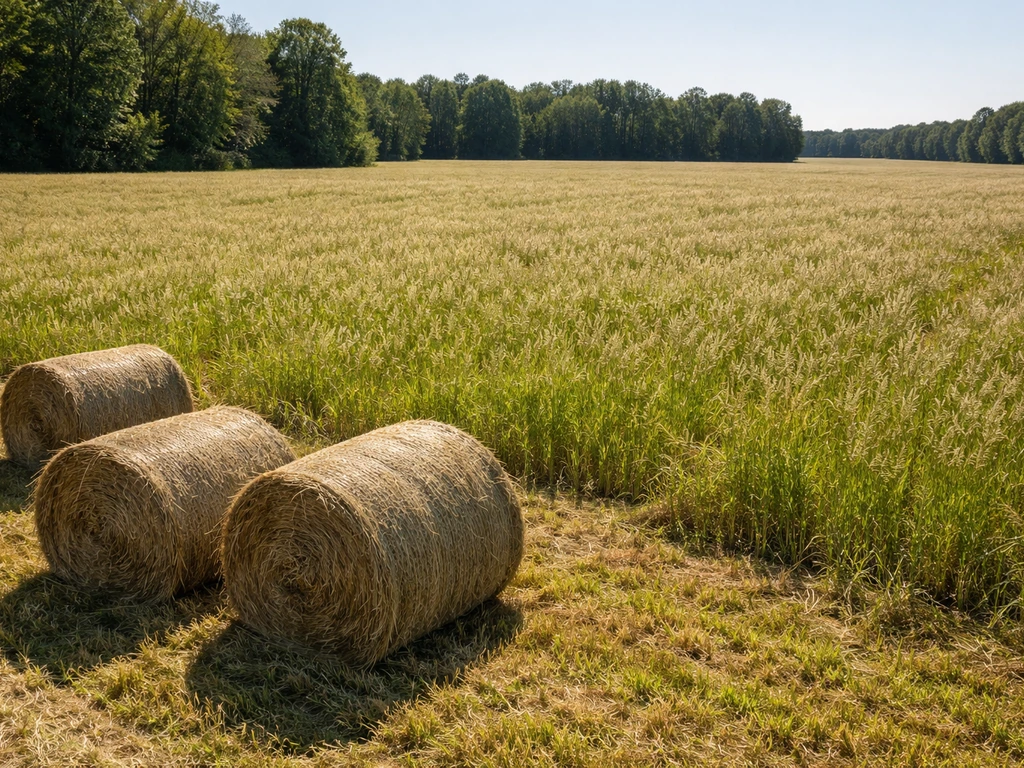
Orchard grass is a cool-season perennial that you plant once and harvest as hay for up to five years or so. Seeded at 8–12 lb per acre (or as low as 4 lb/acre if you're going by pure live seed weight), it germinates in roughly 18 days under good conditions, establishes a productive stand within the first growing season, and can yield 2–5 tons of hay per acre per year when managed well. The keys are good seedbed prep, correct timing, and keeping mowing intervals around 5–6 weeks once the stand is established.
How to Grow Orchard Grass for Hay: Step-by-Step
Marcus Tillwell
29 Jun 2026
What orchard grass actually is (and why farmers grow it for hay)
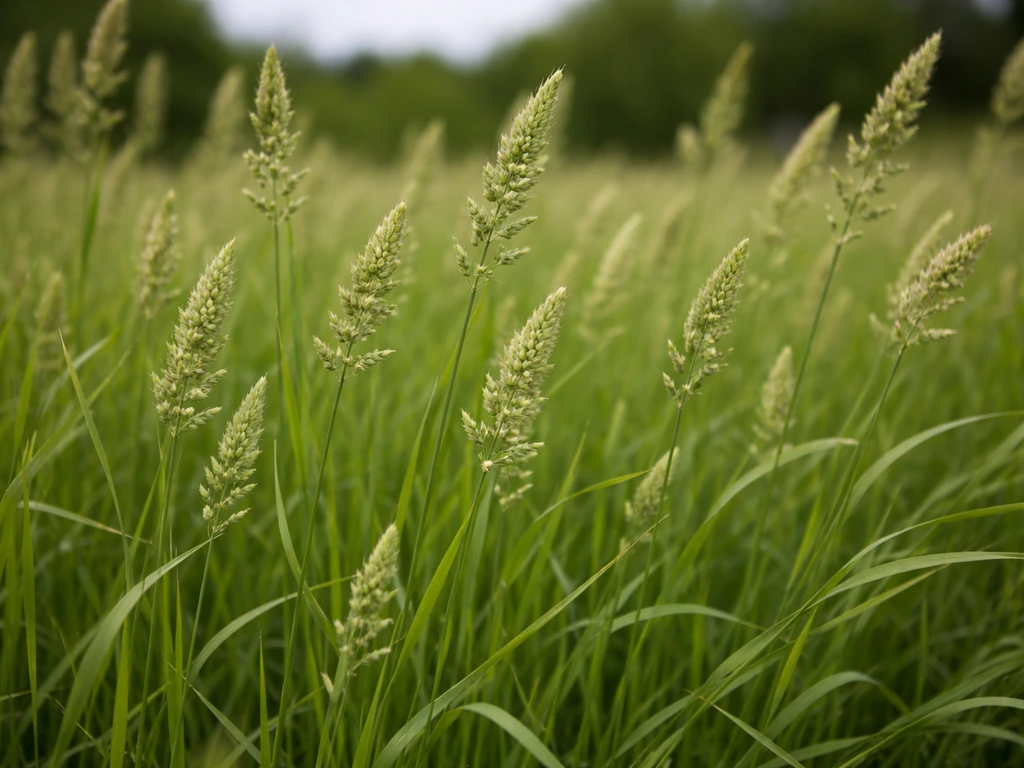
Orchard grass (Dactylis glomerata) is a long-lived cool-season perennial forage grass that thrives in temperate climates across most of the US. how to grow decorative grass. It grows in bunchy clumps, heads out earlier than most other cool-season grasses, and puts on growth fast in spring and again in fall. Those traits make it well-suited for hay production: you get a big first cut in spring, then reliable aftermath cuts through summer and into fall.
The reason it's so widely grown for hay is straightforward. It's high in nutritive value when cut at the right time, it responds aggressively to nitrogen fertilizer, and it handles moderate drought and shade better than most competing cool-season grasses. It's also palatable to cattle, horses, and small livestock. The tradeoff is that it forms thick clumps as it ages, and most university extension programs will tell you honestly that stands tend to decline after about five years. That's not a dealbreaker; it just means you plan to renovate or reseed on roughly a five-year cycle.
Picking the right site and soil conditions
Orchard grass is flexible, but it does have firm requirements around drainage and soil pH. It wants well-drained, medium-textured soil that's moderately deep. Extended periods of saturated soil will thin or kill a stand, so if you've got a low spot that holds water for weeks after rain, that's the wrong place for orchard grass. Sandy soils can work if moisture is adequate during establishment, but they'll stress the stand during dry summers. Heavy clay that drains slowly is the most common site problem homeowners run into.
For soil pH, aim for 6.0–7.0, with 6.5 being a solid target for established stands. Oregon State notes it can survive as low as 5.2, but growth below 6.0 is noticeably reduced. Get a soil test before you do anything else. It will tell you exactly how much lime to add and give you a baseline for phosphorus and potassium, both of which matter at seeding. Penn State's pre-seeding guideline for medium-fertility ground is roughly 0-45-135 lb/acre of N-P-K, worked in before planting, then another round of 20-20-20 lb/acre at seeding, ideally banded near the seed row.
Orchard grass grows best when air temperatures are in the 54–73°F range, which is why spring and late summer/early fall plantings work and midsummer plantings usually fail. It also tolerates partial shade better than most forage grasses, which is a real advantage if your field has scattered trees or a woodline on one side.
When to plant: timing is the most important decision you'll make
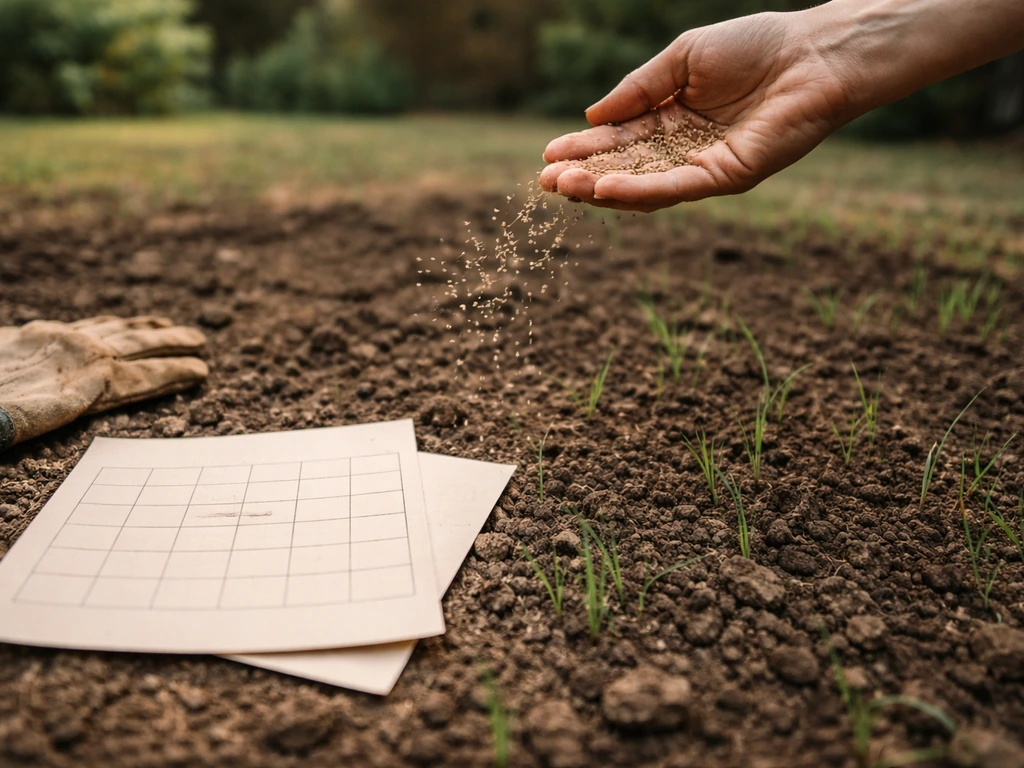
You have two solid windows for seeding orchard grass: late summer/early fall or late winter/early spring. Fall seeding is generally the preferred option in the mid-Atlantic and Southeast. Virginia Tech's guidance puts the window from after the first good rain in September through around October 15. That timing gives seeds cool, moist conditions to germinate and several weeks of growth before a hard freeze. Spring seeding works well in the Northeast, upper Midwest, and Pacific Northwest, typically from late winter into May (Allied Seed cites March 1 through May 15 as a practical spring window).
What kills spring seedings is waiting too long. Oregon State explicitly warns against seeding after the spring moist season has passed, because hot, dry summer conditions will desiccate germinating seedlings before they establish. If you're doing a spring seeding and the forecast turns hot and dry before your stand is 30 days old, you're in trouble. In the Pacific Northwest, that means getting seed in the ground by early May at the latest. In the upper Midwest and Northeast, aim for April to mid-May. If you missed the spring window, wait for fall rather than gambling on a summer seeding.
There's also a frost-seeding option for late winter (roughly February through early March in many regions) where seed is broadcast onto frozen ground and works its way into the soil through freeze-thaw cycles. This is more of a renovation technique than a primary seeding method, but it can fill in thin stands effectively.
How to prepare the land and get seed in the ground
Good seedbed prep is where most stand failures start. The goal is a firm, weed-free bed with fine soil texture so small orchard grass seeds make solid contact with the soil. Here's the sequence that works:
- Test your soil 6–8 weeks before planting so lime has time to react. Apply lime per your test results and till it in.
- Kill or mow existing vegetation close to the ground. If you're converting an existing field, you may need to till or spray before tillage to reduce competition.
- Till to 4–6 inches deep with a disk or rototiller, then drag or harrow to break up clods and create a medium-fine, firm surface. Avoid fluffy, deep-tilled beds: Washington State Extension warns that soft seedbeds cause seed to sink too deep during drilling.
- Apply your pre-seeding phosphorus and potassium fertilizer (and any starter nitrogen) and incorporate it with a final light pass.
- Seed at 8–12 lb/acre if using untested bulk seed, or 4–10 lb pure live seed (PLS) per acre if you know your seed's germination rate. Purdue lists 10 lb PLS/acre as a standard rate.
- Set your drill or seeder for a depth of ¼ to ½ inch. That shallow depth is critical: orchard grass has a small seed with limited energy reserves, and seed buried deeper than ½ inch often dies before it can emerge.
- If broadcasting instead of drilling, increase seeding rate by 25–30% to compensate for uneven coverage, then cultipack or drag to press seed into the soil. Mississippi State Extension recommends rolling after broadcast seeding specifically to improve seed-to-soil contact.
- Cultipack or roll the seedbed after seeding regardless of method. Firm contact between seed and soil is the single biggest factor in consistent germination.
Expect germination to begin around 18 days after planting under decent conditions (Purdue's estimate), though cooler soils can push that closer to 3–4 weeks. The seedlings will look sparse at first. Don't panic. Orchard grass puts energy into roots before it shoots up above the soil line.
Watering, weed control, and what to do when the stand looks wrong
Keeping moisture on new seedlings
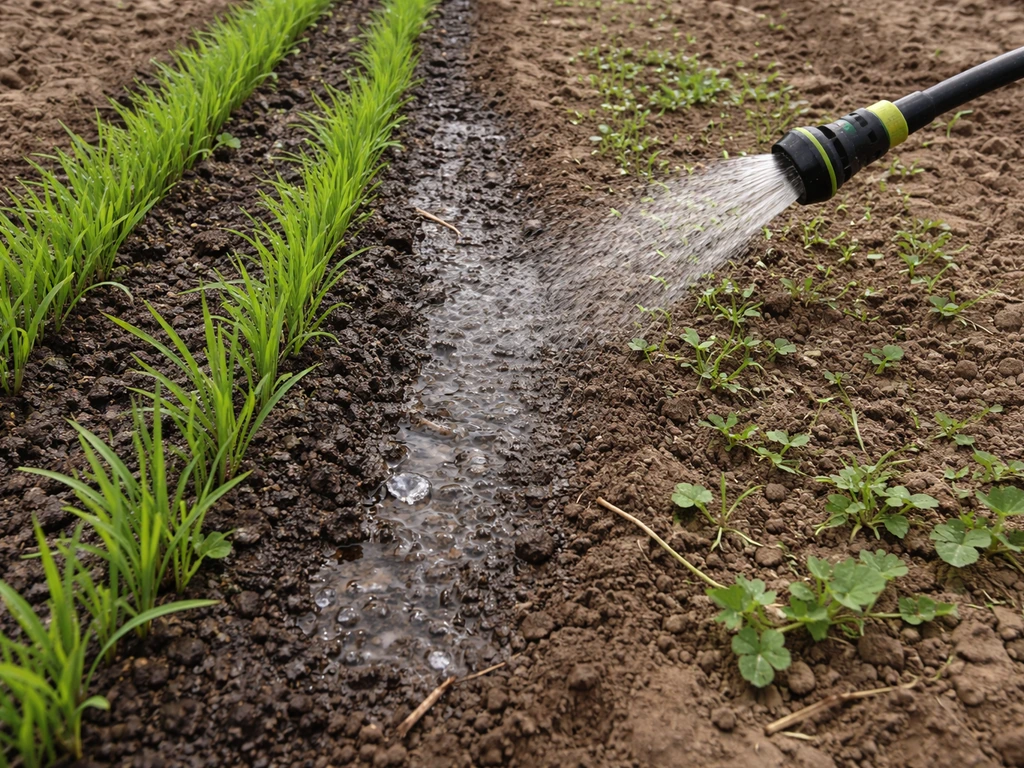
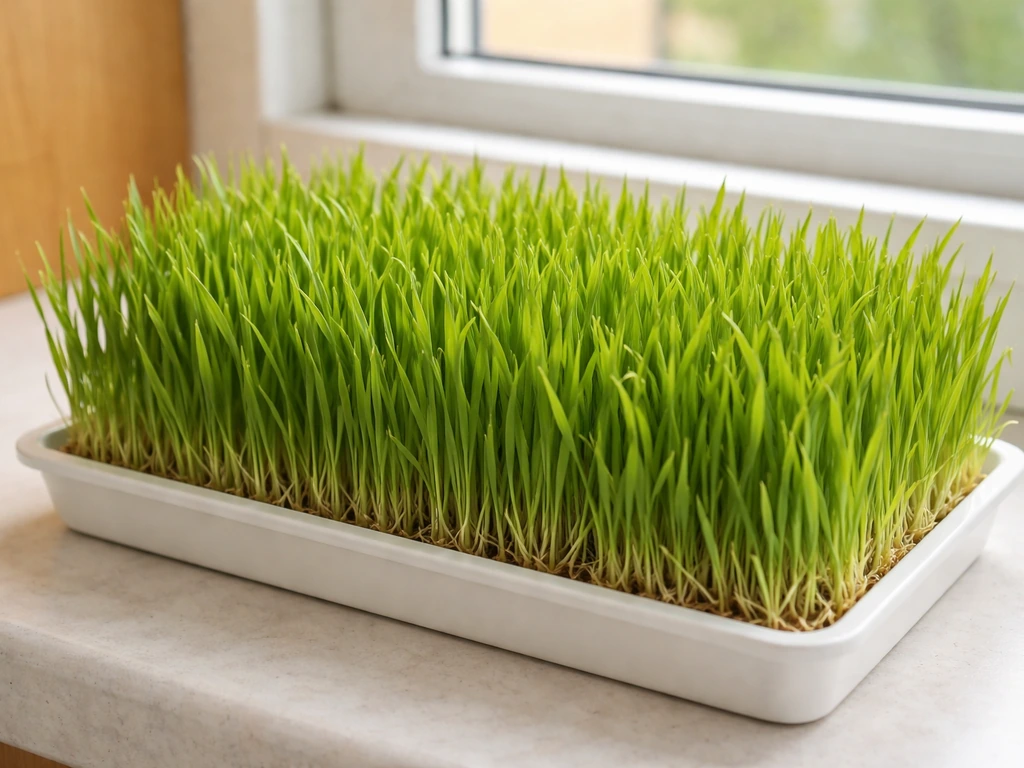
Young orchard grass needs consistent moisture during its first 30–45 days. If you're specifically growing Easter grass, follow similar planning for moisture and establishment, but use the light, container-friendly approach that suits its short grow cycle how to grow easter grass. If you're on a small plot, irrigation can bridge dry spells. On larger acreage, timing your seeding to catch natural rainfall is the practical approach, which is exactly why fall seedings (timed to September rain) and early spring seedings (relying on spring moisture) outperform midsummer attempts. If you're seeding a small area and can run sprinklers, keep the top inch of soil moist but not waterlogged until plants are 3–4 inches tall.
Weed competition in year one
Weed pressure during establishment is the other major stand killer. If you're also trying to speed up establishment in ornamental grasses, see how to make ornamental grass grow faster for related growth-rate tips. Annual weeds will emerge fast and out-compete slow-growing orchard grass seedlings for light. The most practical tool you have is a mowing pass: once weeds reach 6–8 inches tall, clip them back to about 3–4 inches. This lets light reach your orchard grass without pulling or spraying. Don't mow so low that you take off the orchard grass tips in the first cutting passes. Herbicide options exist for established grass stands, but in the seedling phase, options are limited and mowing is your safest bet.
Troubleshooting a poor stand
If your stand looks patchy or thin at 3–4 weeks, run through this checklist before deciding to replant:
- Was seeding depth correct? Seed planted deeper than ½ inch often fails to emerge. Dig in a bare patch and look for rotted or unemerged seed near the surface versus deeper in the profile.
- Was there a dry spell right after seeding? A week without rain or irrigation in the first two weeks after planting can kill germinating seedlings before they establish roots.
- Is the soil compacted or crusted? A hard crust can block emergence. Lightly scratch the surface with a rake in small areas to break the crust.
- Is soil pH off? If you skipped the soil test or lime is still reacting, low pH can suppress early growth significantly.
- Is competition the issue? Dense existing vegetation that wasn't adequately killed before seeding will choke out new seedlings.
- Did you seed too late into a hot or dry period? If the seasonal window closed before your stand fully established, your best move is often to wait and frost-seed in late winter or replant in the next appropriate season.
If you have thin but living plants across at least 60–70% of the area, give it more time. Orchard grass is slow to canopy but fills in faster once roots are established. Serious bare patches (more than 30% of the area) are worth overseeding into during the next planting window.
Cutting for hay: when to cut and how often
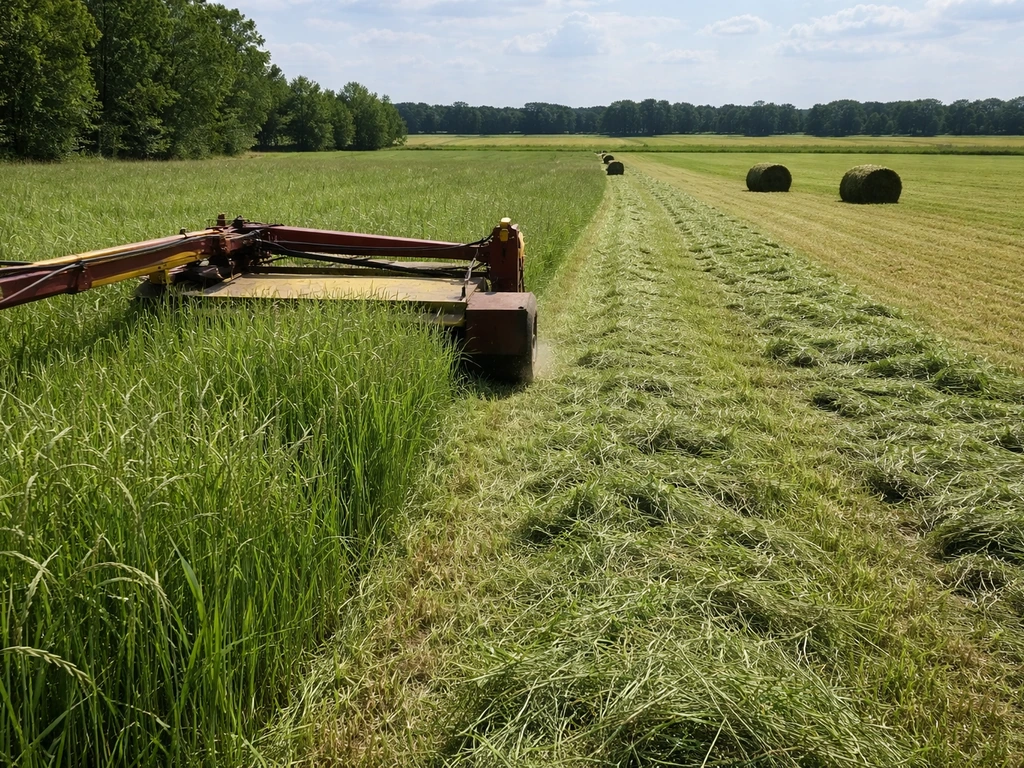
Timing your first cut correctly is the single biggest quality decision in orchard grass hay production. Cut too late and nutritive value drops fast. Cut too early and you sacrifice yield and can stress the stand.
The target for first cutting is the boot stage, meaning when the seed head is still enclosed in the sheath and has not yet emerged. In Maine, University of Maine Cooperative Extension places that window in late May to early June. In Virginia, Penn State, and most mid-Atlantic states, variety maturity affects it (early varieties head in early May, late varieties in late May to early June). Once you see seed heads pushing out of the sheath, quality is already declining. At full bloom, you've missed the window for top-quality hay.
After the first cut, let the stand regrow for 5–6 weeks before cutting again. Penn State recommends 35–40 day intervals for cool-season grasses including orchard grass. NC State and the NRCS both put the aftermath cutting interval at 4–6 weeks, with 8 inches of regrowth as a rough visual cue that the stand is ready. Don't cut shorter than 3–4 inches: leaving residual height protects growing points and helps the plant recover faster.
| Cut | Timing | Stage to Target | Notes |
|---|---|---|---|
| 1st cut | Late May to early June (zone-dependent) | Boot stage (head not yet emerged) | Highest quality window; don't miss it |
| 2nd cut | 5–6 weeks after first cut | 8 inches of regrowth | Quality still good; yield is lower |
| 3rd cut | 5–6 weeks after second cut | 8 inches of regrowth | Late summer cut; watch for drought stress |
| 4th cut (if possible) | Early fall before frost | 8 inches of regrowth | Possible in warmer regions; skip if stand is thin |
With split nitrogen applications timed to each cut, Penn State's data shows spring production can be balanced with aftermath cuts, with aftermath contributing roughly 35–65% of total annual yield. That means your management after the first cut genuinely matters for total tonnage.
Keeping your stand productive year after year
Fertilizing for sustained yield
Orchard grass responds strongly to nitrogen and will visibly improve with proper feeding. For established stands, Virginia Tech's guidance recommends splitting nitrogen applications to match growth periods rather than dumping it all on in spring. A common split is applying a portion in early spring, another after the first cut, and possibly a smaller amount after the second cut heading into fall. University of Delaware targets a soil pH of 6.5 for established stands and ties lime application to soil-test calcium and magnesium levels, not just pH. Don't ignore the P and K side of the equation: those nutrients matter for root health and winter survival.
Managing the clumpy, aging stand problem
University of Kentucky is straightforward about this: orchard grass becomes clumpy with age and most stands start declining before five years. You'll notice it as gaps opening up between clumps, reduced tillering, and a general thinning of the sward. At that point, your options are to overseed into the existing stand during a dormant or frost-seeding window, or to renovate fully by killing the stand and starting over. Overseeding works if you still have decent soil conditions and 50% or more of the stand is productive. Full renovation is worth it when the stand is clearly past its useful life.
Protecting against winterkill and stress
Oregon State flags winterkill as a real vulnerability for orchard grass, particularly in regions with extreme cold and little snow cover. A few things help: avoid late fall nitrogen applications that push lush growth into freeze conditions, don't cut the stand too short heading into winter (leave 4–6 inches of top growth), and make sure drainage is good. Saturated soil going into winter dramatically increases winterkill risk. In drought-prone regions, Utah State University's guidance notes that orchard grass has poor tolerance of extended drought, so irrigation or thoughtful site selection is important in the West.
Year-round maintenance calendar at a glance
| Season | Task |
|---|---|
| Early spring | Apply split nitrogen per soil test; watch for first growth flush |
| Late spring (boot stage) | First hay cut; apply nitrogen after cutting for aftermath growth |
| Early summer | Second cut at 5–6 week interval; check for weed encroachment |
| Late summer | Third cut if regrowth allows; assess stand density |
| Early fall | Possible fourth cut in warm regions; apply lime if pH needs correction |
| Late fall/winter | Avoid cutting below 4 inches; no late nitrogen; consider overseeding thin areas via frost seeding in late winter |
If you're also exploring grass options for non-production purposes, the management approach for orchard grass is quite different from what you'd do with ornamental or decorative grasses, which are grown purely for appearance and have entirely different cutting and care needs. Orchard grass is a working grass: the better you manage it, the more tons per acre you'll pull off it each season.
FAQ
How do I know when to cut if growth is faster or slower than usual?
Aim for 2–3 total inches of growth after your first cut before you decide it is “regrown enough,” then use the regrowth interval as a guide. If you hit boot stage fast due to good moisture and fertility, you may need to shorten the interval slightly rather than waiting for the full 5–6 weeks to protect quality.
Can I just overseed orchard grass into an existing hay field instead of starting over?
You generally can, but avoid seeding into a fully weed-infested bed. If you must overseed, do it during a dormant or frost-seeding window only when weeds are minimized, then mow or light manage the existing sward so seed makes soil contact. In most cases, bare ground and firm, fine seedbed contact matter more than “extra seed rate.”
What should I check if my stand looks great at first but starts thinning within a couple of years?
If you get a lot of lush growth but thin stands later, the cause is often either excess nitrogen late in the season, cutting too low going into winter, or poor drainage that causes winterkill. Check for waterlogging after storms and confirm you left about 4–6 inches going into winter, then re-check your fertilizer timing for the last application.
Should I lime based only on pH, or is there more to it?
Targeting soil-test pH still matters most, but don’t lime “to a number” without considering calcium and magnesium. If your test shows low Ca or Mg, correcting those can improve stand vigor even if pH is acceptable. Re-test after liming in a reasonable timeframe so you can adjust rather than guessing.
What’s the biggest mistake people make during orchard grass establishment?
For orchard grass, you usually want to reduce bare soil and suppress weeds during the first 30–45 days, not just “get seedlings up.” In practice, that means consistent moisture for germination and early rooting, then mowing weeds at about 6–8 inches while keeping orchard grass tips intact so you do not set the crop back.
When is frost-seeding worth it, and when should I avoid it?
If you are in a frost-seeding window, use it as a fill-in tool, not a full establishment plan. Broadcast onto frozen ground and expect more variable results than proper seedbed contact, especially in heavy clays or areas that stay wet after thaw. When in doubt, reseed in the next standard planting window.
How should nitrogen timing change based on my number of cuttings?
If you are growing orchard grass for hay quality, nitrogen management is not just “more is better.” Cutting removes nutrients, so late applications can increase winterkill risk and early applications can raise cutting frequency. Use split applications aligned to growth periods and match timing to your cutting schedule rather than applying a single dose.
What can I do if my field holds water after rain?
Orchard grass typically needs well-drained soil, so if you can see standing water for weeks, you should change the site or fix drainage before committing. For small areas, raised beds or field grading can be more effective than trying to “treat” it, because saturated conditions thin stands even if pH and fertilizer are correct.
What should I do if I miss the spring planting window?
If you miss the spring window, fall is usually the safer bet because seedlings benefit from cool, moist conditions before hard freeze. A good rule is to base timing on the first reliable rains and the number of weeks you can realistically protect establishment. Avoid summer seedings unless you can irrigate reliably during the first month.
How can I tell whether my stand is failing from age versus site or winterkill problems?
Orchard grass stands decline mostly due to clump aging and loss of density, but winterkill and chronic water stress can make it decline faster. Before renovating, confirm your drainage, verify your winter cutting height, and look for gaps between clumps that suggest time-related decline versus widespread thinning that suggests site stress.
Next Article
How to Grow Easter Grass Step-by-Step for a Full Tray
Step-by-step guide to grow Easter grass in a shallow tray, including supplies, timing, watering, light, and mold prevent