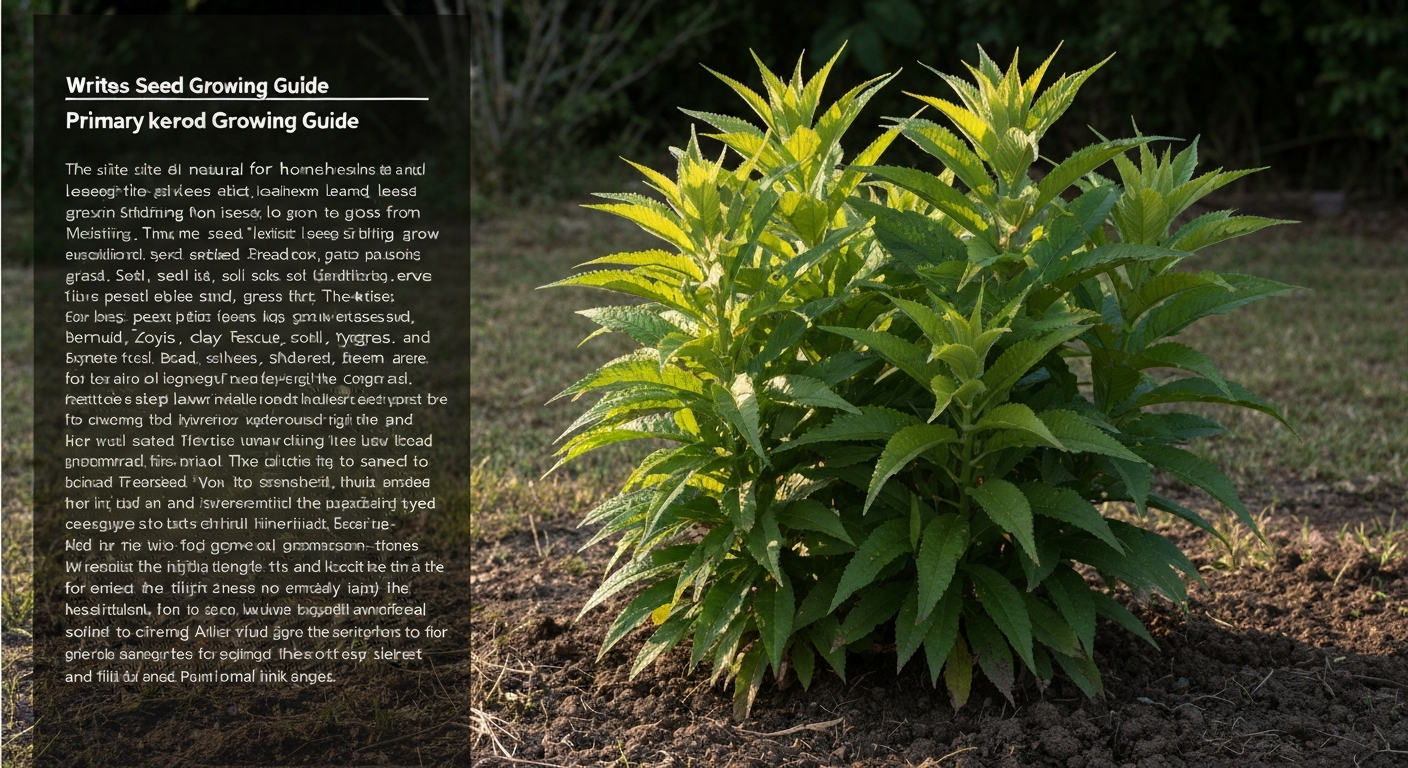
If you've been searching for how to grow China grass, the first thing worth knowing is that 'China grass' isn't a lawn turf variety. The name almost universally refers to ramie (Boehmeria nivea), a tall perennial plant in the nettle family (Urticaceae) grown historically for bast fiber, think linen-like textile, not a lawn you mow on weekends. It won't give you the green carpet you're picturing. If your goal is a lawn, you'll need to identify which grass species actually suits your region, then use this guide to nail the establishment. If you genuinely want to grow ramie/China grass as a plant, that section is covered below too.
How to Grow China Grass: Identification, Planting & Care
Marcus Tillwell
11 Aug 2026
What 'China Grass' Actually Is
Botanically, China grass is Boehmeria nivea, also called ramie, Chinese silk plant, or rhea. The Royal Horticultural Society lists Boehmeria nivea under the entry 'Boehmeria nivea (ramie), RHS Plant Profile' Boehmeria nivea (ramie) — RHS Plant Profile. Major horticultural references including the Royal Horticultural Society, Kew's Plants of the World Online, the Missouri Botanical Garden, and U.S. agricultural records (GRIN) all list 'China grass' as a common name for this fiber crop. It's a shrubby perennial that can reach 1–2 meters tall, produces strong bast fibers in its stems, and is related to stinging nettles, not grasses at all. It belongs to Urticaceae, not Poaceae (the true grass family). There is also a regional wrinkle: in parts of Queensland, Australia, the native shrub Debregeasia australis carries the local common name 'china grass', which is a completely different plant. So depending on where you are and who you're talking to, the name can point to at least two different plants, neither of which is a lawn grass.
In turf and lawn extension literature, 'China grass' simply doesn't appear as a recognized common name for any standard turf species. If a neighbor, a nursery label, or an online listing used the phrase in a lawn context, they were most likely using it as a loose regional nickname for something else, possibly kikuyu, zoysia, or another warm-season creeping grass. It's worth asking exactly what cultivar or species is on the label before you buy.
Growing Ramie (China Grass) as a Plant, Not a Lawn
If you specifically want to grow Boehmeria nivea as a fiber plant, garden curiosity, or erosion-control shrub, here's the practical summary. Ramie is a warm-climate perennial that prefers well-drained, fertile loam with a pH around 5.5–6.5. It grows best in USDA zones 8–11 (or equivalent subtropical/tropical climates). Propagate it from stem cuttings or root divisions rather than seed, as seed germination is slow and erratic. Plant in full sun, water consistently during establishment, and cut stems back to the ground when harvesting or managing size. It is not mown, is not traffic-tolerant, and cannot form a lawn.
How China Grass Compares to Similarly Named or Confused Species
Because the name 'China grass' gets tossed around loosely, it's easy to end up buying or researching the wrong plant. Here's how it stacks up against the species most commonly confused with it, so you can cut through the naming mess quickly.
| Plant | Scientific Name | Family | Lawn Use? | Key Trait |
|---|---|---|---|---|
| China grass / Ramie | Boehmeria nivea | Urticaceae (nettle) | No | Fiber/textile shrub, 1–2 m tall |
| Kikuyu grass | Cenchrus clandestinus | Poaceae (true grass) | Yes — warm-season turf | Aggressive spreader, subtropical lawns |
| Korean grass / Zoysia | Zoysia spp. | Poaceae (true grass) | Yes — warm-season turf | Dense, slow-growing, wear-tolerant |
| Khus / Vetiver | Chrysopogon zizanioides | Poaceae (true grass) | No — erosion control | Deep roots, slope stabilization |
| Kusha grass | Desmostachya bipinnata | Poaceae (true grass) | No — ceremonial/pasture | Sacred grass in South Asian tradition |
| China grass (QLD regional) | Debregeasia australis | Urticaceae (nettle) | No | Australian native shrub, local name only |
Kikuyu and Korean grass (zoysia) are the two species most often mixed up with 'China grass' in a lawn context, especially in Australia and New Zealand where all three names circulate informally. Kikuyu is a warm-season, rapidly-spreading turf grass widely used in subtropical and coastal lawns. Zoysia (sold under names like Korean grass, Manila grass, or Empire zoysia) is denser, slower, and far more manicured-looking. Khus and kusha are not lawn grasses, khus (vetiver) is a deep-rooted grass used for erosion control and perfumery, while kusha grass holds ceremonial significance in Hindu tradition and is a pasture/wetland species. For specific guidance on how to grow kusha grass, see the internal guide (096f9729-c932-414f-94be-a8ad3d1d8336). For specific cultivation advice, see how to grow khus grass for vetiver propagation, planting, and care. None of these are China grass botanically, but knowing the differences saves you from planting the wrong thing entirely.
Is China Grass Right for Your Lawn?
Honestly: no, not if 'your lawn' means a mowable, walkable grass surface. Ramie is not a turf plant. It won't spread to cover ground the way kikuyu or bermuda does, and you can't mow it into a lawn. However, if your situation is one of these, it might still be worth considering as a garden plant:
- You need a tall, dense plant for screening or erosion control on a slope in a subtropical or tropical climate
- You're interested in fiber plants or historical textile crops for a garden project
- You want a large-leaved, ornamental perennial that tolerates heat and humidity
For actual lawn use, the practical decision comes down to your climate zone and what you want from a grass. If you're in a warm, subtropical region (think coastal Australia, the Gulf Coast U.S., southern Africa, or similar), kikuyu or zoysia are the realistic turf choices that sometimes get called 'China grass' informally. If you're in a transitional or cool climate, tall fescue or perennial ryegrass are more appropriate. The rest of this guide focuses on helping you establish a real lawn grass correctly, using kikuyu and zoysia as the primary warm-season examples since they're the species most associated with the 'China grass' label in practice.
Climate and Sunlight Requirements
Warm-season grasses like kikuyu and zoysia germinate and establish best when soil temperatures are between 75–85°F (24–29°C). That means late spring through early summer in most regions. They need full sun to perform well, neither handles deep shade well, though zoysia tolerates partial shade better than kikuyu. If your lawn area gets fewer than 4–5 hours of direct sun per day, you'll likely get a thin, struggling lawn regardless of which warm-season variety you plant.
Seed, Runners/Plugs, or Sod, Which Method to Use
This is the most important decision you'll make before planting, and the right answer depends on your budget, your timeline, and whether your chosen species is even available as seed. Here's how the three methods actually compare for warm-season grasses.
| Method | Upfront Cost | Time to Full Cover | DIY Difficulty | Best For |
|---|---|---|---|---|
| Seed | Lowest | 3–6 months (if seed is available) | Medium — surface prep is critical | Bermuda, some zoysia varieties; budget-conscious homeowners with time |
| Runners / Plugs / Sprigs | Moderate | 1–2 growing seasons | Low-Medium — physical labor, consistent watering | Kikuyu, zoysia; larger areas; when seed is unavailable or unreliable |
| Sod / Turf rolls | Highest | 2–6 weeks to anchor | Low — instant coverage | Immediate results, high-traffic areas, erosion risk, visible front yards |
Kikuyu seed exists, but it's small, variable in germination, and often not commercially available in retail quantities. Broadcast seeding rates are typically around 1–2 kg per hectare (that works out to roughly 10–20 grams per 100 square meters), which is a very low rate by lawn standards. Most practical kikuyu establishment happens vegetatively using sprigs or runners. Zoysia can be seeded at roughly 1–2 lb per 1,000 square feet, or installed as 2-inch plugs on 6–12 inch centers, closer spacing means faster cover but higher cost. Bermudagrass seed rates run about 0.5–1 lb of pure live seed per 1,000 square feet.
My honest recommendation: if you want a kikuyu-type lawn, skip seed entirely and source runners or plugs from a local turf supplier. If you're going with zoysia and have a small area, plugs on 6-inch centers give you coverage within one growing season. If you need something fast, front yard, rental property, erosion issue, pay for sod. The per-square-meter cost is higher but the result is immediate and reliable.
Quick Decision Checklist: Which Establishment Method Fits Your Site
Run through this before you buy anything. It takes two minutes and will save you from planting regret.
- Do you need full grass coverage within 4–6 weeks? → Choose sod. No other method delivers instant coverage.
- Is your area larger than 200 m² and your budget is tight? → Seed (if available for your species) or sprigs/runners are more economical than sod.
- Is kikuyu your target grass? → Use runners or plugs. Kikuyu seed is unreliable for most homeowners.
- Is your planting window now (warm soil, spring/early summer)? → Any method can work. Seed and plugs need warm soil most urgently.
- Are you planting outside the warm season (cool or wet weather)? → Wait for warm soil temperatures (above 24°C / 75°F) or switch to a cool-season grass and use seed.
- Is your site sloped or prone to erosion? → Sod or plugs — seed will wash away before it establishes.
- Do you have pets or high foot traffic? → Sod gives immediate durability. Seed and young plugs are easily destroyed by traffic.
- Is your area in partial shade? → Zoysia tolerates light shade better than kikuyu. Neither handles deep shade — consider a shade-tolerant fescue blend instead.
Planting Calendar and Timing Tables
Timing is the single biggest factor that separates a thick, healthy lawn from a patchy disappointment. Warm-season grasses need warm soil, not just warm air. If you plant too early in spring when the soil is still cold, seed won't germinate and plugs will sit dormant and rot. Aim for soil temperatures consistently above 24°C (75°F), which in most subtropical regions falls between October–December (Southern Hemisphere) or April–June (Northern Hemisphere).
| Region | Best Planting Window (Warm-Season) | Best Planting Window (Cool-Season) | Soil Temp Target |
|---|---|---|---|
| Subtropical Australia (QLD, NSW coast) | Oct–Jan | Not recommended for cool-season | 24–29°C |
| Gulf Coast / Southeast USA | Apr–Jun | Sep–Oct (fescue/rye) | 75–85°F (24–29°C) |
| South Africa (subtropical regions) | Oct–Dec | Mar–Apr (cool-season alternatives) | 24–29°C |
| Mediterranean / Southern Europe | Apr–Jun | Sep–Oct | 24–29°C / 10–18°C |
| Transitional zone (mild winters) | Apr–May or Sep–Oct | Sep–Oct for overseeding | Check local soil temp |
Seeding, Plug, and Germination Rates at a Glance
| Grass Species | Seed Rate | Plug Rate | Sprig/Runner Rate | Germination / Establishment Time |
|---|---|---|---|---|
| Kikuyu (Cenchrus clandestinus) | 1–2 kg/ha (10–20 g per 100 m²) — seed not recommended | N/A — use runners | Sprigs or runners; full cover in 1–2 seasons | Vegetative: 2–6 weeks to root; full cover 1 season |
| Zoysiagrass (Zoysia spp.) | 1–2 lb per 1,000 ft² (≈50–100 g per 100 m²) | 2-inch plugs on 6–12 inch centers (~1,000 plugs per 1,000 ft²) | 7–10 bushels per 1,000 ft² | Seed: 3–4 months to high coverage; plugs: 1–3 seasons |
| Bermudagrass (Cynodon dactylon) | 0.5–1 lb PLS per 1,000 ft² (≈25–50 g per 100 m²) | 2-inch plugs on 12-inch centers | 7–10 bushels per 1,000 ft² | Seed: 7–14 days germination; full cover 60–90 days |
| Tall fescue (cool-season) | 4–6 lb per 1,000 ft² (≈200–290 g per 100 m²) | Not typically used | Not applicable | Germination: 7–14 days; full cover 6–8 weeks |
| Perennial ryegrass (cool-season) | 3–5 lb per 1,000 ft² (≈150–245 g per 100 m²) | Not typically used | Not applicable | Germination: 5–10 days; full cover 4–6 weeks |
Soil Preparation and Amendments
I've seen more lawns fail from poor soil prep than from bad seed or wrong timing. Even the most aggressive warm-season grass struggles to establish in compacted, acidic, or waterlogged soil. Get this part right and everything after it is easier.
Get a Soil Test First
Run a soil test at least four weeks before you plan to plant. Most cooperative extension offices or garden centers offer kits for under $20, and the result tells you your pH, nitrogen, phosphorus, and potassium levels. This matters because most warm-season lawn grasses perform best at a soil pH of roughly 6.0–7.0, bermudagrass sits at the higher end of that range. If your pH is below 5.5, grass roots can't efficiently absorb nutrients no matter how much fertilizer you apply. Lime corrects acidic soil, but it takes 4–6 weeks to fully react, which is why you test early.
Drainage and Compaction
Dig a hole about 30 cm (12 inches) deep and fill it with water. If it drains in under an hour, you're in good shape. If it's still sitting there two hours later, you have a drainage problem that will drown shallow-rooted new grass. Compaction is common in high-foot-traffic areas and in lawns where heavy clay sits underneath. Aerating, either with a manual core aerator or a rented machine, breaks up compaction before planting and gives roots somewhere to go. Do this once before you plant and you'll notice the difference in how quickly the lawn fills in.
Before seeding or plugging, remove existing weeds and dead vegetation completely. If you're renovating an old lawn, scalp or kill the existing growth (a non-selective herbicide, applied 2–3 weeks before planting, is the most thorough option), then rake or till the top 5–8 cm (2–3 inches). Level out any humps or depressions, water pools in low spots and burns on high spots, both of which create bare patches later.
Fixing Difficult Soils Before You Plant
Clay Soil
Clay is the most common difficult-soil complaint, and it's fixable without a massive budget. The problem with clay isn't that it lacks nutrients, it often has plenty. The problem is compaction, poor drainage, and restricted root movement. Work in organic matter: composted bark, aged compost, or gypsum (calcium sulfate) all help break up clay structure. For a lawn area, spread 5–8 cm (2–3 inches) of compost across the surface and till it into the top 10–15 cm. Gypsum at roughly 1–2 kg per 10 m² also improves clay structure without changing pH significantly, useful if your pH is already in the right range. Don't add sand to clay unless you're adding enormous quantities (enough to genuinely change the soil profile). A thin layer of sand mixed into clay creates a concrete-like layer, which is worse than clay alone.
Sandy Soil
Sandy soil drains so fast that water and nutrients leach through before roots can use them. New grass planted in dry sand without amendment will need watering twice a day to survive, which isn't practical. The fix is similar to clay, but with emphasis on water-retention: work in heavy compost (5–8 cm tilled to 15 cm depth) and consider adding a granular moisture-retention amendment. Organic matter in sandy soil breaks down faster than in clay, so you may need to top-dress with compost annually to maintain soil quality. If you're seeding, a light mulch cover (straw or seed-germination blanket) over sandy soil prevents the top layer from drying out between waterings, which is critical in those first 30 days.
Watering After Planting
Keep the top 2–3 cm of soil consistently moist for the first 30 days after seeding, that means light, frequent watering, sometimes twice a day in hot weather. Once seed has germinated or plugs have visibly started to spread, shift to deeper, less frequent irrigation: water to about 15 cm (6 inches) deep, then let the surface dry slightly before watering again. This encourages deeper root growth, which is what makes a lawn drought-tolerant long-term. New sod needs heavy daily watering for the first 2 weeks, then gradually reduce frequency as roots anchor into your native soil. You can test anchoring by lightly tugging a corner, if it lifts easily, keep watering daily.
Mowing and Fertilizing Your New Lawn
Don't mow new grass until it's reached about 1.5 times the target mowing height, mowing too early pulls seedlings out of loose soil before roots are established. For zoysia, target mowing height is typically 2.5–5 cm (1–2 inches). Bermudagrass can go lower, down to 1.5–2.5 cm (0.5–1 inch) for a tight, clean surface. Kikuyu is usually kept at 3–5 cm for home lawns. For practical tips on how to make kikuyu grass grow faster, see our focused guide on improving kikuyu establishment and growth. Always use a sharp blade and never remove more than one-third of the blade height in a single mow.
For fertilizer, most warm-season lawn grasses need roughly 2–6 lb of actual nitrogen per 1,000 square feet per year, split across multiple applications. Apply starter fertilizer (higher phosphorus) at planting to support root development, then switch to a balanced slow-release lawn fertilizer at 6–8 weeks. Avoid heavy nitrogen applications in late autumn for warm-season grasses, it encourages soft growth that can be damaged by cold.
Troubleshooting Common Problems
Bare Spots That Won't Fill In
Persistent bare spots usually trace back to one of four causes: compacted soil underneath, too much shade, standing water, or recurring physical damage (pet traffic, kids' play areas). Dig into a bare spot, if the soil feels like packed concrete, that's your answer. Aerate, amend, and replant. If the spot is in shade, accept that most warm-season grasses won't perform there and either plant a shade-tolerant fescue blend or convert the area to mulch or groundcover.
Seed That Hasn't Germinated After 3 Weeks
Check soil temperature first. If it's below 20°C (68°F), warm-season seed won't germinate, it's not dead, it's dormant. If soil temperature is right but germination still hasn't happened, the seed surface has likely dried out. Germinating seeds die within hours if the soil dries completely. Increase watering frequency, add a light straw mulch, and be patient for another 7–10 days. If nothing at all appears after four weeks with correct temperature and moisture, the seed may have been old or low-quality, reseed with fresh product.
Pet Damage
Dog urine creates high-nitrogen burn spots, the brown dead patches with a green ring around the edge. Flush the area with water immediately after the dog uses it to dilute nitrogen concentration. For repairs, reseed or replug the dead zone after flushing, and keep the dog off it for at least 3–4 weeks while it re-establishes. There's no grass variety that's completely immune to concentrated urine, but thicker, denser turf (well-established zoysia or bermuda) recovers faster than thin, newly seeded lawns.
Pests and Disease
Spongy, browning patches that peel back like a carpet are often caused by lawn grubs (beetle larvae) feeding on roots. Check by pulling back a section of turf, if you see white C-shaped grubs at the root zone, a granular grub control product applied in early summer can break the cycle. Fungal diseases tend to show up as irregular brown or orange patches in humid weather, often after overwatering. The fix is usually improving drainage, reducing irrigation frequency, and applying a lawn fungicide if the problem is severe. Avoid watering at night, wet grass overnight is an invitation for fungal growth.
FAQ
What does the common name “China grass” actually refer to — is it a lawn grass?
Most widely, “China grass” refers to ramie (Boehmeria nivea), a bast‑fiber plant in the nettle family (Urticaceae), not a turfgrass. Historical and botanical references list common names such as China grass, Chinese silk plant or ramie. In some regions local nettle‑type plants have been called “china grass,” so the name can be ambiguous. In turf contexts there is no single lawn species universally called “China grass”; homeowners should clarify regional usage before assuming a particular turf species.
How can I correctly identify whether a plant on my property is ramie (China grass) or a turfgrass like kikuyu or zoysia?
Identification pointers: ramie is a broadleaf perennial shrub-like plant with coarse serrated leaves, stems with bast fibers and non‑grass flower spikes (Urticaceae). Kikuyu, zoysia and other turfgrasses are true grasses with narrow blades, nodes, stolons or rhizomes and grass‑type inflorescences. If in doubt, take clear close-up photos of leaves, stems and growth habit and compare with trusted reference photos or a local extension office.
If I want a durable lawn, should I plant ramie/China grass?
No — ramie is a fiber crop/ornamental, not a turf species optimized for lawns. For a durable lawn choose a turfgrass species suited to your climate and use (warm‑season: kikuyu, bermuda, zoysia in subtropical/temperate warm areas; cool‑season: tall fescue, perennial ryegrass, Kentucky bluegrass in cool climates). Use local extension recommendations to choose the best turf species and cultivar for your region and lawn use.
How do I choose between seed, plugs/runners (sprigs) and sod for establishing a warm‑season lawn (e.g., kikuyu, zoysia, bermuda)?
General choice rules: Seed — lowest cost, best when a good seed source exists and you have time (seeded zoysia/bermuda can take months). Plugs/sprigs (vegetative) — intermediate cost, slower but works when seed is poor or unavailable (kikuyu often established vegetatively). Sod — fastest but most expensive; instant cover and erosion control. Choose sod for quick results or steep/hard‑to‑irrigate sites; choose plugs/sprigs when seed is scarce; choose seed when high‑quality seed is available and you can water frequently during establishment.
What are typical seeding/planting rates and timelines for common turf species (table summary)?
Suggested planting table (convert PLS and local label rates before use): - Kikuyu (seed): ~1–2 kg/ha (≈10–20 g/100 m²). Germination/establishment: warm soils, 7–21 days for germination; full cover months to a season; vegetative sprigging common. - Zoysia (seed): ~1–2 lb/1,000 ft² (≈4.9–9.8 g/m²). Germination: 3–4 months for good cover; plugs: 1,000 plugs per 1,000 ft² on 12
What soil preparation steps should I follow before planting turf (seed, plugs or sod)?
Do a soil test first to determine pH and nutrient needs. Steps: 1) Remove debris, weeds and thatch. 2) Till or loosen compacted soil to 10–15 cm (4–6 in) for lawns (more for renovation). 3) Correct pH with lime or sulfur per soil test (apply 2–4 weeks before planting if possible). 4) Add and incorporate organic matter (2–4 cm) or starter topsoil where needed. 5) Level and firm the seedbed lightly — not overly compacted. 6) If using sod, ensure a smooth grade and irrigation in place before installation.
Next Article
How to grow kikuyu grass: Seed, runners, care & troubleshooting
How to grow kikuyu grass: step-by-step planting, care, troubleshooting, overseeding and alternatives.