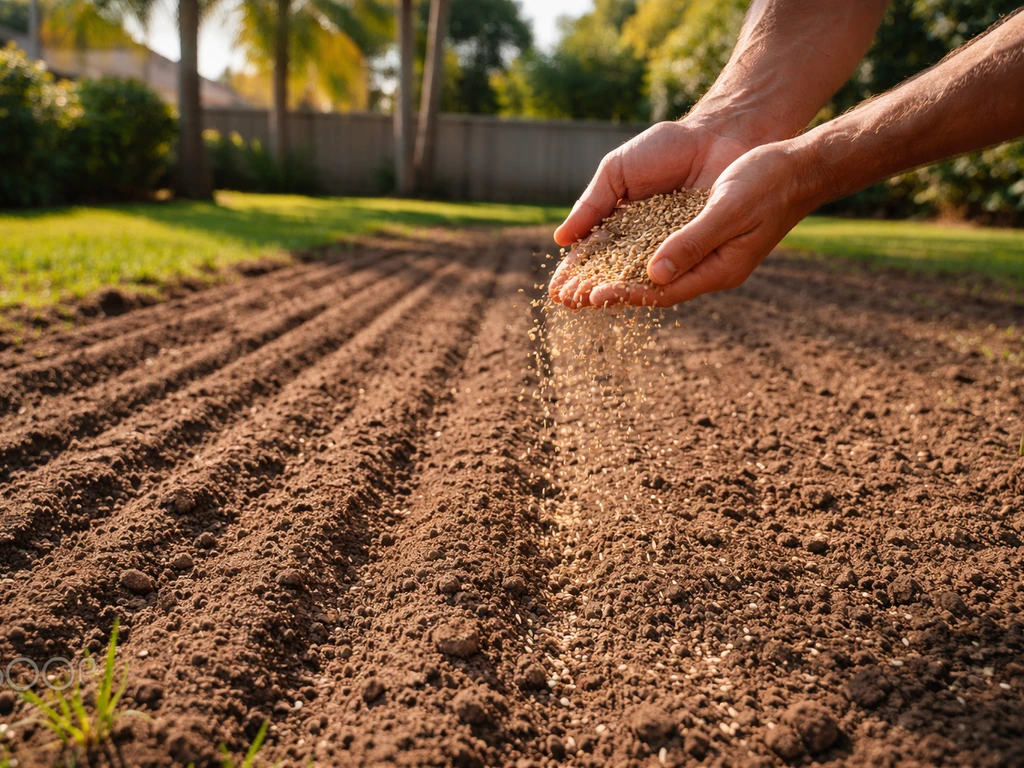
Growing grass in sandy Florida soil is absolutely doable, but you have to work with the soil's weaknesses from day one. Sandy soil drains so fast that seeds dry out before they root, and nutrients wash straight through before roots can absorb them. The fix is a combination of choosing drought-tolerant warm-season grasses like Bermuda or Zoysia, amending the soil with organic matter before you seed, and watering lightly and frequently during establishment rather than deeply and infrequently. Do those three things right, and Florida sand stops being an obstacle.
How to Grow Grass in Sandy Florida Soil Step by Step
Marcus Tillwell
22 May 2026
Why sandy Florida soil makes growing grass so hard
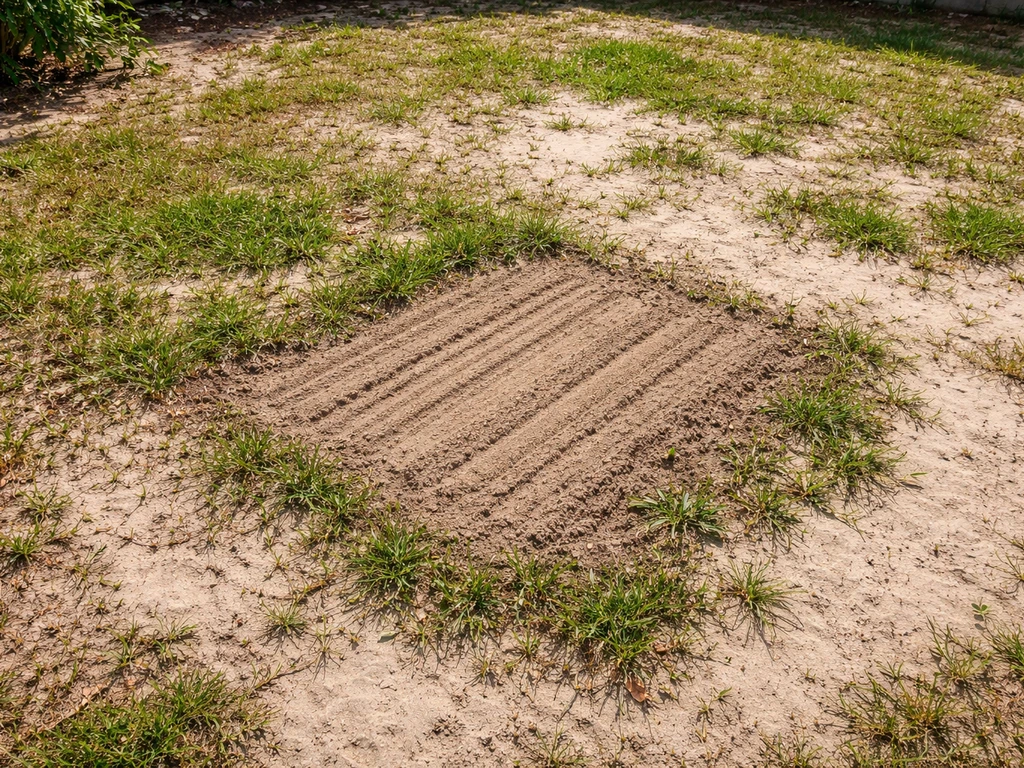
Most of North and Central Florida sits on extremely sandy soil that holds almost no water or nutrients on its own. When you water, it drains straight down through the sand profile within minutes. When you fertilize, the nutrients leach out before shallow roots ever reach them. The result is a lawn that looks stressed, patchy, or just refuses to fill in no matter how much seed you throw at it.
There are three specific problems that sandy soil creates for grass establishment. First, the seedbed dries out fast, sometimes within an hour of watering on a hot Florida day. Germinating seeds that dry out even once during the first week usually die. Second, sandy soil has almost no cation exchange capacity, meaning it cannot hold fertilizer ions the way loam or clay can. Nitrogen especially runs straight through. Third, shallow root systems struggle to anchor in loose sand, so new seedlings are vulnerable to foot traffic, rain, and even wind.
The good news is that these are engineering problems, not permanent barriers. You fix them by amending the soil, choosing the right grass variety, and adjusting your watering routine. None of it requires expensive equipment.
Pick the right grass for Florida sand
Not every grass variety is a realistic choice for Florida sand. The best candidates are warm-season grasses that evolved in hot, dry, low-nutrient conditions. Cool-season grasses like tall fescue can technically survive in North Florida winters but will collapse under summer heat without intensive management. Here is how each major option stacks up.
| Grass Type | Best Use Case | Sandy Soil Tolerance | Shade Tolerance | Grows From Seed? |
|---|---|---|---|---|
| Bermuda | Full sun lawns, high traffic areas | Excellent | Poor (needs 6+ hrs sun) | Yes, hulled seed |
| Zoysia | Full sun to light shade, low-maintenance lawns | Very Good | Moderate | Yes, but slow |
| Bahia | Low-maintenance, rural, or large open areas | Excellent | Poor | Yes |
| St. Augustine | Shaded yards, coastal areas | Good | Best of warm-season options | Sod or plugs only |
| Centipede | Low-fertilizer lawns, acidic sandy soil | Good | Low to moderate | Yes |
| Perennial Ryegrass | Winter overseeding only, temporary color | Moderate | Moderate | Yes |
Bermuda grass: the top pick for most Florida sandy lawns
If you have full sun and want a lawn that establishes quickly from seed, Bermuda is the most reliable choice for sandy Florida soil. It roots aggressively, tolerates drought once established, and spreads to fill in bare spots on its own. Use hulled Bermuda seed (the hull has been removed) so germination is faster and more consistent. Common Bermuda establishes in 7 to 14 days under good conditions. Improved turf-type varieties like Bermuda Princess 77 or Arden 15 give you a finer texture if appearance matters.
Zoysia: slower but low-maintenance once established
Zoysia is a great long-term choice for sandy Florida soil because it is drought-tolerant, handles light shade better than Bermuda, and requires less fertilizer to stay green. The downside is that it establishes slowly from seed, often taking 14 to 21 days to germinate and several months to fully fill in. If you are starting from bare ground and want results this season, Bermuda will get you there faster. Zoysia is worth the wait if you prioritize lower maintenance going forward. Growing centipede grass in sandy soil follows a similar slow-and-steady approach and is worth comparing if you want a very low-fertilizer option. Centipede grass is a warm-season option that can work well in sandy soil, especially if you keep fertilizer light and consistent during establishment Growing centipede grass in sandy soil.
When to consider cool-season grasses
Fescue and perennial ryegrass are only realistic in specific situations in Florida. Tall fescue can work in far North Florida (think Pensacola or Tallahassee) where summers are slightly cooler and the grass has a chance to survive. Perennial ryegrass is best used for winter overseeding onto an existing warm-season lawn to keep the yard green from November through March. It is not a permanent solution. If your main goal is a permanent lawn from seed in Central or South Florida, skip the cool-season options and commit to Bermuda, Zoysia, or Bahia.
Prep the seedbed the right way for sandy soil
Skipping seedbed prep is the most common reason grass fails in Florida sand. For a step-by-step guide specific to your area, follow these Florida seed-starting basics for timing, seedbed prep, and establishment watering how to grow grass seed in florida. You cannot just throw seed on bare sand and expect results. You need to give seeds something to hold onto and something to pull moisture from. The goal is to create a 4 to 6 inch layer of improved soil that retains just enough moisture for germination without waterlogging.
Add organic matter: the single most important step
Organic matter improves sandy soil in two critical ways: it increases water retention and increases nutrient-holding capacity. UF/IFAS recommends incorporating 3 to 6 cubic yards of organic amendment per 1,000 square feet of lawn area, which works out to roughly 15 to 30 percent organic matter by volume. Do not go above 6.5 cubic yards per 1,000 square feet or you risk subsidence and drainage issues. Good choices include composted cow manure, finished compost, and aged leaf compost. Avoid fresh wood chips or sawdust, which will tie up nitrogen while decomposing.
If you want to understand what to add to sandy soil to grow grass in more detail, the core principle is always the same: organic matter is the most cost-effective and long-lasting fix available to a homeowner on a budget.
Till it in to the right depth
Spreading compost on top and raking it in is not enough. When you are adding organic amendments, lime, or starter fertilizer, UF/IFAS recommends tilling to a depth of 6 to 8 inches so the amendments are incorporated throughout the root zone, not just sitting on the surface. A rented tiller makes this straightforward. Till once, spread your amendments evenly across the surface, then till again to mix everything together.
Grade, smooth, and remove barriers
After tilling and amending, rake the surface smooth. You want a firm, level seedbed with no large clods, rocks, or debris. Low spots will collect water and rot seeds. High spots will dry out too quickly. If you have old grass clumps or weed mats from a previous lawn, remove them before you till. A lawn roller (available to rent at most hardware stores) can help firm up the seedbed after raking so seeds make good contact with the soil.
Check your soil pH
Florida sandy soils tend to be acidic. Most warm-season grasses want a pH between 6.0 and 7.0. Pick up an inexpensive soil test kit or send a sample to your county extension office. If your pH is below 6.0, incorporate dolomitic lime during your tilling step. Getting the pH right improves nutrient availability significantly and is one of the cheaper adjustments you can make before seeding.
How to seed: timing, rates, and methods
Best timing for Florida
Warm-season grasses like Bermuda and Zoysia need soil temperatures above 65°F (ideally 70 to 80°F) to germinate well. In Florida, that window runs from roughly late March through early September. The ideal window is April through June, when you get warm soil, regular rain, and a full growing season ahead for the grass to establish before cooler weather arrives. Planting in July or August is possible but riskier because intense summer heat and afternoon thunderstorms can wash seeds out or cause uneven germination. Avoid seeding warm-season grasses from October through February.
Seeding rates
- Hulled Bermuda: 1 to 1.5 pounds of pure live seed per 1,000 square feet for a new lawn
- Zoysia: 1 to 2 pounds of pure live seed per 1,000 square feet (expect slower fill-in)
- Bahia: 5 to 8 pounds per 1,000 square feet (Bahia has low germination rate, so seed heavier)
- Centipede: 0.25 to 0.5 pounds per 1,000 square feet (tiny seed, very light rate)
- Perennial Ryegrass (winter overseeding only): 5 to 10 pounds per 1,000 square feet
How to apply the seed
Split your seed into two equal portions and apply the first half in one direction (north to south) and the second half in the perpendicular direction (east to west). This cross-pattern prevents stripes and gaps. Use a rotary broadcast spreader for even coverage. After spreading, lightly rake the seed into the top 1/8 to 1/4 inch of soil. Do not bury seed deep in sand, or it will struggle to push through. Follow raking with a light roller pass to press seed into firm contact with the soil. Good seed-to-soil contact is critical and often the step homeowners skip.
Starting fresh vs. overseeding
If you have an existing warm-season lawn that is thin or patchy, overseeding is faster and cheaper than starting from scratch. Mow the existing turf low (about 1 inch), dethatch or rake if there is heavy thatch buildup, then broadcast seed over the existing turf and work it in lightly. If you are working with bare ground or a heavily weedy area, kill everything first (a non-selective herbicide like glyphosate works well), wait 10 to 14 days, then till and seed fresh.
Watering and fertilizing during establishment
The watering plan for sandy soil
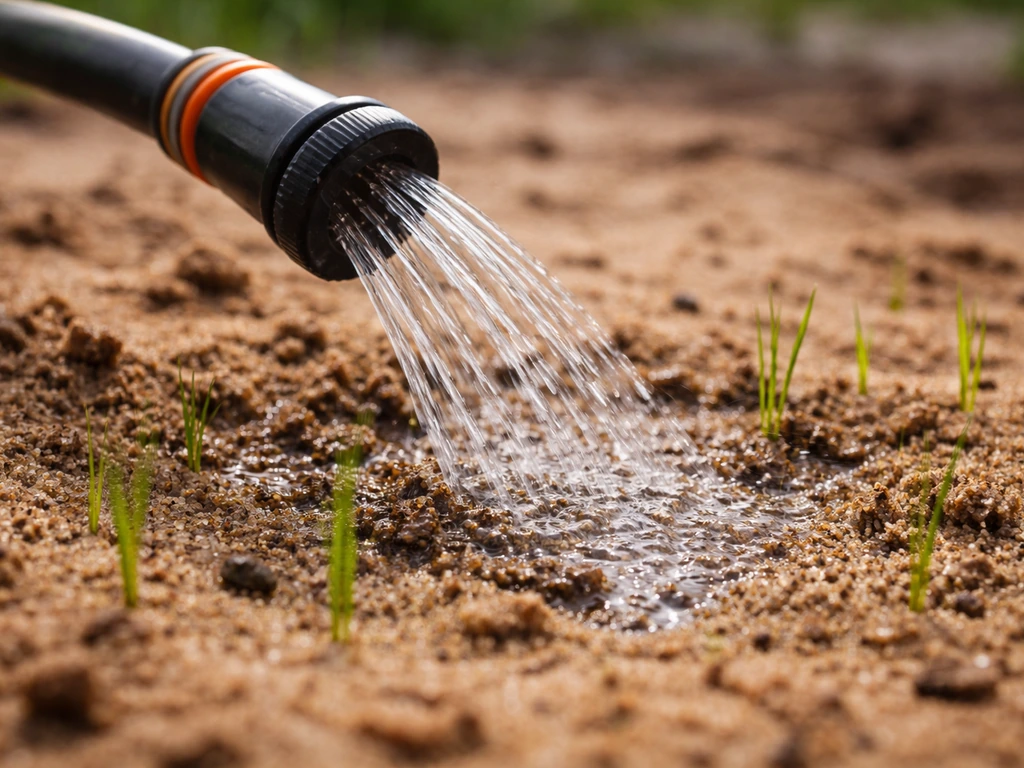
This is where most Florida homeowners go wrong. Sandy soil dries out fast, so the instinct is to water deeply and less often. But during germination, that approach kills seeds. What you actually need is light and frequent watering throughout the day: short cycles (5 to 10 minutes per zone) two to four times daily to keep the top inch of soil consistently moist. If you want to keep things on track, match your watering schedule to the best grass for Florida sand and the seedbed you created light and frequent watering. For a complete guide, follow the same step-by-step approach outlined in how to grow grass in sandy soil short cycles (5 to 10 minutes per zone) two to four times daily. The goal is moist but not muddy. blank" rel="noopener noreferrer">UF/IFAS is clear on this: do not flood the seedbed and do not apply water in a hard stream that can move seeds around or cause erosion. Use a sprinkler with fine spray heads, not a hard-jet pattern.
Once you start to see germination (usually within 7 to 14 days for Bermuda), you can start stretching out the watering intervals gradually. By week three or four, you should be transitioning toward deeper, less frequent irrigation: about 1/2 to 3/4 inch of water two to three times per week, encouraging roots to chase moisture deeper into the soil profile.
Fertilizing on sand: little and often
Apply a starter fertilizer (high in phosphorus, like a 10-20-10 or similar) at seeding time to support early root development. Sandy soil cannot hold large fertilizer applications, so do not dump a full-rate application hoping it will last. You will lose most of it to leaching before the roots develop enough to use it. A better approach is to apply fertilizer at half the label rate at seeding, then follow up with a second light application of a balanced or high-nitrogen fertilizer (like a 15-0-15 with slow-release nitrogen) about four to six weeks after germination when the grass is actively growing. After establishment, fertilize warm-season grasses in Florida three to four times per year during the warm season, using a slow-release nitrogen source each time to minimize leaching in sandy soil. Knowing how much loam to add helps you reduce leaching and gives your new grass a better root zone in sandy soil warm-season grasses in Florida.
Troubleshooting when things go wrong
Bare spots that won't fill in
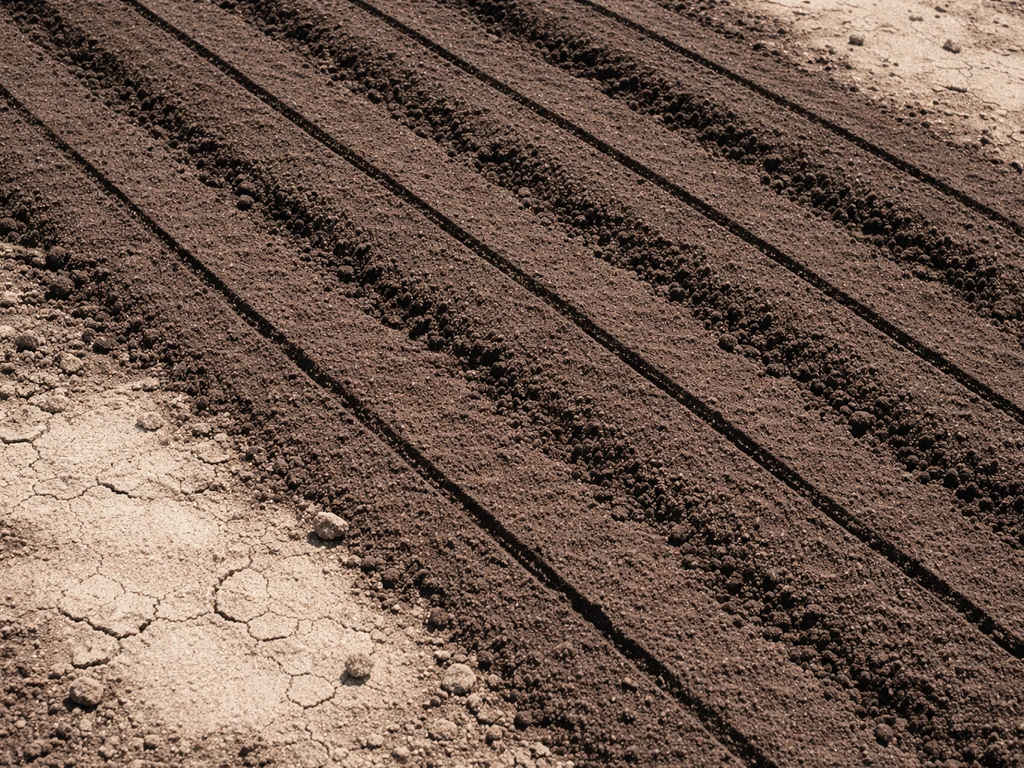
Bare spots after seeding almost always point to one of three causes: the seed dried out during germination, the seed washed out from overwatering or rain, or there is a soil compaction or pH problem in that specific spot. Probe the bare area with a screwdriver. If it goes in easily, the soil is fine. If it is hard to push in, you have compaction. Break up compacted areas, add a handful of compost, and reseed. If the spot stays bare after two attempts, test the soil pH there specifically. Persistent bare spots in sandy Florida lawns are sometimes just low spots with drainage issues or spots where foot traffic has compacted the amended soil back to baseline.
Dry patches even after watering
If you see dry, wilted patches even though you are watering, check your sprinkler coverage first. Sandy soil dries unevenly, and gaps in coverage become obvious fast. Do a simple catch-cup test: place small containers around the lawn during a watering cycle and measure how much water each zone is putting out. You want roughly even distribution. Also check for dry spots caused by buried debris (old concrete, roots, or rocks) that are blocking root penetration. These spots need to be dug up and fixed, not just watered harder.
Poor germination after two weeks
If almost nothing has germinated after 14 days and you have been watering correctly, check three things: soil temperature (if the soil is below 65°F, warm-season seed will stall), seed age and quality (old seed has low germination rates, so buy fresh seed from a reputable supplier), and seed depth (if you buried seed deeper than 1/4 inch in loose sand, it may not have enough energy to push through). If soil temperature is the issue, wait it out. If seed quality is the issue, reseed with fresh material. If depth is the problem, lightly rake the surface to bring seeds closer to the top.
Washouts after rain
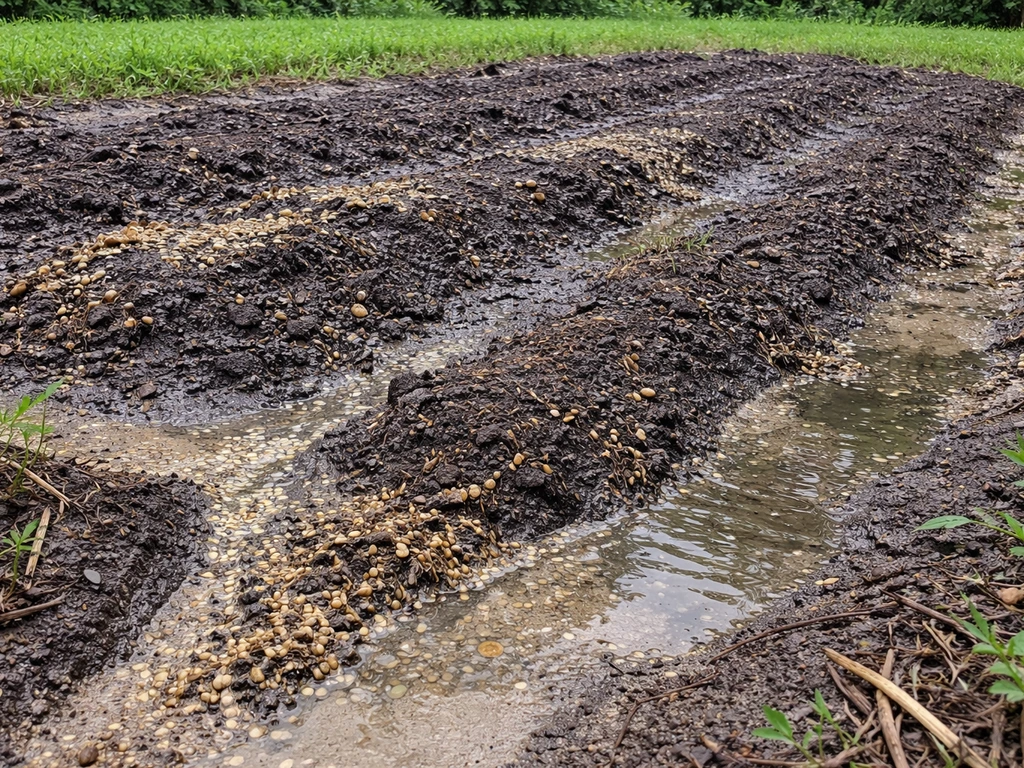
Florida's summer thunderstorms can wash seed downhill in minutes. After a heavy rain, check your seedbed immediately. If you see seed or soil piling up at low spots or along edges, redistribute it with a light rake while the soil is still damp and reseed any bare areas. To prevent future washouts, avoid seeding on slopes greater than 3:1 without erosion netting. Biodegradable erosion blanket (available at hardware stores) laid over freshly seeded slopes holds both seed and soil in place through heavy rain.
Your establishment timeline and next steps
Here is a realistic timeline for growing Bermuda or Zoysia from seed in sandy Florida soil, starting from the day you prep the seedbed.
| Week | What to Expect | What to Do |
|---|---|---|
| Week 1 (Prep) | Bare, amended seedbed | Till 6–8 inches deep, add 3–6 cu yd compost per 1,000 sq ft, grade smooth, apply starter fertilizer, seed |
| Days 1–14 (Germination) | First sprouts appearing (Bermuda faster, Zoysia slower) | Water lightly 2–4x daily, keep top inch moist, no foot traffic |
| Weeks 3–4 (Establishment) | Thin, patchy coverage starting to fill in | Reduce watering frequency, start transitioning to deeper irrigation cycles |
| Weeks 4–6 (First Mow) | Grass reaches 2–3 inches | First mow at highest setting (3–4 inches), bag clippings, apply second light fertilizer |
| Weeks 6–12 (Fill-In) | Coverage filling in, lateral spread accelerating | Water 2–3x per week, fertilize once more at 8 weeks if needed, keep mowing |
| Month 3+ (Established) | Full or near-full coverage on most lawns | Transition to normal maintenance: mow weekly, fertilize seasonally, water as needed |
Your pre-seeding checklist
- Test soil pH and correct to 6.0–7.0 with lime if needed
- Buy enough compost or composted manure: 3–6 cubic yards per 1,000 sq ft
- Rent a tiller and till to 6–8 inches depth
- Spread amendments, till again to incorporate, then rake and roll smooth
- Purchase fresh grass seed appropriate for your sun conditions (Bermuda for full sun, Zoysia for light shade)
- Apply starter fertilizer at or just before seeding
- Set up sprinkler zones to cover the full area with fine spray, not hard jets
- Plan to water 2–4 light cycles per day for the first two weeks
- Keep pets and foot traffic off the seedbed for at least 4 weeks
If you get the soil prep and watering routine right, sandy Florida soil is not the enemy. It drains fast, which means it also warms up fast in spring and dries out after heavy rains, both of which warm-season grasses actually like once they are rooted in. The hard part is just the first two to four weeks. Nail that window and you will have a lawn filling in faster than you expected.
FAQ
Can I just spread seed on sandy soil and count on watering to fix it?
Usually not. In Florida sand, the seed needs both a moist top layer and enough soil contact to stay in place. If you skip organic amendments and seedbed prep, germination often fails because the top inch dries out within hours and the seed can wash or bounce away during storms.
How much organic matter should I add if my lawn area is small or irregular in shape?
The goal is to raise the improved layer into the root zone, not to calculate by cubic yards only. Use the 3 to 6 cubic yards per 1,000 sq ft guideline as a starting point, then adjust for thin or irregular spots by measuring coverage and maintaining a consistent depth when you till to 6 to 8 inches.
Should I till if I’m overseeding a thin lawn instead of starting from bare sand?
Not always. For overseeding an existing warm-season lawn, you usually benefit more from mowing low and lightly raking to expose soil than from deep tilling, which can disrupt the existing turf and bring up weed seeds. Deep tilling is better for bare-ground starts where you are rebuilding the root zone.
What’s the best way to keep the seed from washing away during Florida thunderstorms?
Use fine spray irrigation for establishing days, and after a heavy rain, recheck within hours. If you’re on any slope, reduce the risk by avoiding seeding on steep grades (over 3:1) and using a biodegradable erosion blanket to hold seed and soil while seedlings are still weak.
How do I tell if my watering schedule is too much or too little during germination?
Look at the top inch of soil, not the puddles. If the surface is constantly muddy or the seed looks displaced after rain, you are applying too much water or in a hard stream. If the surface dries, a light but frequent schedule is safer than deep, infrequent irrigation.
Do I need to use a roller after raking in sandy soil?
It helps, especially because sandy soil can remain loose and prevent good seed-to-soil contact. Roll lightly after raking to press seed into the top layer, which improves moisture uptake and anchoring. Avoid over-rolling if the soil is already saturated.
What soil pH range should I target for Bermuda, Zoysia, or centipede in Florida sand?
Aim for roughly 6.0 to 7.0. If your test shows pH below 6.0, incorporate dolomitic lime during the tilling step. Don’t apply lime and fertilizer at random, because correcting pH at the right time improves nutrient availability and reduces wasted applications.
Can I start with one grass type but overseed later if it doesn’t fill in?
You can, but plan for compatibility. Bermuda and Zoysia have different establishment speeds, so mixing casually can leave long transition patches. If your goal is a uniform lawn, choose the target grass first, then use overseeding only to correct thin areas within that grass type’s season window.
How do I fix bare spots if the screwdriver test says the soil isn’t compacted?
If the spot is loose but stays bare, treat it like a moisture or chemistry issue. Check whether that area gets less sprinkler coverage, then consider a localized soil test (pH and basic fertility). Low spots that stay wetter or high spots that dry fastest can both create persistent failures even when the rest of the lawn is fine.
My sprinkler coverage seems uneven, what’s a practical way to adjust it?
Do a catch-cup test during the same watering cycle you are using for germination. Measure output across the zones and make actuator and head-angle adjustments until the cups collect similar amounts. Uneven coverage is a common reason sandy lawns show patchy germination even with “enough” overall runtime.
Is starter fertilizer safe at seeding time in sandy soil, or will it burn seedlings?
Use a light amount, and match the approach to sandy leaching. A phosphorus-forward starter at about half the label rate at seeding is commonly used to support early rooting. Avoid full-rate applications at once because nutrients wash through before roots can use them.
When should I switch from daily-ish watering to deeper, less frequent irrigation?
After germination is established and seedlings are actively growing, gradually lengthen intervals. A common approach is to move by weeks 3 to 4 toward deeper watering (about 1/2 to 3/4 inch two to three times per week) so roots grow deeper into the sand profile.
How long should Bermuda or Zoysia take to visibly fill in after seeding?
Bermuda often shows consistent establishment around 7 to 14 days under good conditions, but full density takes longer as rhizomes spread. Zoysia commonly takes longer, germinating around 14 to 21 days and taking months to fully fill, so expectations should be set accordingly.
If almost nothing germinates after 14 days, what’s the fastest way to diagnose the cause?
Check soil temperature first (warm-season seed stalls if the soil stays below about 65°F), then verify seed quality and age, and confirm you didn’t bury seed deeper than roughly 1/4 inch. If soil temperature is low, waiting is more effective than reseeding immediately.
Can I seed warm-season grass outside the April to June window in Florida?
You can, but risk rises. Seeding warm-season grasses outside late March to early September can lead to uneven germination and poor establishment because heat patterns and soil temperatures change. If you must seed later (like July or August), monitor washout risk closely and expect more variability.
Next Article
How to Grow Grass Seed in Florida: Step-by-Step Guide
Step-by-step tips for how to grow grass seed in Florida, including timing, varieties, soil prep, watering, and failure f