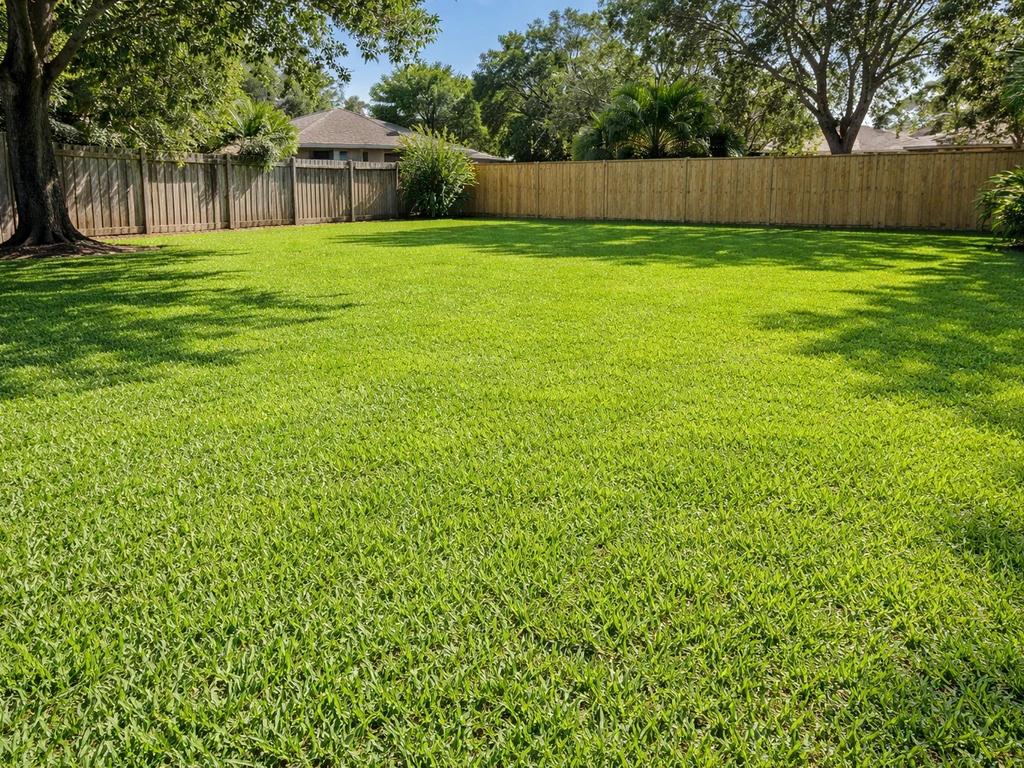
Yes, you can grow grass from seed in Florida, but it takes the right variety, the right timing, and a watering routine you stick to religiously for the first two weeks. Florida's heat and sandy soils can kill a freshly sprouted seedling in a single dry afternoon, so most seed failures come down to drying out too soon, planting the wrong grass, or seeding at the wrong time of year. Get those three things right and you can absolutely grow a new lawn or patch bare spots from seed without laying a single piece of sod.
How to Grow Grass Seed in Florida: Step-by-Step Guide
Marcus Tillwell
5 May 2026
Can you grow grass from seed in Florida (and what to expect)
Growing from seed in Florida is completely doable, but it does require some honest expectation-setting. Florida's climate is intense. Summers are hot and humid with afternoon thunderstorms, and winters in north Florida get cold enough to damage young seedlings that haven't had time to establish. The window for seeding is narrower than people expect, and not every grass type commonly found in Florida lawns can even be grown from seed.
The grasses you can seed in Florida include common bermudagrass, bahiagrass, centipedegrass, Zoysia japonica, tall fescue (north Florida only in fall), and annual ryegrass (used mostly for winter overseeding). The popular warm-season grasses like St. Augustine, improved bermudagrass varieties, and most high-quality zoysiagrasses are only available as sod, plugs, or sprigs. That's not a knock on seeding, it just means you need to go into it knowing which grasses are on the table.
Germination timelines also vary more here than in cooler climates. Bermudagrass and fescue can sprout in 7 to 14 days. Bahiagrass is slow and may take longer to form a uniform cover. Zoysia japonica can take 2 to 3 weeks just to germinate and another 6 to 8 weeks before you have real turf coverage. Plan your calendar around these timelines, not wishful thinking.
Choose the right grass type for your Florida lawn
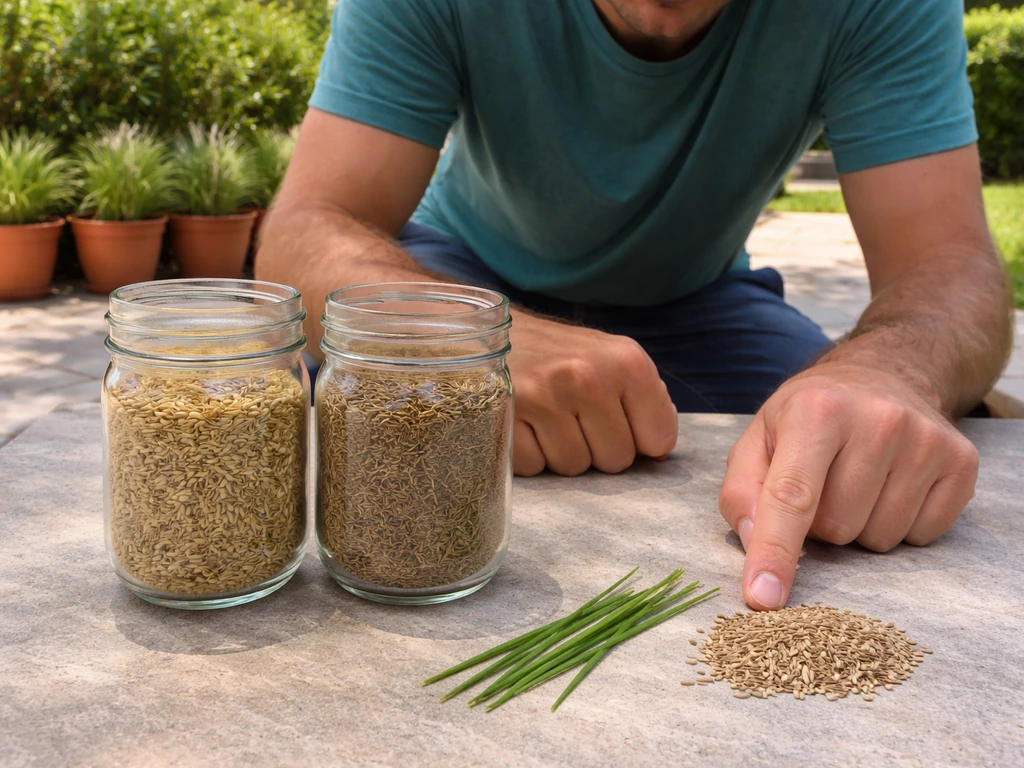
This is where a lot of homeowners make the first mistake. They buy whatever seed is on the shelf at the hardware store without checking whether it's right for Florida's conditions or their region of the state. Here's a straight breakdown of the options.
Bermudagrass
Common bermudagrass is the most widely seeded warm-season grass in Florida. It loves full sun, handles heat, and establishes relatively quickly. The catch: only common bermudagrass can be grown from seed. If you've seen those premium, dense bermuda lawns, those are almost always vegetative varieties. Seeded bermuda grows fine, but it's not going to look like a golf course. Seed at 1 to 2 pounds of hulled seed per 1,000 square feet. Best planted in spring and summer when soil temperatures are warm.
Bahiagrass
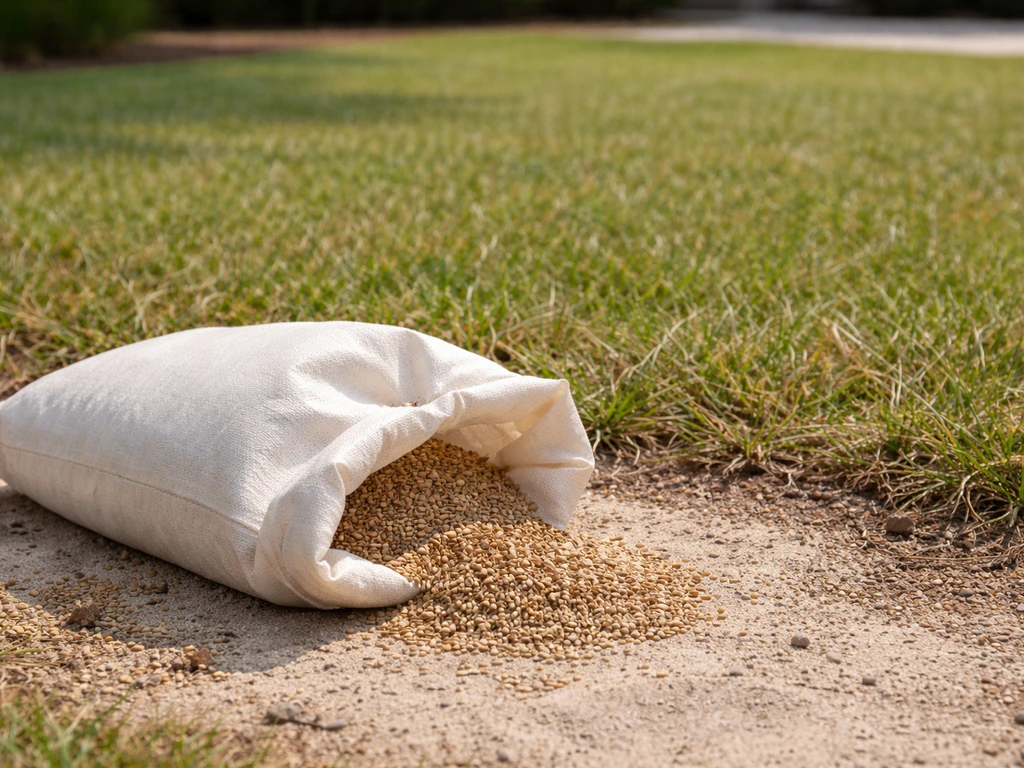
Bahiagrass is one of the most practical seed choices for Florida homeowners, especially in north and central Florida. It's low-maintenance, handles sandy and infertile soils well, and doesn't need as much irrigation as other grasses once it's established. Bahiagrass is one of the easiest choices for sandy ground, but you still need a solid watering and soil-prep plan for reliable establishment handles sandy and infertile soils well. The downside is that germination is slow, and it takes longer than bermuda to produce a uniform-looking lawn. Use scarified seed when you can find it, since it germinates faster. You'll need around 10 pounds of seed per 1,000 square feet. Bahiagrass can be seeded almost any time in south and central Florida, but in north Florida, aim for spring or early summer so it has time to establish before cooler weather slows it down.
Zoysia (Zoysia japonica)
Zoysia japonica is the only zoysiagrass with commercially available seed, and seeded varieties won't quite match the density and quality you'd get from vegetative zoysia. That said, it's a legitimate option if sod isn't in the budget. Seeded zoysia has a quirk that changes the whole approach: the seed needs light to germinate and can't be buried like other grasses. You lay it on the surface and use erosion cloth to hold it in place rather than raking soil over it. Seed it between April and July. Don't seed it in north Florida in late fall, since seedlings that haven't established are vulnerable to winter injury.
Centipedegrass
Centipedegrass is low-input and well-suited to the slightly acidic soils of north and central Florida. The seed is tiny (you're only seeding about 0.25 to 0.5 pounds per 1,000 square feet) and that small size means it's more vulnerable to drying out and washing away. Seed it between April and July to give it a full growing season before winter. It's worth noting that centipedegrass thrives in sandy soil conditions common to many Florida areas.
Tall Fescue and Ryegrass
Tall fescue is a cool-season grass that only makes sense in north Florida and only during fall and winter. It won't survive Florida summers. If you're in north Florida and want a green lawn through the cooler months, fescue seeded in fall is a reasonable choice, but treat it as a seasonal grass, not a permanent solution. Annual ryegrass is used similarly, mostly for winter overseeding on top of dormant warm-season turf. It germinates fast, keeps the lawn green through winter, and dies off as heat returns. In south Florida, ryegrass seeding typically happens November through mid-December.
| Grass Type | Seed Available? | Best Seeding Window | Seeding Rate (per 1,000 sq ft) | Best For |
|---|---|---|---|---|
| Common Bermudagrass | Yes | Spring to summer | 1–2 lb hulled seed | Full sun, all Florida regions |
| Bahiagrass | Yes | Spring/summer (north FL); year-round south/central | ~10 lb | Sandy/infertile soils, low maintenance |
| Zoysia japonica | Yes (limited quality) | April–July | Varies by product | Full sun, patient homeowners |
| Centipedegrass | Yes | April–July | 0.25–0.5 lb | North/central FL, low-input lawns |
| Tall Fescue | Yes | Fall (north FL only) | 6–8 lb | North FL cool-season/shade areas |
| Annual Ryegrass | Yes | Nov–mid-Dec | ~20 lb broadcast | Winter overseeding only |
Best time to seed in Florida
Timing is everything in Florida because both extremes, summer heat and winter cold, can wipe out young seedlings. The rule is simple: seed warm-season grasses (bermuda, bahia, centipede, zoysia) in spring and early summer when soil temperatures are warm and the grass can grow fast enough to establish before any cold weather hits. For south and central Florida, that window is forgiving enough that spring through early summer planting consistently works. In north Florida, you want to aim for April through June to make sure seedlings have several months of warm weather before fall.
Cool-season grasses like tall fescue and ryegrass flip the calendar entirely. Seed those in fall, not spring. In north Florida, planting young cool-season seedlings too late in fall risks winter kill, so aim to seed by mid-October at the latest to give them time to root. South Florida's milder winters make November and early December viable for ryegrass overseeding.
If you're not sure whether your timing is right, think about it this way: warm-season grass seed needs warm soil to germinate. If the soil feels genuinely warm underfoot and overnight temperatures aren't dropping below 60°F, you're in a good window. If you're gambling on dry months with no irrigation available, wait. UF/IFAS extension guidance is clear that if irrigation isn't available, don't seed during dry periods because consistent moisture is non-negotiable for seedling survival.
Soil prep: get this right before you open the seed bag
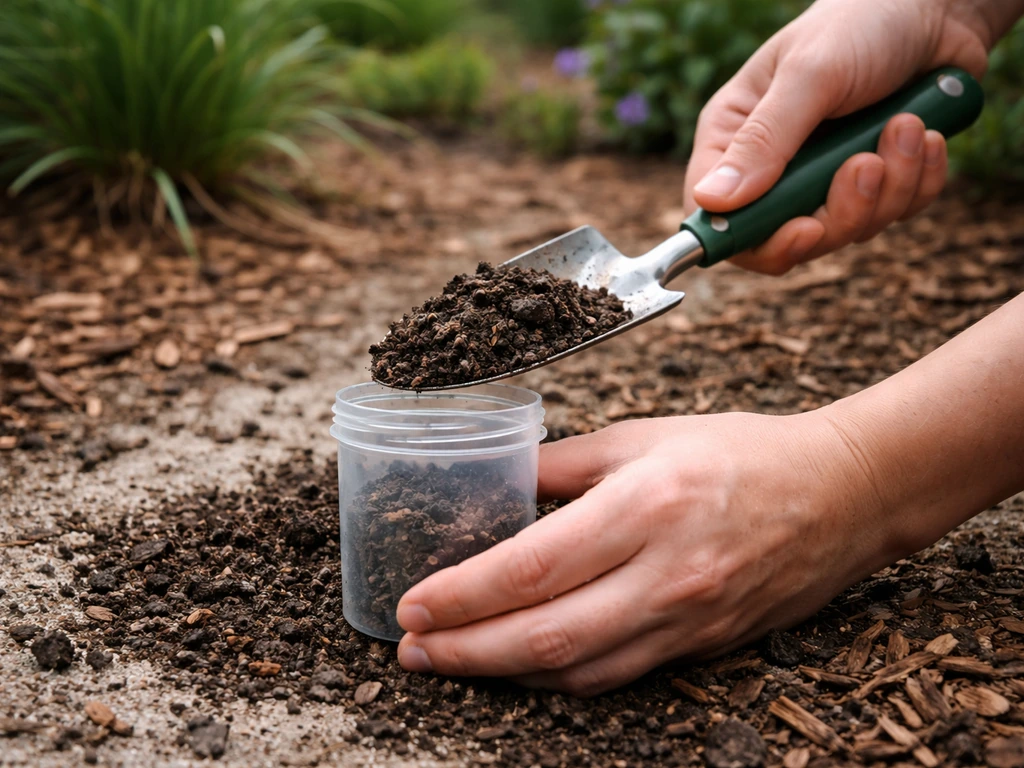
Florida soils vary a lot depending on where you live. Coastal areas tend toward sandy, high-pH soils. Central Florida soils range from sand to muck, often with lower pH. North Florida soils lean toward clay with low pH. Each of these creates different challenges for seed germination, and skipping soil prep is one of the most reliable ways to get a failed seeding.
Before you do anything, take a soil sample. UF/IFAS Extension Soil Testing Laboratory (ANserv/IFAS) provides soil sample submission forms through the ESTL website and local county UF/IFAS Extension office blank" rel="noopener noreferrer">UF/IFAS Extension Soil Testing Laboratory (ANserv/IFAS) sample submission forms. blank" rel="noopener noreferrer">Sample the top 6 inches of soil from 10 to 15 spots in your lawn area, mix them together, and send that combined sample to a UF/IFAS Extension Soil Testing Laboratory. The result tells you your pH and what amendments you actually need, rather than guessing. pH adjustments need to be done before you seed, not after.
If your soil is sandy
Sandy soil is common throughout Florida, and it drains so fast that seeds and seedlings can dry out within hours of watering. Incorporating organic matter helps significantly. For sandy ground, it also helps to add a small amount of compost to improve water retention before you lay seed add compost. The general guideline is 3 to 6 cubic yards of organic amendment per 1,000 square feet (around 15 to 30% by volume), worked into the top 6 inches. Don't go beyond about 6.5 cubic yards per 1,000 square feet or you risk subsidence and drainage problems. Bahiagrass is naturally adapted to sandy Florida soil and is often the easiest starting point if you're fighting coarse, infertile ground. Growing grass in Florida's sandy soil is a challenge worth addressing carefully, since it affects both germination and long-term establishment. Growing grass in sandy Florida soil also depends heavily on moisture control during germination.
If your soil is clay
Clay soils in north Florida present the opposite problem: poor drainage and compaction that prevent roots from penetrating. Test for compaction by pushing a rod thinner than 1 inch into moist soil. If you can't push it at least 6 inches without serious effort, compaction is a problem. Till or aerate to break it up, and incorporate organic or inorganic amendments at 4.5 to 6.5 cubic yards per 1,000 square feet to improve structure. Grade the area so it slopes 1 to 2 percent away from the house. Slopes steeper than about 10 percent are better sodded than seeded because erosion will wash seed away before it can germinate.
Weed eradication before seeding
If the area has existing weeds, contaminant bermudagrass, or nutsedge, kill it all with a nonselective herbicide before you seed. Apply two or three treatments 14 days apart to make sure you're actually getting rid of it, not just burning back the top growth. And do not apply preemergence herbicides just before or after seeding. Those herbicides will prevent your grass seed from germinating just as effectively as they prevent weeds. Wait until your new grass is at least 2 to 3 inches tall and spreading before using any preemergence products.
Seeding process: rates, coverage, and seed-to-soil contact
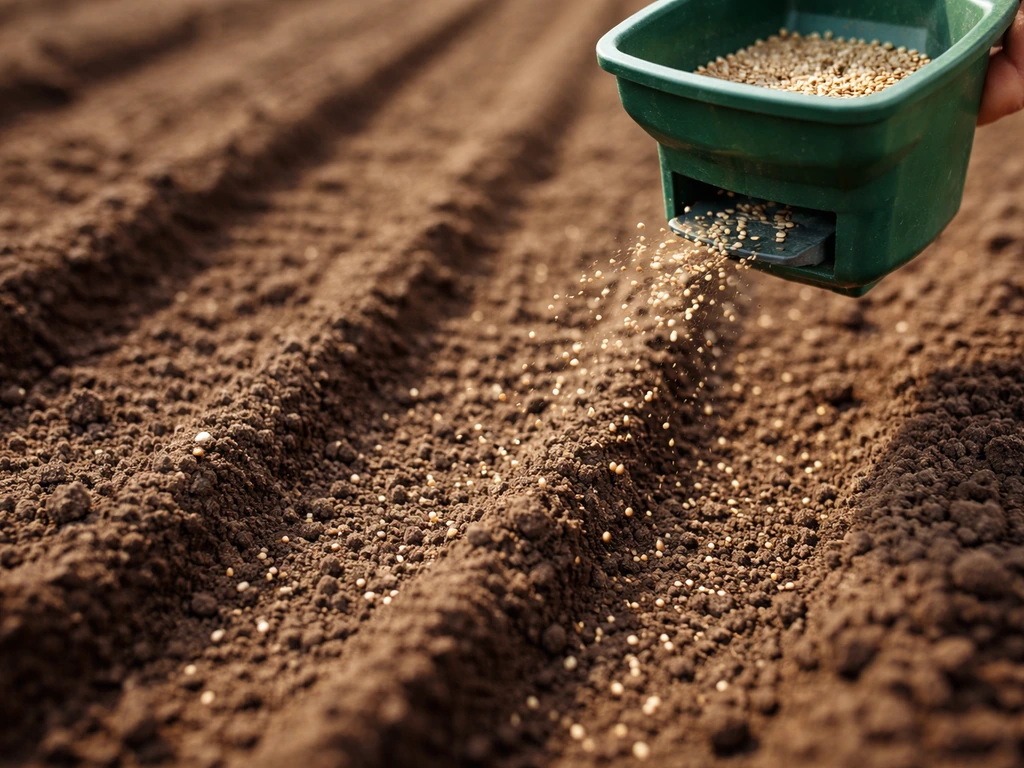
Good seed-to-soil contact is what turns a seed into a seedling. Without it, seeds sit on the surface, dry out, and die. Here's the process that actually works.
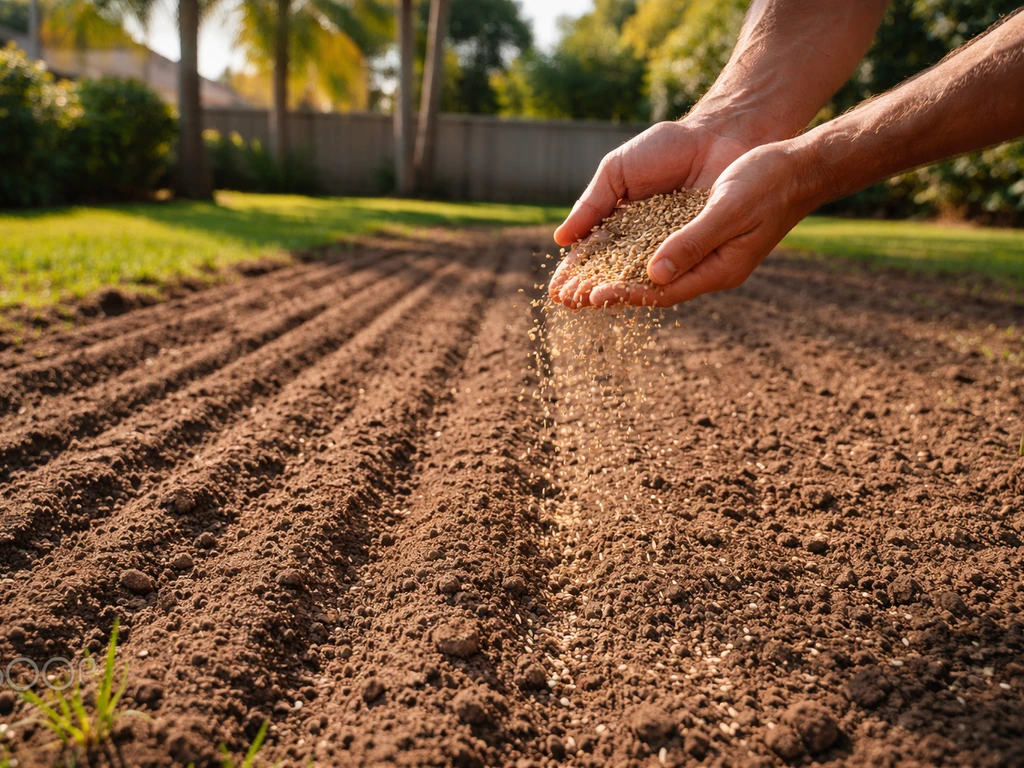
- Rake the area to loosen the top inch or two of soil and create furrows. You want texture, not a smooth, hard surface.
- Divide your total seed amount in half. Apply the first half in one direction with a drop spreader, then apply the second half walking perpendicular to the first pass. This cross-pattern gives you even distribution without gaps or heavy spots.
- Lightly rake seed into the furrows or topdress with 1/4 to 1/2 inch of soil. Exception: zoysia japonica seed needs light to germinate, so do not cover it with soil. Instead, lay erosion cloth over the seeded area to hold seeds in place during irrigation and rain.
- Roll the seeded area with a lightweight roller to firm the soil and maximize seed-to-soil contact. If you don't have a roller, gentle tamping works.
- Mulch with weed-free straw or hay at about 1 bale per 1,000 square feet to cover roughly 50 to 75 percent of bare ground. This conserves moisture and reduces erosion without blocking light entirely.
Seeding rates matter more than most people realize. Too thin and you get patchy coverage. Too heavy and seedlings compete with each other. Use these as your benchmarks: bermudagrass at 1 to 2 pounds of hulled seed per 1,000 square feet, bahiagrass at around 10 pounds per 1,000 square feet, centipedegrass at 0.25 to 0.5 pounds per 1,000 square feet. Zoysia japonica rates depend on the specific product, so follow the bag. For ryegrass overseeding, roughly 20 pounds per 1,000 square feet for a broadcast pure stand.
Watering, germination timeline, and early care
Watering is where most Florida seeders fail, and it usually comes down to one of two mistakes: not watering enough in the first two weeks, or watering too hard and washing seeds away. UF/IFAS extension is clear that improper watering is the single most common cause of seeding failure in Florida.
The first two weeks
From the day you seed until germination, water lightly 2 to 3 times per day in small quantities. The goal is to keep the soil surface consistently moist without saturating it. If the surface dries out after seeds have swollen but before their roots develop, those seedlings die. This is a narrow window in Florida's heat. Use a gentle mist setting on your sprinkler or hose nozzle, not a hard spray that can dislodge seeds or compact the surface. Avoid overwatering to the point of saturation, which can float seeds to the edges or encourage fungal disease. If you're also planning soil upgrades like adding loam, the next step is estimating how much loam to grow grass so your seeding has the right depth and moisture-holding capacity.
Germination timelines by grass type
- Common bermudagrass: 7 to 14 days to germinate
- Tall fescue: approximately 7 to 14 days
- Annual ryegrass: fast, typically 5 to 10 days
- Centipedegrass: 14 to 21 days
- Zoysia japonica: up to 2 to 3 weeks to germinate, plus 6 to 8 more weeks to establish real coverage
- Bahiagrass: variable and slower than most; expect spotty coverage for several weeks before filling in
After germination: reducing water and starting mowing
Once you see consistent germination across the area, gradually reduce watering frequency. You're transitioning from keeping the surface constantly moist to encouraging deeper root development, which means watering less often but more deeply. For bermudagrass specifically, hold off on the first mowing until the grass is well rooted, generally 14 to 21 days after planting. Don't fertilize for the first 30 to 60 days after seeding. Fertilizing too early stresses seedlings, encourages excess top growth before roots are established, and increases the risk of nutrient runoff, especially in Florida's sandy soils.
Troubleshooting Florida seed failures and bare spots
If your seeding attempt didn't produce the results you expected, there's almost always a diagnosable cause. Here are the most common ones and what to do about them.
| Problem | Likely Cause | Fix |
|---|---|---|
| Seed didn't germinate at all | Surface dried out after seeds swelled, wrong seeding season, or preemergence herbicide was applied | Reseed in correct season, water 2–3x daily, avoid preemergence products until grass is established |
| Patchy, uneven germination | Uneven seed distribution or poor seed-to-soil contact | Use cross-pattern spreading, roll after seeding, topdress lightly |
| Seeds washed to edges or low spots | Hard spray irrigation or heavy rain washing unsecured seed | Use gentle mist irrigation, mulch with straw, use erosion cloth for zoysia |
| Bare spots keep appearing | Compacted soil preventing root growth, or wrong grass for soil/shade conditions | Test for compaction with rod method, amend soil, choose a grass suited to your conditions |
| Germination was fine but seedlings died | Soil surface dried between waterings, or seedlings damped off from overwatering | Maintain consistent moisture, don't saturate, use straw mulch to buffer surface temperature |
| Grass is thin and slow to fill in | Bahiagrass or zoysia (naturally slow), or seeded too late in season | Be patient with slow-establishing varieties, reseed bare patches, ensure adequate fertilization after 60-day window |
| Cool-season grass died in spring | Fescue or ryegrass not suited to Florida summers | Treat as seasonal grass, overseed again in fall, or transition to a warm-season variety |
Bare spots that keep coming back are often a soil problem, not a seed problem. If you're repeatedly patching the same areas, check for compaction, drainage issues, shade from a tree or structure (bermuda and bahia need full sun), or pet traffic patterns. No amount of reseeding fixes a spot where roots can't grow or where foot traffic is constant. In high-traffic areas, your best bet is to section it off during establishment and give seedlings at least 4 to 6 weeks to root before letting kids, dogs, or heavy use return to that section.
Florida's conditions can make seeding feel harder than it should be, but most failures are fixable. If you've matched the right grass to your region, your soil type, and the season, and you're committed to consistent watering for those first two weeks, you have everything you need to grow a real lawn from seed. If you are specifically aiming to grow beach grass, the same focus on choosing the right conditions and consistent early care will help you succeed. The timeline is longer than sod but the result is a root system that developed in your specific soil, which often means a more resilient lawn in the long run.
FAQ
Can I grow St. Augustine or improved bermudagrass from seed in Florida?
Usually, no. Those commonly sold as “premium” or “improved” varieties are typically vegetative types that are sold as sod, plugs, or sprigs. If the seed label doesn’t clearly say common bermudagrass or an approved seeded variety, assume it will not match what you see in established premium lawns.
What’s the fastest grass seed to establish in Florida?
Common bermudagrass is often the quickest path to visible coverage, with germination commonly in 7 to 14 days under warm soil and consistent moisture. If you need a dependable start and can water reliably, bermudagrass is usually the fastest seeded option compared with bahiagrass and centipedegrass.
How do I know if my soil is warm enough to seed warm-season grass?
Use the “underfoot” test plus timing. If the ground feels genuinely warm and nights are not dropping below about 60°F, germination is more likely. If the soil is cool or you have a cool snap coming, postpone seeding even if the calendar looks right.
Do I need to cover the seed after seeding?
Coverage depends on the grass. Zoysia japonica seed needs light to germinate, so it should stay on or near the surface and be held in place (often with erosion cloth). For other grasses, the priority is good seed-to-soil contact, which usually means proper raking and light incorporation rather than leaving seeds loose on top.
How long should I keep the surface moist during germination?
In Florida, the critical period is from seeding through germination and early root development, commonly the first two weeks. Expect to water lightly multiple times per day early on, then gradually reduce frequency once you see consistent germination across the area.
Why do my seeds germinate but then the seedlings disappear?
The most common causes are drying out before roots form, watering too hard and washing seeds away, or soil contact issues that leave seeds sitting too long on top. Also watch for timing mismatches, such as seeding warm-season grass too late when nights get cool enough to slow growth.
Should I mow right after the grass sprouts?
Generally, wait until the seedlings are well rooted and spreading. For bermudagrass specifically, that’s commonly 14 to 21 days after planting. Mowing earlier can pull up weak seedlings and restart the establishment timeline.
Can I seed if I don’t have a sprinkler system or I can’t water daily?
It’s strongly risky. Florida seedling survival depends on consistent surface moisture during germination. If you cannot water on schedule, the best move is to wait for a stretch when you can irrigate or switch to a plan that doesn’t rely on seed, such as sod or sprigs.
Should I use preemergence herbicides after seeding to control weeds?
Avoid it until your new grass is established and spreading, commonly when it reaches about 2 to 3 inches tall. Preemergence products can block seed germination, so applying them right after seeding can prevent your grass from emerging while still killing weeds.
What should I do if weeds take over before my grass fills in?
Don’t assume you can “spray later” with preemergence. Instead, control weeds before seeding using nonselective herbicide with multiple treatments spaced about two weeks apart, then avoid preemergence products until the new grass is established. During establishment, focus on correct watering and seeding density to reduce weed space.
Is it better to seed in full sun or can I seed in shade?
Shade often determines success more than people expect. Bermudagrass and bahiagrass generally require full sun to establish well, while performance drops dramatically in heavy shade. If the area is shaded, consider whether sod or plugs will be necessary, or choose a grass type that tolerates your light level.
How do I decide between overseeding with annual ryegrass versus seeding a new warm-season lawn?
Annual ryegrass is mainly for winter color on top of dormant or partially dormant warm-season turf. If your goal is a long-term lawn, seed the correct warm-season grass in spring or early summer. Ryegrass will die back as heat returns, so it is not a substitute for establishing a warm-season base.
Why do I keep getting bare spots even when I reseed?
Bare spots that persist usually signal a root-zone problem, not a seed problem. Common culprits include poor drainage, compaction that blocks rooting, shade patterns, or consistent pet and foot traffic. If traffic is unavoidable, section off the area and give seedlings extra time to root before reopening the zone.
Can I use fertilizer immediately after seeding to help it grow?
It’s usually better to wait. Fertilizing too early can stress seedlings and encourage top growth before roots are strong, plus runoff risk is higher in sandy soils. A common guideline is no fertilizer for roughly 30 to 60 days after seeding.
Is there a rule of thumb for how much seed to apply in Florida?
Yes, use the labeled rate for your grass type, and the Florida benchmarks in particular help. As a general guide, seeded bermudagrass is about 1 to 2 pounds per 1,000 sq ft, bahiagrass about 10 pounds per 1,000 sq ft, and centipedegrass about 0.25 to 0.5 pounds per 1,000 sq ft. Zoysia and ryegrass rates vary by product, so follow those bag instructions closely.
How do I troubleshoot if germination is uneven across the yard?
Uneven germination often points to uneven soil prep, inconsistent seed-to-soil contact, or uneven watering coverage. Check for dry patches, sprinkler overlap gaps, and areas where seed was buried too deeply (for zoysia) or washed away (from overly forceful watering or rainfall).
Next Article
How to Grow Grass in Florida Fast: Seed, Soil, Timing
Step-by-step guide to grow grass in Florida fast with the right seed, soil prep, timing, watering, and fixes for common