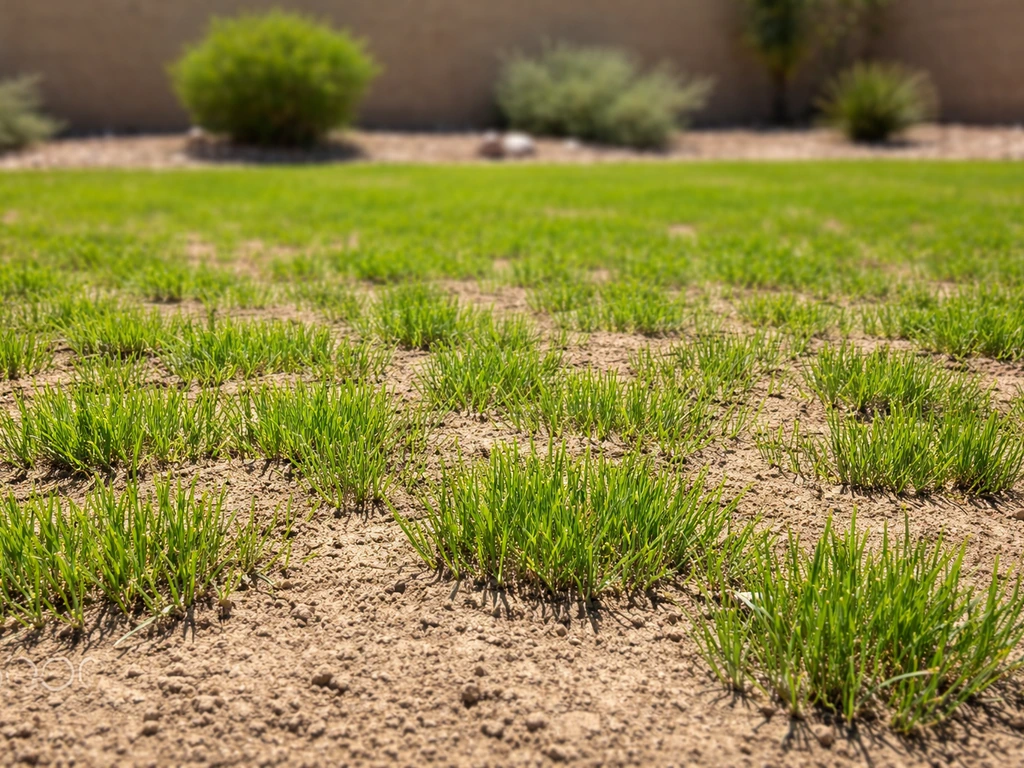
Growing grass in sandy soil is absolutely doable, but you have to go in knowing the two things sand works against you on: it drains too fast and holds almost no nutrients. Fix those two problems, pick the right grass variety, and you can get a thick, healthy lawn even if your yard feels more like a beach than a garden. Skip those steps and you'll be reseeding the same bare patches every season. Here's the full workflow, from diagnosing your soil to troubleshooting a struggling lawn.
How to Grow Grass in Sandy Soil Step by Step Guide
Marcus Tillwell
4 Apr 2026
What Sandy Soil Actually Does to Grass (and What to Expect)
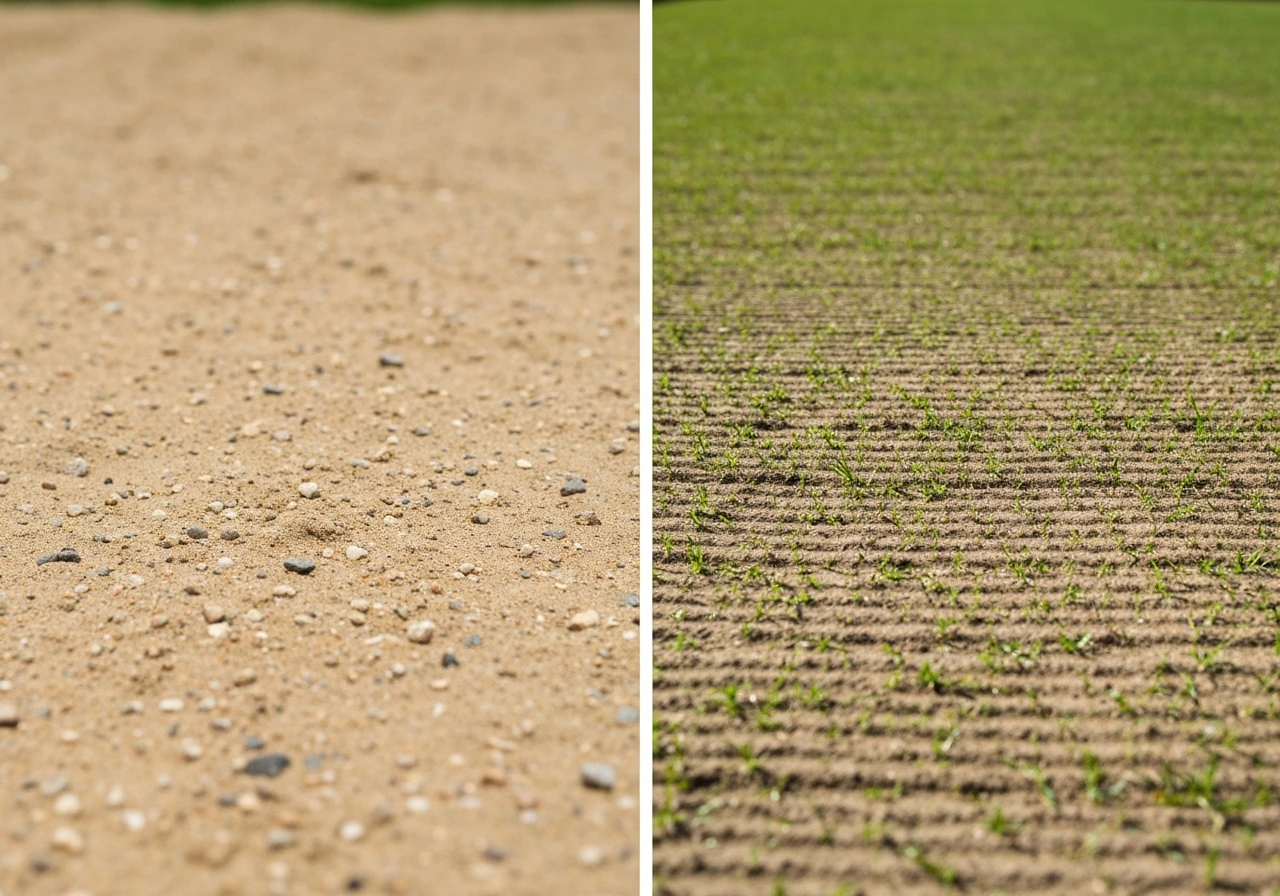
Sandy soil is made up of large particles with big gaps between them. Water and dissolved nutrients drain right through before roots can absorb them. This matters for two reasons: grass dries out fast even after a good rain, and fertilizer disappears almost as quickly as you apply it. Technically, sandy soils have a very low cation exchange capacity (CEC), which is just a measure of how well soil holds onto nutrient ions. Soils with a CEC of 6 or lower need extra management to prevent potassium and other nutrient deficiencies, and most pure sandy soils fall well below that number.
Before you buy a single bag of seed, get a basic soil test from your county extension office or a mail-in lab. It costs around $15 to $25 and tells you your pH, organic matter percentage, and nutrient levels. For grass, you want a pH between 6.5 and 7.3 and organic matter somewhere in the 2 to 4 percent range. Sandy soils almost always come in below 1 percent organic matter and sometimes have pH that's drifted too low or too high. The test results tell you exactly what to add instead of guessing. what to add to sandy soil to grow grass is one of the most common follow-up questions, and the answer depends entirely on your specific test numbers.
Set realistic expectations before you start. In sandy soil, even with good prep, germination can be uneven in the first attempt. You may need to overseed thin spots 30 to 45 days after the first seeding. A full, dense lawn from seed in sandy conditions usually takes one full growing season. That's not a failure, that's just how sand works.
Pick the Right Grass for Sandy Soil
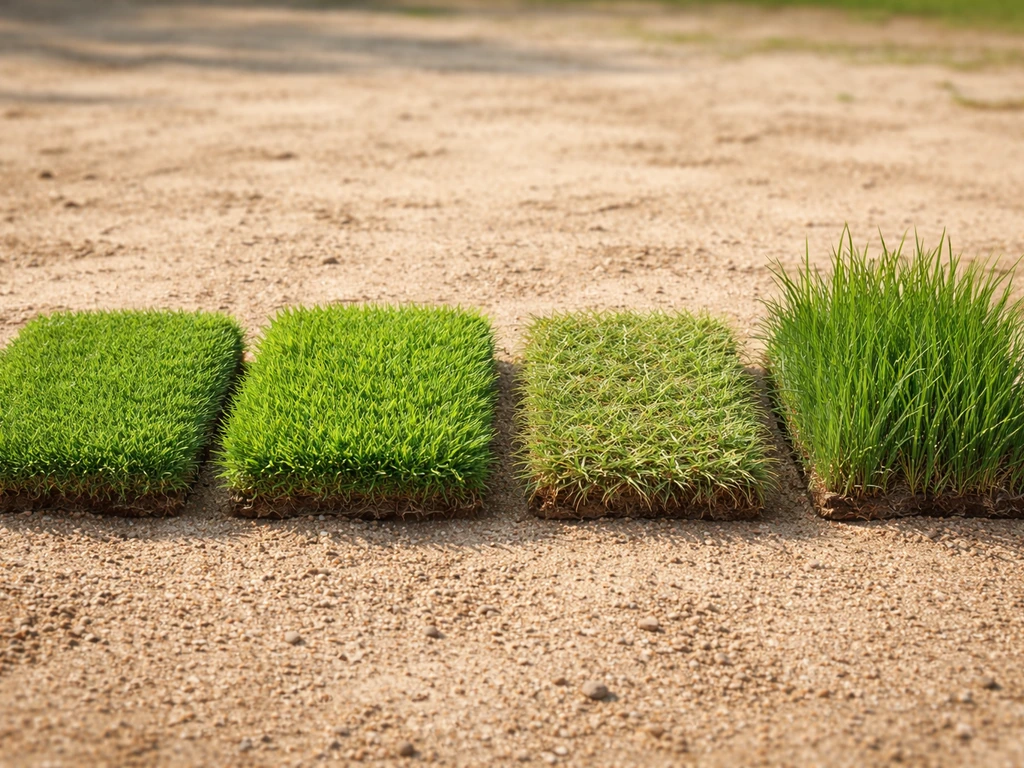
Not every grass variety handles sand equally well. Some are built for it. Matching your grass to your region and your specific conditions is the single biggest factor in whether your lawn succeeds or not.
Warm-Season Grasses (South, Southeast, Southwest)
If you're in the South, your best options are bermudagrass, zoysiagrass, and centipede grass. Bermudagrass is the most drought-tolerant and sand-tolerant of the bunch. It spreads aggressively via stolons and rhizomes, which actually helps it knit together thin sandy soil into a dense mat. Zoysia is slower to establish but handles sandy, low-fertility conditions well once it's rooted. Centipede grass in sandy soil is a particularly good fit in the Southeast because it's adapted to low-fertility, acidic, sandy soils and doesn't need heavy fertilization to thrive. If you're in Florida or along the Gulf Coast, these warm-season grasses are your go-to choices.
Cool-Season Grasses (North, Pacific Northwest, Transitional Zone)
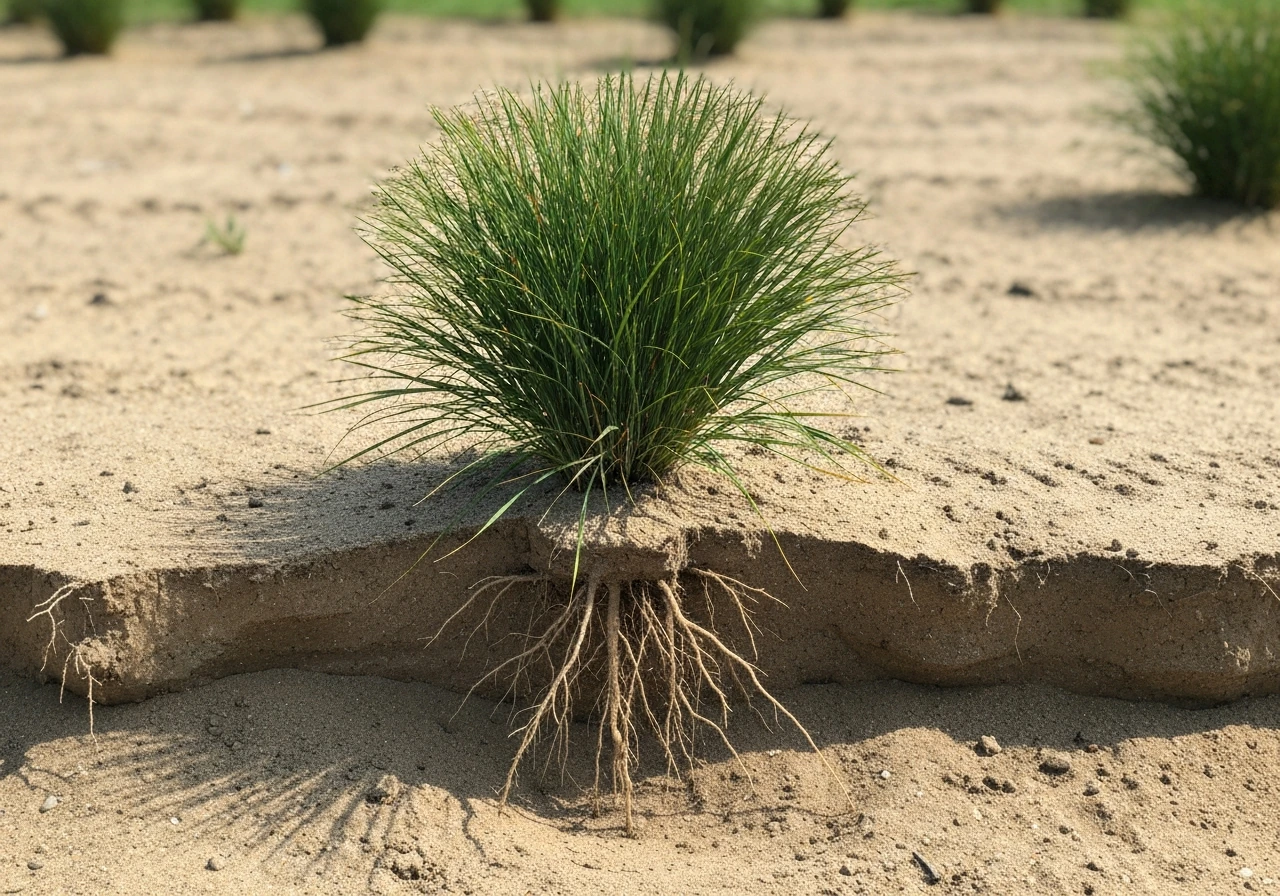
In cooler climates, tall fescue is your strongest option for sandy soil. It has a deep root system that penetrates further into the soil profile to find moisture, which gives it better drought resistance than Kentucky bluegrass or fine fescues in sandy conditions. Perennial ryegrass germinates fast (5 to 7 days under ideal conditions) and is a solid choice for quick cover and erosion control, though it's not as drought-tolerant long-term. Kentucky bluegrass struggles in sand unless you do substantial amendment work first.
| Grass Type | Sandy Soil Tolerance | Drought Tolerance | Germination Time | Best Region |
|---|---|---|---|---|
| Bermudagrass | Excellent | Excellent | 7–14 days | South, Southwest |
| Zoysiagrass | Good | Good | 14–21 days | South, Transition Zone |
| Centipede Grass | Excellent | Moderate | 14–21 days | Southeast |
| Tall Fescue | Good | Moderate–Good | 7–12 days | North, Transition Zone |
| Perennial Ryegrass | Moderate | Low–Moderate | 5–7 days | North, Pacific Northwest |
| Kentucky Bluegrass | Poor | Low | 14–28 days | North (amended soil only) |
If you're in Florida specifically, the situation is a bit different because you're working with subtropical heat, high humidity, and often very pure sand. Growing grass in sandy Florida soil involves its own set of regional considerations, including St. Augustinegrass and bahiagrass as additional options that handle Florida's conditions well.
Building Your Seedbed: How to Prep Sandy Soil Before You Seed
This is where most people underinvest and then wonder why their lawn failed. You cannot just broadcast seed onto raw sand and expect results. The seedbed has to hold moisture long enough for germination to happen and retain enough nutrients to feed young seedlings.
Topdress with Compost
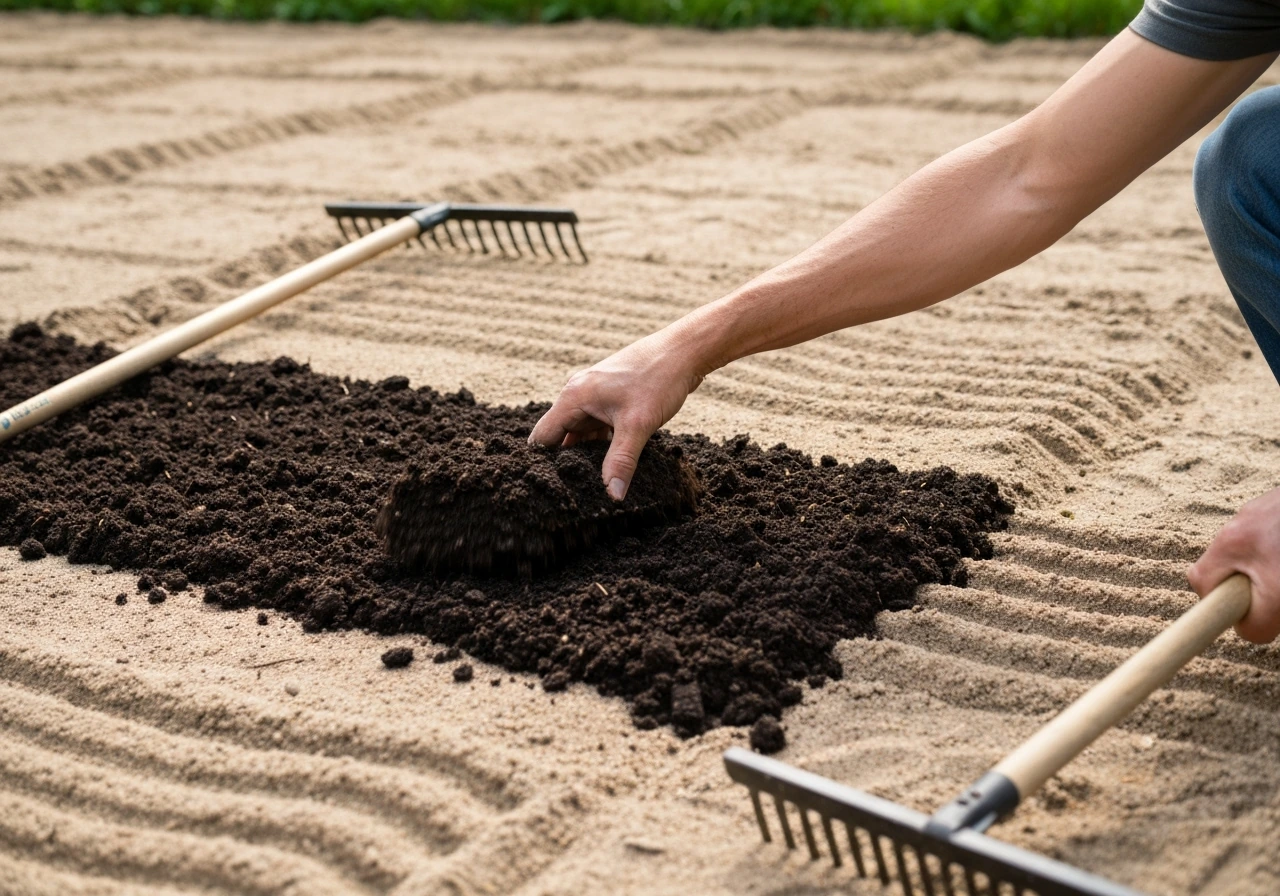
Compost is your best amendment for sandy soil. Work 2 to 3 inches of finished compost into the top 4 to 6 inches of soil using a tiller or a hard rake. This raises organic matter, improves moisture retention, and slightly increases the soil's ability to hold nutrients. Your target is to get soil organic matter up to at least 2 percent, ideally 3 to 4 percent. Don't go above 5 percent, because excessively high organic matter creates its own problems with thatch and fungal issues down the line.
Consider Adding Loam
If your budget allows, blending in quality loam is another solid option. Loam holds moisture and nutrients far better than pure sand. How much loam to grow grass depends on how sandy your starting soil is, but a general guideline is a 1 to 2 inch layer of loam mixed into the top 4 to 6 inches alongside compost. Don't just dump loam on top of sand without mixing it in, because you'll create a layering effect that actually disrupts drainage rather than improving it.
Adjust pH if Needed
If your soil test shows pH below 6.0, apply pelletized lime at the rate specified on the test results. If it's above 7.5, apply sulfur to bring it down. Most grass varieties perform best between 6.0 and 7.5, with the sweet spot around 6.5 to 7.0. Sandy soils can drift toward either end of the scale, so don't skip the test and assume your pH is fine.
Final Seedbed Prep
- Remove debris, rocks, and weeds from the area.
- Till or loosen the top 4 to 6 inches of soil.
- Mix in 2 to 3 inches of compost and any loam or soil conditioners.
- Apply lime or sulfur based on your soil test results.
- Rake the surface smooth but leave a slight texture for seed contact.
- Firm the seedbed lightly with a lawn roller or by tamping with the back of a rake.
Seeding: Timing, Rates, and How to Do It Right
Timing is non-negotiable in sandy soil. Because sand dries out so fast, seeding during the wrong season means your seed will dry out and die before it ever germinates. Plant warm-season grasses like bermuda and zoysia in late spring to early summer when soil temperatures are consistently above 65 degrees Fahrenheit (ideally 70 to 80 degrees). Plant cool-season grasses like tall fescue and ryegrass in early fall when soil temps drop to the 50 to 65 degree range, or in early spring before heat arrives.
Seeding rates vary by grass type. Bermudagrass hulled seed: 1 to 2 pounds per 1,000 square feet. Tall fescue: 6 to 8 pounds per 1,000 square feet. Penn State Extension lists turfgrass seeding rates in pounds per 1,000 square feet, such as turf-type tall fescue at 6 to 8 lb per 1,000 sq ft. Perennial ryegrass: 6 to 9 pounds per 1,000 square feet. Zoysiagrass: 1 to 2 pounds per 1,000 square feet. For sandy soil, go toward the higher end of the range because some seed will inevitably shift or dry out before germination.
Use a broadcast spreader or drop spreader for even distribution. After spreading, rake the seed very lightly to get it into the top quarter to half inch of soil. Seed sitting on the surface in sandy soil is especially vulnerable to wind, rain displacement, and drying out. Seed-to-soil contact is critical, and in sand you have to work a little harder to achieve it. A light pass with a lawn roller after seeding helps press seed into contact with the amended soil.
Apply a starter fertilizer at seeding time. Look for one with a ratio higher in phosphorus (the middle number on the fertilizer bag), something like 10-20-10 or 12-24-12, because phosphorus drives root development in young seedlings. Sandy soils with low CEC don't hold phosphorus well either, so this is one case where getting the fertilizer down at planting really matters.
Watering Sandy Soil: The Most Important Part of the Whole Process
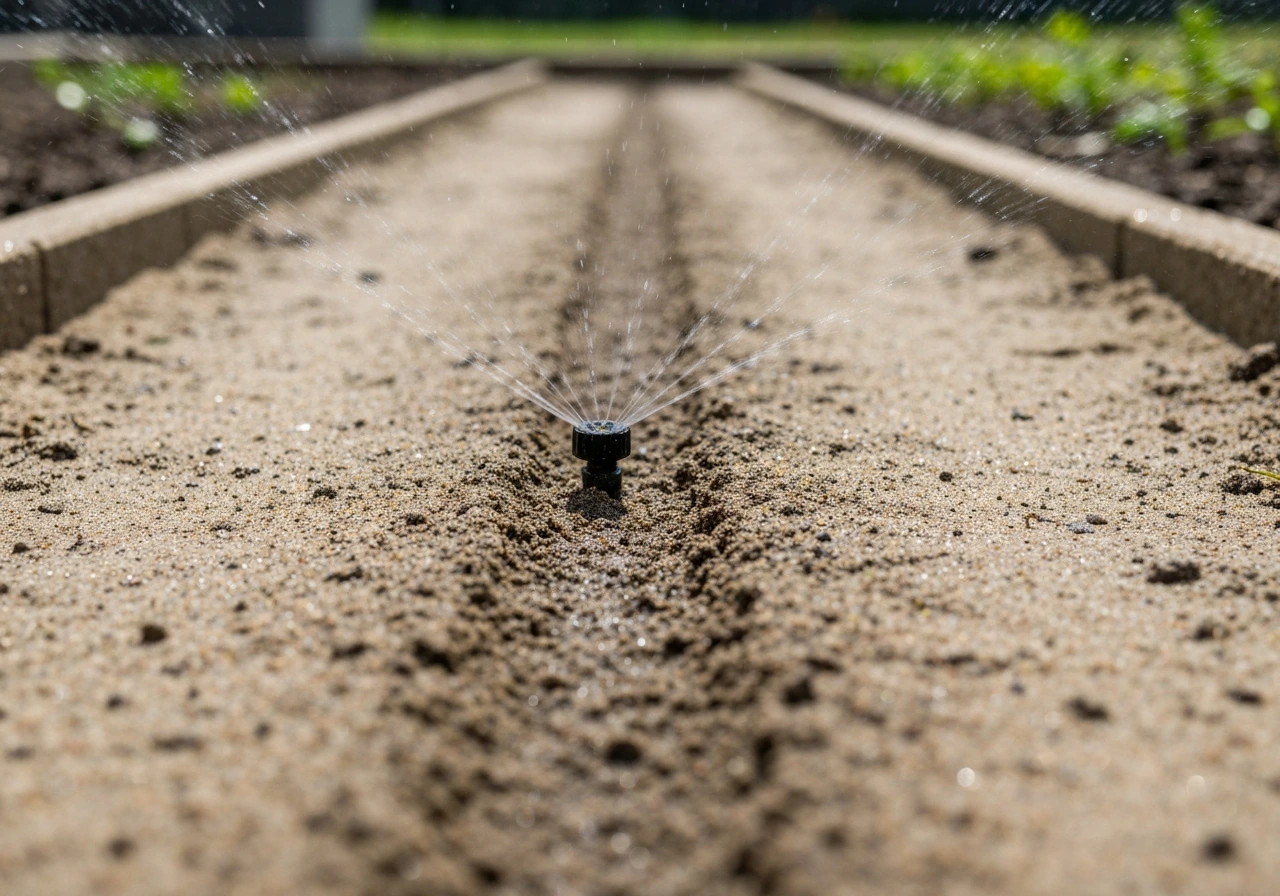
Watering sandy soil after seeding is the area where most homeowners either overwater or, more commonly, underwater. Sandy soil drains so fast that the surface can look dry within an hour of watering even if you've just run a sprinkler. Here's the approach that actually works.
During Germination (Week 1 to Week 3)
Water lightly two to three times per day to keep the top inch of soil consistently moist. Not saturated, just moist. In sandy soil this usually means running your sprinkler for 5 to 10 minutes per zone, two or three times daily. Early morning and early evening are the best windows. If you water midday in summer, evaporation takes most of it before it can do anything. Check the soil by pressing your finger into it: if the top half inch is dry, water again. This phase is critical because germinating seeds cannot survive even a few hours of complete drying out in sandy soil.
After Germination (Week 3 Onward)
Once you see consistent green across the lawn, start transitioning to deeper, less frequent watering. The goal now is to push roots deeper into the soil. Water every other day with longer run times, targeting about half an inch to three-quarters of an inch of water per session. Sandy soil drains fast, so you might need to do two shorter cycles with a 30-minute break between them (called cycle-and-soak) to prevent runoff and let water penetrate instead of sheeting off the surface.
By week six to eight, most grasses should be established enough to tolerate watering two to three times per week. Your goal is to train the roots to go deep where moisture is more stable. Frequent shallow watering in sandy soil creates shallow roots and a lawn that wilts the moment irrigation stops.
Fertilizing, Mulching, and Keeping Your Seed from Washing Away
Mulch: Your Best Friend in Sandy Soil
After seeding, apply a thin layer of straw mulch or a seed starter mulch mat over the seeded area. Straw mulch at about one bale per 1,000 square feet is enough to cover 70 to 75 percent of the surface without blocking sunlight. Mulch does three things in sandy soil: it slows evaporation so the seedbed stays moist longer, it prevents rain from displacing seed and washing it into low spots, and it insulates against temperature swings. On slopes or areas with any grade, consider using a biodegradable erosion control blanket instead of loose straw, because straw can slide in heavy rain.
Fertilizing After Germination
Sandy soils with low CEC need more frequent but lighter fertilizer applications than heavier soils. Rather than one heavy application, split your fertilizer into smaller doses every 4 to 6 weeks during the growing season. A slow-release nitrogen fertilizer works well here because it releases nutrients gradually, matching the slow uptake of a young root system. Wait until the new grass has been mowed at least once (usually around 4 to 6 weeks after germination) before applying a second round of fertilizer.
Weed Control
Do not apply pre-emergent herbicides before or right after seeding. Pre-emergents prevent germination and will kill your grass seed along with the weeds. Wait until the new grass has been mowed at least two to three times before applying any weed control products. For the first 60 days, hand-pull weeds that appear. It's annoying but necessary. After the lawn is established, you can use selective herbicides appropriate for your grass type.
What to Do After the Grass Starts Growing
First Mow Timing
Wait until the new grass reaches about 3 to 4 inches tall before mowing for the first time. Mow at the highest setting on your mower, removing no more than one-third of the blade height in a single mowing. Mowing too early or too short stresses seedlings that are still establishing roots in sandy soil. Keep mower blades sharp so you're cutting, not tearing, the young turf.
Troubleshooting Common Failures
If seed isn't germinating after the expected window (see the table above), the most common causes in sandy soil are: the seedbed dried out before germination completed, soil temperature was too cold or too hot for the variety you planted, seed was buried too deep (more than half an inch), or the seed had poor viability. Buy fresh seed each season, don't use leftover bags from previous years.
Bare spots that persist after the lawn fills in are almost always caused by soil that didn't get amended enough in those spots, poor seed-to-soil contact, or erosion washing seed away. For bare spots, scratch the surface, add a small amount of compost, reseed at the standard rate, press seed in, and cover with a pinch of straw. Water that spot twice daily until it fills in.
Thin, pale, struggling grass after establishment is usually a nitrogen deficiency, which is extremely common in sandy soil. Apply a light dose of quick-release nitrogen (half the label rate) and water it in immediately. You should see a green-up within 5 to 7 days.
- Seed won't germinate: check soil temp, make sure seedbed isn't drying out completely between waterings, verify seed viability.
- Lawn looks thin and patchy: overseed bare spots, increase watering frequency temporarily, check for pH problems with a retest.
- Grass wilts daily even with watering: roots are shallow due to frequent light watering, switch to deeper, less frequent irrigation.
- Erosion washing seed downhill: apply erosion control blanket on any grade, use shorter cycle-and-soak watering instead of long single runs.
- Yellow or pale grass after establishment: apply light dose of nitrogen fertilizer and check for iron deficiency if soil pH is high.
Regional Notes: Sandy Soil Isn't the Same Everywhere
Sandy soil in the Carolinas is a different challenge than sandy soil in Arizona or Michigan. In the Southeast and along the coast, heat and humidity actually help warm-season grasses recover from drought stress faster. In the arid Southwest, the low humidity makes evaporation even more aggressive, and you'll need to water more frequently during establishment. In northern states, the short growing season means timing your seeding correctly is even more critical since you have a narrower window.
If you're gardening near the coast, grasses like bermuda and some native species actually thrive in sandy conditions. Growing beach grass involves slightly different considerations around salt tolerance and wind exposure, but many of the soil prep principles are the same. For readers in Florida specifically, the state's unique combination of sandy soils, subtropical climate, and irrigation constraints means that growing grass seed in Florida requires paying particular attention to timing around the rainy and dry seasons. A broader look at how to grow grass in Florida can help you navigate those regional-specific variables alongside everything covered here.
The Short Version: What Actually Makes This Work
Sandy soil isn't a death sentence for a lawn. It just requires you to solve two problems before anything else: get organic matter up to 2 to 4 percent so the soil holds moisture and nutrients, and pick a grass variety that's genuinely adapted to low-fertility, fast-draining conditions. Bermudagrass, centipede grass, and tall fescue cover most of the country between them. Amend the soil with compost, seed at the right time for your region, mulch immediately after seeding, water frequently but lightly until germination, then transition to deeper watering to build roots. Fertilize lightly and often. Overseed bare spots without hesitation. Most lawns that struggle in sandy soil failed at one of these steps, and most of those failures are fixable with a simple restart in the same season.
FAQ
Can I grow grass in sandy soil without a soil test?
You can try, but you will likely guess wrong on pH and nutrient needs. Even if you follow all the watering and seeding steps, an off pH (below about 6.0 or above about 7.5) and very low organic matter can cause patchy germination or slow establishment. If you cannot test, at least wait to apply lime or sulfur until you confirm pH with an inexpensive meter or soil test kit.
How long should I keep the seedbed moist after seeding?
Keep the top inch consistently moist until you see uniform sprouting, which is often about 10 to 21 days depending on grass type and temperature. After that, you should gradually shift to deeper, less frequent irrigation, because continuing the “light and frequent” schedule can keep roots shallow and make the lawn more drought-sensitive.
What if my sprinklers create puddles or runoff on sandy areas?
That is a sign the watering volume is exceeding infiltration. Use shorter cycles with a break between them (cycle-and-soak) until water penetrates rather than running. Also confirm you are only targeting moist soil, not saturation, since excess water can wash seed and fertilizer while still failing to support proper root depth.
Should I apply compost on top of seed or mix it into the soil?
In sandy soil, mixing compost into the top 4 to 6 inches is usually more effective than heavy top-dressing. If you top-dress for erosion control, use a light, thin coverage and avoid burying seed deeper than about half an inch. Too much compost on top can smother seedlings or disrupt seed-to-soil contact.
Is straw mulch enough, or do I need a seed blanket?
Straw works well on flat areas because it slows evaporation and reduces seed wash. Use a biodegradable erosion control blanket instead of loose straw on slopes, ditches, or windy spots where straw can slide. For very windy coastal yards, the blanket can also improve seed retention during heavy rain events.
How do I prevent birds from eating the seed in sandy soil?
A key prevention step is good seed-to-soil contact (light raking and gentle rolling) so seed is not sitting exposed. Mulch immediately after seeding, and keep it light (cover most of the surface but do not bury seed). If birds are still a problem, temporary netting over the seeded zone can reduce losses during the first two weeks.
My lawn germinated unevenly, what is the best way to fix it?
First check moisture and seed-to-soil contact in the thin areas. Then scratch the surface lightly, add a small amount of compost, reseed at the standard rate for your grass, press in, and mulch lightly. Water those spots twice daily until they fill, then transition back to the normal establishment schedule.
When can I fertilize and how much should I use?
Do not fertilize heavily right after seeding. Use a starter fertilizer at planting, then wait until the grass has been mowed at least once (often 4 to 6 weeks) before applying a second dose. For sandy soil, split feeding into smaller amounts every 4 to 6 weeks rather than one large application, and adjust based on your soil test if possible.
Can I use pre-emergent weed control if I already seeded?
No. Pre-emergent herbicides interfere with germination and can kill grass seedlings. For the first 60 days, rely on hand-pulling and spot removal, then consider selective post-emergent options only after the lawn is established and you know the grass type.
How high should I mow, and what if mowing damages the seedlings?
Mow at the highest practical setting and remove no more than one-third of the blade height. If seedlings look scalped or wilt right after mowing, raise the deck and pause mowing until the lawn thickens. Keeping blades sharp matters because torn turf is harder for young roots to recover from in fast-draining sand.
Why is my grass turning pale or yellow after establishment?
Nitrogen deficiency is common in sand, but not the only cause. Start with a light quick-release nitrogen dose (often about half the label rate) and water it in, and watch for green-up within about a week. If there is no improvement, re-check watering frequency and consider a nutrient deficiency indicated by a soil test (especially potassium and micronutrients).
Next Article
How to Grow Grass in El Paso TX: Seed, Plant, and Care
Step-by-step guide to grow grass in El Paso: pick Bermuda, Zoysia or fescue, prepare soil, seed timing, watering, fixes.