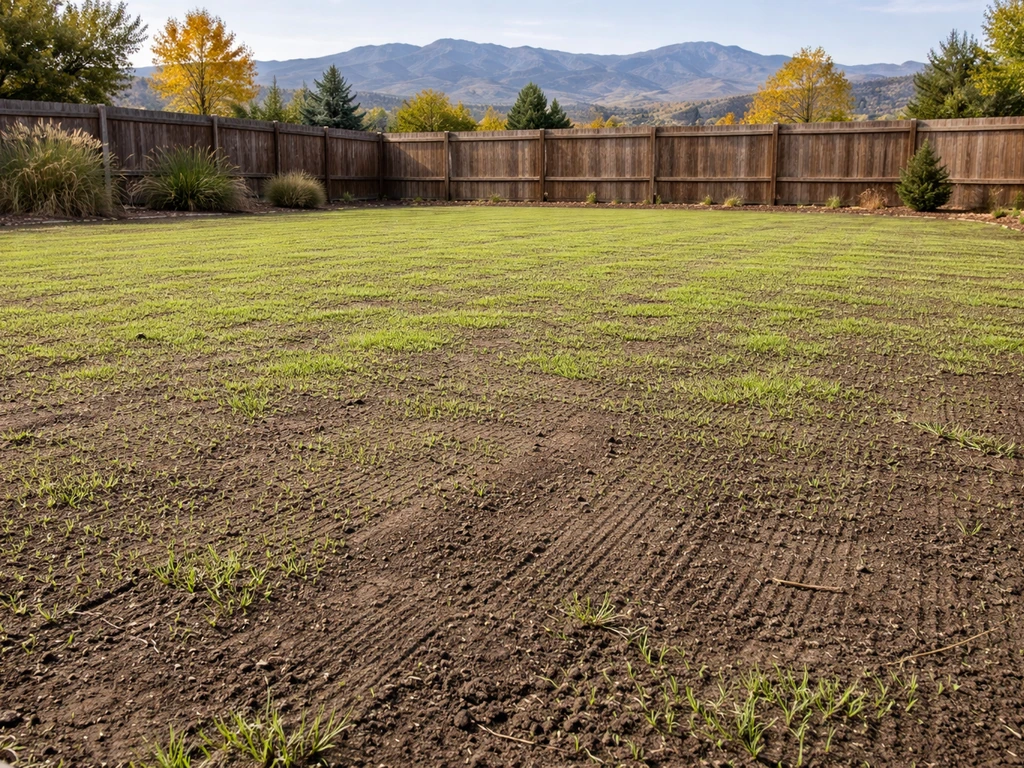
You can absolutely grow a thick, healthy lawn on Georgia red clay, but you have to deal with the clay first. Skip that step and your seed will either wash away, crust over, or sit there doing nothing.
How to Grow Grass in Georgia Clay From Seed
Marcus Tillwell
22 Jun 2026
The winning formula is simple: pick the right grass for your conditions (Bermuda or Zoysia for sun, fescue for shade), fix your soil's pH and compaction before you seed, plant at the right time of year, and keep that top inch of soil consistently moist until germination happens.
The same overall approach also applies when learning how to grow grass in Colorado, since you still need to match the grass to your climate and prep the soil before seeding pick the right grass for your conditions. Everything else is just details.
Why Georgia Red Clay Is So Hard on Grass Seed
Georgia's infamous red clay is dense, compacted, and acidic. On its own, it's almost hostile to grass seed. The clay particles pack together so tightly that water runs off the surface instead of soaking in, roots can barely push through, and air circulation in the root zone is nearly zero. When you add seed to untreated red clay, a few things tend to happen: the seed sits on a hard surface with no real soil contact, rain causes runoff that carries the seed away, or the soil surface dries out and forms a hard crust that physically blocks seedlings from emerging.
On top of the physical problems, Georgia's red clay is typically acidic, often strongly so. Most grass varieties need a soil pH somewhere between 6.0 and 7.0 to absorb nutrients properly. When the pH is off, the grass can't feed itself even if you're fertilizing regularly. UGA Extension points out that no amount of fertilizer or soil testing will fix physical root zone problems on its own. You have to address the structure and the pH together before you put a single seed in the ground.
Picking the Right Grass for Georgia Clay
Georgia straddles two climate zones, and your county matters. North Georgia (Atlanta and above) gets cooler winters and can support cool-season grasses. South Georgia stays warm enough for warm-season grasses to thrive year-round. Most of the state is warm-season territory, so that's where we'll focus, but fescue is genuinely important for north Georgia lawns and shady spots statewide.
| Grass Type | Best Zone in Georgia | Sun/Shade | Clay Tolerance | Seeding Window |
|---|---|---|---|---|
| Bermuda | Statewide (best in south/central) | Full sun only | Good once established | Late April through June |
| Zoysia | Statewide | Full sun to light shade | Very good, dense root system | May through July |
| Tall Fescue | North Georgia, shady areas statewide | Shade to partial sun | Moderate, needs amendment | Mid-September through October |
| Annual Ryegrass | Statewide (winter overseeding) | Sun to light shade | Moderate | October through November |
Bermuda Grass
Bermuda is the workhorse of Georgia lawns. It loves heat, handles drought reasonably well once it's established, and spreads aggressively enough to fill in bare spots on its own. On clay, it performs better than most because its rhizomes and stolons can work their way through compacted soil over time. The catch is it needs full sun. If you have significant tree shade, Bermuda will thin out and struggle. Common Bermuda (Hulled) seed is widely available and germinates relatively fast, typically within 7 to 14 days in warm soil.
Zoysia Grass
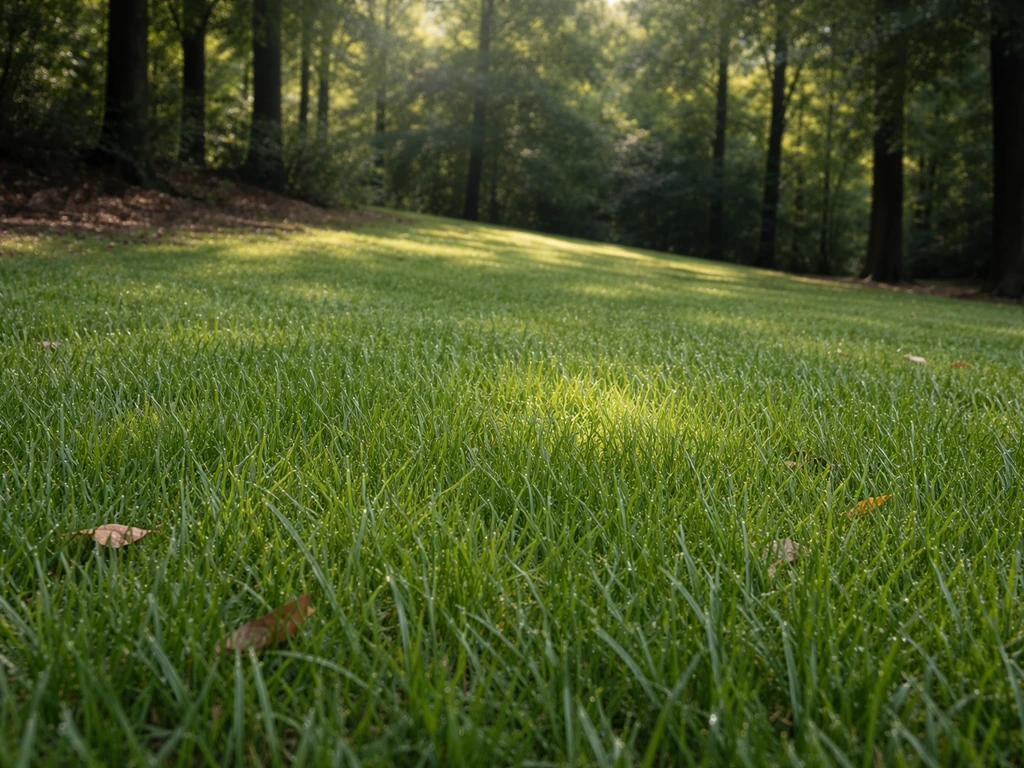
Zoysia is a great choice if you want a dense, lush lawn that handles clay well. It's slower to establish from seed than Bermuda, often taking two full growing seasons to fill in completely, but once it's there it's thick enough to crowd out most weeds. Zoysia handles light shade better than Bermuda and stays green slightly longer into fall. If you're willing to be patient, it's arguably the best long-term choice for Georgia clay. Many homeowners start with plugs or sod to speed things up, but seed works fine if you have the time.
Tall Fescue
Tall fescue is the go-to for north Georgia homeowners and for anyone with significant shade. It's a cool-season grass, which means it actively grows in fall and spring and goes semi-dormant during Georgia's brutal summers. On clay, fescue needs more amendment work than Bermuda or Zoysia because it doesn't spread to fill gaps. Every bare spot in a fescue lawn has to be reseeded. That said, in the right conditions, a well-maintained fescue lawn looks excellent year-round in north Georgia. Overseeding every fall is just part of the routine.
Ryegrass (For Overseeding Only)
Annual ryegrass is typically used to overseed warm-season lawns in the fall to keep them green through winter. It germinates fast (3 to 7 days), is inexpensive, and gives you a green lawn while your Bermuda or Zoysia is dormant. It dies off as temperatures warm in spring, allowing the warm-season grass to take back over. It's not a long-term solution by itself, but it's useful if you're seeding in fall and want quick coverage while you wait for spring.
Which One Should You Choose?
For most Georgia homeowners with a full-sun lawn and red clay soil, Bermuda is the practical first choice. It's fast, affordable, and handles the conditions well. If you want something lower maintenance long-term and can wait, go Zoysia. If you're in north Georgia or have a heavily shaded yard, plant tall fescue in September. Ryegrass is a winter supplement, not a primary lawn grass.
Getting Your Clay Soil Ready to Actually Grow Grass
This is the step most people skip, and it's why their seed fails. You cannot just throw seed on Georgia red clay and expect results. If you need the specific timing and grass choices for your yard, use this guide on how to grow grass in Minnesota as a starting point Getting Your Clay Soil Ready to Actually Grow Grass. You need to address the soil's pH, its compaction, and its drainage before anything else. Spending a week on soil prep will do more for your lawn than any expensive seed or fertilizer.
Start With a Soil Test
A soil test is not optional on Georgia red clay. UGA Extension has found that a large percentage of Georgia soil samples require lime, and you genuinely cannot guess the right amount to apply without knowing your starting pH. UGA Cooperative Extension notes that soil test results determine soil pH, and pH forms the basis for liming recommendations, so you cannot reliably choose a lime rate without testing [soil pH and liming recommendations](https://extension. uga.
edu/publications/detail. html? number=B577). The UGA Cooperative Extension office in your county can process soil tests for around $8 to $12.
You'll get back a report showing your current pH, nutrient levels, and specific lime and fertilizer recommendations for the grass type you're planting. Do this 6 to 8 weeks before you plan to seed, because lime takes time to work. You can also order mail-in test kits if your county office isn't convenient.
Fix the pH With Lime
Most Georgia red clay soils land somewhere between pH 4.5 and 6.0, and most grasses want to be in the 6.0 to 6.5 range. Dolomitic lime is the standard fix. Your soil test will tell you exactly how many pounds per 1,000 square feet to apply, but a typical starting point for heavily acid Georgia clay is 50 to 100 pounds of lime per 1,000 square feet. Apply it, water it in, and give it at least 4 to 6 weeks before seeding. If you're in a hurry, pelletized lime works faster than powdered agricultural lime.
Break Up Compaction
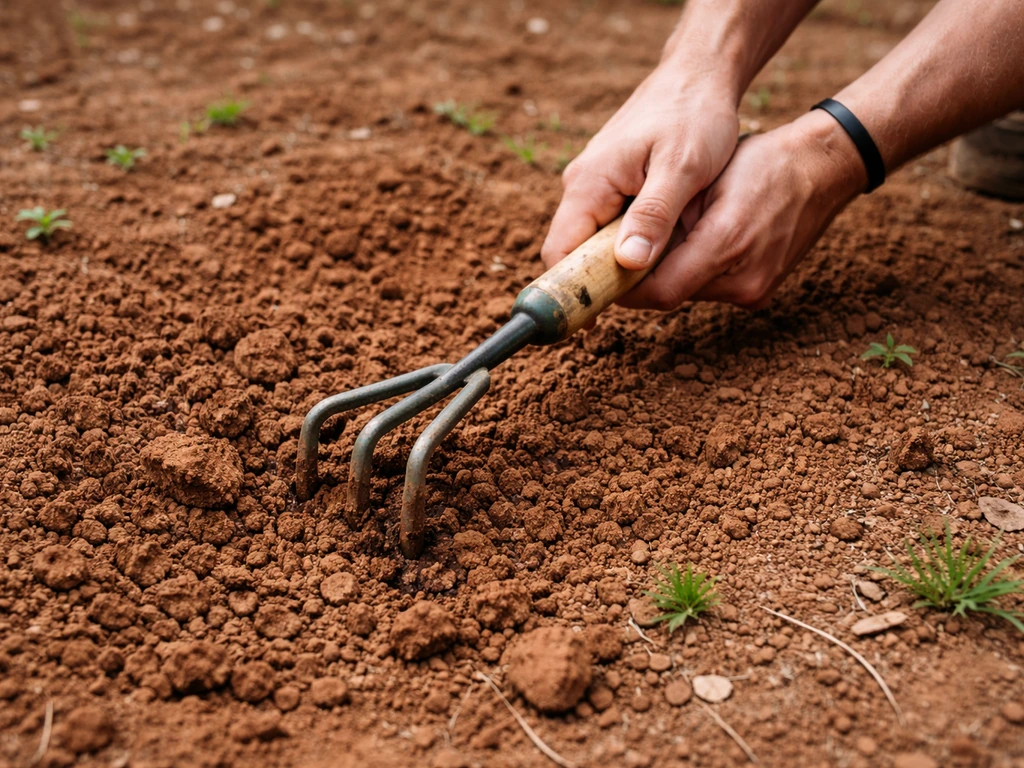
Compacted clay has almost no pore space for air or water. Before seeding, you need to either aerate or physically break up the top 4 to 6 inches of soil. For a new lawn or badly degraded bare area, renting a tiller and tilling 4 to 6 inches deep is the most effective approach. For an existing thin lawn, a core aerator (rentable from most home improvement stores for around $60 to $80 per day) pulls out plugs of soil and immediately improves air and water movement. Core aerate in multiple directions if the clay is very dense.
Add Organic Matter
After breaking up the clay, work in 2 to 3 inches of compost or aged organic material and till it into the top 4 to 6 inches. This is the single biggest structural improvement you can make to clay soil. Organic matter opens up clay's tight particle structure, improves drainage, and gives roots somewhere to actually go. This is not a one-and-done fix. Clay lawns benefit from topdressing with compost every year or two, but getting a good starting layer in before you seed makes an enormous difference in germination and early root development.
Address Drainage Problems
If parts of your yard hold standing water after rain, that's a drainage problem the compost alone won't fix. Low spots where water pools need to be graded or filled before seeding. You can use a mix of topsoil and compost to raise low areas. In extreme cases, a French drain may be necessary. Grass won't establish in areas that stay wet for days at a time, and clay makes this worse because water has nowhere to go. Spend time after a good rain walking your yard and marking the low spots before you do your final prep.
When to Seed in Georgia
Timing your seeding to Georgia's climate is critical. Alaska lawn success also starts with choosing the right cool-season grass for your hardiness zone and then matching seeding time and watering to your local conditions Timing your seeding. Plant warm-season grasses too early and cool nights stall germination. Plant cool-season grasses too late and the summer heat kills them before they establish. Get the window right and germination happens fast, which is your best defense against weeds taking over first.
| Grass Type | Ideal Seeding Window | Soil Temp Target | Why This Window |
|---|---|---|---|
| Bermuda | Late April through mid-June | 65–70°F minimum | Warm soil triggers fast germination before summer heat peaks |
| Zoysia | May through July | 70°F or above | Needs sustained warmth for germination and early spread |
| Tall Fescue | Mid-September through October | 50–65°F | Cool temps favor germination; avoids summer stress |
| Annual Ryegrass | October through mid-November | Below 65°F | Overseed dormant warm-season lawn for winter color |
Right now in late June 2026, you're still in a workable window for Bermuda and Zoysia seeding in Georgia, though you're approaching the point where summer heat can stress newly germinated seedlings. The same general steps, including soil testing, seeding in the right window, and consistent watering, help when you’re planning how to grow grass in Kansas. If you seed Bermuda in the next two to three weeks and keep watering diligent, you can still get a solid stand this season. Tall fescue seeding should wait until mid-September. Trying to seed fescue in summer in Georgia almost always fails because the seedlings cook.
How to Actually Seed Your Georgia Lawn Step by Step
- Complete all soil prep first: test, lime, till, compost, and grade any low spots. Don't seed until the prep is done.
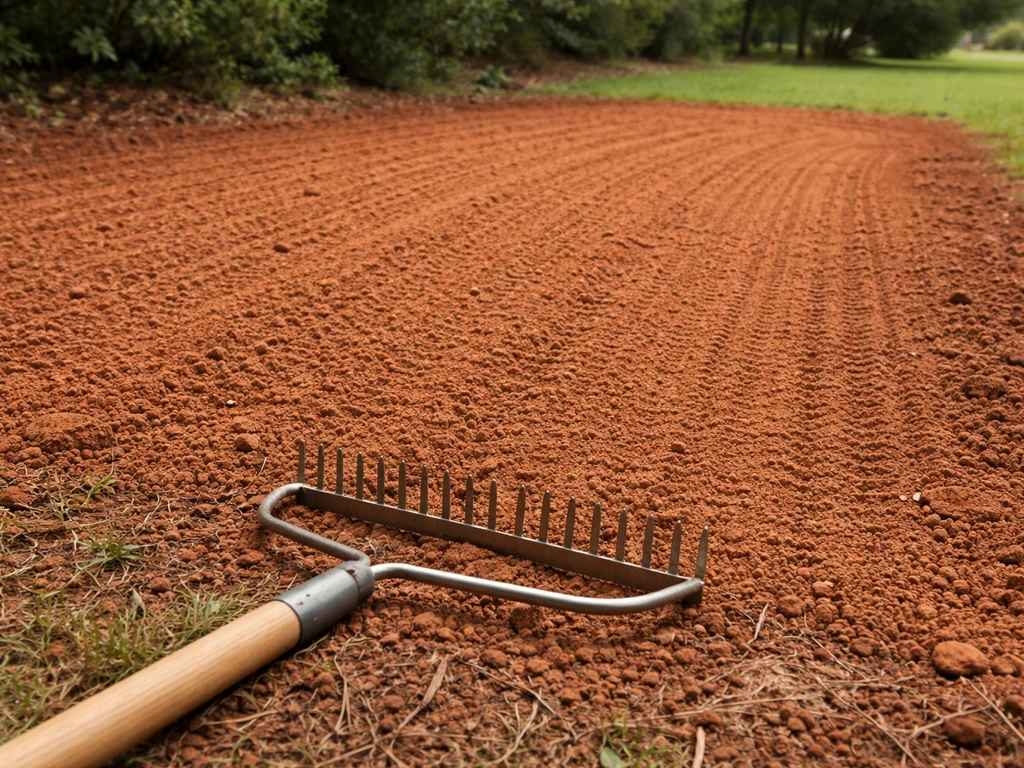
- Rake the seedbed smooth and break up any clods larger than a marble. You want a firm, level surface, not loose and fluffy.
- Choose your seed: for hulled Bermuda, apply at 1 to 1.5 pounds of pure live seed per 1,000 square feet. For tall fescue, use 6 to 8 pounds per 1,000 square feet. For Zoysia seed, apply 1 to 2 pounds per 1,000 square feet.
- Use a broadcast spreader for large areas or a hand spreader for small patches. Divide your seed in half and make two passes in perpendicular directions for even coverage.
- Work the seed into the top quarter inch of soil with a lawn rake, drag mat, or the back of a steel rake. Seed sitting on top of hard clay will not germinate reliably. UGA Extension specifically notes that germination improves when seed is placed below the surface and in firm soil contact.
- Apply a light straw mulch (one bale per 1,000 square feet, spread thinly so you can still see some soil) to hold moisture and reduce crusting. You can also use an erosion control blanket on slopes.
- Water immediately after seeding, gently enough that you don't wash the seed away. A misting or sprinkler setting works better than a hard stream.
On slopes or areas prone to runoff, consider mixing your seed with a tackifier (a spray-on adhesive you can find at home improvement stores) or using a hydroseed mix. This isn't necessary on flat areas but makes a real difference when clay slopes are involved. If you are wondering how to grow grass in Tennessee, use the same basic approach, but match your grass choice to your local season length and sun exposure.
Watering, Mowing, and What to Expect During Establishment
The Watering Schedule That Actually Works
Keeping the top 1 to 2 inches of soil consistently moist (not soaked) is the single most important thing you can do after seeding.
UGA Extension's lawn establishment guidance is clear on this: the upper soil layer needs to stay moist throughout the germination and early establishment phase. On clay in Georgia summer heat, that means watering 2 to 3 times per day in short sessions, typically 5 to 10 minutes each, using a fine spray. You're not trying to soak deep, you're trying to prevent the surface from drying out.
Once you see seedlings emerging (7 to 14 days for Bermuda, up to 21 days for Zoysia, 7 to 14 days for fescue in fall), you can start shifting to fewer, deeper waterings.
After germination, gradually taper from multiple short daily waterings to one deeper watering every other day, and eventually to about 1 inch of water per week once the grass is 30 to 45 days old and actively growing. Deep, infrequent watering trains roots to grow downward into the clay rather than staying shallow at the surface. This matters a lot on clay because deep roots can access more water during dry spells and tolerate compaction better.
When to Mow
Wait until Bermuda reaches about 2 to 2.5 inches tall before the first mow, then cut it to 1 to 1.5 inches. For tall fescue, let it reach 4 inches before the first cut, then mow at 3 to 3.5 inches. Mowing too early pulls seedlings out of the ground before their roots are anchored. The first mow is always a little stressful for new grass, so make sure your mower blade is sharp, and never cut more than one third of the blade height at once.
Germination and Establishment Timeline
- Bermuda (hulled): first germination at 7 to 10 days, noticeable coverage by 3 to 4 weeks, decent stand by 6 to 8 weeks
- Zoysia: first germination at 14 to 21 days, visible coverage by 4 to 6 weeks, full fill-in can take one to two seasons
- Tall Fescue (fall): first germination at 7 to 14 days, mowable stand by 4 to 5 weeks, well-established by spring
- Annual Ryegrass: germination in 3 to 7 days, full green coverage within 3 weeks
Troubleshooting Common Clay Problems
Soil Crusting
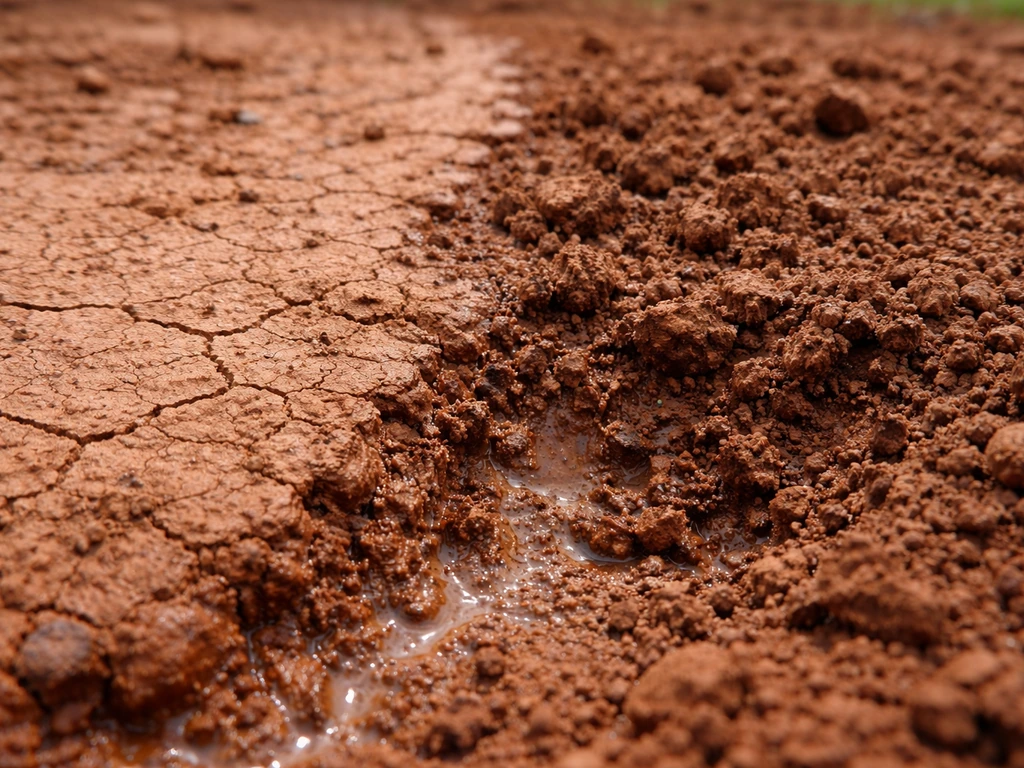
Soil crusting happens when rain or irrigation hits bare clay and the surface dries into a hard shell. Penn State Extension research confirms that soil crusting reduces water infiltration and can physically block seedling emergence. If you see a crust forming before germination, gently scratch the surface with a rake to break it up, then water lightly. This is where the straw mulch really earns its keep. A thin layer of straw dramatically reduces crust formation by buffering the soil surface from rain impact.
Runoff and Seed Wash
If you water too aggressively or get a hard rain after seeding, the seed can pool at the low end of your lawn. Check your lawn after rain and redistribute any visible seed accumulations with a rake. Going forward, water with a fine mist setting and for shorter durations to avoid creating runoff on the clay surface. On slopes steeper than about 10 to 15 degrees, an erosion blanket over the seeded area is worth the investment.
Weak or Patchy Germination
Patchy germination on clay almost always comes down to one of three things: uneven seed-to-soil contact, inconsistent moisture, or pH that's still too low. If you see green in some spots but bare soil in others, check whether those bare areas are higher and drier (moisture problem), or whether the soil there is harder and more compact (contact problem). For dry spots, increase watering frequency. For hard spots, try scratching the surface and pressing seed back in, then mulch more heavily. If the whole stand is thin and slow, and you haven't done a soil test yet, do it now because the pH may still be off.
Persistent Bare Spots
Bare spots that refuse to fill in despite reseeding usually have an underlying issue: compaction, drainage, shade, or tree root competition. Before reseeding a bare spot for the third time, actually dig into it and look at the soil structure 2 to 3 inches down. If it's rock-hard clay, it needs physical loosening with a hand cultivator or small tiller before more seed will help. If water pools there after rain, grade it before reseeding. If it's under a tree, switch to a shade-tolerant variety and accept that Bermuda won't grow there.
Long-Term Maintenance for a Dense Georgia Lawn
Once your lawn is established, the goal shifts from survival to density. A dense stand is your best weed control tool. Thin grass lets crabgrass and broadleaf weeds move in, and once they're established on clay, they're hard to get rid of. Here's what to keep up with every year.
- Soil test every 2 to 3 years: Georgia clay stays acidic and needs periodic liming. Don't assume one lime application fixed it permanently.
- Core aerate annually in spring for Bermuda and Zoysia, or in early fall for fescue. Clay compacts back over time, and annual aeration keeps your soil structure working.
- Topdress with compost after aerating: a quarter inch of compost worked into aeration holes builds organic matter over time and is the cheapest long-term clay improvement strategy available.
- Fertilize based on your soil test results: Bermuda is a heavy feeder during summer (May through August), while fescue is fertilized lightly in fall and early spring. Never fertilize dormant grass.
- Overseed fescue every fall: tall fescue does not spread, so annual overseeding at 2 to 3 pounds per 1,000 square feet each September keeps the density up and fills summer thin spots.
- Mow at the correct height consistently: scalping warm-season grasses or mowing fescue too short both thin out the lawn and open it up to weeds and bare spots.
- Pre-emergent herbicide in late February to early March stops crabgrass before it starts. This is especially important in clay yards because bare, slow-to-establish areas are prime crabgrass real estate.
One thing to keep in mind: growing grass on Georgia red clay is a multi-season project, not a one-weekend fix. In Oklahoma, the same basics apply: start with a soil test, amend as needed, and pick a grass that matches your heat and sun growing grass on Georgia red clay is a multi-season project. If you've never had a great lawn here before, set realistic expectations. Year one is about establishment.
Year two is about density. Year three and beyond, with proper maintenance, is when clay lawns really start to look great. The good news is that each year of organic matter additions, aeration, and consistent care makes the clay measurably easier to work with. It's a slow improvement but it compounds over time.
Georgia's conditions are demanding in ways that differ from neighboring states. Growing grass in Tennessee or Alabama involves some similar warm-season grass choices, but Georgia's red clay and high summer humidity create a specific set of challenges that require the soil prep and timing steps above to be done right. If you're specifically wondering how to grow grass in Alabama, the same basics apply: prep the soil first, then match the grass type to your sun, shade, and timing. If you're in north Georgia specifically, the approach overlaps more with Tennessee's fescue management strategies, particularly for shaded lots.
What to Do Right Now
If you're reading this in late June and want a lawn this season, here's your action plan. For Bermuda or Zoysia: order a soil test kit from your county extension office this week, till and amend your seedbed while you wait for results, apply lime based on the test report, then seed by mid-July at the latest. Water diligently. For tall fescue: hold off until mid-September.
Use the summer to prep your soil so it's ready when the seeding window opens. And if you have existing thin spots in an established warm-season lawn, this is a good time to aerate and topdress with compost to improve your clay structure before fall. If you're in Utah, the same general grass-seeding workflow applies, but you'll want to account for local climate and watering conditions when you plan your lawn how to grow grass in utah.
FAQ
What’s the fastest way to get grass going on Georgia red clay if I’m starting from bare soil?
If you need speed, use warm-season plugs or sod for the first year, then follow up with seed only where needed. Seed-only can work, but clay physical issues, moisture timing, and pH correction make it slower than most people expect. Still do a soil test before you buy seed, because lime needs weeks to work.
Can I just add fertilizer and skip soil testing on Georgia clay?
No. Fertilizer cannot fix low pH or poor structure. If your soil test shows lime is needed, apply it on schedule, then wait the recommended time before seeding. Otherwise seedlings may germinate poorly or stay weak even with regular feeding.
How do I know whether my problem is pH, drainage, or compaction?
Use clues in the yard: runoff or standing water points to drainage, hard crust that resists water suggests compaction and crusting, and generally slow, patchy establishment across multiple spots often points to acidity. The quickest decision aid is a soil test plus a simple infiltration check after rain, like seeing how long water sits before soaking in.
Should I overseed Bermuda or Zoysia with fescue or ryegrass in winter?
You can overseed to keep color, but it will be temporary and it can complicate weed control if you try to manage it like a permanent lawn. Typically ryegrass is used for winter color, while tall fescue is mainly for north Georgia or heavy shade. Plan the overseed timing around when your warm-season grass naturally goes dormant.
How much seed should I use, and what if I still get thin spots?
Use the seeding rate on the seed label, but adjust based on your goal (new lawn versus patching) and your germination environment. If thin spots persist after correcting moisture contact and pH, the cause is often compaction or drainage, not too little seed. For patch fixes, reseed after loosening the top layers and adding compost, then mulch lightly.
Is straw mulch enough on clay, or should I use something else?
Straw mulch helps reduce crusting and protects moisture at the surface, but use it lightly so seedlings can still emerge. In areas with runoff or slopes, consider an erosion blanket or hydroseed to keep seed from washing and to maintain uniform seed-to-soil contact.
Can I water less frequently if it rains a lot in Georgia?
Be careful, rainfall can still create a crust on bare clay. After a rain, check whether water soaked in or pooled, and look for surface hardness. If the top layer is drying and crusting, you may still need short, frequent watering to keep the surface consistently moist for germination.
Why do I see seedlings in some areas but nothing in others?
The most common causes are uneven seed-to-soil contact, uneven moisture, or lingering acidity in specific zones. Low spots can behave differently from high spots on clay, even within the same yard. Rake and re-press seed where contact is poor, and increase watering frequency in higher, drier areas.
When is the right time to mow new grass so I don’t pull it out?
Follow the height-based timing, not the calendar. Bermuda should not be cut too early, typically once it reaches about 2 to 2.5 inches, and you should never remove more than one third of the blade height. For fescue, wait until around 4 inches, then cut to about 3 to 3.5 inches, with a sharp blade.
What should I do if my seed washes to the bottom of a slope?
After a heavy rain, check for seed accumulation and redistribute visible clumps with a rake, then adjust to finer, shorter waterings. For steep areas (roughly 10 to 15 degrees or more), install an erosion blanket or use a hydroseed/tackifier approach so seed stays put during establishment.
How often should I topdress compost on a clay lawn, and will it affect weeds?
Once you have establishment, topdressing with compost every year or two helps over time by improving soil structure and water movement. Compost alone will not control established weeds, and if you topdress before fully addressing drainage or compaction, you may make waterlogging worse in low areas. Spread compost thinly and keep it consistent across the lawn.
Can I grow Bermuda or Zoysia in full shade on Georgia clay?
It’s usually a losing battle for Bermuda, and even Zoysia will thin in deeper shade. If shade is significant due to large trees, consider tall fescue for the shaded portions and accept a mixed lawn strategy if needed. Before you reseed repeatedly, check whether tree roots and dense shade are preventing establishment.
What’s a practical reseeding rule for bare patches that won’t fill in?
After a single attempt, verify pH and moisture first, then confirm compaction and drainage in the bare zone. If a spot has been reseeded multiple times and stays empty, dig 2 to 3 inches down and treat the underlying issue (loosen hard soil, fix standing water, or switch to shade-tolerant grass). More seed without fixing the root problem is usually wasted.
Next Article
How to Grow Grass in Colorado From Seed in Denver Springs
Step-by-step guide for how to grow grass in Colorado from seed, with Denver and Colorado Springs timing, seed, and care.