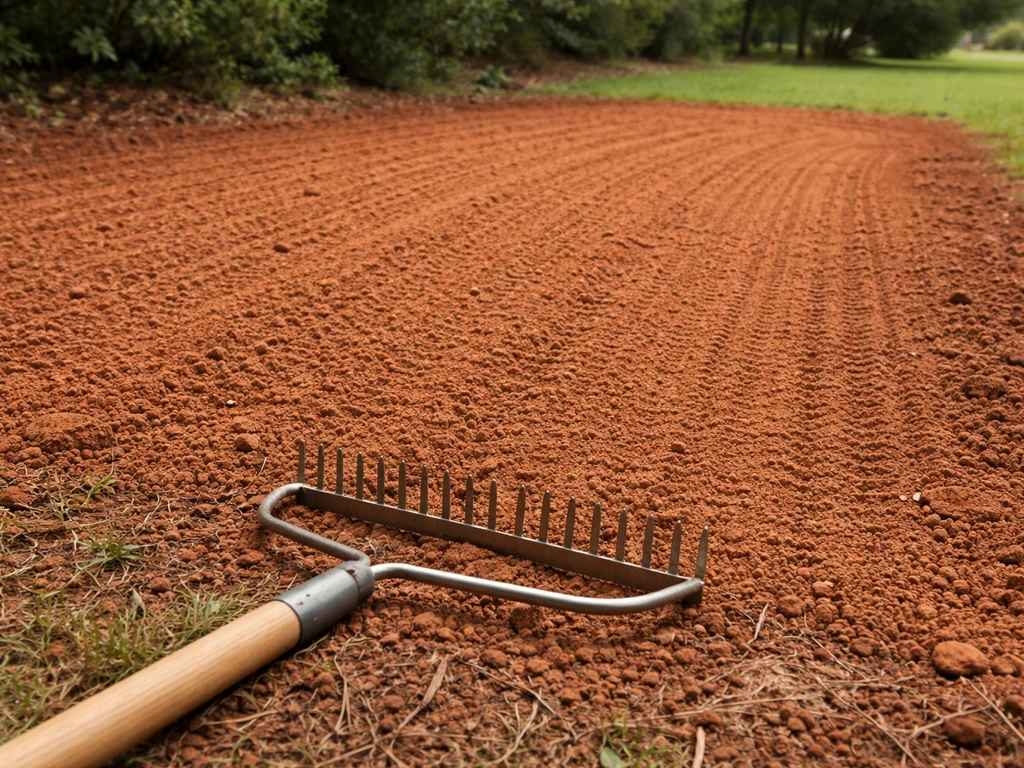
Growing grass in Alabama means picking a variety that fits your slice of the state, planting it at the right soil temperature, and giving it the watering and fertilizer it needs during those first critical weeks. Warm-season grasses like Bermuda and Zoysia thrive across most of Alabama when seeded or plugged in late spring. Cool-season Tall Fescue works best in the north and needs an early-fall planting window. Get those two things right, variety and timing, and the rest of the process is straightforward.
How to Grow Grass in Alabama: Seed, Sod & Lawn Care Guide
Marcus Tillwell
14 Jul 2026
Why Alabama lawns need their own playbook
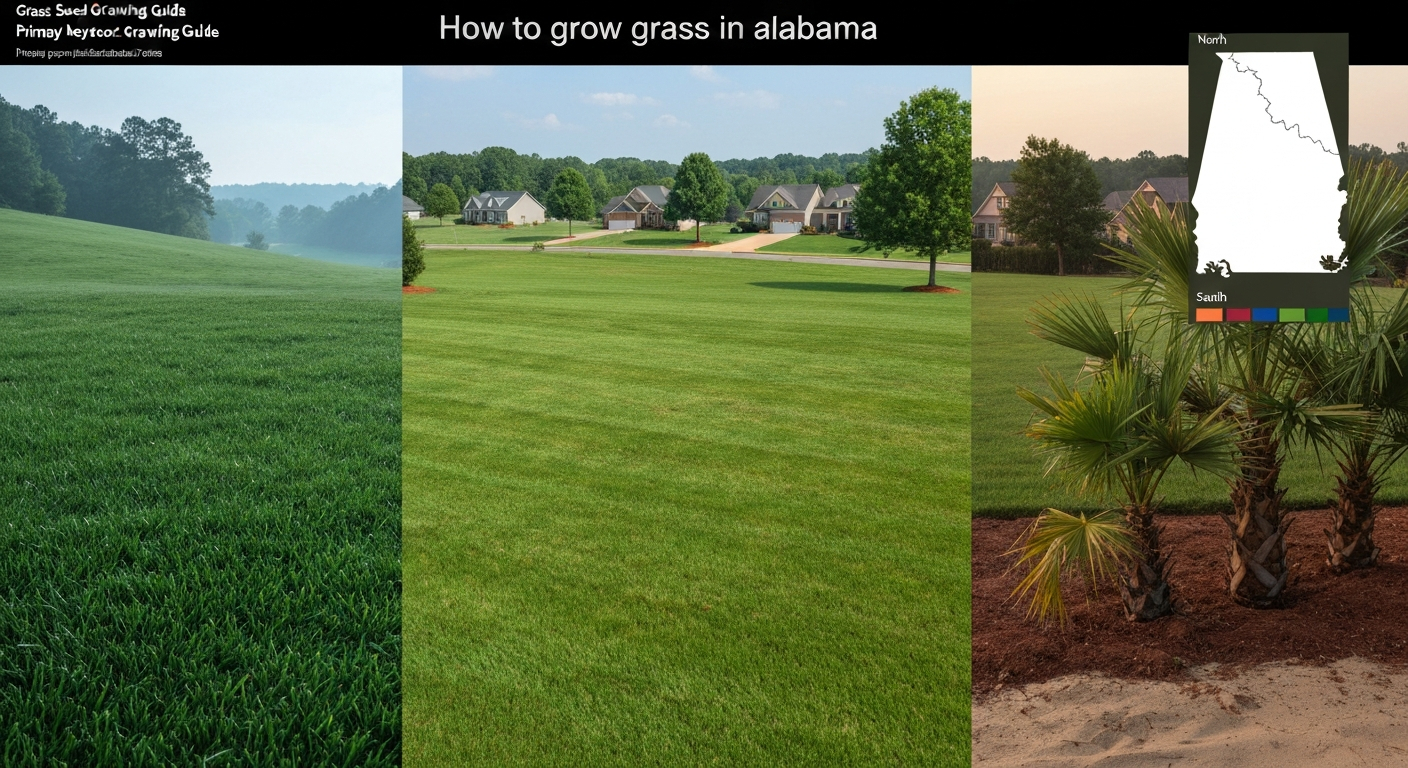
Alabama is not one climate. The USDA Plant Hardiness Zone map places the state in zones 7b through 9b, which translates to winter minimums ranging from about 5°F in DeKalb County to 30°F near Mobile Bay. That 25-degree spread means a grass variety that sails through winter in Birmingham can freeze out entirely in Huntsville. At the same time, the long, humid summers that bake south Alabama would stress cool-season fescue into decline by July. Neighbors in Georgia face a nearly identical situation, and the same logic applies across the Tennessee border as well. The result: there is no single 'Alabama grass', there is a north Alabama choice, a central Alabama choice, and a south Alabama choice, and the method you use to plant it matters just as much as the variety itself.
Soil adds another layer. Much of the state sits on red clay that compacts easily, drains poorly, and tends toward low pH. The Black Belt region is an exception, with calcareous (high-pH) soils that can lock out nutrients. Sandy coastal plain soils in the south drain too fast and need organic matter. None of these problems are dealbreakers, but they do mean you need a soil test before you buy a single bag of seed.
Quick decision guide: which method and which grass
Before you read any further, answer two questions: Where in Alabama do you live, and what is your budget and timeline? If you want a lawn this season and have the budget, sod gives you instant cover. If you want to save money and have the patience to wait 4–8 weeks for germination, seed is the way to go. Plugs are a middle ground, slower than sod but cheaper, and they work well for Zoysia. Overseeding with Perennial Ryegrass in fall keeps a warm-season lawn green through winter. Below is a plain-language guide to help you choose.
| Method | Best for | Cost (relative) | Time to usable lawn | Effort |
|---|---|---|---|---|
| Seed (warm-season) | Bermuda from scratch, spring–summer | Low | 6–10 weeks | Moderate |
| Seed (cool-season) | Tall Fescue renovation, fall | Low | 4–8 weeks | Moderate |
| Sod | Any species, instant results, erosion control | High | 2–4 weeks to root | High (installation) |
| Plugs | Zoysia or Bermuda on budget | Medium | 1 full season to fill | Medium |
| Overseed (ryegrass) | Winter color over dormant warm-season lawn | Low | 7–14 days | Low |
One honest note on seeding Zoysia: it is slow. Even under ideal conditions, seeded Zoysia can take a full growing season to achieve reasonable coverage. If you are in a hurry or filling a large area, sod or plugs will save you a lot of frustration.
Which grass belongs in your part of Alabama
Alabama divides neatly into three turf zones: north (roughly above I-20, including Huntsville, Gadsden, and Anniston), central (Birmingham metro through Tuscaloosa and Talladega), and south (Montgomery south to Mobile and the Gulf Coast). Each zone has a clear first choice and a workable second choice.
North Alabama (USDA zones 7b–8a)
Tall Fescue is the workhorse of north Alabama lawns. It handles the colder winters, tolerates partial shade better than any warm-season grass, and keeps some green color through mild winters. The trade-off is summer: Fescue thins out and goes dormant under the heat stress that arrives by July. Plan to overseed every fall to thicken thinning stands. Bermuda works in north Alabama too, it just needs good cold-hardy varieties. Bermuda will go dormant and turn brown in winter, which many homeowners dislike. Improved cultivars like TifTuf or Riviera bermuda offer better cold tolerance than common types. Zoysia is another solid option in this zone, particularly Zeon or Palisades varieties that handle the cooler winters reasonably well.
Central Alabama (USDA zones 8a–8b)
This is a transition zone, and the honest answer is that both warm-season and cool-season grasses are compromises here. Bermuda is probably the best all-around choice, it thrives in Birmingham's summers, handles clay reasonably well, and recovers quickly from wear. Zoysia is a great option if you want a denser, finer-textured lawn and are willing to wait a season for establishment. Tall Fescue can work in shaded areas or north-facing slopes in central Alabama, but count on some summer thinning in open, sunny spots. Perennial Ryegrass is used primarily for winter overseeding of dormant Bermuda or Zoysia, not as a permanent lawn.
South Alabama (USDA zones 8b–9b)
South of Montgomery, the heat is relentless and winters rarely freeze hard enough to damage warm-season grasses. Bermuda and Zoysia both do extremely well here. St. Augustine, while not seeded (it must be established from sod, plugs, or sprigs), is popular in the coastal south for its shade tolerance and lush look. Tall Fescue is not recommended south of the Birmingham area, the summer heat will consistently thin it out faster than you can renovate it each fall.
| Grass | Best Alabama Region | Establishment Method | Shade Tolerance | Drought Tolerance | Cold Tolerance |
|---|---|---|---|---|---|
| Bermuda (common) | All regions | Seed or sod | Low | High | Moderate (varies by cultivar) |
| Bermuda (hybrid: TifTuf, Tifway) | Central & South | Sod or sprigs only | Low–moderate | High | Moderate–good |
| Zoysia (Zeon, Empire) | All regions | Sod, plugs, or seed (slow) | Moderate | Moderate–high | Moderate–good |
| Tall Fescue | North & some Central | Seed | Moderate–good | Moderate | Good |
| Perennial Ryegrass | All regions (overseeding only) | Seed | Low–moderate | Low | Good (temporary) |
| St. Augustine | South Alabama | Sod, plugs, or sprigs | Good | Moderate | Low |
Alabama planting calendar: when to plant what, where
Timing is where most Alabama lawn projects go wrong. People plant Bermuda in September (too late, soil is cooling) or seed Fescue in April (too late, summer heat is coming). Practical planting windows for Alabama are summarized in Turfgrass Selection, Alabama Cooperative Extension System (ACES) blank" rel="noopener noreferrer">Practical planting windows for Alabama are summarized in Turfgrass Selection — Alabama Cooperative Extension System (ACES).. The windows below are based on soil temperature thresholds: warm-season grasses need at least 65°F at a 2-inch depth to germinate reliably, and ideally 70°F or warmer. Cool-season grasses need soil temps between 50°F and 65°F. NOAA's regional climate tools can help you look up average last spring freeze dates and first fall freeze dates for your specific city or county. NOAA's Frost/Freeze Information, National Weather Service (NOAA) provides frost/freeze climatology and regional climate-normal tools with median last spring and first fall freeze dates by station, which are commonly used to define Alabama planting windows blank" rel="noopener noreferrer">Frost/Freeze Information — National Weather Service (NOAA).
| Grass | North Alabama window | Central Alabama window | South Alabama window | Notes |
|---|---|---|---|---|
| Bermuda (seed) | Mid-May to late June | Early May to late June | Late April to late June | Soil temp must hit 65°F+; avoid if rain is expected within 48 hrs of seeding |
| Zoysia (seed or plugs) | Mid-May to early July | Early May to early July | Late April to early July | Plugs fill in faster than seed; keep moist for 3–4 weeks after plugging |
| Tall Fescue (seed) | Late Aug to late Oct | Early Sept to mid-Oct | Mid-Sept to early Oct | Earlier end of window preferred; late planting risks winter kill before roots establish |
| Perennial Ryegrass (overseed) | Early Oct to Nov | Mid-Oct to Nov | Late Oct to Nov | Temporary winter color; will die off as warm-season turf re-emerges in spring |
| Sod (any warm-season) | April to August | April to August | March to September | Can sod year-round but spring/early summer gives fastest rooting |
If you are in north Alabama and your target date for Tall Fescue is September 15, work backward: soil test should be done by early August so you have time to lime if needed (lime takes weeks to change pH). Seed bed prep happens two to three weeks before seeding. That means you start planning in late July, not the week you want to seed.
Tools and materials you will actually need
You do not need a lot of specialized equipment to establish a lawn from seed. Here is what to gather before you start, organized by task.
For seeding from scratch
- Soil test kit or Auburn Extension submission bags (free from your county extension office)
- Broadcast spreader (rotary type covers ground faster) or hand spreader for small areas
- Tiller or garden fork for loosening compacted clay (rental tiller works fine)
- Bow rake for smoothing and leveling
- Starter fertilizer (balanced, low-N or P-heavy, based on soil test results)
- Lime (if soil test indicates; agricultural lime is cheapest and effective)
- Grass seed (buy certified seed — PLS label matters; buy 10–15% extra for thin spots)
- Seed roller or hand tamper to press seed into soil
- Straw mulch (one bale per 1,000 sq ft of newly seeded area) — keeps moisture in and seed from washing
- Sprinkler and timer — you need to water lightly and frequently during germination
For overseeding
- Core aerator (rent one — this is worth it; opens channels for seed contact)
- Dethatcher or stiff rake to reduce thatch before seeding
- Broadcast spreader
- Ryegrass or Fescue seed
- Starter fertilizer or light nitrogen application
- Sprinkler and timer
For plugging
- Plugger tool or bulb planter (manual) — or a gas-powered planter for large areas
- Zoysia or Bermuda plugs (order in trays; plant 6 inches apart for faster fill, 12 inches for budget-conscious)
- Compost or topdress sand to backfill plug holes
- Starter fertilizer
- Watering can or drip hose for individual plug watering in dry spells
For sodding
- Sod cutter (rent for removing old turf) or flat spade
- Tiller for bed preparation
- Bow rake
- Sod roller (rental) to press sod into soil contact
- Utility knife for cutting sod edges
- Lawn staples for slopes
- Starter fertilizer
- Sprinkler — sod needs 1 inch of water daily for the first two weeks
Soil testing in Alabama: do this first, not last
Skipping the soil test is the single most common and costly mistake Alabama homeowners make. You can do everything else perfectly, right grass, right timing, careful watering, and still get a thin, yellowing lawn if the pH is wrong. Auburn University's Agricultural Experiment Station Soil Lab accepts homeowner samples, and your county Extension office usually has submission bags at no charge. Results typically come back within 3–7 days of the lab receiving your sample, and they include pH readings, nutrient ratings, and specific lime and fertilizer recommendations for your lawn.
How to collect a good soil sample
- Use a trowel or soil probe to collect 10–15 small cores from random spots across your lawn or planting area — avoid obvious problem spots like old compost piles or spots near the foundation.
- Sample to a depth of 4 inches for lawns (6 inches for garden beds).
- Mix all cores together in a clean bucket.
- Fill the submission bag with about one cup of the blended soil.
- Let it air-dry before sealing the bag — wet samples can delay results.
- Label the bag with your name, address, and intended use (home lawn) and submit to your county Extension office or mail directly to the Auburn AAES Soil Lab.
Target pH ranges and how to adjust
Most Alabama lawn grasses want a soil pH between 5.8 and 7.0, with warm-season grasses (Bermuda, Zoysia) preferring 6.0–7.0 and Tall Fescue doing best at 5.8–6.5. Most Alabama soils naturally run acidic (pH 5.0–5.5 in red clay areas), so you will almost certainly need to add lime. If your soil test comes back recommending lime, apply agricultural lime at the rate specified, corrections in the range of 50 to 100 pounds per 1,000 square feet (equivalent to roughly 1–2 tons per acre) are not uncommon for heavily acidic Alabama clay. Lime takes weeks to months to fully change pH, so apply it well before your planting window, ideally 2–3 months ahead if you can plan that far in advance. For the rare high-pH Black Belt soils, sulfur is used to lower pH; the Auburn soil lab recommendation will tell you exactly how much.
| Grass type | Ideal soil pH | Common Alabama starting pH | Typical lime needed |
|---|---|---|---|
| Bermuda | 6.0–7.0 | 5.0–5.5 | 50–100 lb/1,000 sq ft (varies) |
| Zoysia | 6.0–7.0 | 5.0–5.5 | 50–100 lb/1,000 sq ft (varies) |
| Tall Fescue | 5.8–6.5 | 5.0–5.5 | 40–80 lb/1,000 sq ft (varies) |
| Perennial Ryegrass | 6.0–7.0 | 5.0–5.5 | 50–100 lb/1,000 sq ft (varies) |
Auburn's online fertilizer and lime calculators can help you cross-check the lab's written recommendations if the numbers feel unclear. Always follow the lab report first, these tables are rough guides, not substitutes for an actual test.
Preparing the site: clearing, grading, and fixing problem soils
A well-prepared seedbed is worth more than premium seed. Seed dropped onto compacted, lumpy, or waterlogged soil simply will not establish, it sits on the surface, dries out before germination, or washes away in the first rain. Take the time to prepare the bed properly.
Clearing and grading
- Remove existing weeds, dead grass, and debris. For a full renovation, kill existing vegetation with a non-selective herbicide (glyphosate-based) 2–3 weeks before tilling — read the label for re-entry intervals before seeding.
- Till 4–6 inches deep to break compaction. In clay soils, this step is non-negotiable.
- Rake out rocks, roots, and clumps larger than your fist.
- Grade the surface so it slopes away from your house foundation — aim for about a 1–2% slope (roughly 1–2 inches of drop per 10 feet) to move water away from structures.
- Fill any low spots that will collect water. Standing water after rain is a germination killer and a disease incubator.
If your soil is clay (most of Alabama)
Alabama red clay compacts under foot traffic and machinery, drains slowly after heavy rain, and can form a crust that blocks seedling emergence. The fix is organic matter. Work 2–3 inches of compost into the top 4 inches of soil before seeding. This does not eliminate the clay, nothing will, but it opens up the structure enough to improve drainage and root penetration meaningfully. Do not add sand to clay without also adding compost. Sand alone mixed into clay can actually make drainage worse, creating a brick-like matrix. Core aeration before overseeding compacted clay lawns is also very effective: it punches channels through the hardpan and lets seed, water, and air reach the root zone.
If your soil is sandy (south Alabama coastal plain)
Sandy soils in south Alabama drain so fast that seed zones dry out between waterings, nutrients leach away before plants can use them, and organic matter burns off quickly in the summer heat. Again, compost is the answer: work in 2–3 inches before seeding. In sandy soils, a starter fertilizer with some slow-release nitrogen is especially important, as sandy soils hold very little fertility on their own. You will also need to water more frequently during germination than the standard schedule, sandy soil can go from moist to bone-dry in hours during a hot Alabama afternoon.
Dealing with drainage problems
If water pools in your yard for more than 24 hours after a normal rain, you have a drainage problem that seed will not solve on its own. Possible fixes include regrading to redirect surface flow, installing a French drain, or raising the grade with topsoil fill before seeding. In severe cases, consult a landscape contractor before investing in seed or sod. Grass planted in a chronically wet area will thin out, develop fungal disease, and need constant re-seeding.
Step-by-step seeding from scratch
This is the full process from bare dirt to established turf. I will walk through it the way I would tackle my own yard, no steps skipped, honest about what matters most.
Step 1: Finalize your seedbed
After tilling, raking, and amending, firm the seedbed lightly with a lawn roller or by walking across it in overlapping rows. You want a surface that is firm enough that your foot barely sinks in, but not compacted. The goal is good seed-to-soil contact, seed sitting on loose fluff will dry out and fail.
Step 2: Apply starter fertilizer (if soil test recommends)
If your soil test shows low phosphorus, apply a starter fertilizer and lightly rake it in before seeding. Phosphorus drives root development in young seedlings. If phosphorus levels are adequate, hold off on fertilizer at seeding and apply your first nitrogen feeding 3–5 weeks after the seedlings emerge (about 0.5 lb actual N per 1,000 sq ft). Adding high nitrogen right at seeding can stimulate weed competition more than it helps your grass seed.
Step 3: Seed at the correct rate and depth
Use your spreader to apply half the seed in one direction across the area, then apply the remaining half perpendicular to the first pass. This cross-hatch pattern gives the most even coverage. After seeding, lightly rake the surface with a leaf rake, just enough to press the seed into the top layer of soil without burying it deeply. Small seeds like Bermuda and Zoysia need to stay at or just below the surface (no deeper than 1/4 inch). Tall Fescue and Perennial Ryegrass can go slightly deeper at 1/4 to 1/2 inch.
| Grass | Seeding rate (lb/1,000 sq ft) | Planting depth | Days to germination (typical) | Soil temp needed |
|---|---|---|---|---|
| Bermuda (common, hulled) | 0.5–1 lb | 1/8–1/4 inch | 10–20 days | 65–75°F |
| Zoysia (seeded) | 0.5–3 lb | 1/8–1/4 inch | 10–14+ days | 70–85°F |
| Tall Fescue | 5–8 lb | 1/4–1/2 inch | 6–12 days | 50–65°F |
| Perennial Ryegrass | 4–6 lb | 1/4–1/2 inch | 3–7 days | 50–65°F |
Step 4: Roll the seed in
After raking, run a seed roller (empty or lightly filled with water) across the seedbed. This presses seed into firm contact with the soil, the single most underrated step in seeding. Seed that has good soil contact germinates faster and more uniformly than seed sitting loose on the surface.
Step 5: Apply straw mulch
Spread a light layer of weed-free straw mulch over the seeded area, roughly one bale per 1,000 square feet. The mulch holds moisture, moderates soil temperature, and reduces erosion from rain or irrigation. You should still be able to see about half the soil through the mulch. Too thick and it blocks light from reaching seedlings; too thin and the seed zone dries out between waterings.
Step 6: Water correctly from day one
This is the phase where people lose new lawns. During germination, the seed zone, the top 1/4 inch of soil, must stay consistently moist but never waterlogged. Water lightly and frequently: about 1/8 to 1/4 inch per session (roughly 75–150 gallons per 1,000 sq ft), once or twice daily depending on heat. In Alabama's summer heat, you may need to water morning and late afternoon to keep that thin surface from drying out. Once seedlings have emerged and reached about an inch in height (roughly 2–3 weeks after germination), shift to deeper, less frequent watering: about 1/2 inch every 2–3 days. As the lawn fully establishes, move toward the standard 1.0–1.5 inches per week in one or two sessions, watering in the early morning to reduce disease risk.
Step 7: First mow and ongoing maintenance
Do not mow until the grass reaches about 1.5 times its target maintenance height. For Bermuda (target height 1–2 inches), mow when it reaches 2.5–3 inches. For Tall Fescue (target 2–3 inches), mow when it hits about 4 inches. Always follow the one-third rule: never remove more than one-third of the blade in a single mowing. Cutting too low or too soon stresses young seedlings that have barely rooted. Make sure your mower blade is sharp, a dull blade tears young seedlings rather than cutting them.
| Grass | Target mowing height | Mow when it reaches | Maintenance N per year (lb/1,000 sq ft) |
|---|---|---|---|
| Bermuda (common or hybrid) | 1–2 inches | 2.5–3 inches | ~3 lb (split seasonally) |
| Zoysia | 1–2 inches | 2.5–3 inches | Moderate (follow soil test) |
| Tall Fescue | 2–3 inches | 4–4.5 inches | ~3 lb (split spring/fall) |
| Perennial Ryegrass (overseed) | 1.5–2.5 inches | 3–4 inches | Light (temporary stand) |
Fertilizer and weed control timing
Timing fertilizer to Alabama's seasons is critical for both effectiveness and weed suppression. For warm-season grasses, the Auburn Extension standard N budget for Bermuda is roughly 3 lb of actual nitrogen per 1,000 sq ft per year, split across the growing season, typically starting when the grass fully greens up in spring and ending 6–8 weeks before the first fall freeze. Apply the first post-emergence feeding to new seedlings 3–5 weeks after germination, at a conservative 0.5 lb actual N per 1,000 sq ft. For Tall Fescue, the same annual total applies but the timing shifts: fall (September–November) and spring (February–April) applications, with little or no summer fertilization.
Pre-emergent herbicides are where new lawn projects can go sideways. Most pre-emergents for crabgrass and summer annual weeds will also suppress grass seed germination. If you are seeding in spring, do not apply pre-emergents at or before seeding, wait until the lawn has been mowed at least 3 times before using most pre-emergent products. For fall-seeded Fescue, avoid applying pre-emergents within 8–10 weeks of seeding. Read product labels carefully; the label is the law. Post-emergent broadleaf herbicides (for dandelions, henbit, etc.) can generally be applied to established Fescue or Bermuda, but wait until new seedings have gone through several mowing cycles before applying anything.
Fixes for common Alabama lawn problems
Bare spots
Bare spots rarely fix themselves. Identify why the spot went bare before re-seeding: foot traffic path, poor drainage, soil compaction, shade, or pet damage. If you seed over the same problem without addressing the cause, you will be back there again in six months. For small bare spots in warm-season lawns (Bermuda, Zoysia), plugs work well, cut a plug from a healthy edge or buy plugs, press them into prepared soil 6 inches apart, and water daily for 2–3 weeks. For Fescue bare spots, scratch the surface with a stiff rake, overseed at half the normal seeding rate, topdress lightly with compost, and keep moist until germination.
Shady areas
No grass thrives in dense shade. But if you have moderate shade (4–6 hours of direct sun daily), Tall Fescue is your best seed option in north and central Alabama, it tolerates partial shade better than Bermuda. Zoysia (particularly Zeon or Palisades) has better shade tolerance than Bermuda among warm-season grasses, but even Zoysia struggles below 4 hours of sun. In deep shade, the honest answer is ground cover, mulch, or hardscaping. Trying to force grass under a solid tree canopy will lead to perpetual disappointment and re-seeding.
Pet damage
Dog urine causes circular brown burn spots, the nitrogen concentration in urine literally fertilizer-burns the grass. The fix is dilution: water the spot immediately after your dog uses it. For repair, scratch the dead area with a rake, apply a thin layer of compost, and reseed or replug. Bermuda and Zoysia recover faster from pet wear than Fescue because of their aggressive lateral growth. If you have multiple dogs or a high-traffic pet area, consider designating a gravel or mulch zone to concentrate damage rather than fighting a losing battle with grass in that spot.
Seed that will not germinate
If 2–3 weeks have passed with no sign of germination, check these things in order: soil temperature (did it drop below threshold?), moisture (is the seed zone staying consistently moist, or drying out mid-day?), seed quality (is the bag within its sell-by date, and does the label show PLS, Pure Live Seed, percentage?), and seed depth (did the rake pass bury the seed too deep?). In Alabama's heat, a newly seeded warm-season bed can dry out in 3–4 hours on a sunny July afternoon. If you cannot water twice daily, put up a temporary shade cloth over the seeded area during peak afternoon sun until germination occurs.
How Alabama compares to its neighbors
If you are comparing notes with gardeners in neighboring states, keep in mind that Alabama's conditions sit between those found in Tennessee to the north and Georgia to the east, both similarly humid, but with important regional differences in freeze dates and heat duration. For gardeners working in higher, drier climates like Utah, see our guide on how to grow grass in Utah for climate-specific variety and watering advice. For a colder-climate comparison, see our guide on how to grow grass in Minnesota for tips on timing, species, and winter care. If you need guidance for much colder conditions, see our guide on how to grow grass in Alaska. Tennessee lawns lean more heavily on cool-season grass across the entire state, while Georgia's coast and piedmont push even harder into warm-season territory. For state-specific planting windows and variety recommendations, see how to grow grass in Tennessee. Oklahoma to the northwest and Kansas further north deal with more extreme temperature swings and drier summers, which changes both variety choices and watering needs significantly. If you need guidance for drier, continental conditions, see how to grow grass in Oklahoma. For guidance tailored to the cooler, drier Plains climate, see our guide on how to grow grass in Kansas. Alabama's combination of heat, humidity, and acidic clay soils is its own situation, the guidance here is calibrated for it. For gardeners wondering how conditions differ out west, see a guide on how to grow grass in Colorado for high-altitude, dry-climate recommendations.
FAQ
Which grass species are best for different regions of Alabama (north, central, south)?
North Alabama (cooler winters, more shade in some yards): Tall fescue and perennial ryegrass for cool‑season lawns; improved cold‑tolerant bermudagrass hybrids or zoysia can work for warm‑season lawns in sunny sites. Central Alabama: Hybrid/common Bermuda and zoysia are best for sun; tall fescue only for cool‑season overseeding or shaded, cooler microclimates. South Alabama (warmer winters, more heat/humidity): Warm‑season Bermudagrass (hybrid or common) and zoysiagrass perform best; cool‑season species struggle long‑term. Choose cultivars tested for the Southeast (look for improved hybrids for better drought, traffic and disease tolerance).
How do I choose between seed, plugs, sod or overseeding for my lawn?
Decision guidance: Seed — lowest cost; works well for tall fescue, perennial ryegrass, and some seeded bermudas; slower for zoysia. Plugs/sprigs — good for zoysia and hybrid bermuda when cost and time allow; moderate establishment time. Sod — fastest results and best for immediate erosion control or heavy use; costliest. Overseeding — used to renovate cool‑season cover in fall or to maintain winter color (rye over bermuda). Choose based on timeline, budget, site size, and species: warm‑season hybrids often require vegetative establishment (plugs/sod) for best results.
What are the ideal planting windows for Alabama by species?
Cool‑season (tall fescue, perennial ryegrass): early fall (late August–October) is best statewide for seeding/renovation. Warm‑season (Bermuda, Zoysia): late spring to early summer when 2‑inch soil temps consistently reach mid‑60s–70s°F (typically May–June in much of Alabama). Check local last frost and soil‑temperature data before seeding.
What soil testing and pH adjustment steps should I follow?
Take a representative soil sample (0–4 inches depth for lawns) and submit to Auburn/ACES soil lab or local extension. Follow the lab's lime and fertilizer recommendations. Most Alabama soils are acidic; if soil test recommends lime, apply aglime per the lab rate (often on the order of 1–2 tons/acre for large pH corrections — follow CCE and particle size guidance). Apply lime several months before seeding if possible because full correction can take months; if limited time, apply at least the recommended rate immediately and expect gradual pH change.
What seed rates, planting depths, and expected germination times should I use (per 1,000 ft²)?
Recommended seeding rates (lb/1,000 ft²): Tall fescue 5–8; Perennial ryegrass 4–6; Seeded/common bermudagrass 0.5–1; Zoysia (seeded) 0.5–3 (plugs use spacing instead). Planting depths: cool‑season seed 1/4–1/2 inch; small warm‑season seed (bermuda, zoysia) very shallow ≈1/8–1/4 inch. Germination timelines (under proper soil temps & moisture): Perennial ryegrass 3–7 days; Tall fescue 6–12 days; Bermudagrass (seeded) 10–20 days; Zoysia 10–14+ days. Adjust rates for overseeding (reduce by ~25–50% of full renovation rates).
What watering schedule should I follow during establishment?
Immediately after seeding/sodding: keep seed zone continuously moist with light, frequent applications (about 1/8–1/4 inch each watering) — typically daily or twice daily depending on weather — until germination. After seedlings emerge and roots start to grow (2–3 weeks), shift to deeper, less frequent watering: ~1/2 inch every 2–3 days. As turf strengthens, move to maintenance irrigation of about 1.0–1.5 inches per week split into 1–2 events, watering early morning to reduce disease risk.
Next Article
How to Grow Grass in Georgia Clay From Seed
Step-by-step guide to grow grass in Georgia clay from seed: choose the right variety, prep red clay, and seed, water, tr