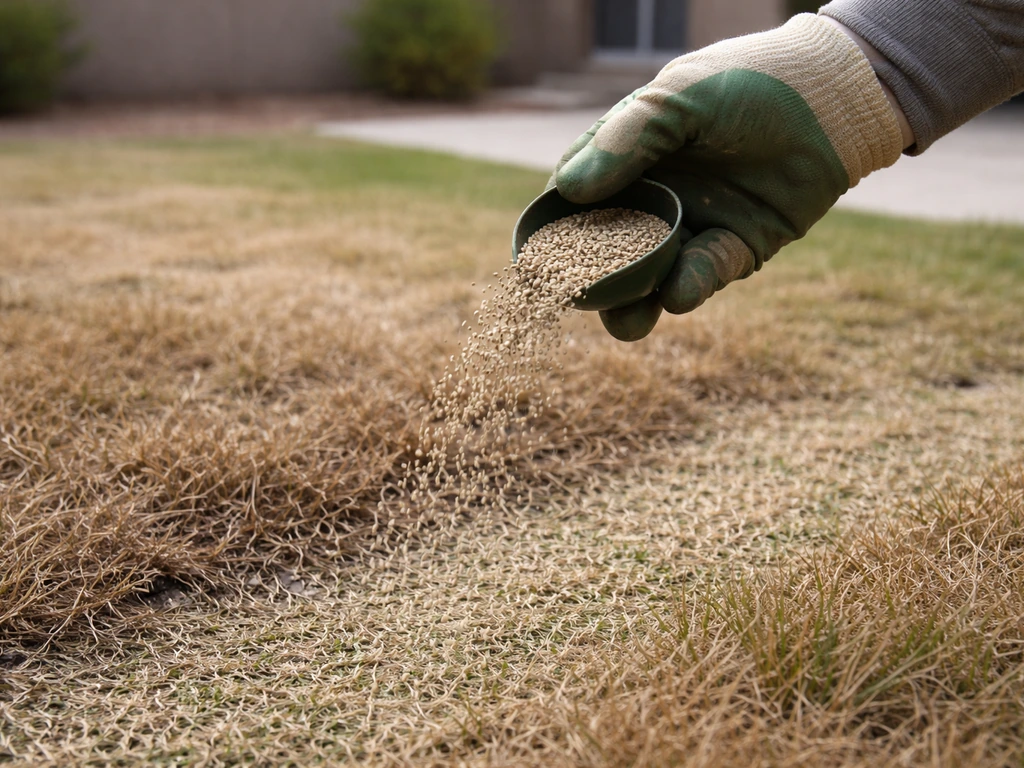
Rhodes grass (Chloris gayana) is one of the most reliable warm-season grasses you can grow in Pakistan. It germinates fast (often within 1 to 7 days in warm soil), handles heat and moderate drought well, and can reach full ground cover in about three months from sowing. The key is timing your sow correctly, keeping seed shallow, and not letting the seedbed dry out in those first critical weeks. Get those three things right and you'll have a thick, green lawn faster than most other grass options available to you.
How to Grow Rhodes Grass in Pakistan: Step by Step Guide
Marcus Tillwell
11 Jul 2026
Is Rhodes grass actually right for your situation?
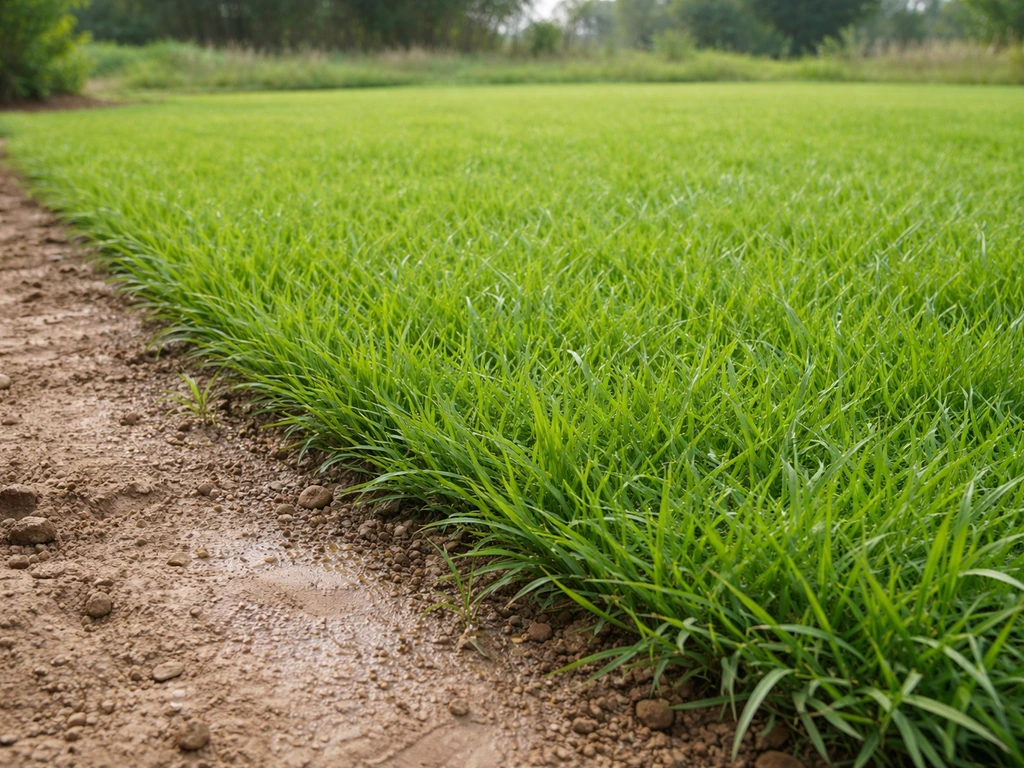
Before you buy seed, be honest about what you're working with. Rhodes grass is a great fit for most of Pakistan's plains and lowland areas because it thrives in the exact conditions you're dealing with: intense summer heat, dry spells between rains, and soils that swing between heavy clay and sandy loam. It grows best between roughly 16.5°C and above 26°C, with maximum growth around 30°C during the day, which is exactly what Lahore, Faisalabad, Multan, and Karachi deliver from March through October.
It's also a smart choice if you need quick ground cover on bare or degraded soil, if you're working on a larger lawn area and want to keep seed costs manageable, or if your site gets full sun for most of the day. Where it starts to struggle: deep, prolonged shade (it really needs sun), areas with heavy foot traffic from pets or kids where a tougher sod-forming grass like Bermuda might hold up better, or mountainous northern regions (Murree, Gilgit, Swat) where winter temperatures regularly drop hard. In those cooler highland spots, Bermuda or fescue blends will serve you better.
One quick comparison worth noting: if you're already familiar with Bermuda grass or have used ryegrass for winter overseeding, Rhodes grass fills a similar niche to Bermuda as a summer perennial but establishes from seed more readily than many Bermuda varieties. The University of Hawai‘i CTAHR also notes that Rhodes grass can be established from seed, and that seedling establishment from seed is typically more rapid than using stolons Rhodes grass fills a similar niche to Bermuda as a summer perennial but establishes from seed more readily. Unlike ryegrass, which is a cool-season annual, Rhodes grass is a warm-season perennial that comes back year after year once established.
| Grass Type | Best Season (Pakistan) | Heat Tolerance | Shade Tolerance | Establishes from Seed | Best For |
|---|---|---|---|---|---|
| Rhodes Grass | Spring to early autumn | Excellent | Poor | Yes, fast | Open lawns, large areas, hot plains |
| Bermuda Grass | Spring to summer | Excellent | Poor | Moderate | High-traffic lawns, sports areas |
| Zoysia | Late spring to summer | Good | Moderate | Slow | Low-maintenance lawns with some shade |
| Tall Fescue | Autumn to spring | Poor | Good | Yes | Cooler regions, shaded yards |
| Ryegrass (annual) | October to February | Poor | Moderate | Yes, fast | Winter color, overseeding |
When to plant and where to put it
Pakistan's University of Veterinary and Animal Sciences (UVAS) recommends a sowing window of February through September for Rhodes grass. That's a wide window, but the sweet spot is March to June in most of the Punjab, Sindh, and KPK plains. You want soil temperatures reliably warm (above 20°C) and either monsoon rains approaching or irrigation available. Sowing just before or at the onset of the summer rains in July also works well because consistent moisture during germination is one of the biggest success factors.
Avoid sowing in the peak of summer heat (late June through August in Sindh and southern Punjab) unless you have reliable irrigation and can water twice daily to keep the seedbed moist. Germination will be fast, but seedlings can scorch if the surface dries out even briefly. For northern and higher-elevation areas, stick to the April to July window when temperatures are consistently warm enough for good emergence.
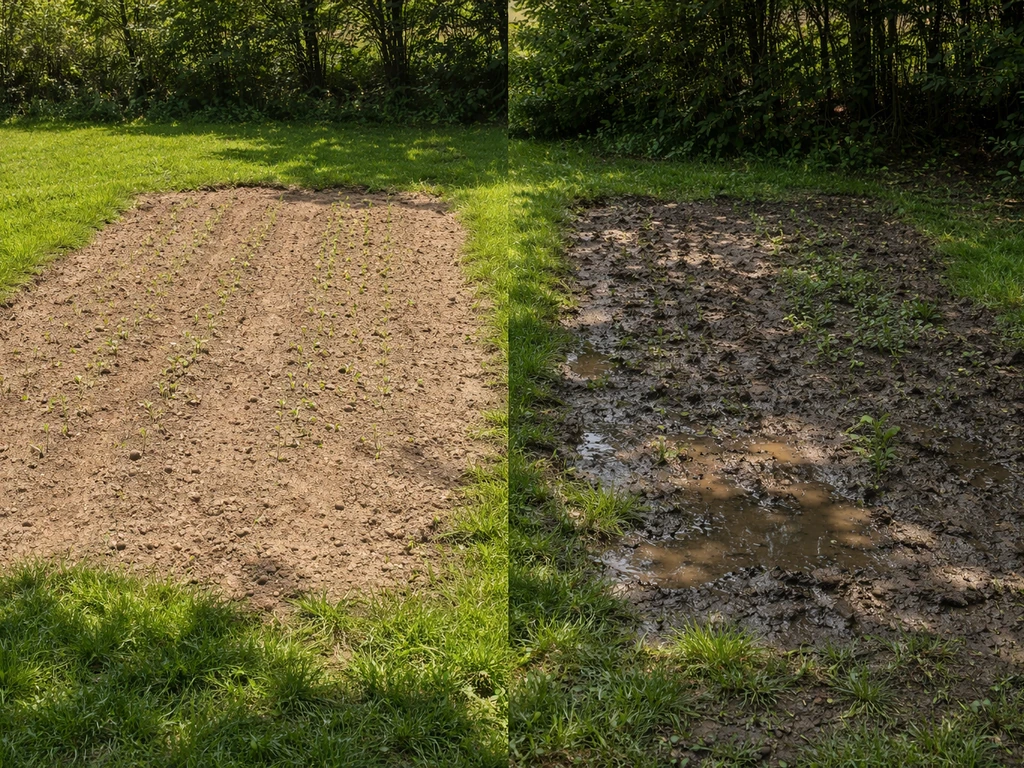
For site selection, pick the sunniest spot available. Ideally, your lawn area gets at least 6 to 8 hours of direct sun. Avoid spots that pool water after rain or irrigation because Rhodes grass does not like waterlogged roots. If you're working in an enclosed courtyard or a spot partially shaded by trees or walls, expect thinner, patchier growth on the shadowed side.
Getting the soil ready

Rhodes grass is tolerant of a wide pH range (roughly 5. 5 to 7. 5 is the working target, though it can push to 4. 5 on the low end and even into alkaline soils), but for a lawn you want to aim for 6.
0 to 7. 0. Most agricultural soils in the Punjab and Sindh plains fall right in this range. If you're on coastal or desert-fringe land with saline tendencies, be aware that salinity genuinely delays and reduces germination, so test your soil or at least flush the top layer with irrigation water before sowing.
Winter rye grass is different from Rhodes grass, so check its specific cold-season sowing timing and soil requirements before you plant how to grow winter rye grass.
If your soil is heavy clay (common in central Punjab), your main job before sowing is breaking it up and improving drainage. Dig or till 10 to 15 cm deep, add a layer of coarse sand or decomposed organic matter (compost or well-rotted manure), and mix it in. Clay soils crust over after rain, which is one of the top reasons Rhodes grass seedlings fail to emerge even after germinating. Loosening the surface crust and adding organic matter breaks this cycle. After prep, water the area and let it settle for a day before sowing.
If your soil is sandy (common in Sindh and parts of Balochistan), it drains too fast and won't hold moisture around seeds. Work in compost or aged manure to increase water retention. Sandy soils are actually easier to sow into because they don't crust, but you'll need to water more frequently during establishment.
- Clear the area of weeds, rocks, and debris completely before you start anything else
- Till or dig to about 10 to 15 cm depth
- For clay: mix in coarse sand and compost at roughly a 1:1 ratio with the existing soil by volume in the top 5 cm
- For sandy soil: work in 5 to 7 cm of compost or well-rotted manure
- Rake the surface level, removing clumps and stones larger than your thumb
- Lightly water the bed and let it settle overnight
- Before sowing, firm the surface by walking across it or rolling if you have a roller — this is important for small-seeded grasses like Rhodes grass because it improves seed-to-soil contact and consistent depth
Sowing the seed: rates, depth, and getting germination right
For a lawn in Pakistan, use roughly 8 kg of seed per acre (about 20 grams per square metre) as your starting point. This is the rate commonly recommended in Pakistan-specific cultivation guides and gives you dense coverage. If you're patching bare spots or want extra-thick coverage faster, you can push toward the higher end used in international guidance (up to about 18 kg per acre equivalent) without causing problems.
Depth is critical. Rhodes grass seed is tiny, and one of the most common establishment failures is burying it too deep. The maximum depth is 25 mm (about 1 inch), but for most soils I'd aim for 5 to 10 mm. On a well-firmed seedbed, broadcasting the seed and then very lightly raking it in or rolling over it with a lightweight roller is enough. You don't need to dig it in. The goal is seed touching moist soil with just a thin covering above it so it isn't exposed to drying wind but isn't buried so deep the tiny seedling can't push through.
For small lawn areas, broadcasting by hand works fine. Divide your seed into two equal portions, walk the area once broadcasting east to west, then repeat walking north to south. This cross-pattern gives you more even coverage. For larger areas, a hand-cranked spreader makes the job much easier and is available in most agricultural supply shops in cities like Lahore, Faisalabad, and Karachi.
Germination under warm conditions is genuinely fast: expect to see sprouts in as little as 1 to 3 days in peak summer warmth, and most seed should have emerged by day 7. If you're sowing earlier in the season (March) when nights are cooler, push the expectation to 7 to 14 days. Full ground cover from a clean sow typically happens around the 8 to 12 week mark.
Watering during establishment: keep it moist, not soggy
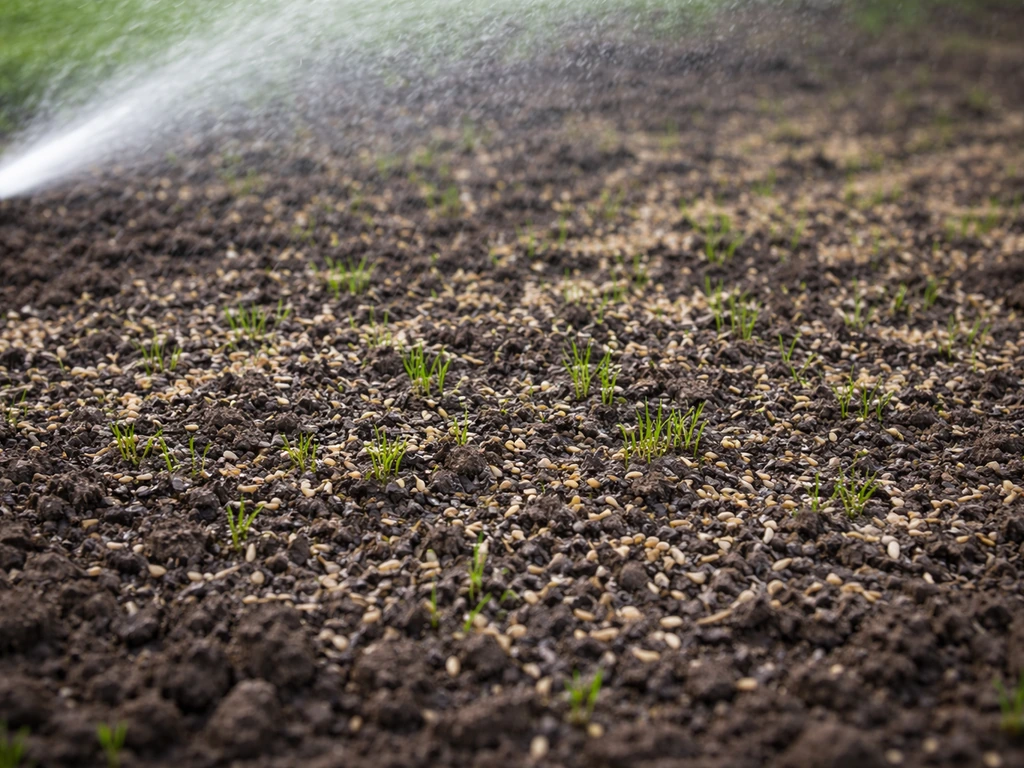
The establishment phase runs from sowing until the grass is about 8 to 10 cm tall and visibly filling in, roughly 4 to 6 weeks. During this phase, your job is to keep the top 2 to 3 cm of soil consistently moist. Not wet, not dry: moist. This usually means watering twice daily (morning and late afternoon) in hot, dry weather, and once daily when conditions are cooler or cloudy.
Once the grass is visibly established and rooting deeper (around week 5 to 6), shift your watering approach. Water less frequently but deeper each time, aiming to wet the soil 8 to 10 cm down. This trains the roots to go deep, which is what gives you drought tolerance later. A simple way to check: push a screwdriver into the soil after watering. It should penetrate 10 cm easily. If the soil is still dry below 5 cm, you're underwatering.
Common watering mistakes to avoid
- Letting the seedbed dry out even once during the first two weeks — this is the single biggest cause of poor germination and seedling die-off
- Overwatering to the point of standing water or surface mud — this encourages fungal issues and can literally wash seed away on slopes
- Watering at midday in peak summer heat — this evaporates too quickly and can briefly scorch tender seedlings
- Switching to infrequent deep watering too early (before week 4 to 5) — roots aren't deep enough yet to benefit
- Ignoring the soil surface on clay sites — if a crust forms after watering, break it with a light rake before it hardens
Fertilizing and mowing to build a thick lawn
At soil prep time, mix a phosphorus-and-potassium fertilizer (something like 0-20-20 or DAP diluted into the soil surface) to help root development. Hold off on nitrogen until the grass has visibly established because pushing top growth before roots are anchored can actually weaken young plants.
At around 4 to 6 weeks after germination, when you have decent coverage, apply a light nitrogen fertilizer (urea at about 25 to 30 kg per acre or a balanced NPK like 15-15-15 at a similar rate). This triggers the lateral spreading and thickening that fills in gaps. Repeat every 4 to 6 weeks through the growing season (March through September). Don't fertilize heavily heading into cooler weather (October onwards in most of Pakistan) when growth is naturally slowing.
For mowing, wait until the grass reaches about 5 cm (2 inches) before the very first cut. Use the highest setting on your mower for that first pass. Never remove more than one-third of the blade height in a single mow: if your target height is 5 to 7 cm for a lawn, mow when it reaches 8 to 10 cm. Cutting too short too early stresses young grass and opens the door to weeds. Once established, Rhodes grass can be maintained at 5 to 8 cm for a neat lawn appearance, mowing weekly or fortnightly depending on growth rate.
Troubleshooting bare spots, slow germination, and establishment failures
Seed didn't germinate at all
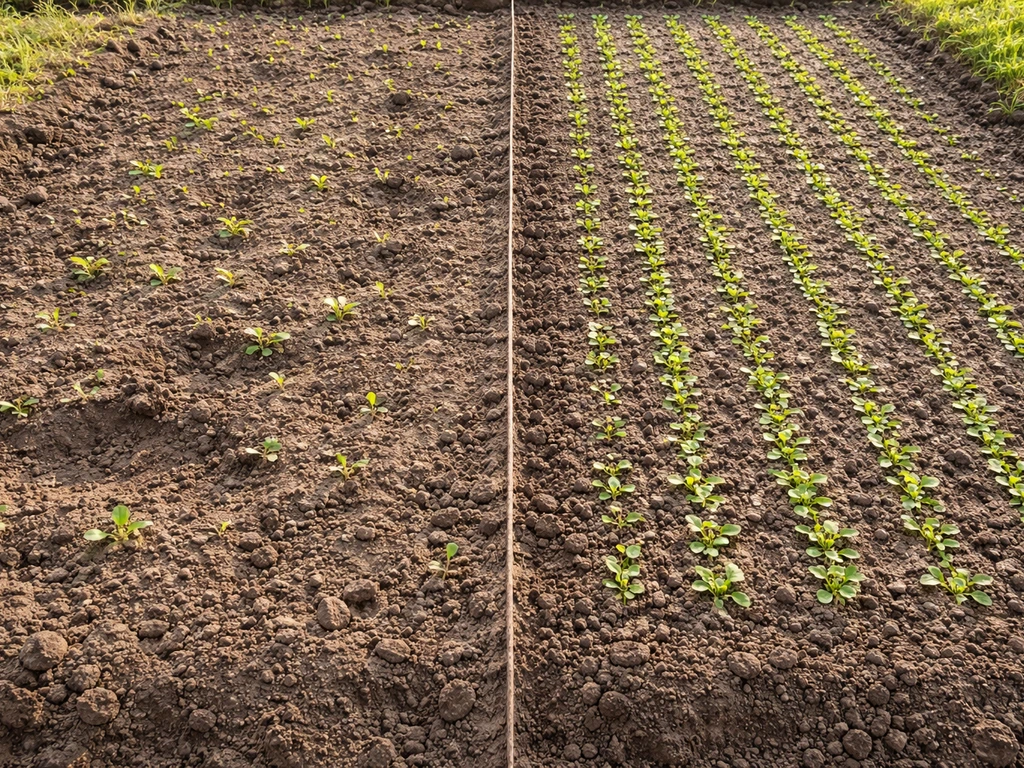
First question: did the seedbed stay moist for at least the first 7 days? If it dried out even once in the first 4 to 5 days, germination fails. The second suspect is depth: seed buried deeper than 2 to 3 cm on clay soil often can't push through. Re-prep the surface, rake lightly, re-sow, and water twice daily. If you're sowing in February or March and nights are still cool (below 16°C), germination will be slow or stalled until temperatures rise. Wait it out or hold the sowing for a couple of weeks.
Patchy and uneven growth
Patchy results usually come from uneven seed distribution, uneven watering (high spots dry faster), or soil crusting in some areas that blocks emergence. For bare patches after your main sowing has established, scratch the surface lightly with a hand rake, broadcast fresh seed directly onto the patch, firm it down with your foot, and water it in. Rhodes grass fills in from the edges of existing plants too, so the surrounding grass will creep into small gaps over time.
Weeds taking over
Weeds are your biggest competition during the first 4 to 6 weeks. The best defense is dense sowing (don't underdo the seed rate), fast germination from a warm seedbed, and mowing weeds down before they set seed once your grass is tall enough for a first cut. Hand-pulling broadleaf weeds in the first 2 to 3 weeks is tedious but effective. Avoid chemical herbicides until the grass is fully established (at least 8 to 10 weeks old) because young seedlings are sensitive.
Yellow or thinning grass after establishment
Yellowing after the grass is up is usually one of three things: nitrogen deficiency (most common), overwatering causing root issues, or salinity stress in affected spots. Check your watering first: if the soil feels constantly wet or smells musty, ease off and improve drainage. If the soil looks fine and watering is reasonable, a light application of urea or ammonium nitrate usually fixes yellowing within 7 to 10 days. If only certain patches are affected (especially near concrete walls or hard surfaces), test for salinity or alkalinity in those spots.
Disease and pest problems
Rhodes grass is generally quite hardy, but overwatering combined with high humidity (monsoon season) can trigger fungal issues that look like irregular brown or gray patches. Cut back watering frequency, improve air circulation by mowing to the right height, and avoid evening watering that leaves the canopy wet overnight. Sap-sucking insects (aphids, mealybugs) occasionally appear but are rarely severe enough to cause major damage. Over- and under-watering can cause damage that looks identical to pest injury, so rule out water stress before reaching for any spray.
Keeping the lawn going long-term and knowing when to start over
A well-established Rhodes grass lawn in Pakistan's plains is genuinely low-maintenance once it's through that first growing season. It'll slow down or go dormant-looking in the cool months (November through February in most areas), then bounce back strongly when temperatures warm again. If you want green grass through winter, plan on overseeding or special winter care methods based on your location’s temperatures cool months. This is normal, not failure. Continue light watering through cooler months to prevent complete die-back, but don't fertilize when the grass is dormant.
If you want winter green color, some lawn owners in Pakistan do a winter overseeding with annual ryegrass (October to November) onto the dormant Rhodes grass base. If you are also wondering about ryegrass, focus on its cool-season sowing window and soil prep so it establishes before hot weather arrives annual ryegrass. This gives you green through winter while the Rhodes grass rests underneath, then the ryegrass dies back naturally as temperatures rise and the Rhodes grass resurges. It's a practical combination for those who want year-round green in the Punjab and Sindh lowlands.
Re-seeding is worth doing if more than 30 to 40 percent of your lawn is bare or thin heading into a new spring. Oversow at half the normal seed rate after a light scarification (scuffing the surface with a stiff rake). Full re-establishment is usually needed only if drainage problems, compaction, or severe salinity has killed the root base. In that case, go back to the full soil prep process before re-sowing.
Your practical action plan for this week
If it's currently between March and August in most of Pakistan, you're in the window to sow. Here's what to do right now: If you’re trying to grow winter grass in Arizona, look at cooler-season options and adjust your seeding and watering schedule to match Arizona winter conditions.
- Check your site: full sun (6+ hours), no pooling water, relatively flat or gently sloped
- Get your soil ready: till to 10 to 15 cm, amend for clay or sand as described above, rake level and firm the surface
- Buy seed: aim for 8 kg per acre (about 20 g per square metre) of clean Rhodes grass (Chloris gayana) seed from an agricultural supplier — check availability in your city, as demand can be patchy in smaller markets
- Also buy: a phosphorus-potassium starter fertilizer (DAP works for phosphorus), a light nitrogen fertilizer for week 5 to 6 (urea or 15-15-15 NPK)
- Sow seed by broadcasting in a cross-pattern, then firm lightly with your foot or a roller
- Water immediately after sowing and keep the seedbed moist twice daily for at least 2 weeks
- First mow at 5 cm height, first fertilizer dose at week 5 to 6, then into the regular maintenance cycle
The timeline from sow to a lawn you're happy with is roughly 10 to 12 weeks if you stay consistent with watering in the early weeks. That's faster than most grass species you can establish from seed in Pakistan, which is one of the main reasons Rhodes grass is worth choosing when conditions are right. To get the best results, follow a step-by-step approach to planting Rhodes grass, including timing, seed depth, and consistent early watering.
FAQ
When should I overseed my Rhodes grass lawn in Pakistan to keep it thick?
Plan to overseed again in early spring only if you see more than about a third of the lawn staying thin or bare through late winter. Before sprinkling new seed, lightly scarify (scuff) the surface and make sure water reaches the soil 2 to 3 cm down, otherwise new seedlings germinate but fail to root.
Can I grow Rhodes grass from seed and fertilize right away?
Yes, but treat it as a two-step process: seed in the warm window for germination, then delay the first heavy nitrogen until coverage is clearly established. If you nitrogen too early, you get weak root anchoring and the lawn can thin during heat waves or after mowing.
What’s the correct watering schedule for fixing bare patches on Rhodes grass?
For patch repairs, aim for a seedbed that is moist at the surface for at least the first 7 days, then keep watering twice daily until the new shoots are visible and stable. If you only water once daily, top layers dry quickly and repaired patches often stay patchy longer than the main lawn.
Will Rhodes grass grow under trees or in a courtyard with limited sun?
Rhodes grass does not tolerate repeated shade. If you have partial shade, expect slower fill-in and uneven density on the shaded side. A practical test is to mark the shadiest area, sow normally, and watch for at least 6 weeks, if there is still no thickening then you likely need full-sun placement or a different grass for that corner.
How do I maintain Rhodes grass in areas with heavy foot traffic?
If your lawn gets heavy foot traffic (kids, pets, frequent walking), Rhodes can thin in worn paths because it relies on a dense, healthy canopy. Consider raising the mowing height slightly, avoid scalping, and for high-wear lanes use an oversow plan with extra seed after each dry spell to keep gaps from expanding.
What should I do if my soil or water is salty when trying to grow Rhodes grass?
If you are using saline-affected water or your area has salt buildup, apply a thorough pre-wash irrigation to flush salts from the top layer before sowing. Then keep the seedbed moist during the germination week, because salt stress slows sprouting even when temperatures are correct.
How can I tell whether my Rhodes grass watering is deep enough in Pakistan?
Don’t rely on a single watering day schedule. Instead, after establishment, test with a screwdriver, you want penetration around 10 cm. If the tip hits dry soil around 5 cm, increase the depth per irrigation rather than just increasing how often you water.
When is the first mowing, and what height should I keep Rhodes grass at?
You should mow first when the grass is about 5 cm tall, then keep mowing at 5 to 8 cm. If you cut too short during the first 4 to 6 weeks, seedlings get stressed, weeds get light, and you can end up with permanent patchiness even if germination was good.
How do I handle brown or gray patches that show up during monsoon season?
If you see irregular brown or gray patches during humid monsoon periods, reduce evening watering (so the canopy dries overnight) and avoid overwatering. Also mow at the recommended height to improve airflow, if patches keep expanding despite correcting moisture, then you may need targeted diagnosis rather than more water.
My Rhodes grass seed is not sprouting yet, when should I re-sow?
For Rhodes grass, 1 to 3 days germination is common in peak warmth, but only if the seedbed stays moist. If germination has not started by about 7 to 14 days depending on month and nights are cool, re-check temperature, seed depth, and whether the top 2 to 3 cm actually stayed moist the whole first week.
My new Rhodes grass looks weak early on, is it a fertilizer problem?
Rhodes grass can be sensitive to fertilizer mis-timing. Use the early phosphorus-and-potassium step for root help, then wait until you have decent coverage before nitrogen. If your lawn looks pale right after sowing, it’s usually not a nitrogen issue, it’s often establishment moisture or insufficient seedbed firmness.
Is it safe to sow Rhodes grass in the hottest summer weeks in Pakistan?
Avoid sowing in deep peak heat unless you can maintain consistent surface moisture. A safer option if you are in late June to August is to sow at the onset of monsoon or ensure irrigation capacity for twice daily watering during germination.
Next Article
How to Grow Winter Grass in Arizona: Step by Step Guide
Learn how to grow winter grass in Arizona with step-by-step prep, seeding timing, watering, and fixes for bare spots.