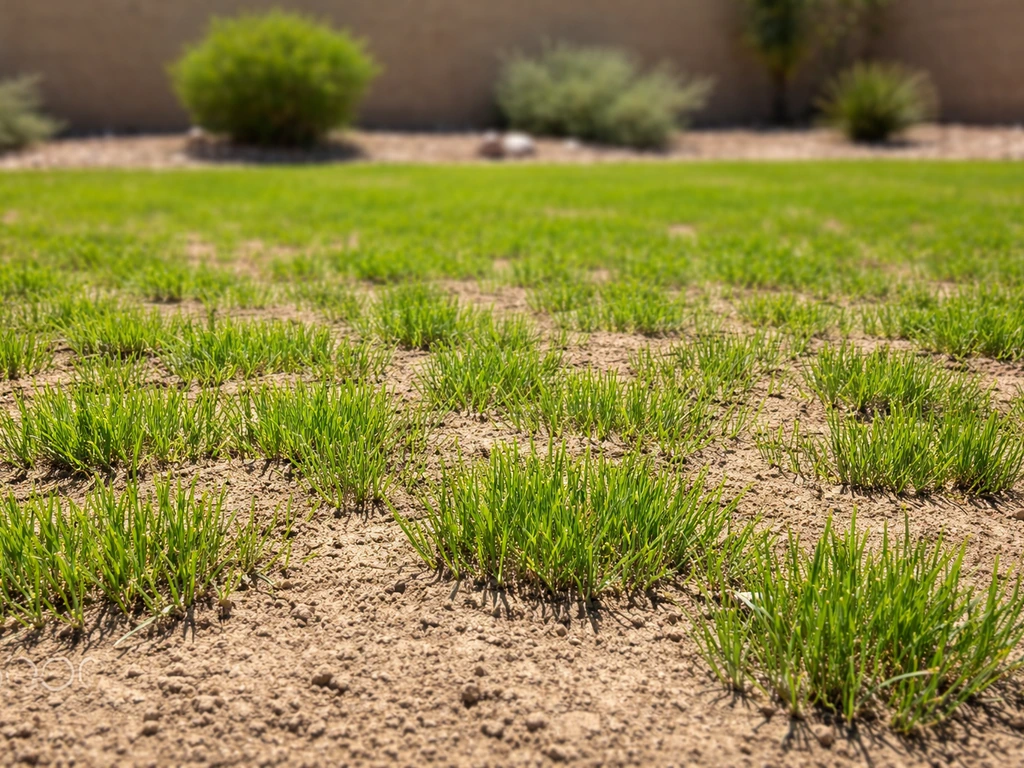
Growing ryegrass from seed is one of the more forgiving lawn projects you can take on, but only if you get the basics right. Ryegrass germinates fast, establishes quickly, and can turn a bare or thin lawn into something green and dense within three to four weeks. The catch is that timing, soil contact, and consistent watering during germination are non-negotiable. Get those three things right, and ryegrass is hard to mess up. Skip any of them, and you will be staring at patchy, uneven results wondering what went wrong.
How to Grow Ryegrass from Seed: Step-by-Step Guide

Marcus Tillwell
14 Apr 2026
Choosing the right ryegrass type and where it fits
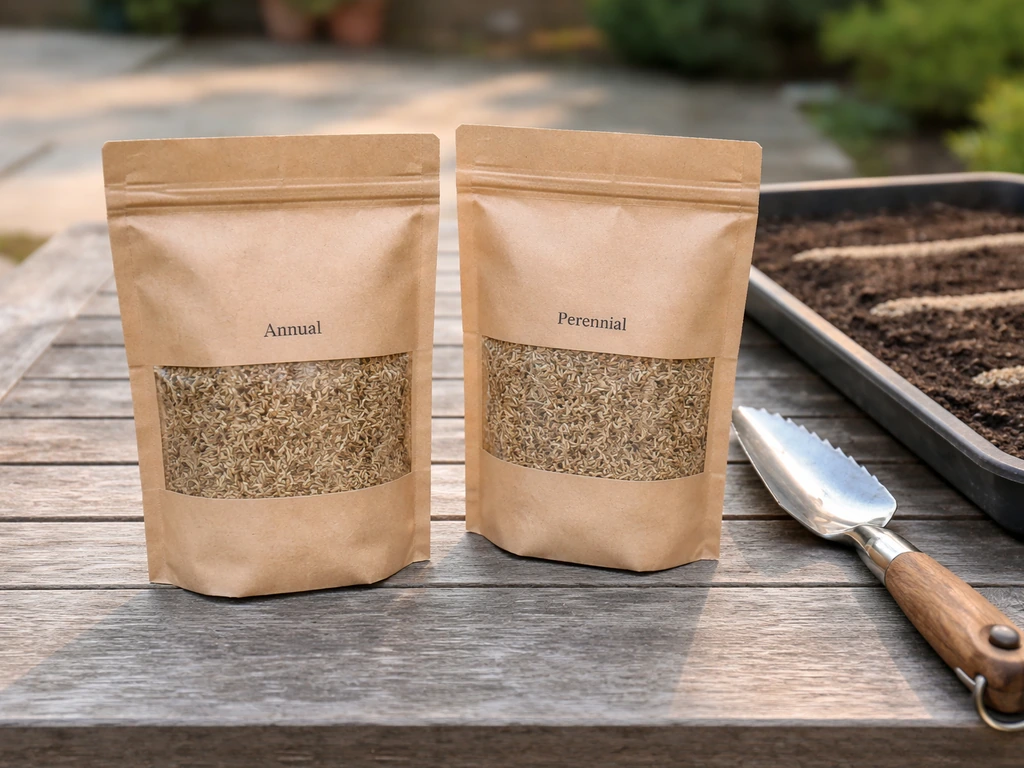
Before you buy a bag of seed, you need to know which ryegrass you are actually planting, because annual and perennial ryegrass behave very differently. Annual ryegrass (Lolium multiflorum, sometimes called Italian ryegrass or wintergrass) grows fast, germinates within five to seven days, and dies off when hot weather returns. It is the go-to choice for overseeding warm-season lawns in fall to keep them green through winter and early spring, and it is also used for quick soil stabilization on slopes or bare areas. Perennial ryegrass (Lolium perenne) takes a little longer to get established but sticks around year after year in the right climate. University of Maryland Extension also notes that perennial ryegrass seed can germinate quickly but is not necessarily a long-lived species under Maryland conditions. It is finer-textured, more wear-tolerant, and much better suited as a permanent lawn grass in cooler regions.
Many bags sold at big-box stores are blends that include both species, so read the label carefully. If you are overseeding a bermuda or zoysia lawn for winter color, annual ryegrass at high rates is typically your best bet. If you are trying to establish a permanent cool-season lawn in the Pacific Northwest, the Mid-Atlantic, or the upper Midwest, go with turf-type perennial ryegrass. If you are in a transitional zone or somewhere warm like the Southwest desert, growing winter grass in Arizona follows a different playbook focused almost entirely on seasonal overseeding with ryegrass rather than permanent establishment.
Ryegrass is a cool-season grass, which means it thrives when soil temperatures are between roughly 50 and 65 degrees Fahrenheit. It does not handle prolonged drought, deep shade, or extreme heat well. If your yard is heavily shaded or you are dealing with a grass-type mismatch, it is worth thinking about whether ryegrass is the right long-term solution before you invest time and seed into it. That said, as a transitional or temporary grass, it is almost unmatched for speed and ease.
Best time to plant ryegrass
Timing is the single biggest factor in whether your ryegrass succeeds. The rule is simple: soil temperature needs to be in that 50 to 65 degree sweet spot, and you need enough growing season ahead of you for the grass to establish before either freezing cold or intense heat arrives.
For permanent perennial ryegrass lawns, the best windows are late summer to early fall (late August through October in most of the country) or early spring (March through April). Fall is generally preferred because soil is warm from summer, there is less weed competition, and the grass has the entire cool season to thicken up. Spring works too, but you are racing against summer heat. If you plant too late in spring, the young lawn gets hammered before it has a chance to root deeply. For more on navigating cold-weather planting, growing grass in cold weather covers what to expect from a germination standpoint when temperatures start dropping.
For overseeding warm-season turf with annual ryegrass, the timing is slightly different. You want to wait until the warm-season grass (bermuda, zoysia, St. Augustine) is slowing down for fall dormancy but before nighttime temperatures drop below about 50 degrees consistently. That window is typically mid-October through November depending on your region. The goal is to catch the transition when nights are cool enough to reduce competition from the existing turf but days are still warm enough for ryegrass to germinate and push some roots down before winter. Growing winter rye grass goes deeper into this seasonal overseeding timing if your primary goal is winter color rather than permanent turf.
If you are reading this in winter and wondering whether it is too late, there is still a path forward in milder climates. Growing grass in the winter explains what is realistic depending on where you live and what adjustments to make when conditions are not ideal.
Soil prep for seed success
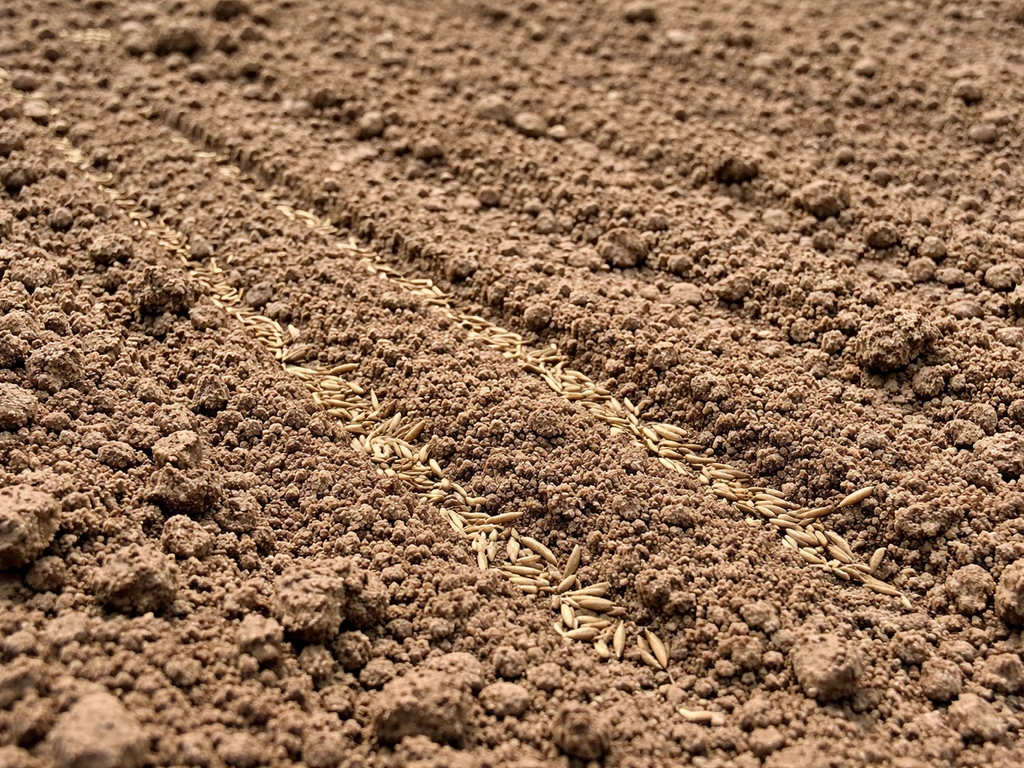
Ryegrass seed will not establish on hard, bare soil without some prep work. The fundamental requirement is seed-to-soil contact. Seed sitting on top of compacted ground or thick thatch simply will not germinate reliably, no matter how well you water it. This is probably the most common reason people end up with patchy, frustrating results.
Starting from scratch on bare ground
If you are seeding a bare area or a new lawn, till or loosen the top two to three inches of soil. Rake it smooth and level, breaking up any clumps. You want a fine, crumbly seedbed. Then lightly firm the soil with a roller or just by walking over it, because seed dropped into excessively loose, fluffy soil tends to dry out fast and germinate unevenly. If your soil is heavy clay, work in a half-inch layer of compost before seeding to improve drainage and root penetration. If it is sandy and drains too fast, compost helps here too by adding water-holding capacity.
Overseeding an existing lawn
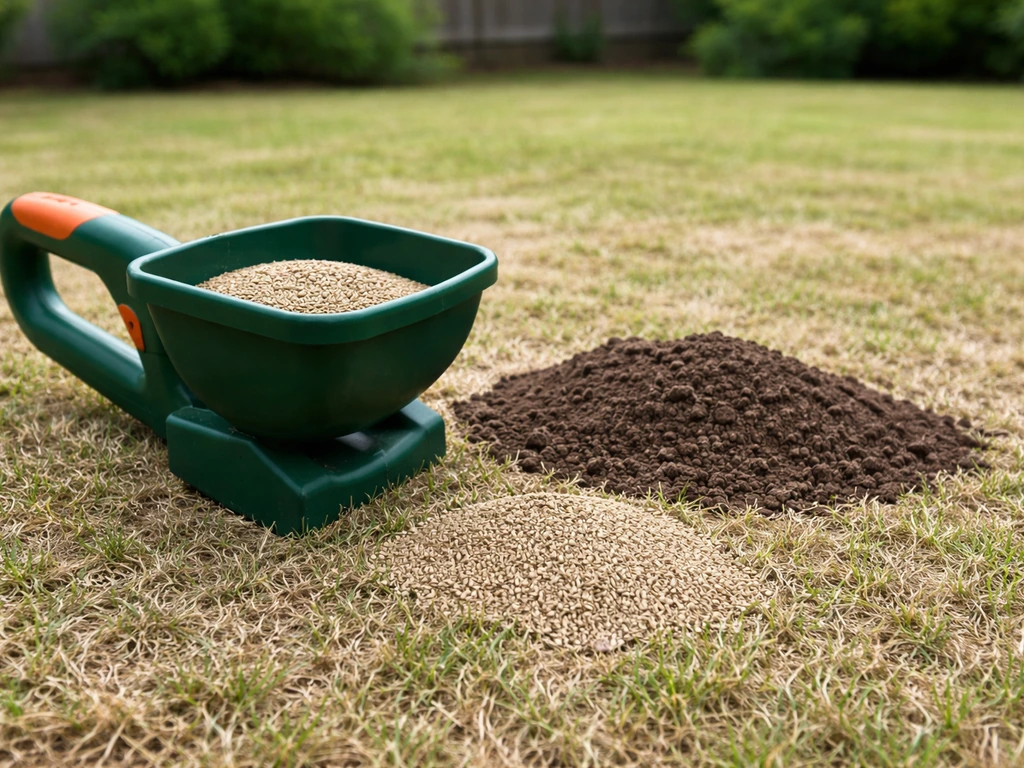
If you are overseeding existing warm-season turf, mow the existing grass as short as possible (scalp it down to about half an inch to an inch) before seeding. Penn State Extension notes that ryegrass can establish successfully not only in prepared, tilled seedbeds but also when renovating existing sods, including overseeding situations overseeding existing warm-season turf. This reduces competition and lets sunlight and water reach your new seed. Then use a dethatching rake or a power dethatcher to scratch the surface and expose soil. Even shallow cultivation to about a quarter-inch depth makes a real difference in seed-to-soil contact and stand quality. For bare spots within an existing lawn, scratch up the spot with a hand rake, loosen the top inch, and seed directly into that loosened soil.
Compaction and other problem soils
Compacted soil is a silent killer for ryegrass establishment. If water puddles on your lawn for more than a few minutes after rain, you have compaction. Core aerate before seeding if possible, especially on clay-heavy soils. The cores left on the surface actually help by giving seed a place to land and stay moist. On slopes where washouts are a risk, mix seed with a thin layer of straw mulch immediately after seeding to hold both moisture and seed in place.
Seeding rate and application methods
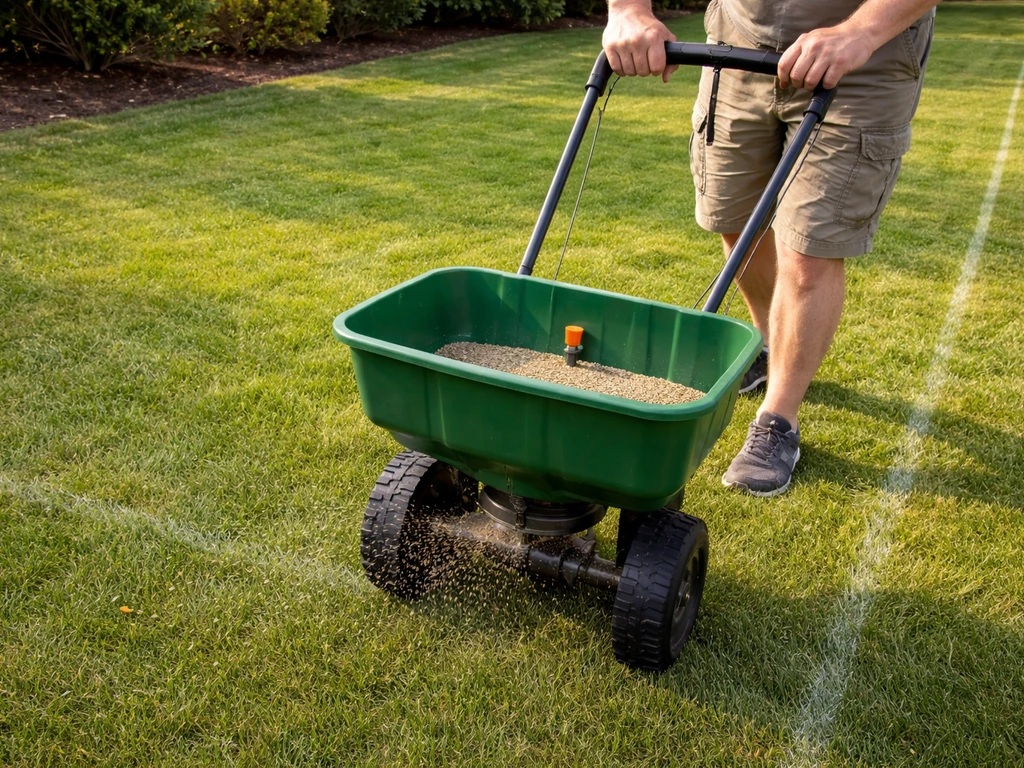
Getting the seeding rate right matters more than most people realize. Too little seed and you get a thin, weedy stand. Too much and seedlings compete with each other and come in weak and spindly. For turf-type perennial ryegrass, a rate of 4 to 5 pounds per 1,000 square feet is a good starting point for overseeding, while starting from bare ground may call for 8 to 10 pounds per 1,000 square feet to hit the density needed for a full stand. Annual ryegrass used for overseeding warm-season turf is typically applied at higher rates, sometimes 10 to 15 pounds per 1,000 square feet, because the goal is a dense, fast green-up rather than a permanent turf.
| Ryegrass Type | Goal | Seeding Rate (lb/1,000 sq ft) |
|---|---|---|
| Perennial ryegrass | Overseeding existing turf | 4 to 5 |
| Perennial ryegrass | New lawn from bare ground | 8 to 10 |
| Annual ryegrass | Overseeding warm-season turf for winter color | 10 to 15 |
| Annual ryegrass | Temporary soil stabilization | 10 to 20 |
For application, a drop spreader or broadcast spreader is the easiest and most consistent tool for flat areas. Split the seed into two equal halves and make passes in perpendicular directions (north-south then east-west) to get even coverage. On small patches or bare spots, spreading by hand works fine. After broadcasting, use a leaf rake to lightly drag the seed into the top quarter-inch of soil, or run a roller over the area to press seed into contact with the soil surface. Do not bury ryegrass seed deeper than a quarter-inch. For larger lawns with thick existing turf, a slit-seeder (also called an overseeder) is worth renting. It mechanically cuts slits in the soil and drops seed directly into them, dramatically improving germination rates compared to broadcasting on top of dense turf.
Watering plan through germination and early growth
This is where most people either succeed or fail. Ryegrass seed needs to stay consistently moist from the moment you plant it until it has germinated and pushed roots into the soil. That does not mean soaking the ground until it is muddy. It means light, frequent watering so the top quarter-inch of soil never fully dries out.
In practical terms, that means watering two to three times per day in short cycles during the germination window, applying roughly an eighth to a quarter inch of water each time. In hot or windy weather, you may need to water even more frequently. The goal is damp, not saturated. If you see water pooling or running off, you are overwatering. A quick finger test works fine: press your fingertip into the seedbed and if it feels dry to the touch even at the surface, it needs water now.
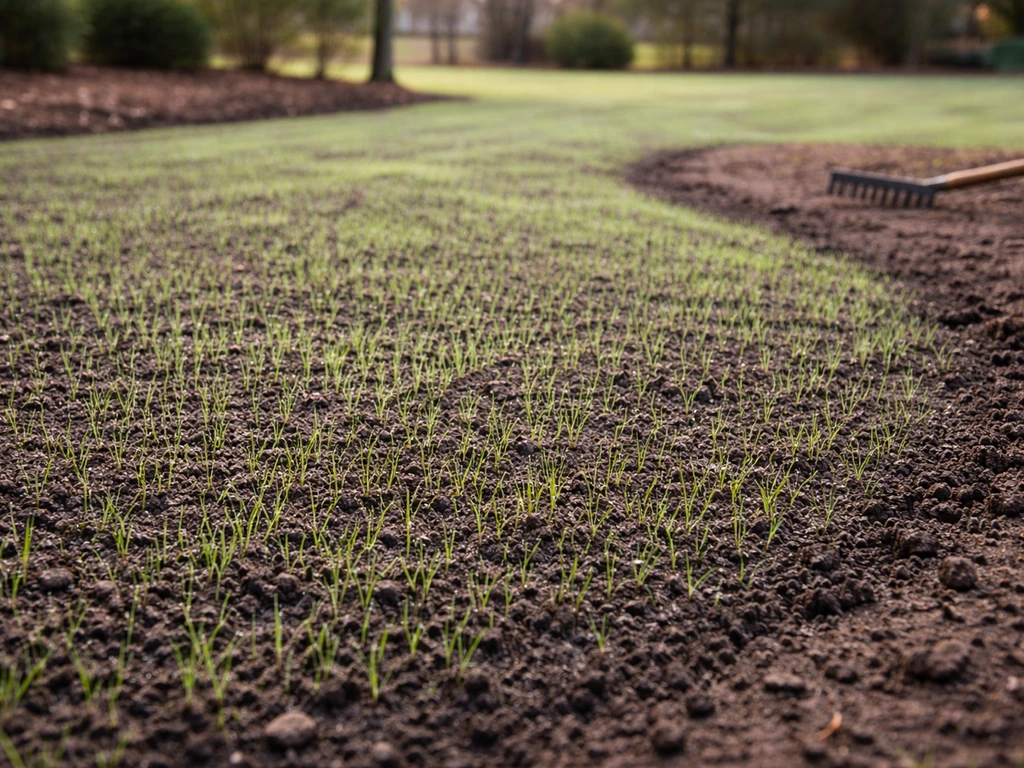
Perennial ryegrass typically germinates in five to ten days under good conditions. Annual ryegrass can pop up in as few as five to seven days. You will know germination is happening when you see a flush of thin green threads across the seedbed. Once you see that, you can back off slightly to once or twice a day, applying a little more water each time to encourage roots to chase moisture deeper into the soil. Deeper roots mean a more drought-tolerant, resilient lawn later. Do not stop watering altogether, though, until the lawn has reached mowing height and rooted well enough that you cannot easily pull up seedlings by hand.
For those interested in establishing a longer-term perennial stand, understanding how to grow perennial ryegrass from seed covers additional nuance on watering through the full establishment phase, especially as the grass matures past the initial germination sprint.
Early care: first mowing, feeding, and weed management
When and how to mow for the first time
Do not rush the first mow. Wait until the grass is tall enough that you are not cutting off more than a third of the blade at once. For most perennial ryegrass lawns maintained at around two inches, that means waiting until the grass reaches about three inches before you mow for the first time. Set the mower high, use a sharp blade, and avoid mowing when the soil is wet. Mowing wet, soft soil on a young lawn pulls seedlings right out of the ground. Ryegrass lawns can reach mowing stage in as little as three to four weeks after seeding under good conditions.
The recommended maintenance height for perennial ryegrass is 1.5 to 2.5 inches. If you let it get too tall before you start mowing, step it down gradually over two or three cuts rather than scalping it all at once. Removing too much at once shocks the young plants and causes that yellowing, thinning knock-back that makes a new lawn look worse instead of better.
Fertilizing new ryegrass
If you added a starter fertilizer at seeding (something like a 10-10-10 or a dedicated starter blend high in phosphorus), you typically do not need to feed again until after the first mowing. At that point, apply a light nitrogen fertilizer to push leafy growth. Do not over-fertilize a young lawn. Too much nitrogen too early can burn seedlings and push top growth faster than roots can keep up, which leaves you with a weak stand that dries out quickly.
Weed management during establishment
Avoid applying pre-emergent herbicides around seeding time. Pre-emergents prevent germination and will kill your ryegrass seed along with the weeds. Wait until your new lawn has been mowed at least three times before applying any post-emergent herbicides, and always check the label to confirm it is safe for ryegrass. For the first several weeks, your best weed management tool is dense seeding and keeping the lawn mowed at the right height so ryegrass shades out competition.
Troubleshooting: patchiness, poor germination, washouts, and crusting
Even when you do most things right, ryegrass establishment can go sideways in predictable ways. Here is how to read the signs and fix them.
- Patchy germination with bare spots: The most common cause is uneven seed-to-soil contact. Rake those bare areas lightly, reseed at the same rate, and water consistently. Also check whether those spots are getting full sun or drying out faster than the rest of the lawn.
- Nothing is coming up after two weeks: Check soil temperature first. If soil is below 50 degrees, germination will be very slow or stalled entirely. Also dig up a few seeds and check: if they are soft and mushy, they rotted from overwatering or poor drainage. If they are dry and intact, you are underwatering or the seed had poor contact.
- Seed washing away on slopes: Seed on bare slopes needs something to hold it in place. Apply a thin layer of straw mulch immediately after seeding, or use erosion-control blankets for steeper grades. Water those areas more gently and more frequently rather than in heavy bursts.
- Soil crust forming over seed: A hard surface crust after rain or heavy watering can prevent seedlings from emerging. Break the crust gently with a light rake drag and resume light watering to keep the surface consistently damp without creating runoff.
- Birds eating seed: This is frustrating but common. A thin layer of straw mulch helps by hiding seed from birds. You can also use reflective tape or pinwheels to deter them temporarily.
- Bunching or uneven stand density: Ryegrass has a natural tendency to bunch under moisture stress. If your stand looks clumpy rather than uniform, it often means some areas are drying out between waterings. Increase watering frequency in those zones and check for sprinkler coverage gaps.
- Yellowing after first mow: This is usually from mowing too short too soon, or from a dull blade tearing rather than cutting cleanly. Raise your mowing height, sharpen the blade, and give the lawn a week to recover.
If you are dealing with multiple failed germination attempts and suspect your conditions are genuinely outside what ryegrass handles well (extreme cold, too much shade, or compaction that keeps recurring), it is worth considering whether a different grass variety would serve your lawn better long-term. Warm-climate growers in particular sometimes find that growing rhodes grass or other heat-tolerant alternatives fits their climate better as a permanent solution, with ryegrass used only for seasonal overseeding.
How to finish establishment and care long-term
Once your ryegrass lawn has been mowed two or three times and looks reasonably full and uniform, you have cleared the hardest part. The focus shifts from survival to growth and density. At this stage, back your watering down to a deeper, less frequent schedule: aim for about an inch of water per week total, applied in one or two sessions rather than multiple daily sprinklings. This encourages roots to grow deeper chasing moisture, which is exactly what you want for a lawn that handles summer stress better and stays green longer between waterings.
Keep mowing consistently at your target height. For perennial ryegrass, that is 1.5 to 2.5 inches depending on your preference and local climate. Never let it get more than about 50 percent taller than your target height before mowing again. Consistent mowing at the right height actually thickens turf over time by encouraging lateral tillering rather than just upward growth.
For annual ryegrass overseedings, understand that the grass will decline naturally as warm weather returns in spring. Warm-season turf underneath will push back through as temperatures climb. Do not try to save the ryegrass once it starts thinning in late spring; just let it go and transition your care back to the warm-season base lawn. If you want green color year-round in a warm climate, you will repeat the overseeding process each fall.
For permanent perennial ryegrass lawns, plan on overseeding thin areas each fall to keep density up. Ryegrass does not spread aggressively like bermuda or zoysia, so thin spots do not always fill in on their own. A light overseeding each year in fall keeps the lawn thick and competitive against weeds. In regions where winters are genuinely harsh, understanding how ryegrass is grown in challenging climates like Pakistan highlights just how adaptable this grass can be when timing and variety selection are dialed in correctly.
Long-term, ryegrass is a relatively low-maintenance grass when matched to the right climate and use case. Fertilize two to three times per year (fall, late fall, and early spring for permanent lawns), keep the mower blade sharp, and water deeply rather than frequently once established. If you hit problems in colder months and are unsure how to adjust your care routine, growing grass in the winter gives you a practical framework for keeping ryegrass alive and growing even when conditions are not perfect. Stay consistent with mowing and watering, reseed thin spots every fall, and ryegrass will reward you with a dense, fast-recovering lawn that looks good through the seasons it is built for.
FAQ
Can I mix ryegrass seed with sand or compost when seeding?
You can, but only in thin, dry amounts that do not bury the seed. Ryegrass must stay within the top quarter-inch for reliable germination, so avoid heavy compost mixes. If you want better spread, consider mixing seed with a small quantity of inert, clean material (like fine sand) and still rake or press lightly after spreading.
What’s the best way to tell if I’m watering correctly during germination?
Use a surface moisture check plus a runoff check. The surface should feel like it is staying damp, not dry, and water should not puddle or flow. If water puddles for more than a few minutes, cut back and switch to shorter cycles more frequently. If the seedbed feels dry at the top quarter-inch, increase frequency rather than adding a big soak.
How long should I keep watering daily after I see sprouts?
Once you get a visible germination flush, you can reduce from multiple short cycles to once or twice per day. Continue until the seedlings are at mowing height and rooted well enough that gently tugging does not easily pull them up. Stopping early is a common reason new ryegrass looks patchy even after it sprouted.
Should I roll the lawn after seeding, and when?
Rolling can improve seed-to-soil contact, especially on uneven or fluffy surfaces, but do it immediately after seeding. Use light pressure so you do not create compaction. If your soil is already compacted (signs include water pooling and slow infiltration), core aerate instead of heavy rolling.
Do I need to cover ryegrass seed with straw or mulch?
Usually, no for flat areas with good seed contact. Straw mulch is helpful on slopes to prevent washout and on exposed, windy sites to reduce drying, but apply a thin layer so seeds are not buried. Heavy mulch can block light and interfere with germination.
Will ryegrass grow in partial shade, and what level of shade is too much?
Ryegrass can tolerate some shade, but deep shade or areas that stay cool and wet often reduce density and increase thinning. If your lawn is heavily shaded, choose perennial ryegrass for longer establishment, but expect slower thickening. If the area is consistently dark under trees or buildings, consider switching grasses instead of relying on ryegrass alone.
What mowing height should I use for ryegrass if my lawn is patchy early on?
For perennial ryegrass, start mowing around the target height of about 1.5 to 2.5 inches, but do not scalp patchy spots to “even them out.” Instead, mow at the recommended height once most blades are ready, then keep mowing on schedule. Cutting too low stresses weaker seedlings and can widen thin areas.
Can I apply fertilizer immediately after seeding ryegrass?
If you used a starter fertilizer at seeding, you typically wait until after the first mowing to feed again. If you did not use starter, avoid strong nitrogen right after sprouting. A safer approach is to rely on water and seed establishment first, then use light nitrogen only once the turf has recovered from the first mow.
Are pre-emergent herbicides always a no-go for ryegrass seed?
They are generally a no-go around seeding because pre-emergents can block germination. If weed control is urgent, plan for alternatives like manual removal or waiting until the lawn has been mowed at least three times before using post-emergent products. Always confirm label compatibility with ryegrass and the timing on the product.
Why did my ryegrass germinate but then fail to fill in?
Common causes are uneven seed-to-soil contact, inconsistent moisture after sprouting, or mowing too early or too low. Also check for compaction and poor drainage, which can keep roots shallow even if seeds germinate. If thin areas persist after mowing begins, overseed those spots in the next suitable window rather than trying to “fix” them mid-season.
How often should I mow after the first few cuts to thicken perennial ryegrass?
Keep mowing regularly so you remove no more than about half of the blade height each time. As a rule of thumb, mow when the grass reaches roughly 50 percent above your target height. Consistent mowing supports lateral tillering, which is what builds density in ryegrass.
What should I do if I see water pooling or algae on the seeded area?
Pooling often means compaction or drainage issues. Reduce watering frequency, improve aeration (core aerate if feasible), and avoid heavy rolling. Algae can appear in persistently wet conditions and can indicate that the seedbed stays saturated, which reduces oxygen at the surface and can lead to weak establishment.
Can I overseed ryegrass into an existing lawn if I have a pest or disease problem?
It depends on the severity. Seeded ryegrass is vulnerable during establishment, so address extreme stress first, such as severe thinning from pests, broad disease patches, or major matting. If the lawn is actively failing, focus on correcting the underlying cause before overseeding so the new seedlings can compete and root.
Next Article
How to Grow Grass in El Paso TX: Seed, Plant, and Care
Step-by-step guide to grow grass in El Paso: pick Bermuda, Zoysia or fescue, prepare soil, seed timing, watering, fixes.