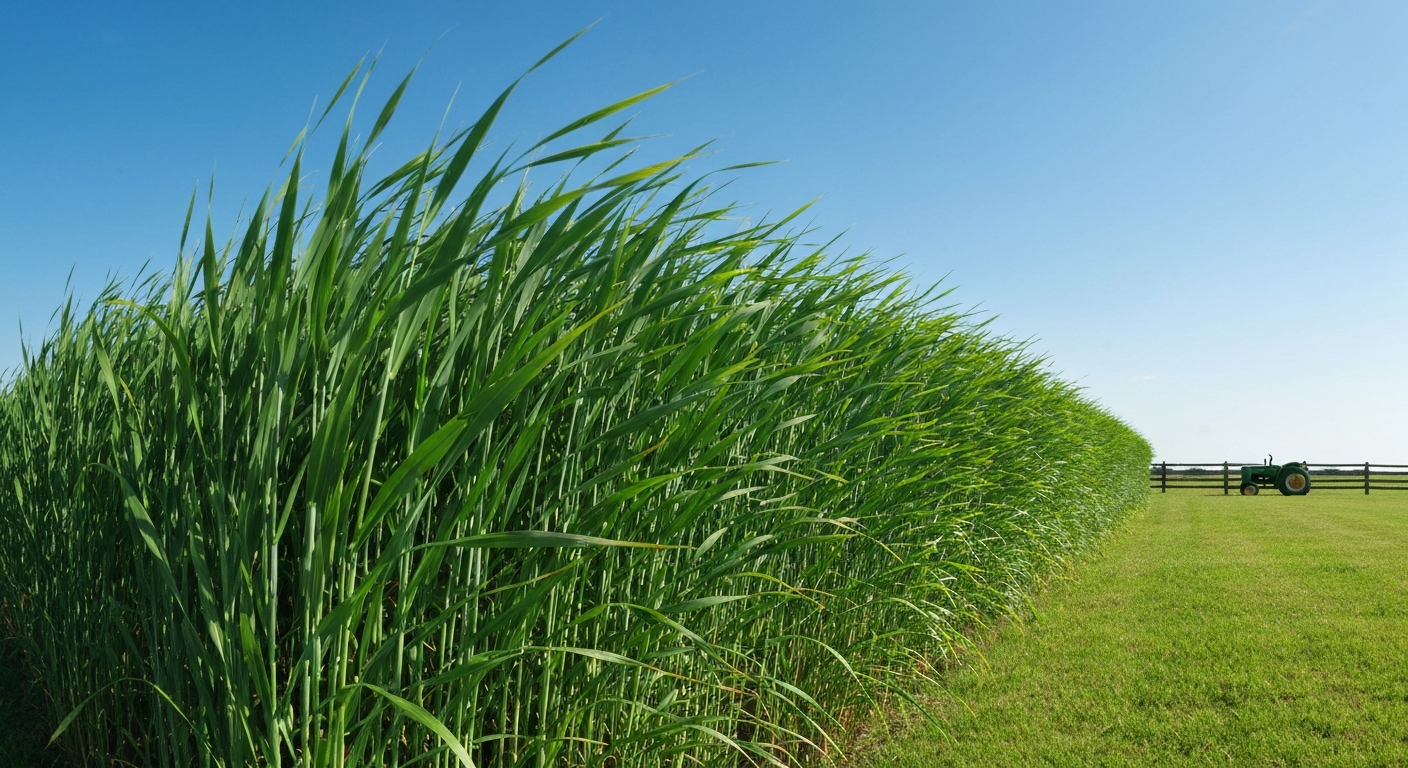
Sudangrass is a warm-season annual you plant after your soil hits 60°F, and it grows fast enough to cover bare ground, suppress weeds, or cut for forage by midsummer. Drill or broadcast seed at 20–35 lb/acre (about 0.5–0.7 lb per 1,000 sq ft for drilling, up to 0.9 lb for broadcast), push it 1 to 1.5 inches deep into a firm seedbed, and you'll see seedlings in as little as 4–7 days in warm, moist soil. It won't replace a permanent lawn, the first hard frost kills it, but as a summer cover crop, erosion stopper, or temporary green fill, it's one of the fastest-establishing grasses you can grow from seed.
How to Grow Sudangrass from Seed: Home Lawn & Cover-Crop Guide
Marcus Tillwell
12 Aug 2026
What sudangrass actually is (and what you're really buying)
Botanically, true sudangrass is Sorghum sudanense (Piper) Stapf, a C4 warm-season annual native to Sudan and northeast Africa. But when you browse seed catalogs or visit your farm co-op, a lot of what's labeled 'sudangrass' is actually a sorghum-sudan hybrid (Sorghum bicolor × S. sudanense), often abbreviated SSG. These hybrids are taller, leafier, and higher-yielding than pure sudangrass, and for most homeowner uses, temporary cover, erosion control, summer fill, they perform nearly identically. Unless you have a specific grazing or forage reason to want pure sudangrass, don't stress over the distinction. Just look for 'sudangrass' or 'sorghum-sudan hybrid' on the bag.
Sudangrass is a deep-rooted grass that can punch through compacted subsoil, which makes it genuinely useful as a soil-improvement tool, not just a quick green cover. Cornell / Extension guidance and summaries on warm‑season annuals and biomass benefits note that sudangrass establishes quickly in warm soil, produces high summer biomass that suppresses weeds, improves soil structure with deep roots, tolerates drought, and can be used as temporary cover, erosion control, or forage/green‑manure. Its roots also release a natural compound called sorgoleone, an allelopathic exudate that suppresses weed germination. That's a real benefit when you're trying to shut down a weedy bare spot for a season, but it also means you need to allow time before seeding small-seeded plants after a sudangrass stand (more on that in the soil prep section).
Who should actually choose sudangrass
Sudangrass is the right call in some specific situations, and entirely wrong for others. Here's how to figure out which side you're on.
Good candidates for sudangrass
- You need fast summer coverage on bare, eroded, or disturbed ground and aren't ready to establish a permanent lawn this season
- You want to improve compacted or poor-structure soil before seeding a permanent grass next spring
- You have a large area (side lot, utility strip, field edge) where you want to suppress weeds over summer without spraying
- You're growing forage for chickens, goats, or cattle and have the space to manage a taller, coarser grass
- You want a green-manure cover crop to mow down or till in before fall or spring planting
- Your summer soil temperatures regularly hit 75°F or higher — sudangrass loves heat and is drought-tolerant once established
Situations where sudangrass is the wrong choice
- You want a permanent, low-mow lawn — sudangrass dies at frost and cannot serve as a year-round turf
- You have young children or dogs who need a fine-textured lawn surface — sudangrass is coarse and grows 4–8 feet tall if left unmowed
- You're in a cool northern climate where summers are short and soils stay cool — warm-season annuals underperform in short growing windows
- You plan to seed small-seeded flowers or fine lawn grasses immediately after — sorgoleone residue can suppress germination for weeks
- You have a shaded yard — sudangrass is a full-sun C4 grass and will struggle in anything less than 6 hours of direct sun
Honest pros and cons
| Factor | Pro | Con |
|---|---|---|
| Establishment speed | Emerges in 4–7 days in warm soil | Fast growth means frequent mowing if you want it manageable |
| Soil improvement | Deep roots break compaction, add organic matter | Sorgoleone can suppress next planting if not allowed to break down |
| Drought tolerance | Very tolerant once established | Needs consistent moisture at germination |
| Weed suppression | Dense canopy and sorgoleone suppress weeds | Not selective — allelopathy affects all small seeds |
| Cost | Seed is inexpensive; widely available | Annual — you pay and replant every year |
| Permanence | Great summer fill | Frost-killed; not a lawn replacement |
| Forage/livestock use | High biomass, palatable with management | Prussic acid risk in stressed or immature regrowth — relevant if you're grazing |
Sudangrass vs other grasses: which one actually fits your yard
The honest comparison here isn't really 'sudangrass vs bermudagrass for a lawn', those are different tools for different jobs. What follows is a practical breakdown of how sudangrass stacks up against the grasses and ornamentals you're most likely to be considering for the same site.
| Grass | Type | Permanent? | Best Use Case | Sun Needs | Choose Over Sudangrass When... |
|---|---|---|---|---|---|
| Sudangrass / SSG | Warm-season annual | No | Summer cover, forage, erosion control, soil improvement | Full sun | You just need fast summer cover or soil building |
| Bermudagrass (couch) | Warm-season perennial | Yes | Permanent warm-season lawn, high-traffic areas | Full sun | You want a year-round lawn in a warm climate |
| Zoysiagrass | Warm-season perennial | Yes | Low-maintenance permanent lawn in warm/transition zones | Full sun | You want a dense, slow-growing permanent turf |
| Tall fescue / ryegrass | Cool-season perennial/annual | Yes (fescue) | Permanent cool-season lawn, overseeding | Sun to part shade | Your summers are mild and you need year-round green lawn |
| Switchgrass (Panicum virgatum) | Warm-season perennial | Yes | Native ornamental, wildlife habitat, erosion control | Full sun to part shade | You want a permanent, low-maintenance native ornamental |
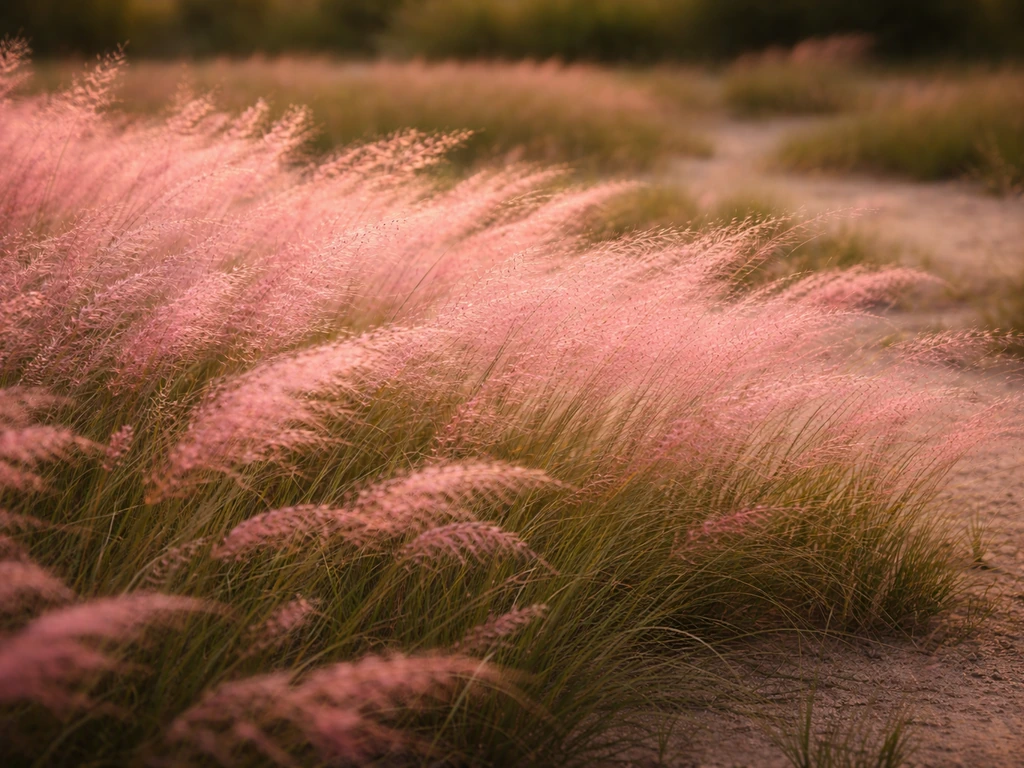
| Pink muhly grass (Muhlenbergia capillaris) | Warm-season perennial | Yes | Ornamental accent, fall color | Full sun | You want a low-growing ornamental with seasonal interest |
| Carex (sedge spp.) | Cool-season perennial | Yes | Shade groundcover, moist or woodland sites | Shade to part sun | Your site is shaded or moist and you need permanent ground cover |
| Feather reed grass (Calamagrostis × acutiflora) | Cool-season perennial | Yes | Upright ornamental accent, mixed borders | Full sun to part shade | You want a year-round structured ornamental grass |
| Reed canarygrass (Phalaris arundinacea) | Cool-season perennial | Yes (invasive) | Not recommended for most landscapes | Sun to part shade | Avoid planting — invasive in many states, spreads aggressively |
| Scutch / couch grass (Elymus / Cynodon types) | Warm-season perennial | Yes | Utility lawn or hard-wear areas (climate-dependent) | Full sun | You need a hard-wearing permanent lawn surface |
The takeaway: if you want a real permanent lawn, look at bermudagrass or zoysiagrass for warm climates, or tall fescue and ryegrass for cool-season regions. If you're considering warm-season perennial options, see how to grow couch grass for a low-maintenance, spreading lawn alternative. For ornamental interest that comes back every year, switchgrass and muhly grass are far better fits than sudangrass. Carex is your best option for shaded, moist spots. For shaded, moist spots, see our guide on how to grow Carex grass for planting, light, and watering tips. Sudangrass fills a narrow but genuinely useful role: fast, cheap, summer-only coverage where you're not ready or willing to commit to a permanent planting yet. If you want an ornamental, low-maintenance option for borders or meadow-style plantings, see how to grow muhly grass for planting and care tips. One grass worth avoiding in this list is reed canarygrass, it spreads aggressively and is considered invasive in many states, so steer clear regardless of what problem you're trying to solve. For more on its invasive nature and management, see how to grow reed canary grass. For a comparison with a similar coarse, fast-establishing species, see our guide on how to grow scutch grass. If you're considering ornamental grasses, see a concise guide on how to grow feather reed grass for planting tips and seasonal care.
When and where to plant sudangrass
The single most important rule: wait until your soil at 4 inches deep reads at least 60°F, and ideally 65°F or warmer. Planting into cool soil is the number one reason sudangrass fails or germinates unevenly. A cheap soil thermometer costs less than five dollars and saves you a wasted bag of seed. Take the reading in the morning before the sun has had time to warm the surface, and measure at the 4-inch depth.
Planting windows by region
| Region | Typical Planting Window | Notes |
|---|---|---|
| Deep South (Zone 8–10): TX, LA, FL, GA | Late April to mid-July | Soils warm early; wide planting window; possible second planting in some areas |
| Transition Zone (Zone 7): VA, NC, TN, OK, NM | Mid-May to early July | Aim for early June as sweet spot; late July risks frost before maturity |
| Mid-Atlantic / Midwest (Zone 6): OH, IN, PA, IL | Late May to late June (June 1–Aug 1 per NRCS Ohio guidance) | June is ideal; late plantings may not produce full biomass before frost |
| Northern Plains / Great Lakes (Zone 4–5): MN, WI, MI, ND | Early June to early July | Short window; prioritize warm, well-drained sites; avoid late-season planting |
| Mountain West / High Elevation | June to early July (highly site-specific) | Check local frost dates; elevation can compress window significantly |
| Pacific Coast (mild climates) | May to July | Varies widely by coastal vs. inland location; confirm soil temps before seeding |
Sudangrass is killed by the first hard frost. In northern zones with short summers (Zones 4–5), this means you're working with roughly 90–120 frost-free days, which is enough for sudangrass to reach cover-crop biomass but leaves little margin for late planting. In the South, you have a much wider window and less urgency. Wherever you are, get the seed in by late June in most temperate zones to guarantee useful biomass before the season ends.
Site assessment before you touch a seed bag
Walking the site carefully before planting saves more time than any other step. Here's what to check and why each factor matters for sudangrass specifically.
Sunlight
Sudangrass needs full sun, meaning 6 or more hours of direct sunlight per day. It's a C4 plant that drives photosynthesis hard in high-heat, high-light conditions. Walk your site at different times of day and identify shade cast by buildings, trees, or fences. If more than a third of the area is in shade, sudangrass will be thin, spindly, and unproductive. In that case, Carex sedges or a shade-tolerant fescue mix is a better choice.
Soil texture and compaction
Grab a handful of moist soil and squeeze. If it holds a tight ribbon and feels slick, you have clay-dominant soil. If it falls apart immediately and feels gritty, it's sandy. Clay soil is slow to drain and can crust over after rain, forming a barrier for seedling emergence. Sandy soil drains too fast and dries out quickly after germination. Both need different prep approaches, covered in the next section. For compaction, push a metal rod or screwdriver into the soil by hand. If you can't push it 6 inches deep without significant effort, the soil is compacted and your seedbed prep needs to include some tillage or loosening.
Drainage
Dig a 12-inch-deep hole, fill it with water, and come back an hour later. If standing water remains, drainage is poor. Sudangrass tolerates brief waterlogging better than many grasses, but consistent ponding will rot seed and prevent germination. On poorly drained sites, either raise the seedbed slightly by adding a thin layer of compost, or consider redirecting the drainage problem before you plant.
Slope and erosion risk
If you're planting on a slope specifically to control erosion, broadcast seeding is usually safer than drill seeding because disturbing a slope with equipment can accelerate wash. After broadcast seeding, use a lawn roller to press seed into the soil, and consider a light straw mulch (one bale per 1,000 sq ft) to hold moisture and prevent seed wash in the first week. On steeper slopes (more than 15–20% grade), mix sudangrass with a fast-germinating annual ryegrass at a roughly 3:1 (sudan:ryegrass) ratio by weight to get some root anchor in the first 7–10 days while sudan establishes.
Pet-affected areas
Dog urine burns are high-nitrogen, high-salt spots that will show up as dead patches surrounded by dark-green rings. Sudangrass is not particularly more tolerant of urine burn than other grasses, and its coarse texture makes it an unpleasant surface for pets anyway. For pet-heavy areas, a better approach is using a hardy perennial lawn grass like tall fescue (more urine-resistant than many species) and addressing the burn spots with water dilution and overseeding. If you do use sudangrass as a temporary summer cover in a dog yard, expect to replant or address damaged spots at the end of the season before transitioning to a permanent lawn grass.
Preparing the seedbed for your specific site type
Good seed-to-soil contact is everything. Sudangrass seed is not tiny, it's similar in size to small sorghum grain, but it still needs a firm, worked seedbed to germinate reliably at 1 to 1.5 inches deep. Here's how to prep based on what you're working with.
Bare spots and disturbed ground
If you're working with fresh topsoil or recently disturbed earth, your main job is to create a level, firm surface. Rake out rocks and debris, break up any large clods, and roll or tamp the surface before seeding. Fresh disturbed soil is often loose and fluffy, which causes seed to sit too deep or too shallow when broadcast. A single pass with a lawn roller (fill it one-third with water to keep it light) after raking firms things up nicely. Seed into that firmed surface, then roll again after seeding to lock seeds in.
Compacted or clay soil
Clay soil is actually not a major problem for sudangrass, its deep roots are part of what makes it useful as a compaction-busting cover crop. But the surface layer still needs to be broken up enough for seed to make contact at the right depth. If you're planting a small area, a tiller run at 4–6 inches, followed by raking and rolling, is sufficient. For larger areas, a disc or chisel pass helps. Add 2–3 inches of compost if the clay is especially tight and mix it into the top few inches. Avoid planting right after heavy rain into wet clay, the surface will crust as it dries and block emergence.
Sandy soil
Sandy soil drains water fast, which is the main germination threat. Add 2–3 inches of compost or aged manure worked into the top 4–6 inches before seeding. This improves water retention dramatically. After seeding, use a light straw mulch to reduce surface moisture loss during the critical first week. Plan to water daily until seedlings reach 2–3 inches tall if rainfall is absent. Sandy soil also holds fewer nutrients, so a starter fertilizer application (covered in the fertilizer section) makes a bigger difference here than on clay.
Shady or tree-root areas
As noted, sudangrass is not appropriate for shaded areas. If you have a shaded bare spot under trees and were hoping sudangrass would fix it, redirect that energy toward Carex sedges, fine fescues, or a shade-tolerant groundcover. If the area has partial shade (morning sun, afternoon shade) with at least 5–6 hours of direct light, you can attempt sudangrass but expect thinner, shorter plants. Tree roots also compete fiercely for water, so supplement irrigation during dry spells.
Pet-affected and high-nitrogen soils
Areas damaged by dog urine or heavy manure application often have elevated salt and nitrogen levels. Before seeding anything, flush the soil with water (run a sprinkler for 30–60 minutes) to dilute salts, then wait 3–5 days. If the area has dead thatch or burned plant debris, rake it out and remove it, that organic layer can form a barrier between seed and soil. Amend with a thin layer of topsoil or compost before seeding.
Soil pH: quick check before you plant
Sudangrass grows well in soil pH ranging from about 5.5 to 7.5, so it's not particularly fussy. A quick soil pH test (inexpensive kits at any garden center) is worth doing before adding lime or sulfur. If pH is below 5.5, add agricultural lime per the kit's instructions and work it in before seeding. At that low pH, nutrient availability drops and germination suffers.
Tools, materials, and a pre-planting safety check
What you'll need
- Sudangrass or sorghum-sudan hybrid seed (see seed label section below for what to look for)
- Soil thermometer (4-inch reading depth)
- Rake (bow rake for seedbed prep)
- Lawn roller (for firming seedbed before and after broadcast seeding)
- Broadcast spreader or hand-crank seeder (for areas under 5,000 sq ft)
- Grass drill or slit seeder (rented from equipment yards) for larger areas or for better seed-to-soil contact
- Starter fertilizer or all-purpose granular fertilizer (10-10-10 or similar)
- Straw mulch (optional but recommended for sandy soil and slopes)
- Hose and sprinkler or drip irrigation setup
- Mower with deck height adjustable to at least 6–8 inches (sudangrass is mowed high)
Quick safety checklist
- Prussic acid (HCN) risk: sudangrass and SSG hybrids can accumulate prussic acid (cyanogenic glucosides) in young, stressed, or frost-stressed tissue — relevant if livestock will graze the stand; do not graze until plants are at least 18–24 inches tall, and never graze immediately after frost damage or drought stress
- Sorgoleone awareness: if you plan to seed a fine lawn grass or small-seeded plants immediately after terminating a sudangrass stand, wait at least 2–4 weeks after incorporation for the allelopathic compounds to break down
- Equipment calibration: before running any spreader, calibrate it over a tarp and weigh the output so you're hitting the target seeding rate — overseeding wastes money and creates overly thick stands that are prone to lodging
- Pesticide label check: if you've recently applied a pre-emergent herbicide to the site, check the label — many pre-emergents will prevent sudangrass germination just as they prevent weed germination
- Mowing safety: do not mow sudangrass in tall, dense stands with a push mower — use a string trimmer or a tractor-mounted deck for stands above 3 feet
Seeding rates, depth, and methods
Getting the seeding rate right matters more than most homeowners expect. Too thin and you get poor weed suppression and slow ground coverage; too thick and plants compete with each other, lodge (fall over), and dry out at the base. Use the table below as your guide.
| Seeding Method | Rate (lb/acre) | Rate (lb/1,000 sq ft) | Rate (g/m²) | Notes |
|---|---|---|---|---|
| Drilled (grass drill or slit seeder) | 20–30 | 0.46–0.69 | 2.2–3.4 | Most reliable stand; lower rate needed because seed placement is precise |
| Broadcast + roll | 30–40 | 0.69–0.92 | 3.4–4.5 | Use higher end on rough or cloddy seedbeds; roll after seeding |
| Broadcast for erosion control (slopes) | 40–50 | 0.92–1.15 | 4.5–5.6 | Mix with annual ryegrass for fast anchor on steep slopes |
| Overseeding into existing thin stand | 15–20 | 0.34–0.46 | 1.7–2.2 | Scalp existing vegetation first; best on bare soil patches |
Seeding depth: target 1.0 to 1.5 inches deep in most soils. In very sandy, loose soils you can go to 1.5 inches. In heavy clay or hard seedbeds, don't push past 1 inch, if the soil is too hard to seat seed at 1 inch, you need more tillage before you plant. After broadcast seeding, use a lawn roller to press seed into the surface, this alone dramatically improves germination rates because it creates the physical contact between seed and soil that allows moisture uptake.
Germination timeline and what to expect
In warm, moist soil (65–90°F), sudangrass seedlings emerge in roughly 4–7 days. Under cooler or drier conditions, emergence can stretch to 10–14 days. If nothing has emerged after 14 days, dig up a few seeds. If they're soft and rotted, conditions were too wet or cold. If they're intact and hard, the soil may have dried out between watering cycles and germination stalled. Re-water immediately and check for soil crust on clay sites, break any surface crust with a light rake without disturbing seeds.
| Condition | Expected Emergence | Action if Delayed |
|---|---|---|
| Soil 65–80°F, moist | 4–7 days | None needed; monitor moisture |
| Soil 60–65°F, moist | 7–12 days | Be patient; confirm soil contact; avoid saturating |
| Soil below 60°F | Very slow or failed | Wait for warm weather; do not replant until soil warms |
| Dry surface after seeding | 10–14+ days or failed | Water daily; add light straw mulch to retain moisture |
| Clay surface crust formed | Delayed or blocked | Gently break crust with rake; water again |
Fertilizing and watering through the season
Fertilizer
For temporary cover or erosion control where you're not trying to maximize biomass, you don't need heavy fertilizer inputs. A starter fertilizer applied at seeding (something like 10-10-10 at the bag-recommended rate, typically around 10–15 lb per 1,000 sq ft) gives seedlings a phosphorus boost for rooting. For maximum biomass production in a forage or cover-crop situation, published guidance recommends 75–100 lb of nitrogen per acre (roughly 1.7–2.3 lb of actual N per 1,000 sq ft) split into a starter application at seeding and a side-dress when plants are 12–18 inches tall. For a typical homeowner summer cover situation, a single moderate application of balanced fertilizer at planting and one follow-up at 6 weeks is sufficient.
Watering
Until seedlings are 3 inches tall, keep the top inch of soil consistently moist, this usually means watering lightly every 1–2 days in dry weather (roughly 0.25 inches of water per watering). Once plants pass 6 inches and roots begin to explore deeper soil layers, sudangrass is surprisingly drought-tolerant and only needs supplemental water during extended dry spells (more than 2 weeks without rain). Overwatering during establishment encourages damping-off disease on the seedlings; don't water so heavily that the surface stays waterlogged.
Mowing and managing sudangrass through summer
Left unmanaged, sudangrass can reach 4–8 feet tall. For most homeowners using it as a cover or temporary lawn, mowing is the primary management tool. Mow to 6–8 inches when plants reach 18–24 inches tall. Never cut more than one-third of the plant height at a time (same rule as any grass), removing too much of the leaf area in one cut shocks the plant and reduces regrowth. After mowing, plants will regrow vigorously from the base. Most homeowners get 2–3 cuttings per summer in northern zones and 3–4 cuttings in the South.
If you're using sudangrass as a soil-improvement cover crop with plans to terminate it in fall, mow or till it down 2–4 weeks before you want to seed your permanent lawn grass. This gives the sorgoleone time to begin breaking down and gives the organic matter time to start incorporating. In northern zones, the first frost will kill the stand outright, which simplifies termination, mow the dead material or till it in after frost.
Troubleshooting: when things go wrong
Poor or patchy germination
The most common cause is cold soil. If you planted before soil hit 60°F, germination will be slow, uneven, and patchy regardless of seed quality. Wait for warmer conditions and lightly overseed the bare patches at the next planting window. The second most common cause is poor seed-to-soil contact from broadcasting without rolling. If you can go back and roll the surface, do that. If not, scratch the surface lightly with a rake and water more consistently for the next week.
Volunteer regrowth and persistence
Sudangrass is an annual, but it can drop seed and produce volunteer plants the following year. If you mow the stand before it sets seed (usually by mowing or terminating before plants head out), volunteers are minimal. If you let it go to seed, expect some re-emergence the next summer. In most cases this isn't a serious problem, the volunteers germinate with warm soil and are easy to till in or mow down. If you're transitioning to a different grass, till in volunteers early when they're small.
Pest and disease issues
Sudangrass is relatively pest-tolerant, but a few problems show up in home settings. Aphid colonies (especially sorghum aphid) can cluster on stems and leaf undersides during hot, dry summers. A strong spray of water knocks them back; insecticidal soap works for heavy infestations. In humid areas, leaf blight and anthracnose can cause leaf spotting, proper plant spacing (not overseeding too densely) and avoiding overhead irrigation later in the day reduce these problems. If you see stunted, yellowed plants with distorted leaves, check for soil pH problems or nutrient deficiencies before assuming pest pressure.
Stand falling over (lodging)
Lodging, plants falling over in masses, usually happens when sudangrass is planted too densely, pushed with excess nitrogen, or exposed to heavy rain and wind. It's more common with tall SSG hybrids. If it happens, cut the lodged stand with a string trimmer or brush cutter to 6–8 inches and let it regrow. Reduce nitrogen applications for the rest of the season.
How to read a sudangrass seed label (and what branded mixes actually give you)
Every seed bag sold in the U.S. must carry a standardized seed label. Knowing how to read it takes about two minutes and can save you from buying low-quality seed. Here's what each component means for sudangrass.
Key label components
| Label Field | What It Means | What to Look For |
|---|---|---|
| Pure seed % | Percentage of the bag contents that is actually the species listed | For sudangrass: look for 95%+ pure seed; anything below 90% is low-quality |
| Germination % | Percentage of pure seed that germinated in the lab test | Look for 80% or higher; below 75% means you need to increase your seeding rate to compensate |
| Inert matter % | Non-seed material: dust, chaff, broken seed coats | Should be under 5%; higher inert matter means you're paying for fluff |
| Weed seed % | Percentage of weed seeds in the mix | Zero is ideal; anything above 0.5% is a concern — you're planting weeds along with sudangrass |
| Noxious weed seed | Listed separately; indicates particularly problematic invasive weeds in the bag | The field should read 'none found' — do not buy seed with listed noxious weeds |
| Lot number and test date | When the germination test was conducted | Germination declines with age; seed tested more than 12 months ago may perform below labeled rate — adjust seeding rate upward if the test date is old |
| Cultivar or variety | Named variety of sudangrass or SSG in the bag | Named cultivars from variety trials (extension forage trials, Texas A&M listings) generally outperform generic 'sudangrass' on yield and uniformity |
Branded and blended mixes: what to expect from packaged products
Major lawn seed brands like Scotts typically focus on turf-type lawn grasses (bluegrass, fescue, ryegrass) rather than sudangrass or cover-crop mixes. If you're shopping at a big-box hardware store, you're unlikely to find a branded sudangrass product on the lawn seed shelf. Sudangrass and SSG seed is more commonly sold through farm supply stores (Tractor Supply, Rural King, local co-ops), online agricultural seed suppliers, and extension-linked seed dealers. Some cover-crop blended mixes include SSG or sudangrass alongside legumes (like cowpeas or soybeans) for nitrogen fixing; these blends are sold for summer cover-crop use and are fine for homeowners wanting combined soil improvement.
If you see a lawn-seed product marketed as a 'summer filler' or 'temporary lawn mix' and it includes sorghum or sudan, read the label carefully. Some of these products blend coarse sorghum-sudan with finer annual grasses. The sorghum component will dominate quickly given its faster growth rate, so manage expectations: you'll get a coarser, taller stand than the package photos typically suggest. For a finer-textured temporary summer lawn in warm climates, a bermudagrass seed product is usually a better-looking and better-performing option.
Adjusting seeding rate for older or lower-germination seed
If you have seed with a listed germination of 75% instead of the more typical 85%, increase your seeding rate proportionally. Divide your target rate by the germination percentage expressed as a decimal. For example, if your target is 0.7 lb per 1,000 sq ft and germination is 75% (0.75): 0.7 ÷ 0.75 = 0.93 lb per 1,000 sq ft. That adjustment costs almost nothing but produces the stand density you actually planned for.
FAQ
What is sudangrass and when is it appropriate to use in a home lawn or garden?
Sudangrass (Sorghum sudanense or sorghum × sudan hybrids) is a warm‑season, fast‑growing C4 annual grass used for summer biomass, erosion control, temporary summer color, forage, or as a cover crop. It’s appropriate when you need a quick, warm‑season summer cover to suppress weeds, build organic matter, or stabilize soil. It is not a replacement for a permanent lawn because it’s coarse textured, annual (killed by frost), and lacks the low‑mow habit of perennial turfgrasses.
When should I plant sudangrass in my region?
Seed after soils have warmed — wait until 4‑inch (10 cm) soil temperatures are consistently ≥60°F (some guides prefer ≥65°F). In many temperate regions this means seeding from late spring through early summer (e.g., June–early July in cooler states). Check local last‑frost dates and county extension seeding windows for exact timing.
What seeding rates and depths should I use for home plots?
Use drill rates of about 20–35 lb/acre and broadcast rates of 30–50 lb/acre (extension ranges vary by target). Home conversions: 20 lb/acre ≈ 0.46 lb per 1,000 ft²; 30 lb/acre ≈ 0.69 lb per 1,000 ft²; 40 lb/acre ≈ 0.92 lb per 1,000 ft². Plant ¾–1½ inches deep (commonly 1.0–1.5"); shallower on fine soils and slightly deeper on coarse soils.
Which seeding method is best: drill, broadcast, or overseed?
Drilling with a grass drill gives the most reliable stand at lower seed rates. Broadcast seeding is acceptable for erosion control or when drilling isn’t possible but requires higher seed rates and should be followed by rolling/cultipacking for better seed‑to‑soil contact. Overseeding into an established lawn is generally not recommended if your goal is a turf replacement; sudangrass is better for bare or prepared seedbeds.
How quickly will sudangrass germinate and what conditions are needed for good emergence?
Under warm, moist conditions emergence is typically 3–7 days (around 4 days under favorable temperatures). Optimal soil temperatures are roughly 68–95°F (20–35°C). Good seed‑to‑soil contact, consistent moisture, and warm soils are critical for fast, uniform emergence.
What soil preparation is needed for best results (bare spots, clay, sand, shade, pet areas)?
Bare spots: loosen top 2–3 inches, remove debris, level, and firm the seedbed. Clay soils: amend with organic matter, break hardpans if present, and ensure surface drainage; avoid over‑deep seeding. Sandy soils: increase seed‑to‑soil contact and consider more frequent watering until established. Shade: sudangrass prefers full sun; performance drops in heavy shade so choose an ornamental or shade‑tolerant grass instead. Pet areas: sudangrass tolerates wear moderately but is annual — for permanent pet runs choose durable perennial turf (bermuda/couch or specialized mixes). Pack or roll after broadcasting to improve contact.
Next Article
How to Grow Muhly Grass From Seed, Pink Muhly Tips
Step-by-step guide to grow muhly grass from seed, with pink muhly tips, timing, soil prep, watering, and germination.