Guppy grass (Najas guadalupensis) is one of the easiest aquarium plants you can grow, and it does not need CO₂ injection, expensive lights, or a special substrate to thrive. You can float it, plant it loosely in gravel, or anchor it with a small weight, and it will grow in almost any freshwater tank as long as you give it 8 to 12 hours of low-to-moderate light per day, keep the water between 15 and 30°C (59 to 86°F), and avoid letting it melt from sudden condition changes. That is the whole core of it. Everything below just fills in the practical details so you actually get it right.
How to Grow Guppy Grass in an Aquarium: Step by Step

Marcus Tillwell
16 May 2026
What guppy grass actually is and how it grows
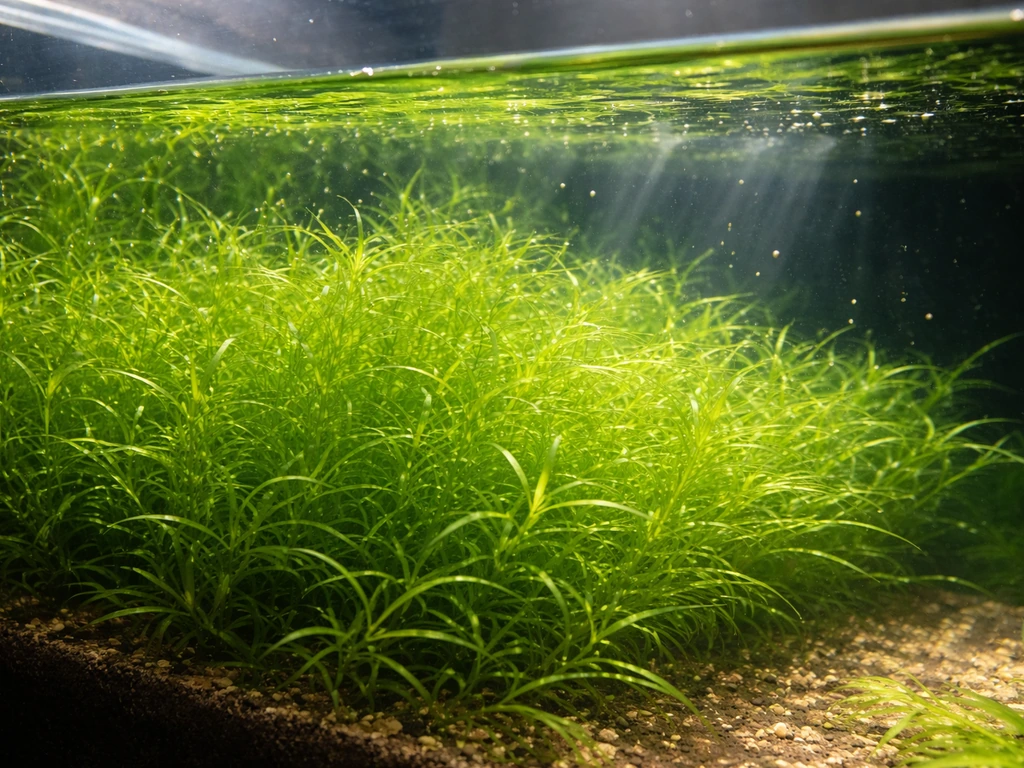
The plant sold in aquarium shops as "guppy grass" is almost always Najas guadalupensis, a submersed aquatic herb native to North and South America. In the wild it is a fast-spreading annual with slender, branched stems that can reach up to 70 cm long. The stems are brittle by design, and that brittleness is part of how it reproduces: broken fragments develop small white roots and become new plants. You will notice this in your tank too. Trim a stem and the offcut floats for a day or two, grows a few fine white roots at the cut end, and starts putting on new growth. It does not have a true rhizome like carpeting plants do, and it does not send out runners the way grass does on a lawn. It spreads by fragmentation and by producing new lateral shoots along each stem.
Because the stems are fine and delicate, guppy grass creates dense, bushy clusters that fish, shrimp, and fry immediately use for cover. That is exactly why it became a staple in guppy breeding setups, hence the common name. It can be kept floating at the surface or anchored in substrate, and it performs both roles well. Most hobbyists float it because it requires zero effort, but planted stems work just as effectively once they root in.
Tank setup: light, temperature, flow, and CO₂
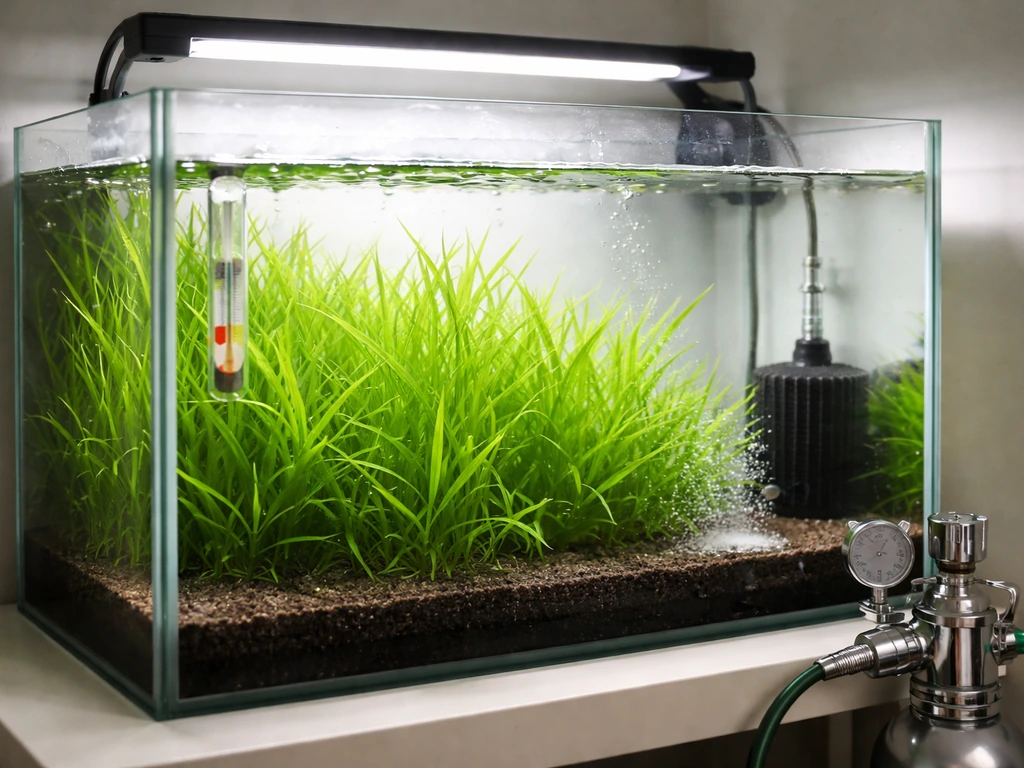
Guppy grass is genuinely forgiving, but getting these four factors right from the start means faster growth and fewer problems.
Light
Aim for 8 to 12 hours of light per day. Guppy grass is classified as a low-to-moderate light plant, which means you are targeting roughly 20 to 40 PAR at the substrate level. Most standard LED aquarium lights sold for planted tanks will handle this easily at medium intensity. You do not need a high-end planted tank light. A basic timer to keep the photoperiod consistent matters more than raw light power. Running lights for more than 12 hours a day does not make the plant grow faster; it just increases your algae risk.
Temperature
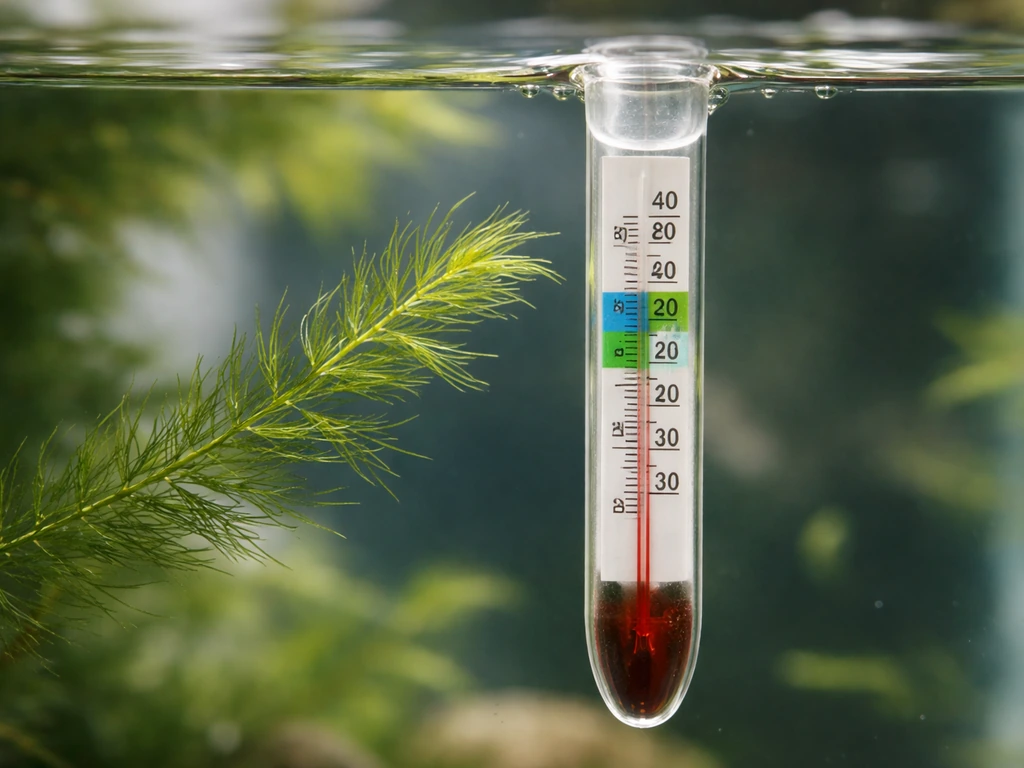
Keep the water between 20 and 28°C (68 to 82°F) for best growth. The plant can survive down to 15°C and up to 30°C, but the sweet spot is that 20 to 28°C range. At temperatures above 25°C the leaves start to get brittle and the plant becomes more fragile, so if your tank runs warm (common in summer with tropical fish), try to stay under 28°C. Below 15°C growth slows dramatically and the plant may begin to deteriorate.
CO₂
You do not need CO₂ injection to grow guppy grass. It grows happily in a low-tech tank with no supplemental CO₂ at all. If you do run a CO₂ system for other plants in the tank, keep levels in the 20 to 30 ppm range and do not exceed 30 ppm. Above 30 ppm you risk harming your fish and shrimp, which is not worth it for a plant that does not need CO₂ to begin with. If you are only growing guppy grass and a few other easy plants, skip the CO₂ and save the money.
Water flow
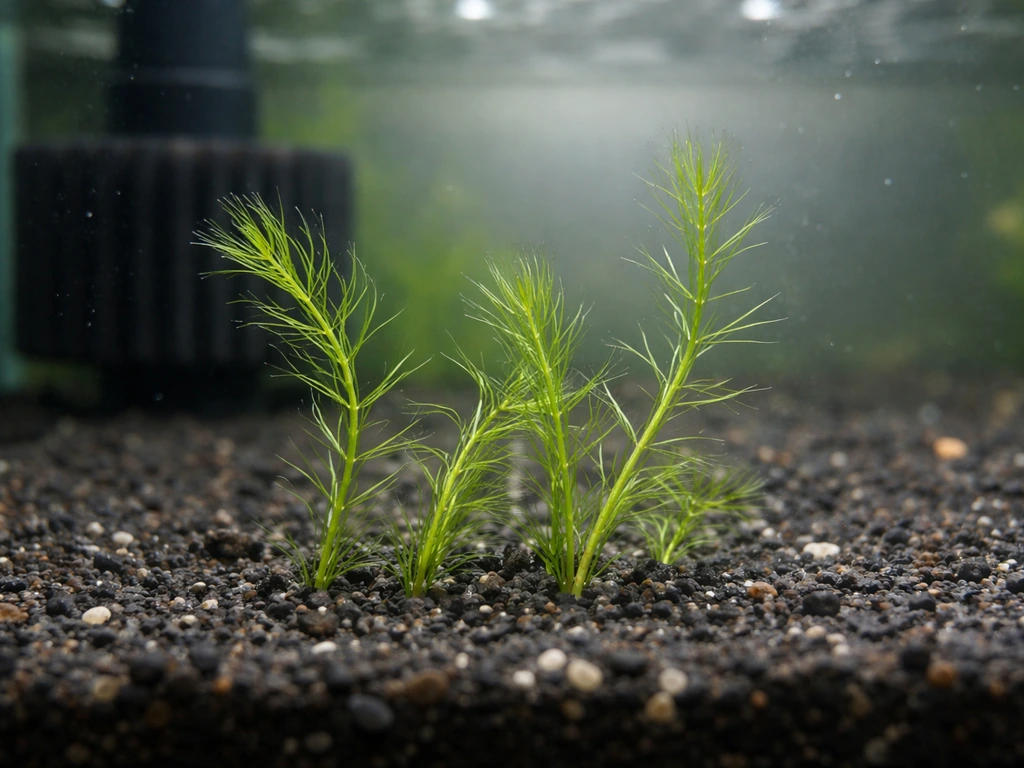
Keep the flow calm to moderate. Guppy grass has fragile stems that snap easily in strong currents, and constant agitation will break it apart faster than it can establish. A sponge filter or a low-flow hang-on-back filter is ideal. If you have a stronger filter, point the outlet toward the glass wall rather than directly at your guppy grass clusters. The plant does best when the water is gently moving around it, not blasting through it.
Planting guppy grass: substrate, anchoring, and placement
The simplest approach is to float a clump of guppy grass and leave it. Seriously. It grows at the surface, provides cover, shades the lower tank slightly (which can actually help reduce algae), and requires no planting at all. If you are specifically trying to learn how to grow fountain grass from seed, the process is different from aquarium planting and involves preparing the seed and outdoor or pot conditions. That said, if you want it planted in your substrate for an aquascape look, here is how to do it without losing the plant to melting.
- Acclimate first: before planting, float the new stems in your tank for 24 to 48 hours so they adjust to your water parameters. Skipping this step is the most common reason guppy grass melts after introduction.
- Separate into individual stems or small bunches of 3 to 5 stems. Do not try to shove a dense clump straight into the gravel.
- Push each stem about 1 inch (2 to 3 cm) into the substrate. Guppy grass has only a few long, fine roots and does not need to be buried deeply. One inch is enough to hold it in place while it roots.
- Use fine-to-medium gravel or sand. Guppy grass is not fussy about substrate type because it absorbs most nutrients from the water column, not from the substrate. Plain gravel works perfectly.
- Place planted stems in the midground or background where they will not be constantly disturbed by fish or water flow. If stems keep floating back up, use a small plant weight or tie them loosely to a stone with cotton thread until they root.
- For floating use, just place clumps at the surface and let them drift. In a tank with moderate surface flow, floating clusters will naturally consolidate in one area.
Once a planted stem establishes, it will develop fine white roots that grip into the substrate and anchor the plant securely. This can take anywhere from a few days to two weeks depending on your light and water conditions.
How to grow guppy grass fast: speed-up tactics and real timelines
Under good conditions, guppy grass is genuinely fast. You can expect noticeable growth within one to two weeks, and a small bunch can fill out a 10-gallon tank in four to six weeks. Here is how to push that growth rate without creating problems.
Optimize your light schedule first
Consistent lighting is the single biggest lever for faster growth. Set your timer to a fixed 10-hour photoperiod and do not change it. Erratic lighting stresses the plant and slows growth more than slightly suboptimal intensity does. If your tank light has adjustable intensity, run it at medium rather than cranking it to full power. More light does not automatically mean more growth in a low-tech tank; it just increases your algae risk if nutrients cannot keep up.
Add a liquid fertilizer (but dose conservatively)
Because guppy grass feeds from the water column rather than the substrate, a liquid fertilizer makes a noticeable difference to growth speed. Use a balanced all-in-one liquid fertilizer at half the recommended dose to start. Over-dosing nutrients without enough light to consume them is a fast track to algae blooms, which will then compete with your guppy grass. Start low, watch the plant for two weeks, then increase slightly if growth is still slow. You are looking for new lateral shoots extending from existing stems as a sign that nutrients are hitting the right level.
Trim to propagate, do not just let it overgrow
This sounds counterintuitive, but regular trimming actually speeds up overall growth. When you trim a stem, the cut end produces a new shoot and the offcut can be replanted or floated to grow into a new plant. After trimming, you can replant the cut end into substrate or leave the offcut to root and grow, since Aqua-Fish.net notes that Najas guadalupensis reproduces easily from stem cuttings stem produces a new shoot and the offcut can be replanted or floated to grow into a new plant.. A tank with regularly trimmed guppy grass ends up denser and healthier than one where it is left to tangle into a mass. Trim every two to three weeks once it is established, cutting stems back by one-third to one-half of their length.
Realistic growth timeline
| Timeframe | What to expect |
|---|---|
| Days 1 to 3 | Adjustment period; plant may look limp or slightly pale. Normal. |
| Days 4 to 7 | New white roots appear on planted stems; floating stems begin extending new shoots. |
| Weeks 2 to 3 | Visible new lateral growth; stems noticeably longer; planted stems anchored. |
| Weeks 4 to 6 | Dense clumps forming; ready for first major trim and propagation. |
| Week 8 onward | Full establishment; trimming every 2 to 3 weeks to keep it manageable. |
Keeping it healthy: nutrients, trimming, and staying ahead of problems
Guppy grass is low-maintenance by nature, but a little consistent care keeps it growing well and prevents the common issues that frustrate people. Once established, the routine is straightforward.
- Do partial water changes of 25 to 30% weekly. This keeps nitrate levels in check and refreshes trace minerals that the plant uses.
- Dose liquid fertilizer after water changes, not before, so nutrients are fully available in fresh water.
- Trim every two to three weeks to prevent the plant from shading itself. A dense mat of untrimmed guppy grass blocks light to its own lower stems, which then die back and rot.
- Remove dead or yellowing stems promptly. Decomposing plant matter degrades water quality and feeds algae.
- Check your photoperiod timer every few weeks to make sure it has not shifted due to power outages.
Common problems and how to fix them
Melting after introduction
This is the most common complaint, and it almost always comes down to a sudden change in growing conditions. Guppy grass grown emersed (above water) or in different water parameters than your tank will drop leaves and look like it is dying when you first add it. Do not panic and do not throw it out. Float the plant for 48 to 72 hours before planting to let it adjust. Remove any obviously dead or brown material, keep the lights on a stable schedule, and give it one to two weeks. New growth will appear from the nodes and the plant will recover.
Slow or stalled growth
If the plant is not growing after two weeks, check these things in order: First, is the light running for at least 8 hours per day? Second, is the water temperature above 20°C? Third, are you dosing any fertilizer at all? Most slow-growth problems in guppy grass come from one of those three being off. Increase your photoperiod by an hour, add a small dose of liquid fertilizer, and check your heater is keeping temperature in the right range. If you are doing all three correctly and growth is still slow, test your water for ammonia and nitrite, as a tank that is still cycling will suppress plant growth. Japanese forest grass is a different plant, so you will want to match its emersed or shaded growing conditions and soil or substrate needs for best results how to grow japanese forest grass.
Algae blooms
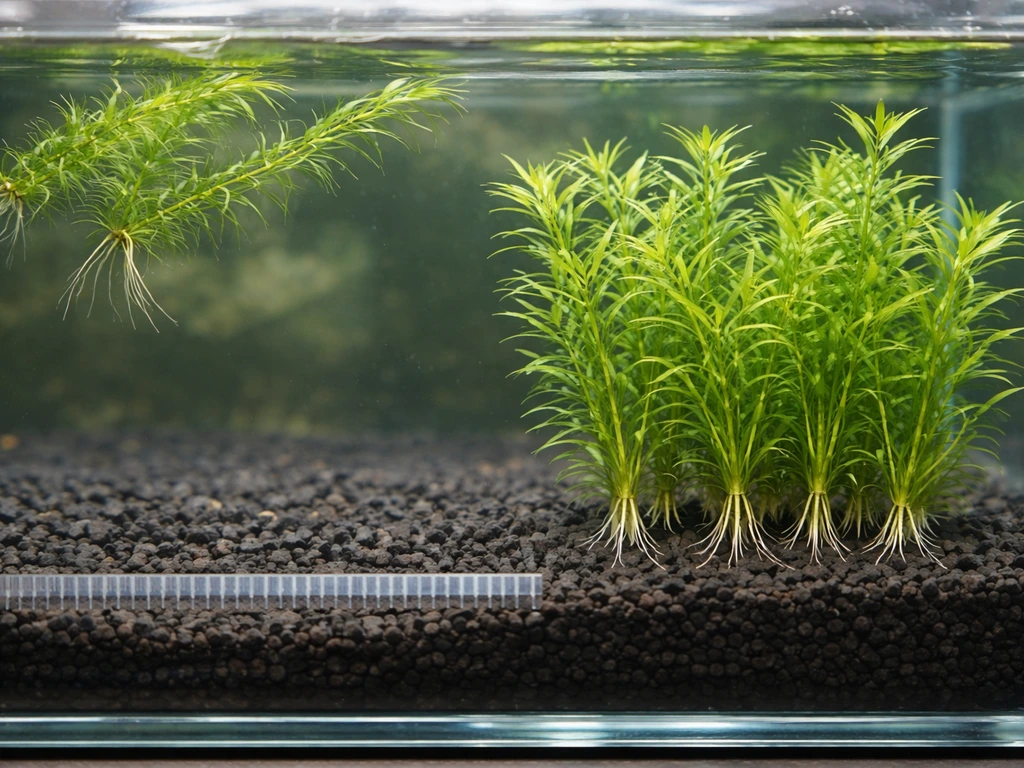
Algae in a guppy grass tank is almost always a light-and-nutrient imbalance. Too much light relative to nutrient uptake, or too many nutrients relative to how much the plant can consume. First, reduce your photoperiod by one hour and do a 30% water change to dilute excess nutrients. If you were dosing fertilizer at full recommended dose, cut it in half. Do not add CO₂ to try to fix an algae problem; it will not help and may make things worse by stressing your fish. Healthy, fast-growing guppy grass will actually out-compete algae for nutrients over time, so getting the plant growing well is the long-term fix.
Stems floating loose or not rooting
If planted stems keep floating up, they either were not pushed deep enough into the substrate or your substrate is too coarse. Push stems at least 1 inch down, and if the gravel is very large, switch to finer gravel or fine sand for a section of the tank where you want planted growth. You can also tie stems to a small piece of driftwood or a smooth stone with cotton thread, which biodegrades in a few weeks by which point the plant has usually rooted on its own.
Tank mates, safety, and sourcing
Guppy grass is compatible with almost every common freshwater fish and invertebrate. Guppies, tetras, rasboras, corydoras, and shrimp all coexist with it perfectly. In fact, shrimp actively graze biofilm off the stems and fry use the dense clusters as refuge from larger fish. The one thing to watch is large, plant-eating fish like goldfish or large cichlids, which will tear guppy grass apart quickly. If you mean growing it for a specific setup, like a discus or goldfish tank, the same light, temperature, and anchoring basics apply. It is also not a great match for tanks with very strong digging fish like certain loaches, which will uproot planted stems repeatedly.
When sourcing guppy grass, buy from a reputable aquarium store or a trusted online seller who can confirm it is pest-free. Wild-collected or cheaply imported plants can carry snail eggs, parasites, or invasive hitchhikers. Before adding any new plant to an established tank, quarantine it in a separate container for one to two weeks and do a visual inspection. If you are buying from a hobbyist locally (a common way to get guppy grass since it trims so prolifically), ask them about the health of their tank. Avoid plants from tanks that show signs of algae overload, disease, or snail infestations.
One dosing caution worth mentioning: if you treat your aquarium with any fish medication, especially copper-based treatments, remove guppy grass from the tank first. Copper medications are lethal to aquatic plants and invertebrates at therapeutic doses for fish. The same goes for many algaecide products. When in doubt, move the plant to a hospital tank during treatment and return it once the main tank has been fully water-changed and the medication has cleared.
Guppy grass is about as beginner-friendly as aquarium plants get, sitting in a very different category from ornamental grasses like purple fountain grass or Japanese forest grass that people grow in garden beds. The core requirements here are aquatic: stable water temperature, consistent low-to-moderate light, gentle flow, and a little patience through the first week of adjustment. Get those basics right and you will have more guppy grass than you know what to do with inside two months.
FAQ
Can I grow guppy grass in a brand-new aquarium that is still cycling?
In a new tank, guppy grass can still survive if you meet light and temperature, but you may see slower rooting and more leaf loss while water chemistry stabilizes. If your tank is cycling, keep the photoperiod at the lower end (around 8 hours), avoid adding fertilizer until ammonia and nitrite read 0, and consider floating first for 1 to 2 weeks to reduce stress while the tank finishes cycling.
How should I trim guppy grass without causing it to melt or die back?
Brittle stems can snap easily when first introduced, especially if you trim too aggressively. Use sharp scissors, cut only one-third to one-half of the stem length at a time, and replant the trimmed portion right away or float it until you see small white roots at the cut end.
What’s the safest way to move guppy grass to a new tank or after a water change?
Yes, it can handle it, but sudden changes are the main trigger for melting. When moving between tanks, float it first for 48 to 72 hours, then plant or re-anchor gradually. Match temperature as closely as possible, and avoid big swings in hardness or pH over one day.
Will guppy grass take over my aquarium, and how can I keep it contained?
Because guppy grass spreads by fragments, you should treat it like a “runaway” plant if you do weekly maintenance in a shared tank. Use a net to remove excess fragments, don’t let clippings drift into areas you want to keep bare, and if you want it contained, anchor it within a defined area using mesh or a dedicated section of fine substrate.
My planted guppy grass keeps floating up, what causes that and how do I fix it?
If guppy grass is floating up after it has grown roots, it usually means the stems are not pressed deep enough or the substrate is too coarse or buoyant. Push stems at least about 2.5 cm (1 inch) into finer gravel or fine sand, and avoid placing it under a strong return current that keeps lifting fragments.
Can I replant the offcuts from trimming, and should I bury them or float them?
You can replant the white-rooted cuttings, but don’t bury the whole plant too deeply. Plant only the stem section that is ready to anchor (with new white roots), keep the top growth near the surface, and give it stable light for at least a week so it rebuilds lateral shoots.
How do I tell if my guppy grass problems are from fish damage versus bad growing conditions?
If you see holes, shredded tips, or consistently damaged clusters, look first at fish or shrimp selection. Goldfish and large cichlids often destroy stems quickly. Some loaches and herbivorous species can also tear plants up, so verify the tank inhabitants before changing light or fertilizer routines.
Can I keep guppy grass in the tank during medication or algaecide treatments?
Guppy grass is usually tolerant of stable conditions, but it does not do well with copper-based treatments or many algaecides. Remove the plant before medicating, keep it in a separate hospital tank or temporary container with the same temperature and light, then return it after the main tank is fully water-changed and cleared.
Is floating guppy grass better than planting it, or does it depend on my goal?
If you are growing it mainly for cover, floating can outperform planting for the first couple of weeks because there is no uprooting stress. Floating also limits how many fragments get trapped in substrate. Once established, you can shift a portion to substrate for aquascape effect by anchoring only a small section.
How do I avoid algae when using liquid fertilizer with guppy grass?
A very common mistake is using high nutrients with too little light, which can trigger algae that then blocks plant growth. Use a balanced liquid fertilizer at half dose only after light is stable, increase slowly based on new lateral shoots, and if algae starts, reduce photoperiod and dilute nutrients with a water change rather than adding more fertilizer.
Next Article
How to Grow Grass in El Paso TX: Seed, Plant, and Care
Step-by-step guide to grow grass in El Paso: pick Bermuda, Zoysia or fescue, prepare soil, seed timing, watering, fixes.