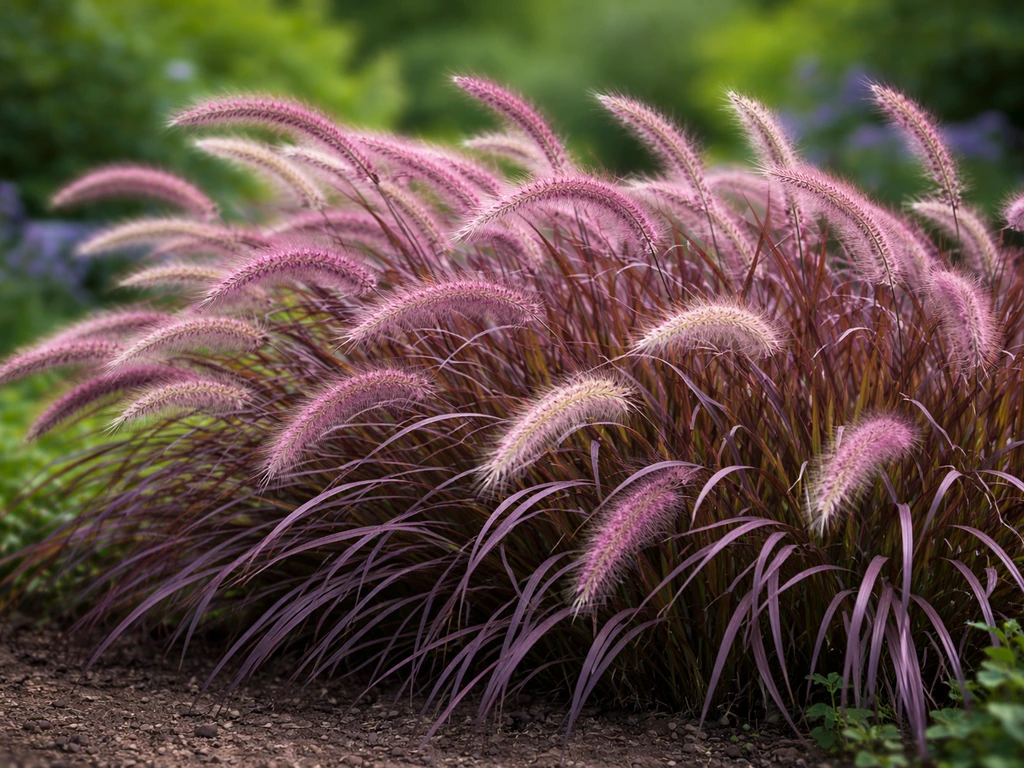
You can grow fountain grass from seed, but it takes a little patience and the right setup. Sow seeds indoors 4 to 8 weeks before your last frost, pressing them lightly onto moist seed-starting mix and barely covering them with vermiculite. Keep the tray at 70 to 95°F and expect germination within 7 to 14 days under good conditions. Once nights stay reliably warm and frost is off the table, transplant seedlings outdoors into a full-sun spot with well-drained soil, spacing plants about 2 to 3 feet apart. Direct sowing works too, but starting indoors gives you a real head start and better germination control.
How to Grow Fountain Grass from Seed: Complete Homeowner Guide
Marcus Tillwell
6 Aug 2026
What fountain grass is and why you might want it in your yard
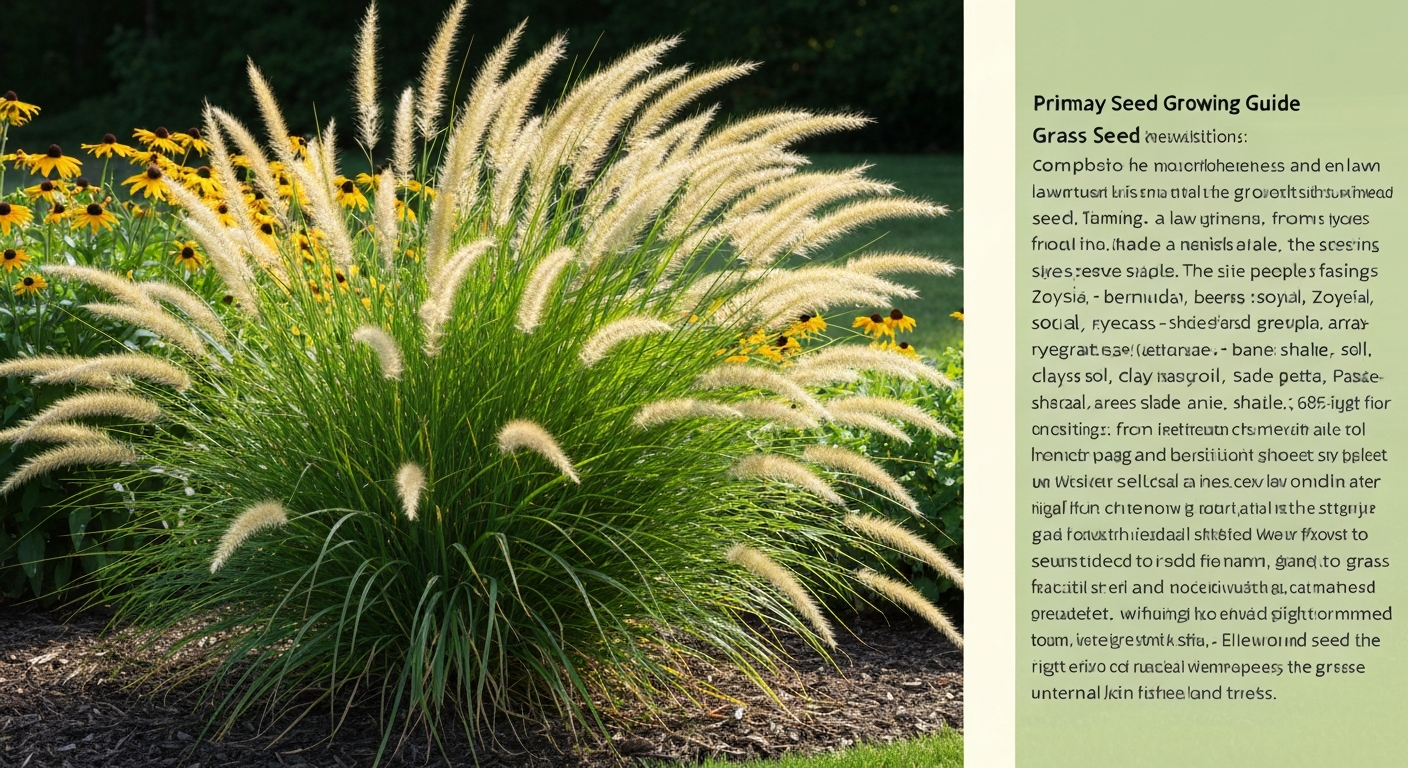
Fountain grass is an ornamental clumping grass that earns its name from the way its long, arching seed heads cascade outward like water from a fountain. Most homeowners grow it for the texture it brings to borders and beds, the soft movement it adds on breezy days, and the extended season of interest it provides from summer right through winter. Unlike turf grasses that need constant mowing and fertilizing to look good, fountain grass mostly takes care of itself once established. It fills in blank spots, softens hardscaping, and holds up under drought stress better than most flowering perennials.
In the landscape, fountain grass works well as a specimen plant, a low-maintenance border anchor, or massed along slopes and driveways where something tougher than annuals is needed. It pairs well with black-eyed Susans, salvia, and rudbeckia. In hot, dry regions it replaces high-water plants cleanly. The main use cases are ornamental, not lawn coverage, if you need to fill bare lawn spots or establish turf, fountain grass is not the right tool. That distinction matters because a lot of homeowners come to this plant after being frustrated by patchy turf, but fountain grass won't create a walkable lawn. It creates drama and structure.
Varieties to know and how to pick your seed
The plants sold as fountain grass fall mainly into two species you'll encounter at nurseries and seed retailers. The first is Pennisetum alopecuroides, commonly called Chinese fountain grass or simply fountain grass. It's a clump-forming warm-season perennial that tops out around 2 to 4 feet tall and wide depending on cultivar, and it's genuinely cold-hardy enough to overwinter in USDA Zones 5 or 6 through 9. The dwarf cultivar 'Hameln' is a popular choice that stays compact and seeds reliably. The second is Pennisetum setaceum, the species most often called fountain grass in catalogs, which is more aggressive and more drought-tolerant but also shorter-lived as a landscape plant in cooler zones. Note that current botanical naming has moved both species into the genus Cenchrus, Pennisetum setaceum is now formally Cenchrus setaceus according to Kew's Plants of the World Online, but nurseries and seed packets still mostly use Pennisetum, so don't let the name change confuse you at the garden center.
Purple fountain grass, sold as Pennisetum setaceum 'Rubrum', is one of the most requested varieties and also one of the trickiest to grow from seed. Many cultivated selections of 'Rubrum' produce limited viable seed, and the striking dark burgundy color does not always come true from seed the way it does from divisions or cuttings. If you want reliable purple plants, buying transplants or propagating by division is the smarter path. If you do find seed labeled as purple fountain grass, buy from a vendor who provides AOSA-standard germination percentages on the packet, that tells you the seed was actually tested and gives you realistic expectations. A packet listing 70% germination at a stated test date is worth more than an unlabeled packet from a discount bin.
When buying seed, check the test date on the label. Fountain grass seed stored properly, sealed, dry, and cool, ideally below 45°F, holds viability reasonably well, but seed sitting in a warm warehouse for two seasons loses germination rate fast. The general seed-saving rule of thumb is that temperature in Fahrenheit plus relative humidity percentage should stay below 100 for long-term storage. If a packet has no test date or lists a test date more than a year old, buy fresh seed instead. It saves a lot of frustration later.
When to plant: hardiness zones and a simple timing calendar
Fountain grass needs warm soil to germinate and establish well. The seeds want soil temperatures in the range of roughly 68 to 95°F (20 to 35°C), below that range, germination stalls or doesn't happen. That temperature window gives you a clear target for both indoor starts and direct sowing. If you try to rush seeds into cold spring ground, you'll wait weeks for nothing, and the seed can rot.
| Region / Climate | Start Indoors | Transplant or Direct Sow Outdoors | Notes |
|---|---|---|---|
| Zones 5–6 (cool North/Midwest) | Late March to early April | After last frost, late May to early June | Perennial P. alopecuroides best choice; P. setaceum treat as annual |
| Zones 7–8 (Mid-Atlantic, Pacific NW, upper South) | Late February to mid-March | April to early May | Most fountain grass species perform well as perennials |
| Zones 9–10 (Deep South, low-elevation Southwest, coastal CA) | January to February | March or direct sow outdoors after soil warms | Check invasive status before planting P. setaceum outdoors |
| Hot/dry arid Southwest (AZ, inland CA) | January to February indoors | Late February to March in protected areas | P. setaceum is listed invasive in AZ and CA — see cautions below |
| Coastal / mild Pacific regions | February to March | March to April | Cool wet springs slow establishment; prioritize drainage |
For direct sowing, wait until nighttime temperatures consistently stay above 55°F before putting seed in the ground. In most of the country that's late spring. In the Deep South and mild coastal zones you can direct sow much earlier, sometimes in late winter. The indoor start window of 4 to 8 weeks before last frost is a sweet spot, too far ahead and you'll have overgrown, root-bound seedlings by transplant time; too late and you lose the advantage of getting a head start.
Picking the right spot: sun, drainage, spacing, and where not to plant
Fountain grass wants full sun, at least 6 hours of direct sun per day. Below that threshold you'll get lanky, floppy plants that barely flower. Extension research backs this up clearly: partial shade reduces bloom and inflorescence production significantly. If your best open spot only gets 4 or 5 hours of sun, you're better off looking at shade-tolerant ornamental grasses. Japanese forest grass (Hakonechloa macra) is a genuinely shade-adapted alternative that brings similar texture in lower-light spots.
Drainage is the other non-negotiable. Fountain grass crowns sitting in waterlogged soil, especially over winter in colder zones, will rot. Find spots where water doesn't pool after rain. Raised beds and slopes are ideal. Flat low spots next to downspouts or near clay-heavy areas where puddles form are bad choices regardless of how sunny they are.
Spacing matters more than most people expect with clumping grasses. At maturity, P. alopecuroides reaches roughly 2 to 3 feet wide for most common cultivars. Pennisetum alopecuroides, Missouri Botanical Garden Plant Finder notes mature clump sizes of about 2–3 ft and uses that size to inform spacing recommendations Pennisetum alopecuroides — Missouri Botanical Garden Plant Finder. Plant centers 3 feet apart for mass plantings, or give single specimens 3 to 4 feet on all sides to let the arching habit show fully. Crowded fountain grass looks messy and loses its signature cascading shape.
If you have pets, especially dogs who dig or run through beds, site fountain grass carefully. The seed heads and foliage itself are not toxic to dogs or cats, but the awns (bristles) on the seed heads can work their way into ears, eyes, and paws if your animals are constantly in contact with mature seed heads. Planting fountain grass in beds bordered by edging or in raised planters that dogs can't easily access solves this. Avoid planting right along primary dog-run paths.
Getting your soil ready: clay, sandy, and everything in between
Fountain grass is more forgiving about soil than most ornamentals, but that doesn't mean you can ignore site prep and expect great results. It performs best in fertile, well-drained soil with moderate organic matter. The prep steps differ depending on what you're starting with.
Clay soil
If you squeeze a handful of your soil into a ball and it holds the shape without crumbling, you've got clay or clay-heavy loam. Heavy clay drains poorly and can suffocate fountain grass roots in wet seasons. Work in 2 to 3 inches of compost or aged bark fines across the planting area and turn it into the top 8 to 10 inches. This won't turn clay into loam overnight, but it loosens the structure enough to improve drainage and root penetration. In extreme clay situations, building a raised bed or mounding planting areas 6 to 8 inches above grade is the most reliable fix. Avoid adding sand alone to clay, it tends to make a concrete-like mix without enough organic matter to offset it.
Sandy soil
Sandy soil drains fast, sometimes too fast. Fountain grass handles dry conditions better than most ornamentals, but seedlings getting established need consistent moisture that sandy soil can't hold on its own. Amend with 3 to 4 inches of compost worked into the planting area before sowing or transplanting. A layer of organic mulch 2 to 3 inches thick after planting helps retain what moisture the soil does hold. You'll also need to water more frequently in the first growing season on sandy sites than on loam.
Average garden soil (loam)
If your soil crumbles when dry and forms a ball when moist that breaks apart with a little pressure, you're working with decent loam. For this soil type, a basic prep of loosening the top 6 to 8 inches, removing weeds and debris, and incorporating an inch or two of compost is usually sufficient. A soil pH test is worth doing if you don't know your soil's baseline, fountain grass performs well in a broad range but struggles outside roughly pH 5.5 to 7.5. A basic test kit from the hardware store costs a few dollars and takes the guesswork out.
What you'll need: materials checklist
- Fountain grass seed with a current AOSA test date (choose P. alopecuroides for cold-hardy perennial use; P. setaceum for warm zones where it's not invasive)
- Seed-starting trays or small pots with drainage holes (for indoor method)
- Sterile seed-starting mix (lightweight, fast-draining — not regular potting soil)
- Fine vermiculite for seed covering
- Clear plastic dome or plastic wrap to cover trays during germination
- Heat mat (optional but helpful — keeps soil near optimal temperature of 70–80°F)
- Watering can with a fine rose head or spray bottle for gentle watering
- Balanced slow-release granular fertilizer (10-10-10 or similar) for outdoor planting areas
- Compost or aged bark fines for soil amendment (2–4 inches depending on soil type)
- Organic mulch (straw, shredded bark) for post-transplant coverage
- Garden fork or tiller for soil prep
- Trowel for transplanting
- Garden edging (optional, for pet management or border definition)
Direct sowing outdoors: step by step
Direct sowing works when you have warm soil and aren't in a rush for plants to establish quickly. It's a lower-effort method but less controlled, you'll get uneven germination, and early seedlings are vulnerable to birds, drying out, and competition from weeds. If you're willing to manage those variables, here's how to do it.
- Wait until soil temperature at 2-inch depth is consistently at or above 65°F (use a soil thermometer — guessing based on air temperature is unreliable).
- Prepare the planting area by loosening the top 6 to 8 inches of soil and removing weeds, rocks, and debris. Incorporate compost as described above for your soil type.
- Rake the surface smooth so seed-to-soil contact is even.
- Scatter seeds at the spacing you want your final plants — about 3 feet apart for individual plants, or more densely (then thin later) if you want a massed bed.
- Press seeds gently into the soil surface. Fountain grass seed is small and needs light to germinate well — do not bury it more than 1/8 inch deep. A very light dusting of fine soil or vermiculite over the seed is sufficient.
- Water gently with a fine rose or mist setting. You want the surface moist but not washed out — heavy watering moves small seeds around.
- Keep the soil surface consistently moist until germination. In hot weather this may mean light watering once or twice daily.
- Expect germination in 7 to 21 days depending on soil temperature and seed quality. Cooler soils push toward the longer end.
- Once seedlings are 2 to 3 inches tall, thin to final spacing — one strong plant every 2 to 3 feet for most cultivars.
Starting seeds indoors and in containers: step by step
Indoor starting gives you significantly more control over temperature and moisture during the critical germination window, and it lets you get plants established and ready to transplant right when outdoor conditions hit the right range. This is my preferred method for most homeowners, especially in zones 5 through 7 where the outdoor window is short.
- Time your indoor start 4 to 8 weeks before your region's average last frost date. Six weeks is a good default for most situations.
- Fill seed trays or small pots with sterile, pre-moistened seed-starting mix. The mix should be damp but not dripping — squeeze a handful and only a few drops of water should come out.
- Sow seeds on the surface, spacing them about an inch apart in trays. Press each seed lightly into the surface so it makes contact with the mix but is not buried.
- Cover seeds with a very thin layer of fine vermiculite — just enough to barely hide the seed. Vermiculite holds moisture while letting light through, which supports germination.
- Cover the tray loosely with a clear plastic dome or plastic wrap to maintain humidity.
- Place the tray on a heat mat set to 70 to 80°F, or in the warmest spot in your house. Bottom heat speeds germination noticeably.
- Check trays daily. Mist with a spray bottle to maintain surface moisture — the mix should never dry out completely but also shouldn't be waterlogged.
- Remove the plastic cover as soon as the first seedlings emerge. Move trays to bright light immediately — a south-facing window or a grow light 2 to 4 inches above the seedlings works well. Weak light produces leggy seedlings.
- Keep seedlings at room temperature (65 to 75°F) under bright light. Water when the top inch of mix begins to dry.
- Begin hardening off 7 to 10 days before your planned transplant date by setting trays outdoors in a sheltered spot for a few hours each day, gradually increasing outdoor time over a week.
For container growing, the same indoor method applies. If you intend to keep fountain grass in containers permanently rather than transplanting to ground, choose compact cultivars like 'Hameln' and use a well-draining potting mix in a container with good drainage holes. Containers dry out faster than ground soil, which means more frequent watering during establishment and through hot summers.
Seed depth, germination timeline, and what success looks like
The single most common mistake with fountain grass seed is burying it too deep. These seeds need light for best germination, a covering of no more than 1/8 inch (about 3 mm) is the target. If you pack them under half an inch of soil they'll struggle to push through, especially in heavy or crusted soil. The ideal is seed pressed onto the surface with only a light dusting of vermiculite on top.
Under optimal temperature and moisture conditions (soil at roughly 75 to 85°F, consistently moist), germination research on ornamental Pennisetum species shows most seeds sprouting within about 8 days. In typical home conditions, slightly cooler, less perfectly controlled, expect 7 to 14 days for the first sprouts and up to 21 days for the slower ones. If nothing has emerged after 21 days in warm conditions, the seed is likely not viable. Check by digging up a few seeds to see if they're rotted or shriveled.
Successful emergence looks like a thin, pale-green thread pushing up from the soil surface, then quickly turning dark green as the first leaf unfurls. The seedling will look like a small grass blade, not like a broadleaf sprout. In trays with multiple seeds, germination will be uneven, some spots will sprout in a week while others take two. That's normal. Don't give up on a tray just because part of it is slow.
Watering and fertilizing from seed to established plant
The watering schedule shifts through three distinct phases: germination, early seedling growth, and outdoor establishment. Getting the transitions wrong, especially overwatering young seedlings or underwatering just-transplanted plants during a heat wave, accounts for most fountain grass failures.
| Phase | Timing | Watering Approach | Fertilizing |
|---|---|---|---|
| Germination (indoors/trays) | Sowing through first sprouts, roughly 1–3 weeks | Keep surface constantly moist — mist 1–2x daily, never let mix dry out | None — seed-starting mix has no fertilizer, and seedlings don't need it yet |
| Early seedling growth (indoors) | First sprout through 3–4 true leaves, roughly weeks 2–6 | Water when top inch of mix dries; reduce surface misting, water from base if possible to reduce damping off risk | Begin very diluted balanced liquid fertilizer (quarter strength) once 2 true leaves appear |
| Hardening off | Final 1–2 weeks before transplant | Water before outdoor exposure to reduce stress; keep consistent | Continue diluted liquid feed weekly |
| Transplant / first 4 weeks outdoors | Immediately post-transplant | Water deeply at planting, then every 2–3 days for first 2 weeks; taper to once a week after week 3 if no rain | Apply slow-release granular fertilizer (10-10-10) at planting per package rate; no additional feed until fall |
| Established plant (after first season) | Ongoing | Water deeply but infrequently — once per week in dry spells, none needed in rainy periods | One application of balanced slow-release fertilizer in spring as new growth emerges |
Overwatering established fountain grass is a more common problem than underwatering. Once roots are down and the plant is actively growing, it handles dry spells well. Soggy soil around established crowns, especially in fall and winter, is a leading cause of crown rot. Back off the watering schedule in late summer and fall.
Transplanting and thinning: timing and spacing guidance
Transplant outdoor seedlings (or indoor-started plants) after all frost risk has passed and nighttime temperatures are consistently above 50°F. For most of the country this aligns with late spring. Rushing transplant timing to get plants out early is one of those lessons most gardeners learn the hard way, one late frost on unprotected seedlings sets you back further than waiting would have.
- Prepare the planting holes ahead of time — slightly larger than the root ball, with amended soil worked into the backfill.
- Water seedlings well an hour before transplanting to reduce root disturbance stress.
- Remove seedlings from trays carefully, keeping the root ball as intact as possible. For cell-pack trays, squeeze the base to pop seedlings out rather than pulling from the top.
- Set the root ball so the crown (where roots meet stem) sits at the same depth it was in the tray — no deeper.
- Backfill with amended soil and firm gently around the base. Do not pack hard.
- Water immediately and thoroughly after planting.
- Space transplants at 2 to 3 feet on center for most P. alopecuroides cultivars, 3 feet for larger types. They'll fill in over 2 to 3 growing seasons.
- For directly sown beds, thin to final spacing once seedlings reach 3 to 4 inches tall. Cut extras at soil level rather than pulling, to avoid disturbing the roots of neighboring seedlings.
Keeping fountain grass healthy: pruning, dividing, and seasonal care
Fountain grass is genuinely low maintenance compared to most landscape plants, but it does have a couple of non-negotiable annual tasks that make a real difference in plant health and appearance.
The most important is the late-winter cutback. In late winter or very early spring, before new growth starts pushing from the crown, cut the entire clump back to about 4 to 6 inches above ground. Use hedge shears or loppers for large clumps. If you tie the clump into a bundle before cutting it's much easier to deal with the debris. Skipping this step results in new growth emerging through dead material, plants survive but look ragged and the dead foliage mats and can harbor disease and pests. In zones 5 and 6, this timing is typically late February to mid-March. In the Deep South, late January to early February.
Division is the other key maintenance task. Clumps that have been in the ground 3 to 4 years start to die out in the center, producing a ring of growth with dead space in the middle. Divide in early spring before new growth gets more than a few inches tall. Dig the whole clump, use a sharp spade or saw to cut it into sections each with several growing points, and replant the vigorous outer divisions. The dead center section can be discarded. Dividing also gives you free plants to spread around your yard or share.
Mulching in fall protects crowns in zones near the hardiness edge. Apply 2 to 3 inches of straw or shredded bark around (not over) the crown after the first hard frost in zones 5 and 6. Remove mulch in early spring before growth begins so it doesn't trap moisture against the crown.
Pests, diseases, and what to do when things go wrong
Fountain grass is not particularly pest-prone compared to most ornamentals, but there are a few problems worth knowing about and a few seedling-stage issues that catch growers off guard.
| Problem | What You See | Likely Cause | Action |
|---|---|---|---|
| Damping off (seedlings) | Seedlings collapse at soil line; stem looks pinched or rotted | Fungal disease from overwatering and poor airflow in trays | Remove affected seedlings immediately; reduce watering frequency; improve airflow around trays; use sterile seed-starting mix only |
| No germination after 3+ weeks | Seeds sown but nothing emerging | Cold soil, old/non-viable seed, buried too deep, or dried-out mix | Check soil temp with thermometer; verify seed test date; resow at correct depth; maintain consistent moisture |
| Yellowing or pale seedlings | Leaves are light green to yellow, weak growth | Insufficient light, overwatering, or nitrogen deficiency | Move to brighter light; check watering; begin diluted balanced fertilizer |
| Crown rot (established plants) | Plant wilts from center; base of clump turns mushy or discolored | Waterlogged soil, especially in winter; poor drainage | Improve drainage; do not amend with water-retaining materials; avoid fall overwatering |
| Aphids on new growth | Sticky residue; clusters of small insects on new stems and seed heads | Common in stressed or overfertilized plants | Blast off with water; treat with insecticidal soap if severe; avoid excess nitrogen |
| Rust fungal spots | Orange-brown powdery spots on leaf blades | High humidity and poor airflow; usually late summer | Increase plant spacing; remove and discard affected foliage; avoid overhead watering in evening |
| Poor flowering/seed heads | Plants grow but produce few or no plumes | Too much shade, over-fertilizing with nitrogen, or plants need dividing | Assess sun exposure; reduce fertilizer nitrogen; divide aging clumps |
Homeowner challenges and practical fixes
Repairing bare spots
Bare spots in a landscape bed where fountain grass previously grew are usually caused by crown rot, drought stress, or poor drainage, the same things that kill the plants in the first place. Before replanting, fix the underlying problem. If the spot is in a low area that holds water, mound the soil up 4 to 6 inches or redirect water flow before replanting. Add compost to restore organic matter. Then transplant a new seedling rather than direct sowing into the patched area, transplants establish faster and compete better with any weed pressure that has moved into the gap.
Shade challenges
If your only available spots are partially shaded, fountain grass will survive but won't thrive. You'll get fewer flowering plumes, floppy growth, and a plant that never looks quite right. If you need ornamental grass texture in a shaded spot, Japanese forest grass (Hakonechloa macra) handles lower light far better and brings similar soft movement to the planting. It's a genuinely different plant for a genuinely different situation.
Managing around pets
The seed-head awns on fountain grass are the main concern with dogs and cats. They work into fur, eyes, and ears and can cause real discomfort or require vet attention. If you have dogs that run or dig near the plants, either plant fountain grass in raised beds or planters the dogs can't access, or cut seed heads before they fully mature and shed. Removing seed heads also prevents self-seeding, which is a separate benefit in regions where P. setaceum is invasive.
Small-space planting
In small gardens, containers, or tight borders where a full-sized clump would overwhelm the space, stick to compact cultivars like 'Hameln' or 'Little Bunny' (both P. alopecuroides). These stay in the 18 to 24 inch range and work well as focal points in small beds or in large containers on patios. Sow seed as described for indoor starting, then transplant into a large container (at least 12 to 14 inches in diameter with drainage holes) filled with well-draining potting mix. Container plants need more frequent watering and an annual slow-release fertilizer top-dress each spring.
How to adapt your approach by region
The core technique is the same everywhere, but the timing and specific species choices shift based on your climate. Here's what changes.
- Hot and dry (inland Southwest, parts of Texas and Oklahoma): P. setaceum handles this climate well from a plant-performance standpoint, but check invasive status in your state before planting (it is listed as invasive in Arizona and parts of California). P. alopecuroides is a safer ecological choice. Mulch heavily after transplanting and irrigate more frequently through the first summer.
- Cool and wet (Pacific Northwest, upper Midwest, New England): Prioritize drainage above all else. P. alopecuroides 'Hameln' is the right choice — it's cold hardy and handles wet springs better than P. setaceum. Start indoors and delay outdoor transplant until soil has dried from spring rains. Expect slower establishment in the first season.
- Coastal climates (Gulf Coast, Atlantic seaboard): Humidity increases the risk of rust fungal disease and damping off in seedlings. Prioritize good airflow around plants. In Gulf Coast zones 9 and 10, purple fountain grass performs as a short-lived perennial. Watch for P. setaceum self-seeding in natural areas.
- Urban and suburban microclimates: Heat islands in cities push effective hardiness zones up by half a zone or more — a Zone 6 city homeowner may find P. setaceum overwintering where it technically shouldn't. That's fine in a managed garden bed, but be aware it can also spread more readily in warmer urban areas.
When fountain grass isn't the right choice and what to plant instead
Fountain grass is an ornamental plant. It's not a lawn grass and it won't function like one. If you're coming here because you want to fill in a bare patch of turf, repair a struggling lawn, or establish ground coverage you can walk on, fountain grass is not the answer. For bare spots in a lawn, the right tool is a turf grass matched to your region and light conditions: bermuda grass for hot, sunny, high-traffic southern lawns; zoysia grass for warm-season lawns that need more shade tolerance and wear resistance; tall fescue or fine fescue for cool-season lawns or shaded areas in the transition zone and north; perennial ryegrass for quick germination and cool-season establishment. These grasses are the practical solutions for actual turf problems.
For shade-heavy ornamental spots where fountain grass won't perform, Japanese forest grass is the most direct alternative, it brings similar texture and movement to shaded borders where fountain grass would fail. For short-term displays or fast-germinating grass for seasonal decorations or displays like golu, fast-germinating short-season grasses are a completely different category from ornamental clumping grasses, and the growing method differs considerably from what's described here. For step-by-step instructions on how to grow grass for golu, see our guide on how to grow grass for golu.
In California and Arizona specifically, think carefully before planting Pennisetum setaceum at all. Cal-IPC includes it in the California Invasive Plant Inventory, and Arizona's invasive plant working groups list it as a concern for wildland invasion. blank" rel="noopener noreferrer">Arizona Wildlands Invasive Plant Working Group – invasive plant list (AZ advisory document) lists Pennisetum setaceum (fountain grass) as a species of concern for wildland invasion in Arizona. P. alopecuroides is not on those lists and is the ecologically responsible choice in those regions. If you're in Florida, UF/IFAS maintains a cautionary assessment for Cenchrus setaceus with county-level occurrence data that's worth checking before planting near natural areas.
Don't confuse these: fountain grass versus unrelated plants with similar names
Guppy grass is a common source of confusion in online searches, and it's not remotely related to fountain grass. Guppy grass (Najas guadalupensis) is a fully aquatic plant grown submerged in fish tanks and ponds, it's used as a breeding habitat for fish and has nothing to do with ornamental Pennisetum grown in garden beds. If you're searching for information about growing aquatic plants for aquariums or ponds, guppy grass is a completely different subject with completely different care requirements. Don't let overlapping search results mix up the two.
Similarly, miscanthus (Maiden grass) is sometimes called fountain grass in casual conversation or at garden centers, but it's a different genus entirely, grows considerably larger (often 5 to 8 feet), and is managed differently. If you buy seed or a plant labeled 'fountain grass' at a big-box store, check the Latin name on the tag to confirm you're getting Pennisetum or Cenchrus and not something else entirely.
Quick reference: timeline, checklist, and troubleshooting at a glance
Condensed planting timeline
- 6–8 weeks before last frost: Start seeds indoors in trays with seed-starting mix; press onto surface, cover lightly with vermiculite; maintain 70–80°F
- Days 7–14: Expect first germination; remove plastic cover and move to bright light immediately
- Weeks 3–5 (indoors): Begin diluted fertilizer once 2 true leaves appear; water consistently but not excessively
- 1–2 weeks before last frost: Begin hardening off outdoors in a sheltered spot
- After last frost, soil 65°F+: Transplant outdoors at 2–3 ft spacing; water deeply; apply slow-release fertilizer
- First 4 weeks outdoors: Water every 2–3 days; watch for transplant stress (wilting, yellowing)
- Growing season: Water weekly in dry spells; remove spent seed heads to prevent invasive self-seeding if needed
- Late winter/early spring (Year 2+): Cut back to 4–6 inches above crown before new growth starts
- Every 3–4 years: Divide crowded clumps in early spring
Short materials checklist
- Fresh fountain grass seed with current AOSA germination test date
- Sterile seed-starting mix and fine vermiculite
- Seed trays with drainage holes and clear plastic dome
- Spray bottle and watering can with fine rose
- Heat mat (optional)
- Compost for soil amendment (2–4 inches depending on soil type)
- Balanced slow-release granular fertilizer (10-10-10)
- Organic mulch (straw or shredded bark)
- Trowel and garden fork
Immediate troubleshooting actions
| Symptom | Most Likely Fix |
|---|---|
| No germination after 3 weeks | Check soil temp (needs 65°F+); verify seed test date; resow at shallower depth; maintain surface moisture |
| Seedlings collapsing at soil line | Damping off — remove affected plants, reduce watering, improve airflow, use only sterile mix |
| Leggy, pale seedlings | Move to stronger light immediately; 2–4 inches from grow light or south window |
| Transplants wilting after planting | Water deeply and consistently for 2 weeks; shade temporarily if transplanting in peak heat |
| No flowering on established plants | Check sun exposure (need 6+ hours); reduce nitrogen fertilizer; consider dividing older clumps |
| Center of clump dying | Normal after 3–4 years — dig and divide in early spring; replant outer sections |
FAQ
What varieties of fountain grass can I grow from seed and how do they differ?
Common ornamental types: Pennisetum/Cenchrus alopecuroides (cold‑hardy clump‑forming, zones ~6–9), Pennisetum/Cenchrus setaceum (including ‘Rubrum’ purple fountain grass—tender, often perennial in zones ~9–10 or grown as annuals elsewhere). Cultivars differ in height (1–4 ft), color (green, burgundy/purple), seed production (some cultivars set less viable seed), and hardiness. Choose P. alopecuroides strains for cooler climates and P. setaceum/P. ‘Rubrum’ for warm climates or annual color displays.
Is fountain grass invasive or regulated in my area?
Some species (notably Pennisetum/Cenchrus setaceum) are listed as invasive in places like California, Arizona, and parts of the U.S. Check local extension or invasive‑species lists before planting. Consider sterile cultivars, alternatives, or container culture where local escape is a concern.
When is the best time to sow fountain grass seed by region?
General rule: sow when soil temperatures are reliably warm—about 68–86°F (20–30°C). Regionally: USDA zones 6–8: start seeds indoors 4–6 weeks before last frost and transplant after danger of frost; direct sow after last frost when soil warms. Zones 9–10+: direct sow in spring or late winter; fall sowing may work where winters are mild. For cool‑season transitional regions, treat as annual and start indoors for earlier display.
How do I prepare different soil types (clay vs sandy) before sowing?
Clay: improve drainage by adding 25–50% compost and coarse sand or perlite to planting area or use raised beds; avoid compaction and keep crown elevated. Sandy: add organic matter (compost) to increase water‑holding capacity and nutrients. In all soils: remove weeds, loosen top 6–8 inches, and aim for a well‑drained seedbed with pH ~6.0–7.5.
What materials do I need (simple checklist)?
Materials checklist: fountain grass seed (labeled variety), seed trays/flat or direct‑sow tools, sterile seed starting mix or prepared bed, compost, garden fork/tiller, hand trowel, fine rake, light mulch (straw or shredded bark), spray bottle or hose with fine nozzle, slow‑release balanced fertilizer (10‑10‑10 or similar) and liquid starter if desired, labels, plant tags, gloves.
Should I start seeds indoors or sow directly outdoors? Pros and cons.
Start indoors: pros—earlier growth, controlled conditions, higher germination in cool climates; cons—more work, transplant shock risk. Direct sow: pros—less work, no transplant shock, good where long warm season exists; cons—risk of uneven germination, slow establishment in cool soils. Choose indoors for zones with cool springs or for earlier displays; direct sow for warm regions or when restoring large areas.
Next Article
How to Grow Purple Fountain Grass from Seed Step by Step
Step-by-step how to grow purple fountain grass from seed, including timing, soil prep, sowing, germination, and troubles