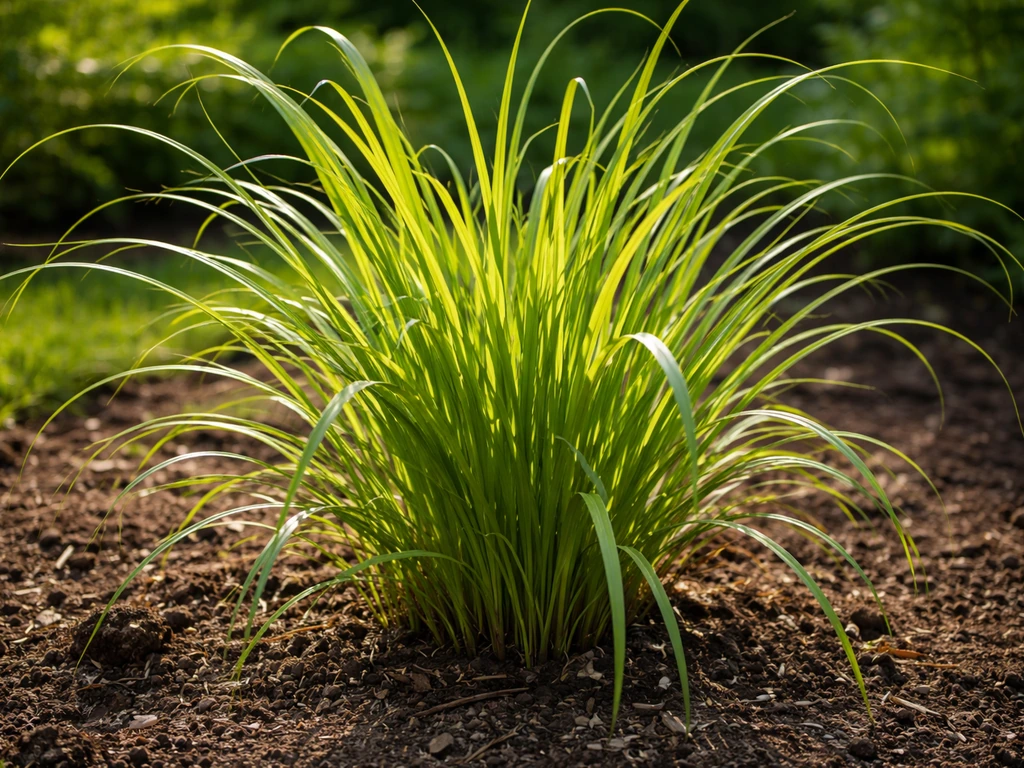
Bunny tail grass (Lagurus ovatus) is a charming annual ornamental grass that grows best in a warm, sunny spot with light, well-drained soil. To grow it from seed, press the seeds onto the soil surface with just a very light dusting of cover (no more than 1/8 inch deep), keep the soil moist but never soggy, and expect sprouts in 5 to 12 days under good conditions. It thrives in Mediterranean-style climates but grows reliably as a summer annual across most of the US and UK if you give it full sun and sharp drainage.
How to Grow Bunny Tail Grass From Seed Step by Step
Marcus Tillwell
10 Jun 2026
What bunny tail grass actually is and where it grows best
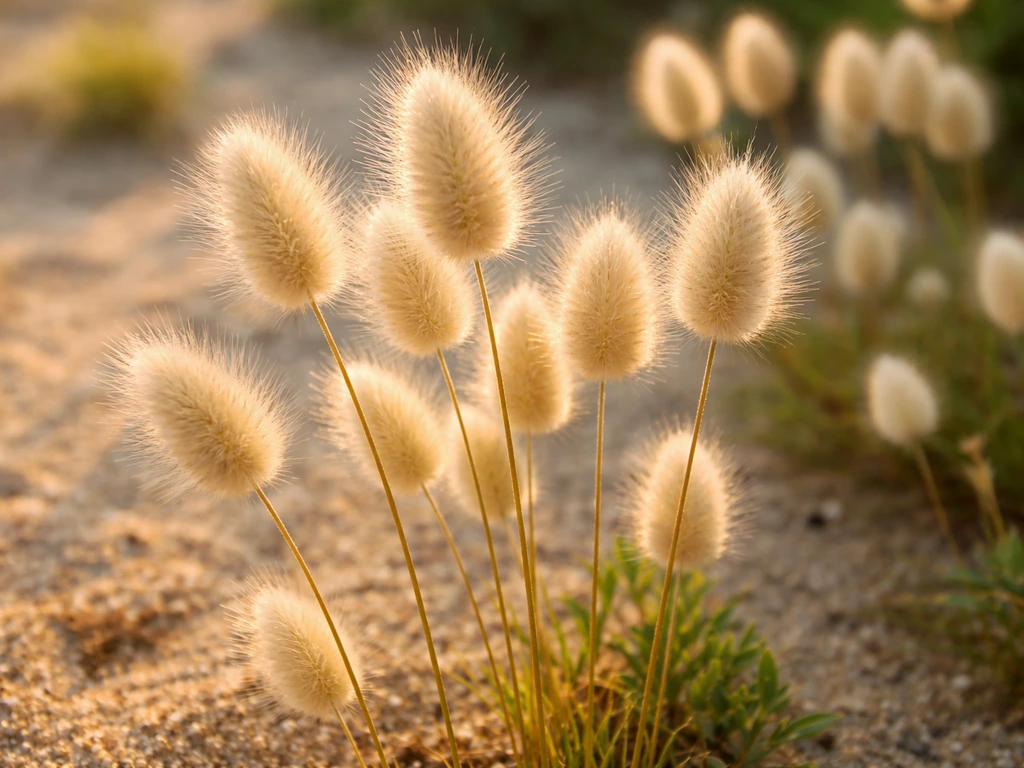
Lagurus ovatus is the only species in its genus, and it goes by a handful of names: bunny tail grass, hare's-tail grass, rabbit's-tail grass, and bunnytail. Those fluffy, oval seedheads are the reason for all those names, and they're genuinely one of the most appealing textures you can add to a border or cutting garden. It's native to the shores of the Mediterranean, which tells you a lot about what it likes: warm sun, lean soil, and excellent drainage.
Because it's a true annual, Lagurus ovatus lives its whole life in one season: germinate, grow, flower, set seed, and done. In mild climates it can naturalize and reseed itself, so you may get repeat plants year after year without replanting. In cooler or wetter regions you'll likely need to resow each spring. It's not a lawn grass in the way that bermuda, fescue, or ryegrass are, so it won't replace a turf stand, but it makes a beautiful low-maintenance addition to borders, dry gardens, containers, and even informal cottage-style plantings. The Royal Horticultural Society notes that Lagurus ovatus is grown as an ornamental annual rather than as a lawn grass it won't replace a turf stand.
A quick note if you're searching for 'grass for rabbits': Lagurus ovatus is an ornamental plant, not a verified rabbit food. Don't assume that something called 'bunny tail' is safe for pet rabbits to eat. More on that at the end of this guide.
Picking the right seed and variety for your climate
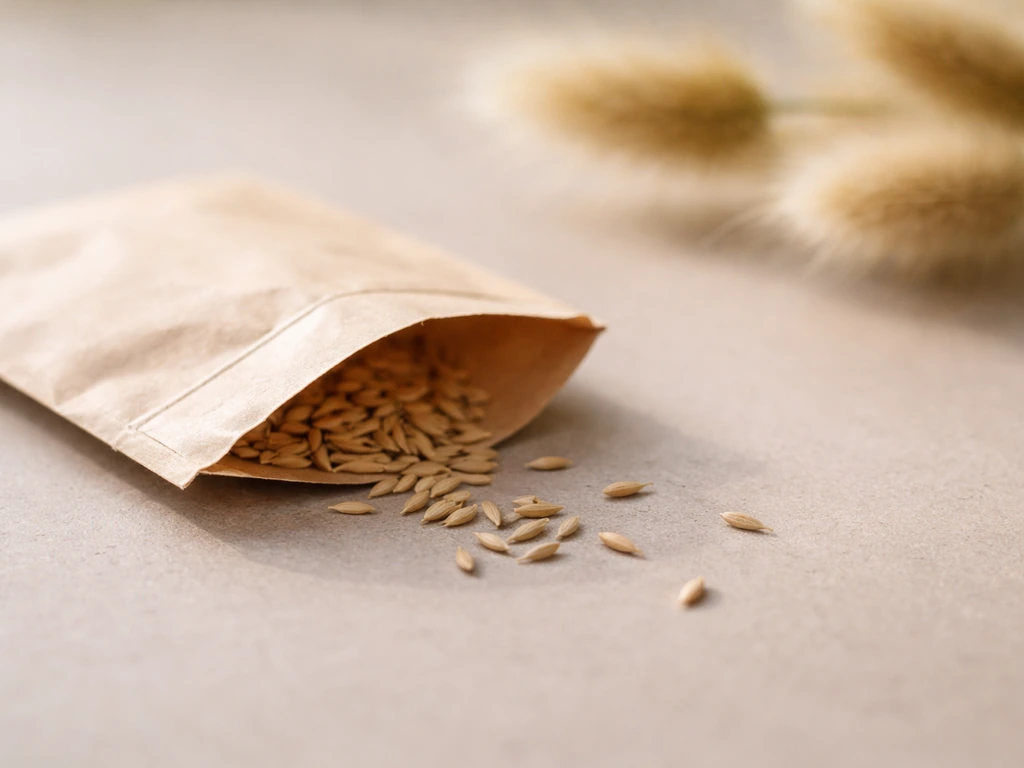
There's really only one species to buy: Lagurus ovatus. You'll see it sold under 'Bunny Tails Grass Seeds,' 'Hare's Tail Grass,' and 'Rabbit Tail Grass' at retailers like Botanical Interests, Johnny's Selected Seeds, Siskiyou Seeds, and Heritage Harvest Seed. Some suppliers offer a dwarf form ('Nanus'), which grows to about 12 inches rather than the standard 18 to 24 inches. The dwarf is great for containers or tight borders; the standard form gives you bigger, showier plumes and works better in mass plantings or as a cut-grass display.
Climate-wise, Lagurus ovatus is flexible. It performs best where summers are warm and dry, making it an easy choice in California, the Southwest, the Mediterranean-climate Pacific Northwest valleys, and similar zones. In the humid Southeast or Midwest, it still grows well, but you'll need to be extra careful about drainage since wet conditions are its main enemy. In cooler northern climates (USDA zones 4 to 5), treat it as a direct-sow spring annual and expect the full 80 to 110 days to maturity to eat into your season. It's not the right plant for deep shade or boggy spots regardless of your region, unlike some of the cool-season lawn grasses like fescue that can tolerate shadier conditions.
Getting your soil right before you plant
Soil preparation is where most failures start with this grass, so don't skip it. Lagurus ovatus needs very well-drained, light to medium soil with moderate fertility. It does not want rich, heavily amended soil the way a vegetable garden would, and it absolutely does not want compacted clay that holds water.
If your soil is clay or compacted
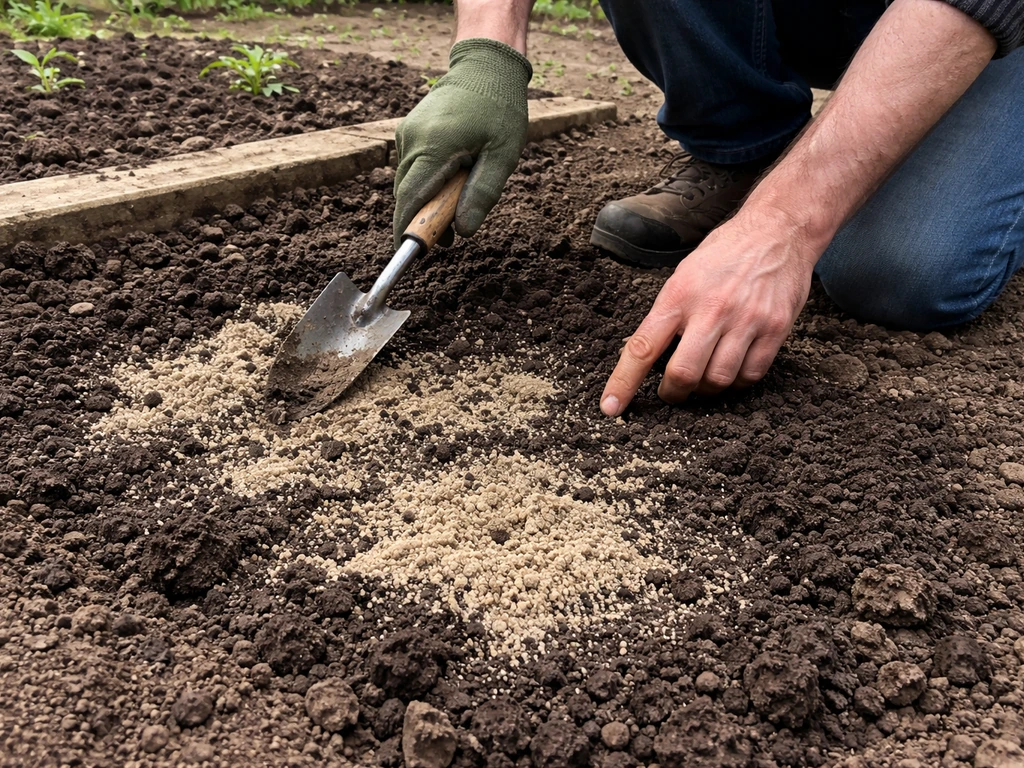
Work in coarse sand or fine grit (not beach sand, which can make concrete-like mixes) to open up the structure. A 2 to 3 inch layer tilled in 6 to 8 inches deep makes a real difference. You can also raise the bed by a few inches using a mixture of native soil and grit, which improves drainage immediately without major digging. Avoid over-amending with compost because high organic matter holds moisture, which is the opposite of what this plant wants.
If your soil is sandy
Sandy soil is almost ideal for Lagurus ovatus. A light application of balanced granular fertilizer (something like a 10-10-10 at the label rate) before sowing is enough to provide moderate fertility. You don't need to heavily amend sandy soil for this grass.
pH and basic soil prep
Lagurus ovatus isn't fussy about pH the way some lawn grasses are. A neutral to slightly alkaline range (around 6.5 to 7.5) works well. If you've already tested your soil for other lawn projects and it's within that range, you're fine. Rake the surface smooth, break up any clumps larger than a marble, and firm the bed lightly before seeding. Good seed-to-soil contact matters because these seeds germinate better on or very near the surface.
How to grow bunny tail grass from seed, step by step
- Choose a location with full sun (at least 6 hours of direct sun daily). This is non-negotiable for good germination and strong plume production.
- Prepare the soil as described above: light texture, good drainage, no thick mulch layers or waterlogged areas.
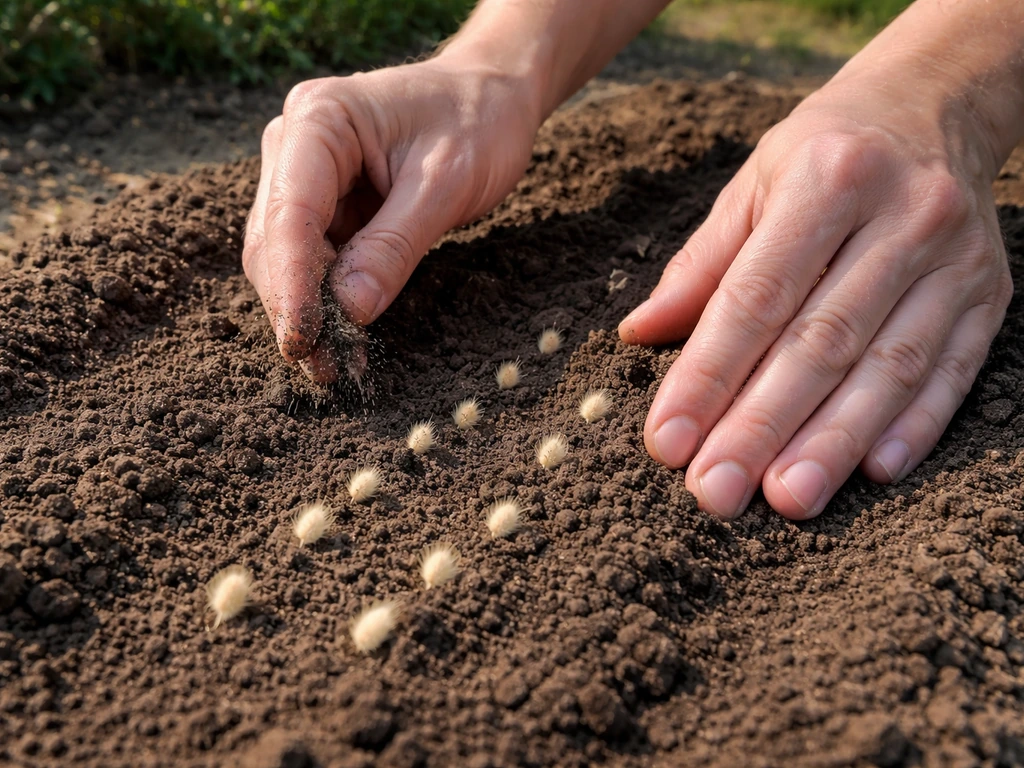
- Scatter seeds evenly over the prepared surface. For a loose, natural look, broadcast by hand. For a more structured planting, sow in shallow rows spaced 6 to 9 inches apart.
- Cover very lightly with a thin layer of fine soil or vermiculite, no more than 1/8 inch. Light is required for germination, so burying seeds deeply is one of the fastest ways to get zero results.
- Firm the surface gently with your hand or the back of a rake to ensure good seed-to-soil contact.
- Water in with a gentle spray. You want the surface moist, not flooded. A misting nozzle or watering can with a rose head works well here.
- Keep the surface consistently moist (not wet) until germination, which typically takes 5 to 12 days under warm, well-lit conditions.
- Once seedlings are up and showing their first true leaves, thin to about 6 inches apart if you broadcast-sowed, or thin rows to the same spacing.
If you're starting indoors (useful in shorter-season climates), sow in small pots or cell trays 6 to 8 weeks before your last frost. Place on a sunny windowsill or under fluorescent grow lights on a 16-hour-on, 8-hour-off cycle. Lagurus ovatus seedlings need strong light from the moment they emerge or they get leggy fast. Transplant outdoors after your last frost date when seedlings have 3 to 4 leaves.
Timing, watering, and what to expect during germination
The best time to direct-sow outdoors is spring, once soil temperatures have warmed and frost risk has passed. In mild climates (zones 8 and above), you can also sow in fall for a cool-season run before summer heat arrives. For most of the continental US, a spring sow between late March and mid-May is the sweet spot.
Germination runs 5 to 12 days under good conditions, with some sources noting up to 10 to 12 days as more typical at cooler spring temperatures. From germination to flowering and plume production is roughly 80 to 95 days under average conditions, with full maturity potentially taking up to 110 days. That means if you sow in early May, you can expect those fluffy plumes by mid to late summer.
Watering strategy changes at each stage. Before germination, keep the soil surface consistently moist with light, frequent watering (sometimes twice daily in warm, windy weather). Once seedlings are established with a few sets of leaves, back off to deep but less frequent watering. Once fully established, Lagurus ovatus is low water use and handles dry spells well. Overwatering after establishment actually hurts it, especially in clay-heavy soils.
Why your seeds aren't germinating (and how to fix it)
Three problems account for most bunny tail grass germination failures, and they're all fixable once you know what's happening.
| Problem | Likely Cause | Fix |
|---|---|---|
| Seeds don't sprout after 2+ weeks | Covered too deeply or soil compacted over seeds | Resow on the surface with only a dusting of cover; press seeds in firmly but don't bury them |
| Sparse, patchy germination | Poor light reaching seeds or inconsistent moisture | Move to a sunnier spot; water surface more frequently until sprouts appear |
| Seedlings emerge then collapse | Overwatering and poor drainage causing damping off | Improve drainage before resowing; reduce watering frequency and allow surface to barely dry between waterings |
| No germination despite good conditions | Soil too cold at sowing time | Wait until soil is consistently above 55°F (13°C); germination is much faster and more reliable in warm soil |
| Weeds outcompeting seedlings | Weed seeds already in soil germinating alongside Lagurus | Hand-weed carefully in the first 3 to 4 weeks; avoid pre-emergent herbicides which will also block your grass seed |
Thin stands are often the result of sowing too late in the season (not enough warm days left to reach maturity) or sowing into shady spots. If you get thin coverage, oversow the gaps immediately rather than waiting. Because Lagurus germinates quickly under good conditions, a second sowing a few weeks later can still catch up reasonably well.
Ongoing care after establishment
Once bunny tail grass is up and growing, it's genuinely low maintenance. If you are specifically looking for how to grow brachiaria grass, you can apply the same overall approach to sunlight, soil, and watering planning Once bunny tail grass is up and growing, it's genuinely low maintenance.. Water during extended dry spells (a good soak every 10 to 14 days in dry summers is usually enough), and don't fertilize heavily. Rich, high-nitrogen soil pushes leafy growth at the expense of the fluffy plumes, which are the whole point of growing it.
Deadheading isn't necessary, but cutting the stems at the base after the plumes fade keeps the planting looking tidy and prevents unwanted self-seeding. If you want it to naturalize and return on its own next year, leave some plumes to drop seed. This works best in warm, dry climates with loose, sandy soil. In wetter regions, self-seeding is less reliable.
There's no significant pest pressure to worry about under normal conditions. The main ongoing threats are overwatering, poor drainage, and shade creeping in from neighboring plants as the season progresses. Keep the area around it reasonably open and don't crowd it with large leafy plants that will block light.
Using it as a cut grass or in arrangements
Bunny tail grass is excellent as a cut or dried grass. Cut stems when the plumes are fully formed but still soft and green-tinged for the best dried results. Hang bunches upside down in a warm, airy space for one to two weeks. They dry beautifully and hold their shape for months in arrangements.
A note on 'grass for rabbits' and pet safety
If you searched for bunny tail grass because you want to grow something for your pet rabbits to eat, stop before you plant and verify safety first. Lagurus ovatus is not a documented rabbit food plant, and its common name refers purely to the appearance of its plumes, not any connection to rabbit nutrition or safety. Rabbit welfare organizations and veterinary sources are clear that many plants can be toxic to rabbits even when they look harmless, and you should never feed a rabbit any plant unless you have confirmed it's safe from a reliable source. For actual rabbit-safe grazing, plain timothy hay, meadow grass, and certain herbs have documented safety records. Don't rely on a plant's name as a guide to whether it's safe for your animals.
How bunny tail grass compares to other ornamental and specialty grasses
If you're exploring ornamental and specialty grasses more broadly, it's worth knowing where Lagurus ovatus sits relative to similar options. Mexican feather grass offers a similar wispy, movement-in-the-wind quality but is a perennial with a finer leaf texture and a more invasive reputation in some states. Broom grass is a coarser, more utilitarian plant used for different purposes entirely. Citronella grass is grown primarily for its scent rather than its ornamental appeal. Lagurus ovatus is the best choice specifically when you want soft, tactile plumes for borders, dried arrangements, or containers, and you're happy replanting annually or allowing it to self-seed.
FAQ
How deep should bunny tail grass seeds be planted, and what if I planted them too deep?
Because Lagurus ovatus seeds need surface light and close seed-to-soil contact, burying deeper than about 1/8 inch is a common reason for poor germination. If you accidentally cover them too much, lightly rake the bed so seeds are closer to the surface, then keep the top layer consistently moist until you see sprouts (usually within 5 to 12 days in good conditions).
What watering schedule works best before germination, especially during hot or windy weather?
For direct sowing, it helps to keep the soil surface evenly moist without letting water pool. In warm, windy weather that can mean light watering more than once per day at first, then gradually spacing out watering after seedlings form a few leaf sets. If the soil crusts or dries on top, seedlings can fail even when the bed is “overall” moist.
My seedlings look leggy, what did I do wrong and how can I correct it?
If your seedlings look leggy or thin, the fastest fix is more light, not fertilizer. Seedlings started indoors need strong light from emergence, a sunny windowsill often is not enough in low-sun seasons, and fluorescent grow lights on a 16-hour cycle are a safer baseline. Transplant only after the last frost and when seedlings have 3 to 4 leaves to reduce shock.
Can I start bunny tail grass indoors if my summers are short?
Yes, but time it carefully. In cooler areas (around USDA 4 to 5), direct-sowing may stretch your timeline because maturity can take 80 to 110 days. Indoor starting (6 to 8 weeks before the last frost) can buy you time, but you still need full sun outdoors afterward so the plants can form plumes before the season ends.
Should I fertilize bunny tail grass, and what happens if I use too much?
Bunny tail grass generally performs as well or better in nutrient-lean conditions. If you over-fertilize, especially with higher nitrogen, you can get lots of leafy growth with smaller or fewer fluffy plumes. Use a light balanced fertilizer only as directed (for example, around a label-rate 10-10-10 prior to sowing) and avoid repeated feeding.
I’m getting thin coverage, should I replant or wait it out?
Thin stands are often from late sowing or shade. If you see gaps early, oversow them right away rather than waiting for the “next season.” Since germination is relatively fast under good warmth, a second sowing a few weeks later can still catch up before maturity.
What’s the best way to improve drainage for bunny tail grass in heavy clay?
Bunny tail grass will struggle in wet, compacted, or boggy soil, even if it grows temporarily at first. If your yard is clay-heavy, improve drainage by mixing in grit or coarse sand and consider raising the bed a few inches using native soil plus grit. The goal is water to drain quickly after watering, not to stay saturated.
How can I encourage bunny tail grass to come back each year, and when is self-seeding unreliable?
If self-seeding matters to you, leave some faded plumes to drop seed, but accept that reliability drops in wetter regions. For more controlled return, you can collect dry seed from the plumes and sow again the next spring instead of hoping for volunteers, especially where winters are cooler or soils stay damp.
When is the right time to cut bunny tail grass for fresh use or drying?
Yes, but plan for it like an annual display. Cut or dried arrangements are best when plumes are fully formed but still slightly soft and green-tinged, then hang bunches upside down in a warm airy space for about one to two weeks. If you wait until they are fully crisp and very pale, the plumes can be more fragile during handling.
Is bunny tail grass safe for pet rabbits to eat?
Bunny tail grass is ornamental, not a confirmed rabbit feed plant, so the safe approach is to keep it out of reach of grazing and never assume “bunny” means “safe.” If you want to provide rabbit-safe forage, stick to plants with documented safety records (for example, timothy hay or meadow-grass types) and verify any new plant through a reliable rabbit-welfare or veterinary source before offering it.
Next Article
How to Grow Citronella Grass Step by Step Today
Step-by-step guide to grow citronella grass fast, from planting and care to overwintering and troubleshooting.