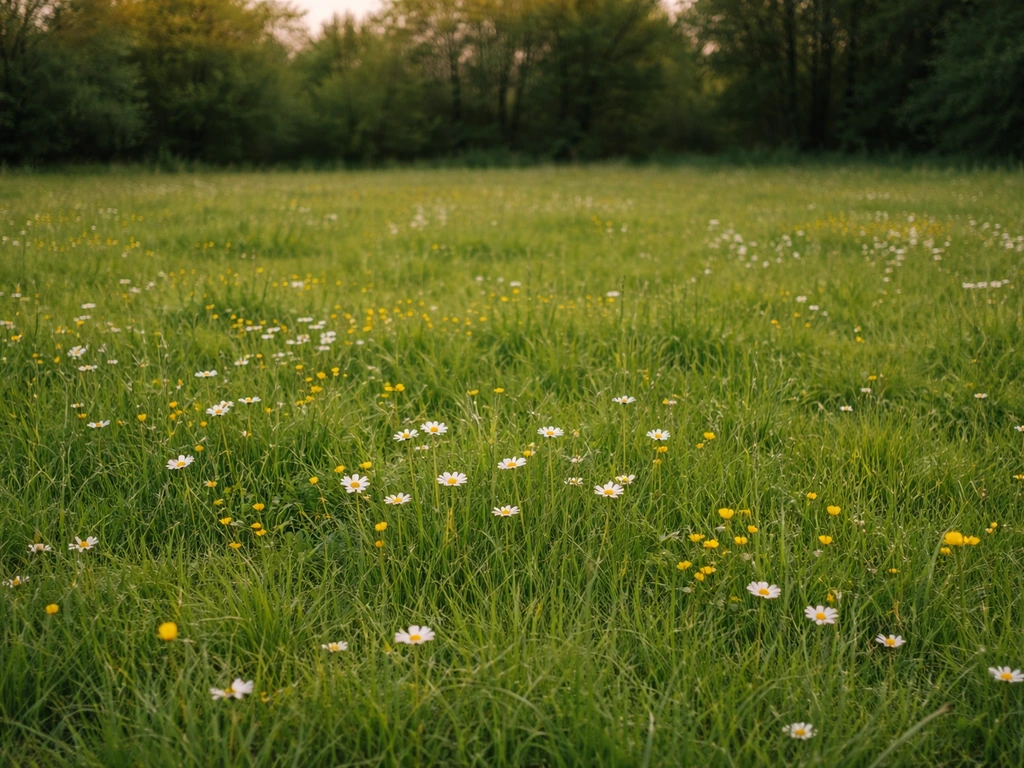
Yes, you can grow wildflowers in an existing lawn without ripping everything out and starting over. The key is managing competition from your existing grass, wildflower seeds are tiny and slow to establish, and established turf will shade them out and steal moisture before they get a foothold. Get that part right, and you can interseed directly into bermuda, fescue, ryegrass, or zoysia, turn a struggling corner into a mini-meadow, or gradually shift your whole lawn toward a pollinator-friendly wildflower mix while still having functional turf for most of the year.
How to Grow Wildflowers in Lawn: Interseed, Renovate & Tips!
Marcus Tillwell
13 Jul 2026
Can you actually grow wildflowers in a lawn? Benefits, limits, and realistic goals
The honest answer is: yes, but not everywhere and not all at once. A dense, healthy stand of tall fescue or bermudagrass is genuinely difficult for wildflower seedlings to break into. Those grasses didn't get established by being polite neighbors. What works is reducing that competition strategically, through timing, scalping, aerating, or using herbicide, and then seeding species that are actually suited to the conditions you have.
When it works, the benefits are real. You get a lawn that supports native bees, butterflies, and other pollinators that a monoculture lawn simply can't feed. You reduce mowing frequency in wildflower zones. You cut fertilizer inputs because many native wildflowers prefer lean soils. And if you go the mini-meadow or full-conversion route, you can dramatically cut water use in dry climates. Homeowners with pets, kids, and neighbors who still need parts of the lawn to function as turf can mix approaches, keeping core areas as traditional lawn while converting edges, slopes, and shady corners to wildflower patches.
The limits are just as worth knowing. Most perennial wildflowers take one to three seasons to hit their stride, you won't get a magazine-cover meadow in year one. Annual wildflowers bloom faster but need to be re-seeded or allowed to self-seed each year. And if your existing grass is thick and healthy, interseeding without suppression is mostly a waste of seed. Be honest about what your site allows before you choose a method.
Which approach is right for you: interseeding, spot repair, full conversion, or mini-meadow?
There are four main ways to bring wildflowers into a lawn, and choosing the right one depends on how much of your lawn you want to change, how much work you're willing to do, and what you need the space to keep doing.
| Approach | Best for | Turf kept? | Effort level | Time to results |
|---|---|---|---|---|
| Interseeding into existing turf | Homeowners who want pollinators without losing lawn function; low-density additions | Yes | Medium | 1–3 seasons for perennials |
| Spot repair with wildflowers | Bare patches, thin areas, edges, slopes that won't grow turf | Partially | Low–Medium | 1 season for annuals, 2–3 for perennials |
| Full conversion / renovation | Replacing struggling or unwanted lawn entirely with meadow or native planting | No | High | 2–3 seasons for full effect |
| Mini-meadow patch | Converting a defined section (e.g., a corner, strip, or bed) while keeping the rest as lawn | Partial — rest of lawn remains | Medium | 1–2 seasons |
Interseeding makes the most sense if you have a moderately thin or stressed lawn and want to add biodiversity without a full renovation. It works best in fescue and ryegrass lawns because these cool-season grasses thin out in summer and leave windows for wildflower seedlings. Bermuda and zoysia are trickier, they spread aggressively and will outcompete most wildflowers without deliberate suppression.
Spot repair is the lowest-barrier entry point. If you have bare or thin areas that keep failing to fill in with grass, wildflowers, especially native annuals or low-growing perennials, can be a smarter, lower-maintenance choice than fighting to re-establish turf. This is also a good strategy near trees where shade thins out fescue, or on dry slopes where irrigation doesn't reach well.
Full conversion is a bigger commitment: you scalp or kill the existing turf, prep the soil, and seed an entirely new mix. It's the best path if your lawn is mostly weeds anyway, if you're on a steep slope that's hard to mow, or if you genuinely want a meadow rather than a lawn. If you're exploring this route, the process overlaps significantly with what's covered in guides on how to grow a wildflower meadow or how to grow a meadow from scratch.
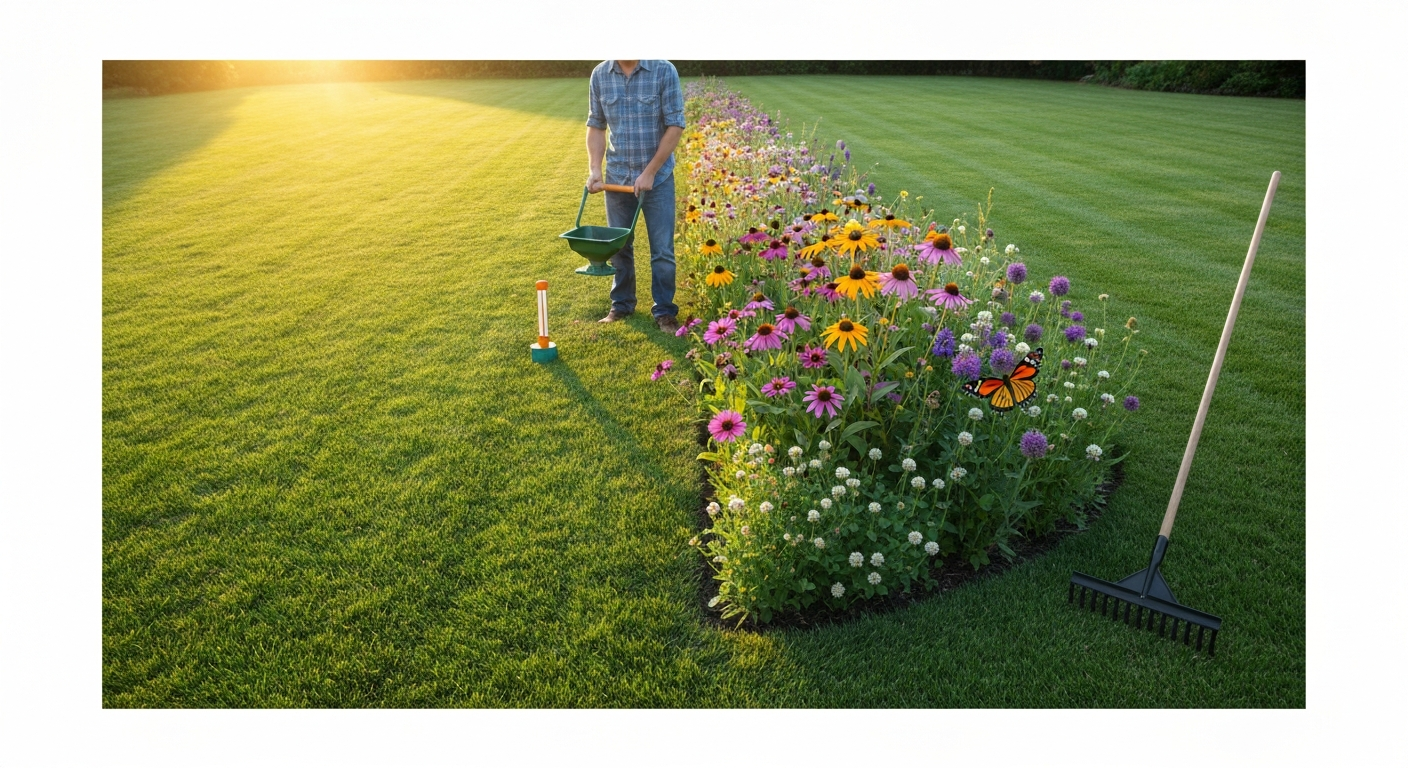
A mini-meadow is a middle path and often the most practical for most homeowners. You pick a defined area, maybe a 10x20-foot corner, a strip along the fence, or the shady side of the house, convert that section while leaving the rest as normal lawn. It's manageable, reversible if you change your mind, and still provides a genuine boost to local pollinators. This approach is explored in more depth in the guide on how to grow a mini meadow. For a focused how-to on establishing wild grass patches, see our guide on how to grow wild grass. For homeowners wanting a low-growing, turf-like alternative, see our concise guide on how to grow mini leaf grass. For step-by-step instructions on creating a larger meadow-style conversion, see how to grow a meadow.
When to seed: seasonal timing for cool-season and warm-season lawns
Timing is one of the most important variables, and it's where a lot of homeowners go wrong. Wildflower seeds don't care about the calendar date, they care about soil temperature and moisture. For most lawns in the US, you're working within one of two turf systems, and each has its own optimal window.
Cool-season lawns (fescue, ryegrass, Kentucky bluegrass)
Cool-season grasses are most active in spring and fall, which means they're also most competitive during those windows. Your best seeding times are late summer through early fall when soil temperatures at 2 inches deep are between 50°F and 65°F. This gives wildflower seedlings a chance to germinate alongside a slower-growing, post-summer-stressed turf. Late summer seeding (late August through mid-September in most of the northern US) is often the sweet spot: soils are still warm, the turf has weakened from summer heat, and there's enough season left for seedlings to root in before winter.
Dormant seeding in late fall or early winter is a second option that works especially well for prairie-type perennial wildflowers. You broadcast seed after the ground cools but before it freezes hard. The seeds sit there all winter, get natural cold-moist stratification, and germinate on their own schedule in spring. You're skipping the irrigation-intensive germination phase because nature handles it. The downside is you can't control exactly when germination happens, and you'll have a slow, patchy first season.
Warm-season lawns (bermuda, zoysia, centipede, St. Augustine)
Warm-season turf goes dormant in fall and winter, which is actually the ideal window to interseed wildflowers without the grass fighting back hard. Seeding cool-season wildflowers in fall into a dormant bermuda or zoysia lawn can work well. For warm-season wildflowers seeded alongside warm-season turf, wait until soil temperatures are reliably above 65°F at 2 inches, usually late spring through early summer depending on your region. Bermudagrass itself needs sustained soil temps above 65°F for reliable germination, and many warm-season wildflowers have similar requirements.
| Lawn type | Best seeding window | Target soil temp (2") | Notes |
|---|---|---|---|
| Cool-season (fescue, ryegrass) | Late Aug – mid-Oct | 50–65°F | Fall seeding gives best establishment; dormant seeding Nov–Dec also works for perennials |
| Warm-season (bermuda, zoysia) | Spring into dormant turf OR late spring after green-up | 65°F+ for warm-season wildflowers | Fall dormant seeding works for cool-season wildflowers overwintering in dormant turf |
| Transition zone (mixed or rotating) | Two windows: late Aug–Sep and mid-April–May | 55–65°F fall; 65°F+ spring | Match wildflower type to the window — cool-season species in fall, warm-season in spring |
Regional timing adjustments
These windows shift by several weeks depending on where you live. In the Deep South and Southwest, warm soils persist into November, so fall seeding windows open later and close later. In the Upper Midwest and New England, soils cool fast in September and hard freezes can come in October, so you need to seed earlier in the fall window or commit to full dormant seeding. The Pacific Northwest has mild winters and a long, cool spring, cool-season wildflowers often do well seeded in fall through early spring there. When in doubt, a cheap soil thermometer pushed 2 inches into the ground tells you more than any calendar date.
Choosing your seed mix: native, annual, or perennial wildflowers?
The seed mix you choose shapes what your lawn looks like, how much work it takes, and how long it lasts. There are three main categories, and each has a genuine use case.
| Type | Examples | Pros | Cons | Best use case |
|---|---|---|---|---|
| Native wildflowers (regionally adapted) | Purple coneflower, black-eyed Susan, prairie blazingstar, wild bergamot, lanceleaf coreopsis | Long-lived once established; highest pollinator value; low input after year 2–3; adapted to local climate and soils | Slow to establish (1–3 years to peak bloom); higher seed cost; may require stratification | Long-term lawn conversion, mini-meadow, or interseeding for permanent pollinator habitat |
| Annual wildflowers | California poppy, bachelor's button, annual phacelia, plains coreopsis, annual black-eyed Susan | Fast-blooming (often within 6–10 weeks of germination); colorful first season; good gap-fillers | Must re-seed or allow self-seeding each year; less ecological value long-term; may not return reliably | Spot repairs, quick color in a bare area, first-season filler while perennials establish |
| Perennial wildflowers (non-native/cultivated) | Garden coneflower cultivars, ox-eye daisy, chicory, yarrow | Faster to bloom than true natives; widely available; decent pollinator value | Variable regional adaptation; some can become aggressive; less targeted ecological benefit | Homeowners wanting quick results with some longevity; transitional mixes |
For most homeowners interseeding into an existing lawn, a blend of native perennials with a small fraction of annuals (around 20–30% annuals by seed count) is the most practical starting point. The annuals give you something to see in year one while the perennials are putting their energy into root development. By year two or three, the perennials take over and you phase out the annuals or let them self-seed in gaps.
When shopping for seed, look for mixes that list species names, not just 'wildflower mix.' Regional mixes sourced from native ecotypes perform better than generic national mixes. Check that the label shows Pure Live Seed (PLS) percentage and tells you the coverage rate in PLS seeds per square foot or PLS pounds per acre. A mix with no PLS label is hard to compare against anything meaningful.
Wildflower species by purpose and height
Not every wildflower works in every situation. Here's a practical breakdown by what you're trying to accomplish and how tall the plants get, both matter a lot for mixed-turf situations where you still want part of the lawn to be walkable or mowable.
Low-growers for mixed turf (under 12 inches)
- White clover (Trifolium repens) — nitrogen-fixing, pollinator magnet, mow-tolerant; excellent for interseeding into any turf
- Creeping thyme (Thymus serpyllum) — very low, fragrant, handles foot traffic; good for paths and edges
- Lanceleaf coreopsis (Coreopsis lanceolata) — to about 12 inches, good drought tolerance, long bloom period
- Violets (Viola species) — native violets stay low, tolerate shade, support specialized bees and fritillary butterflies
- Self-heal (Prunella vulgaris) — native, low-spreading, excellent for moist or shadier spots in the lawn
Pollinator-priority species (12–36 inches)
- Purple coneflower (Echinacea purpurea) — one of the highest-value native pollinator plants; drought-tolerant once established; 2–4 feet
- Wild bergamot (Monarda fistulosa) — beloved by bumblebees and native bees; spreads by rhizome over time; 2–3 feet
- Black-eyed Susan (Rudbeckia hirta) — fast-establishing, reliable bloomer, short-lived perennial that re-seeds freely; 1.5–3 feet
- Prairie blazingstar (Liatris pycnostachya) — spectacular late-summer bloom; monarch butterfly magnet; 2–4 feet
- Plains coreopsis (Coreopsis tinctoria) — annual, very fast bloomer; good season-one fill while perennials establish; 1–2 feet
Showy perennials for mini-meadow or full conversion areas (3 feet and taller)
- Tall goldenrod (Solidago canadensis) — late-season bloom critical for bees; aggressive spreader so better in contained conversion areas
- Wild blue indigo (Baptisia australis) — slow to establish but very long-lived; 3–4 feet; excellent for edges and borders
- Compass plant (Silphium laciniatum) — prairie icon, 4–6 feet; deep taproot, drought-proof once established; best for full conversion
- Joe-pye weed (Eutrochium purpureum) — 4–7 feet; spectacular butterfly and bee magnet; best for moist areas or rain gardens
- Swamp milkweed (Asclepias incarnata) — monarch host plant; 3–5 feet; tolerates wet or average soils; essential for any pollinator conversion
Seed rates and blend recommendations for bermuda, zoysia, fescue, and ryegrass
One of the most common mistakes is seeding at bare-soil rates when interseeding into existing turf. Because established grass steals moisture and light from emerging wildflower seedlings, you generally need to seed at higher rates than the bag recommends for open ground. A good rule of thumb from the Xerces Society's interseeding guidance: increase your wildflower seeding rate by about 25% above the bare-soil recommendation when seeding into an existing grass stand. In some cases, practitioners double the rate entirely for low-density or suppressed stands.
For reference, USDA/NRCS pollinator planting guidance targets 20–40 PLS seeds per square foot for establishment. See Using Publicly Available Data to Quantify Plant–Pollinator Interactions and Evaluate Conservation Seeding Mixes (USDA/FSA research appendix) for practitioner seed‑count methods that standardize high‑diversity pollinator mixes to about 430 PLS seeds/m² (≈40 seeds/ft²) and explain converting species seeds‑per‑pound and PLS% into lb/acre. Commercial wildflower mixes for homeowners typically land around 0.5–1 lb per 1,000 sq ft for overseeding applications, and roughly 0.5 lb per 200 sq ft for bare-soil establishment. A specific example: Hancock Seed's Alternative Lawn Wildflower mix recommends 4 oz per 1,000 sq ft (equivalent to about 10.9 lb per acre) on bare soil. For interseeding, bump that toward 5–6 oz per 1,000 sq ft. Always check the PLS coverage information on the specific product label, seed size varies enormously between species and mixes.
| Turf grass | Competitiveness with wildflowers | Recommended strategy | Seeding rate adjustment vs bare-soil rate | Timing note |
|---|---|---|---|---|
| Tall fescue | Moderate — clumping habit leaves gaps | Core aerate, scalp low in late summer, interseed fall | +25–30% above bare-soil rate | Late Aug – mid-Oct; soil 50–65°F |
| Perennial ryegrass | Moderate-high — germinates fast, competitive | Thin with dethatching + scalp before seeding; time to late summer/fall | +25–30%; consider doubling on dense stands | Late Aug – Sep; ryegrass slows as soil cools |
| Bermudagrass | Very high — aggressive lateral spread | Interseed in fall dormancy; or use suppression herbicide before spring seeding | +25–50% above bare-soil rate due to high competition once active | Fall dormant seeding into dormant bermuda; or post-green-up with suppressed bermuda |
| Zoysia | High — dense mat, very competitive once established | Best results with full-season suppression or mini-meadow patch approach in thin/stressed areas | +30–50%; mini-meadow conversion preferred over full-stand interseeding | Fall dormant seeding; warm-season wildflowers late spring at soil 65°F+ |
A note on ryegrass specifically: because perennial ryegrass germinates in 5–10 days and grows aggressively in cool weather, it can swamp wildflower seedlings if both germinate at the same time. Timing your wildflower seeding just after the main ryegrass germination flush (let the ryegrass green up in early fall, mow it down, then broadcast wildflowers) can help. The same logic applies to fescue.
How to blend wildflower and turf seed: percentages and practical ratios
If you want to keep functional turf while adding wildflowers, you don't need to choose one or the other, you seed a blended mix. The trick is getting the ratio right so neither component crowds out the other entirely. These are the practical blends that work for different goals.
Light pollinator enhancement (mostly lawn, some wildflowers)
This is the easiest and most reversible approach. Seed your standard turf grass at its normal rate and add wildflowers at about 10–15% of the total seed weight. Focus on low-growing, mow-tolerant species: white clover, lanceleaf coreopsis, native violets, and self-heal. This blend looks like a normal lawn for most of the year with intermittent patches of bloom. You can still mow it at 3–4 inches, just less frequently.
Mixed lawn-meadow blend (equal function)
For a more balanced look, still walkable, but clearly supporting wildlife, aim for roughly 40–60% turf grass by seed count and 40–60% wildflowers, weighted toward low to mid-height natives. A practical mix might be: 50% fescue (a fine fescue like hard fescue or sheep fescue, which is less competitive than tall fescue), 30% native perennial wildflowers, and 20% annual wildflowers for first-season color. Mow once in late spring at 4–5 inches before the tall wildflowers bolt, then let it grow until late summer or early fall.
Mini-meadow or conversion blend (wildflower dominant)
For a defined patch you're converting entirely, drop the turf grass component to 10–20% (or eliminate it) and go 70–90% wildflowers with a mix of annuals and perennials. Some practitioners include a low-growing nurse grass like hard fescue at 10–15% just to hold soil and reduce weed pressure while perennials establish. After two to three seasons, mow aggressively in late fall to knock back the nurse grass and let the perennials dominate. This approach aligns with what's covered in guides specifically on how to grow a wild lawn and how to grow wild grass.
Step-by-step: interseeding wildflowers into an existing lawn
Here's the practical sequence for a homeowner intersecting wildflowers into an established cool-season or warm-season lawn. I'm walking through the method I'd use for a fescue lawn in the Midwest, with notes for adjusting to bermuda or zoysia.
Preparation (2–4 weeks before seeding)
- Scalp the lawn short — mow to 1–1.5 inches to remove as much leaf canopy as possible, reducing shade on the seed bed.
- Core aerate the entire area (or the section you're seeding). This creates small openings in the turf that improve seed-to-soil contact and reduce competition from roots. On compacted clay soil, make two passes in perpendicular directions.
- If your soil is clay: topdress with 1/4 to 1/2 inch of screened compost over the aerated surface. That's roughly 0.8–1.6 cubic yards per 1,000 sq ft. Drag it into the aeration holes with a lawn rake.
- If your soil is sandy: incorporate compost before seeding to improve moisture retention. Sand loses water fast and wildflower seedlings are vulnerable to dry-out in the first two weeks.
- Let the existing grass recover for one to two weeks before seeding — you want it growing slowly, not aggressively. In late summer before a fall seeding, summer stress usually handles this for you.
Seeding
- Mix your wildflower seed with dry sand at a ratio of about 4 parts sand to 1 part seed by volume. This bulks up the seed, makes it easier to spread evenly, and helps you see where you've already seeded.
- Broadcast the mix by hand or with a hand-crank spreader in two passes at right angles to each other for even coverage. Target rate: 25–30% above the bare-soil recommendation on the seed package for interseeding into turf.
- Rake lightly (do not bury the seed — most wildflower seeds need light to germinate and should sit at or just below the soil surface). Use a leaf rake and take one or two passes.
- Roll or cultipack if you have access to a lawn roller — even a water-filled drum roller pressed at light weight helps press small seeds into contact with soil. If you don't have a roller, just walk over the area to press seeds down.
- For a drop seeder or slit-seeder: a slice seeder set to a shallow depth (1/8 to 1/4 inch) and a very light seeding rate works well for interseeding, as it creates furrows without deeply disturbing roots.
First 8–12 weeks: watering, mowing, and what to expect
The germination phase is where most interseeding attempts succeed or fail. Wildflower seeds are small and dry out fast. For the first 7–21 days after seeding, keep the soil surface consistently moist with light, frequent irrigation, multiple short cycles per day is better than one deep watering. You're not trying to soak the soil, you're preventing the surface from crusting or drying out while seeds swell and germinate.
Once seedlings are visible (typically 10–21 days for most annuals and fast-germinating perennials, sometimes longer), gradually reduce irrigation frequency and increase depth. Move toward watering once or twice per week and letting water penetrate 4–6 inches to encourage deep rooting. Annual wildflowers may show true leaves within 3–4 weeks. Many perennials will look like small, unremarkable rosettes all first season, that's normal, they're building root systems.
Don't mow the wildflower areas during establishment if you can avoid it. If the surrounding turf needs cutting, raise your mowing height to 4 inches and mow around the seeded zones. If you must mow the whole area, wait until the tallest seedlings are at least 6 inches high and set the mower at 4 inches minimum. Never remove more than one-third of the leaf blade at any single mow.
Adjustments for bermuda and zoysia lawns
If you're working in a warm-season lawn, the preparation timing shifts. For bermuda: time your fall dormant seeding for after the first hard frost when the bermuda has gone dormant but the soil is still above freezing. You get essentially zero competition from the turf during fall and winter. For spring seeding into bermuda, wait until soils hit 65°F and then interseed immediately, the window before bermuda greens up and gets aggressive again is short. Zoysia is even more competitive once established; a mini-meadow patch approach (full conversion of a defined section rather than spreading wildflowers through the whole lawn) usually yields better results than trying to interseed through dense zoysia.
Soil, shade, pets, and other real-world challenges
Clay soil
Clay soils compact easily and can form a surface crust that blocks emerging seedlings. Core aerate first, topdress with 1/4–1/2 inch screened compost, and avoid seeding right before heavy rain events that will crust the soil. Mushroom Compost Guide, lawn topdress recommendations (commercial source citing Penn State/extension topdressing norms) recommends topdressing with 1/4–1/2″ screened compost after core aeration to improve seed‑to‑soil contact and amend clay soils Mushroom Compost Guide — lawn topdress recommendations (commercial source citing Penn State/extension topdressing norms). Many native wildflowers, particularly prairie species like purple coneflower, blazingstar, and wild bergamot, actually do well in heavy clay once established. They've been doing it in the Midwest for thousands of years. The establishment phase is the hard part.
Sandy soil
Sandy soils drain fast and dry out quickly, a real problem for tiny wildflower seeds trying to germinate. Work compost into the top 3–4 inches before seeding and water more frequently during germination. Species like black-eyed Susan, lanceleaf coreopsis, and California poppy handle sandy, dry conditions well once established. Avoid mixing in heavy organic matter at the surface only, it needs to be incorporated so roots can reach it.
Shade
Most wildflowers need full sun or partial shade, if you're under a dense tree canopy, your species options narrow significantly. Native violets, wild ginger, woodland phlox, and self-heal are better candidates for shaded lawn areas than most traditional wildflower mixes. Full-sun prairie mixes will not perform under heavy shade no matter how well you prepare the soil.
Pets and foot traffic
Dogs and wildflowers are a tough combination during establishment. Keep dogs off seeded areas for at least 6–8 weeks until seedlings are rooted in. After that, most established wildflowers are reasonably durable, but the most delicate and showy perennials won't survive heavy daily traffic from a large dog. If you have pets, focus wildflower zones on edges, fenced sections, or areas the dog doesn't use regularly, and seed main run areas with durable turf grass.
Ongoing management: mowing, irrigation, weeds, and re-seeding
The biggest management shift with a wildflower lawn is changing when and how you mow. Instead of mowing weekly to keep turf uniform, you're mowing strategically. For mixed lawn-wildflower areas: mow once in late spring (May, roughly) at 4–5 inches to prevent cool-season grass from shading out emerging warm-season wildflowers, then let the area grow through summer bloom. Mow again in late fall after seed heads have dispersed, this both distributes seeds and cuts back dormant material.
Weed pressure is heaviest in year one before wildflowers establish. Avoid using broadleaf herbicides on wildflower areas, most wildflowers are broadleaf plants and will be killed by the same products used to kill dandelions. Hand-pull aggressive weeds like thistle, dock, and bindweed before they go to seed. By year two to three, a well-established wildflower planting is genuinely competitive with most lawn weeds because the ground is occupied.
Annual wildflower components need re-seeding every year unless you allow them to self-seed. Let seed heads develop fully before the late-fall mow, the mower will help spread the seed across the area. For perennials that thin out over time, spot re-seed bare areas in fall at roughly 25–30% above bare-soil recommended rates to account for the competition from established plants around them.
Troubleshooting common problems
| Problem | Likely cause | Fix |
|---|---|---|
| Seed doesn't germinate | Soil surface dried out; seeding depth too deep; wrong season for species | Water more frequently (2–3x daily short cycles); check soil temp; confirm species cold/warm stratification needs; re-seed if past the germination window |
| Seedlings appear then die | Soil dries out between waterings; damping off fungus in waterlogged soil; slug damage | Adjust irrigation — more frequent but lighter; improve drainage if soil stays wet; use iron phosphate slug bait if slugs are visible at night |
| Grass overtook the wildflowers | Turf competition too high; seeding rate too low; mowing timing wrong | Scalp grass harder before next seeding; increase wildflower seeding rate by 25–50%; mow turf areas more frequently to reduce canopy pressure on wildflower seedlings |
| Only annuals bloomed, no perennials returned | Perennials take 1–3 years; may not have established well in year 1 | Normal — be patient with perennials; re-seed bare spots with perennial seed in fall; reduce mowing height to prevent shading small rosettes |
| Bare spots persist despite seeding | Soil compaction or hardpan; shade; drainage problem; high weed competition | Aerate or loosen soil manually; test drainage; switch to shade-tolerant species if under tree cover; hand-weed aggressively before re-seeding |
| Weeds dominate after first season | Disturbed soil opened weed seed bank; wildflower density too low | Do not cultivate again (brings up more weed seed); mow weeds before they seed; increase wildflower density in fall re-seeding; be patient — wildflowers usually win by year 3 |
| Wildflowers spread into lawn areas you want to keep as turf | Aggressive self-seeders or rhizomatous species (goldenrod, wild bergamot) | Edge wildflower areas with a spade or edging tool each fall; avoid goldenrod and bergamot in small unrestricted areas; choose clump-forming species for mixed turf zones |
Wildflower lawn planting checklist
Use this before you seed to make sure you've covered the critical preparation steps. Skipping any of these, especially soil prep and timing, is the most common reason interseeding fails. For another relevant comparison, see how to grow a mini meadow.
- Confirmed soil temperature at 2 inches is within the right range for your grass type and wildflower species
- Identified whether you're interseeding, spot-repairing, doing a mini-meadow patch, or full conversion
- Chosen a seed mix appropriate for your region, sun exposure, and soil type (native perennials + some annuals for most homeowners)
- Checked seed label for PLS percentage and coverage rate; adjusted rate upward by 25–30% for interseeding into existing turf
- Mowed existing lawn short (1–1.5 inches) and core aerated
- Amended soil if needed: 1/4–1/2 inch compost topdress for clay; compost incorporated for sandy soil
- Mixed seed with dry sand for even distribution (4: 1 sand:seed by volume)
- Broadcast in two perpendicular passes; raked lightly; rolled or pressed for seed-to-soil contact
- Set up irrigation for 2–3 short daily waterings during the germination period (first 7–21 days)
- Marked the area so pets, kids, and lawn equipment stay off for the first 6–8 weeks
- Planned first mow at no lower than 4 inches, only after tallest seedlings exceed 6 inches
- Scheduled late-fall mow for after seed heads disperse to distribute seed for next season
FAQ
Can I grow wildflowers in an existing lawn without killing all my grass?
Yes. Interseeding (overseeding) lets you add wildflowers into a turf stand without full renovation. Success requires reducing competition at seeding and early establishment (mow low, scarify or slit-seed, thin the turf if dense), selecting species suited to the turf and site, and giving seedlings good seed‑to‑soil contact and moisture. For heavier conversions or persistent bare areas, choose full renovation or create a dedicated mini‑meadow area.
How do I decide between interseeding, spot‑seeding, or full conversion to a wildflower lawn or mini‑meadow?
Decision checklist: - Interseed when you want to keep most lawn function and only add floral diversity (good for patches, edges, low‑traffic zones). - Spot‑seed bare/damaged patches or to create floral islands. - Full conversion or mini‑meadow when you want long‑term low‑mow habitat, accept reduced turf uniformity, or have large low‑use areas. Choose interseeding if >60% turf cover and you need mowing/playability preserved; choose renovation if turf cover <50%, weeds dominate, or you want high‑diversity pollinator habitat.
When is the best time to seed wildflowers into my lawn (cool‑ vs warm‑season lawns)?
Timing by turf type: - Cool‑season lawns (fescue/ryegrass): late summer → early fall is best (soil 2" ≈ 50–65°F) for seedling establishment; early spring is possible but competes with weeds. - Warm‑season lawns (bermuda/zoysia): seed warm‑season wildflowers in late spring → early summer after soil warms (2" ≥65°F); dormant broadcast in late fall/winter also works for many prairie species that need cold stratification. For interseeding, plan seeding when grasses are least competitive (post‑mow/flowering or after a gentle suppression period).
What seeding rates should I use for interseeding vs bare‑soil establishment?
General rates: - Bare soil (establishment high‑diversity mixes): typical product guidance is ~4–12 lb PLS/acre depending on diversity; many homeowner 'alternative lawn' mixes recommend ~4–11 oz per 1,000 ft². - Interseeding: increase above bare‑soil labeled rates because of competition. Practitioners commonly use about 25% more seed than bare‑soil recommendations; program guidance varies from 25%–100% adjustments depending on site. - PLS seed‑count targets: aim for ~20–40 PLS seeds/ft² (≈215–430 seeds/m²) for pollinator mixes. Always convert using the product PLS% and seeds per lb on the label and confirm vendor guidance.
How do seeding rates translate for common lawn sizes and turf types (practical examples)?
Example quick conversions (approximate; verify with product PLS info): - Homeowner small plot (1,000 ft²): 4 oz per 1,000 ft² (commercial alt‑lawn mix) ≈ good light overseed. For interseeding increase by ~25% → ~5 oz/1,000 ft². - High‑diversity pollinator mix on bare soil: 4–12 lb/acre (use label PLS conversion). - For turf-specific approach: cool‑season turf interseeding: use recommended mix rate ×1.25; warm‑season turf: follow dormant seeding or spring timing and similar rate adjustment. Use a seed calculator to convert PLS seeds/ft² to lb/acre using seeds-per-lb from the vendor.
Which wildflower species work best when interseeded into lawns?
Choose species that are relatively short/low‑growing, establish from small seeds, and tolerate competition early on. Xerces and regional lists include many persistent species for interseeding (e.g., coreopsis, black‑eyed Susan, many native asters, certain clovers and low annuals). For cool‑season lawns prioritize cool‑tolerant forbs and low grasses; for warm‑season lawns use warm‑season native forbs and annuals. Use primarily native species for local pollinator benefit; include a small amount of short, turf‑compatible annuals/perennials if quick color is desired. Check regional seed lists for site specifics.
Next Article
How to Grow a Meadow From Seed: Step by Step Guide
Step by step guide to grow a meadow from seed with timing, soil prep, sowing, watering, mowing, and fixes for bare patch