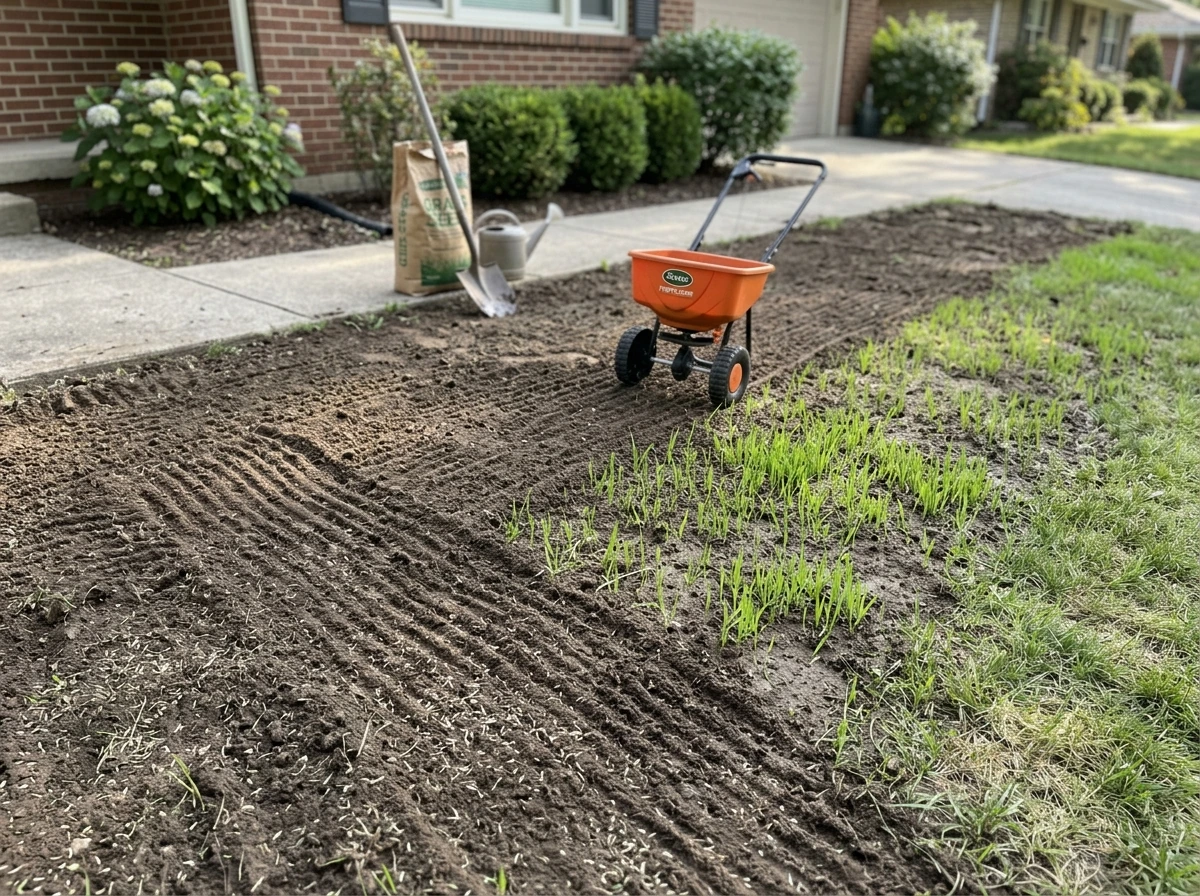
Getting grass to grow evenly comes down to three things: [seed placed at the right depth with good soil contact](/home-lawn-solutions/what-to-use-to-grow-grass), consistent moisture during germination, and choosing the right grass variety for your timing and climate. If any one of those three breaks down, you get patches. The good news is that each cause is fixable, and most problems can be diagnosed and corrected before you lose a whole season.
How to Grow Grass Evenly From Seed: Fix Patchy Spots
Marcus Tillwell
24 Mar 2026
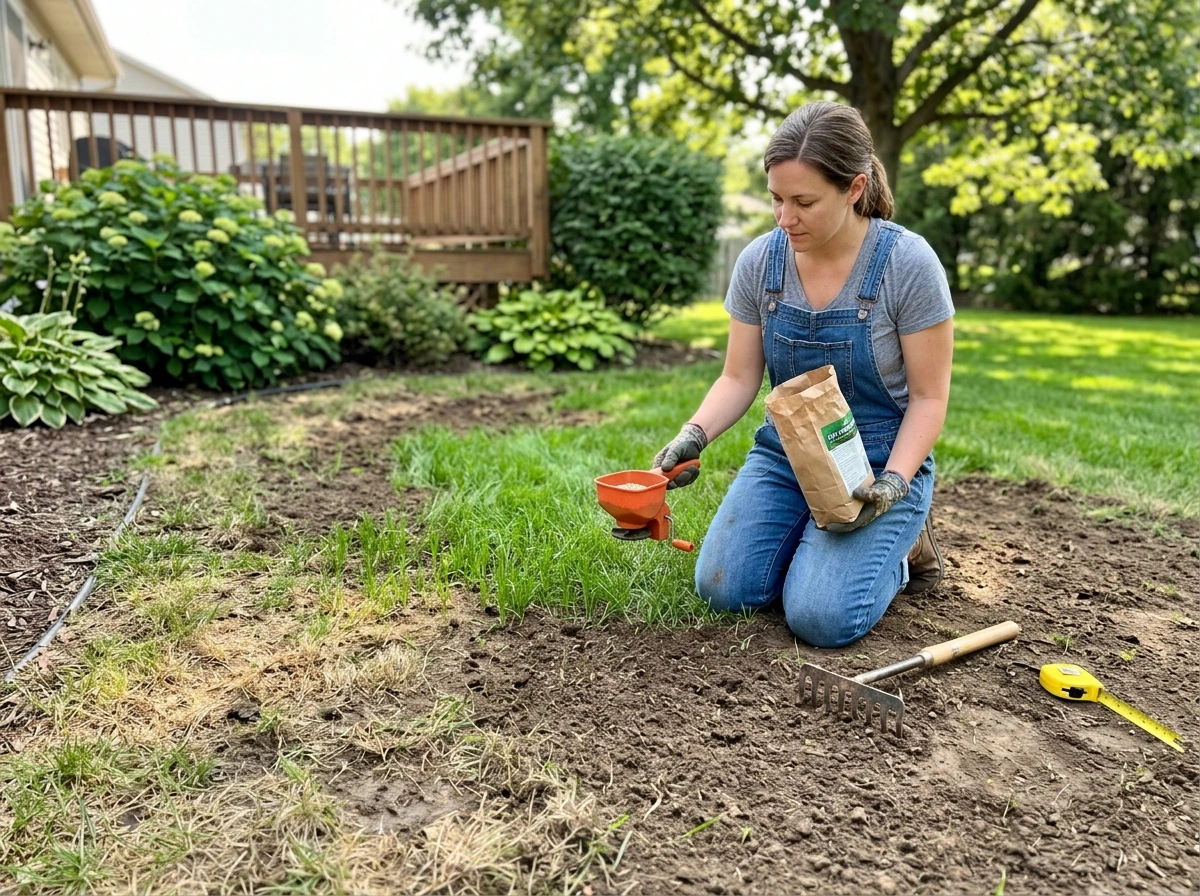
Why Grass Grows Patchy in the First Place
Uneven germination almost always has a clear cause once you look for it. The most common culprits are inconsistent seed depth, poor seed-to-soil contact, compacted or cloddy soil, uneven watering, and seeding at the wrong time for your grass type. These aren't random bad luck, they're specific conditions you created (or inherited) in the seedbed.
One of the sneakiest problems is soil crusting. After a heavy rain, a thin hard crust can form on bare soil. Seedlings that are close to emerging will push up, run out of stored energy trying to break through, and die before they ever see sunlight. You can spot this if you see small pale sprouts that look like they started but never made it. Breaking that crust gently with a light rake or just your fingers can save a seeding that looked like a total loss.
Working soil when it's too wet creates clods, and cloddy seedbeds are a major cause of uneven stands. Some seeds sit tight against moist soil and germinate fine. Others sit in an air pocket next to a clod and never absorb enough moisture to sprout. The result looks like scattered coverage even though you seeded the whole area. The same thing happens in compacted soil, where seeds on the surface can't make consistent contact with the soil underneath.
Leaf litter and heavy thatch have the same effect. If you're overseeding into an existing lawn and there's a lot of debris on the surface, the seed lands on top of organic material instead of soil, and germination is spotty at best. Clearing the surface before seeding isn't optional if you want even results.
- Seed planted too deep (over 1/2 inch) runs out of energy before reaching light
- Seed sitting on top of soil with no contact dries out before rooting
- Compacted soil prevents consistent moisture absorption across seeds
- Soil crusting after rain blocks emergence even when seeds have germinated
- Cloddy or uneven seedbeds create variable conditions seed by seed
- Uneven watering dries out higher spots while lower spots stay wet or puddle
- Wrong seeding timing means soil temps don't support germination in parts of the lawn that warm or cool unevenly
Prep the Soil Before You Touch the Seed Bag
Good soil prep is where even germination is won or lost. Skipping it and just throwing seed down is the number one reason people reseed the same spots two or three times. It takes an extra few hours but it's the difference between a uniform lawn and a patchy one.
Test First, Then Amend
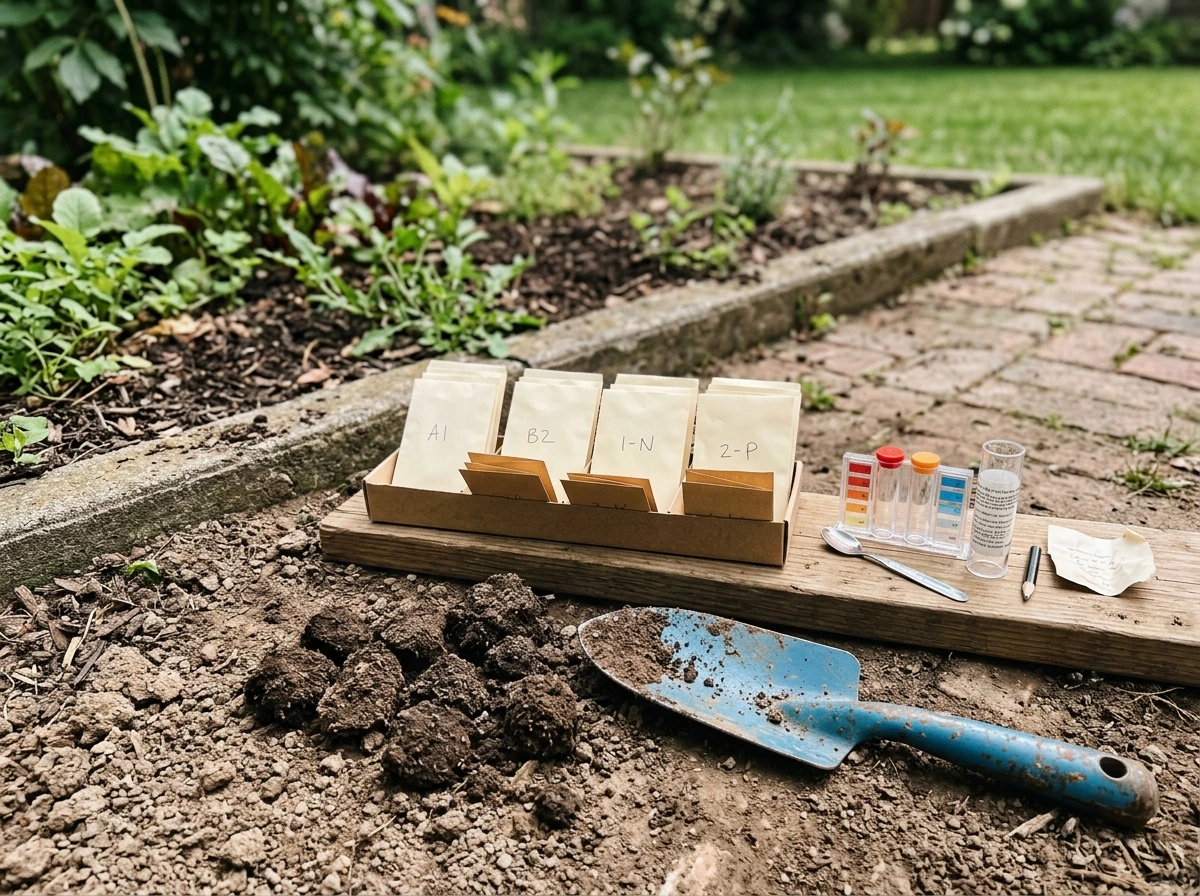
Get a soil test before you add anything. Most university extension services offer them for under $20, and the results tell you pH, phosphorus, and potassium levels. Grass germinates best at a soil pH between 6.0 and 7.0. If your pH is off, seeds can germinate unevenly because nutrient availability varies. Add lime to raise pH on acidic soil or sulfur to lower it on alkaline soil, but only based on what the test tells you. Guessing leads to over-correction.
For starter fertilizer, apply it just before or immediately after seeding and water it in lightly. Phosphorus helps early root development, but some extension guidance notes that phosphorus starter fertilizer isn't always necessary if your soil test shows adequate P levels. If the test shows it's low, use a starter blend. If it's adequate, a light nitrogen application is enough.
Grade and Loosen the Seedbed
The seedbed should be firm but not hard, and as level as you can make it. Low spots collect water and seeds wash or float together, creating dense clumps in one place and bare spots somewhere else. Fill low areas with topsoil or a quality compost blend and grade toward the edges. If you have clay soil, till in compost to break up compaction. If you have sandy soil, also add compost to help it hold moisture longer during germination.
Only work the soil when it's dry enough not to clump in your hand. Working wet clay soil creates those clods that wreck seed-to-soil contact. If you squeeze a handful of soil and it crumbles apart when you poke it, it's ready to work. If it holds together in a sticky ball, wait another day or two.
For existing lawns with compacted areas, run a core aerifier over the problem zones before overseeding. Aeration pulls plugs of soil and creates channels for seed to fall into and make contact with. This is especially useful if you're dealing with areas that see heavy foot traffic or pet use.
Picking the Right Grass for Your Climate and Timing
Choosing a grass variety that doesn't match your climate or your seeding window is one of the quieter reasons for uneven lawns. You can do everything else right, but if soil temperatures don't support germination for your variety, you'll get spotty results or none at all.
| Grass Type | Climate Zone | Best Seeding Window | Germination Time | Seeding Rate (per 1,000 sq ft) |
|---|---|---|---|---|
| Tall Fescue | Cool-season / Transition | Late Aug to early Oct | 7–14 days | 6–8 lb |
| Fine Fescue | Cool-season (shade tolerant) | Early Aug to late Sept | 5–12 days | 3–6 lb |
| Perennial Ryegrass | Cool-season / Overseeding | Late Aug to Oct | 5–10 days | 6–10 lb (overseeding into bermuda: 10–15 lb) |
| Bermudagrass | Warm-season (South/Transition) | Mar 15 to May 15 | 10–30 days | 0.8–1 lb pure live seed |
| Zoysiagrass | Warm-season / Transition | Late spring after last frost | 14–21 days | 1–2 lb hulled seed |
For cool-season grasses like fescue and ryegrass, late summer into early fall is consistently the best seeding window. Soil temperatures in the 55 to 65°F range give you ideal germination conditions, and the cooler air reduces heat stress on new seedlings. In Minnesota and similar northern climates, that translates to roughly early August through late September. Spring seedings in cool climates often lead to uneven stands because soil temps are variable and weed pressure is high.
For warm-season grasses like bermudagrass, the target window is March 15 through May 15 in Oklahoma and similar southern or transition-zone climates. Bermuda seed should go in shallow, ideally around 1/16 inch deep, and at a rate of about 0.8 to 1 pound of pure live seed per 1,000 square feet (or roughly 2 pounds if you're using coated seed). Shallow, consistent placement is especially critical for bermuda because the seeds are tiny and can't push through much soil.
Perennial ryegrass is worth knowing about even if it's not your main grass. It germinates fast, sometimes in 5 days under good conditions, and it's commonly mixed into fescue blends specifically to give quick, even coverage while the slower species establish. If your lawn has historically shown uneven coverage with a pure fescue seeding, a fescue-ryegrass blend might give you a more uniform-looking result in the first few weeks.
Shade, Pets, and Problem Areas
Shaded areas almost always need a different variety than the sunny parts of your lawn. Fine fescue handles shade better than any other common turf grass. If you seed a sunny area grass into shade, you'll get thin, patchy coverage no matter how well you prep the soil. Use a shade-tolerant blend in those zones and seed them separately if needed.
Pet traffic areas need extra attention. Dogs in particular create compacted, nitrogen-burned spots. Before seeding these areas, flush the soil with water to dilute salt and urine buildup, aerate with a hand aerifier or fork, and add a thin layer of topsoil before seeding. These spots will need protection (a temporary fence or barrier works) for at least three weeks after seeding so the new grass can root before it gets traffic again.
How to Actually Seed for Uniform Coverage
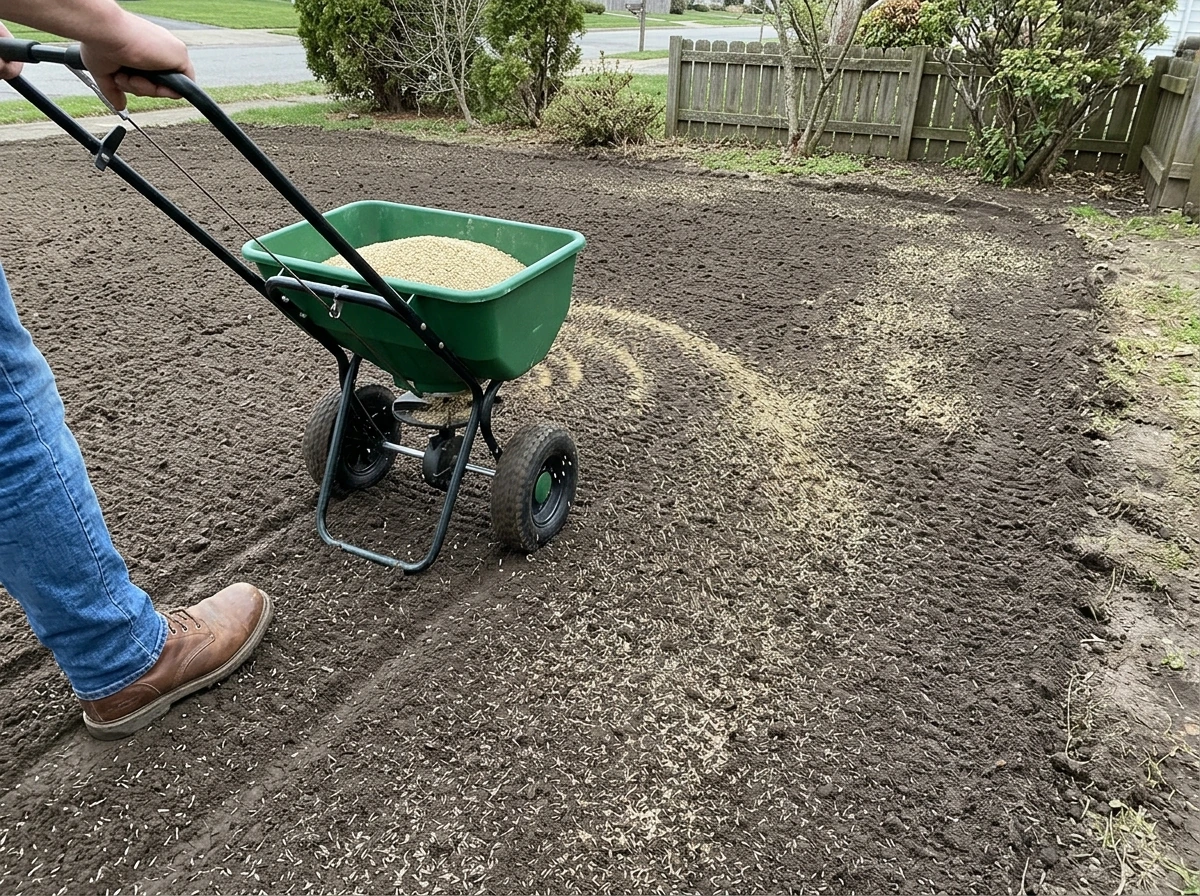
The way you spread seed matters as much as how much you use. Spreading too fast or only in one direction creates stripes of heavy and light coverage. The standard technique is to split your total seed quantity in half and spread the first half in one direction, then spread the second half perpendicular to the first. This cross-hatch pattern catches gaps that a single pass misses.
Equipment and Depth
A rotary broadcast spreader works for most seedings, but for overseeding into an existing lawn, a slit seeder or verticutter cuts small furrows and drops seed directly into soil contact. That's the best tool for getting even results on an established but thin lawn. If you're seeding a bare area, a drop spreader gives you more precise coverage than a broadcast spreader, especially near edges.
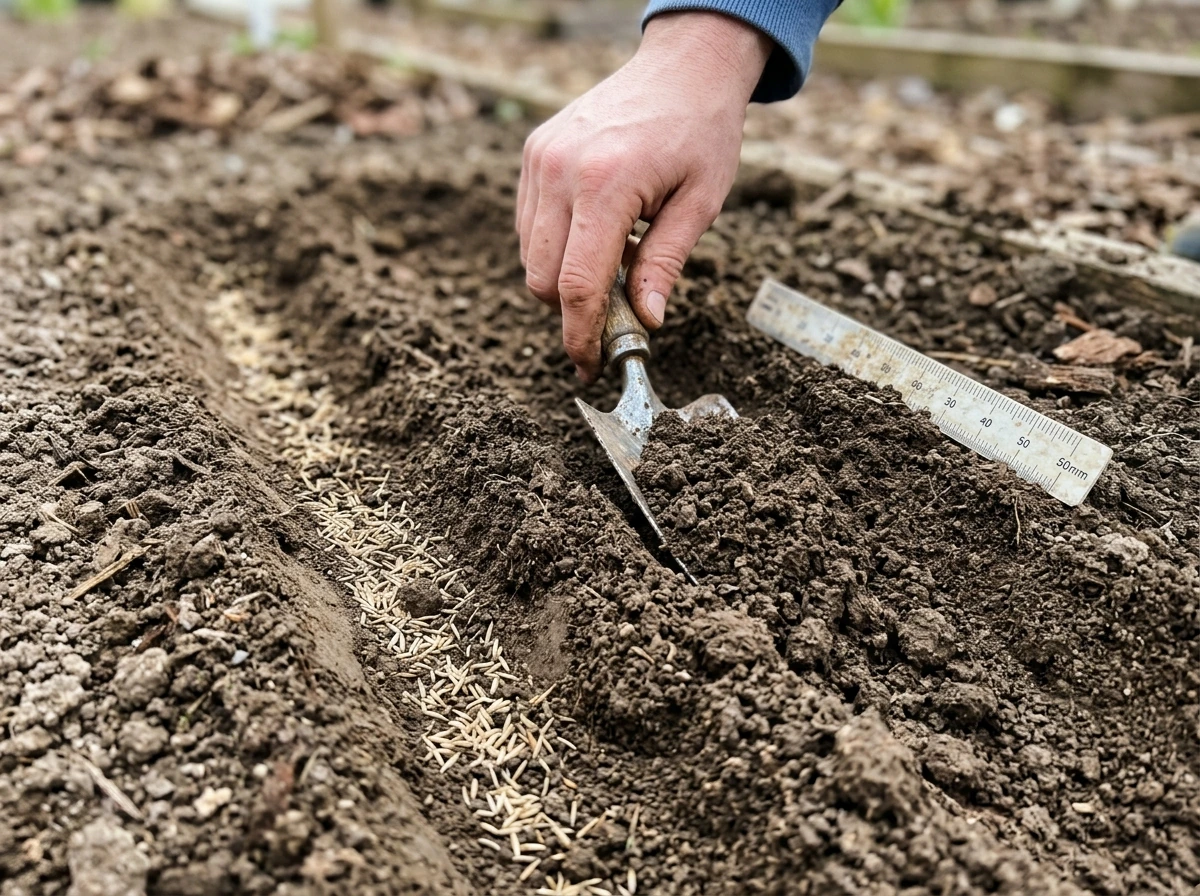
Seed depth is critical. The target for most lawn grasses is 1/8 to 1/4 inch of soil cover. WSU Extension guidance for most grass seeding also keeps planting depth around 1/4 to 1/2 inch depending on conditions, and advises avoiding overly deep planting [target for most lawn grasses is 1/8 to 1/4 inch of soil cover](https://extension. wsu.
edu/wallawalla/grass-seeding-tips/). Tall fescue can go a bit deeper, up to 1/2 inch, but most grasses need to stay in that shallow range. Too deep and the seedling runs out of energy before it reaches light. Too shallow with no soil cover and the seed dries out.
After spreading, rake the area lightly to work seed into the soil surface.
You're not burying it, just making contact.
Lock In Seed-to-Soil Contact with a Roller
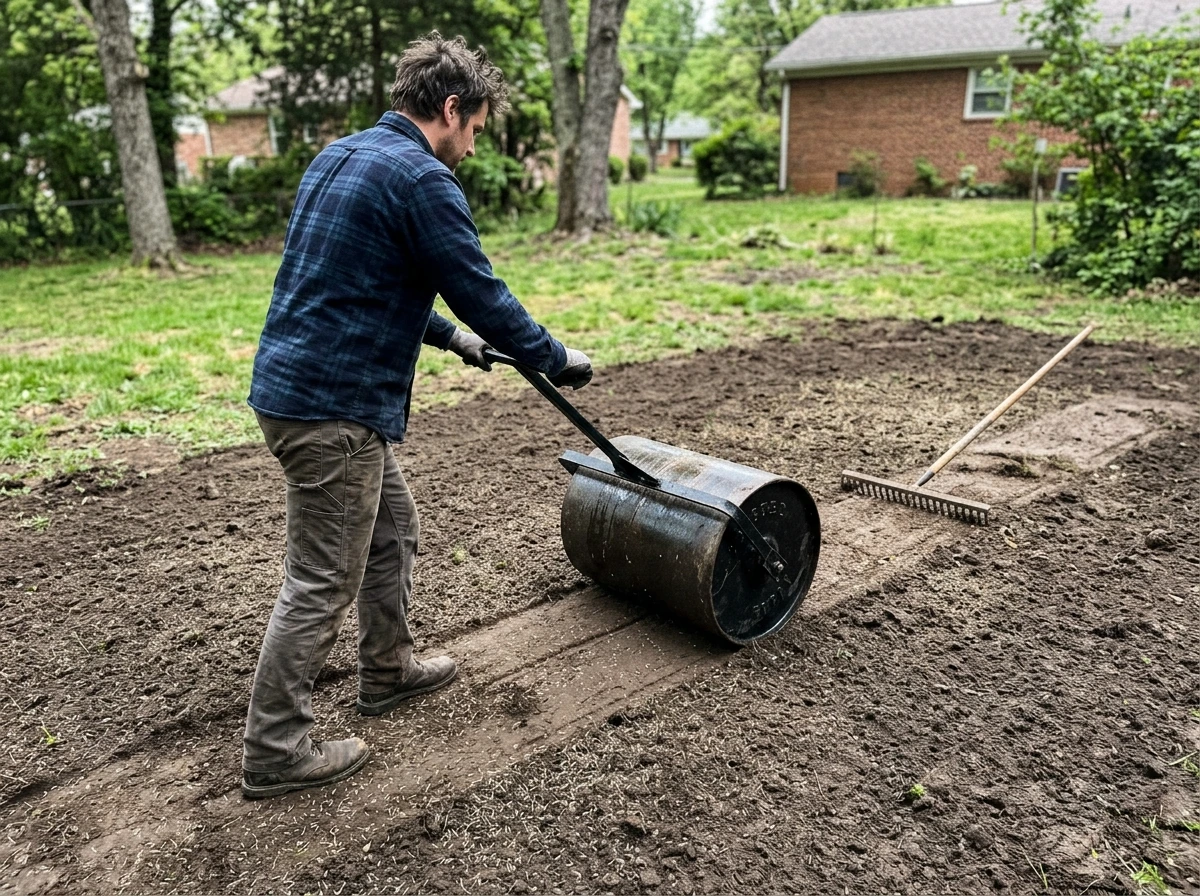
After raking, roll the area lightly with a lawn roller. This presses seed into the soil, closes air gaps, and dramatically improves germination uniformity. You can rent a water-ballast roller from most equipment rental places for about $30 to $50 a day. Fill it only about one-third full so it's not so heavy it compacts the soil. Roll once in each direction.
Watering: The Make-or-Break Step for Even Emergence
More seedings fail from inconsistent watering than from anything else. During germination, the top inch of soil needs to stay continuously moist. During germination, the top inch of soil needs to stay continuously moist. Not soggy, just consistently damp. If it dries out even once for a few hours on a hot, windy day, seeds that were just starting to germinate can die. The rule is light and frequent, not deep and occasional.
For the first two weeks, water daily at minimum. On hot, sunny, or windy days you may need to water two or three times a day in short cycles, this is the key to how to grow great grass. The goal is to keep that top half-inch to one inch moist at all times. This sounds like a lot, but each cycle only needs to run a few minutes. You're not trying to soak the soil deep, you're just refreshing the surface moisture.
After about a week, when you start to see consistent germination across the area, begin to shift your approach. Gradually decrease the frequency but increase the amount per watering session. This encourages roots to chase water deeper into the soil rather than staying shallow. Shallow-rooted grass is weaker and more vulnerable to drying out later. The transition is gradual, not a sudden switch.
Check your sprinkler coverage before you rely on it. Put a few empty tuna cans around the lawn and run your sprinklers for a set time. Then measure how much water collected in each can. If some cans have noticeably more or less than others, you have uneven coverage, and that will show up as uneven germination. Adjust heads, overlap patterns, or run zones separately to even things out.
Avoid letting water pool or puddle in low spots. If you see standing water after watering, you're applying too much at once, or you have a grading issue. Either reduce run time and add more frequent short cycles, or address the grade before you seed. Puddles wash seeds together, create dense clumps, and leave bare areas nearby.
What to Do Right After Seeding
The first 48 hours after seeding set up whether the whole effort works. There are a few aftercare steps that make a real difference in how evenly the lawn establishes.
Mulch to Hold Moisture and Prevent Erosion
Apply a thin layer of clean, weed-free straw over the seeded area. One bale covers about 1,000 square feet, and you want just enough that roughly 50 percent of the soil is still visible through the straw. Too much straw smothers seedlings. Too little and it doesn't protect moisture or prevent erosion. Straw keeps the seedbed from crusting after rain and reduces surface drying on hot days.
On slopes, erosion netting or biodegradable erosion blankets work better than straw, which can wash off in heavy rain. Anchor the netting at the top edge and check it after any significant rain. Seeds that wash into low spots create clumps while the upper slope goes bare, which is exactly the uneven pattern you're trying to avoid.
Managing Weeds Without Damaging New Seedlings
Pre-emergent herbicides and newly seeded lawns don't mix. Most pre-emergents require waiting at least nine weeks before you can seed, and applying them after seeding can seriously damage germinating grass. Don't use them during establishment. For weed control after seeding, wait until the lawn has been mowed four times before applying any post-emergent herbicide, and use it at half the normal rate the first time. Before that point, the best weed management is keeping the lawn dense through good seeding, watering, and fertility so weeds have less room to establish.
One exception worth knowing: siduron is a pre-emergent that can be applied at seeding time on cool-season grasses to suppress crabgrass and some warm-season weeds without harming the new turf. It's not as widely available as other products, but it's a useful option if you're seeding fescue or ryegrass in an area with heavy crabgrass pressure.
Mowing and Fertilizing New Grass
Start mowing when the new grass reaches about 3 to 4 inches and keep your first cuts at 1.5 to 2 inches. Don't wait too long to mow. Letting new grass get too tall before the first cut actually weakens it. If you're trying to figure out the best way to grow grass in the first place, start with proper seeding and early care. Gradually raise mowing height over the first few cuts until you reach your target height of around 3 to 3.5 inches for fescue-type lawns.
Fertilize about six weeks after germination with approximately 1 pound of actual nitrogen per 1,000 square feet. Before that point, the seed has its own energy stores and the starter fertilizer is doing its job. Fertilizing too early or too heavily can burn young seedlings and create uneven growth.
Fixing Uneven Spots That Are Already There
If you're looking at a patchy lawn right now and want to fix it, the approach depends on what caused the patches. how to grow great grass. Don't just throw seed on top of existing bare spots without addressing the root cause, or you'll be in the same spot again in a month.
Troubleshooting by Scenario
| Problem | Likely Cause | Fix |
|---|---|---|
| Pale sprouts that stopped growing | Soil crusting after rain | Gently break crust with a light rake; keep surface moist |
| Scattered thin patches across whole lawn | Inconsistent seed depth or cloddy seedbed | Overseed after light raking; roll to improve contact |
| Dense clumps in low spots, bare higher areas | Seed washed by water or rain | Fill and grade low spots; re-seed high bare areas; check irrigation overlap |
| Bare spots under trees | Wrong grass variety for shade | Reseed with fine fescue shade blend; reduce competition from surface roots if possible |
| Dog-damaged brown spots | Urine burn and compaction | Flush with water, aerate, add topsoil, reseed, and fence off for 3 weeks |
| Seed didn't germinate at all | Wrong soil temperature or timing | Check timing against variety requirements; wait for the right window or choose a different variety |
| Thin coverage after overseeding into existing lawn | Seed sitting on thatch, not soil | Verticut or slit-seed to get seed into soil; remove excess thatch first |
The Rescue Overseeding Plan
For bare spots up to a few square feet, here's the direct approach. Scratch the soil surface with a hand rake until you have loose, bare soil. If the area is compacted, poke it with a garden fork several times. Add a thin layer of topsoil if the grade is low. Spread seed at the normal rate for your variety, rake lightly to barely cover the seed, firm the soil with the back of the rake or a small hand roller, cover with a thin layer of straw, and water immediately. Keep it moist twice a day until germination.
For larger areas (over 500 square feet) that failed to establish, consider whether timing is a factor before re-seeding. If it's late spring in a cool-season grass zone, you may get better results waiting until late summer for a fall seeding rather than fighting summer heat stress on new seedlings. Delay is sometimes the better move. If you're in the right window and had a failure, core aerate the area first, then reseed with a slit seeder if you can rent one, and pay very close attention to watering frequency for the first two weeks.
If the same spots fail repeatedly despite good seeding technique, the issue is almost always in the soil or microclimate. Persistent bare spots under trees suggest root competition and shade. Spots that stay bare near downspouts or at the bottom of slopes often have drainage issues or soil that's been compacted by water flow. Fix the underlying condition, not just the surface. More seed without fixing the cause is just an expensive exercise in frustration.
FAQ
Can I water less often but deeper to grow grass more evenly?
Yes, but only if you keep the top layer consistently damp. After seeding, avoid letting the surface dry for more than a few hours, even if deeper soil stays moist. If you switch to “deep watering” too early, seeds may germinate unevenly because the top inch dries out between cycles.
What should I do if I see sprouts but they stop growing?
If you see pale sprouts that never reach sunlight, it often means seedlings died after a crust formed. Lightly break the crust with a rake or your fingers, then resume frequent, gentle watering to keep the surface moist. Don’t remove all covering soil, you only want to reopen contact.
How can I tell why only certain spots keep coming back patchy?
Most unevenness from the same cause shows up in the same locations repeatedly. Run a quick check by marking the bare areas, then compare them to irrigation patterns, slope, foot traffic, pet routes, and tree shade. If the same spots fail after you correct watering and seed depth, the culprit is usually grade, compaction, or root competition rather than seed quality.
How firm should the seedbed be for best even germination?
Change the seedbed firmness goal if you seed into very sandy or very silty soil. Sandy soils often need slightly more compaction after raking so seed contacts moisture, while clays need looser, non-cloddy conditions so seed isn’t sealed in air pockets. Use the “firm but not hard” test, the soil should resist a footprint but not feel rock-like.
Why do I keep getting stripes of uneven grass even when I water a lot?
Don’t rely on the total amount of water without confirming coverage. Uneven spray creates a lawn that germinates in bands, stripes, or wedge-shaped patches. Use the tuna-can catch test for each zone, then adjust sprinkler overlap or run time per zone before you seed.
What’s the best way to overseed so the new grass establishes evenly?
For overseeding into an existing lawn, the risk is that seed lands on thatch or on top of dry organic material. A slit seeder or verticutter improves soil contact by dropping seed into small channels. If you don’t have that equipment, at least rake vigorously to remove debris and consider light topdressing to improve contact.
Can I use weed control products right after I seed?
It depends on the grass type and the product label, but as a general rule, don’t apply pre-emergent herbicides during establishment. For cool-season lawns, siduron is a special case that can be applied at seeding time on certain situations, while most common pre-emergents require a long wait after seeding. When in doubt, confirm label timing for both your grass species and your seeding date.
When is it worth re-seeding a patch, and when is it better to wait?
It’s usually better to correct the seed placement than to re-seed repeatedly. If depth is too deep, seedlings can’t reach light, if too shallow they dry out. If you suspect depth problems, lightly rake to improve contact without burying seed, roll once, then focus on consistent moisture for the next two weeks before deciding on a full re-do.
Do I need to change my watering method in shaded areas for even growth?
Yes, but isolate the cause. In shade, fine fescue often performs better, yet even shade-tolerant turf will still be patchy if the seedbed stays wet then dries due to reduced evaporation. In shaded spots, water more lightly and more frequently, and consider separate seeding mixes rather than one mix for sunny and shaded areas.
How long should I keep people and pets off the new seed area?
If you seed on an old lawn, you may need to temporarily restrict movement. Even light foot traffic can create micro-compaction that prevents uniform seed-to-soil contact and creates recurring skips. Use a temporary barrier for at least a few weeks, especially in pet-heavy zones, and reopen access only after seedlings are sturdy enough to mow.
Next Article
How to Grow Grass Step by Step From Seed for Any Yard
Step-by-step seed-to-lawn guide: choose bermuda, zoysia, fescue or rye, prep soil, time planting, fix bare spots.