If you searched 'how to grow grass Don't Starve' looking for help with your real lawn, you're in the right place. If you were after the survival game, this isn't it, Don't Starve, Stardew Valley, Animal Crossing, Valheim, Raft, and Ark all have their own game-specific grass mechanics covered in dedicated game guides. This article is for homeowners who want an actual living, green lawn and need a straight path from bare dirt to established turf. Here's how to do it.
How to Grow Grass Don t Starve: Complete Lawn Seeding Guide
Marcus Tillwell
21 Jul 2026
What This Guide Covers and Who It's For
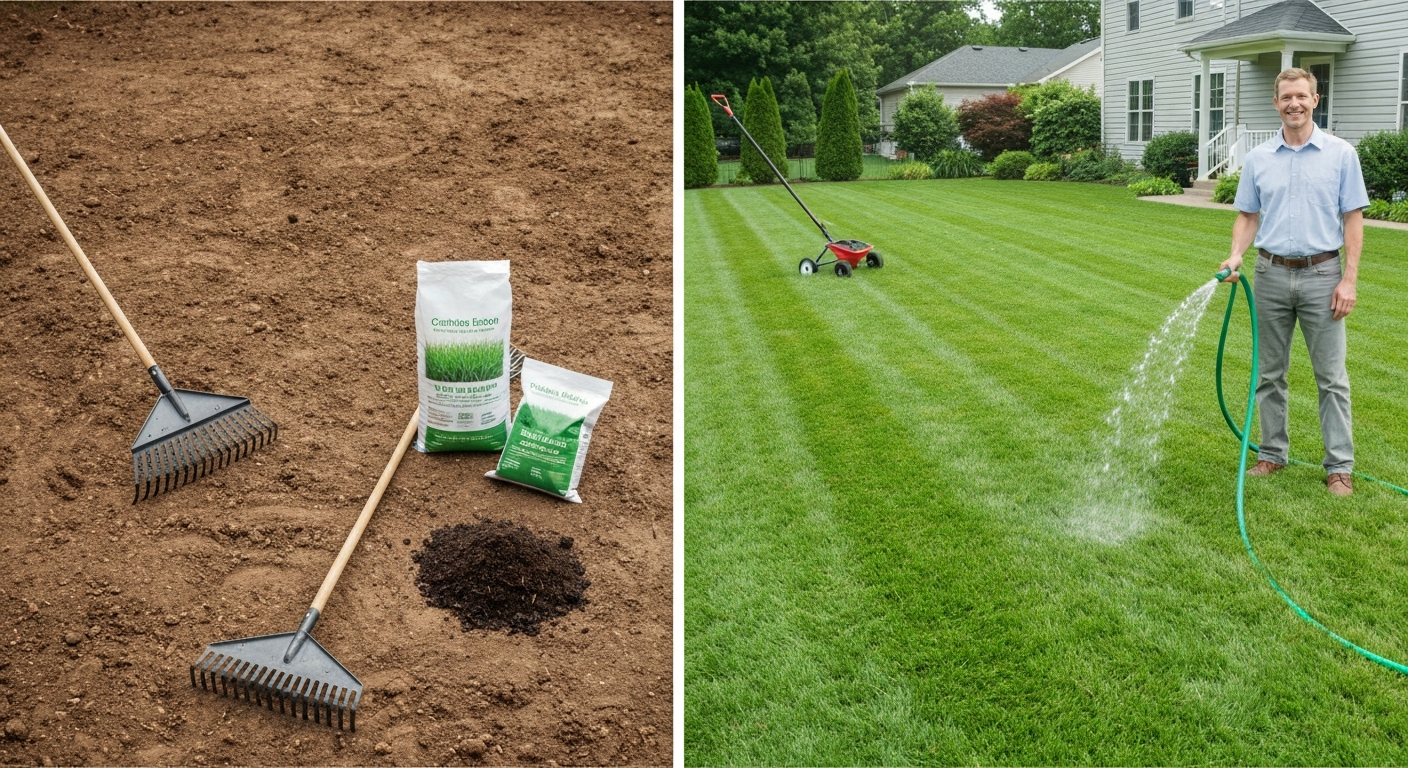
This is a step-by-step lawn establishment guide built for homeowners dealing with real-world problems: clay soil that drains like a parking lot, sandy soil that won't hold moisture, bare spots left by pets, shaded areas under trees, or a patchy yard that never quite filled in. Whether you're starting from scratch or repairing an existing lawn, this guide walks you through every stage, seed selection, soil testing and preparation, seeding methods, watering schedules, fertilizing, and troubleshooting when things go sideways. The advice is grounded in university extension research and adjusted for different regions and soil types, so it actually applies to where you live.
Start This Week: Your Quick-Start Checklist
Before you buy a single bag of seed, run through this checklist. Most failed lawns trace back to skipping one or two of these steps, usually soil prep or timing.
- Identify your grass type zone: are you in a cool-season region (most of the northern U.S.) or a warm-season region (Southeast, Gulf Coast, Southwest)?
- Check your local last/first frost dates and match them to the seeding windows in the regional timing section below.
- Order or pick up a soil test kit from your local extension office — results take 1 to 2 weeks and cost around $15 to $20.
- Walk your lawn and flag problem areas: bare spots, compacted zones, pet-damaged patches, low spots that stay wet.
- Measure the total square footage you plan to seed so you can calculate seed, fertilizer, and amendment quantities.
- Source your seed by cultivar name, not just species — 'tall fescue blend' is not enough. Look for NTEP-evaluated varieties matched to your region.
- Gather or rent the tools you'll need: drop or broadcast spreader, core aerator (most hardware stores rent these), garden rake, and a hose with an adjustable nozzle or oscillating sprinkler.
Seed-Selection Matrix: Finding the Right Grass for Your Yard
The single most common mistake homeowners make is buying whatever seed is on sale without checking whether it matches their climate, soil, shade level, or foot traffic. Bermuda won't survive a cold northern winter. Fescue will thin out and die in Florida summer heat. Here's how the four major species stack up across the conditions that matter most in a typical residential yard.
| Grass Type | Climate Zone | Best Soil Type | Shade Tolerance | Traffic Tolerance | Drought Tolerance | Seeding Rate (lb/1,000 ft²) |
|---|---|---|---|---|---|---|
| Bermudagrass | Warm-season (Zones 7–10) | Well-drained, sandy to loam | Very low — needs full sun | Very high | High once established | 0.5–1 lb (seeded varieties) |
| Zoysiagrass | Warm-season / Transition (Zones 6–9) | Adaptable, tolerates some clay | Moderate | High | High once established | Typically plugged or sodded; seed ~1–2 lb if available |
| Tall Fescue | Cool-season / Transition (Zones 4–7) | Tolerates clay and compaction better than most | Good (best cool-season shade option) | Moderate to high | Moderate | 6–10 lb (new lawn) |
| Perennial Ryegrass | Cool-season (Zones 3–6) | Prefers well-drained loam | Low to moderate | High (good for high-traffic areas) | Low — needs consistent moisture | 4–6 lb (new lawn) |
A few practical notes on using this table. If you're in the transition zone (roughly Kentucky, Virginia, Tennessee, Kansas, and similar latitudes), neither warm-season nor cool-season grasses are perfectly comfortable, tall fescue is usually the most reliable choice because it handles both summer heat and cold winters better than the alternatives. For shaded areas under trees, tall fescue is your best option among the four; bermuda is essentially not viable below about 50% sunlight. For high-traffic lawns with dogs or kids, perennial ryegrass establishes fast and takes a beating, though it thins out in drought. If you want data on specific cultivars rather than just species, the National Turfgrass Evaluation Program (NTEP) publishes performance trial results by region, and your state's land-grant extension office will have a recommended variety list built from those trials.
A Quick Word on Seed Quality and Pure Live Seed
The bag label matters more than most people realize. Every seed bag lists germination percentage and purity percentage. The number you actually care about is Pure Live Seed (PLS): multiply germination rate by purity rate to get it. If a bag shows 85% germination and 90% purity, you're working with about 76% PLS. That means if the extension guide says to plant 6 lb per 1,000 square feet, you'd need to plant closer to 8 lb to hit the same effective seed density. Universities like UMass and Purdue explain this math in detail, and it's worth doing before you buy. UMass/CAFE provides a Seeding‑Rate Considerations (PLS) fact sheet that explains PLS math and how to adjust seeding rates based on bag label purity and germination Seeding‑Rate Considerations (PLS) — UMass/CAFE. A cheap bag with 70% PLS will need significantly more seed to match a premium bag at 90% PLS, and it often ends up costing more in the end.
When to Seed by Region: Timing Is Everything
Get the timing wrong and it doesn't matter how good your soil prep is. Seed sown into cold soil in spring, or into summer heat in the South, will either sit dormant and rot or germinate and immediately stress. The right window depends on whether you're growing cool-season or warm-season grass, your specific region, and local soil temperatures, not just air temperature.
Cool-Season Grasses (Fescue, Ryegrass, Bluegrass)
For most of the northern and mid-Atlantic U.S., late summer to early fall is the best window, typically mid-August through mid-September, backed up by Penn State Extension research. The reason is straightforward: seedlings get a full fall to establish roots, then continue growing in spring before summer heat hits. You essentially give them two cool growing seasons before their first real stress test. Count back 6 to 8 weeks from your average first frost date to find your seeding deadline. If you can't hit the fall window, a secondary spring window works (late March to early May depending on your area), but seedlings will have less time to establish before summer.
The Pacific Northwest plays by different rules. Oregon State University Extension recommends early May through mid-June for cool-season seeding in much of Oregon, because mild summers reduce establishment stress and spring soil conditions are favorable. If you're west of the Cascades, don't follow the Mid-Atlantic fall-seeding advice blindly, check Oregon State or Washington State University Extension for regionally adjusted windows.
Warm-Season Grasses (Bermuda, Zoysia)
Warm-season species need warm soil to germinate and establish, soil temperatures above 65°F, ideally above 70°F. In Texas and similar climates, Texas A&M AgriLife Extension puts the optimal seeding window for Bermudagrass at late spring to early summer, commonly May through June. Attempting to seed warm-season grass in early spring or fall is a common and frustrating mistake; the seed sits in cool soil, germination is spotty, and weeds often out-compete the thin stand. Note that Zoysia is rarely seeded, most homeowners use plugs or sod because seeded Zoysia establishes very slowly.
Regional Seeding Windows at a Glance
| Region | Grass Type | Primary Seeding Window | Secondary Window |
|---|---|---|---|
| Northeast / Mid-Atlantic | Cool-season (fescue, ryegrass, bluegrass) | Mid-Aug to mid-Sept | Late Mar to early May |
| Upper Midwest / Great Lakes | Cool-season (bluegrass, fescue, ryegrass) | Late Aug to mid-Sept | Apr to early May |
| Pacific Northwest (west of Cascades) | Cool-season (fescue, ryegrass) | Early May to mid-June | Sept (limited window) |
| Transition Zone (KY, VA, TN, KS) | Tall fescue preferred | Mid-Aug to mid-Sept | Mar to Apr |
| Southeast / Gulf Coast | Warm-season (bermuda, zoysia, centipede) | May to July | N/A |
| Southwest / Texas | Warm-season (bermuda) | May to June | N/A |
To fine-tune these windows for your specific county, pull NOAA Climate Normals (1991–2020 data is publicly available) for the nearest weather station and cross-reference with your state extension's seeding guide. Soil thermometers are inexpensive and give you the most reliable planting signal, no guessing required.
Testing Your Soil Before You Spend a Dollar on Seed
Skipping the soil test is one of the easiest ways to waste money. You can buy the best seed and plant it perfectly, but if your pH is off or your soil is locked up with compaction, it won't matter. Penn State Extension recommends collecting 8 to 10 soil cores from across the lawn to a depth of 4 inches, mixing them into a composite sample, and sending that to your land-grant extension lab. It costs around $15 to $20 and tells you pH, phosphorus, potassium, and often organic matter content, plus the lab gives you specific amendment recommendations for your results.
What to Check For
- pH: most turf grasses prefer 6.0–7.0. Below 6.0, lime is needed. Above 7.5, sulfur may be required. pH directly affects nutrient availability — even well-fertilized soil won't feed grass well if pH is wrong.
- Phosphorus and potassium: the soil test tells you if these are deficient. If phosphorus is already adequate, do not add a high-P starter fertilizer — it won't help and can cause runoff problems.
- Drainage: dig a hole 12 inches deep, fill it with water, and check it in an hour. If more than 1 inch of water remains after 60 minutes, you have a drainage problem that needs structural fixing, not just amendments.
- Compaction: push a screwdriver into moist (not wet) soil. If it won't penetrate 6 inches without significant effort, the soil is compacted and needs core aeration before seeding.
- Organic matter: most lawn soils benefit from 3–5% organic matter. If your soil test shows below 2%, plan to incorporate compost before seeding.
Preparing Clay and Sandy Soil: Practical Fixes That Actually Work
These are the two soil types I get the most questions about, and both require a different strategy. Clay soil is dense, compacts easily, and drains poorly. Sandy soil drains too fast and doesn't hold nutrients. Neither is a lost cause, but fixing them takes more than a bag of amendment thrown on top.
Clay Soil
The evidence-backed fix for clay is organic matter incorporation combined with core aeration, not gypsum, which Oklahoma State University Extension points out is only effective for sodic soils (high sodium content diagnosed by a soil test). Gypsum marketed as a 'clay breaker' for general clay soils is not supported by research. What does work: incorporate 2 to 3 inches of compost into the top 4 to 6 inches of soil before seeding, and plan to follow up with core aeration plus compost topdressing annually for the first two or three years. Core aerators pull 2 to 4 inch plugs from the soil, which you then top-dress with compost or fine sand; over time this genuinely changes the structure of the root zone.
Sandy Soil
Sandy soil has the opposite problem: water and nutrients move through it too fast for seedlings to get established. The fix here is organic matter too, but for a different reason, compost increases the water and nutrient holding capacity of sandy soil by adding particle surface area. Work 3 to 4 inches of compost into the top 6 inches before seeding. You'll also need to water more frequently during establishment (light, frequent irrigation) because the soil dries out faster. Once established, tall fescue or bermuda both handle sandy conditions reasonably well if you maintain organic matter through annual topdressing.
Compaction: Core Aeration First, Then Seed
If your soil is heavily compacted, common on new construction sites or high-traffic areas, do not seed until you've aerated. Kansas State University Extension recommends core (hollow-tine) aeration pulling 2 to 4 inch cores; for initial remediation of badly compacted clay, two passes per year (spring and fall) is appropriate until structure improves. For most residential lawns with moderate compaction, a single fall aeration followed immediately by seeding is the standard approach and works well.
How to Add Topsoil, Compost, and Amendments the Right Way
Adding material to your soil is only useful if you incorporate it properly. Dumping compost on top and hoping rain works it in is mostly wishful thinking, at least for initial establishment. Here's the workflow I recommend for new lawn areas or major renovations.
- Test first, then amend: get soil test results before buying anything. Apply lime or sulfur per the test recommendations at least 2 to 4 weeks before seeding to allow pH adjustment time.
- Compost quantity: spread 2 to 3 inches of finished compost (not fresh wood chips or unfinished material) across the area. For a 1,000 square foot area, that's roughly 6 to 9 cubic yards.
- Incorporate to depth: till or rototill compost into the top 4 to 6 inches of native soil. This is critical — layering amendments on top without mixing creates an interface layer that can actually trap water or roots.
- Grade and settle: rake the area smooth and let it settle for at least one week before seeding, or water it lightly to speed settling. Seeds sown into freshly worked, fluffy soil will sit too deep once the soil compresses.
- Apply starter fertilizer after grading: based on your soil test results, apply a starter fertilizer with a higher phosphorus ratio (1:2:1 or 1:2:2 N:P:K ratio is typical). Target about 1.0 to 1.5 lb of P2O5 per 1,000 square feet, but skip phosphorus entirely if your soil test shows adequate levels. Keep starter nitrogen at or below 1.0 lb actual N per 1,000 square feet per application.
- Timeline: for a fall seeding, begin soil prep 4 to 6 weeks before your target seeding date to allow for test results, amendment delivery, incorporation, and settling.
Seeding Methods: Broadcast, Slit Seeding, and Hydroseeding
There are three main ways to get seed into the ground, and which one you choose depends on the scale of the job, your budget, and whether you're starting fresh or overseeding.
Broadcast (Drop or Rotary Spreader)
This is the DIY standard, and it works well when soil contact is good. The key technique is to split your seed rate in half and make two passes at right angles to each other, this gives you uniform coverage and reduces gaps. Calibrate your spreader before you start (most brands have published settings by seed type and product, so check the bag). Broadcast seeding works best on prepared, lightly raked soil where the seed can settle into surface contact. After spreading, drag the area lightly with a rake or drag mat to improve contact, then roll with a lawn roller if available.
Slit Seeding (Slice Seeding)
A slit seeder cuts shallow grooves (about 1/8 to 1/4 inch deep) directly into the soil and drops seed into the slits, giving excellent seed-to-soil contact without full-scale tillage. This is ideal for overseeding thin lawns or renovating areas where you don't want to tear everything up. University of Maryland Extension notes that slit seeding typically allows you to use lower total seed rates than broadcast and still get comparable establishment. Like broadcast, apply half the rate in one pass and the other half perpendicular. Most hardware stores and equipment rental yards carry slit seeders.
Hydroseeding
Hydroseeding uses a slurry of seed, fertilizer, wood-fiber or paper mulch, and a tackifier sprayed onto prepared soil. It's typically a contractor service and makes the most sense for large areas (5,000+ square feet), slopes, or erosion-prone sites. Municipal specifications commonly require wood-fiber mulch at roughly 1,000 to 2,000 lb per acre. See the City of Phoenix Hydroseeding Specifications (example municipal spec) for similar rates and material requirements. The mulch layer helps retain moisture and protects seed from washing away. For most residential lots, broadcast or slit seeding is more cost-effective, but hydroseeding is worth getting quotes on for major projects.
Watering Schedule and Germination Timelines
Water management after seeding is where most homeowners either over-water (creating disease problems) or under-water (killing germinating seedlings). The rule during germination is: keep the top 1/4 to 1/2 inch of soil consistently moist but not soggy. That usually means two to three short watering cycles per day in warm or dry weather, each lasting 5 to 10 minutes. Once seedlings reach about an inch tall, transition to less frequent but deeper watering, one to two times per day, allowing the soil to dry slightly between cycles.
| Grass Type | Typical Germination | First Mow (approx. height) | Full Establishment |
|---|---|---|---|
| Perennial Ryegrass | 5–10 days | 3–4 inches (mow to 2.5") | 6–8 weeks |
| Tall Fescue | 7–14 days | 4 inches (mow to 3–3.5") | 8–10 weeks |
| Kentucky Bluegrass | 14–30 days | 3–4 inches (mow to 2.5–3") | 10–16 weeks |
| Bermudagrass (seeded) | 10–14 days (warm soil) | 2–3 inches (mow to 1.5") | 8–12 weeks |
| Zoysiagrass (from plugs) | Plugs: 2–3 growing seasons to fill | 2–3 inches | 1–3 seasons |
Perennial ryegrass is the fast establisher in the group, if you need a lawn that looks presentable within 6 weeks, it's hard to beat. Kentucky bluegrass is the slowest, which is why it's often mixed with ryegrass in northern blends: the ryegrass germinates quickly, holds the soil, and gives you a green lawn while the bluegrass slowly fills in underneath.
Repairing Bare Spots and Pet-Damaged Areas
Bare spots are frustrating because they keep coming back if you don't identify why they're bare in the first place. Before you throw seed at a problem area, spend two minutes diagnosing it. Dog urine spots leave a characteristic dead circle with a ring of darker green around the edge (the nitrogen edge effect). Compaction spots feel hard underfoot and drain slowly. Shade spots thin gradually from the center of the canopy out. Each needs a different fix.
Assessing the Damage
- Dog urine damage: dead turf in a roughly circular patch 6 to 12 inches across, often with a greener ring at the edge. The soil pH is locally elevated and salt concentration is high.
- Foot traffic compaction: bare or thin turf along paths, under play equipment, or near gates. Screwdriver test will confirm compaction.
- Shade thinning: gradual loss of density under trees or along north-facing walls, worsening each season.
- Disease or thatch: irregular patches, often with fungal signs (white/gray mycelium, orange pustules) or a thick spongy thatch layer over 1/2 inch.
Small Spot Repair Checklist (under 2 square feet)
- Rake out dead material and loosen the top inch of soil with a hand cultivator.
- For urine spots: flush the area with 1 to 2 gallons of water to dilute salts, then wait 48 hours before seeding.
- Add a thin layer (about 1/4 inch) of compost or topsoil mix and rake level.
- Apply seed at the new-lawn rate for your grass type, pressing seed into contact with the back of a rake or your hand.
- Cover lightly with a thin layer of straw mulch or peat moss to retain moisture.
- Water twice daily until germination, then taper to once daily as seedlings establish.
- Keep foot traffic and pets off the area for at least 3 to 4 weeks.
Large Bare Area Repair Checklist (over 2 square feet)
- Remove all dead material with a dethatching rake or power dethatcher — don't seed over dead debris.
- Core aerate the area if the soil is compacted, pulling at least two passes of plugs.
- Amend with 1/2 to 1 inch of compost worked into the top 2 to 3 inches of soil.
- Level the area so it matches surrounding grade — low spots will stay wet and re-die.
- Apply seed at full new-lawn rates using a broadcast or slit seeder.
- Apply starter fertilizer at the rates from your soil test.
- Cover with erosion-control blanket or straw mulch on any area larger than 10 square feet or on slopes.
- Water twice daily for the first 2 weeks, transitioning to deep, infrequent watering as seedlings establish.
- Overseed thin areas at 50% of the new-lawn rate after 6 to 8 weeks if coverage is still patchy.
Managing Pet Damage Going Forward
The honest answer is that if you have a large dog with a consistent bathroom routine, you'll be repairing the same spot seasonally until you either train the dog to use a designated gravel or mulch area, or switch to a more urine-tolerant grass type. Tall fescue has slightly better urine tolerance than Kentucky bluegrass or perennial ryegrass because of its deeper root system, but no turf species is genuinely urine-proof at normal dog concentrations. Flushing the spot with water immediately after the dog uses it reduces damage significantly, this dilutes the nitrogen and salt load before it kills the roots.
Fertilizing and Mowing After Seeding
Don't push new seedlings with heavy nitrogen. The starter fertilizer you applied at seeding handles early establishment. Wait until seedlings have been mowed at least twice before applying follow-up nitrogen. For cool-season grasses, the first follow-up application of about 0.5 to 1.0 lb actual N per 1,000 square feet typically goes down 4 to 6 weeks after germination, and then again in fall. Warm-season grasses get their fertilizer pushes in late spring and early summer when they're actively growing, with no late-season nitrogen applications (which can reduce cold hardiness).
First mowing: the single most common mistake is mowing new seedlings too early or cutting too short. Wait until grass reaches the target mowing height plus about one-third, that means for a tall fescue lawn you're keeping at 3.5 inches, wait until it's about 4.5 to 5 inches tall before the first cut. Never remove more than one-third of the blade height in a single mowing. Use a sharp mower blade; a dull blade tears seedling stems and sets back establishment by days.
Year-One Maintenance Calendar
| Month (Cool-Season Example) | Task |
|---|---|
| Late July to early Aug | Soil test, order seed and amendments, schedule equipment rental |
| Mid-Aug to mid-Sept | Aerate, incorporate compost, apply lime/sulfur per test, grade, apply starter fertilizer, seed |
| Sept to Oct | Water twice daily until germination, then taper; first mow when grass hits target height + 1/3 |
| Oct to Nov | Apply follow-up nitrogen (0.5–1 lb N per 1,000 ft²); continue mowing at correct height; allow light foot traffic only |
| Nov to Dec | Final mow of season; note any thin areas for spring overseeding |
| Feb to Mar | Soil test if not done in fall; plan spring overseeding of thin spots |
| Mar to May | Overseed bare spots if needed; apply pre-emergent only if lawn is fully established (skips it if overseeding) |
| May to Aug | Mow consistently; irrigate during dry spells; scout for weeds and address while small |
| Late Aug (Year 2) | Core aerate and topdress with compost; overseed any remaining thin areas; apply fall fertilizer |
Troubleshooting: When Things Don't Go as Planned
Even with good prep, lawns don't always cooperate. Here are the most common problems and what actually fixes them.
- Seed doesn't germinate after 3 weeks: check soil temperature first (cool-season grass needs soil at 50–65°F, warm-season needs 65°F+). If temperature is fine, check moisture — the top half-inch must stay consistently damp, not just surface-misted once a day. If neither explains it, check seed viability: pour some seeds in a damp paper towel and check for sprouting after 5–7 days.
- Germination is patchy and uneven: usually a spreader calibration problem or seed washed downhill by heavy irrigation. Re-seed bare patches at new-lawn rate, and adjust your watering to shorter, more frequent cycles to prevent runoff.
- Bare spots come back every year in the same place: the underlying cause hasn't been fixed. Map the spots and diagnose the pattern — compaction path, shade from a tree that's grown, or pet activity all leave characteristic patterns.
- Lawn looks great in October but thins out the following summer: this is common with perennial ryegrass, which doesn't handle summer heat well. Consider transitioning to a tall fescue blend through overseeding in the fall.
- Weeds take over before grass fills in: annual weeds (crabgrass, spurge) exploit slow-establishing areas. Pre-emergent herbicides cannot be used on newly seeded areas, so your best tool is getting density fast — use appropriate seeding rates, not low ones, and don't leave soil bare.
- Lawn established but has hard, dry patches the following summer: likely compaction returning in high-traffic zones. Annual core aeration is the maintenance response; it's not a one-time fix on clay or high-traffic sites.
Looking Up Game Guides? Here's Where to Go
If you landed here looking for survival game mechanics rather than real lawn care, the game guides for growing grass in Don't Starve, Stardew Valley, Animal Crossing, Valheim, Raft, and Ark are each covered in their own dedicated resources. For Valheim-specific help, look for guides on how to grow grass in Valheim that cover its turf mechanics, planting steps, and tips for establishing lawns in that game. For specific instructions on how to grow grass in Raft, look for a dedicated 'how to grow grass Raft' guide in the Raft community resources. For Animal Crossing: Wild World specifically, see the guide on how to grow grass in Animal Crossing: Wild World for title-specific mechanics Animal Crossing: Wild World how to grow grass. If you're looking for instructions specific to growing Star Grass in Stardew Valley, see our guide on how to grow star grass. If you want game-specific, step-by-step instructions, see the guide on how to grow grass in Stardew Valley. The mechanics vary significantly between titles, what works in Stardew Valley has no connection to Don't Starve's turf placement system, and Valheim and Ark both have their own entirely separate cultivation systems. Search specifically for the game title alongside 'grass guide' for game-focused results. If you're specifically playing Ark, check a dedicated guide on how to grow long grass in Ark for the game's exact cultivation steps.
FAQ
When is the best time to seed a lawn in my region?
Cool‑season regions (Northeast, Midwest, northern transitional zones): late summer to early fall (typically mid‑August through mid‑September, adjusted by local frost dates) is ideal — fall gives seedlings warm soil, cool air and reduced weed competition. Pacific Northwest: early spring to mid‑June or early fall depending on local microclimate; check your county extension guidance. Warm‑season regions (South, Deep South, warm Texas): late spring–early summer (when soil temperatures consistently warm) is best for bermuda and zoysia. Convert these windows to exact local dates using NOAA climate normals or your county extension/frost‑date tables.
Which grass should I choose: Bermuda, Zoysia, Tall Fescue, Perennial Ryegrass or mixes?
Pick by climate, shade, traffic and maintenance tolerance: - Bermuda: warm‑season, best in full sun, very wear‑tolerant, low mow height; seeding and sprigging in late spring/early summer. - Zoysia: warm‑season, tolerates some shade and foot traffic, slow to establish; best sodded or plugged in warm months. - Tall fescue: cool‑season, good heat tolerance (in transition zones), deeper roots for drought tolerance, works in sun/part shade; often sold as blends with multiple cultivars. - Perennial ryegrass: cool‑season, quick germination, used in blends or for overseeding high‑traffic areas; less heat/drought tolerant than fescue. Use NTEP trial data and your state extension recommended cultivar lists; prefer named cultivars and mixes tailored to your region (e.g., “tall fescue blend” with specific cultivar names).
How do I pick the right seed mix and calculate how much to buy (including PLS)?
Use a seed‑selection matrix: match species to climate (cool vs warm), shade tolerance, and use (play vs ornamental). For quantity, start with university seeding rates (per 1,000 ft²): tall fescue 6–10 lb; perennial ryegrass 4–6 lb; Kentucky bluegrass 1–3 lb; seeded bermuda 0.5–1 lb. For overseeding use ~50% of new‑lawn rates. Adjust for Pure Live Seed (PLS): PLS = (% purity × % germination) / 100. Divide target rate by (PLS/100) to get the bag rate. Always round up and buy from reputable suppliers; request cultivar names and NTEP data where available.
How should I prepare different soils (clay, sandy, compacted) before seeding?
Do a soil test first (composite of 8–10 cores to 4 inches). Then: - Clay: incorporate 2–3 inches of screened compost into the top 2–4 inches, perform core aeration, and consider repeated topdressing over seasons. Don’t use gypsum unless soil test shows high sodium. - Sandy: add organic matter (compost) to increase water/nutrient retention; avoid excessive nitrogen that leaches. - Compacted areas: hollow‑tine core aeration pulling 2–4 inch cores when turf is actively growing; repeat once or twice yearly until improved. Finish with a smooth graded seedbed (no large clods) and correct pH per soil test (lime or sulfur as recommended).
How do I repair bare spots and pet‑damaged areas?
Remove dead turf and loosen soil to 1–2 inches. For pet urine spots, dilute residual salts by watering deeply; remove topsoil if heavily damaged and amend with clean topsoil/compost. Refill with topsoil, firm lightly, seed at the recommended rate for the species (for small spots use a slightly higher local rate), cover seed with 1/8–1/4 inch of screened topsoil or a light mulch (straw or erosion control mulch), and keep consistently moist until established. For large or recurring pet damage, change pet habits or install a designated pet area with permeable surface.
What seeding methods should I use: broadcast, slit, plugs, hydroseed — and what are typical rates and tips?
- Broadcast (drop/rotary) seeding: common for lawns. Calibrate spreader, apply half rate in one direction and half at right angles. Use full new‑lawn rates from extension tables; overseed at ~50% rate. - Slit/slice seeding: places seed in small slits; set slits shallow (~1/8–1/4 inch). Can use slightly lower seed rates and improves seed‑to‑soil contact; make passes perpendicular for even coverage. - Plugging/sodding: best for warm‑season zoysia or instant lawn; plugs or sod give rapid cover but cost more. - Hydroseed (contractor): uses slurry with mulch and tackifier; good on slopes or large jobs. Seed and mulch rates vary; confirm contractor’s PLS‑adjusted seed rates and application timing. For small yards, broadcast or slit seeding is usually most practical.
Next Article
How to Grow Grass Valheim: In-Game Fixes & Real Lawn Guide
Grow grass in Valheim and real life: in-game fixes and mods, plus step-by-step seeding, care, and best grass choices.