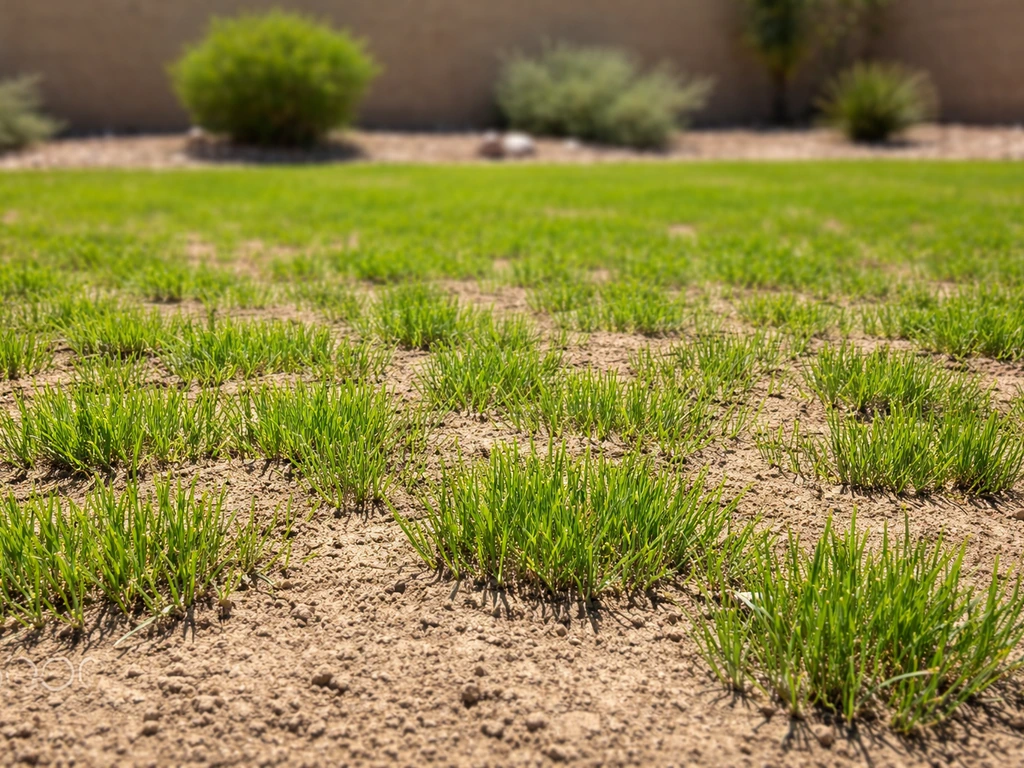
Growing pasture grass for horses comes down to three things you have to get right: picking the correct grass species for your climate, preparing the soil before you ever open a seed bag, and keeping horses off the new seeding long enough for roots to actually establish. Get all three right and you can have a productive, durable horse pasture within one growing season. Skip any one of them and you will be reseeding the same bare spots next year.
How to Grow Pasture Grass for Horses Step by Step
Marcus Tillwell
13 May 2026
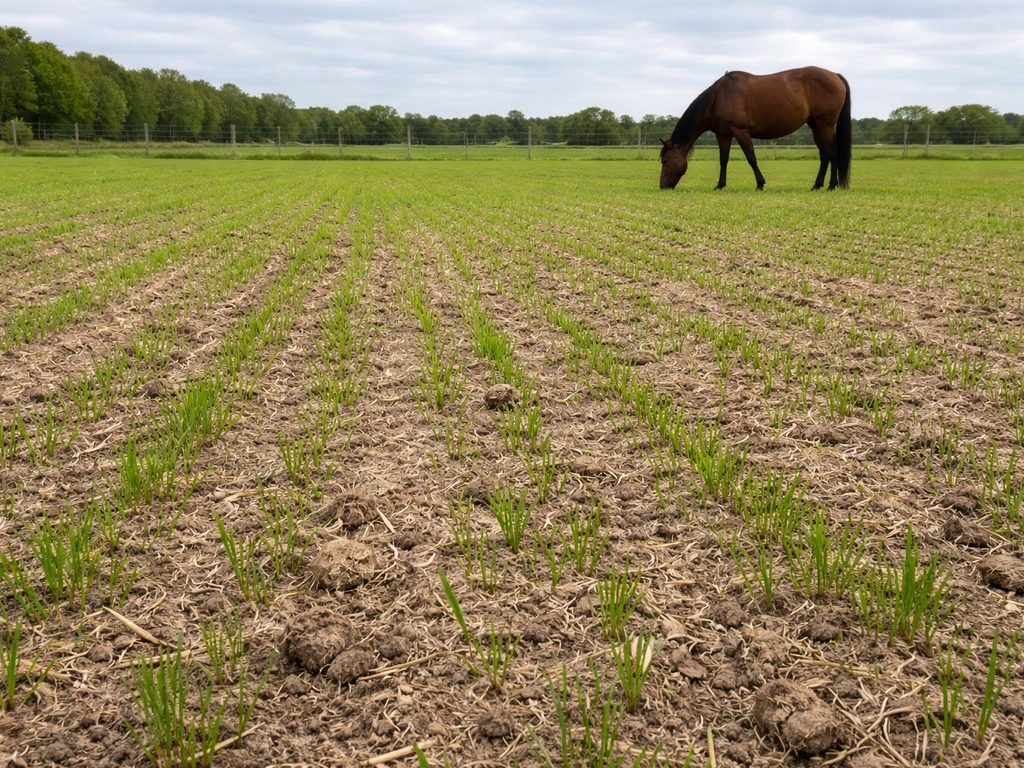
Define your pasture goal and match grass type to your climate
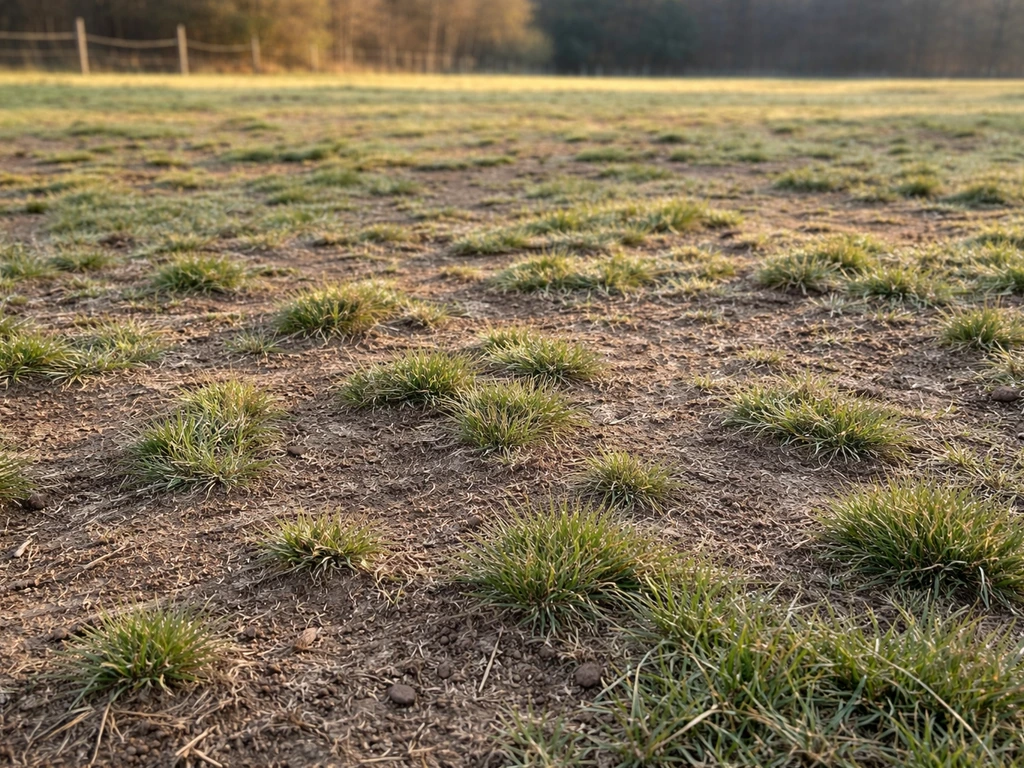
Before you buy a single pound of seed, be honest about what you are trying to accomplish. Are you establishing a brand new pasture from bare ground? Filling in thin or bare spots in an existing stand? Converting a weedy field into something horses can actually graze? Each situation calls for a slightly different approach, and the grass type that works in Kentucky is not the same one that works in Texas or Minnesota.
Cool-season grasses (tall fescue, perennial ryegrass, and orchardgrass) grow actively in spring and fall when temperatures are between roughly 60 and 75 degrees Fahrenheit. They go semi-dormant in the heat of summer but green back up in late summer and fall. These are the backbone of horse pastures in the northern two-thirds of the country, from the Mid-Atlantic and Midwest through the Pacific Northwest.
Warm-season grasses (bermudagrass, bahiagrass, and zoysia) thrive in summer heat, go dormant and turn brown in fall, and are the right choice for the South and lower plains states. If you are in the transition zone, roughly a band from northern Virginia through Kansas and into southern Oregon, you can run into trouble with either category, and a mixture of adapted varieties often works better than betting everything on one species.
For most horse owners in cool-season climates, a mixture of tall fescue and perennial ryegrass is the most productive and persistent foundation you can plant. University of Minnesota research found that mixtures like LaCrosse BLM #4 and Agassiz CHS #4, which include tall fescue and perennial ryegrass, consistently produced high-yielding, persistent pastures that horses preferred.
In the South and Southwest, bermudagrass is the most widely adapted warm-season option for horse pastures because it handles drought, overgrazing, and heavy hoof traffic better than most alternatives. If you are growing for cattle instead of horses, the considerations are similar but the species weights shift a bit, just as they do for goats or other livestock.
For cattle, you can use many of the same pasture establishment principles, but you will want to choose grass species and management that match beef grazing needs growing for cattle. For goats, the same basics apply when selecting grass type and getting the seedbed ready, so use these pasture-grass methods as your starting point goats or other livestock.
If you are aiming to grow cow grass, the same overall pasture seeding and soil prep principles apply, but you should choose the right species for your region and manage establishment carefully.
Choose the right grass and seed for horses and your conditions
Not all grass seed is created equal for horses, and the biggest watch-out is endophyte-infected tall fescue. Standard tall fescue is infected with a fungal endophyte that is toxic to horses, causing fescue toxicosis, especially dangerous in pregnant mares. When you buy tall fescue seed for a horse pasture, you must specifically look for endophyte-free or novel-endophyte (MaxQ or similar) varieties on the label. Penn State Extension and the University of Kentucky both state this clearly: use endophyte-free tall fescue seed for any new stand where horses will graze. This is not optional. Regular commodity tall fescue seed at the farm store is usually endophyte-infected.
Here is a quick breakdown of how the most common horse pasture species compare:
| Grass | Climate | Strengths for Horses | Watch-outs |
|---|---|---|---|
| Tall Fescue (endophyte-free) | Cool-season, nationwide | Drought tolerant, persistent, handles low fertility and acidity | Must be endophyte-free; toxic to horses if infected |
| Perennial Ryegrass | Cool-season, North and Pacific NW | Fast germination, high seedling vigor, palatable | Less persistent in heat and drought; winter-kills in harsh northern winters |
| Bermudagrass | Warm-season, South and plains | Heat and drought tolerant, spreads to fill bare spots, handles heavy grazing | Slow from seed, goes dormant in cool temps, weed pressure during establishment |
| Orchardgrass | Cool-season, nationwide | High yield, very palatable, shade tolerant | Can clump; less traffic-tolerant than fescue |
| Zoysiagrass | Warm-season, transition zone and South | Dense, traffic tolerant once established | Very slow and difficult from seed; not ideal for large pastures |
| Kentucky Bluegrass | Cool-season, North | Excellent horse preference, spreads via rhizomes | Slow establishment, needs high fertility and full sun |
For most situations, a blend works better than a single species. Perennial ryegrass germinates quickly and gives you cover fast, while endophyte-free tall fescue fills in behind it and provides long-term persistence. In the South, bermudagrass seed at 4 to 8 pounds of pure live seed per acre (Missouri Extension) is a reasonable starting point for new pasture establishment, though sprigging or sodding often gives more reliable results in large open fields.
One more thing on seed quality: buy certified seed from a reputable supplier, and check the germination percentage and weed seed percentage on the tag. High weed seed content in cheap bags is one of the fastest ways to sabotage a pasture establishment before it starts.
Soil testing and prep: fix clay, sand, and compaction before you seed
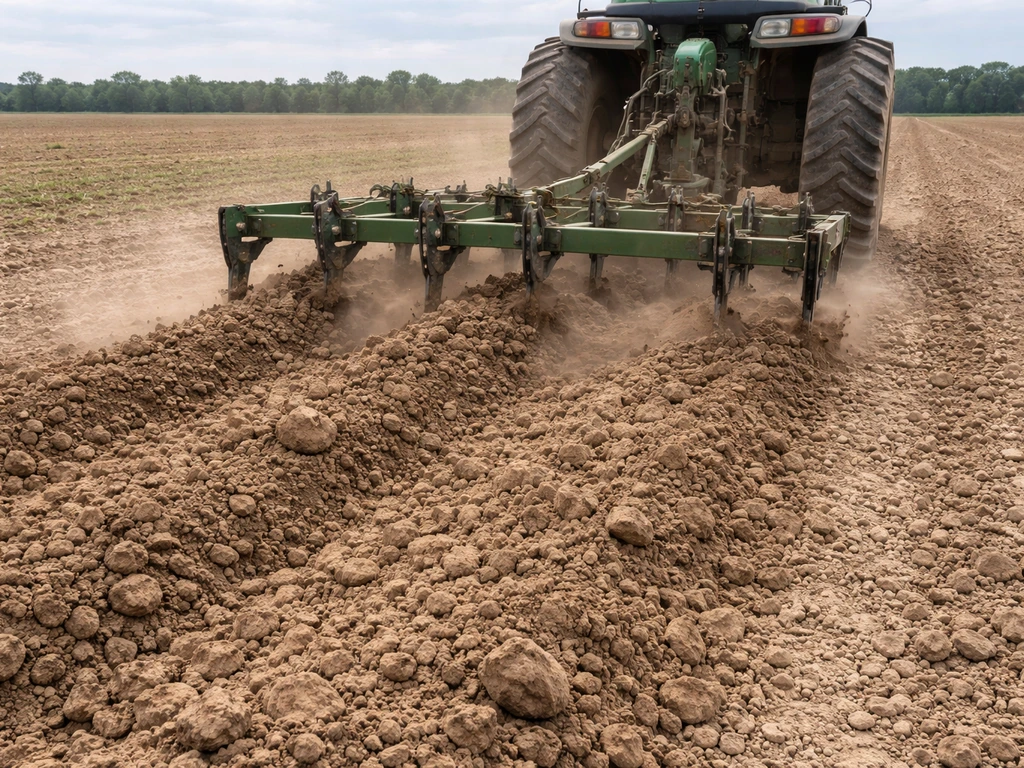
Soil prep is where most horse pasture projects either succeed or quietly fail. Horses are hard on soil. Heavy hooves compact the ground, and overgrazing strips protective cover, leaving you with a hard, crusted seedbed where new seed has almost no chance. Before you do anything else, get a soil test. Penn State Extension identifies pH, phosphorus (P), and potassium (K) as the key parameters to assess, and you cannot guess your way to the right lime and fertilizer rates without test numbers.
The target pH for most cool-season pasture grasses, including tall fescue, is 6.5. If your soil test comes back below 5.5, Mississippi State Extension recommends applying lime at 1 to 2 tons per acre before or at seeding. Lime takes time to work its way through the soil profile, so if you can apply it several months before you plan to seed, you will get better results. For typical warm-season grass like bermudagrass, a similar pH target near 6.0 to 6.5 applies, though bermudagrass tolerates slightly lower pH better than cool-season species.
Dealing with clay soil
Clay soil holds water well but compacts easily under hoof pressure, and it can form a hard cap over seeds that blocks emergence. If you have clay, deep tilling (chisel plow or subsoiler at 8 to 12 inches) before seeding will break up compaction layers. Work in organic matter, compost, or gypsum to improve structure. After primary tillage, use a disk harrow to break clods, then drag or roll the surface so you end up with a firm, fine seedbed. Firm does not mean packed like concrete; it means the top inch or two is loose enough for seed placement while the soil below provides solid support.
Dealing with sandy soil
Sandy soil drains fast, which means it dries out quickly after seeding and can starve germinating seed of moisture during critical early days. If your pasture has sandy soil, organic matter additions help retain moisture. Plan to irrigate more frequently during establishment, and consider splitting your fertilizer applications because sandy soils leach nutrients faster. Sandy soils often have lower pH and nutrient holding capacity, so your soil test results are especially important here.
Dealing with compaction and horse traffic areas
Gate areas, water troughs, and feeding spots are often so compacted they are functionally pavement. Seed will not establish in them no matter what you do unless you physically break up the compaction first. Rent or hire a tractor with a subsoiler or aerator for these spots. After breaking compaction, add topsoil or compost if the area is severely degraded, then proceed with normal seedbed prep. Rotating horse traffic to other parts of the pasture while new seed establishes in these zones is critical.
When to plant: timing so pasture grass actually takes off
Timing is one of the most important decisions you will make, and it is completely determined by which grass type you are planting. Planting at the wrong time of year is one of the most common reasons horse pastures fail to establish.
For cool-season grasses like tall fescue and perennial ryegrass, late summer to early fall is almost always the best planting window. North Carolina Cooperative Extension identifies optimum tall fescue germination conditions as air temperatures of 68 to 77 degrees Fahrenheit and soil temperatures above 60 degrees Fahrenheit. In most cool-season regions, that window falls between late August and mid-October. You get warm soils for fast germination, no competition from summer annual weeds, and the seedlings have weeks of moderate growing weather before winter dormancy. Spring seeding is a second option, but it is riskier because you are racing summer heat and weed pressure.
For warm-season grasses like bermudagrass, you need warm soil, typically above 65 degrees Fahrenheit at the 2-inch depth, which in most of the South means waiting until late April through June. Seeding bermudagrass into cold soil just wastes seed, since it will sit dormant and be overtaken by weeds. Texas A&M AgriLife recommends preparing the seedbed, waiting for weeds to germinate and brown out, and then broadcasting bermudagrass seed and packing it into the soil surface.
Zoysiagrass is worth mentioning as a caution: Purdue University notes that seed establishment after early July may not fully establish before winter, and Clemson Extension describes seed establishment as difficult and time consuming even under good conditions. Purdue University also notes that after mid-summer in Indiana, zoysiagrass begins to lose color as night temperatures drop into the mid-50s°F, and that seed establishment after early July may not fully establish before winter. Zoysia is not well suited to large-scale pasture establishment from seed and is better left to lawn situations where you have more control.
Seeding methods and rates for even coverage with no bare spots
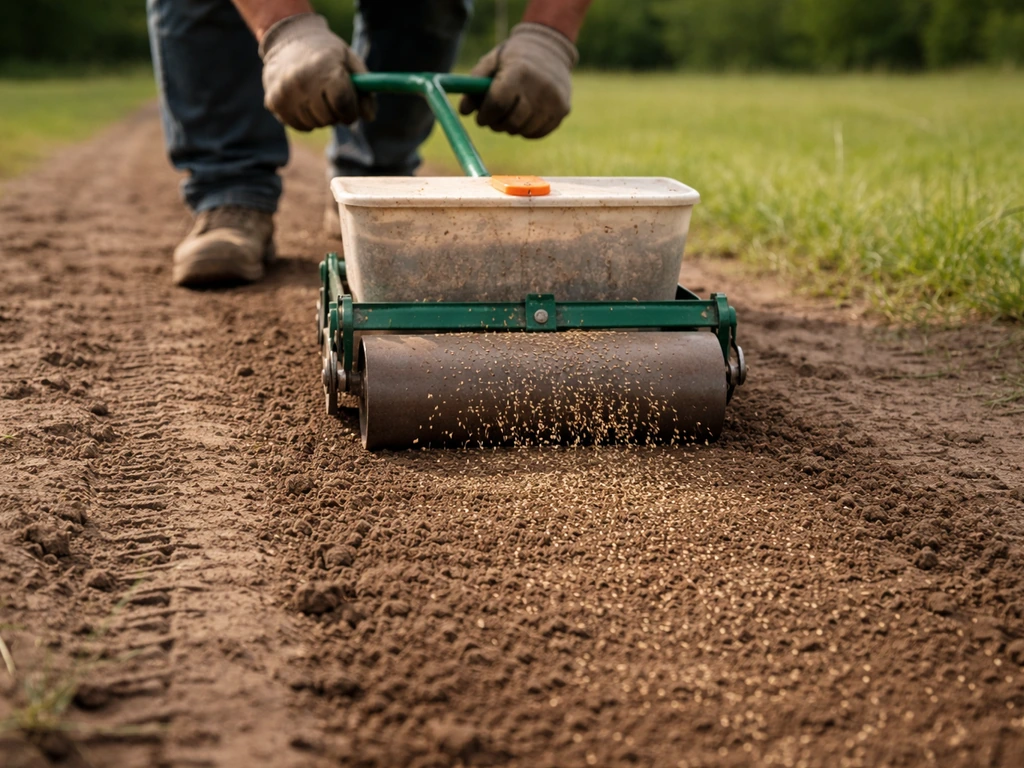
The most common reason new pasture seedings end up uneven and patchy is poor seed-to-soil contact. Seed left sitting on top of a loose or cloddy seedbed without getting pressed into the soil surface has very low germination rates. Penn State Extension is direct about this: seeding depth should generally not exceed 3/8 inch for most forage crops, and a firm seedbed is essential for the seed-to-soil contact that drives germination.
Seeding rates by species
| Grass Species | Seeding Rate (per acre) | Seeding Depth |
|---|---|---|
| Tall Fescue (alone) | 12–20 lb/acre | 1/4 to 1/2 inch |
| Perennial Ryegrass | 15–25 lb/acre | 1/4 to 1/2 inch |
| Bermudagrass (seed) | 4–10 lb pure live seed/acre | Surface press-in to 1/4 inch |
| Tall Fescue (in mix) | ~5–6 lb per 1,000 sq ft for small areas | 1/4 to 1/2 inch |
For small areas or pasture renovation projects measured in square feet rather than acres, the tall fescue rate of 5 to 6 pounds per 1,000 square feet (North Carolina Cooperative Extension) translates well. For large fields being established from scratch, work at the per-acre rates above.
Equipment and method
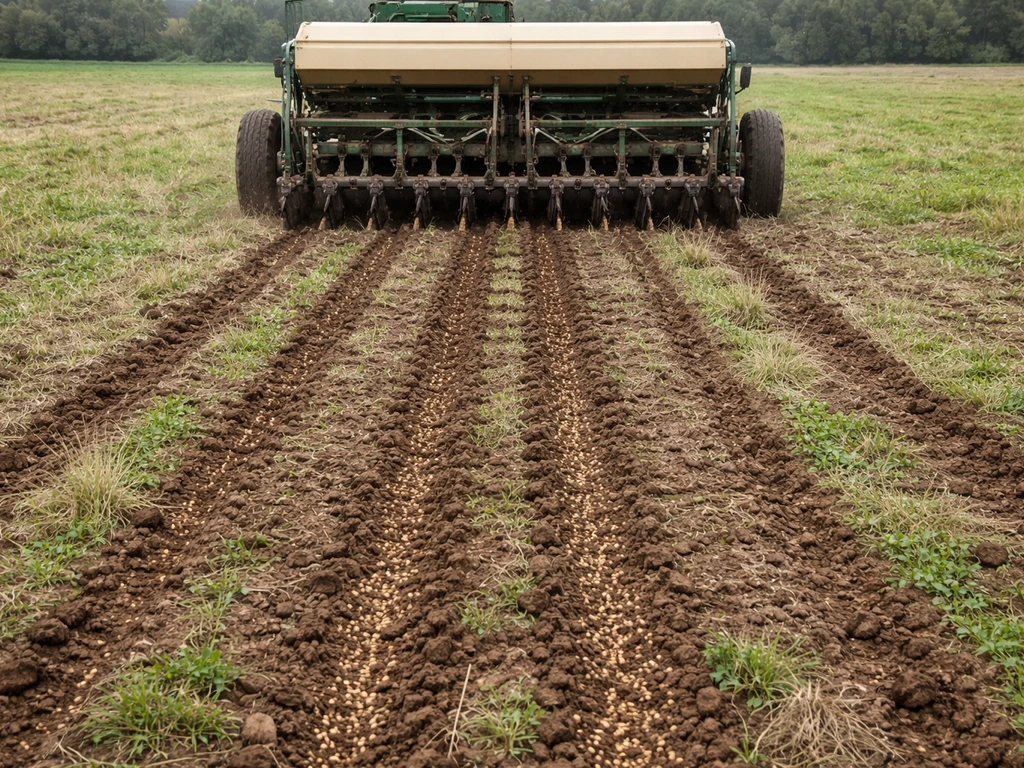
For large pastures, a drill seeder (box drill or no-till drill) gives you the most consistent depth and seed-to-soil contact, and it is worth renting or hiring out if you are seeding more than a few acres. A no-till drill is especially useful for overseeding into existing thin stands because it places seed without full tillage. For smaller areas, a broadcast spreader followed by a cultipacker or roller is effective.
Broadcast the seed, then roll or pack to press seed into the surface. For bermudagrass specifically, Texas A&M AgriLife emphasizes broadcasting the seed and then packing again after spreading, because this warm-season grass germinates at or very near the soil surface. Do not bury bermudagrass seed deep or you will lose it.
When broadcasting by hand or spreader, split the application: go over the area in two passes at right angles to each other with half the seed per pass. This gives you more even distribution and reduces the chance of striping or thin spots.
Watering, fertilizing, and weed control during establishment
The first two to three weeks after seeding are the most fragile. The seedbed needs to stay consistently moist for germination to happen, but you also do not want to wash seed off the surface with heavy irrigation. Light, frequent watering is the right approach early on. A good rule of thumb from University of Minnesota extension principles: water lightly two to three times per day for the first couple of weeks to keep the soil surface from drying out.
Once seedlings are up and beginning to root in, shift toward about 1/3 inch of water every other day, then gradually extend intervals as roots deepen. If you are relying on rainfall, plant during your typical rainy season whenever possible and have a backup irrigation plan for dry stretches.
Starter fertilizer
Penn State Extension recommends only 20 to 40 pounds of nitrogen per acre at establishment for pure grass stands, and University of Kentucky's overseeding guidance lands in a similar range at 30 to 40 pounds N per acre. Do not over-fertilize at planting. Too much nitrogen early on promotes fast top growth at the expense of root development, and it can boost weed competition. Apply phosphorus and potassium based on your soil test results, not guesswork. If your test shows low P and K, apply them at seedbed preparation before seeding.
Weed control during establishment
This is one of the trickiest parts of pasture establishment, and the honest answer is that your options are limited while seed is germinating. University of Georgia forage guidance is clear that there are no pre-emergent herbicides currently labeled for use during establishment of seeded bermudagrass, bahiagrass, tall fescue, or annual forage crops.
This means your main weed control tools at establishment are a clean, competitive seedbed; weed-free certified seed; and proper timing so your desired grass germinates quickly and competes hard. For bermudagrass in the South, waiting for weeds to emerge and die after initial tillage before seeding (a stale seedbed approach) dramatically reduces weed pressure.
Once grass seedlings are several inches tall and have been mowed at least once, post-emergent herbicide options open up, but check labels carefully for grazing restrictions and safety for the specific grass species you planted.
Mowing after establishment begins also helps manage weeds. University of Minnesota equine extension guidance recommends mowing after each grazing period to control many pasture weeds and encourage new grass growth. Set mower height so you are not cutting new seedlings below 3 to 4 inches.
Maintenance and troubleshooting: keeping pasture grass growing
The single biggest mistake horse owners make after successfully establishing a pasture is grazing it too soon. University of Kentucky extension is emphatic on this point: grazing too soon after seeding and grazing too heavily during the first 6 to 8 months is one of the most common reasons new seedings fail to establish. Roots need time to anchor deeply before horses put hoof pressure and grazing stress on young plants. A general guideline is to keep horses off new seedings until grass reaches at least 6 to 8 inches in height, and then graze only briefly before rotating animals out again. Rotational grazing from the start, even before the stand is fully dense, protects your investment.
Annual fertilization for established pastures
Once your pasture is established, University of Minnesota extension guidance pegs nitrogen needs for horse pastures at roughly 90 pounds of N per acre per year, split into applications in spring and mid-summer. Apply nitrogen before expected rainfall for best results. For maintenance phosphorus and potassium, Mississippi State Extension guidance for tall fescue puts maintenance needs at around 60 to 70 pounds of P2O5 and K2O per year, adjusted based on whether forage is being removed as hay. Continue pulling soil tests every two to three years to stay on top of pH and fertility changes.
Troubleshooting bare spots and slow establishment
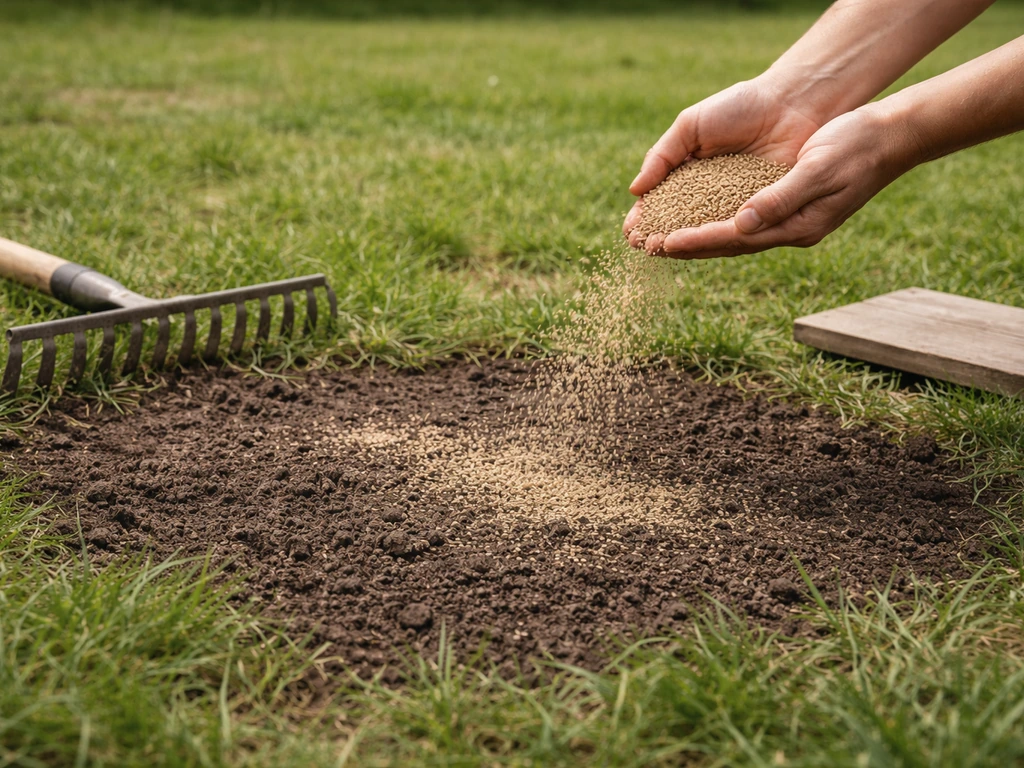
If you are looking at your pasture several weeks after seeding and it is still patchy or thin, work through this checklist before giving up or reseeding:
- Check germination timing expectations: perennial ryegrass germinates in 7 to 14 days under good conditions; tall fescue takes 10 to 21 days; bermudagrass can take 3 to 4 weeks in warm soil. Patience is sometimes the actual answer.
- Check soil moisture: if the seedbed dried out for even a few days during the first two weeks, germination will be spotty. Rewater and give it more time before declaring failure.
- Check seeding depth: seed buried deeper than 1/2 inch may not emerge at all. Dig up a few seeds in bare areas and look for white sprouts that did not make it to the surface.
- Check for crusting: if your soil surface formed a hard crust after rain or irrigation, it can physically block emergence. Lightly rake the surface of bare areas and water again.
- Check pH and fertility: if you skipped the soil test and your pH is well below 6.0, germination and early growth will be weak across the board. Apply lime and plan to reseed the thin areas.
- Check whether horses or wildlife are grazing off seedlings before they can establish. Even one pass of horses through a fresh seeding can set you back weeks.
- For persistent bare spots near gates and water, consider temporary exclusion fencing and a targeted overseeding with high-vigor perennial ryegrass to get quick cover while slower species fill in.
If your pasture was established successfully but is thinning out over time, look at your grazing management first. Poor pastures with decreased stand density almost always trace back to overgrazing, compaction, or both, according to University of Connecticut Extension pasture renovation guidance. Rotating horses through smaller paddocks with rest periods of 30 to 45 days is the most effective long-term fix for a pasture that keeps thinning out despite reseeding efforts.
If you are also trying to get that existing thin stand to fill in faster, the approaches in how to make pasture grow faster and how to get grass to grow in horse pasture can give you additional targeted tactics on top of what is covered here. Guinea pig grass needs similar basics, but it is grown and maintained a bit differently than horse pasture how to get grass to grow in horse pasture.
If you are trying to get a thin or bare stand to fill in, the same seeding, soil prep, and establishment steps are what drive the results how to get grass to grow in horse pasture.
What to do if the whole stand fails
If germination was poor across the entire pasture rather than just in scattered spots, you almost certainly had one of three problems: wrong timing for the species, inadequate seed-to-soil contact, or a soil pH or fertility issue that made germination impossible. Do a post-mortem before you reseed. Pull a soil test if you skipped it. Check your seed tag for germination rate.
Revisit your planting dates against the temperature requirements for your grass type. Then address the root cause before putting more seed down. Reseeding into the same failed conditions just produces the same failed result. If you are trying to push establishment speed, start by improving seed-to-soil contact and keeping the seedbed consistently moist through the first few weeks how to make pasture grow faster.
FAQ
Can I grow pasture grass for horses in a small backyard or do I need acreage?
Yes, the same principles work at any scale, but setup changes. For small areas, treat gate paths and feeding zones as separate mini-projects because those spots compact first, then seed the rest of the paddock, and roll or compact after seeding to improve seed-to-soil contact. Use the small-area seeding rate, and irrigate lightly but frequently until the grass is established.
How do I tell if my pasture is ready for horses after seeding besides grass height?
Height helps, but check root establishment and stand stability. If you gently tug a corner of clump-forming grass, it should resist pulling, and the soil surface should not shift or crust excessively when you walk on it. If seedlings break loose easily or the surface is still fragile, keep horses off even if they have reached 6 to 8 inches.
What if I accidentally seeded in the wrong season, can I fix it without starting over?
Sometimes you can salvage, but the fix is usually management, not re-seeding. If cool-season seed went in too early and weeds took over, focus on mowing to reduce weed competition and keep the desired grass protected until it can shade weeds. If warm-season seed was placed into cold soil, you may need to wait for appropriate warmth rather than continuing attempts to force germination, and you can plan a renovation window for the next correct planting period.
Should I fertilize immediately after seeding or wait until seedlings are up?
For establishment, heavy nitrogen right after seeding is a common mistake. The safer approach is to use soil-test-based phosphorus and potassium before or at seeding, then add nitrogen only within the modest establishment range after you see seedlings emerging and actively growing. This reduces the risk of lush top growth that still lacks strong roots and can also increase weed pressure.
How can I prevent horses from overgrazing before the pasture is fully established if I cannot keep them totally off it?
Use temporary exclusion tactics. Options include fencing off the seeding area entirely, using sacrificial sacrifice lots for turnout, or allowing very limited traffic only after plants are well rooted, with rotation out quickly. If you must provide access, restrict it to short visits and avoid wet or muddy days, because hoof pressure plus soft soil is what kills seedlings.
Is overseeding thin spots the same as establishing from bare ground?
The concepts are similar but the execution differs. Overseeding works best when you improve seed-to-soil contact without fully destroying existing turf, so a no-till drill is often the most reliable tool. Also, expect uneven results if the thin spots are created by compacted traffic lanes, so physically aerate or subsoil those lanes first, then overseed.
Do I need to remove weeds before seeding, and what if I have a weedy field?
Yes, start clean because there are no easy herbicide “shortcuts” during establishment for most seeded horse pastures. The practical options are a stale seedbed approach (especially for bermudagrass in the South), mowing to suppress weeds, and ensuring the desired grass establishes quickly by planting at the right temperatures. If perennial weeds are entrenched, plan on phased renovation rather than expecting one seeding to win the competition.
What should I do if my soil test shows low pH, do I lime before or after seeding?
Plan to lime ahead of seeding when possible. If pH is very low, liming before planting gives time for lime to react and move through the soil profile, which improves germination and nutrient availability. If you missed the timing window, prioritize correcting pH before the next establishment season and focus immediately on improving seed-to-soil contact and nutrient needs for what you can still adjust now.
How deep should I plant seed, and does that differ between grass types?
Most forage pasture seed should not be buried deeply, generally staying shallow so sprouts can reach the surface. Bermudagrass is especially sensitive and should be packed near the surface rather than planted deep. If your method pushes seed too far down (for example, aggressive broadcasting without packing or over-adjusting drill depth), you can end up with poor emergence even when the seed rate is correct.
Can I rely on rainfall to establish pasture, or do I need irrigation?
Rainfall can work if your planting window lines up with typical wet weather, but establishment needs consistent surface moisture during germination. If you cannot guarantee steady moisture, have a backup irrigation plan and be ready to water lightly and frequently early on. The goal is a damp top layer, not saturated soil that could wash seed away or form crusts.
How do I avoid buying the wrong tall fescue seed for horses?
Look specifically for endophyte-free or novel-endophyte varieties on the label, do not assume “tall fescue” commodity seed is safe for horses. Also compare tag details like purity, germination percentage, and weed seed content before purchasing, because low-quality seed can undermine establishment even when you choose the correct endophyte type.
Next Article
How to Grow Grass in El Paso TX: Seed, Plant, and Care
Step-by-step guide to grow grass in El Paso: pick Bermuda, Zoysia or fescue, prepare soil, seed timing, watering, fixes.