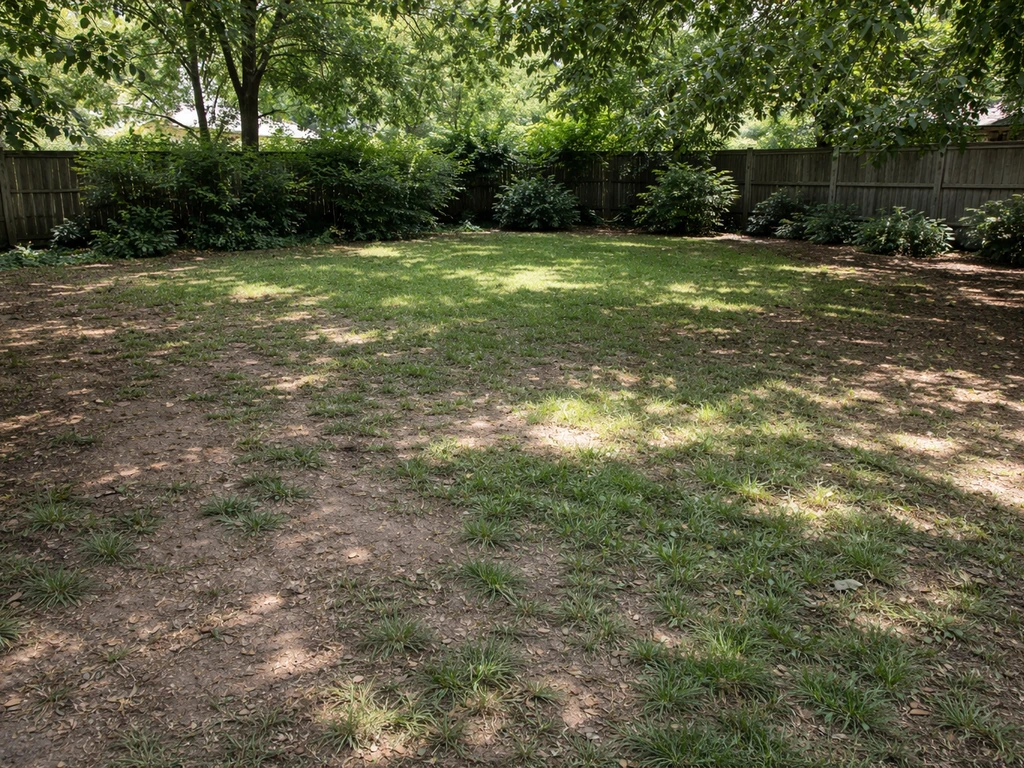
Growing grass in full sun is genuinely one of the easier lawn challenges once you pick the right grass for your climate. The real mistakes happen before a single seed hits the ground: choosing a cool-season grass for a blazing southern yard, planting too early when the soil is still cold, or skipping soil prep and wondering why germination is patchy. Get those decisions right and a full-sun lawn practically takes care of itself during establishment. This guide walks you through every step, from confirming you actually have full sun to troubleshooting a lawn that refuses to fill in.
How to Grow Grass in Full Sun: Seed, Sod, Timing, Watering & Mowing
Marcus Tillwell
29 Jul 2026
Why full sun lawns are a different game
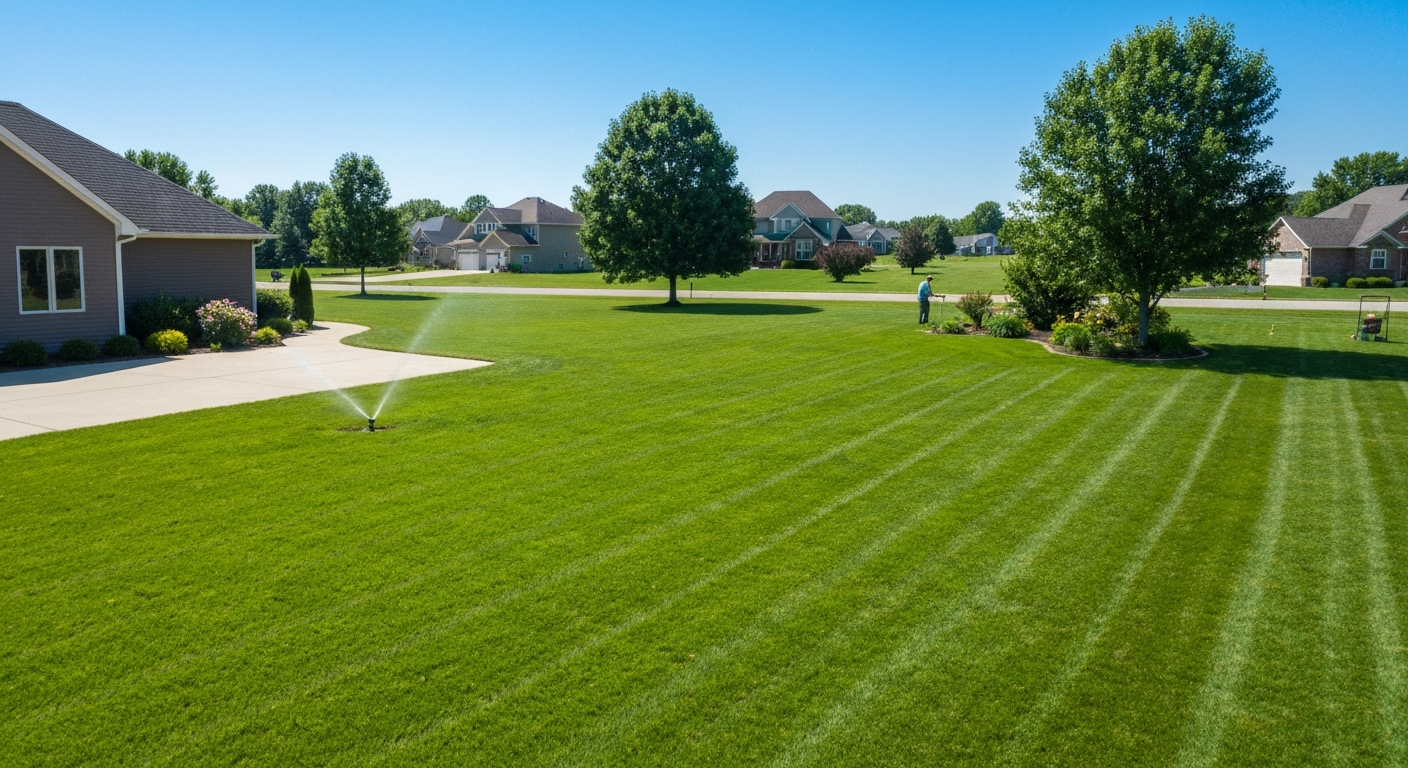
A full-sun site sounds like the ideal scenario, and for the right grass, it is. But direct sun all day also means higher soil temperatures, faster moisture loss, and more stress on young seedlings during establishment. The grasses that thrive here, particularly warm-season types like bermuda and zoysia, are built for exactly these conditions. Cool-season grasses like tall fescue and perennial ryegrass can also handle full sun, but they need more attention to watering and timing to survive summer heat without burning out. Unlike shaded lawns, where the core problem is light deficiency, full-sun lawns present a different set of challenges: heat stress, drought pressure, soil crusting, and weed competition from seeds that love bare, sunny soil just as much as your grass does.
What actually counts as full sun
Full sun means a spot receives six or more hours of direct, unobstructed sunlight per day, which is the standard definition used by horticultural authorities including the Royal Horticultural Society. Many sun-loving grasses perform best with eight or more hours, so knowing where your yard lands within that range matters. A shaded hillside might look sunny in the morning but lose light after noon because of a fence or tree line, which knocks it into partial-sun territory and changes which grasses will work well there.
How to measure sun hours in your yard
The simplest method is a sun map, which Penn State Extension recommends for homeowners planning lawn establishment. On a clear midsummer day, sketch your yard and go outside once per hour from sunrise to sunset. Mark each zone as sunny or shaded. At the end of the day, add up the sunny hours for each area. Any zone with six or more consecutive or total hours of direct sun qualifies as full sun. This takes maybe five minutes per check and gives you real, site-specific data that no app or satellite image can match.
For more precision, a handheld PAR (photosynthetically active radiation) meter measures the light wavelengths plants actually use for photosynthesis, not just visible brightness. Consumer lux meters and smartphone light apps are widely available and give useful ballpark readings, but UC IPM researchers caution that they are less accurate for plant PAR than a dedicated meter. If you want reliable numbers, verify app readings with a trusted PAR or quantum meter. For most homeowners, the hourly observation method is accurate enough to make a good grass selection decision.
Warm-season vs. cool-season grasses for sunny spots
Your climate determines which category of grass to plant before you ever think about specific species. Warm-season grasses (bermuda, zoysia, St. Augustine, centipede) grow actively in summer heat, go dormant and brown in winter, and are the right choice for USDA zones 7 through 10, roughly the South, Southwest, and parts of the transition zone. Cool-season grasses (tall fescue, perennial ryegrass, Kentucky bluegrass) grow actively in spring and fall, can handle cold winters, and are the right choice for zones 3 through 6, roughly the North and Pacific Northwest. The transition zone (roughly zones 6b through 7b, stretching from Virginia through Kansas) is where it gets tricky: neither type is perfectly comfortable, and grass selection comes down to your local summers and whether you can tolerate winter dormancy.
Both warm-season and cool-season grasses need full sun of at least six hours to perform well, though warm-season types are generally more heat-tolerant and drought-resilient once established. UC IPM confirms that cultivar choice within each species also matters, so look for sun-rated varieties even within a species that is already considered sun-tolerant.
Bermuda grass: the full-sun workhorse
Bermudagrass (Cynodon spp.) is the go-to warm-season grass for full-sun lawns that see heavy foot traffic. It spreads aggressively through both stolons (above-ground runners) and rhizomes (below-ground runners), which means it fills in bare spots on its own and recovers quickly from damage. Bermudagrass (Cynodon spp.) is a warm‑season turfgrass with excellent heat and traffic tolerance that spreads by stolons and rhizomes and is typically established by sod, plugs, or sprigs (Bermudagrass for Florida Lawns (ENH19), UF/IFAS) Bermudagrass for Florida Lawns (ENH19) — UF/IFAS. It thrives in USDA zones 7 through 10 and is especially well-suited to the Southeast, South, Southwest, and Gulf Coast. It goes dormant and turns brown when temperatures drop below about 50°F, which is worth knowing if you live near the northern edge of its range.
Seed, sod, and plug options for bermuda
Seeded bermuda varieties like Princess 77, Yukon, and Arden 15 are available at garden centers and online, but UF/IFAS notes that most premium bermuda cultivars (like Tifway 419) are sterile hybrids and can only be established vegetatively by sod, plugs, or sprigs. If you want a top-quality hybrid variety, sod or sprigs are your path. If you're okay with a common seeded variety, seed works fine and costs far less. Sod gives you an immediate lawn and is the fastest way to establish bermuda. Plugs and sprigs are the middle ground: more affordable than full sod, but they require one to two growing seasons to fill in completely. Oklahoma State Extension cites typical sprigging rates of 20 to 50 bushels per acre, or roughly 0.5 to 1.2 bushels per 1,000 square feet for mechanical sprigging.
Seeding rate, germination, and planting windows
For seeded bermuda, North Carolina State Extension recommends approximately 1 to 2 pounds of hulled seed per 1,000 square feet for a new lawn. Germination takes 7 to 28 days, and the wide range is real: soil temperature is the controlling factor. Bermuda seed needs soil temperatures consistently at or above 65 to 70°F measured at a 1-to-2-inch depth. Do not go by the calendar alone. In most of the South, that means planting from late April through June. In the transition zone, late May through early June is safer. Never seed bermuda when cool nights are still dropping soil temps below 65°F, because the seed just sits there and rots or gets eaten by birds.
Zoysia grass: dense, durable, and patient
Zoysiagrass (Zoysia spp.) builds one of the densest, most weed-resistant lawns of any warm-season grass, which makes it a great long-term choice for full-sun homeowners who want a low-maintenance surface after establishment. The catch is that it is slower to establish than bermuda. It tolerates moderate foot traffic and handles drought reasonably well once rooted, but it needs that full first growing season (sometimes two) to reach a full canopy. Like bermuda, it goes dormant in winter and is best suited to zones 6 through 9.
Seed, sod, and plug options for zoysia
Most high-quality zoysia cultivars, including Zeon, Emerald, and Meyer, are established only by sod or plugs because they are vegetative varieties without viable seed. Seeded varieties like Zenith (Zoysia japonica) do exist and are sold at retail, but UF/IFAS notes they establish more slowly and offer fewer cultivar choices than vegetative types. Zoysiagrass for Florida Lawns (ENH11/LH011), UF/IFAS reports most high-quality zoysias are established vegetatively and that seeded Zoysia japonica cultivars are fewer and slower to establish Zoysiagrass for Florida Lawns (ENH11/LH011) — UF/IFAS. If you are plugging, extension sources and Carolina Lawns from NC State recommend spacing plugs 6 inches apart for faster fill-in (typically one full growing season) or 12 inches apart if you are willing to wait two seasons. Plugs placed at 6-inch spacing are significantly more expensive upfront but save you a summer of weeding bare soil between slow-spreading plugs.
Planting rates, germination, and timing
Seeded zoysia rates are typically around 1 to 2 pounds per 1,000 square feet for Zenith-type varieties, similar to seeded bermuda. Germination takes 14 to 21 days or longer, and zoysia seed requires soil temperatures of at least 65°F to germinate reliably. Planting windows closely mirror bermuda: late spring through early summer in zones 6 through 9. In the lower South (zones 8 to 10), you have a longer window, but avoid late-summer planting, which does not leave enough warm-weather weeks for the grass to establish before fall.
Tall fescue: the cool-season sun performer
Tall fescue is the most heat- and drought-tolerant of the cool-season grasses, which is why it holds its own in full-sun lawns across the transition zone and cooler parts of the South. Its deep root system (roots can reach 2 to 3 feet in loose soil) lets it pull moisture from lower in the soil profile during hot, dry stretches. It does not spread by stolons or rhizomes like bermuda, which means bare spots need to be overseeded rather than waiting for the grass to fill in on its own. Oregon State recommends tall fescue specifically for full-sun lawns in the Pacific Northwest and transition zone where summers are warm but winters are cold.
Seed and sod options for tall fescue
Tall fescue is almost always established by seed for home lawns, though tall fescue sod is available in some regions. Sod is a good option if you need immediate erosion control on a slope or want a usable surface quickly. For seed, NC State Extension recommends 6 to 8 pounds per 1,000 square feet for a new lawn. This is a higher rate than most other species because of tall fescue's larger seed size, but it also means robust establishment when conditions are right.
Germination timeline and planting windows
Tall fescue germinates in 7 to 14 days when soil temperatures are between 50 and 65°F. The ideal planting window in most cool-season regions is late August through mid-October, when soil is still warm enough to support germination but air temperatures are cooling off to reduce stress on seedlings. Spring planting (March through April) is possible but riskier because you are racing against summer heat arriving before the lawn fully establishes. In the transition zone, fall seeding is strongly preferred. Tall fescue is not a good choice for zones 8 and warmer; summer heat will thin it out even with irrigation.
Perennial ryegrass: fast cover and quick repair
Perennial ryegrass is the fastest-germinating grass on this list, and that speed is its main selling point. It is commonly used for new lawns, overseeding bare patches, and overseeding dormant warm-season lawns in the South for winter color. NC State Extension describes it as well-suited for quick establishment and wear recovery in full-sun lawns. Its weakness is summer heat: perennial ryegrass does not tolerate sustained high temperatures as well as tall fescue, so it struggles in zones 7 and warmer unless you are using it specifically as a winter overseeding grass.
Seed and sod options for perennial ryegrass
Perennial ryegrass is almost exclusively established by seed for home lawns. Sod containing perennial ryegrass exists but is less common than pure stands. NC State Extension recommends 5 to 8 pounds per 1,000 square feet for new lawn establishment. It is frequently sold in mixes with Kentucky bluegrass or fine fescues to combine its fast germination with the long-term durability of those slower-establishing species.
Germination timeline and planting windows
Perennial ryegrass germinates in 5 to 10 days at soil temperatures of roughly 55 to 70°F, making it one of the fastest grasses to establish. The ideal planting window in cool-season regions is late August through October, mirroring tall fescue. In warmer zones (7 to 9) it is commonly seeded in November or early winter to provide green cover over dormant bermuda or zoysia, then fades naturally when warm-season grass breaks dormancy in spring. For year-round cool-season use, stick to zones 5 and 6 and avoid expecting it to survive hot, humid summers.
Comparing the four grasses side by side
Here is a direct comparison of the four species covered in this guide. Use this table to narrow your choice based on your climate, how fast you need a lawn, and your preferred establishment method.
| Grass | Sun Tolerance | Drought Tolerance | Traffic Tolerance | Establishment Speed | Best Establishment Method | Best Use Case |
|---|---|---|---|---|---|---|
| Bermuda | Excellent (needs 6+ hrs, thrives at 8+) | High | Very High | Fast (sod/sprigs); Moderate (seed) | Sod, sprigs, or plugs for hybrids; seed for common types | High-traffic full-sun lawns in zones 7–10 |
| Zoysia | Excellent (needs 6+ hrs) | High | High | Slow (all methods) | Sod or plugs at 6–12 in spacing | Low-maintenance dense lawn in zones 6–9; tolerates some wear |
| Tall Fescue | Good (6+ hrs) | Moderate-High for cool-season | Moderate | Moderate (seed germinates in 7–14 days) | Seed at 6–8 lb/1,000 sq ft; sod available | Cool-season and transition zone full-sun lawns, zones 4–7 |
| Perennial Ryegrass | Good (6+ hrs) | Low-Moderate | Moderate-High | Very Fast (5–10 days germination) | Seed at 5–8 lb/1,000 sq ft | Quick cover, overseeding, cool-season zones 3–6 or winter overseeding in South |
If you are in the South or transition zone and want a durable, heat-proof lawn, bermuda is the practical first choice. Zoysia is worth the wait if you want a thicker, lower-maintenance surface and do not mind a slower first season. If you are in the North or Pacific Northwest, tall fescue handles full sun and summer heat better than any other cool-season option. Perennial ryegrass is best as a component in a seed mix or as a short-term overseeding solution rather than a standalone permanent lawn in warm climates.
Site prep before you plant anything
Skipping site prep is the most common reason a full-sun lawn fails or looks bad for the first two years. The work you do before seeding or laying sod determines how well roots establish, how evenly water penetrates, and how long the lawn stays healthy without constant intervention.
Soil testing and pH adjustment
Get a soil test from your local cooperative extension office or a reputable mail-in lab before you plant. It costs $10 to $25 and tells you your pH, organic matter level, and nutrient needs. Most lawn grasses prefer a pH between 6.0 and 7.0. Bermuda is comfortable up to 7.0; tall fescue and ryegrass perform best at 6.0 to 6.5. If your pH is below 6.0, add lime according to your soil test recommendation, typically 50 to 100 pounds of pulverized limestone per 1,000 square feet. If it is above 7.5, sulfur applications can help bring it down. Do this correction at least two to four weeks before planting so the amendment has time to react with the soil.
Fixing clay and sandy soil before seeding
If your soil is clay, water will pond on the surface and roots will struggle to penetrate past a few inches. The best fix is to till in 2 to 3 inches of compost worked down to a 4-to-6-inch depth. This improves both drainage and aeration without changing the grade. For severely compacted clay, core aeration before tilling helps break up the hardpan. If your soil is sandy, it drains too fast and holds almost no nutrients. Compost is the answer here too: 2 to 3 inches tilled in helps sandy soil retain both moisture and fertilizer long enough for grass roots to access them. In either case, do not rototill when soil is wet or you will compact it further.
Grading and leveling
The soil surface should slope gently away from your house at a rate of about 1 to 2 percent, or roughly 1 inch of drop per 8 feet, to direct surface water away from the foundation. Fill low spots with topsoil or a compost-soil mix and rake the whole area level. This prevents water from pooling after rain, which can rot seed and stress established turf. On slopes steeper than about 15 percent, consider sod instead of seed because seed and topsoil wash away before germination.
How to plant: broadcast, slit seeder, sod, plugs, and hydroseeding
Broadcast seeding
A rotary spreader is the simplest broadcast method and works well for most home lawns. Divide your seed into two halves and make two passes in perpendicular directions for even coverage. After spreading, rake lightly to cover seed with about 1/8 inch of soil or topdress with a thin layer of compost. Seed-to-soil contact is the single most important factor in germination success: seed sitting on top of thatch or loose mulch will not germinate reliably.
Slit seeding
A slit seeder (also called a slice seeder) cuts shallow grooves in the soil and drops seed directly into them, giving excellent seed-to-soil contact without full tilling. This is the most effective seeding method for overseeding existing lawns or seeding into prepared soil with minimal disruption. You can rent a slit seeder from most equipment rental shops for $60 to $100 per day. For new lawns seeded from scratch, it is the method most likely to produce even, consistent germination.
Sod installation
Sod gives you an immediate lawn and is the best choice for slopes, high-traffic areas, or anywhere you need erosion control right away. Prepare the soil the same way you would for seed: test, amend, grade. Lay sod with staggered joints (like brickwork), press it firmly against the soil with a roller, and water immediately and deeply. Sod roots in two to three weeks in warm weather. Avoid heavy foot traffic for the first three to four weeks while roots are establishing.
Plugs and sprigs
Plugs are small 2-to-4-inch sections of sod, usually sold in trays of 18 or 72. They are the standard vegetative method for bermuda and zoysia in home lawns. Use a bulb planter or plug tool to cut a hole, drop in the plug, firm the soil around it, and water. Space at 6 inches for faster coverage or 12 inches if budget is the constraint. Sprigs are individual stems with roots that are either broadcast over prepared soil and pressed in or planted in furrows. Both methods require keeping the soil consistently moist for the first several weeks until plants are actively spreading.
Hydroseeding
Hydroseeding is a professional method that mixes seed with water, fertilizer, and a fiber mulch slurry that is sprayed onto prepared soil. It is faster than hand-broadcasting on large areas and provides built-in mulch to retain moisture, which matters on a hot, full-sun site. Hydroseeding is typically hired out rather than DIY; costs run $0.08 to $0.20 per square foot depending on region. It is a practical option for new construction lots or large bare areas where broadcast seeding is difficult.
Watering during establishment
The first two to three weeks after seeding are the most water-intensive period. The goal is to keep the top 1 inch of soil consistently moist without letting it dry out between waterings, but also without overwatering to the point of runoff or fungal problems. In practice, this usually means two to three light waterings per day during the germination phase, roughly 5 to 10 minutes per zone depending on your sprinkler output. On a hot, full-sun site, the surface can dry out in a few hours, so morning and midday waterings are more important than a single deep watering.
Once seeds have germinated and grass is visible (typically 1 to 2 weeks for ryegrass, 2 to 3 weeks for tall fescue, 3 to 4 weeks for bermuda and zoysia seed), shift gradually to deeper, less frequent watering. The goal after germination is to encourage roots to grow downward in search of moisture. After four to six weeks, most newly seeded lawns can be watered to a depth of about 6 inches twice a week rather than shallow daily watering. For new sod, water daily for the first two weeks, then every other day for two more weeks, then transition to twice-weekly deep watering.
First mow rules and mowing heights
Do not mow too early. Wait until new seedlings reach about one-third above the target mowing height before the first cut, and never remove more than one-third of the blade in a single mowing session. For bermuda, the target height is 1 to 2 inches; wait for seedlings to reach about 2.5 to 3 inches before first mow. For zoysia, mow at 1 to 2.5 inches; wait for 3 to 3.5 inches. Tall fescue performs best kept at 3 to 4 inches in summer to reduce heat and moisture stress; wait until seedlings reach 4 to 5 inches. Perennial ryegrass target height is 1.5 to 2.5 inches; wait for 3 to 4 inches. Make sure your mower blades are sharp before that first cut so you are cutting rather than tearing.
Fertilizing new grass in full sun
For a newly seeded cool-season lawn (tall fescue or ryegrass), apply a starter fertilizer with a higher phosphorus content (like a 12-12-12 or 10-20-10) at or just before seeding to support root development. Avoid high-nitrogen starter fertilizers on new seed because excess nitrogen promotes shoot growth before the root system is established. At the four-to-six-week mark, once the lawn is mowed once or twice, apply a standard lawn fertilizer at the rates listed on the bag for your grass type.
For warm-season grasses (bermuda and zoysia), hold off on heavy nitrogen until the lawn has broken dormancy in spring and is actively growing, typically when soil temperatures are consistently above 65°F. During the first establishment season, one application of starter fertilizer at planting and a second light nitrogen application at four to six weeks is enough. Overfertilizing during establishment pushes top growth at the expense of root development and increases disease risk.
Tackling problem soil, slopes, and high-traffic spots
Clay soil
Clay soil is the most common problem in full-sun lawns because many subdivisions are graded during construction and topped with thin, compacted subsoil. Work in 2 to 3 inches of compost before seeding, core aerate if the soil is already compacted, and overseed bare spots aggressively each fall. Tall fescue's deep root system handles clay better than most cool-season grasses, while bermuda's rhizomes push through compacted clay more readily than zoysia.
Sandy soil
Sandy soil in a full-sun yard is a double challenge: water and nutrients leach through it quickly, which stresses seedlings. Compost additions help, but you will also need to water more frequently during establishment and fertilize in split applications rather than a single heavy dose. Bermuda actually tolerates sandy soil quite well once established, which makes it a practical choice for coastal or sandy-soil yards.
Slopes
On gentle slopes (under about 15 percent grade), seeding with a hydroseed mulch or covering seed with erosion-control netting helps keep seed in place until germination. Steep slopes above 15 percent are better handled with sod, which stays in place immediately and prevents the topsoil from washing. Bermuda's aggressive stolons also make it a good long-term choice for slopes once established, because its horizontal spread knits the surface together quickly.
High-traffic and pet areas
For a full-sun yard that gets heavy foot traffic or pet use, bermuda is the best choice in warm climates because it recovers from damage faster than any other common grass. In cool climates, perennial ryegrass has the best wear recovery among cool-season grasses. For pet spots with urine damage (yellowing circles), the fix is dilution: water those spots heavily and immediately after your dog uses them to flush nitrogen salts from the soil. Reseeding those spots in fall with your base grass species is the cleanest repair method.
Regional timing and climate adjustments
Your local climate is the single biggest variable in when and how to plant. Here is a practical regional breakdown based on the grass types covered in this guide.
| Region | Climate Zone | Best Warm-Season Planting Window | Best Cool-Season Planting Window | Notes |
|---|---|---|---|---|
| Deep South / Gulf Coast | Zones 8–10 | April–June (soil temp ≥65°F) | N/A for permanent; Nov–Dec for winter overseeding (ryegrass) | Bermuda and zoysia dominate; cool-season grasses struggle in summer |
| Southeast / Mid-South | Zones 7–8 | Late April–June | Late Aug–Oct (tall fescue) | Transition zone: bermuda or zoysia for sun; tall fescue viable with irrigation |
| Transition Zone (VA to KS) | Zones 6b–7b | May–June | Late Aug–Oct | Tall fescue most reliable; bermuda possible in warmer microclimates |
| Mid-Atlantic / Midwest | Zones 5–6 | N/A (too cold for warm-season) | Late Aug–Sept (tall fescue, ryegrass) | Cool-season only; fall seeding strongly preferred |
| Pacific Northwest / Northeast | Zones 3–6 | N/A | Aug–Oct (tall fescue or ryegrass mixes) | Cool summers allow good establishment; avoid planting after mid-October |
| Southwest / Arid West | Zones 7–10 | April–July | Oct–Nov for overseeding (ryegrass) | Bermuda excels; drought tolerance is critical; irrigation required for establishment |
If you are unsure about the exact timing for your county or microclimate, your local cooperative extension office is the most reliable resource. They publish soil temperature data, planting calendars, and cultivar recommendations specific to your region. Most extension offices offer free or low-cost consultations and many have lawn helplines.
Troubleshooting common full-sun lawn problems
Poor germination
- Soil temperature too low: check with a soil thermometer at 1 to 2 inch depth before reseeding
- Seed buried too deep: grass seed should be at or just below the soil surface, not deeper than 1/4 inch
- Insufficient moisture: the top inch of soil must stay moist throughout the germination period; even one dry spell can kill germinating seeds
- Old or low-quality seed: check the germination rate on the bag (look for 85% or higher) and the test date (seed older than 1 year loses viability quickly)
- Birds and insects: light straw mulch (one bale per 1,000 sq ft) or erosion netting discourages seed removal
Heat stress and drought in an established lawn
- Raise your mowing height in summer: taller grass shades the soil, reduces water loss, and cools the root zone
- Water deeply and infrequently: 1 inch of water per week (including rainfall) applied in one or two sessions is better than light daily watering for established lawns
- Avoid fertilizing cool-season grasses during peak summer heat: nitrogen pushes growth that the root system cannot sustain under drought stress
- Let warm-season grasses go dormant naturally if water is scarce: bermuda and zoysia survive drought dormancy and green up when rain returns
Common pests and diseases in sunny lawns
- Armyworms and sod webworms: watch for brown patches that appear suddenly in late summer; look for caterpillar activity at dusk; treat with a labeled insecticide or Bt (Bacillus thuringiensis) product
- Brown patch (Rhizoctonia): circular brown patches in tall fescue during hot, humid weather; improve air circulation, reduce evening watering, and apply fungicide labeled for brown patch if needed
- Dollar spot: small bleached spots the size of a silver dollar in bermuda or zoysia; usually indicates low nitrogen; a light fertilizer application and adequate watering often resolves it
- Grubs: C-shaped larvae below the soil surface that eat grass roots, causing turf to lift like a carpet; treat with a preventive grub control product in late spring before larvae hatch
- Crabgrass and annual weed invasion: full-sun bare soil is a crabgrass nursery; apply pre-emergent herbicide in early spring before soil temperatures reach 55°F to prevent germination, and maintain a dense grass stand to crowd out weeds
Equipment and tools checklist
- Soil thermometer (probe type, $10–$20): essential for timing planting correctly
- Soil test kit or mail-in test: do this before any amendments
- Rotary spreader: for broadcast seeding and fertilizer application
- Slit seeder (rental): best germination results for new or overseeded lawns
- Garden rake and landscape rake: for leveling, topdressing, and light seed incorporation
- Core aerator (rental, $60–$80/day): for compacted or clay soils before planting
- Lawn roller (rental): for pressing in sod or firming seed-to-soil contact after seeding
- Sprinkler with timer: critical for maintaining consistent moisture during germination
- Mower with sharp blades: set to correct height for your grass species
- Handheld light meter or PAR meter: optional but useful for confirming full-sun classification in borderline spots
Your next steps
Start with a soil test and a sun map before buying any seed or sod. See our guide on how to grow grass in sunny area for a step-by-step overview of site selection, grass choice, and establishment in full sun. Those two steps take less than a day combined and will prevent most of the common mistakes that cause lawns to fail or underperform. Once you know your sun hours, your soil pH, and your climate zone, the right grass species and planting window become obvious. If you are dealing with a yard that has both sunny and shaded zones, you may need different species or mixes in different areas. Full shade and low-light areas require a completely different approach to grass selection, and the same principles of soil prep, timing, and establishment care still apply there. For step-by-step guidance on planting turf on slopes with limited light, see how to grow grass on a shady hill. For specific instructions, see our guide on how to grow grass in low light areas. For step-by-step advice on planting and maintaining turf in shaded areas, see our guide on how to grow grass in shade. Your local cooperative extension office is always worth a call if you hit a problem you cannot solve with general guidance, because they know your soil, your pest pressure, and your regional weather patterns better than any national resource can.
FAQ
What exactly counts as “full sun” for a lawn and how do I measure it at my home?
Full sun = locations receiving six or more hours of direct sunlight on a typical summer day (many authorities use 6–8 hours). Measure it by: 1) making a sun‑map — sketch your yard and note which areas are sunlit each hour on a representative summer day, then total hours for each spot; 2) spot‑checking with a soil/air thermometer at solar noon to confirm conditions; 3) for more precision, use a handheld PAR/quantum meter or a lux meter (smartphone apps are indicative but verify with a meter). If a site is sunlit for ≥6 hourly observations in midsummer, classify it as full sun.
Which grass species work best in full sun and how do I choose between warm‑season and cool‑season grasses?
Choose by your climate (USDA zone/seasonal temps): - Warm‑season (best in hot climates, summer active): Bermudagrass (Cynodon spp.) and Zoysiagrass (Zoysia spp.). Excellent heat, drought and wear tolerance; typically established with sod, plugs/sprigs or vegetative methods. - Cool‑season (best in cooler climates or transition zones, spring/fall active): Tall fescue and perennial ryegrass. Good quality in spring/fall; tall fescue has deeper roots and better summer performance among cool‑season options; perennial ryegrass germinates fast and is good for overseeding/repairs. Choose cultivar blends adapted to your zone and disease/pest pressure; consult local extension for cultivar recommendations.
What are the seed, sod and plug/sprig options and typical seeding or planting rates?
Options and rates: - Seed (common for cool‑season): Tall fescue 6–8 lb/1000 sq ft; Perennial ryegrass 5–8 lb/1000 sq ft; Kentucky bluegrass 2–3 lb/1000 sq ft. - Warm‑season seeded bermudagrass (limited cultivars): ~1–2 lb/1000 sq ft (seed counts vary). - Sod: covers immediately; order by sq ft (no seeding rate). - Plugs/sprigs (common for zoysia/bermuda vegetative establishment): Zoysia plugs spaced 6–12 in apart (6 in fills in ~1 season, 12 in may take 2 seasons); Bermudagrass sprigging for homeowners: ~0.5–1.2 bushel/1000 sq ft (regional ranges exist). For mixtures, follow bag directions and account for overseeding rates for damaged areas.
What are the optimal planting windows by grass type and region?
Plant by soil temperature and seasonal growth patterns rather than strict calendar dates: - Cool‑season (tall fescue, perennial rye): best seeded in early fall (4–8 weeks before first hard freeze) or early spring when soils are workable; fall gives strongest establishment. Soil temps ~50–65°F ideal. - Warm‑season (bermuda, zoysia): seed/sod/plug when soil temps are consistently ≥65–70°F (often late spring through early summer); plant after last frost and when warm growing season begins. Check local extension for region‑specific windows; measure soil temp at 1–2 inch depth for precision.
Step‑by‑step site preparation before planting (soil test, pH, amendments, grading, compaction fixes).
1) Clear vegetation/debris: mow and remove thatch/old turf or kill existing vegetation (nonselective herbicide if needed — follow label and wait recommended interval). 2) Soil test: collect composite samples (0–6 inch depth) and submit to a university/extension lab. 3) Amend pH/nutrients per report: lime for low pH, sulfur for high pH; add starter P if recommended. 4) Organic matter: incorporate 1–2 in of compost into top 4–6 in for poor soils. 5) Grading: ensure 1–2% slope away from structures for drainage; correct low spots and smooth. 6) Break compaction: use rototiller (small areas) or mechanical aeration/deep tine if compacted; for extreme compaction, consider subsoiling. 7) Final rake: create a firm, smooth seedbed with loose top 0.5–1 in of soil for seed contact (not deep). 8) Roll lightly if necessary to improve seed‑soil contact. Do a light irrigation to settle bed before seeding/sodding.
What are the detailed planting methods (broadcast, slit seeder, sod, plugs, hydroseeding) and when to use each?
- Broadcast/hand spread seed: low cost, good for small to medium cool‑season lawns. Use a broadcast or drop spreader for even application. Lightly rake and roll. - Slit seeder/vertical spreader: mechanical seed placement improves seed‑to‑soil contact and germination — useful for overseeding or large areas. - Sod: best for instant cover, erosion control on slopes, and high‑expectation lawns. Lay staggered, butt seams, roll and water thoroughly. - Plugs/sprigs: cost‑effective for zoysia/bermuda when sod unavailable; plant plugs at recommended spacing (6–12 in for zoysia). Water thoroughly and keep moist until fill‑in. - Hydroseeding: good for large sites, erosion control and steep slopes — seed, mulch and tackifier sprayed on; quicker than broadcast but more costly. Choose method by species, budget, time to useable surface and slope/erosion risk.
Next Article
How to Grow Grass in Shade: Step-by-Step Guide
Step-by-step guide to grow grass in shade, from choosing seed for dense shade to soil prep and seedling watering.