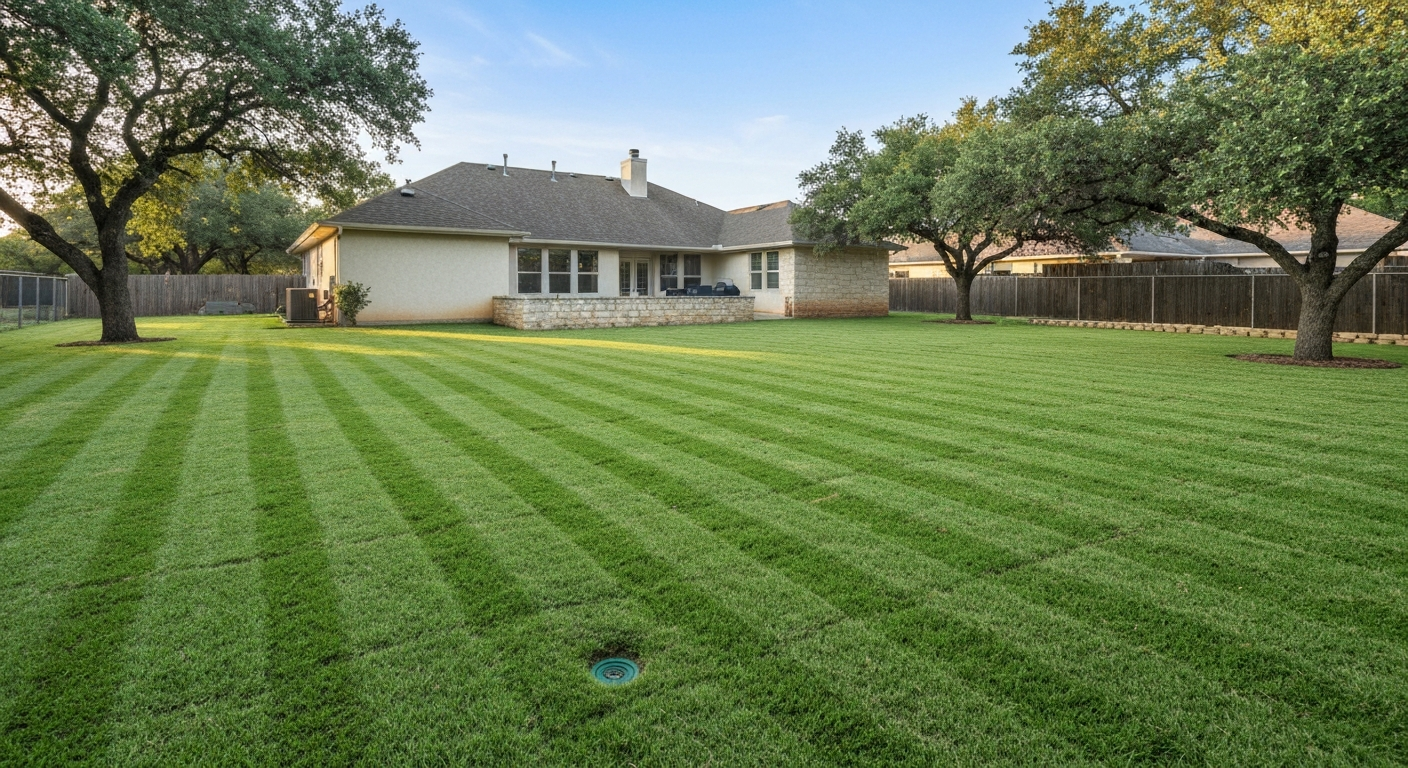
Growing grass heads can mean two very different things: establishing a real lawn from seed, or filling a stocking with potting mix and ryegrass seed to make a quirky little doll that sprouts hair in about a week. Both are genuinely satisfying projects, and both follow the same basic logic: right seed, right temperature, consistent moisture. This guide covers both, with enough detail on species selection, soil prep, and timing so you can actually pull it off the first time.
How to Grow Grass Heads: Lawn Repair, Care & Quick DIY Steps
Marcus Tillwell
22 Jul 2026
What are grass heads, exactly?
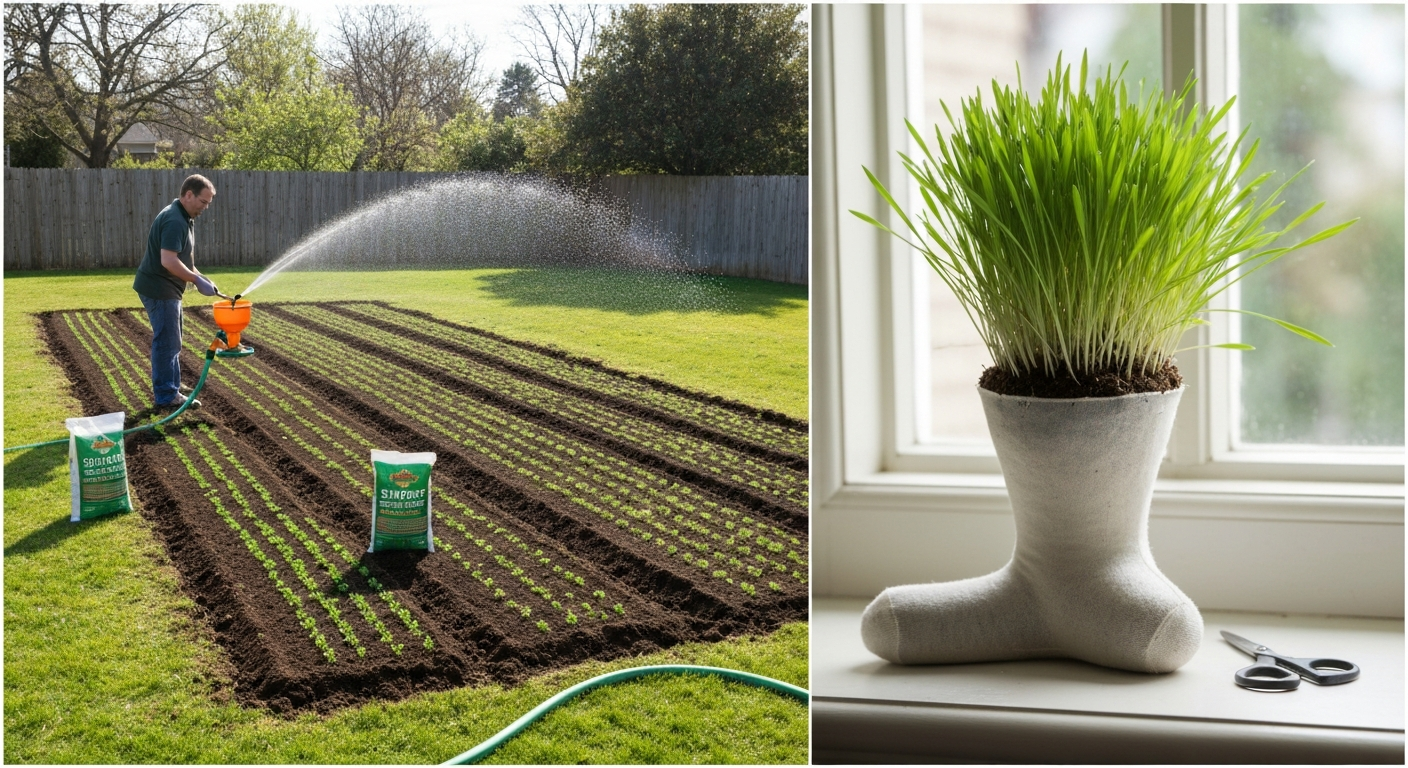
The term 'grass head' gets used two ways. In lawn care, it loosely describes the goal of growing a dense, healthy stand of grass from seed, whether you are starting from bare dirt or patching a tired lawn. In the craft world, a grass head is a small DIY toy: a nylon stocking or old sock stuffed with grass seed and growing medium, shaped into a head, and left on a sunny windowsill to sprout. If you landed here looking for the craft version, scroll ahead to the step-by-step DIY section. If you want a real lawn, start here and read through. Either way, the seed science is the same and this article will give you what you need.
Decide your goal before you buy a single bag of seed
The biggest mistake homeowners make is buying seed at the hardware store without knowing what they are actually trying to accomplish. The approach is completely different depending on whether you are establishing a new lawn from scratch, repairing bare spots, overseeding a thin but living lawn, or doing a quick craft project. Here is how each situation plays out.
- Full lawn establishment: You are working with bare or near-bare soil. This requires the most site preparation — grading, tilling, amending, and the highest seed rates. Budget the most time and water.
- Overseed an existing lawn: Grass is alive but thin. You are adding seed on top of existing turf to thicken density. Lower seed rates, less prep, but timing is critical.
- Patch repair (bare spots): Localized dead zones caused by pets, foot traffic, drought, or disease. Small-scale prep, targeted seeding, and consistent moisture until the patch fills.
- Plugs or sod: Skip seeding altogether. Plugs are small squares or rounds of living turf planted at intervals — Zoysia plugs are commonly spaced 6 inches on center. Sod gives instant coverage. Both cost more but remove the germination gamble.
- Craft grass head: Tabletop or countertop project using ryegrass seed in a stocking. No soil prep, no outdoor timing windows. Takes about 7 to 14 days from setup to 'hair' you can trim.
Getting clear on which category you are in will save you money and prevent the frustration of using the wrong seed, the wrong rate, or the wrong timing. If you are trying to grow grass specifically for Easter baskets, the craft approach with fast-germinating ryegrass is the right path.
Pick the right grass for where you live
There is no single 'best' grass seed. The right choice depends almost entirely on your climate zone and how much sun your lawn gets. The United States splits roughly into warm-season territory (Southeast, Gulf Coast, Southwest) and cool-season territory (Northeast, Midwest, Pacific Northwest). Transition zone states like North Carolina, Tennessee, Kansas, and northern Texas can use either, though it gets complicated. Here is a quick breakdown of the four main options.
| Grass Type | Season | Best Climate | Germination (days) | Shade Tolerance | Drought Tolerance | Common Use |
|---|---|---|---|---|---|---|
| Bermudagrass | Warm | Southeast, Southwest | 7–14 | Poor | Excellent | Full-sun lawns, athletic fields |
| Zoysiagrass | Warm | Southeast, Transition Zone | Slow (often plugs) | Moderate | Good | Low-maintenance lawns, plugs/sod |
| Tall Fescue | Cool | Northeast, Midwest, Transition | 7–21 | Good | Moderate | Home lawns, shady yards |
| Perennial Ryegrass | Cool | Northeast, Pacific Northwest, overseed | 5–10 | Moderate | Low | Quick repair, overseeding, craft heads |
Bermudagrass
Bermuda is the workhorse of warm-season lawns. It germinates in 7 to 14 days once soil temperatures hit at least 65°F, and it goes dormant and turns tan when temperatures drop in fall. Plant it shallow, no deeper than a quarter inch, and make sure the seedbed is firm so seed makes real contact with the soil. If you push the seed too deep, germination rates drop dramatically. Bermuda is not for shady yards, it needs full sun to thrive.
Zoysiagrass
Zoysia is beautiful, dense, fine-textured, relatively drought-tolerant once established, but it is slow. Seeded Zoysia (mostly Zoysia japonica) needs frequent, light irrigation during germination and takes considerably longer than Bermuda to fill in. That is exactly why most people skip seeding altogether and go with plugs or sod. If you do seed Zoysia, plan on a seeding rate of 1 to 2 lb per 1,000 sq ft, but set realistic expectations: the lawn will not look full for at least a season.
Tall Fescue
Turf-type tall fescue is the backbone of cool-season home lawns across the Northeast and Midwest. It germinates in 7 to 21 days, tolerates shade better than Bermuda, and handles moderate drought once established. The seeding rates are higher than warm-season grasses: expect to use 5 to 8 lb per 1,000 sq ft for new stands, and 4 to 6 lb per 1,000 for overseeding into an existing lawn. Tall Fescue, Iowa State Extension (seeding rates) gives similar recommendations: 5–8 lb per 1,000 sq ft for new lawns and 4–6 lb per 1,000 for overseeding Tall Fescue — Iowa State Extension (seeding rates). If your yard has trees and struggles with shade, tall fescue is usually your best shot at a real lawn.
Perennial Ryegrass
Perennial ryegrass is the speed champion: under warm, moist conditions it can sprout in as few as 5 days. This makes it the go-to for fast repairs, winter overseeding of Bermuda lawns, and craft grass heads. The trade-off is durability, it does not handle extreme heat or extended drought. For overseeding, apply 5 to 10 lb per 1,000 sq ft depending on how sparse the existing turf is. For a craft grass head, a small pinch of seed is all you need.
Reading a seed bag: blends, certified seed, and what the numbers mean
Seed bags are honestly confusing if you have never looked closely at the label. There are a few things you need to pay attention to before you pull out your wallet.
Every seed tag lists purity percentage, germination percentage, and inert or weed seed content. The number that actually matters is Pure Live Seed, or PLS. You calculate it by multiplying the purity percentage by the germination percentage and dividing by 100. So if a bag reads 92% purity and 80% germination, the PLS is 73.6%. That means roughly 26% of what you are buying is either dead seed or inert material. To figure out how much bag seed to actually apply, divide the recommended PLS rate by that decimal. Extension example: if PLS = 74% (92% purity × 80% germination), multiply the recommended PLS seeding rate by (100/74 ≈ 1.35) to convert to bulk pounds to apply from the bag (Understanding a Turfgrass Seed Label, UMass Amherst) Understanding a Turfgrass Seed Label — UMass Amherst (Turf fact sheet). Using the example above, if you need 5 lb of PLS per 1,000 sq ft, you actually need to spread about 6.8 lb of bagged seed. This matters more than most people realize and explains why under-seeded lawns come in spotty.
Certified seed has been tested and verified to meet state standards for purity, germination, and variety trueness. It costs a bit more but is worth it, especially for named turf-type cultivars. Blends (multiple varieties of the same species) and mixtures (more than one species) offer some insurance against disease or stress, but for most home lawns, a quality single-species product works fine. Avoid bags labeled 'common' for Bermuda or Zoysia if you want a real lawn, those are lower-quality varieties with uneven germination and appearance.
| Grass Type | New Lawn Rate (lb/1,000 sq ft) | Overseed Rate (lb/1,000 sq ft) |
|---|---|---|
| Tall Fescue | 5–8 | 4–6 |
| Perennial Ryegrass | 5–10 (overseed) | 5–10 |
| Bermudagrass (seeded turf types) | 0.5–2 | 0.5–1 |
| Zoysiagrass (seed) | 1–2 | Plugs preferred |
When to plant: timing windows by climate
Timing is the single factor most homeowners get wrong. Planting too early or too late almost guarantees a poor stand, no matter how good your seed is.
Warm-season grasses (Bermuda, Zoysia)
Both Bermuda and Zoysia need soil temperatures above 65°F before germination is reliable. In practical terms, that means planting from roughly late March through early July in most of the Southeast and South, and into late spring in transition-zone states. A general planting window of March 1 through July 1 is a reasonable starting point for temperate U.S. climates, but check your local extension office for region-specific dates. Trying to push Bermuda seed into the ground in early March in Tennessee is a waste of seed, it will just sit there until the soil warms up, and in the meantime birds and rain will scatter it.
Cool-season grasses (Tall Fescue, Perennial Ryegrass)
Late summer to early fall is the best window for cool-season grasses across the Northeast, Midwest, and Pacific Northwest. You want the 2-inch soil temperature to be falling through the 50 to 65°F range, with enough time before the first hard frost for seedlings to establish, at minimum 45 days before average first frost. In most of these regions, that means seeding from mid-August through mid-September. Spring seeding of cool-season grasses works but is second-best: summer heat arrives before roots are deep enough to handle stress, and weed competition is fierce. If you are overseeding Bermuda with ryegrass for winter color (a common practice in the South), seed in early fall when the Bermuda starts to slow down.
Soil testing and preparation: what you need to know before you dig
I will be honest with you: most people skip soil testing and their lawns pay for it for years. A soil test is not complicated or expensive. You collect small cores from 8 to 10 spots across your lawn at 0 to 4 inches depth, mix them together, and send the combined sample to your state university's soil testing lab. Most charge $10 to $20. What you get back is pH, phosphorus, potassium, organic matter levels, and a specific lime recommendation. That information tells you exactly what your soil needs, no guessing.
Most turf grasses perform best at a soil pH between 6.0 and 7.0. Outside that range, nutrients become less available to roots even if you have applied plenty of fertilizer. If your pH is below 6.0, lime will raise it. If it is above 7.5, sulfur can bring it down, though high-pH soils are less common in most of the country.
Clay soil
Clay holds water and nutrients well but compacts easily, drains poorly, and makes it hard for grass roots to penetrate. If your soil stays wet for days after rain, or if you can roll a ribbon of it between your fingers when moist, you have clay. Core aeration (pulling actual plugs of soil out of the ground) is the most practical fix you can do yourself, and doing it before seeding gives seed channels to fall into and roots room to grow. Leave the plugs on the surface, they break down and topdress the lawn naturally.
Sandy soil
Sandy soil is the opposite problem: it drains so fast that moisture and nutrients flush through before roots can use them. New seedlings in sand dry out between waterings in a matter of hours on a warm day. Adding organic matter is the most effective long-term fix. Compost worked into the top 3 to 4 inches before seeding improves water retention significantly.
Soil amendments: compost, lime, gypsum, and sand
There is a lot of conflicting advice online about what to add to your soil. Here is a straightforward breakdown of when each amendment actually helps.
| Amendment | When to use it | When NOT to use it | How much (general) |
|---|---|---|---|
| Compost | Any soil type, especially sandy or depleted soils; improves structure and organic matter | Not a substitute for lime if pH is low | 1–2 inches worked into top 4 inches before seeding |
| Lime (calcitic or dolomitic) | Soil pH below 6.0; apply per lab recommendation | Do not apply without a soil test — over-liming is a real problem | Per test result, often 25–50 lb/1,000 sq ft for moderate correction |
| Gypsum (calcium sulfate) | Helps loosen compacted clay, adds calcium without changing pH | Does not raise pH; not a lime substitute | 20–40 lb/1,000 sq ft; most useful on heavy clay |
| Coarse sand | Improving drainage in isolated areas like high-traffic paths | Do not add small amounts to clay — it can make concrete-like conditions | Only effective in large quantities (50%+ volume); better to use compost |
One thing worth repeating: do not dump a bag of sand onto clay soil and call it drainage improvement. Unless you are adding enough sand to fundamentally change the texture (we are talking about at least half the volume), you can actually make drainage worse. Compost is almost always the safer, more effective choice for improving both clay and sandy soils.
Step-by-step: establish a new lawn from seed
This is the part where a lot of lawn guides get vague. Here is a concrete checklist you can actually follow, from bare dirt to growing grass.
- Get a soil test. Send samples to your state extension lab at least 4 to 6 weeks before your planned seeding date so you have time to apply lime if needed. Lime takes 2 to 3 months to fully adjust pH, so earlier is better.
- Remove debris and existing weeds. Kill persistent weeds with a non-selective herbicide like glyphosate, wait 7 to 10 days, then remove dead material. Do not skip this — live weed competition is one of the top reasons new lawns fail.
- Grade the area. Fill low spots and create a gentle slope away from your foundation (about 1 to 2% grade). Rake smooth. This step prevents future puddling and uneven germination.
- Till or aerate. For new lawns, till the top 4 to 6 inches to break up compaction. For overseed or patch repairs on existing lawns, core aerate instead to avoid destroying living turf.
- Work in amendments. Apply compost, lime, or other amendments based on your soil test results. Rake into the loosened top layer. If using starter fertilizer (higher phosphorus), incorporate it now — 0.5 to 1.0 lb actual nitrogen per 1,000 sq ft is a common guideline.
- Firm the seedbed. Use a lawn roller or simply walk across the area to remove air pockets. The seedbed should feel firm under your feet, not spongy. This is non-negotiable for Bermuda, which must be planted no deeper than a quarter inch.
- Apply seed at the correct rate. Use a drop spreader or broadcast spreader calibrated for your seed type. Apply half the seed in one direction and half perpendicular to it for even coverage. See the rates in the table above.
- Rake lightly. Drag a leaf rake gently over the surface to set seed into the top quarter inch of soil. For Bermuda especially, you want seed-to-soil contact, not seed buried under loose material.
- Mulch lightly (optional but helpful). A thin layer of weed-free straw (not hay — hay has weed seeds) helps retain moisture, especially on slopes. You should be able to see the soil through it.
- Water immediately and consistently. Water gently until the top inch of soil is moist. For the first 2 to 3 weeks, the goal is to keep the top half inch of soil consistently moist — multiple short waterings per day in hot weather. Do not let the seedbed dry out before germination. After germination, gradually transition to deeper, less frequent watering to encourage deep root growth.
- Hold off on mowing until grass reaches the correct height. Mow tall fescue first at 3 to 4 inches when seedlings hit about 4.5 to 5 inches. Never remove more than one-third of the blade at once. Bermuda can be mowed at 1.5 to 2 inches once it reaches 2.5 to 3 inches.
- Avoid herbicides until the stand is established. Most pre-emergent herbicides will prevent grass seed from germinating. Post-emergent broadleaf herbicides should wait until the lawn has been mowed at least 2 to 3 times.
- Apply follow-up fertilizer at 6 to 8 weeks. After the seedlings are established, apply a balanced fertilizer to support continued growth. Follow your soil test recommendations for specific nutrient needs.
Watering, mowing, and fertilizing after germination
The post-germination phase is where most homeowners accidentally wreck a lawn that was on track. Once you see consistent coverage, transition your watering from frequent-and-shallow to infrequent-and-deep. You want to encourage roots to chase moisture downward, not stay near the surface. For established turf, watering once or twice a week to a depth of about 6 inches is the goal. A tuna can set on the lawn makes a simple rain gauge, 1 inch of water per week (including rainfall) is a reasonable target for most grasses.
Mowing height matters more than most people think. Cutting too short (called scalping) stresses the plant, reduces root depth, and invites weeds. Tall fescue should be kept at 3 to 4 inches, Bermuda at 1 to 2 inches, and Zoysia at 0.5 to 1.5 inches depending on the cultivar. Keep your mower blades sharp, torn grass blades invite disease.
Troubleshooting common problems
Bare spots that won't fill in
Persistent bare spots usually have a cause that has not been addressed: compacted soil, low-hanging tree roots, recurring pet urine, or poor drainage. Seeding over the same bare spot repeatedly without fixing the root cause is a waste of seed. Investigate first. If it is a pet traffic area, use a seed blend marketed for high-traffic lawns (perennial ryegrass mixed into fescue works well) and consider reseeding after training pets to use a different area.
Shade areas
If you are fighting a shaded area under trees, tall fescue is your best seeded option in cool-season regions. Fine fescues (creeping red, chewings) actually outperform tall fescue in dense shade and are worth blending in. Bermuda simply does not work in shade, if your yard is heavily wooded and you are in the South, consider ground covers or mulch in those spots instead of fighting the grass battle. No amount of seeding will fix a grass problem caused by too little light.
Seed not germinating
If you planted two or three weeks ago and see almost nothing, run through this checklist: Was the soil temperature high enough? (Check with a soil thermometer, not the air temperature.) Was the seedbed kept consistently moist? Did a crust form on the soil surface preventing emergence? Was the seed planted too deep? Did birds eat the exposed seed? Most of the time, failure to germinate is a moisture or temperature problem, not bad seed.
Clay soil that stays waterlogged
If water pools for more than 24 to 48 hours after rain, core aerate in two passes (perpendicular directions), topdress with compost, and consider whether a French drain or grading adjustment is needed for severe low spots. Gypsum applied at 20 to 40 lb per 1,000 sq ft helps loosen clay structure over time without affecting pH, and is a good annual addition for heavy-clay lawns.
DIY grass head: the craft version
If you are here for the sock-and-seed craft project, here is exactly how to do it. This is a genuinely fun project for kids and takes about 10 minutes to set up. Perennial or annual ryegrass is the right seed choice because it sprouts in 5 to 10 days, fast enough to keep kids (and adults) interested.
- Pour about 1 to 2 tablespoons of grass seed into the toe of a nylon stocking or old pantyhose leg.
- Fill the rest of the stocking with potting mix or peat-based growing medium until you have a ball roughly the size of a tennis ball. Tie the stocking closed at the top.
- Shape the ball into a head. Squeeze and manipulate it to form a rounded shape. You can pinch and tie small sections with thread to form a nose.
- Set the head in a small container or jar with the tied-off end up. Add water to the container so the bottom of the grass head just touches the water — it will wick moisture up.
- Place on a sunny windowsill. Keep the water topped up and mist the surface once a day.
- Grass sprouts (the 'hair') will emerge in 5 to 10 days. Once it reaches 2 to 3 inches, you can trim it with scissors to style it.
- Draw a face on the head with permanent marker after shaping, before the grass grows in, so you can see where to position the eyes relative to the 'hair' direction.
For Easter basket grass, the same ryegrass seed works well planted in shallow containers or cut-down cardboard tubes filled with moist potting mix. Plant 2 to 3 weeks before Easter, keep moist and in bright light, and you will have 3 to 4 inches of bright green grass ready for the basket. This is a close cousin to the grass head doll approach, just in a different container. If you want to explore other creative or themed grass-growing projects, the topics around angel grass and grass for Easter baskets go deeper on those specific variations. For a step-by-step tutorial on how to grow angel grass, see our guide on how to grow angel grass. If you want specific, step-by-step instructions on how to grow anima grass, see our guide on how to grow anima grass.
A note on what this guide does not cover
If you searched 'how to grow grasshoppers,' that is a different topic entirely, raising grasshoppers as feeder insects or for study is an insect-rearing project unrelated to lawn establishment or grass head crafts. This guide is focused on grass seed, turf establishment, and decorative grass-growing projects for homeowners. For grasshopper-specific content, that topic has its own dedicated guidance elsewhere.
FAQ
What are the first steps a homeowner should take before planting grass seed or repairing a lawn?
Start with a soil test (0–4 inch cores from several spots) to get pH and nutrient recommendations. Adjust pH to about 6.0–7.0 if needed (follow lab lime rates). Remove debris, kill or remove heavy thatch, and grade/firm the seedbed so seed has good contact. Choose the right grass species for your climate, sun exposure and use (see species-specific guidance). Decide whether you’ll overseed, patch, use plugs or lay sod based on budget, timeline and area size.
How do I choose between Bermuda, Zoysia, Fescue and Ryegrass for my lawn?
Match species to climate and use: - Bermudagrass: warm‑season, aggressive, best for full sun and high wear; seed germinates 7–14 days when soil ≥65°F. - Zoysiagrass: warm‑season, dense and drought‑tolerant but slow to establish; often done with plugs or sod rather than seed. - Tall fescue: cool‑season, good in transition zones and shade‑tolerant fescues exist; germinates 7–21 days; common new‑lawn seeding 5–8 lb/1,000 sq ft. - Perennial ryegrass: cool‑season, very fast establishment (5–10 days), used for quick cover or overseeding. Choose based on your USDA/college extension region and sun/shade patterns.
When is the best time to seed each species?
General timing: - Cool‑season grasses (fescue, perennial rye): late summer → early fall (soil temps falling through ~50–65°F); finish seeding about 45 days before average first frost. - Warm‑season grasses (Bermuda, Zoysia): when soil temps are consistently ≥65°F (spring → early summer in many regions). Adjust for your locality using your state extension seeding calendar.
How do I calculate how much seed to buy?
Use recommended PLS seeding rates (species and purpose): tall fescue new lawn 5–8 lb/1,000 sq ft; overseed fescue 4–6 lb/1,000; perennial rye 5–10 lb/1,000; bermuda 0.5–2 lb/1,000; zoysia 1–2 lb/1,000 (plugs/sod often preferred). Convert bag weight to Pure Live Seed (PLS) using label purity and germination: PLS% = (purity% × germination%)/100. Divide the recommended PLS pounds by (PLS%/100) to get bulk pounds to apply from the bag.
What are the correct seeding methods for full renovation, overseeding and spot repairs?
- Full renovation (new lawn): prepare seedbed, apply starter fertilizer if soil test indicates low P, spread seed at full recommended rate, lightly rake to ensure contact, roll or tamp, and mulch with light straw or erosion net in sloped areas. - Overseeding: mow lower, core aerate if compacted, seed at the lower overseed rate, ensure good seed‑soil contact, and keep surface moist. - Patch repair: for small bare spots, loosen soil, add topsoil or compost if needed, seed at a slightly higher local rate, press seed into soil, and protect with a light mulch. For larger bare areas consider plugs or sod for faster cover.
When should I choose plugs or sod instead of seed?
Choose plugs or sod when you need faster establishment, when seeded varieties are slow or low quality (zoysiagrass), for instant erosion control, or for heavily used areas. Sod gives instant cover; plugs are cheaper than full sod but take time to fill in (spacing commonly 6 inches for fast fill). Warm‑season grasses often use plugs or sod for reliable results.
Next Article
How to Grow Grass in San Antonio Texas: Step-by-Step Guide
How to grow grass in San Antonio: best turf choices, planting windows, soil prep, watering schedules and troubleshooting