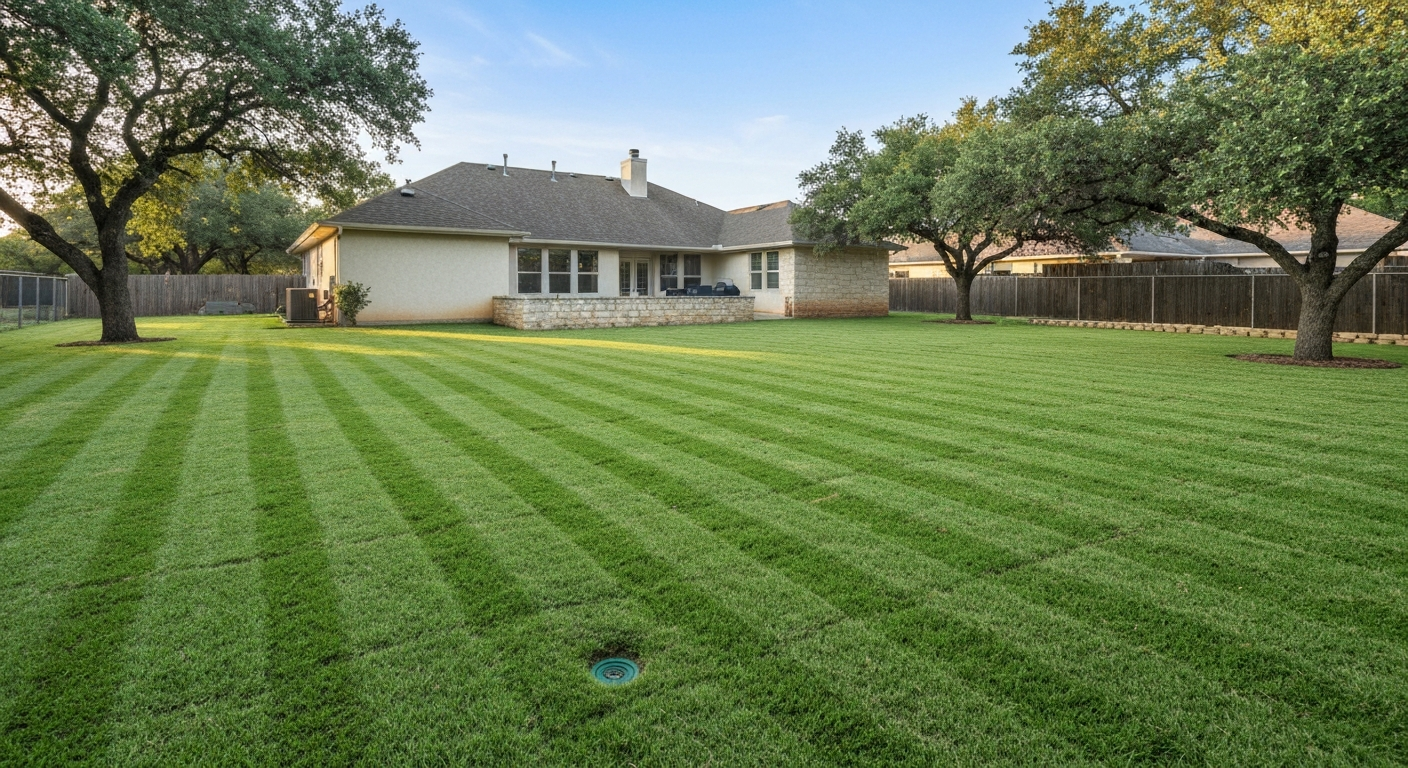
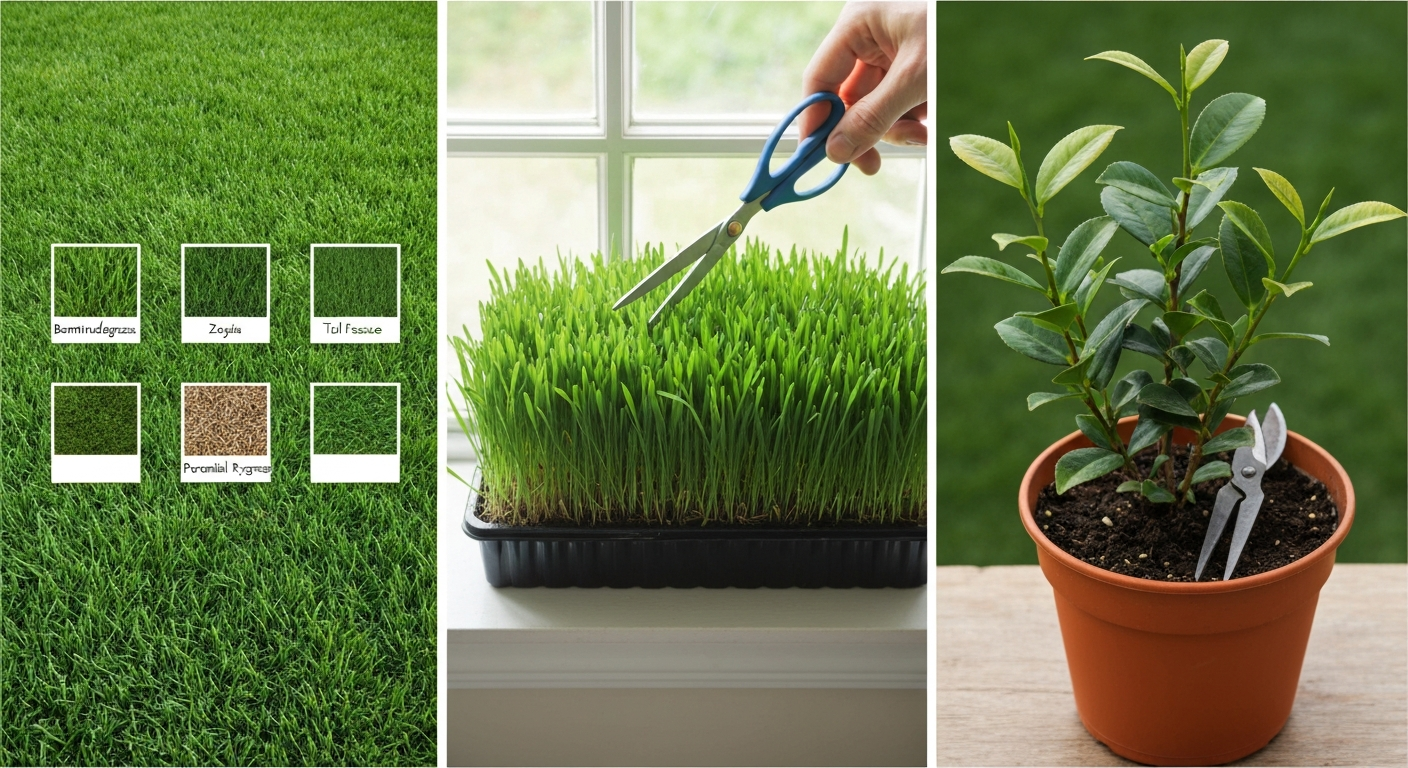
If you searched 'how to grow tea grass at home,' you probably mean one of three very different things: a lush home lawn (Bermuda, Zoysia, Fescue, or Ryegrass), a tray of wheatgrass for juicing, or the actual tea plant (Camellia sinensis) you brew into a cup. This guide tackles all three briefly, then goes deep on lawn grass, because that is almost certainly what most homeowners searching this phrase are after. You will find variety picks by climate, planting windows by region, seeding rates, germination timelines, soil testing steps, and honest troubleshooting for the spots where things go wrong.
How to Grow Tea Grass at Home: Complete Lawn Guide
Marcus Tillwell
8 Aug 2026
Which 'tea grass' do you actually mean?
The phrase 'tea grass' does not refer to one single plant. It shows up in at least three completely different contexts, and choosing the wrong guide will waste you a lot of time and money. Here is a quick breakdown so you can confirm you are in the right place.
Lawn grass (the most common intent)
Most people typing 'tea grass' into a search engine are looking for a grass variety they heard called that at a garden center or by a neighbor. In practice they are asking about common turfgrasses: Bermudagrass, Zoysia, Tall Fescue, or Perennial Ryegrass. That is exactly what the bulk of this guide covers. If this is you, keep reading.
Wheatgrass (for juicing or health shots)
Wheatgrass is the young shoot of common wheat (Triticum aestivum), harvested around 7 to 10 days after germination and cold-pressed into juice or used as a supplement. See Definition: Wheatgrass juice, NCI Drug Dictionary for an authoritative medical/dictionary definition distinguishing wheatgrass juice (young Triticum aestivum shoots cold‑pressed for supplements) from tea or tea‑plant products Definition: Wheatgrass juice — NCI Drug Dictionary. It has nothing to do with lawn care or the tea plant. Growing it at home is genuinely simple: fill a shallow tray with moist potting soil or coco coir, scatter pre-soaked wheat berries densely across the surface, keep them in indirect light, mist daily, and harvest with scissors at 6 to 8 inches. One 10x20 inch tray produces enough grass for a few shots per day. If wheatgrass growing is your goal, this lawn-focused guide is not the right fit.
Camellia sinensis (the actual tea plant)
Camellia sinensis is the slow-growing evergreen shrub whose leaves are processed into green tea, black tea, oolong, and white tea. It is not a grass at all. It can be grown outdoors in USDA zones 7 through 10 roughly, or in containers almost anywhere if you bring it inside during hard freezes. Plants take 3 to 5 years to produce a meaningful harvest. UF/IFAS and Washington State University extension offices both publish home-growing guides for it. Worth noting: in traditional Japanese tea farming, the term 'chagusaba' describes a tea-grass integrated system where grasses are grown alongside Camellia sinensis as mulching material, which may be another origin point for the 'tea grass' phrase. If Camellia sinensis is your goal, seek out a dedicated tea-plant cultivation guide, because the soil chemistry, pruning, and harvest protocols are entirely different from turfgrass establishment.
What this guide covers and how to use it
From this point forward, this guide focuses on establishing a real home lawn from seed, plugs, or sod using the four most widely grown turfgrass species in the U.S.: Bermudagrass, Zoysia, Tall Fescue, and Perennial Ryegrass. You will work through the guide in order if you are starting from bare soil, or jump to a specific section if you already know your grass type and just need a planting window or soil-prep checklist. Each section gives you concrete numbers, not vague advice, so you can shop for materials, plan your calendar, and know exactly what to expect at each stage.
At a glance: comparing the four main lawn grasses
Before you buy a single bag of seed, it helps to know what each grass type does well and where it struggles. The table below captures the most practically useful attributes for a homeowner making a decision.
| Grass | Climate fit | Shade tolerance | Drought tolerance | Traffic tolerance | Seeding difficulty | Time to full lawn |
|---|---|---|---|---|---|---|
| Bermudagrass | Warm-season (zones 7–10) | Poor (needs full sun) | Excellent | Excellent | Moderate (needs warm soil) | 1 full growing season from seed |
| Zoysia | Warm-season (zones 6–9) | Fair to moderate | Good | Excellent | Slow (14–21 days to germinate) | 1–3 seasons from seed/plugs |
| Tall Fescue | Cool-season (zones 4–7) | Good | Moderate (deep roots help) | Good | Easiest for beginners | 6–8 weeks to full cover |
| Perennial Ryegrass | Cool-season (zones 3–7) | Moderate | Poor | Good | Fastest germinator | 3–4 weeks to cover; not persistent in heat |
A few honest notes on that table: Bermuda goes completely dormant and turns tan in winter, which surprises a lot of first-time warm-climate homeowners. Zoysia is the slowest to establish from seed or plugs but once it fills in it is nearly bulletproof. Tall Fescue is the workhorse cool-season grass for the transition zone and upper South because it stays green in mild winters but tolerates summer heat better than bluegrass. Perennial Ryegrass germinates in as little as 5 days, which is why it is used for overseeding dormant Bermuda lawns in the fall, but it does not survive brutal summers on its own.
Warm-season vs. cool-season: matching grass to your climate and shade
The single biggest mistake homeowners make is planting a warm-season grass in a cool climate or vice versa. It will not kill you financially if you are seeding, but it wastes an entire season. Use the USDA 2023 Plant Hardiness Zone Map (searchable by ZIP code) to confirm your zone, then apply this basic rule: if your winters regularly drop below 10°F (zone 6 and colder), plant cool-season grasses. If your summers are long and hot with mild winters (zones 8 to 10 roughly), plant warm-season grasses. The transition zone, stretching from roughly northern North Carolina through Kansas and into southern California's interior, is genuinely tricky, and Tall Fescue or Zoysia tend to be the most reliable choices there because both handle the extremes better than Kentucky Bluegrass or Bermuda at the northern and southern edges respectively.
Shade is the other variable that overrides everything else. If your yard gets fewer than 4 hours of direct sun per day, Bermudagrass is not a realistic option regardless of your climate zone. Tall Fescue is the most shade-tolerant seeded option among the four grasses here, performing acceptably in 4 to 6 hours of sun. Zoysia (particularly cultivars like 'Emerald' and 'Cavalier') handles moderate shade. If your property is heavily shaded, the honest answer is that ground covers or mulch may serve you better than any turfgrass. For more ideas on low-light grass establishment, the topic of how to grow grass at home for decoration covers some ornamental and low-maintenance alternatives worth reading.
Climate fit by region (quick reference)
- Pacific Northwest and upper Northeast (zones 5–6, humid continental or oceanic): Tall Fescue and Perennial Ryegrass. Cool wet springs are ideal for germination.
- Southeast and Gulf Coast (zones 8–10, humid subtropical): Bermudagrass or Zoysia. Do not waste time on Fescue south of Atlanta in full sun.
- Midwest and Great Plains (zones 5–7, continental): Tall Fescue or Kentucky Bluegrass in the north; Zoysia or Bermuda where summers are reliably long and hot.
- Transition zone (roughly zones 6–7, from Virginia to Kansas): Tall Fescue is the most dependable single-species choice. Zoysia is a strong second.
- Southwest and Southern California (zones 8–11, arid/Mediterranean): Bermudagrass with supplemental irrigation. Fine Fescue mixes in coastal and cooler inland areas.
- Mountain West (zones 4–6 depending on elevation): Cool-season mixes including Tall Fescue and Perennial Ryegrass. Bermuda will not survive most winters above 5,000 feet.
Regional planting windows by grass type
Timing is everything with grass seed. The soil temperature targets matter more than the calendar date, but the calendar is a useful starting point. Warm-season grasses need soil consistently at or above 65°F for reliable germination. Cool-season grasses thrive with soil temperatures between 50 and 65°F. NOAA's 30-year climate normals and local cooperative extension offices are the most reliable references for your specific area. The table below gives general windows by region and grass type.
| Grass type | Best planting season | Approx. soil temp target | Typical germination window | When to expect full cover |
|---|---|---|---|---|
| Bermudagrass (seed) | Late spring to early summer (May–June in most of zones 7–9) | ≥65°F | 7–21+ days | 1 full growing season (end of first summer) |
| Zoysia (seed or plugs) | Late spring (May–June, zones 6–9) | ≥65°F | 14–21 days to germinate; plugs spread through summer | 1–3 growing seasons |
| Tall Fescue (seed) | Early fall (late Aug–Oct, zones 4–7) or early spring | 50–65°F | 7–14 days | 6–8 weeks from fall seeding |
| Perennial Ryegrass (seed) | Fall preferred (Sep–Oct) or early spring | 50–65°F | 5–10 days | 3–4 weeks to visible cover |
For cool-season grasses, fall is almost always the better planting window over spring. Here is the honest reason: when you seed Tall Fescue in September or October, the seedlings push roots through the mild fall, survive winter as small but established plants, and hit their first spring already rooted in. Spring-seeded cool-season lawns face a race against rising summer heat that often ends with thin or dead turf. Fall seeding wins almost every time in zones 4 through 7. For warm-season grasses, the opposite is true: plant in late spring after the last frost risk has passed and soil has genuinely warmed. Seeding Bermuda into cool soil is one of the most common and costly mistakes I have seen homeowners repeat.
Seed vs. plugs vs. sod: which method is right for you
There is no universally right answer here. The best method depends on your budget, your timeline, your grass species, and honestly how much physical work you want to do on a hot afternoon. Here is a real comparison to help you decide.
| Method | Material cost (approx.) | Labor | Time to usable lawn | Best for | Biggest drawback |
|---|---|---|---|---|---|
| Seed | Lowest ($0.05–$0.25/sq ft for most species) | Moderate (prep is the bulk of it) | 3 weeks (Ryegrass) to 1–3 seasons (Zoysia) | Budget-conscious; large areas; Tall Fescue, Ryegrass, Bermuda | Slowest; weeds can outcompete thin seedlings |
| Plugs/sprigs | Moderate ($0.30–$0.75/sq ft depending on species) | High (individual placement or sprigging) | 1 growing season (6–12" spacing) to fill | Bermudagrass, Zoysia where seed is unavailable or slow; budget over sod | Takes a full season; gaps invite weeds; not great for cool-season grasses |
| Sod | Highest ($0.50–$1.50/sq ft installed) | Low to moderate (laying is physical but fast) | 2–6 weeks to root; usable in days | Fast results; high-visibility areas; erosion control on slopes | Expensive; requires immediate and consistent irrigation; heavy to move |
My honest take: if you are growing Bermuda or Zoysia and want it fast, sod or plugs are worth the extra cost. If you are growing Tall Fescue over a large area (500 square feet or more), seed almost always makes more economic sense. Perennial Ryegrass is so fast and cheap to seed that buying sod for it is rarely justified. Plugs are the sweet spot for improved Zoysia varieties that simply do not seed well, like 'Emerald' or 'Meyer.' If you are curious about the no-soil-prep end of the spectrum, growing artificial grass is a completely different path that some homeowners in drought-prone zones find worth exploring.
What you need before you start: tools and materials checklist
The quantities below cover a 500 to 1,000 square foot area, which is a reasonable first project for a homeowner doing this without professional help. Scale up or down from there. I am separating the list by method because you will not need all of this for every approach.
Seeding (500–1,000 sq ft)
- Grass seed: Tall Fescue 3–8 lb; Perennial Ryegrass 3–9 lb; Bermudagrass 0.5–2 lb (PLS); Zoysia (Zenith) 0.5–2 lb. Always check the seed tag for Pure Live Seed percentage and adjust accordingly.
- Drop or rotary spreader (a $30 hand spreader works fine for 1,000 sq ft)
- Leaf rake or stiff-tine rake to scratch seed into soil surface
- Lawn roller (rental, $25–$40/day) to press seed into contact with soil
- Starter fertilizer (one 10–18 lb bag covers 1,000–5,000 sq ft; choose a low-nitrogen, high-phosphorus formula like 10-18-10)
- Straw or erosion-control blanket (1 bale covers roughly 500–800 sq ft; skip in shaded, low-wind areas)
- Hose with adjustable nozzle or oscillating sprinkler
- pH test kit or access to a mail-in soil test ($15–$20 through your state extension lab)
Plugging (500–1,000 sq ft)
- Grass plugs: at 6-inch spacing you need roughly 400 plugs per 100 sq ft (yes, this adds up — budget for 2,000–4,000 plugs for 500–1,000 sq ft or plan for 12-inch spacing and a longer fill time)
- Plug planting tool or bulb planter
- Wheelbarrow or flat cart for moving trays
- Starter fertilizer (same formula as seeding)
- Hose and soaker or sprinkler for twice-daily watering in the first two weeks
- Pre-emergent herbicide (apply before plugging if weed pressure is high; do not apply after, as it blocks rooting)
Sodding (500–1,000 sq ft)
- Sod: order 550–1,100 sq ft to account for cuts and waste (sod is sold by the square foot or pallet; a standard pallet covers roughly 450 sq ft)
- Sharp utility knife or sod cutter for trimming pieces
- Lawn roller (critical for sod — rental strongly recommended)
- Top-dressing mix or fine compost to fill gaps between sod pieces (one 40 lb bag per 200 sq ft)
- Starter fertilizer applied to soil before laying sod
- Irrigation: sod needs to be watered immediately after laying and kept consistently moist for 2–3 weeks
Soil testing: do this before you spend a dollar on seed
Soil testing is the step most homeowners skip and later regret. I skipped it once on a Tall Fescue project and got patchy germination I could not explain for three weeks. Turned out my soil pH was sitting at 5.2, well below the 6.0 to 7.0 range that cool-season grasses need for nutrient uptake. A $15 mail-in test from my state extension lab would have flagged that before I planted. Do not make the same mistake.
How to take and submit a soil sample
- Use a trowel or soil probe to collect 10 to 15 small plugs from across the planting area, going 4 to 6 inches deep each time.
- Mix all plugs together in a clean plastic bucket. Let the sample air-dry if it is wet.
- Fill the soil test bag (from your state extension office or local garden center) with roughly one cup of the mixed sample.
- Request the following tests: pH, buffer pH, available phosphorus (P), potassium (K), calcium (Ca), magnesium (Mg), organic matter (OM), and soil texture. Most standard extension tests include all of these for one fee.
- Mail the sample and wait 1 to 2 weeks for results. Many labs now email results with PDF recommendation sheets.
Reading your results and making amendments
Your results will come with a recommendation sheet tailored to the crop or turf type you specified. Here is how to interpret the most important numbers for lawn use.
| Measurement | Target range for lawn grasses | If too low | If too high |
|---|---|---|---|
| pH | 6.0–7.0 (most turfgrasses) | Apply ground limestone at the rate specified by lab (based on buffer pH and soil texture) | Apply elemental sulfur at lab-specified rate; note this takes months to work in cool soil |
| Phosphorus (P) | Medium to high (varies by lab scale) | Add starter fertilizer with phosphorus before seeding | No action needed; avoid high-P fertilizers |
| Potassium (K) | Medium to high | Add potassium sulfate or muriate of potash per lab recommendation | No action needed |
| Organic matter (OM) | 3–5% ideal for lawns | Incorporate 1–2 inches of compost into the top 4–6 inches before seeding | Rarely a problem; no action |
| Soil texture | Loam preferred; note clay or sand extremes | Sandy soil: add compost heavily. Clay soil: till in compost + coarse sand | N/A |
A practical note on lime: the lab will give you a pounds-per-1,000-square-feet number based on both your pH reading and your buffer pH (which accounts for how much your soil resists change). Do not just guess and dump lime. Too much lime raises pH past 7.5 and locks out iron and manganese, giving you a yellow lawn. Follow the lab number precisely. If you are working with clay soil, which is common in the Southeast and Midwest, plan to till amendments 4 to 6 inches deep before planting. Extension programs and NRCS-based guidance consistently point to a 4 to 6 inch workable rooting zone as the minimum for a seeded or sodded lawn to establish properly. A shallow layer of good soil over compacted subsoil will give you shallow roots and a lawn that stresses badly in summer.
Elemental sulfur is the tool for lowering pH, but be patient: it works slowly, taking several months in warm, biologically active soil, and even longer in cold or dry conditions. How To Change Your Soil's pH, Iowa State Extension provides lookup tables to compute lime or elemental sulfur rates from your soil test and texture, explains that elemental sulfur works slowly in warm biologically active soil, and shows lime recommendations based on buffer pH and soil texture How To Change Your Soil's pH — Iowa State Extension. If you need a faster short-term option, aluminum sulfate lowers pH more quickly but can build up to toxic levels if overused. For most lawns, lime or sulfur applied 4 to 8 weeks before seeding is the minimum lead time to see meaningful pH movement. If your test comes back with a pH that is only slightly off (say, 5.8 for a Fescue lawn), you can amend and seed at roughly the same time, with the understanding that germination may be marginally slower until the amendment takes hold.
Seeding rates and what to expect during germination
Once your soil is prepped and amended, seeding itself takes less than an hour for most homeowners. The key is matching your spreader setting to the target seeding rate and splitting the application: run half the seed in one direction, then the other half perpendicular to get even coverage. After spreading, rake lightly (less than a quarter inch depth), roll the area, apply starter fertilizer, and cover with a light straw mulch on slopes or in windy areas. Then water gently for 10 to 15 minutes twice a day until germination. Do not let the seed dry out during this window.
| Grass | Seeding rate (new lawn) | Days to first germination | Notes |
|---|---|---|---|
| Tall Fescue | 6–8 lb/1,000 sq ft | 7–14 days | Fall is strongly preferred; overseed thin areas at 3–4 lb/1,000 sq ft |
| Perennial Ryegrass | 5–9 lb/1,000 sq ft | 5–10 days | Fastest germinator; used for overseeding dormant Bermuda lawns in fall |
| Bermudagrass | 0.5–2.0 lb PLS/1,000 sq ft | 7–21+ days (needs warm soil ≥65°F) | Check seed tag for PLS; hulled seed germinates faster than unhulled |
| Zoysia (Zenith) | 1–2 lb/1,000 sq ft | 14–21 days | Very slow to fill even after germination; plugs often more practical |
If you hit day 21 and you are seeing almost nothing from Tall Fescue or Bermuda, the first things to check are soil temperature (get a $10 soil thermometer, not guesswork), moisture (the top half-inch should be consistently damp, not wet, not dry), and seed-to-soil contact. Seed sitting on top of loose thatch or dry crust will not germinate reliably. Rake the area lightly and overseed the thin sections. Germination failure is almost never about the seed itself. It is almost always about temperature, moisture, or poor contact.
Watering and care through establishment
The establishment phase is where most lawns are won or lost, and it comes down to watering discipline. For the first two weeks after seeding, water lightly and frequently: two short sessions per day (morning and late afternoon), 10 to 15 minutes each, keeping the top inch of soil moist but not waterlogged. Once seedlings reach about an inch tall, shift to one deeper watering per day. By week four (for cool-season grasses) or week six (for warm-season grasses), you should be watering less frequently but more deeply, pushing the roots downward. That transition, from surface moisture to deep watering, is what builds drought-tolerant turf rather than shallow-rooted grass that wilts at the first dry week.
Do not mow until seedlings reach 1.5 times your target mowing height. For Tall Fescue, that means waiting until it reaches about 4 to 4.5 inches before the first cut at 3 inches. For Bermuda, wait until it hits about 1.5 inches and mow to 1 inch. Mowing too early tears seedlings out by the roots rather than cutting them. Use a sharp blade, and keep the mower light (walk-behind preferred over heavy riding mowers) for the first several cuts.
Troubleshooting bare spots, clay soil, shade, and pets
Persistent bare spots
Bare spots that refuse to establish are usually one of three things: compacted soil under the surface, low pH or nutrient deficiency, or too much shade for the species you planted. Poke the bare area with a screwdriver. If it barely penetrates 2 inches, you have compaction. Core aerate or hand-till the spot to 4 to 6 inches, amend with compost, and reseed. If the surrounding grass is healthy but the bare spot persists, get a localized soil test for that area specifically.
Clay soil
Clay soil is not a disaster but it needs work before seeding. Till 2 inches of finished compost into the top 4 to 6 inches before planting. Clay's drainage problem means water pools, which promotes disease in seedlings. Avoid overwatering. If you are laying sod on clay, a thin (half-inch) layer of sand-free compost under the sod and a lawn roller after installation will help the roots penetrate the clay layer rather than sitting on top of it.
Sandy soil
Sandy soil drains so fast that seed can dry out within hours of watering, even when you think you have the schedule dialed in. Work 3 inches of compost into sandy soil before seeding, and consider a starter fertilizer with slow-release nitrogen to prevent nutrients from washing through. Water more frequently in smaller amounts during germination.
Shade
Under trees, two problems layer on top of each other: low light and surface roots competing with grass for water. Tall Fescue is your best bet in 4 to 6 hours of sun. Under 4 hours, no turfgrass will thrive long-term. Thin existing turf under trees with a rake, overseed heavily with Tall Fescue (6 to 8 lb per 1,000 sq ft), and expect to overseed the same area every fall to keep it looking decent.
Pets
Dog urine burns are a real and recurring problem, especially in cool-season lawns. The nitrogen concentration in urine creates localized over-fertilization. Water the affected spots immediately after your dog uses them to dilute the nitrogen. For persistent burn areas, reseed in fall with Tall Fescue (it recovers better than Ryegrass or Bermuda from repeated stress) and consider a low-traffic path or designated area for pets to redirect the pattern.
A note on mowing, fertilizing, and long-term care
Once your lawn is established, a few habits separate a lawn that looks good from one that requires constant repair. Mow at the high end of the recommended height range for your species: Tall Fescue at 3 to 4 inches, Bermuda at 0.5 to 1.5 inches, Zoysia at 0.5 to 2 inches, Perennial Ryegrass at 2 to 3 inches. Taller mowing shades the soil, retains moisture, and suppresses weeds. Fertilize based on soil test results rather than a fixed calendar. For most cool-season lawns, the most productive fertilizer application is in early fall (September), not spring. For warm-season grasses, fertilize through the active growing season (late spring through midsummer) and stop 6 weeks before the first expected frost to avoid pushing tender growth into a freeze.
If you are thinking beyond a basic lawn and want grass for specific decorative or niche purposes, the guide on how to grow grass at home for decoration covers some creative applications worth exploring alongside this one. For step-by-step shopping and product recommendations, see Home Depot's how to grow grass guide. For tips on achieving a plush, velvety lawn, see how to grow soft grass. If you need guidance on replicating the fine-texture, low-mow turf used on fairways and greens, see our how to grow golf course grass at home guide for species selection and ultra-fine maintenance tips. And if a perfectly uniform, low-maintenance surface without the seeding timeline is your priority, comparing this approach against how to grow artificial grass may help you decide if living turf is the right fit for your situation at all.
FAQ
What does “tea grass” mean and how should I clarify my intent before starting a project?
“Tea grass” is ambiguous. It can mean: (a) a lawn grass (e.g., bermudagrass, zoysia, tall fescue, ryegrass), (b) wheatgrass (Triticum sprouted shoots used for juicing), or (c) a tea‑plant (Camellia sinensis) used to make tea leaves. Decide which you mean before proceeding. For home lawns follow turf guidance below. For wheatgrass use indoor sprouting/juicing protocols. For growing Camellia sinensis, consult specialty tea‑plant guides (USDA zones ~7–10 outdoor; container culture extends range). Avoid the phrase “tea grass” in technical searches—use the species name instead.
Which grass species should I choose for my lawn: Bermuda, Zoysia, Tall Fescue or Ryegrass?
Match species to your climate, sun and use: - Warm‑season (Bermuda, Zoysia): best where soil temps are consistently ≥65°F and summers are hot (southern/transition zones). Good for full sun, high traffic. - Cool‑season (Tall fescue, Perennial ryegrass): best in cooler climates/transition and north where active growth is at soil ≈50–65°F; fescue tolerates some shade and heat‑patches better than ryegrass. Use USDA Plant Hardiness zones, Köppen climate bands, or local extension recommendations to pick species and cultivars. For shaded yards prefer fine fescues or shade‑tolerant tall fescues; for heavy traffic choose turf‑type tall fescue or improved bermuda varieties.
When is the best time to plant each grass type (regional planting windows)?
Planting windows by region/species: - Cool‑season (tall fescue, ryegrass): ideal seeding is early fall (late August–October) when soil is warm and air cooler; spring (March–May) is second option but weed competition is higher. - Warm‑season (bermuda, zoysia): seed or plug/sod in late spring to early summer when soil temps consistently ≥65°F (generally May–July in many regions). Check local last/first frost dates and NOAA 30‑year normals and use soil temperature measurements for best timing.
What soil tests and amendments do I need before establishing a lawn, and how much should I apply?
Get a complete lawn soil test (pH, buffer pH, P, K, Ca, Mg, organic matter, texture) via your county extension lab. Follow their pound/1,000 ft² lime or sulfur recommendations to reach the target pH (lab provides rates). Typical prep: 4–6 inches of workable topsoil, incorporate lab‑recommended lime/sulfur and starter fertilizer. Starter fertilizer often contains a balanced N‑P‑K (e.g., 10‑20‑10) applied at the label or extension recommended rate (commonly 0.5–1.0 lb actual N/1,000 ft² as a starter — follow product label and extension guidance). Never guess—use the lab’s numeric lime/sulfur table for correct application rates.
What are recommended seeding rates and expected germination timelines for each turf species?
Typical seeding rates (lb per 1,000 ft²) and germination: - Tall fescue (new lawn): 6–8 lb/1,000 ft²; germination 7–14 days. - Perennial ryegrass: 5–9 lb/1,000 ft²; germination 5–10 days. - Bermudagrass (seeded): 0.5–2.0 lb/1,000 ft² PLS; germination 7–21+ days (soil ≥65°F). - Zoysia (seeded types like ‘Zenith’): 1–2 lb/1,000 ft²; germination 14–21 days and 1–3 seasons to reach full density. Always check seed tag for purity/PLS and adjust rates accordingly; for sod/plugs follow supplier spacing and plug size guidance.
How do I prepare the site and sow seed, install plugs or lay sod (step‑by‑step materials and quantities)?
Site prep steps: 1) Clear vegetation, rocks and debris. 2) Grade for drainage and remove major clods. 3) Till or loosen top 4–6" of soil; amend with screened topsoil if needed. 4) Apply lime/sulfur per soil test and incorporate. 5) Broadcast seed at recommended rate (use a calibrated drop or broadcast spreader); lightly rake to ensure seed‑to‑soil contact, then roll or tamp. 6) For plugs/sprigs: space plugs 6–12" apart for zoysia/bermuda, press into holes and firm soil around each plug; for sprigs follow plug/sprig density guidance from supplier. 7) For sod: stagger seams, butt edges tightly, roll to ensure contact and water thoroughly. Materials: seed (rate above), starter fertilizer per label (see previous answer), 2–3 gallons/1,000 ft² of water per irrigation event during establishment (see watering schedule), seed spreader, rake, roller, topsoil as needed.
Next Article
How to Grow Grass in San Antonio Texas: Step-by-Step Guide
How to grow grass in San Antonio: best turf choices, planting windows, soil prep, watering schedules and troubleshooting