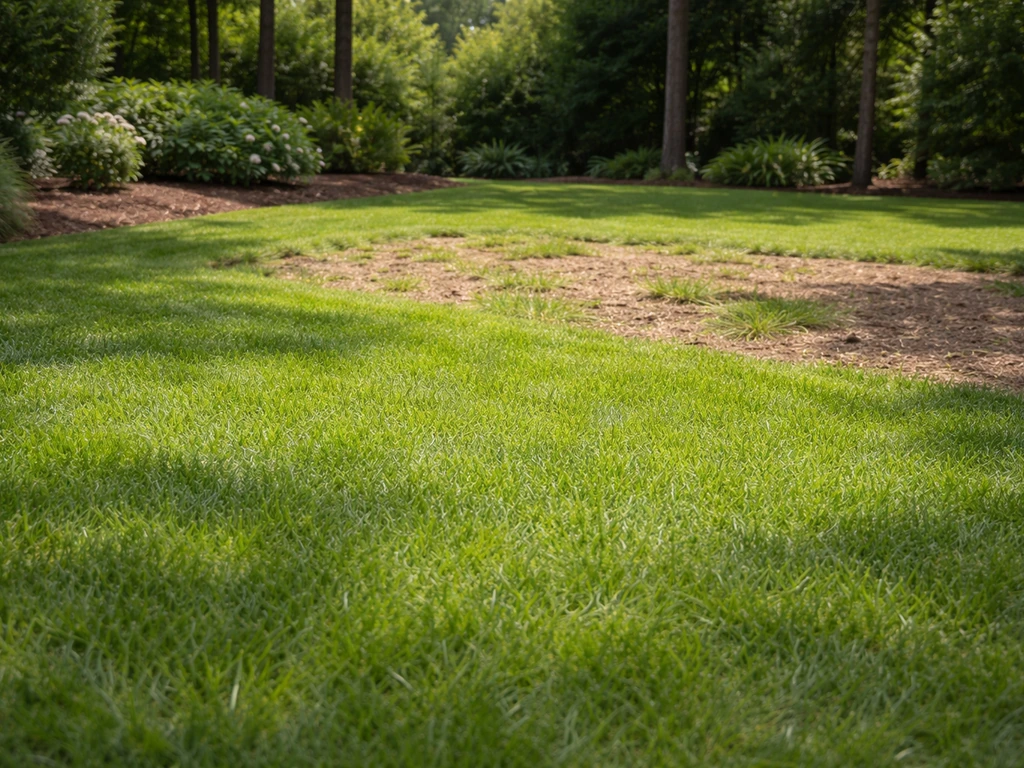
The best way to grow grass in New England is to seed cool-season species in late summer to early fall, roughly mid-August through mid-September, into well-prepared soil with a pH between 6.0 and 7.0. That single window gives your seed warm soil for fast germination, cooling air temperatures that favor root development over weed competition, and enough growing time before hard frost arrives. A blend of perennial ryegrass, Kentucky bluegrass, and fine or turf-type tall fescue, matched to your specific microclimate, coastal, inland, or northern, will outperform any single-species approach. Everything else in this guide builds on that foundation.
Best Way to Grow Grass in New England: Complete Guide
Marcus Tillwell
12 Jul 2026
The single best strategy for a New England lawn
If you only take one thing away from this article, make it this: seed in late summer, prepare your soil first, and choose a cool-season blend designed for your corner of the region. That is not generic advice. It is what every land-grant university extension across the six New England states, UMass, UMaine, UNH, UConn, URI, and UVM, agrees on after decades of regional turf trials.
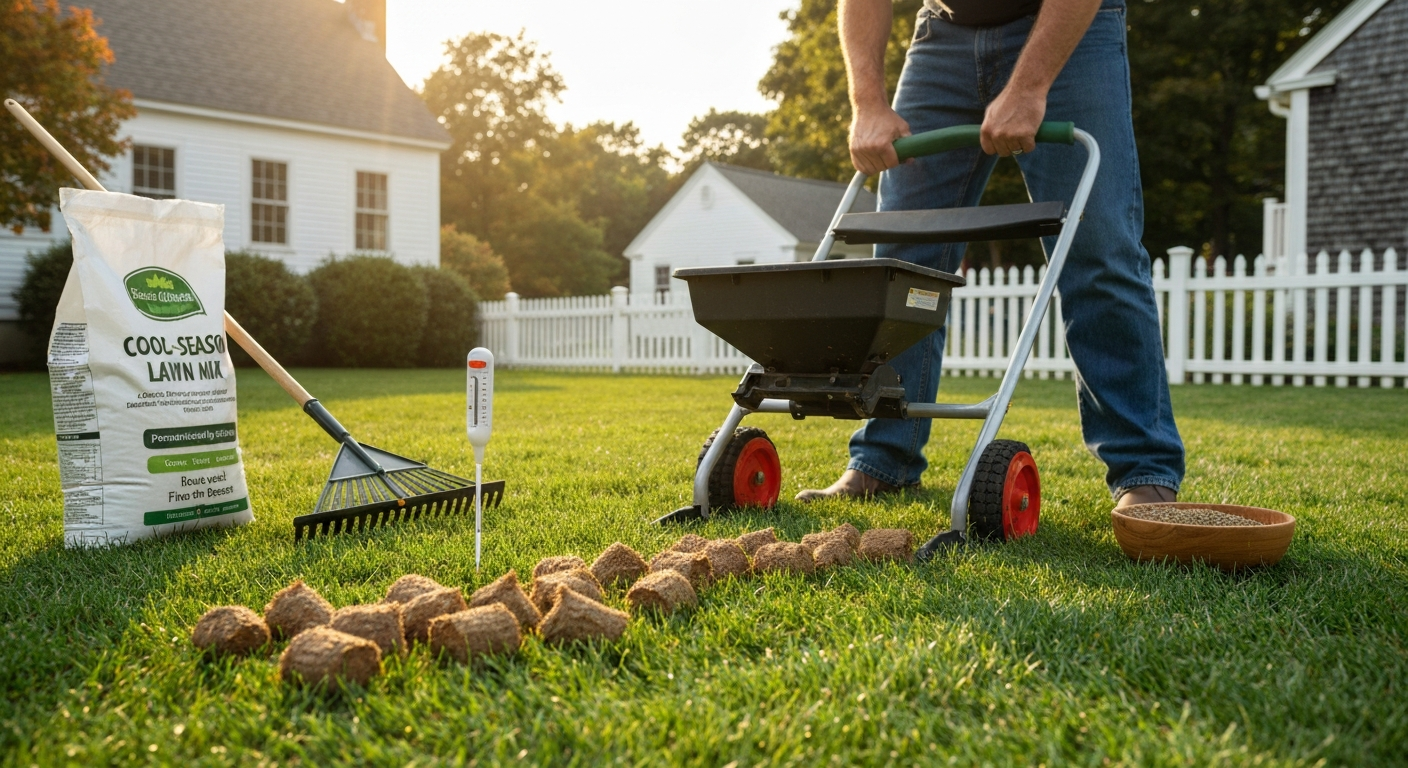
Here is the quick plan for a new lawn or full renovation. Test your soil in July so results come back with time to amend. Aerate and topdress with compost in late August. Seed between mid-August and mid-September. Water twice daily until germination, then taper off. Mow once grass reaches 3.5 to 4 inches, and apply a light starter fertilizer at seeding. That sequence works for 90 percent of New England homeowners, whether you are in the Merrimack Valley, the Connecticut shoreline, or the hills of Vermont.
For bare spot repairs or smaller patches, spring seeding from late April through early June is a workable backup plan, but expect more weed competition and more watering stress during summer heat. Fall is still the preferred approach even for small repairs if you can wait.
When to seed: the spring vs. fall debate
Every New England extension program lands on the same answer: fall, specifically the late summer to early fall window, is the best time to establish cool-season grass from seed. The reasoning is practical. Soil temperatures at a 2-inch depth are still warm enough, typically 55 to 70°F, to trigger fast germination. Air temperatures drop as grass establishes, which reduces the evaporation stress on seedlings. Annual weeds like crabgrass are finishing their cycle, so your new grass faces far less competition than it would in spring. And the grass has 6 to 8 weeks to develop a real root system before the ground freezes.
Spring seeding is not worthless. Late April through early June works reasonably well for overseeding thin lawns or patching small spots, especially if you have irrigation. The problem with spring seeding is that germinating grass runs straight into summer heat, drought stress, and crabgrass pressure just as it is trying to establish roots. That combination is hard on seedlings and is the most common reason people call me saying their lawn 'never took.' If you seed in spring and your soil is not consistently moist through June and July, expect thin, patchy results.
Seeding windows by New England region
| Region | Best Fall Window | Spring Backup Window | Notes |
|---|---|---|---|
| Southern CT, RI coast | Late Aug – early Oct | Late Apr – early Jun | Milder falls allow seeding into early October; spring irrigation critical |
| Central MA, central CT, inland RI | Mid-Aug – mid-Sep | Late Apr – late May | Fall window reliable; spring works if irrigated |
| NH, VT, western MA | Mid-Aug – early Sep | Late Apr – mid-May | Shorter fall window; aim to seed by Sept 10 for full establishment |
| Maine (central and northern) | Mid-Aug – mid-Sep | Mid-May – early Jun | Frost risk cuts fall window short; spring seeding more common here than elsewhere |
| Coastal ME, Cape Cod, coastal RI | Late Aug – late Sep | Late Apr – early Jun | Moderate maritime climate extends both windows slightly |
Soil temperature is a more reliable trigger than the calendar. The Cool‑Season Turfgrasses (Penn State Extension) notes that soil temperature, especially 2‑inch depth reaching about 50°F, with many cool‑season species germinating fastest in the mid‑60s°F and optimal bands varying up through the 70s–80s°F depending on species, is the most reliable trigger for germination. When the 2-inch soil temperature drops below 50°F, germination stalls. Check soil temperature with a cheap probe thermometer rather than guessing by date. UMaine Extension specifically recommends the mid-August through September window for Maine, while Rhode Island guidance extends the fall window to early October on the coast. If you are in northern Maine or the Northeast Kingdom of Vermont, treat September 1 through 10 as your reliable cutoff for fall seeding.
Seed vs. sod: which one makes sense for your situation
Seed is the right choice for most New England homeowners most of the time. It costs far less, usually 10 to 20 percent of what sod costs for the same area, gives you access to better-adapted cultivars in custom blends, and with proper timing produces excellent results within 60 to 90 days. The downside is that seed requires more patience and more consistent watering during germination, and you need to keep foot traffic off new seedlings for the first 4 to 6 weeks.
Sod makes sense in specific scenarios. If you have a severe erosion problem on a slope and cannot protect bare soil long enough for seed to establish, sod stops erosion immediately. If you need a functional lawn fast, for a home sale, an event, or a newly built home where the builder left bare dirt, sod gets you there in days rather than months. High-traffic areas that will be used heavily within a season are also candidates. The catch with sod is that it still requires excellent soil preparation, because poorly prepared soil under sod fails just as badly as it does under seed. Laying sod on compacted subgrade and calling it done is one of the most common expensive mistakes I see in New England.
Hire a professional when the scope or complexity exceeds DIY comfort. Full-lot grading, severe drainage problems, or lawns that require significant regrading to correct drainage all justify professional involvement. A licensed landscape contractor with turf experience, not just a mowing service, is worth it for those scenarios. For most repairs, overseeding, and even full renovations on flat or gently sloped lots, the DIY path is entirely achievable with the steps in this guide.
Which grass species actually work in New England
New England is cool-season grass territory, full stop. The region's winters and relatively short growing season rule out most warm-season grasses as anything more than curiosities. Here is an honest breakdown of what works and what does not.
The cool-season workhorses
Perennial ryegrass is the quick starter. It germinates in 5 to 10 days under good conditions, establishes fast, and provides visual cover while slower species fill in. Modern turf-type cultivars have improved disease resistance and finer texture compared to older varieties. Its limitation is that it is not as drought-tolerant or long-lived as the other species, and in severe winters without snow cover it can thin out in northern areas. It belongs in most New England blends as a component, typically 10 to 20 percent by weight, not as the whole lawn.
Kentucky bluegrass is the long-game species. Germination takes 14 to 30 or more days, which is agonizingly slow and one of the most common causes of homeowner panic. 'Nothing is happening' is usually just KBG doing its thing underground. It spreads by rhizomes, meaning it fills in gaps over time and recovers well from damage. It performs beautifully in central and southern New England but can struggle in the heavily shaded or very acidic soils common in northern areas. It also needs more fertility and water than fescues. Use it as 20 to 40 percent of a blend rather than as a monoculture.
Fine fescues (creeping red, chewings, hard, and sheep fescue) are the workhorses of shade and low-maintenance lawns. They tolerate shade, drought, poor soil, and acidic conditions better than KBG or ryegrass. Hard fescue and creeping red fescue are particularly good in northern New England where soils are naturally more acidic. In deep shade situations, a fine fescue blend is often the only seed that has a realistic shot.
Turf-type tall fescue fills a niche for inland and high-traffic areas. It germinates in 7 to 14 days, handles summer heat and drought better than the other cool-season species, and tolerates wear well. It grows as a clump rather than spreading, so renovation seeding of worn areas needs to be thorough. On hot, dry inland sites in Connecticut, central Massachusetts, and Rhode Island, adding 20 to 30 percent tall fescue to a blend measurably improves summer survival.
What about bermuda and zoysia?
Bermudagrass and zoysiagrass are warm-season grasses adapted to the Southeast and transition zone. They go dormant (turn brown) when soil temperatures drop below about 55°F, which in New England means they are brown from October through May in most areas. Bermuda also lacks the winter hardiness to survive reliably north of coastal Connecticut or Rhode Island, and even there it is marginal. Zoysia is slightly more cold-tolerant, and some homeowners in southern Connecticut or Rhode Island have had it persist, but the extended dormancy period makes it a poor choice for a region that prizes green turf for as much of the year as possible. Stick with cool-season species in New England.
Tailored seed blends and exact seeding rates for every part of New England
There is no single blend that works perfectly across six states with wildly different soils, elevations, and microclimates. The following formulas are based on UMaine and UMass extension seeding rate tables and regional trial data. All rates are in pounds of seed per 1,000 square feet for new seeding; reduce by about 40 to 50 percent for overseeding into existing turf.
| Region / Site Type | Recommended Blend | Seeding Rate (lbs/1,000 sq ft) | Notes |
|---|---|---|---|
| Coastal CT, RI, southern MA (sunny) | 40% KBG + 30% perennial ryegrass + 30% fine fescue | 3–3.5 | Ryegrass provides fast cover; KBG fills in over time |
| Inland CT, MA, RI (sunny, moderate traffic) | 30% KBG + 20% perennial ryegrass + 30% tall fescue + 20% fine fescue | 3.5–4 | Tall fescue adds heat and wear tolerance for drier summers |
| NH, VT, western MA (sunny) | 40% KBG + 30% fine fescue + 30% perennial ryegrass | 3–3.5 | KBG suits these cooler soils; fine fescue tolerates acidic conditions |
| Northern and central Maine (sunny) | 30% KBG + 40% fine fescue + 30% perennial ryegrass | 3–3.5 | Fine fescue emphasis for acid soils and shorter season |
| Shaded sites (all regions) | 60–70% fine fescue + 30–40% shade-tolerant KBG | 3–3.5 | See shade section below for species details |
| High-traffic inland sites (any region) | 50% tall fescue + 30% KBG + 20% perennial ryegrass | 5–6 | Higher rate compensates for tall fescue's bunch-type habit |
| 100% Kentucky bluegrass (if chosen alone) | 100% KBG | 1–1.5 | Slow establishment; only use solo if committing to premium KBG lawn |
| 100% Tall fescue (if chosen alone) | 100% turf-type tall fescue | 5–7 | Good for hot inland sites; needs overseeding of thin spots annually |
Always check the seed label for germination percentage and pure seed percentage. The rate on the bag assumes pure live seed (PLS). UMass Extension recommends converting bag-label rates to PLS before calculating how much seed to buy, and they provide a simple online calculator for this. To do it manually: PLS percentage = (pure seed % x germination %) divided by 100. If a bag is 90% pure seed and 85% germination, the PLS is 76.5%, meaning you need more seed than the label's simple rate suggests to hit your target.
For application, divide your total seed into two equal passes and spread at right angles to each other, one north-south, one east-west. This dramatically reduces striping and bare patches. A drop spreader works for small areas; a rotary spreader is faster for anything over 2,000 square feet. For large new lawn installations, a slit-seeder or seed drill gives you better seed-to-soil contact and higher germination rates than broadcast seeding alone.
Shade and problem microclimates: when it's tough to grow anything
Shade is the number one complaint I hear from New England homeowners, and for good reason. Dense tree canopy, north-facing slopes, and the shadows cast by houses and fences create conditions where even 'shade-tolerant' grass struggles. Being honest with yourself about light levels matters before you buy seed.
If a spot gets 3 to 4 hours of direct sun daily, you can establish grass with a fine fescue-dominant blend. Creeping red fescue, chewings fescue, and hard fescue are the most shade-tolerant grasses that will persist in New England. A mix labeled specifically as a 'shade blend' at your regional garden center will typically be 60 to 80 percent fine fescues, sometimes with a small percentage of shade-tolerant KBG cultivars, which is exactly what you want. Apply at 3 to 3.5 lbs per 1,000 square feet.
If a spot gets fewer than 3 hours of direct sun, accept reality: no grass species will thrive there long-term. You have two practical options. First, limb up trees to allow more light to penetrate, removing lower branches can convert a deep shade area to partial shade quickly. Second, convert to a shade-tolerant ground cover like pachysandra, hostas, or native ferns. Trying to force grass in deep shade means reseeding the same dead patches every year, which is frustrating and expensive.
Other problem microclimates worth planning for: low spots that hold water after rain are prone to waterlogging and disease; address drainage first (see the section below) before seeding. Areas under large Norway maples are particularly difficult because the trees produce allelopathic compounds and dense root competition that inhibit grass growth even with adequate light. Areas alongside driveways or roads that get salt spray in winter benefit from salt-tolerant species like hard fescue and turf-type tall fescue.
Step-by-step soil testing and what to do with the results
Skipping soil testing is the single most common DIY lawn mistake. Without a test, you are guessing at lime and fertilizer needs, and guessing usually means either over-applying (which can harm grass and waterways) or under-applying (which means your seed germinates into soil it cannot fully use). Testing costs between $15 and $30 at most New England land-grant labs, which is cheap insurance before spending money on seed and amendments.
How to take a proper soil sample
- Use a clean trowel, soil probe, or old kitchen knife. Avoid galvanized tools, which can contaminate zinc readings.
- Take 6 to 8 cores from random spots across the area you plan to seed. For a new lawn, sample from multiple representative spots, not just one corner.
- Sample to a depth of 3 to 4 inches for lawn areas (not deeper, which dilutes the root-zone reading).
- Combine all cores in a clean plastic bucket and mix thoroughly.
- Spread the mix on newspaper or a clean surface and let it air-dry for several hours. Do not use an oven.
- Fill a soil sample bag with roughly 1 cup of the dried, mixed soil.
- Submit to your state's land-grant soil lab: UConn Soil Nutrient Analysis Lab, UNH Cooperative Extension, UMass Soil Testing Lab, or the UMaine Analytical Lab, depending on your state.
- Request pH, buffer pH (also called lime requirement), available phosphorus and potassium, and organic matter. Most basic homeowner packages include all of these.
Reading the results and making amendments
The target soil pH for all cool-season turfgrasses in New England is 6.0 to 7.0. Perennial ryegrass prefers the upper end of that range, roughly 6.3 to 7.0. Most New England soils trend acidic (pH 5.0 to 6.0), especially in forested areas, under heavy tree canopy, and in Maine and Vermont where granite-based parent material naturally produces low pH. If your test comes back at pH 5.5, do not panic, but do lime.
Always follow the lime recommendation from your lab report, not a generic rate off the bag. The lab calculates a buffer pH lime requirement specific to your soil texture and organic matter. For established turf, do not exceed about 100 lbs of agricultural limestone per 1,000 square feet in a single application, and if the requirement is larger, split it into spring and fall applications over two years. For a new lawn that you are tilling or rototilling, you can incorporate larger amounts before seeding because you are working it into the soil profile.
For phosphorus and potassium deficiencies, follow the lab's fertilizer recommendation. At seeding, a starter fertilizer with a higher phosphorus number (the middle number on the bag, like 10-20-10) supports root establishment. Avoid high-nitrogen applications at seeding; they push top growth before roots develop and increase disease risk.
Improving challenging soils before you seed
New England soils vary dramatically. A sandy loam in coastal Rhode Island drains fast and needs organic matter to hold moisture. A heavy clay in the Connecticut River Valley compacts easily, drains poorly, and becomes a waterlogged mess in spring. The good news is that both problems respond to the same basic fix: add organic matter, improve structure, and seed into the improved surface. Here is how to handle each.
Clay soils: compaction and drainage fixes
If you push a screwdriver into your lawn and it stops at 2 to 3 inches, your soil is compacted. Core aeration is the most practical fix available to homeowners. Rent a hollow-tine core aerator (walk-behind models are widely available at equipment rental shops across New England) and run it over the lawn in late August or early September. Aim for plugs 2 to 3 inches deep and cores spaced 2 to 3 inches apart. Leave the plugs on the surface; they break down and return organic matter to the soil. Immediately after aeration, topdress with a quarter inch of finished compost worked across the surface with a broom or the back of a rake, then broadcast your seed directly into the aerated holes. The combination of open holes, compost, and seed is one of the highest-ROI renovation steps you can do.
For severe drainage problems in clay, such as areas that stay soggy for 48 or more hours after rain, surface aeration alone will not solve it. You may need to install a French drain or catch basin, which is worth a professional consultation. Seeding into a chronically wet area without addressing drainage results in moss, algae, and disease, not grass.
Sandy soils: moisture retention and organic matter
Sandy soils in coastal New England (Cape Cod, the Rhode Island coast, parts of southern New Hampshire) drain so quickly that seed dries out before it can germinate unless you water constantly. The fix is organic matter. Topdress with 1 to 2 inches of compost and rake it into the top 3 to 4 inches before seeding. This improves water retention, adds nutrients, and supports the microbial activity that healthy grass roots need. On very sandy soils you may need to water three times daily during germination instead of twice. A half-inch of straw mulch over the seeded area dramatically reduces moisture loss without blocking light, and it breaks down naturally so you do not need to remove it.
New construction: dealing with compacted subgrade
If you are seeding a lawn around a newly built home, the soil has almost certainly been graded with heavy equipment, stripping topsoil and compacting what remains. Do not seed directly onto construction subgrade. At minimum, spread 4 to 6 inches of quality loam (screened topsoil), lightly till the interface between new loam and existing subgrade so the layers do not delaminate, amend according to your soil test, and then seed. Skipping this step is the reason so many new construction lawns fail within two years.
Germination timelines and watering schedule
The single most important thing you can do after seeding is keep the top half inch of soil consistently moist until germination is complete. Seed that dries out mid-germination dies. Seed that sits in standing water rots. Moist but not saturated is the target.
| Species | Germination Time (days) | Optimal Soil Temp | Notes |
|---|---|---|---|
| Perennial ryegrass | 5–10 | 59–75°F | Fastest germinator; provides quick visible cover |
| Turf-type tall fescue | 7–14 | 60–75°F | Reliable mid-speed; more drought-tolerant once established |
| Kentucky bluegrass | 14–30+ | 59–86°F | Slow and often alarming; patience required, results are worth it |
| Fine fescue (creeping red, chewings) | 7–14 | 59–68°F | Similar to tall fescue; very consistent in cool conditions |
From seeding through first germination (days 1 through roughly 10 for ryegrass-heavy blends): water lightly twice daily, morning and late afternoon, applying about 0.1 to 0.15 inches per session. You are not deep-watering; you are keeping the surface film of moisture intact. Days 10 through 21: as ryegrass sprouts but KBG is still emerging, keep the twice-daily schedule. Do not assume you are done just because the ryegrass is up. Days 21 through 45: once most species have germinated and grass reaches 1.5 to 2 inches, shift to one deeper watering per day, about 0.25 inches, encouraging roots to chase water downward. After first mowing (when grass reaches 3.5 to 4 inches): water every other day or every third day depending on rainfall, applying 0.5 inches per session. By 6 to 8 weeks after seeding, a well-established new lawn in good soil needs about 1 inch of water per week from rain or irrigation, same as a mature lawn.
Troubleshooting: pets, bare spots, and common problems
Bare spots that refuse to fill in
Persistent bare spots almost always have an underlying cause that has not been addressed. The most common culprits in New England: soil pH below 5.5 (grass cannot take up nutrients), compaction from foot traffic or equipment, poor drainage in low spots, tree root competition, or shade below the grass threshold. Before reseeding a bare spot for the third time, dig down 4 inches with a trowel and look. Is the soil rock-hard? Bone-dry even after rain? Are you hitting a mat of tree roots? Each answer points to a different fix. Once the cause is addressed, scratch the surface with a hand rake, apply seed at normal establishment rate, cover lightly with compost, and water. Bare spots smaller than 6 inches rarely need more than this.
Pet damage: nitrogen burns and digging
Dog urine burns appear as circular yellow or dead patches 4 to 8 inches across, often with a ring of darker green grass around the perimeter (from diluted nitrogen). The fix: drench the spot immediately after urination with a large volume of water to dilute the nitrogen concentration. For existing dead spots, scratch the surface, apply a thin layer of compost to dilute soil salt, reseed with a tough blend that includes turf-type tall fescue, and water in. Tall fescue is the most wear-tolerant cool-season species and handles urine damage somewhat better than fine fescues. There is no grass variety that is truly immune to repeated concentrated urine in the same spot; management and dilution are the only solutions.
Grubs, fungal disease, and snow mold
Japanese beetle grubs are a widespread New England pest that feed on grass roots from late summer through fall and again in spring. Signs include spongy turf that peels back like a rug, raccoon and skunk digging, and irregular dead patches in late summer. If you find more than 8 to 10 grubs per square foot, treatment with a grub control product (preventive applications work best in June to July, before grubs hatch and reach damaging size) is warranted. Endophytic ryegrass and fescue varieties contain naturally occurring fungi that reduce some surface insect feeding, and most modern turf-type cultivars in New England blends carry endophyte.
Snow mold, particularly gray snow mold (Typhula blight), is the most common fungal disease affecting New England lawns. It appears as circular bleached or matted patches in early spring as snow melts. Prevention is mostly cultural: avoid excessive nitrogen applications in fall (which promotes the lush, soft growth that disease loves), mow the lawn short (about 2 inches) for the final cut of the season to reduce matting under snow, and avoid piling snow in the same spots each year. If snow mold recurs badly every spring, a fall fungicide application before first snowfall can help, but improving cultural practices is always the first line of defense.
Mowing, feeding, and getting your lawn through winter
New grass should not be mowed until it reaches 3.5 to 4 inches, and the first few mows should take no more than one-third of the blade height at a time. Set your mower to 3 to 3.5 inches for established New England cool-season lawns. Mowing too short is one of the primary stressors that weakens grass and opens the door to weeds. Never go below 2.5 inches.
For fertilizing an established lawn, the New England schedule looks roughly like this: a light application of starter fertilizer at seeding, skip heavy nitrogen in spring to avoid pushing too much top growth at the expense of roots, apply the bulk of your nitrogen in early September (1 lb of actual nitrogen per 1,000 square feet) to support root development and winter hardiness, and optionally a light winterizer application in late October if your soil test suggests it. Avoid any nitrogen application after the lawn goes dormant.
For winter prep: make the last mow of the season at about 2 to 2.5 inches to reduce snow mold risk. Remove excessive leaf buildup promptly; a thick mat of leaves suffocates grass and promotes fungal disease over winter. In areas with heavy salt spray from roads, early spring overseeding of salt-damaged edges is easier and faster than trying to prevent the damage entirely.
State-by-state: slight differences that matter
While the broad strategy across New England is consistent, the regional differences are real. Maine's shorter growing season and more acidic soils mean fine fescues play a bigger role than they do in Connecticut, where the longer fall and milder summers give Kentucky bluegrass a better opportunity to establish. If you are working through the specifics for your state, the guides on growing grass in Massachusetts, Connecticut, and Maine each go deeper on local soil conditions, extension resources, and state-specific seeding calendars. For a detailed state-specific walkthrough, see the guide on how to grow grass in Maine (f249b02e-7606-4c84-988b-d8b2fde2fadd). For detailed, state-specific steps and calendars, see our guide on how to grow grass in Massachusetts. For gardeners in Maryland, see a dedicated guide on how to grow grass in Maryland for transition‑zone recommendations and warm‑season options. For step-by-step Connecticut-specific instructions, see how to grow grass in CT. For readers in North Carolina, see the regional guide on how to grow grass in NC for state-specific species recommendations and seeding calendars. States just outside New England, like Maryland and northern Virginia, share some of the transition-zone challenges that southern Connecticut and Rhode Island face, particularly around warm-season grass suitability, which is useful context if you are gardening near the coast and considering whether bermuda or zoysia could work for you (short answer for New England: they reliably cannot). For practical guidance tailored to that region, see how to grow grass in northern Virginia.
The most important region-specific resource available to you is your state land-grant extension: UMass, UMaine, UNH, UConn, URI, and UVM all publish free, regularly updated lawn establishment guides, soil sampling instructions, and pest calendars specific to New England conditions. Before you buy a single bag of seed, spend 20 minutes with your state's extension publication. It is the most evidence-based lawn advice you will find anywhere, and it is free.
FAQ
What is the single best, evidence‑based overall strategy for establishing or repairing a cool‑season lawn from seed in New England?
Seed in late summer–early fall (generally mid‑August through mid/late September; extend into early October in milder coastal areas) when soil temperatures are still warm enough for rapid germination but air temps favor root growth. Before seeding: perform a soil test, correct pH and nutrients, decompact/overturn problematic soil (aeration or tilling as appropriate), topdress with 1/4–1/2" screened compost or a thin layer of topsoil, then seed with a recommended region blend at the prescribed rate. Use spring (late April–mid June) only for spot repairs because weed pressure and summer stress risk are higher. If you need instant cover, or if erosion/steep slope/high‑use area requires immediate turf, choose sod (see “When to choose seed vs. sod”). For state calendars and local timing, check your land‑grant extension: UMass, UMaine, UNH, UVM, UConn, URI (example: https://ag.umass.edu/sites/ag.umass.edu/files/pdf-doc-ppt/lawn_bmp_establishment_2016_final.pdf).
When should I choose seed vs. sod in New England?
Choose seed when: you have time (6–12+ weeks) to nurse seedlings, budget is limited, and you want to establish specific blends/cultivars. Choose sod when: you need immediate erosion control, instant useable turf (events, play areas), extreme weed pressure that seeded turf would struggle against, or when site access/steepness prevents reliable irrigation. Sod is recommended for very small, critical sites or when you cannot water frequently for the weeks after seeding. If installing sod, prepare soil the same way (soil test, adjust pH, loosen top 4–6") and lay within 24–48 hours of harvest for best rooting.
What grass species and blends are best for coastal, inland and northern New England? Exact blend examples?
Focus on cool‑season grasses: perennial ryegrass (PR), tall/fine fescues (TF/FF), and Kentucky bluegrass (KBG). - Coastal (salt spray, mild winters, sandy soils): fine fescue‑heavy mixes + some perennial ryegrass for quick cover. Example: 40% fine fescue + 35% PR + 25% KBG. - Inland (mixed soils, higher traffic, summer heat/drought risk): turf‑type tall fescue blends with PR and some KBG for recovery. Example: 50% turf‑type tall fescue + 30% PR + 20% KBG. - Northern/High elevation (cold, shorter growing season): mixes that favor KBG + PR + some fine fescue for cold tolerance. Example: 45% KBG + 30% PR + 25% fine fescue. Use turf‑type/ improved cultivars where available. Avoid warm‑season grasses (Bermuda, Zoysia) except for special microclimates with long, hot growing seasons—these are generally unsuitable in most of New England.
What exact seeding rates should I use (lbs per 1,000 ft2) and how should I apply the seed?
Target seeding rates by species (per 1,000 ft2): - Kentucky bluegrass (KBG): 1.0–1.5 lb - Perennial ryegrass (PR): 6–9 lb when used alone; when blended with KBG adjust total to 3–4 lb (combined) - Turf‑type tall fescue (TTF): 5–7 lb - Fine fescue mixes: 3–5 lb For blends, aim for the combined recommended total (example inland mix total ~5–7 lb/1,000 ft2). Always convert bag label rates to Pure Live Seed (PLS) if possible (PLS = labeled germ % x purity %). Apply seed in two passes at right angles (north–south, then east–west) for uniform coverage. Use a drop spreader for accuracy or a calibrated rotary for larger areas. For large renovations, consider slit‑seeding or a seed drill for better seed‑to‑soil contact; for overseeding, broadcast then rake lightly or use a slit seeder.
What are the soil testing and amendment steps with exact targets and application guidance?
Steps: 1) Sample: collect 6–8 cores across the renovation area to 3–4" depth, combine, air‑dry, send ~1 cup to your state lab. 2) Request: pH, buffer pH/lime requirement, available P & K, and recommendations for turf. 3) Targets: pH 6.0–7.0 for most cool‑season turf. 4) Lime: apply only per lab lime requirement. As general guidance, do not exceed ~100 lb agricultural limestone per 1,000 ft2 in one application on established turf (split if more is needed); follow lab prescription for new turf incorporation. 5) Phosphorus and potassium: apply according to soil test; starter fertilizer (see next Q) only as recommended. 6) Organic matter: for compacted or poor soils, work in 1/4–1/2" screened compost over the surface or incorporate when establishing new turf. 7) Aeration: core aerate (hollow‑tine ~2–3" deep) in early fall for compaction; combine with overseeding and topdressing.
What starter fertilizer and seedbed prep should I use?
Starter fertilizer: use a turf starter with a low first number phosphorus (if soil test recommends P) such as 10‑20‑10 or 12‑24‑12, applied at starter rates for turf—commonly 1 lb actual N/1,000 ft2 as a split of fast/slow release (check bag label). If soil P is adequate, use a balanced low‑P starter (e.g., 10‑10‑10) or a low‑N option to avoid excessive top growth. Seedbed prep: remove debris, mow low, lightly scarify or rake to create firm seedbed with good seed‑to‑soil contact. If renovating, core aerate or shallow till and incorporate up to 1/4–1/2" compost, then firm the surface before seeding.
Next Article
How to Grow Grass in NC: Bermuda, Seed, and Care Guide
Step-by-step NC lawn guide: plant Bermuda or seed, prep soil, time by season, water, mow, fertilize, and fix washouts.