Yes, you can grow pampas grass, and it's one of the more rewarding ornamental grasses you can plant if you match it to the right spot. It's fast-growing, drought-tolerant once established, and those iconic feathery plumes are genuinely stunning in the fall. But it comes with real caveats: it's invasive in parts of the U.S., it can grow aggressively large, and cutting it back without gloves is a good way to shred your hands. Get those things right upfront and you'll have a low-maintenance showpiece for 10-plus years.
How Do You Grow Pampas Grass Step by Step

Marcus Tillwell
6 Apr 2026
Can you grow pampas grass (and where it will actually survive)
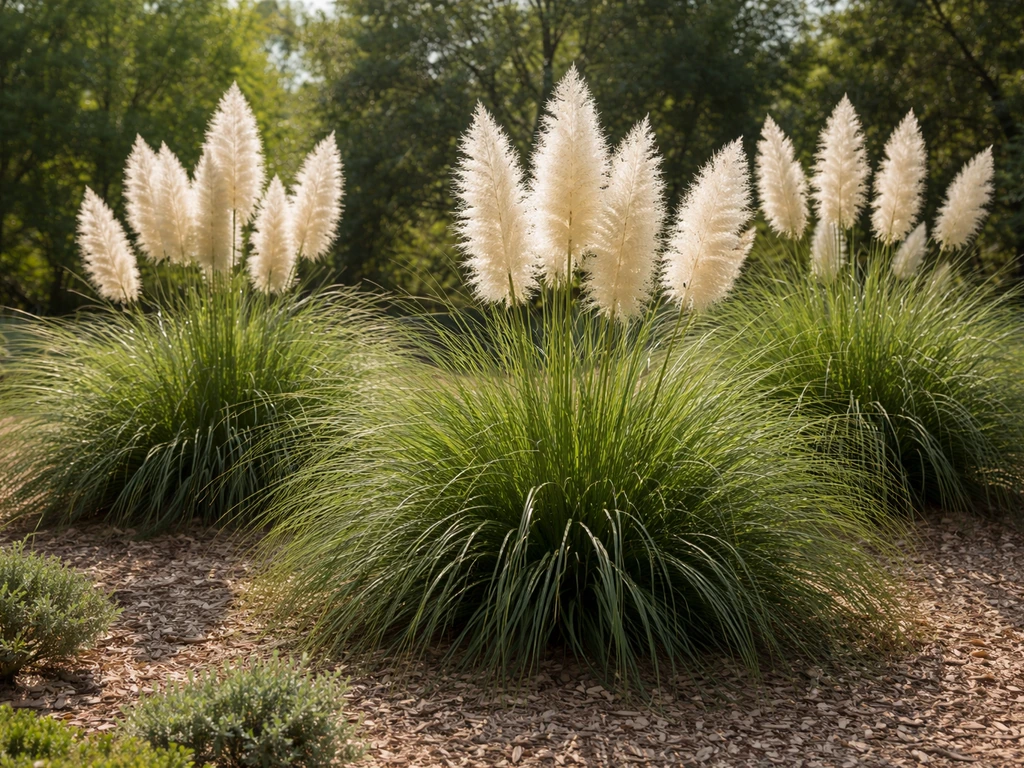
Pampas grass (Cortaderia selloana) is tougher than most people expect. The Texas Tech University plant database places it in USDA hardiness zones 7 through 11, which covers most of the South, the Pacific Coast, and a good chunk of the mid-Atlantic. The University of Florida's IFAS program actually extends that range down to zone 5B for some sources, meaning established plants can occasionally survive temperatures as low as around 5°F to 20°F depending on how wet your winters are. Excessively wet cold winters are harder on the plant than dry cold ones.
If you're in zones 7 through 11, you're in the sweet spot and can grow the standard species without much worry. If you're in zones 5B or 6, you'll want to choose a cold-hardier cultivar (more on that below) and protect new plants their first winter. North of zone 5B, the roots are unlikely to survive repeated hard freezes, and growing pampas grass long-term isn't realistic without bringing it indoors, which is impractical given the size. In UGA Cooperative Extension's pampas grass publication, the plant is described as hardy in USDA zone 8 (Coastal Plain) and only marginally hardy in zones 6 and 7 (Piedmont region) UGA Cooperative Extension notes pampas grass is hardy in USDA zone 8 and marginally hardy in zones 6 and 7.
There's one major geographic exception: if you live in California or Hawaii, think carefully before planting. Both states have documented pampas grass as an invasive species that escapes garden settings and colonizes roadsides, river banks, and coastal cliffs. The UC Davis California Invasive Species “Scorecard” notes Cortaderia selloana as a well-known invasive that escapes gardens and can spread in California. In Hawaii, it's on the invasive species watch list. In California, it's been classified as a priority control species by state agencies. This doesn't mean you're legally barred from planting in every California county, but you should check your local regulations first and understand you're taking on a real ecological responsibility.
Choosing the right pampas grass type (including white pampas)
The species you'll see most often at nurseries is Cortaderia selloana, the standard pampas grass. Within that species there are several cultivars worth knowing before you buy, because they vary significantly in size, cold tolerance, and plume color.
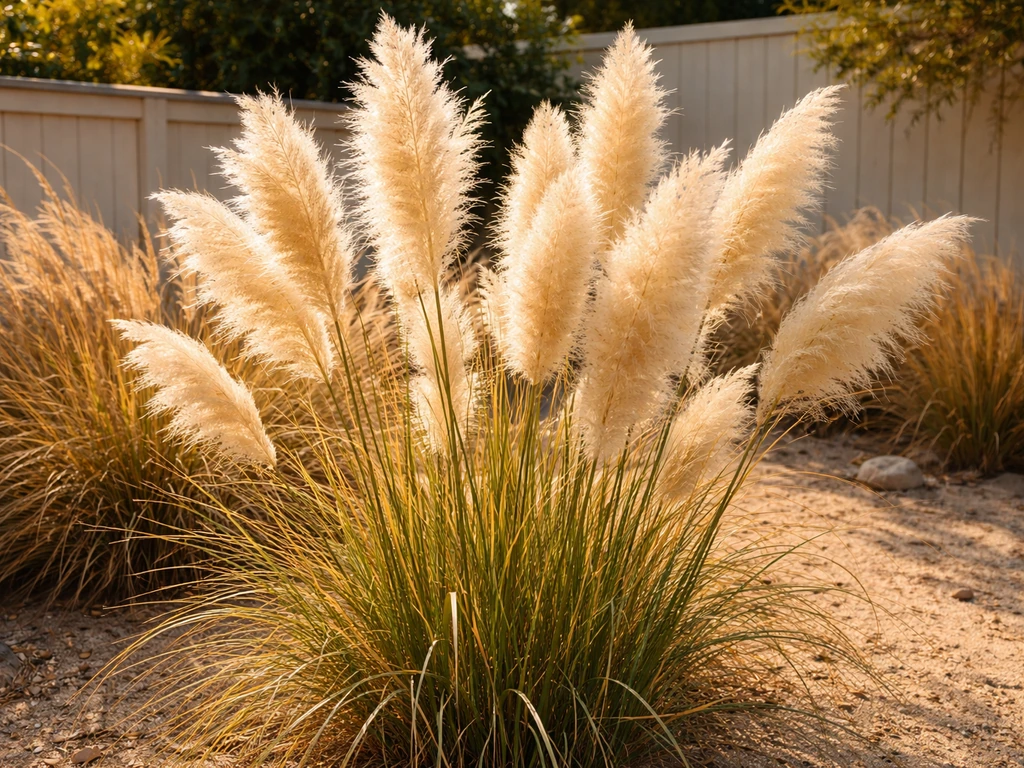
If you want white plumes (the classic look most people picture), 'Ivory Feathers' is a popular cultivar rated to USDA zone 6, making it a solid option for slightly colder climates where the standard species might struggle. It produces the dense, silky white plumes that look best in late summer and fall. For a compact option that's easier to manage in a smaller yard, 'Pumila' is the go-to dwarf cultivar. It tops out around 5 feet tall with plumes reaching about 18 inches, compared to the standard species that can hit 10 to 12 feet. 'Pumila' is rated hardy to 0°F (zone 7) and is much more manageable in suburban settings.
If you want something a little different, purple pampas grass is another cultivar worth exploring, offering pinkish-purple plumes instead of the traditional white. The care requirements are essentially the same, but it gives you a more dramatic color in the garden. Whatever cultivar you choose, buy from a reputable nursery and stick with named cultivars rather than unlabeled seedlings when you can, because size and hardiness can vary widely.
| Cultivar | Plume Color | Mature Height | USDA Zone | Best For |
|---|---|---|---|---|
| Cortaderia selloana (standard) | White/cream | 10–12 ft | 7–11 | Large spaces, warm climates |
| 'Ivory Feathers' | White | 6–8 ft | 6–11 | White plumes, slightly colder climates |
| 'Pumila' (dwarf) | White/cream | ~5 ft | 7–11 (to 0°F) | Smaller yards, easier management |
| Purple pampas grass | Pink-purple | 8–10 ft | 7–11 | Color contrast, dramatic effect |
Site and soil requirements (sun, drainage, space, climate match)
Pampas grass is a full-sun plant. It needs most of the day in direct sunlight to grow its best and produce those signature plumes. In very hot regions (think southern Texas or inland California), it can tolerate a bit of light afternoon shade without suffering much, but if you're planting in a spot that gets less than 6 hours of direct sun daily, expect smaller plants, fewer plumes, and a weaker overall habit. Don't try to make a shade spot work for this plant.
Drainage is the other non-negotiable. Pampas grass prefers well-drained soil and will rot at the crown if it sits in waterlogged ground, especially over winter. If your soil is clay-heavy and water pools after rain, you have a couple of options: raise the planting area by 6 to 8 inches with amended soil or plant in a raised berm, or mix in coarse sand and compost to improve drainage before planting. Sandy soil is actually ideal, though it needs more frequent watering during establishment. The plant isn't particularly fussy about soil fertility or pH once drainage is sorted.
Space is where most homeowners underestimate this plant. The standard species can spread 6 to 10 feet wide at maturity. Even 'Pumila' will clump out to 3 to 4 feet across. Plan for that full mature spread when choosing a location. Don't plant it near walkways, driveways, or areas where people brush past it regularly because the leaf edges are sharp enough to cut skin. A back corner of the yard, a slope that needs stabilizing, or a property-line screen are all ideal placements.
Step-by-step planting to start growth
Most homeowners will get the best results starting with nursery-grown transplants rather than seeds. Growing from seed is possible and can be rewarding, but it's slower and the seedlings need more babying. If you want to go the seed route, the process involves stratification and careful germination management, which is covered in detail in this guide on how to grow pampas grass seeds. For most people, a gallon or 3-gallon container transplant from a nursery is the faster, more reliable path.
- Pick your timing: Spring is the best time to plant pampas grass in most zones. The soil has warmed up, and the long growing season ahead gives the plant time to establish a strong root system before winter. In zones 9–11, fall planting also works well.
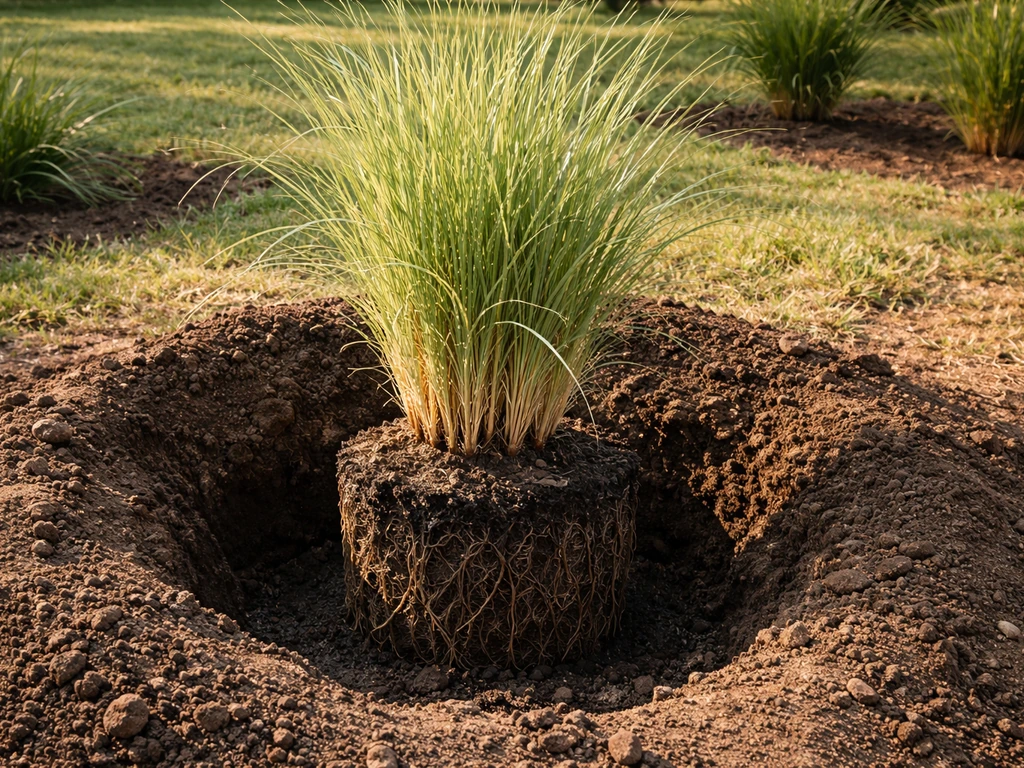
- Prepare the site: Clear the area of weeds and grass. Dig the planting hole two to three times as wide as the container and the same depth. If drainage is poor, work coarse sand or fine gravel into the surrounding soil to a depth of about 12 inches.
- Amend if needed: For clay soils, blend compost into the backfill at roughly a 1:3 ratio (compost to native soil). Avoid excessive fertilizer in the planting hole at this stage.
- Plant at the right depth: Set the plant at the same depth it was growing in the container. Planting too deep can cause crown rot. Backfill gently and firm the soil around the root ball.
- Water in thoroughly: Soak the root zone deeply right after planting until water runs out around the edges. This settles air pockets and gets the roots in contact with the surrounding soil.
- Mulch around the base: Apply 2 to 3 inches of mulch (wood chips, straw, or bark) around the plant, keeping it a few inches away from the crown. This retains moisture and suppresses weeds during the establishment phase.
Expect the plant to look fairly unimpressive for the first season. Pampas grass puts a lot of energy into root development before it shows significant above-ground growth. By year two, you'll see the clump fill out noticeably, and plumes often begin appearing by late summer or fall of the second or third year depending on your climate and cultivar.
How to care for pampas grass (water, fertilizing, growth management)
Watering
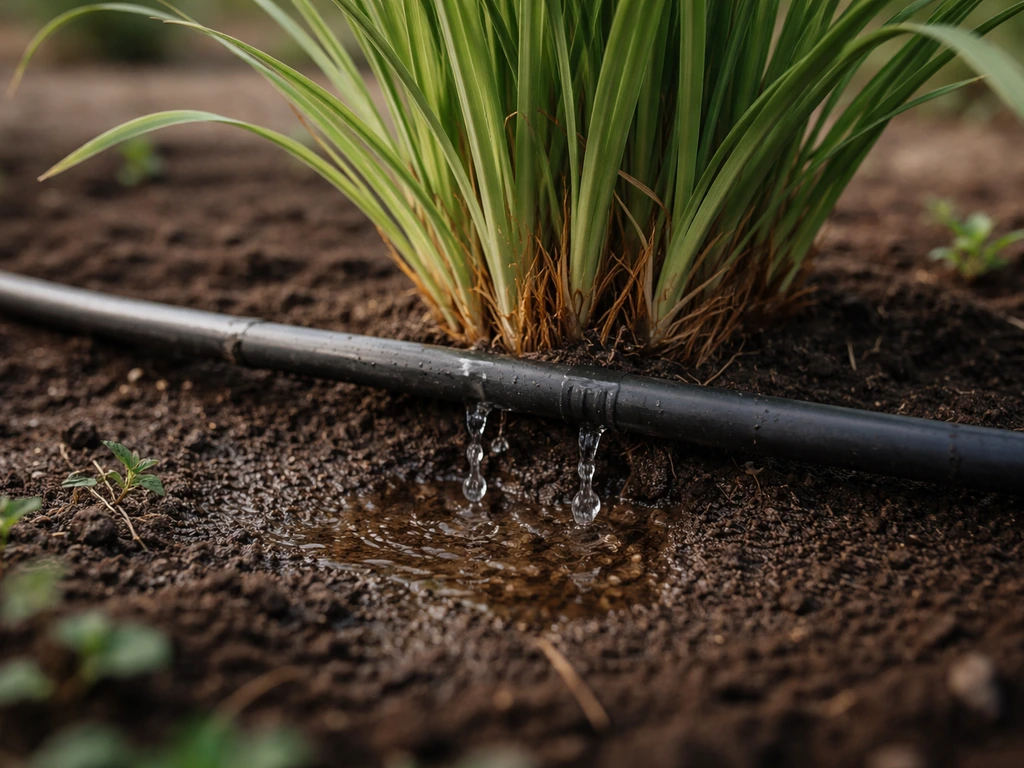
For the first growing season, water consistently about once or twice a week, enough to keep the root zone moist but not soggy. After the first full growing season, pampas grass becomes notably drought-tolerant and rarely needs supplemental irrigation in most climates unless you're experiencing extended dry spells. In hot, dry regions like the Southwest, a deep watering once every 2 to 3 weeks during summer will keep it looking good. Established plants in humid climates often survive on rainfall alone.
Fertilizing
Pampas grass isn't a heavy feeder. A single application of a balanced slow-release granular fertilizer (something like a 10-10-10 formula) in early spring is typically enough to support a full season of growth. Apply according to package directions and water it in well. Avoid over-fertilizing, especially with high-nitrogen products, because this can push lush leafy growth at the expense of plume production and can make the plant more prone to flopping over.
General growth management
Beyond watering and a spring fertilizer application, pampas grass is largely self-sufficient during the growing season. It doesn't need deadheading (though you can cut spent plumes in late fall if you prefer a tidier look). The clump will expand slowly outward each year, and the primary maintenance task is the annual cutback, which is covered in the next section. If you're interested in how similar ornamental grasses like prairie grass handle their seasonal cycles, the approach to establishment care is comparable.
Controlling growth and safety considerations (cutting back, spreading, nuisance risk)
How and when to cut pampas grass back
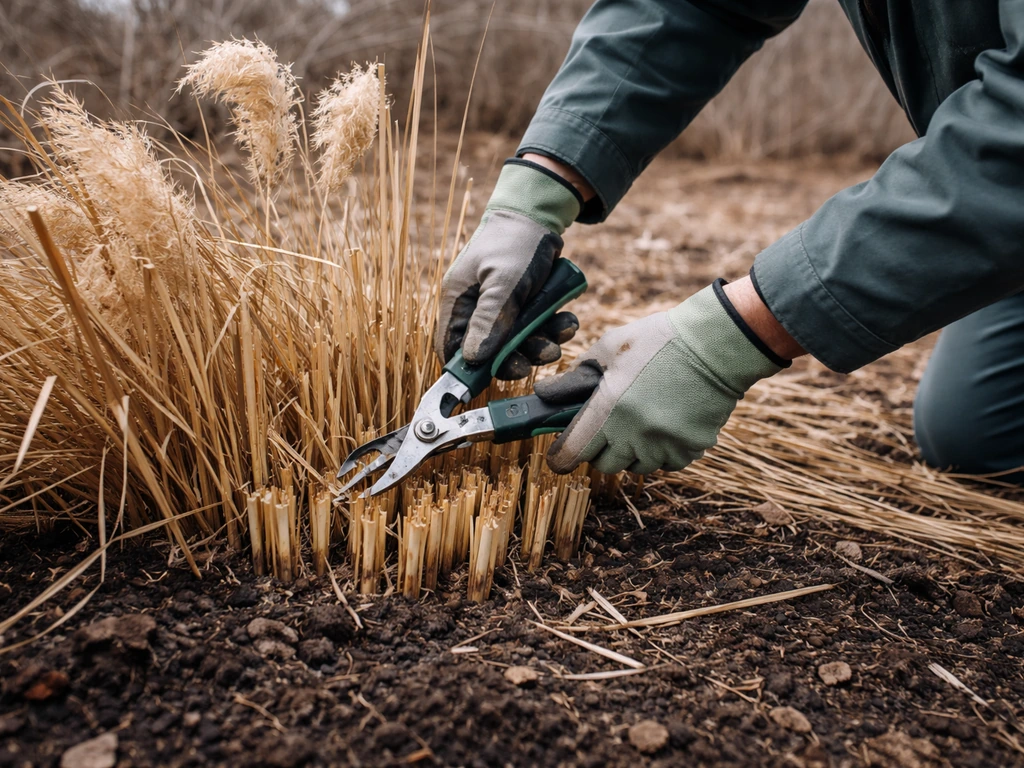
The most important maintenance task for pampas grass is cutting it back once a year. The right time is late winter, just before the plant begins pushing up new growth in spring. The University of Georgia Extension recommends cutting close to ground level, removing the previous year's foliage entirely so new growth can emerge cleanly. Gardening Know How similarly advises late winter as the best timing to avoid accidentally cutting off new growth points that are just starting to emerge.
The process itself is straightforward but requires the right gear. The leaf blades on pampas grass are extremely sharp and will slice through bare skin easily. Wear heavy leather gloves, long sleeves, and eye protection. For small clumps, a pair of loppers or heavy-duty hedge shears works fine. For large established clumps, a reciprocating saw or chainsaw is often the most practical tool. Cut the entire clump down to about 6 to 12 inches from the ground. It looks dramatic after the cutback, but the plant will regrow quickly once temperatures warm up.
Some gardeners tie the foliage into a bundle before cutting to make cleanup easier. You just wrap a few bungee cords or twine around the clump at chest height, cut below the tie, and the whole bundle holds together for hauling away. It's a small trick that makes a big mess a lot more manageable.
Preventing spread and avoiding nuisance situations
Pampas grass spreads primarily by seed. A mature plant can produce millions of seeds that travel on the wind, which is exactly why it has become invasive in places like California and Hawaii. If you want to reduce seed spread, cut the plumes off before they mature and release seeds (usually mid to late fall). Female plants produce the showiest plumes; male plants produce less conspicuous ones. If you're buying from a nursery, ask whether the cultivar is a sterile or low-seed variety, as some selected cultivars produce far fewer viable seeds.
The clump itself doesn't spread aggressively by runners the way some grasses do. It expands outward gradually from the center, so you can control the footprint by dividing the clump every 3 to 5 years in early spring. Use a sharp spade or reciprocating saw to cut the clump into sections, remove the portions you don't want, and replant divisions as desired. Divisions can also be shared with neighbors or started in new spots in the yard, similar to how you might propagate other ornamental grasses. If you're curious how a very different fast-growing grass handles division and expansion management, the approach used for super napier grass offers an interesting comparison in terms of clump control strategy.
Research published in Scientific Reports has documented allergenicity concerns associated with Cortaderia selloana pollen, so if you or someone in your household has grass pollen allergies, it's worth noting before you plant. This doesn't mean you can't grow it, but placing it downwind of frequently used outdoor areas or near windows is worth reconsidering.
If you're in a state where pampas grass is classified as invasive, check local regulations before purchasing. In some California counties and Hawaii, there are active removal programs rather than planting encouragement. For most of the rest of the country, growing it responsibly just means staying on top of seed head removal and occasional clump division.
Putting it all together: realistic expectations for a first-time grower
If you're in zones 7 through 11, you've got a sunny, well-drained spot, and you choose a cultivar sized for your space (dwarf 'Pumila' for smaller yards, standard or 'Ivory Feathers' for larger properties), pampas grass is genuinely one of the lower-maintenance ornamental plants you can grow. Year one is all about roots. Year two you'll see the clump fill in. By year three, expect the full plume display in late summer and fall. For a broader look at the full lifecycle and care arc from planting through maturity, the complete pampas grass growing guide covers the subject in depth.
The annual late-winter cutback takes maybe 30 to 45 minutes once you have the right tools and gloves. Outside of that, you're looking at occasional watering in dry spells and one fertilizer application per year. That's about as low-effort as a large ornamental plant gets. Just give it the right site, the right cultivar for your zone, and respect the sharp edges, and pampas grass will reward you for years. If you find yourself drawn to other ornamental grass options with less invasive potential, exploring something like gold coin grass or even the low-growing penny grass might be worth a look as companion or alternative plantings.
FAQ
Will pampas grass come back if I cut it down in fall instead of late winter?
It usually rebounds, but fall cutbacks can increase the chance you remove energy and delay spring regrowth. For the best plume display, cut close to ground level in late winter just before new growth starts, and avoid cutting after new shoots appear.
How do I protect pampas grass during its first winter in colder zones?
Focus on keeping the crown dry. In colder areas near the zone edge, add a winter windbreak and mulch after the ground starts to cool, but do not mound mulch so deeply it traps moisture against the crown. If your winters are wet, prioritize drainage improvements over extra mulch.
What’s the fastest way to get plumes (and how long should I wait)?
Give new plants time to build roots, year one often looks unimpressive. Plumes commonly appear in late summer or fall of year two or three, and good sun plus good crown drainage are the biggest accelerators.
Why is my pampas grass not producing many plumes?
The most common causes are too little direct sun, over-fertilizing with high nitrogen, and wet or poorly drained soil that weakens the crown. Check that it gets at least about 6 hours of direct sun and only do the single spring balanced fertilizer application.
Can pampas grass grow in containers or small yards?
It can be grown in a large container for a while, but it will still need full sun and excellent drainage, plus frequent watering during establishment. Plan for frequent repotting or division later because container-grown clumps can become root-bound and less plume-heavy.
How far from paths, fences, and windows should I plant it?
Because mature clumps spread widely, allow room for the full mature width, and keep it away from places people brush against the leaves. Also consider plume blowback, so position it downwind from walkways and away from frequently used entrances.
What’s the safest way to divide pampas grass?
Divide in early spring before vigorous growth ramps up. Use sharp tools and wear thick gloves and eye protection, because the clump leaves are extremely sharp. Replant divisions quickly and keep the new sections consistently moist, but never waterlogged, during establishment.
My soil is clay, what should I do before planting?
Fix drainage first, because crown rot is the main failure point. Raise the planting area by several inches or build a raised berm, then blend in coarse material (like sand and compost) to prevent water pooling during winter storms.
Are there male versus female plants, and does it matter for the look?
In general, female plants produce the most showy plumes, while male plants are less conspicuous. If plume appearance is your goal, ask the nursery about the cultivar and how it performs, especially if you are trying to avoid low-plume disappointments.
How can I reduce the risk of pampas grass becoming invasive?
Prevent seed spread by removing plumes before they mature and release seed, usually mid to late fall. Also stay on schedule with clump division every few years so plants do not expand beyond your intended footprint.
Is pampas grass safe for people with grass pollen allergies?
If you or someone in the household reacts to grass pollen, pampas grass can still be a concern because it produces pollen that may trigger symptoms. If you want to keep it, consider placing it farther from doors and windows, ideally downwind from frequent seating areas.
Does pampas grass need deadheading or regular pruning besides the annual cutback?
No routine deadheading is required for plant health, but cutting spent plumes before they mature helps reduce seed dispersal. Other than the late-winter cutback, any pruning is usually for aesthetics or cleanup.
Next Article
How to Grow Grass in El Paso TX: Seed, Plant, and Care
Step-by-step guide to grow grass in El Paso: pick Bermuda, Zoysia or fescue, prepare soil, seed timing, watering, fixes.