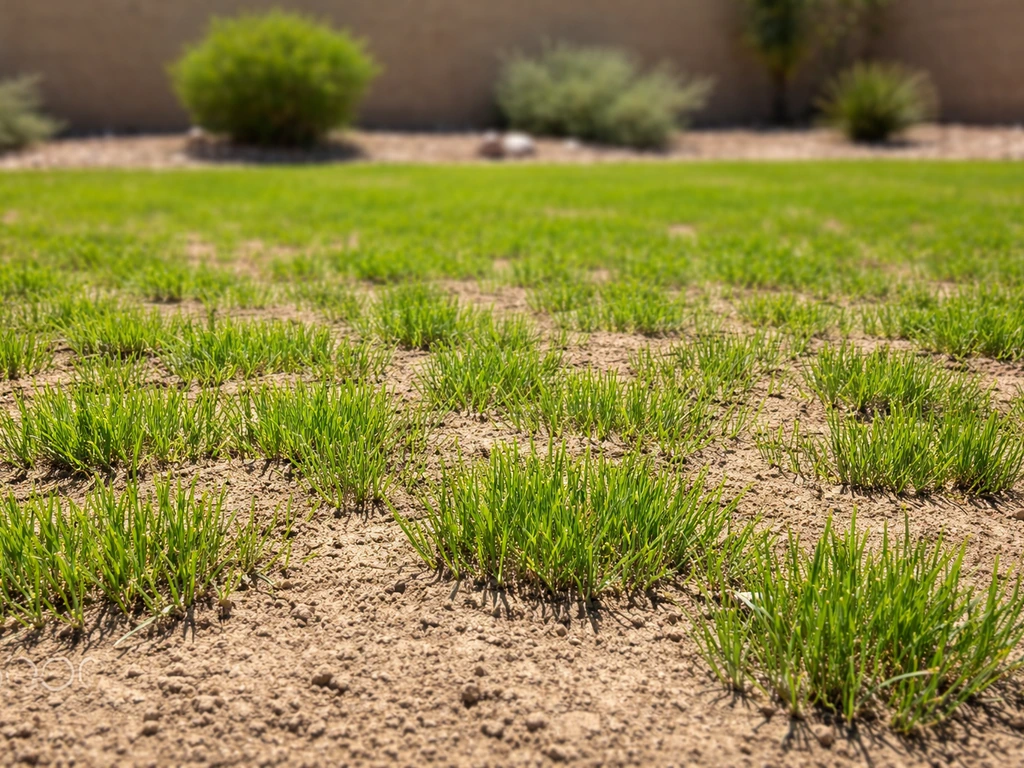
Yes, you can grow a thick, healthy lawn in clay soil. It takes more prep work than planting in loamy soil, but once you fix the core problems (compaction, drainage, and pH), grass roots just fine in clay. The key is not skipping the soil prep and picking a grass variety that actually tolerates clay. Do those two things right and you will be surprised how well grass establishes, even in heavy clay.
How to Grow Grass in Clay Soil: Seed, Prep, and Care
Marcus Tillwell
9 Apr 2026
Diagnose what your clay soil is actually doing wrong
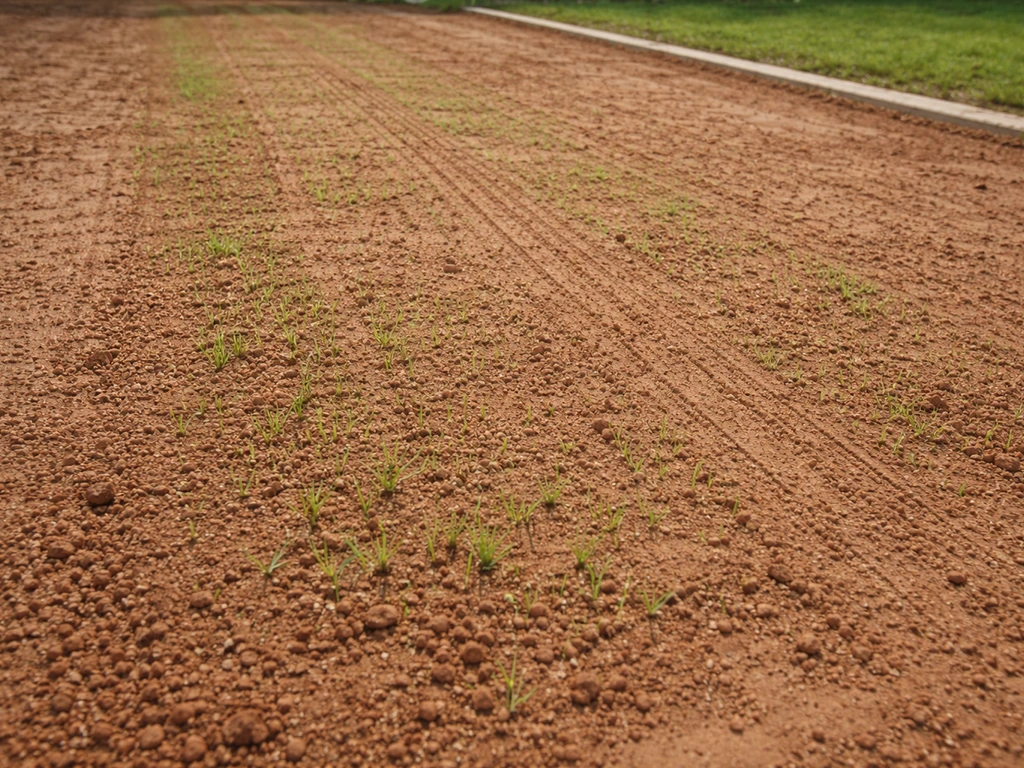
Before you buy a single bag of seed, figure out exactly what you are dealing with. Clay soil fails grass for four main reasons: physical compaction, poor drainage, incorrect pH, and low organic matter. Most clay lawns have all four, but understanding which is worst in your yard tells you where to put your effort.
Compaction is the big one. Clay particles pack tightly and leave almost no air pockets for roots or water to move through. You can test for this by pushing a screwdriver into the soil. If you have to really force it, you have a compaction problem. Drainage is related but slightly different. Dig a hole about 12 inches deep, fill it with water, and watch how fast it drains. If water is still sitting in the hole after an hour, you have a drainage issue that will drown seedlings and cause fungal problems.
pH is where a lot of people go wrong because you cannot see it. Clay soils are often acidic (pH below 6) or alkaline (pH above 7.5), both of which lock up nutrients even if you fertilize. Grass generally wants a pH between 6.0 and 7.0. Get a soil test done. University extension labs will give you pH, estimated soil texture, organic matter percentage, and phosphorus and potassium levels for about $15 to $25. Iowa State, UMN, and similar labs even provide amendment recommendations based on your specific results. Test every 3 to 5 years, or any time you are making a major change like establishing a new lawn.
One more thing to check: if you notice water pooling in low spots or see a surface crust forming after rain, you may have a near-surface hardpan layer. This is a dense layer a few inches down that roots physically cannot penetrate. Core aeration helps, but severe hardpan sometimes needs deeper mechanical work before seeding. If you have hard soil that resists any kind of tillage, address the hardpan before doing anything else or your seed investment will be wasted.
Break up hard clay and improve the soil structure before you seed
This is the step most people rush or skip entirely, and it is the main reason clay lawns fail. Good soil prep takes a day or two but sets up everything that comes after.
Aerate first
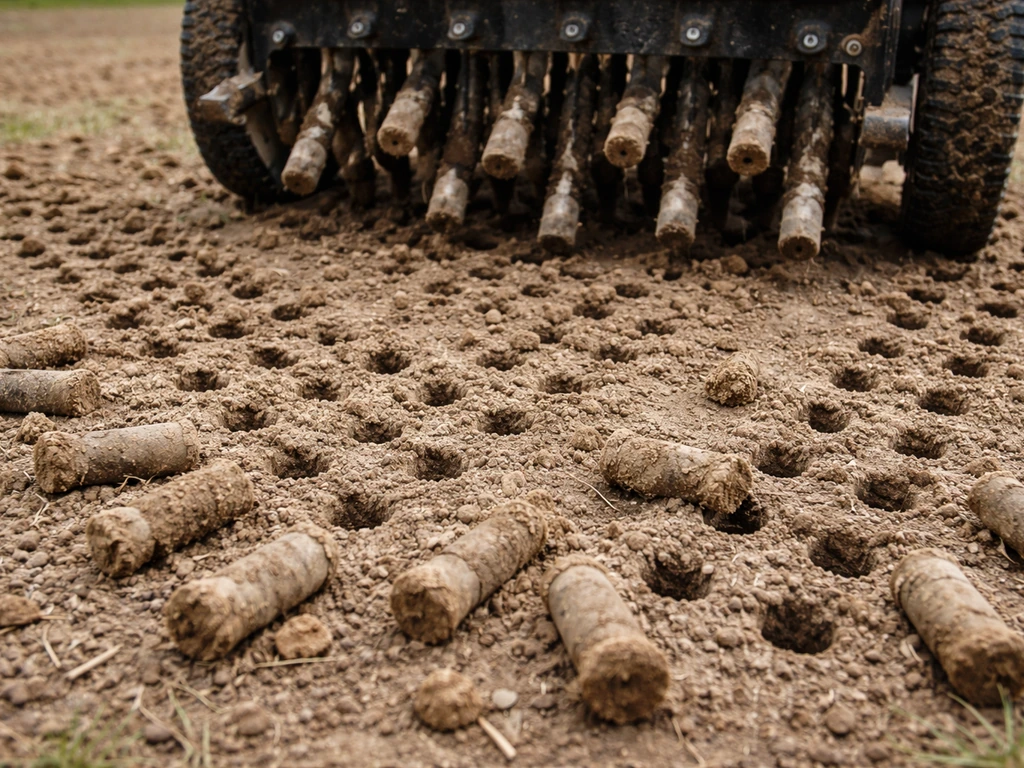
Core aeration is your most important tool for clay soil. Rent a core aerator from any equipment rental shop for around $75 to $100 for a half day. Make two passes in perpendicular directions. This pulls plugs out of the soil (leave them on the surface, they will break down), and opens channels for water, air, and roots. For clay that is moderately compacted, one round of aeration is enough before seeding. For severely compacted clay, plan on aerating in spring, letting the lawn recover, then aerating again in fall before your seeding window.
One critical rule: never till or aerate clay soil when it is wet. Colorado State Extension is very clear on this. Tilling wet clay destroys the soil structure and creates hard clods that can persist for years, making the problem worse than before you started. Wait until the soil is moist but not soggy. It should crumble in your hand, not smear.
Add compost and work in amendments
After aerating, spread 1 to 2 inches of compost across the entire area. Compost is the single best amendment for clay because it improves drainage, adds organic matter, feeds soil microbes, and helps break up tight clay structure over time. For an existing lawn, this is called topdressing. Oregon State Extension describes how compost fills in the holes left by core aeration, which is exactly what you want: the organic matter gets worked directly into the root zone instead of just sitting on top.
For a brand new lawn area or a full renovation, you can till in up to 3 to 4 inches of compost along with any lime or sulfur needed to correct pH. Phosphorus and potassium do not move quickly when surface applied, so Penn State Extension recommends tilling these nutrients into the soil to about 4 to 6 inches depth before establishment. This is the right time to do it, during initial prep, not after the grass is growing.
If your soil test shows low pH (acidic clay), add pelletized lime at the rate your test recommends. If pH is too high (alkaline clay), use sulfur to bring it down. Do not guess at rates. The soil test will tell you exactly how much to add based on your buffer pH and your target. Getting this wrong wastes money and can cause problems that take years to correct.
For readers dealing with persistently acidic soil conditions, knowing your starting pH before adding lime is especially important since clay holds onto acidity more stubbornly than sandy soils.
Pick the right grass for clay soil and your climate
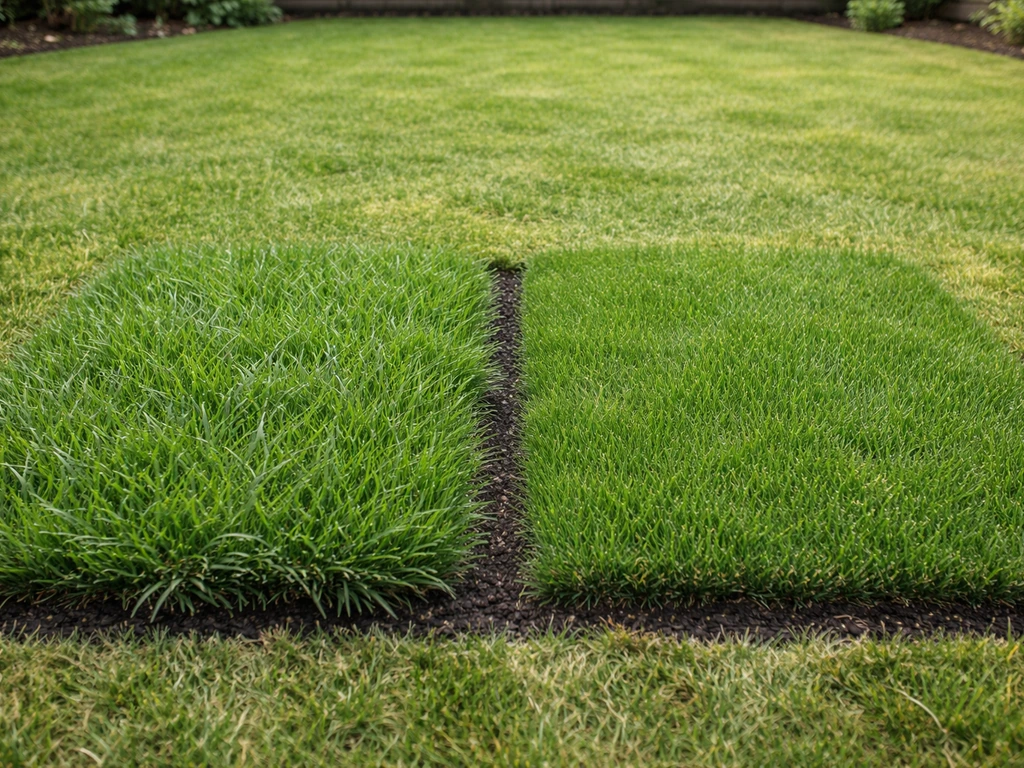
Not all grass types handle clay equally well. Here is how the main options compare for clay-heavy lawns:
| Grass Type | Climate Zone | Clay Tolerance | Drought Tolerance | Shade Tolerance | Notes |
|---|---|---|---|---|---|
| Tall Fescue | Cool-season (Transition/Northern) | Excellent | Good | Moderate | Deep roots punch through clay better than most cool-season grasses; top choice for clay in mid-Atlantic and Midwest |
| Bermuda | Warm-season (South/Southwest) | Good | Excellent | Poor | Aggressive enough to establish in clay; needs full sun and warm temps |
| Zoysia | Warm-season/Transition | Good | Good | Moderate | Slow to establish but very dense once in; handles compaction well long-term |
| Kentucky Bluegrass | Cool-season (North) | Fair | Fair | Poor | Struggles in heavy clay unless soil is well-amended; spreads via rhizomes once established |
| Perennial Ryegrass | Cool-season (North/Pacific NW) | Fair | Poor | Moderate | Fast germination; good for overseeding or quick cover but not deep-rooted enough for severe clay |
| Fine Fescue | Cool-season (North) | Fair | Good | Excellent | Best for shade and low-maintenance; less aggressive than tall fescue in clay |
Tall fescue is the standout choice for clay in most of the country's transition and cool-season zones. Its deep root system, sometimes reaching 2 to 3 feet, can break through compacted clay layers that stop shallow-rooted grasses dead. If you are in the South, bermuda is the go-to for clay because of its aggressive spreading habit and heat and drought tolerance. Zoysia is slower to establish but worth considering for warm-season zones where you want a dense, low-maintenance lawn over time.
Climate matters as much as clay tolerance. If you are in the UK and dealing with heavy clay, the approach and variety choices differ slightly from what works in the American South or Midwest. Readers growing grass in clay conditions in the UK or those working in clay soil across Australia should factor in local species availability and seasonal timing differences when making their selection.
If your yard has red clay specifically (common in the Southeast US), the soil tends to be especially dense and low in organic matter. The approach is the same but you will typically need more compost amendment and possibly more frequent aeration in year one. If you are working with red clay soil specifically, expect to put in a bit more effort in the prep phase before seed goes down.
Seed prep and how to plant in clay soil
Timing is the first decision. For cool-season grasses (tall fescue, Kentucky bluegrass, fescues, ryegrass), late summer to early fall is the best window. Penn State Extension calls this the optimum time in most regions because weed competition drops off, soil temperatures are still warm enough for germination, and new grass gets two full cool growing seasons before summer heat stress. Mid-August through mid-September is ideal for most of the northern US and transition zone. Spring seeding works but expect more weed competition.
For warm-season grasses (bermuda, zoysia), plant in late spring to early summer once soil temps consistently hit 65 to 70°F. Planting too early in cold soil means slow, patchy germination and vulnerability to weeds.
Seeding rates and seed quality
Seeding rate depends on species. For tall fescue, NCSU TurfFiles recommends 5 to 6 lb per 1,000 sq ft for overseeding and up to 8 to 9 lb per 1,000 sq ft for new establishment (Iowa State Extension puts it at 7 to 9 lb for new lawns). Always check the seed label for germination percentage. A bag showing 80% germination needs a higher application rate than one showing 95% germination. Penn State Extension specifically advises using the germination percentage on the seed label to guide your rate, not just the species recommendation alone.
Getting seed into clay soil properly
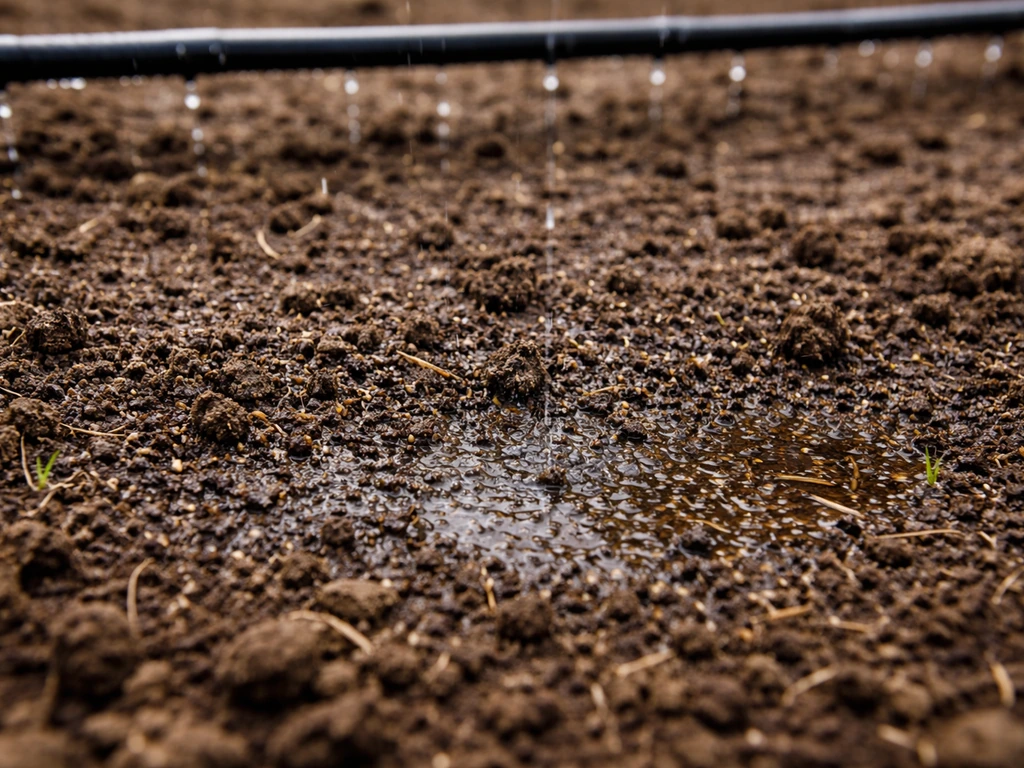
Seed-to-soil contact is everything on clay. Clay's dense surface can form a crust that prevents seeds from making good contact or allows them to wash away. The best approach for a full renovation is to use a slit seeder (also called a slice seeder), which cuts small grooves about 1/4 inch deep and drops seed directly into them. Penn State Extension recommends this approach specifically when the site was killed with glyphosate but not deeply tilled. Rental cost is typically $60 to $100 for a half day and it dramatically improves germination rates compared to broadcasting seed on the surface.
For smaller areas or overseeding, broadcast the seed after aerating and topdressing with compost, rake it in lightly to about 1/4 inch depth, and then roll with a lightweight lawn roller to press seed into the soil. Rutgers Extension says to rake seed to approximately 1/4 inch deep and then roll lightly (do not overdo it). A cultipacker can also improve seed-to-soil contact on larger areas, as Penn State Extension notes.
Apply a starter fertilizer at seeding time. Starter fertilizers are higher in phosphorus, which supports root development in new seedlings. Penn State Extension says to apply at the rate listed on the label, and that both nitrogen and phosphorus support rapid establishment. On clay soil, getting roots established quickly is especially important because clay dries into a hard surface fast and you want roots to anchor before that happens.
Watering schedule and weed control during germination
Water is where most people either overdo it or give up too soon. For newly seeded clay, the goal is keeping the top 1 to 2 inches of soil consistently moist without creating puddles or runoff. Iowa State Extension's guidance for new lawn seed says to keep the seedbed moist but not saturated until germination occurs. On clay, runoff is a real risk because the soil does not absorb water quickly. Water lightly and frequently, up to 3 to 4 short cycles per day if temps are high, rather than one long soak that causes runoff.
UMN Extension recommends watering newly planted turf to a depth of 4 to 6 inches initially, then following a light and frequent schedule until germination. After germination starts, reduce frequency gradually. Once you see seedlings pushing up, you want to shift toward deeper, less frequent watering to encourage roots to chase moisture downward. UMN Extension is explicit on this: reducing frequency after germination helps prevent shallow rooting, which is the enemy of a clay lawn long-term. The target after establishment is deep, infrequent watering, meaning 1 to 1.5 inches per week applied in 2 to 3 sessions rather than a little every day.
Managing weeds without killing new grass
Weed control during germination is tricky because most herbicides will kill germinating grass seed along with weeds. For spring seedings, the main threat is crabgrass. Penn State Extension explains that preemergence herbicides work by creating a barrier in the soil before seeds germinate. The challenge is that the same barrier can affect your turf seed.
Siduron (sold as Tupersan) is one of the few preemergence options safe to use around germinating cool-season grass seed. UC IPM and Iowa State Extension both mention it as a viable option during spring establishment. Crabgrass starts germinating when soil temperatures hit around 58°F (Mississippi State Extension), so timing your application around that trigger point is important. If you are seeding in fall, you get a natural advantage because weed competition is lower and you may not need a preemergence at all.
How to get grass to thicken in clay over time
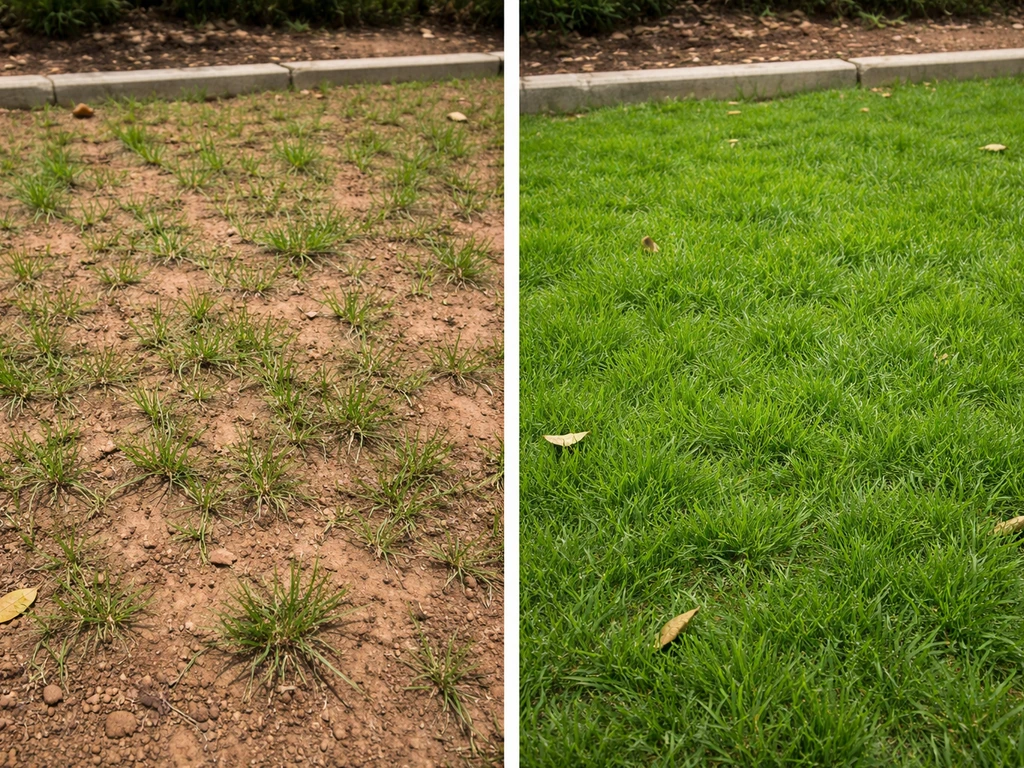
Getting initial germination is step one. Getting a thick, dense lawn is a longer project, especially in clay. Here is the maintenance approach that actually builds density:
- Follow up your starter fertilizer with a second application 4 to 8 weeks after the initial seeding. Penn State Extension recommends applying 1/2 lb of nitrogen per 1,000 sq ft at this stage to thicken the new stand. Do not skip this application because early fertility directly drives tillering, which is how grass plants multiply and fill in bare spots.
- Aerate every fall on clay lawns. This is not a one-time fix. Annual or biannual core aeration keeps clay from recompacting and continually improves organic matter incorporation. Pair it with a light topdressing of compost each fall and your soil will improve noticeably year over year.
- Mow at the right height. Tall fescue should be kept at 3.5 to 4 inches. Cutting it shorter stresses roots and thins the stand. Bermuda can be cut shorter (1 to 2 inches) but still needs consistent mowing to stay dense.
- Overseed thin spots every fall (for cool-season lawns) or every spring (for warm-season lawns). Clay lawns tend to thin in high-traffic areas faster than other soil types because compaction redevelops. Catch it early with overseeding rather than letting bare spots take over.
- Retest your soil every 3 to 5 years and correct pH as needed. Clay buffers pH changes slowly, so a one-time lime application may not hold forever. Staying on top of pH is one of the highest-return maintenance habits for clay lawns.
If you are dealing with soil that was chemically or physically damaged before you started, you may find the grass struggles to thicken even after good prep. Lawns growing in genuinely poor soil conditions often need a second year of soil-building before the turf really fills in, and that is normal. Do not panic if year one looks thin. Keep aerating, keep feeding, and it will improve.
Troubleshooting: why grass is not growing in your clay soil
Here are the most common clay-specific problems and what to actually do about them:
- Seed germinated but seedlings died: Almost always a watering problem. Either the seedbed dried out between waterings (clay surfaces crust fast in sun and wind) or you overwatered and suffocated roots. Check your schedule and make sure the top inch stays consistently moist, not wet.
- Bare patches that will not fill in: Could be compaction redeveloping in a high-traffic zone, pH that is still off, or a drainage low spot where water sits too long. Walk the area, probe the soil, and check if runoff or foot traffic is the likely culprit. Spot-aerate and overseed those areas specifically.
- Grass is thin everywhere despite germination: Usually a fertility issue or pH problem. Do a fresh soil test. If the last one was more than 3 years ago, the numbers may no longer reflect current conditions. Apply a fall fertilizer and plan a re-aeration.
- Water pools on the surface after every rain: Drainage in the top few inches is severely limited. Consider installing a French drain in the worst spots, or mound up the seeding area slightly to improve surface drainage before re-seeding.
- Soil is rock-hard and seed rolls off the surface: The surface has sealed over. This is common with untreated clay in summer. You must aerate and add compost before any seed application will work. Seed sitting on a sealed clay surface without soil contact will almost never germinate.
- Grass looks pale or yellow despite growing: Likely a pH or iron problem. Clay soils at the wrong pH lock up nutrients. Pale grass after fertilizing often means the fertilizer cannot be absorbed. Soil test first, then adjust pH, and consider a foliar iron application for quick greening while the pH corrects.
If you have tried the standard approach and things are still not working, consider whether your situation falls outside the typical clay problem. For example, soil that was scorched by construction debris, fuel spills, or chemical burns behaves differently from regular clay. If you suspect your soil was damaged by heat or burning, the recovery process involves different steps than standard clay amendment.
The honest truth about clay lawns is that the first year is the hardest. If you prep well, pick the right grass, and manage water correctly, germination happens reliably. Year two you will see the lawn start to thicken as roots get deeper and soil structure improves. By year three, a well-managed clay lawn can be as good as anything grown in better soil. The difference is in the prep work you put in before the first seed goes down.
FAQ
Can I grow grass in clay soil without core aeration or compost? (I have a small patch).
Yes, but only if the surface crust issue is small. If soil smears when you squeeze a handful, drains slowly, or you can’t push a screwdriver in easily, you still need core aeration plus compost topdressing, otherwise seed-to-soil contact will fail and germination will be spotty.
When should I start mowing after seeding clay soil, and how low can I cut?
For clay lawns, “light mowing” right after seeding is often the wrong goal. Wait until seedlings have rooted and reach about 3 to 4 inches tall, then mow to a higher cut height than usual (do not scalp). Scalping removes leaf area that those young plants need to keep roots growing into dense clay.
How do I tell if I’m watering too much or too little on clay soil seed? I can’t see what’s going on underneath.
Clay is prone to drying from the top while staying wet deeper down, so the right test is physical. Before watering, check the top 2 to 3 inches by probing, if it is still moist and cool, skip. If it is crusty and dry, water in short, frequent cycles until you see germination and the top stays consistently moist without puddling.
Can I fertilize more than the starter rate to help grass thicken faster on clay?
In many clay sites, the first feeding is not the problem, the timing is. Use starter fertilizer at seeding time as planned, then avoid heavy nitrogen until seedlings are well established (when you have steady new growth and can mow regularly). Overfeeding early can stress young roots and increase disease pressure in persistently wet areas.
Should I always add more phosphorus on clay soil, even if my soil test is not low?
Your soil test will also reveal phosphorus and potassium. If phosphorus is already adequate, adding extra for “strong roots” is unnecessary and can become a runoff issue. Follow the nutrient numbers from the test, then adjust only after the next soil test cycle.
What signs mean compost and aeration are not enough, and I likely need deeper work for hardpan?
If you have a true hardpan layer, surface compost will help but it cannot fully replace mechanical access. Core aeration creates channels, but when roots repeatedly stop at a dense few inches down, you may need deeper mechanical work (or at least repeated aeration over time) before seeding again.
What’s the best order to apply compost, lime, and sulfur when fixing pH in clay soil?
Yes, but avoid mixing “unknown” products. If you must apply lime or sulfur, do it based on the soil test and do not guess rates. Also, apply amendments before compost-heavy topdressing so the correction agent reaches the layers where pH matters most, then water it in.
If my seed bag shows lower germination, should I increase the seeding rate or fix something else first?
Use the seed label germination percentage to calibrate your plan. Low germination means you will not reach full density at the label rate, so either increase the seeding amount using the label numbers or consider fresh seed. If you seed heavily but seed depth or contact is poor, germination still won’t catch up.
How deep should I rake or cover seed in clay soil, and what happens if it’s buried too deep?
Raking in and rolling are about contact, not hiding seed. If you bury seed deeper than about 1/4 inch, many cool-season seeds struggle in dense clay and crust-prone surfaces, especially before roots anchor. Aim for light coverage, then firm lightly.
I used weed killer last season. How long should I wait before seeding grass in clay soil?
It can be. Even if you avoid herbicide damage, you can still create a persistent “weed control residue” situation when preemergence products were applied late or at the wrong target window. If you want to seed soon after any herbicide, check labels for time-to-plant guidance, and consider a soil-level barrier test area before committing.
If my clay lawn looks thin after the first season, should I reseed right away or wait?
Clay lawns often look thin in year one because roots are still expanding and soil structure is improving. Measure success by emergence and coverage consistency, not by quick thickness. Plan for continued aeration, compost topdressing, and normal feeding through year two, then evaluate for overseeding only after roots have established.
For bermuda or zoysia in clay soil, what temperature should I confirm before seeding or laying? (Air temp seems misleading).
Warm-season grasses can survive, but timing mistakes are common. If you seed bermuda or zoysia when soil temperatures are still below the target range, germination slows and weeds compete. Use a soil thermometer and wait for consistent warmth before planting.
Next Article
How to Grow Grass in El Paso TX: Seed, Plant, and Care
Step-by-step guide to grow grass in El Paso: pick Bermuda, Zoysia or fescue, prepare soil, seed timing, watering, fixes.