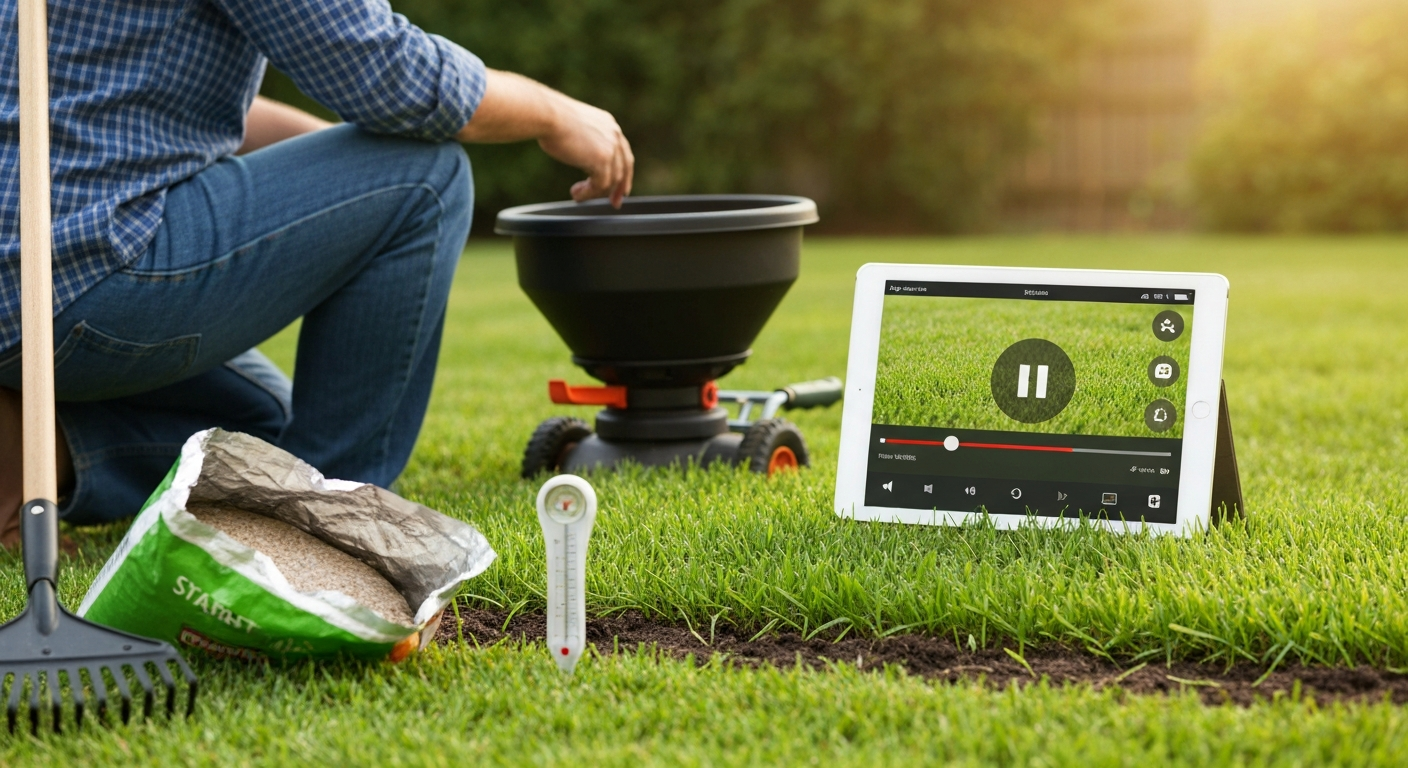
Growing grass from seed is genuinely straightforward once you understand three things: pick the right seed for your climate, prep the soil properly, and keep the seedbed moist until germination kicks in. Most beginner failures come down to planting at the wrong time of year, skipping soil prep, or letting the surface dry out for a few days right after seeding. Nail those three things and you will have a lawn. This guide walks you through every step in plain language, with real numbers for seeding rates, timing, and soil amendments so you are never guessing. For step-by-step beginner-friendly instructions on how to grow grass for beginners, see this beginner's guide. For a straightforward, down-to-earth walkthrough with practical tips, see how to grow grass dinkum.
How to Grow Grass for Dummies: Beginner's Lawn Guide
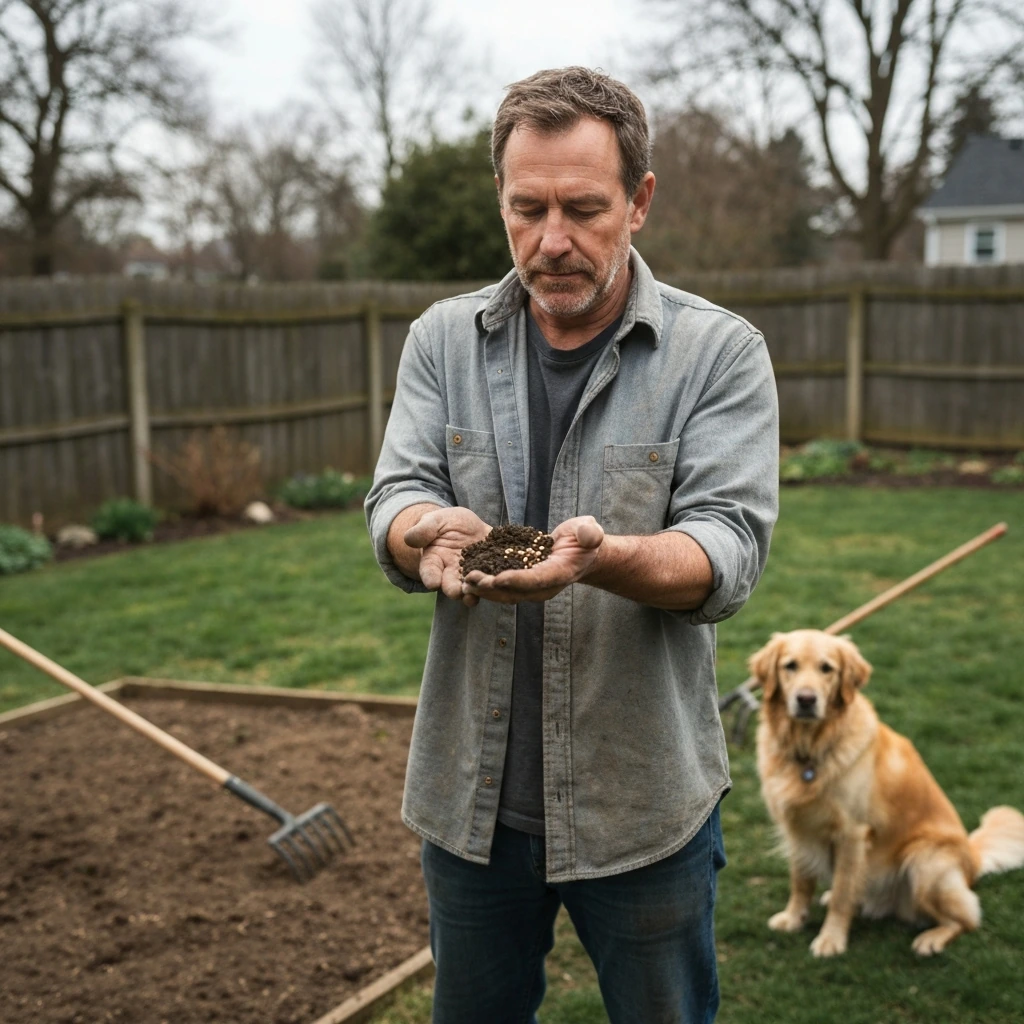
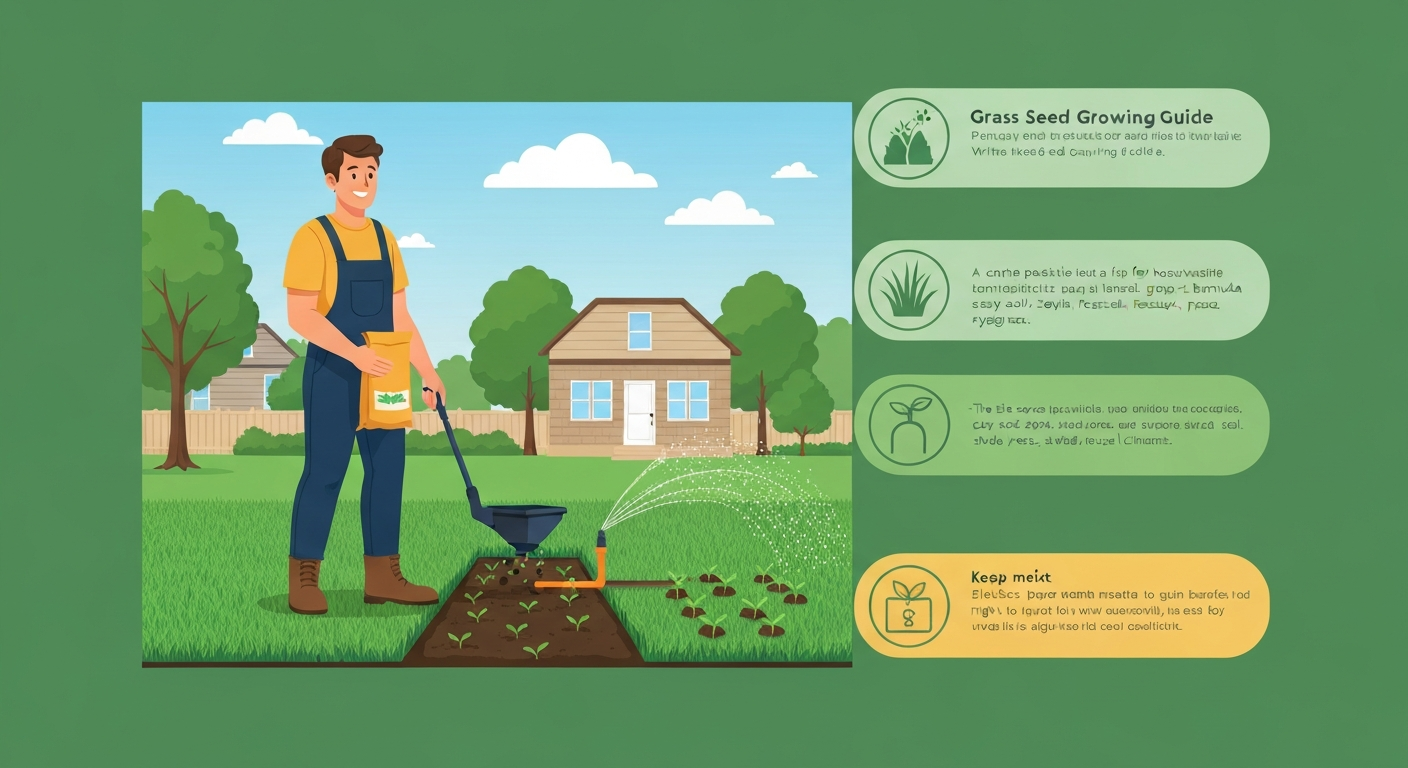
What this guide covers and how to use it
Think of this as a choose-your-own-adventure for lawn beginners. You do not need to read it front to back. If you already know you want to seed a bare backyard, jump to the soil testing and site prep sections. If you are still deciding between seed and sod, the next section handles that. If you are in New Zealand or the Southern Hemisphere, the planting calendar section has timing flipped to match your seasons. The guide is written around the most common scenarios: starting from bare dirt, repairing patches, dealing with clay or sandy soil, growing in shade, and managing a lawn where pets run. Throughout, you will see exact figures, not vague ranges, so you can go to the hardware store or order online with confidence.
One honest expectation up front: grass takes time. Cool-season ryegrass can show sprouts in as few as five days under ideal conditions, but Kentucky bluegrass may take a full month before you see anything, and a brand-new lawn from seed will not look finished until its second or third mowing. Seed is slow but cheap. Sod is fast but expensive. Grass mats sit somewhere in between. By the end of this guide you will know which path fits your situation, your budget, and your timeline.
Seed vs sod (grass mats): pick your path
Before you buy anything, make a simple decision: are you seeding, laying sod rolls, or using grass mats? Each option has a genuinely different cost, speed, and durability profile. Sod gives you an instant lawn but costs roughly four to eight times more than seed per square foot and requires careful, fast installation since it can dry out or die within 24 to 48 hours if not watered. Seed is the cheapest option and gives you the widest variety choice, but you are looking at three to eight weeks before coverage and several months before a lawn that handles foot traffic. Grass mats (pre-grown turf mats or plugging mats) are a middle ground, often used for warm-season grasses like Zoysia that do not establish well from seed. For step-by-step installation and care, see how to grow grass mat. They cost more than seed but less than full sod, and they fill in over a full growing season rather than overnight.
Use this simple flow to choose. If budget is the first concern, seed wins almost every time. If you need the lawn usable within two to three weeks (say, before an event or to prevent erosion on a slope), sod is the practical choice. If you want Zoysia and want to avoid the high cost of full sod coverage, plugs or mats planted in spring will spread and fill in by late summer. For most homeowners doing a first-time lawn on a budget with no hard deadline, seed is the right answer.
| Option | Cost (relative) | Time to usable lawn | Best for | Main drawback |
|---|---|---|---|---|
| Seed | Low ($0.05–0.30/ft²) | 6–16 weeks | Budget installs, large areas, wide variety selection | Long wait, needs consistent watering, weed competition |
| Sod rolls | High ($0.40–0.80/ft² + install) | 2–3 weeks | Fast results, erosion-prone slopes, instant curb appeal | Expensive, physically demanding to install, needs immediate water |
| Grass mats / plugs | Medium ($0.20–0.50/ft²) | Full growing season to fill in | Warm-season grasses (Zoysia, Bermuda), patchy repairs | Slow coverage, gaps between plugs require patience |
Choosing the right grass: warm-season vs cool-season
Grass species are split into two broad groups based on when they grow actively. Cool-season grasses (fescue, ryegrass, Kentucky bluegrass) do their best growing in spring and fall when temperatures sit between 60 and 75°F (15–24°C). They go semi-dormant and look stressed in the heat of summer. Warm-season grasses (Bermuda, Zoysia) thrive in summer heat above 80°F (27°C) and go brown and dormant in winter. Planting the wrong type for your region is one of the most common expensive mistakes beginners make. If you live in the upper Midwest, New England, or similar cool climates, you want cool-season grass. If you are in the deep South, the Gulf Coast, or subtropical areas of the Southern Hemisphere, warm-season is your answer. The transition zone (roughly Virginia to Kansas to Northern California) can support both, though tall fescue tends to be the most forgiving choice there.
Bermudagrass
Bermuda is the king of warm-season lawns in hot, sunny climates. It is drought-tolerant once established, handles heavy foot traffic well, and recovers quickly from damage, which makes it a reasonable option for pet owners in warm regions. It needs full sun (at least six hours daily) and goes completely dormant and brown in cool winters. Hulled bermudagrass seed is planted at about 1 to 2 lb per 1,000 ft² and germinates in 7 to 21 days when soil temperatures stay at or above 65°F. It spreads aggressively by stolons, so it will eventually invade garden beds if not edged regularly.
Zoysiagrass
Zoysia forms a dense, carpet-like lawn that is genuinely tough on foot traffic and reasonably good at crowding out weeds once fully established. The catch is that establishment is slow: plugs and mats can take a full growing season to fill in, and seed germination can stretch to 14 to 60-plus days even under ideal conditions. Zoysia has moderate shade tolerance compared to other warm-season grasses, making it one of the better warm-season choices if your yard gets partial sun. Like Bermuda, it goes dormant and brown in cold weather.
Tall fescue
Turf-type tall fescue is the workhorse of cool-season lawns. It has a deep root system that handles drought better than most cool-season grasses, tolerates some shade, and holds up to moderate pet and foot traffic. It is widely recommended for the transition zone and for homeowners who want a lawn that looks decent through summer without irrigation. Seeding rate is 6 to 8 lb per 1,000 ft² for a new lawn (about 29 to 39 g/m²), and germination happens in 7 to 14 days at optimal soil temperatures of 50 to 65°F. If you have pets, tall fescue's quick recovery from wear spots makes it a practical choice in cool and transition-zone climates.
Perennial ryegrass
Perennial ryegrass germinates faster than almost anything else in the cool-season category, often showing green in as few as three to ten days. That speed makes it popular for overseeding thin lawns and for quick erosion control. Plant it at 3 to 5 lb per 1,000 ft² for lawn establishment or 4 to 6 lb for a pure stand. It prefers cool temperatures (50 to 65°F soil) but struggles in sustained summer heat. Many lawn mixes blend ryegrass with Kentucky bluegrass or fescue to get quick cover while the slower species establish.
Fine-leaf fescues (shade and low-maintenance lawns)
Hard fescue, chewings fescue, and strong creeping red fescue are the best cool-season options for shaded areas. They are among the most shade-tolerant turfgrasses available, growing reasonably well in as little as three to four hours of direct sun. They also require less fertilizer and mowing than tall fescue or ryegrass. Seed at 3 to 5 lb per 1,000 ft² depending on species and whether you are seeding new or overseeding an existing lawn.
| Grass type | Season | Seeding rate (per 1,000 ft²) | Germination time | Shade tolerance | Pet/traffic tolerance |
|---|---|---|---|---|---|
| Tall fescue | Cool | 6–8 lb | 7–14 days | Moderate | Good |
| Perennial ryegrass | Cool | 3–5 lb | 3–10 days | Low–Moderate | Moderate |
| Kentucky bluegrass | Cool | 2–3 lb | 14–30 days | Low | Good (self-repairs) |
| Fine fescues | Cool | 3–5 lb | 7–14 days | High | Low–Moderate |
| Bermudagrass | Warm | 1–2 lb (hulled seed) | 7–21 days | Very low | Excellent |
| Zoysiagrass | Warm | Plugs/mats preferred | 14–60+ days | Moderate | Excellent |
When to plant: a timing calendar by climate
Timing is probably the single biggest factor beginners get wrong. Plant too early and a late frost kills the seedlings. Plant too late in fall and the seed sits dormant through winter with high weed competition come spring. Plant in peak summer heat and cool-season seed simply will not germinate, or the seedlings will burn out before they establish. The rules are different depending on where you live and which grass type you are planting.
Cool-season grasses (Northern Hemisphere)
The ideal window is late summer to early fall, roughly mid-August through mid-October depending on your region. Soil is still warm from summer (which speeds germination), air temperatures are cooling down (which reduces stress on seedlings), and weed pressure drops significantly compared to spring. In northern states like Minnesota, aim for late August to mid-September. In transition-zone states like Virginia or Kansas, you have until mid-October. Spring seeding works too, targeting late March through early May when soil temperatures reach 50°F, but expect more weed competition. Avoid seeding cool-season grasses in June, July, or early August when soil temperatures regularly exceed 70°F.
Warm-season grasses (Northern Hemisphere)
Plant warm-season grasses in late spring through early summer, once soil temperatures at a 1 to 2 inch depth are consistently at or above 65°F and ideally approaching 75°F. In the deep South (Georgia, Texas, Florida), this often means late April through June. In the upper range of the warm-season zone (the Carolinas, Oklahoma), wait until mid-May to be safe. Bermudagrass seed germinates fastest around 75 to 85°F soil temperature. Planting too early when soil is still cold in the 50s will result in seeds sitting for weeks and rotting.
Southern Hemisphere timing (including New Zealand)
The seasons are flipped: the equivalent of Northern Hemisphere's late-summer fall seeding window falls in February through April in New Zealand, southern Australia, and South Africa. Cool-season ryegrass and fescue mixes are commonly used in New Zealand's cooler South Island regions, with the main seeding season running from late February through April. In warmer northern regions of New Zealand (Auckland and north), warm-season options become viable and planting windows shift toward late October through December. If you are in New Zealand specifically, local lawn seed suppliers and regional extension resources are your best calibration for exact timing, as microclimates vary significantly. For New Zealand readers, check local guides on how to grow grass NZ for region-specific seed mixes and timing.
| Climate/Region | Grass type | Best planting window | Notes |
|---|---|---|---|
| Northern US (MN, WI, NY) | Cool-season | Late Aug – mid-Oct | Fall preferred; spring OK late March–May |
| Transition zone (VA, KS, NC) | Cool-season / tall fescue | Sept – mid-Oct | Fall strongly preferred over spring |
| Deep South (GA, TX, FL) | Warm-season | Late Apr – June | Soil must be ≥65°F consistently |
| Upper warm zone (Carolinas, OK) | Warm-season | Mid-May – June | Wait until last frost risk is gone |
| New Zealand (South Island, cool) | Cool-season ryegrass/fescue | Feb – Apr | Equivalent to Northern Hemisphere fall |
| New Zealand (North Island, warm) | Warm-season or cool-season | Oct – Dec or Feb – Apr | Check local conditions; highly variable |
| Southern Australia (Melbourne area) | Cool-season | Feb – Apr | Fall equivalent; avoid summer seeding |
Tools, materials, and what it will cost you
You do not need expensive equipment to seed a lawn. Most of what follows can be rented if you do not own it, and for small areas (under 2,000 ft²), basic hand tools will do the job. Here is what you actually need before you start, grouped by must-have and nice-to-have.
Must-have items
- Grass seed appropriate for your region and conditions (budget $0.05–0.30 per ft² for quality seed)
- Starter fertilizer with higher phosphorus, such as a 10-20-10 or similar formulation (roughly $20–$40 per bag covering 5,000 ft²)
- Garden rake or hard rake for seedbed preparation and light seed covering
- Broadcast spreader (rotary or drop type) for even seed distribution — rent for $20–$40/day or buy for $30–$60
- Lawn roller (water-filled) to firm seed into soil — essential for seed-to-soil contact; rent for $15–$25/day
- Garden hose with a gentle spray/mist nozzle, or oscillating sprinkler
- Soil test kit or a lab test — $15 for a basic DIY kit, $15–$25 sent to a university extension lab
- Lime or sulfur if soil pH needs adjustment (guided by soil test results)
Helpful but optional
- Slit seeder (also called a slice seeder) — significantly improves seed-to-soil contact on large areas; rent for $60–$90/day
- Rototiller for breaking up compacted soil or incorporating amendments — rent for $50–$80/day
- Hollow-tine core aerator for clay soil decompaction — rent for $50–$80/day
- Straw mulch or seed germination blanket for slopes and erosion-prone areas ($10–$30 per bale or roll)
- Compost or topsoil for amending poor-quality soil ($30–$60 per cubic yard delivered; 3 cu yd per 1,000 ft² is a useful benchmark)
For a typical 2,000 ft² new lawn seeding project, expect to spend $150 to $400 on materials if your soil is in decent shape, and $300 to $700 if you need significant soil amendment. Compare that to sod for the same area at $800 to $1,600 or more with installation, and you can see why seed is the default recommendation for most beginners on a budget.
Soil testing and amendments: fix the foundation first
Skipping soil testing is the most consistently expensive mistake beginners make. You can plant the best seed at the perfect time of year and it will still fail if your soil pH is off or your soil is nutritionally depleted. A soil test costs almost nothing relative to the time and seed you will waste without one.
How to take a soil sample
Pull a composite sample from 8 to 10 spots around your lawn area, going 4 to 6 inches deep with a trowel or soil probe. Mix the cores together in a clean bucket, then fill the lab's sample bag with about a cup of that mixed soil. Send it to your state or provincial university extension soil lab, most charge $15 to $25 and return results with specific lime and fertilizer recommendations for turfgrass. Labs like the University of Minnesota Soil Testing Laboratory or Virginia Tech Soil Test Lab are examples of this type of service; your local land-grant university will have an equivalent. Results come back within one to two weeks.
Reading and acting on results
Target soil pH for most turfgrasses is 6.0 to 6.5, with around 6.2 being a commonly cited optimum. Virginia Cooperative Extension turf recommendations (optimum pH ≈6.2; lime by soil test), Virginia Tech notes an optimum turf pH of about 6.2 and advises applying lime only based on laboratory soil-test recommendations Virginia Cooperative Extension turf recommendations (optimum pH ≈6.2; lime by soil test) — Virginia Tech. If your pH is below 6.0, the lab will tell you how much lime to apply based on your specific soil type and buffering capacity. Do not guess at lime rates, the amount needed varies dramatically between sandy soil and clay. If pH is above 7.0, sulfur can bring it down, again at lab-specified rates. Apply lime or sulfur at least four to six weeks before seeding if possible, though you can incorporate it during soil prep if timing is tight.
Fixing clay soil
If your soil clumps into a sticky ball when wet and sets hard as concrete when dry, you have clay, and it needs work before seed will ever grow well in it. The most effective approach is mechanical decompaction followed by organic matter incorporation. Rent a hollow-tine core aerator and make two passes in perpendicular directions. Then incorporate compost into the top 4 to 6 inches, using roughly 3 cubic yards of compost per 1,000 ft² as a guideline. This is a lot of compost and it takes physical effort, but it is the proven approach. Do not waste money on gypsum unless a soil test specifically identifies a sodium problem (sodic soil); gypsum does not help typical clay soils in the way it is often marketed.
Fixing sandy soil
Sandy soil drains so fast that water and nutrients wash through before roots can use them. The fix is the same as clay: incorporate organic matter, using the same 3 to 6 cubic yards of compost per 1,000 ft² worked into the top several inches. Organic matter acts as a sponge in sandy soil, slowing drainage and holding nutrients. Sandy-soil lawns will always need more frequent watering during seedling establishment than clay-soil lawns, so plan your watering schedule accordingly.
Site preparation: the step-by-step before you seed
Good site prep is where a lot of beginner lawn projects fall short. It is physically the most demanding part, but it sets up everything that follows. Do not rush it. A rough seedbed covered with old weed clumps will fight you for the next three years.
- Kill or remove existing vegetation. For a weedy patch or old lawn, you have two options: spray with a non-selective herbicide (glyphosate-based products) and wait 10 to 14 days for everything to die, or rent a sod cutter to strip the old turf. Sod cutters are fast and avoid chemical waiting periods. For small bare spots, a flat spade and some elbow grease works fine.
- Rough grade the area. Use a garden rake to level any obvious high and low spots. Water should drain away from your house foundation — aim for a gentle 1 to 2 percent slope away from structures. This is easier to fix now than after the lawn is established.
- Decompact the soil. For any area that has been compacted (driveways, play areas, construction zones), till the top 4 to 6 inches with a rototiller or make two aerator passes. Skip this step only if your soil is genuinely loose and friable to begin with.
- Incorporate amendments. Spread your compost, lime, or sulfur as directed by your soil test. Till or rake it into the top 4 to 6 inches. For clay soils, aim for 3 cubic yards of compost per 1,000 ft². For sandy soils, the same guideline applies.
- Add topsoil if needed. If your native soil is extremely poor (heavy clay, fill dirt, bare subsoil from construction), add 2 to 4 inches of good topsoil and blend the top inch or two into the underlying soil so there is no sharp layer boundary that can interrupt root growth.
- Fine grade and create the seedbed. Rake the surface smooth to about a quarter-inch texture — you want the seedbed firm but not compacted, with a loose, crumbly surface layer. Remove rocks, debris, and clumps. A water-filled lawn roller lightly rolled over the surface can firm the seedbed before seeding.
- Do a final check 24 to 48 hours before seeding. Water the prepared area lightly and look for low spots that pool water or high ridges you may have missed. Fix them now — it is much harder after the seed is down.
Seeding step-by-step: rates, methods, and what to expect
Once the seedbed is ready, seeding itself is relatively quick. The steps below cover how to choose a seed blend, apply it at the right rate, cover it correctly, and know what to watch for in the days and weeks ahead.
Choosing your seed blend
For most cool-season situations, a blend of two or three species outperforms a single species because different grasses fill different niches (one handles shade, another handles traffic, another establishes fast). A common and reliable blend for the northern United States combines turf-type tall fescue with 10 to 15 percent perennial ryegrass for quick initial cover. For shaded areas, swap most of the fescue component for fine fescues. For a high-quality sports-type lawn in the North, a Kentucky bluegrass and ryegrass blend works well. For warm-season lawns, Bermuda is almost always seeded as a single species; Zoysia is typically established by plugs or mats rather than seed.
Exact seeding rates
Do not eyeball this. Under-seeding leaves gaps that weeds fill immediately. Over-seeding wastes money and can create overcrowding problems. Set your broadcast spreader to the rate on the seed bag, then calibrate it with a small test on pavement before you seed the lawn. For blends, the overall rate should still match the dominant species recommendation. Divide the total seed into two equal batches and make two passes in perpendicular directions for even coverage.
| Grass species | New lawn seeding rate (per 1,000 ft²) | Metric equivalent (g/m²) | Overseeding rate |
|---|---|---|---|
| Tall fescue | 6–8 lb | 29–39 g/m² | 3–4 lb/1,000 ft² |
| Perennial ryegrass | 3–5 lb | 15–24 g/m² | 3–4 lb/1,000 ft² |
| Kentucky bluegrass | 2–3 lb | 10–15 g/m² | 1–2 lb/1,000 ft² |
| Fine fescues | 3–5 lb | 15–24 g/m² | 2–3 lb/1,000 ft² |
| Bermudagrass (hulled seed) | 1–2 lb | 5–10 g/m² | 0.5–1 lb/1,000 ft² |
Broadcast seeding vs slit seeding
Broadcast seeding spreads seed over the surface using a rotary spreader, then relies on raking and rolling to get seed-to-soil contact. It works well on freshly prepared bare soil. Slit seeding (using a machine that cuts shallow grooves and drops seed directly into them) gives dramatically better seed-to-soil contact, especially for overseeding into existing turf where you cannot rake the surface. If you are starting from bare dirt, broadcast seeding with a good roller pass is perfectly adequate. If you are overseeding a thin existing lawn, renting a slit seeder for the day is worth it.
Seed depth and covering
Small cool-season seeds (perennial ryegrass, fine fescue, Kentucky bluegrass) should barely be covered, aim for about 1/8 to 1/4 inch of soil or contact with the surface. Tall fescue and Bermudagrass can go slightly deeper, around 1/4 to 1/2 inch. After broadcasting, lightly rake the surface to partially bury seed, then make one or two passes with the water-filled roller to press seed firmly against the soil. This step is non-negotiable, seed sitting loose on top of soil with no contact dries out and fails. On slopes, apply a light straw mulch (one bale covers roughly 1,000 ft²) to reduce erosion and help hold moisture.
Apply starter fertilizer at seeding time
Apply a starter fertilizer at seeding, using a formulation with higher phosphorus like a 10-20-10 or similar product. A common rate is 0.5 lb of actual nitrogen per 1,000 ft² at the time of seeding. This supports root development in the critical early weeks. Spread it before or at the same time as the seed and water it in. Avoid high-nitrogen fertilizers at seeding, they push top growth before the root system can support it.
Watering after seeding and germination timelines
Keep the top quarter to half inch of soil consistently moist until germination. On a warm, sunny day this may mean watering two to three times daily for short sessions, you are not trying to soak deeply, just keeping the surface from drying out. Once seedlings emerge and reach about half an inch, shift to less-frequent but deeper watering to encourage roots to grow downward. Expect germination on the schedule below, assuming soil temperatures are in the optimal range. If soil is cooler than optimal, add one to two weeks to each estimate.
| Grass species | Optimal soil temperature | Expected first sprouts | Lawn coverage (at optimal conditions) |
|---|---|---|---|
| Perennial ryegrass | 50–65°F (10–18°C) | 3–10 days | 3–5 weeks |
| Tall fescue | 50–65°F (10–18°C) | 7–14 days | 4–6 weeks |
| Kentucky bluegrass | 50–65°F (10–18°C) | 14–30 days | 6–10 weeks |
| Fine fescues | 50–65°F (10–18°C) | 7–14 days | 4–6 weeks |
| Bermudagrass (seed) | 65–85°F (18–29°C) | 7–21 days | 6–10 weeks |
| Zoysiagrass (plugs/mats) | 65–80°F (18–27°C) | 14–60+ days | Full growing season |
What to do if germination is slow or patchy
If you hit day 14 and still see nothing for a grass like tall fescue, check three things before panicking. First, check soil temperature at the 2-inch depth with a cheap probe thermometer, if it is below 50°F for cool-season seed or below 65°F for warm-season seed, the seed is not going to sprout regardless of what you do. Wait for temperatures to come up. Second, check moisture, if the surface has been drying out to a light tan color between waterings, seeds may have germinated and then died. You may need to reseed the thin spots and be more diligent about watering frequency. Third, check seed quality and age, old or improperly stored seed has low germination rates. Buy from a reputable source and check the germination rate listed on the tag (look for 85 percent or higher on cool-season species).
Patchy germination where some areas fill in and others stay bare usually comes down to uneven seed coverage, inconsistent watering, or soil quality variation across the lawn. Overseed the thin patches once the main lawn is established enough to handle a second pass. Do not try to fix bare spots mid-germination by watering differently in different zones, simplify and water the whole area consistently, then address patches after the first mowing.
Community resources can be genuinely useful when you are troubleshooting a problem nobody else in your area seems to have covered. Searching YouTube for terms like 'how to seed a lawn from scratch' or 'tall fescue germination time-lapse' will turn up hours of practical video guidance that complements the steps here. For step-by-step videos, search YouTube for "youtube how to grow grass" to find practical grow-grass tutorials and time-lapse demonstrations. Lawn communities on Reddit are another place where real homeowners share what worked and what failed in specific regional climates and soil conditions, and those threads can give you calibration that no single guide can fully provide. For step-by-step, region-specific help on who to grow grass, see our separate guide that walks through timing, seed choice, and local tips. For region-specific troubleshooting and homeowners' experiences, search Reddit for how to grow grass reddit to find active lawn-care communities.
FAQ
What are the first steps a complete beginner should take before planting grass?
1) Decide seed vs sod (see next FAQ). 2) Do a soil test (0–4 in or 0–6 in composite sample) at a university or commercial lab to get pH and P/K recommendations. 3) Identify your climate/zone and sun exposure (full sun, part shade, heavy shade). 4) Choose an appropriate grass species/cultivar for your region and site conditions. 5) Gather tools: rake, seed spreader, soil thermometer, lawn roller or hand tamp, sprinkler/timer, starter fertilizer (if recommended by soil test), compost or topsoil for amendments, and mulch/seed cover if needed. 6) Plan timing: seed in the proper seasonal window (cool-season vs warm-season) for best germination.
How do I choose between seeding, overseeding, plugs/sprigs, and sod (mats)?
Seeding: cheapest, good for large areas, slower to establish (weeks–months), best when timing, moisture, and soil prep are right. Overseeding: refreshes thin lawns, uses lower seeding rates, done in the same season as seed for the turf type. Plugs/sprigs: vegetative propagation for warm‑season grasses (Bermuda, Zoysia) — lower cost than sod, slower spread (months). Sod (mats): fastest lawn cover and erosion control, most expensive, immediate results. Choose sod for instant lawns or steep slopes, seed for budget and large areas, plugs for warm‑season budget installations where time is available.
Which grass types are best for beginners by region and sun/shade?
Cool‑season (Northern/temperate): Tall fescue (general purpose, tolerant), Kentucky bluegrass (dense lawn, slower germination), Perennial ryegrass (fast germination, wear tolerant), Fine‑leaf fescues (best for shade). Warm‑season (southern/warmer climates): Bermudagrass (sunny, durable), Zoysiagrass (slower, good wear), Centipede/St. Augustine (regionally used, often sodded). For heavy shade choose fine‑leaf fescues or shade‑tolerant blends. For transition zones prefer turf‑type tall fescue blends or mixes that include both cool and heat‑tolerant varieties. Check local extension cultivar lists for recommended varieties.
When is the best time to plant seed or lay sod in different climates (including Southern Hemisphere/NZ)?
Cool‑season grasses (US North/temperate): seed in early fall (4–10 weeks before first expected frost) or early spring if necessary. Warm‑season grasses (US South/tropical): seed or install sprigs/sod in late spring to early summer when soil temps are consistently ≥65°F (18°C); best establishment when 1–2 in soil temps reach mid‑70s°F. Southern Hemisphere (e.g., New Zealand/Australia): reverse months — cool‑season seed in autumn (March–May) and early spring (Aug–Sept) as local climate indicates; warm‑season in late spring–summer (Oct–Feb). For overseeding plan similar windows but with lower seeding rates.
What exact seeding and sodding/sprigging rates should I use (per 1,000 ft² and g/m²)?
Common seeding rates (per 1,000 ft² with approximate metric g/m²): - Tall fescue (new lawn): 6–8 lb/1,000 ft² (≈29–39 g/m²). - Perennial ryegrass: 3–5 lb/1,000 ft² (≈15–24 g/m²); many sources list 4–6 lb for pure stands. - Kentucky bluegrass: 2–3 lb/1,000 ft² (≈9.8–14.6 g/m²). - Fine‑leaf fescue mixes: 3–5 lb/1,000 ft² (≈15–24 g/m²). - Bermudagrass seed (hulled): ~1–2 lb/1,000 ft² (≈4.9–9.8 g/m²). Overseeding rates are typically 30–75% of new‑lawn rates depending on goal. Sodding: cover area 100% (sod sold by ft² or rolls). Sprigging/plugs for warm‑season grasses: planted at rates per supplier guidance (typical sprigging volumes ≈5–10 bushels/1,000 ft²) — establishment is slower than sod and rates vary by cultivar and method.
How deep should I plant seed and what conditions does it need for germination?
Small cool‑season seeds (perennial ryegrass, Kentucky bluegrass, fine fescue): press into the soil or lightly cover so seed sits near the surface (~1/8–1/4 in). Larger seeds (tall fescue, bermudagrass) may be placed up to ~1/4–1/2 in depending on texture. Key: ensure firm seed‑to‑soil contact and keep the top 1/4–1/2 in of soil consistently moist (not flooded). Optimal soil temperature: cool‑season germination around 50–65°F (10–18°C); warm‑season usually requires ≥65°F at 1–2 in depth, often best at 75–85°F.
YouTube How to Grow Grass: Seed, Sod & Video Guide
YouTube-friendly guide to grow grass: seed vs sod, turf types, soil prep, watering, timelines, troubleshooting.